What Ohio Gardeners Should Plant Near Patios For More Birds And Butterflies
A patio can feel a little flat, even when the furniture is nice and the pots are full. It has sun, color, maybe even a good view, but it still misses that spark that makes people want to linger.
Then a goldfinch drops in. A butterfly floats past your chair.
Suddenly the whole space feels alive.
That is the difference the right plants can make.
A lot of Ohio gardeners focus on how a patio looks from the house. The smarter move is to think about who else it might invite in.
Certain plants turn that edge of the yard into a landing spot, a nectar stop, or a safe place to pause, and once that starts happening, the patio becomes more than just a place to sit.
It starts to feel like the best seat in the garden. More movement, more color, more little moments you would have missed otherwise.
All from planting the right things within a few steps of where you already love to be.
1. Coneflower Brings In Butterflies And Seed Loving Birds
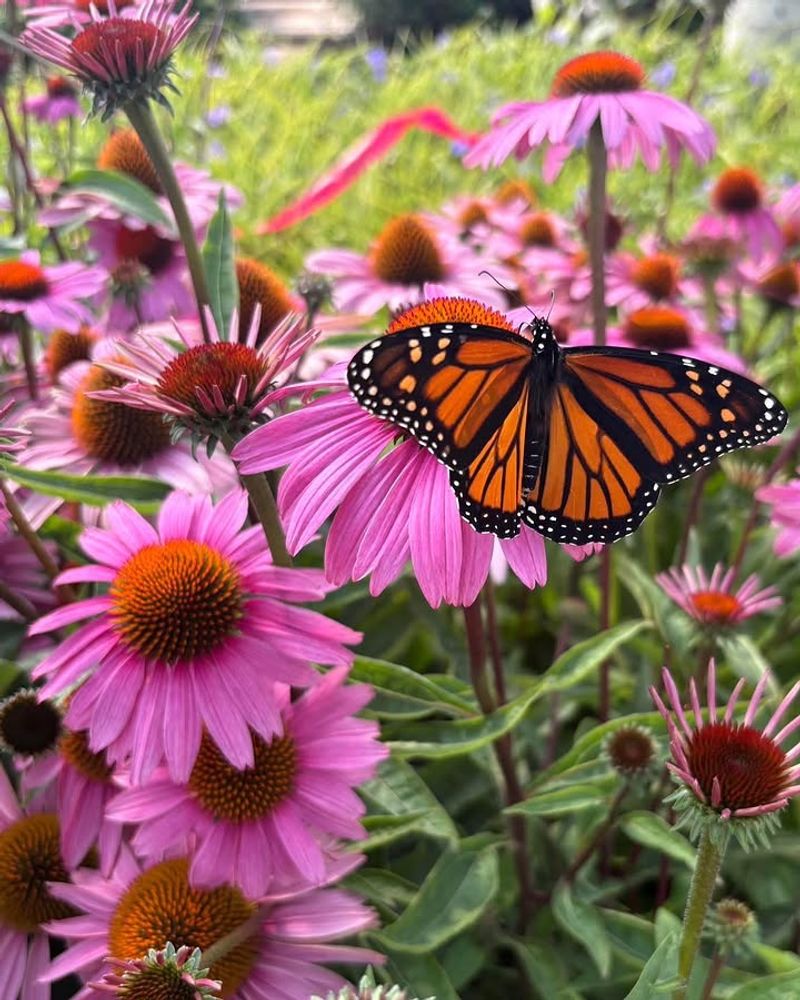
Walking past a patch of purple coneflowers on a late July afternoon, you might catch a goldfinch hanging sideways off a seed head, picking away like it owns the place. That moment right there is exactly why coneflower earns a spot near any Ohio patio.
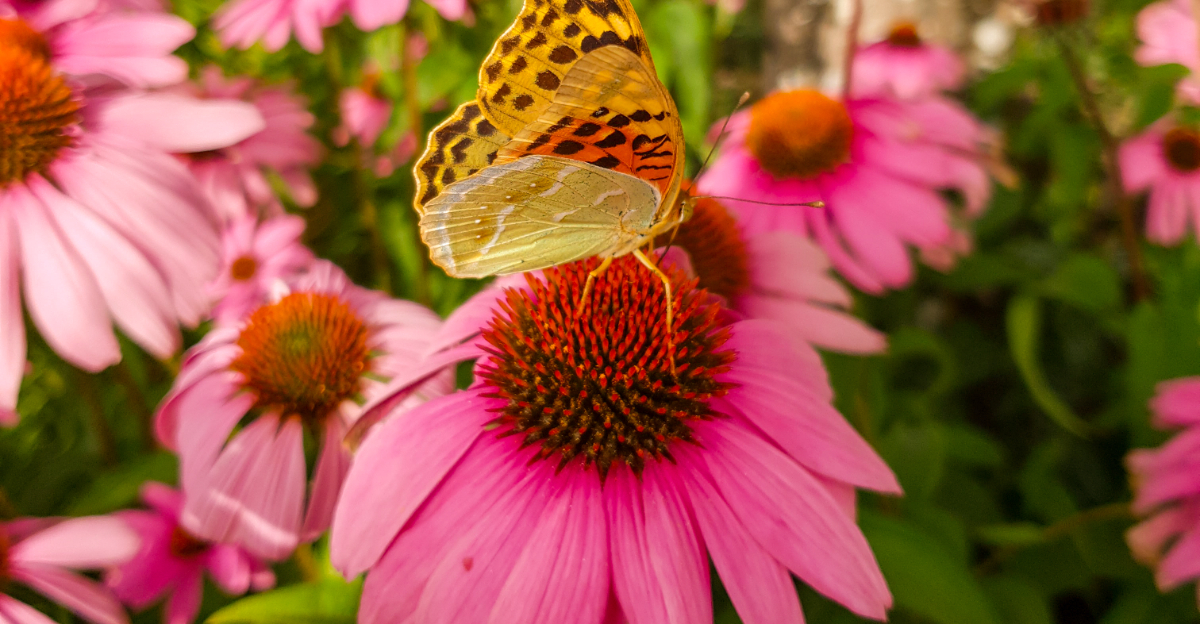
Known scientifically as Echinacea purpurea, this tough native perennial blooms from midsummer well into fall, giving butterflies like swallowtails and fritillaries a reliable nectar stop throughout the season.
Coneflower loves full sun, so plant it in spots that get at least six hours of direct light each day. It handles Ohio summers without much fuss and tolerates dry stretches once it gets established.
You do not need to deadhead every bloom. Leaving the spiky seed heads standing through fall and winter is actually the better move because finches, chickadees, and other small birds will return again and again to feed on them.
Near a patio, coneflowers work well in clusters of three or more since groupings attract more pollinators than single plants scattered around.
They reach about two to four feet tall, so place them just behind lower plants to create a layered look without blocking your view.
Ohio State University Extension lists coneflower as one of the top native perennials for supporting local wildlife.
2. Black Eyed Susan Attracts Pollinators And Late Season Birds
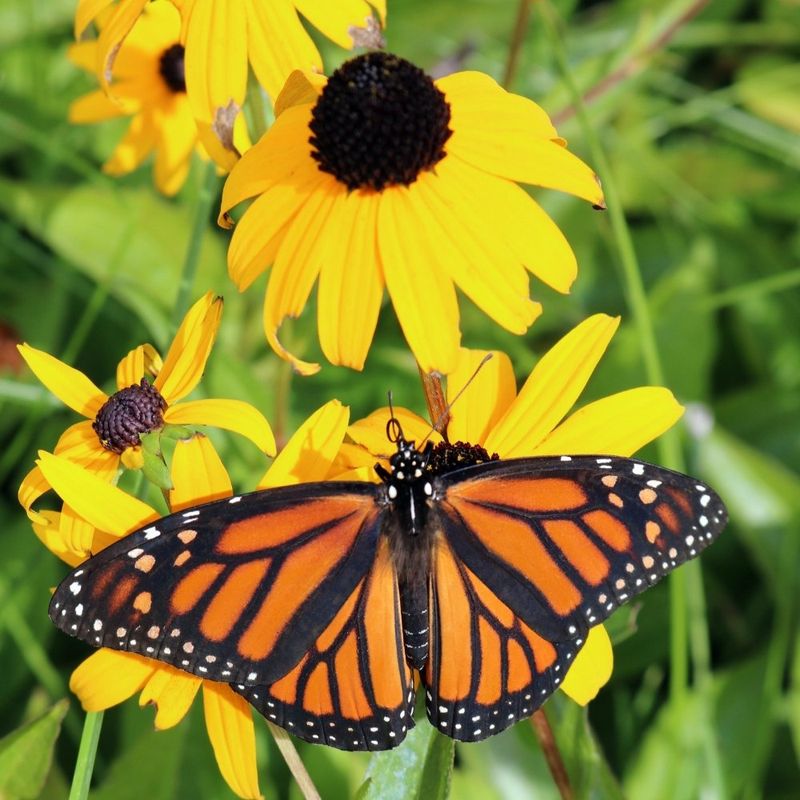
Few plants feel more like an Ohio summer than a wide drift of Black-Eyed Susans glowing in the afternoon sun. Rudbeckia hirta is one of those reliable workhorses that blooms from June through September without asking for much in return.
That long window matters because it means butterflies, bees, and other pollinators have a consistent food source across multiple months, not just a brief burst of flowers that disappears by July.
One of the best things about Black-Eyed Susan near a patio is how naturally it fits into a mixed planting. It grows one to three feet tall depending on the variety, so it layers nicely with taller plants behind it and shorter groundcovers in front.
Your Ohio Garden Changes Every Week. Your Plan Should Too.
Gardening in Ohio changes quickly throughout the season. Every Friday you’ll receive a simple weekly plan showing exactly what to plant, prune, fertilize, harvest, and protect so you never miss the right timing.
The cheerful yellow blooms create visual warmth right from your seating area, and as the flowers fade, the dark seed heads take over as a food source for sparrows, goldfinches, and other seed-loving birds.
Black-Eyed Susan also self-seeds, which means the colony slowly expands on its own over a few seasons. If you want to control spread, simply remove a few seed heads before they drop.
It thrives in full sun and well-drained soil, making it one of the easiest native plants to establish in a typical Ohio yard. Starting with a few plants usually leads to a much fuller patch within two growing seasons.
3. Bee Balm Fills Patios With Hummingbirds And Color
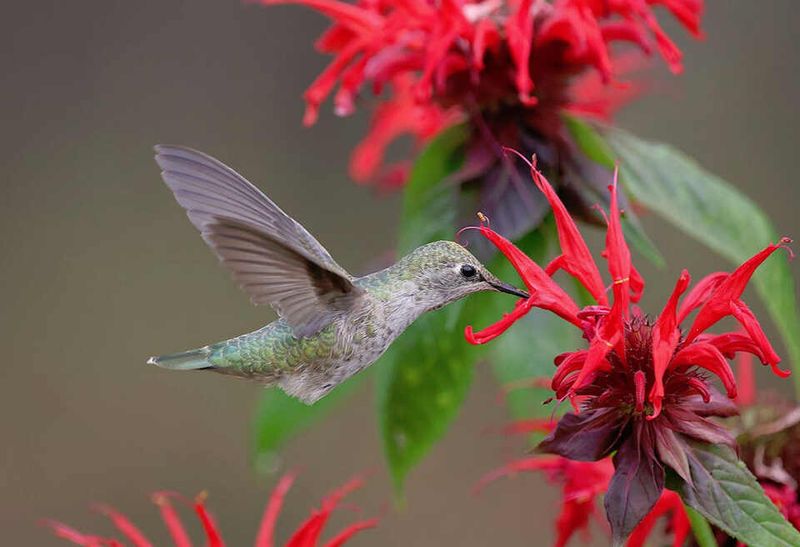
There is something almost electric about watching a ruby-throated hummingbird hover just a few feet from where you are sitting. Bee balm, or Monarda, is one of the best plants you can grow near an Ohio patio if hummingbirds are on your wish list.
Its tubular flowers in shades of red, pink, and purple are shaped almost perfectly for hummingbird feeding, and the birds seem to know it. Butterflies and bees visit regularly too, making bee balm a multi-purpose wildlife plant.
Bee balm blooms in midsummer and fills the air with a pleasant herbal fragrance that many gardeners find just as appealing as the wildlife it pulls in.
It grows two to four feet tall and spreads gradually, so give it a little room near your patio edge rather than tucking it right against your seating.
One thing to keep in mind is airflow. Bee balm can develop powdery mildew in crowded or humid spots, so spacing plants about eighteen inches apart and choosing mildew-resistant varieties like Monarda fistulosa helps keep it looking tidy all season.
Plant bee balm in full sun to light shade with moist, well-drained soil for best results.
Ohio gardeners often find it pairs beautifully with coneflower and Black-Eyed Susan, creating a layered native garden that blooms in sequence and keeps wildlife visiting from June through September.
4. Salvia Draws In Bees And Hummingbirds All Season
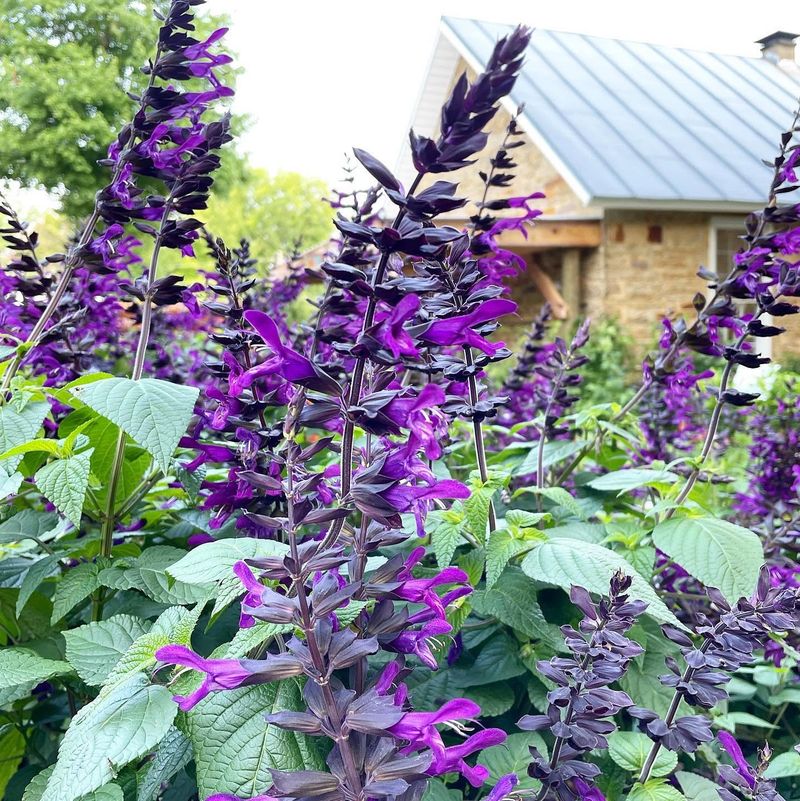
Salvia has a quiet confidence about it. The tall flower spikes rise up in shades of purple, blue, and violet, and once the first hummingbird finds them, word seems to spread fast among the local wildlife.
Native salvias and well-adapted cultivars like Salvia nemorosa thrive in Ohio gardens and bloom repeatedly from late spring through early fall when you give them a little attention between flushes.
The key to keeping salvia blooming is simple trimming. Once a flower spike starts to fade, cutting it back by about a third encourages the plant to push out a fresh round of blooms within a few weeks.
That repeat-bloom habit is a big part of what makes salvia so valuable near a patio, because you get continuous color and a steady supply of nectar for bees, hummingbirds, and smaller butterflies across a long season.
Salvia grows one to three feet tall depending on the variety, making it a natural fit at the front or middle of a patio border. It prefers full sun and well-drained soil, and once established it handles dry Ohio summers without much supplemental watering.
Pairing salvia with bee balm and coneflower creates a sequence of blooms and a layered height structure that looks intentional and keeps pollinators active from spring well into fall. It is a plant that rewards a small amount of care with a big return.
5. Milkweed Supports Monarchs Right Near Your Seating Area
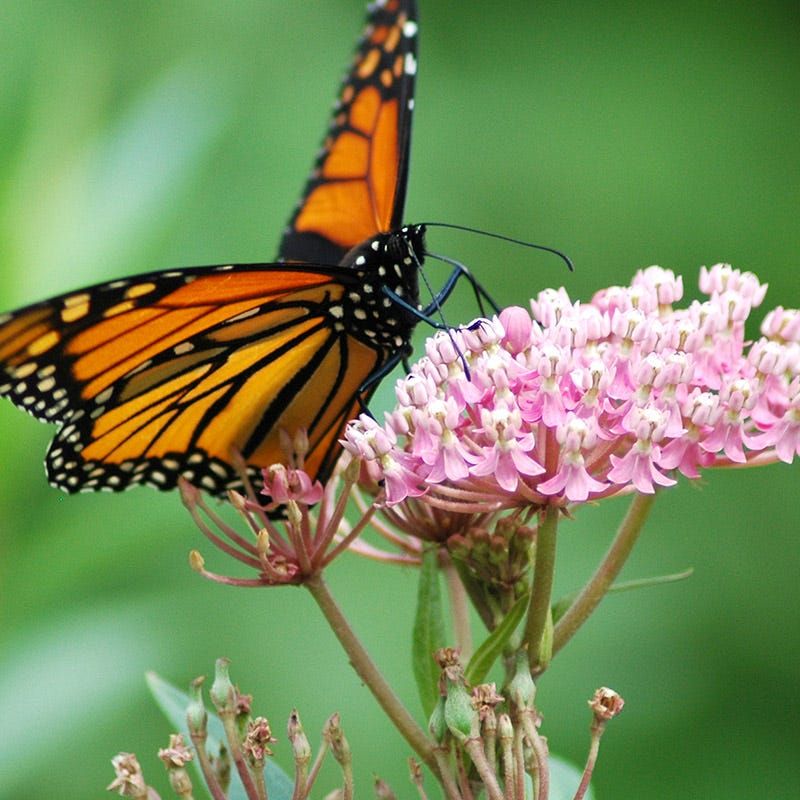
Monarch butterflies are one of the most recognized and beloved insects in North America, and their populations have been under serious pressure for years.
Planting milkweed near your Ohio patio is one of the most direct and meaningful things a home gardener can do to support them.
Milkweed is not just a nectar plant. It is the only plant monarch caterpillars can use as a food source, which makes it essential rather than optional if you want to see monarchs complete their life cycle in your yard.
For patio settings, butterfly weed (Asclepias tuberosa) is often the most practical choice. It stays compact at one to two feet tall, produces clusters of bright orange flowers from June through August, and handles dry conditions well once established.
Common milkweed (Asclepias syriaca) is also native to Ohio but spreads more aggressively through underground roots, so it works better in a larger open area away from tight patio plantings.
Place milkweed where you can actually watch it from your seating area, because once monarchs find it, the show is worth seeing up close. You might spot eggs on the undersides of leaves or tiny striped caterpillars working their way through the foliage.
Ohio State University Extension encourages gardeners to include multiple milkweed species for the greatest benefit to migrating monarch populations passing through the state each season.
6. Blazing Star Pulls In Butterflies With Tall Flower Spikes
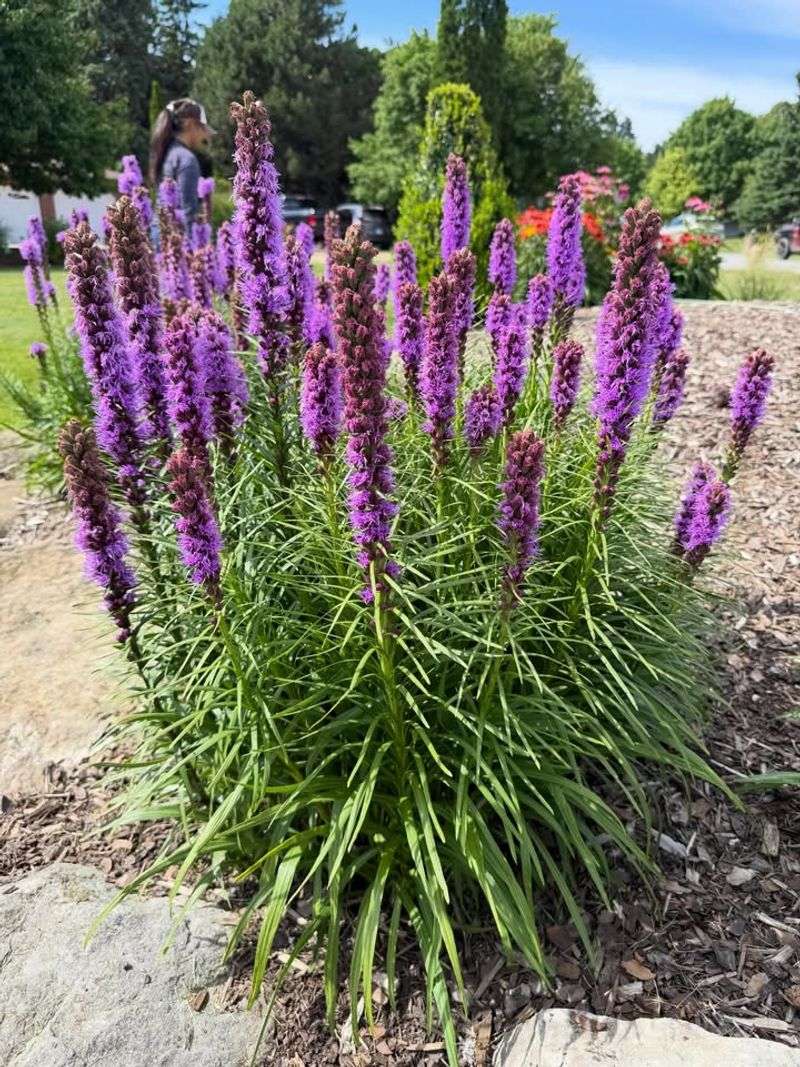
Blazing star has a dramatic flair that most garden plants simply cannot match. Also called Liatris, it sends up tall, feathery purple spikes that bloom from the top down, which is the opposite of most flowering plants.
That unusual trait makes it a conversation starter in any garden, but the real attraction for Ohio gardeners is how powerfully it pulls in butterflies.
Swallowtails, monarchs, and painted ladies all visit blazing star with notable enthusiasm during its midsummer bloom period.
As a native prairie plant, Liatris spicata is completely at home in Ohio soils and tolerates both drought and clay once it gets established. It grows two to four feet tall, making it a strong vertical accent near a patio border without becoming overwhelming.
The upright form also means it does not flop over or crowd neighboring plants, which keeps the area around your seating looking neat and intentional.
Plant blazing star in full sun with good drainage, and expect it to get better each year as the corms develop and the clumps fill out. Goldfinches and other birds visit the seed heads in late summer and fall, extending its wildlife value well past the bloom period.
Grouping three to five plants together creates a more visible and attractive target for butterflies flying through your yard.
It pairs especially well with coneflower and Black-Eyed Susan for a classic native Ohio patio planting that delivers from July through September.
7. Aster Keeps Pollinators Visiting Late Into The Season
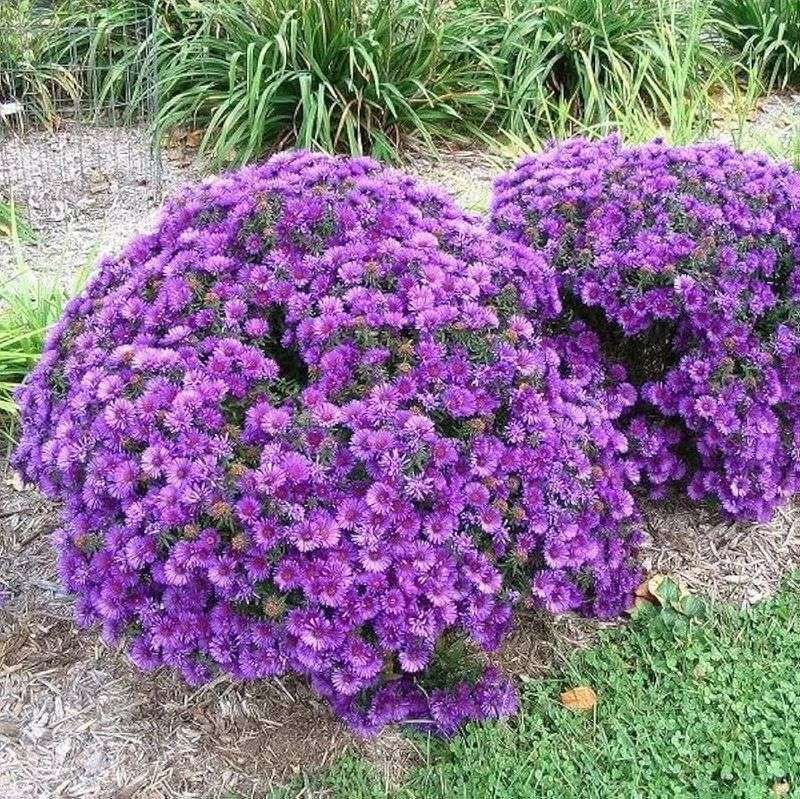
By the time September rolls around, most garden plants are wrapping up for the year. Asters are just getting started.
Native asters like New England aster (Symphyotrichum novae-angliae) are among the most important fall-blooming plants in Ohio because they provide nectar at a time when almost nothing else is flowering.
Migrating monarchs fueling up for their journey south depend heavily on late-season nectar sources like asters, and so do bumblebees trying to build up energy before winter arrives.
New England aster grows three to six feet tall and produces masses of purple, pink, or white daisy-like flowers from late August through October.
Near a patio, taller varieties work well at the back of a border where they create a bold fall backdrop without blocking sightlines from your seating.
Shorter cultivars like Symphyotrichum oblongifolium stay around two feet and fit more easily into tighter spaces without needing staking.
Asters prefer full sun and adapt well to average Ohio garden soils. Pinching the stems back by half in June encourages bushier growth and more blooms come fall.
Because they bloom so late, asters pair naturally with goldenrod and Joe Pye weed to create an end-of-season garden that hums with activity right up until the first hard frost.
Seeing a monarch nectaring on aster blooms in late September from your patio chair is a genuinely rewarding payoff for a full growing season of planting and tending.
8. Goldenrod Feeds Birds And Pollinators Without The Myths
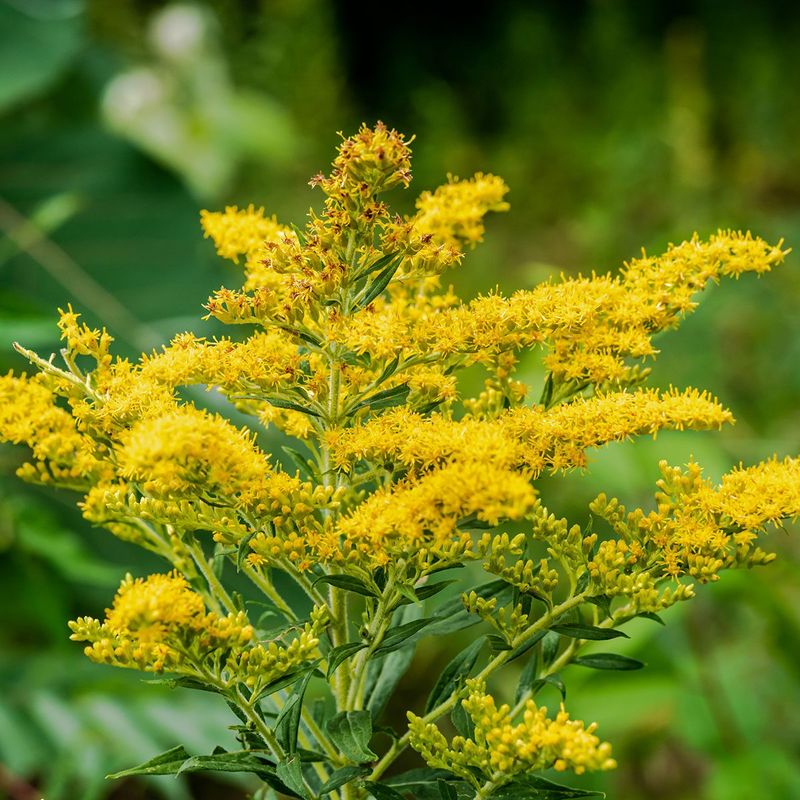
Goldenrod gets blamed for a lot of sneezing it did not actually cause. The real culprit behind late summer allergies is ragweed, which blooms at the same time but has wind-carried pollen that travels invisibly through the air.
Goldenrod pollen is heavy and sticky, designed to be carried by insects rather than wind, so it rarely causes allergic reactions.
Once Ohio gardeners understand that, goldenrod goes from being an overlooked roadside plant to one of the most ecologically valuable things you can grow near a patio.
Native goldenrods like Solidago speciosa and Solidago rugosa support an extraordinary number of species.
Research from the University of Delaware found that goldenrod hosts over 100 species of caterpillars, and its late summer blooms feed enormous numbers of bees, wasps, beetles, and butterflies.
Birds follow the insects, and finches feed on the seeds as the season winds down.
The main concern gardeners have about goldenrod is spread, and that concern is fair for aggressive species. Choosing well-behaved cultivars like Solidago speciosa or the compact Fireworks variety keeps spread manageable near a patio.
Plant goldenrod in full sun with average soil and minimal fertilizer since rich soil actually encourages excessive spreading.
Pairing it with asters and blazing star creates a native late-season trio that supports migrating wildlife through October and gives your patio garden a warm golden glow right through the end of the growing season.
9. Joe Pye Weed Brings In Butterflies With Big Blooms
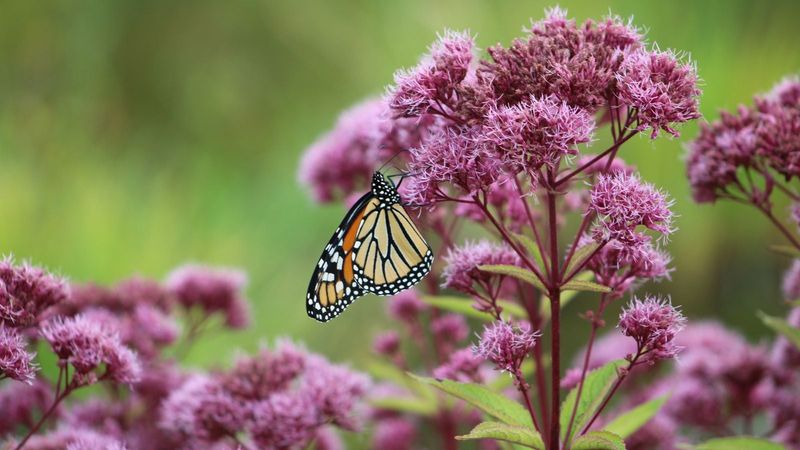
If you want butterflies to practically line up outside your patio, Joe Pye weed delivers in a way that few other plants can match.
This native perennial produces large, domed clusters of dusty pink to mauve flowers in late summer that seem to act like a landing pad for swallowtails, fritillaries, and skippers.
On a warm August afternoon, a well-established Joe Pye weed can have a dozen or more butterflies feeding on it at once, which is the kind of wildlife activity that makes a patio feel like a nature preserve.
Joe Pye weed (Eutrochium purpureum) grows tall, often reaching five to seven feet, so placement matters near a seating area. Putting it at the back of a border or along a fence line gives it room to show off without crowding your space or blocking your view.
It prefers moist, well-drained soil and thrives in full sun to partial shade, making it one of the more flexible native plants for Ohio yards that have variable light conditions.
Despite its impressive height, Joe Pye weed rarely needs staking if grown in full sun. Cutting it back by one third in late May, a technique sometimes called the Chelsea chop, encourages a slightly more compact form.
Pairing it with goldenrod and asters at the back of a patio garden creates a bold, wildlife-rich display from August through October that makes the most of the end of the Ohio growing season.