What Suddenly Brings Monarch Butterflies To Your Virginia Yard Every September
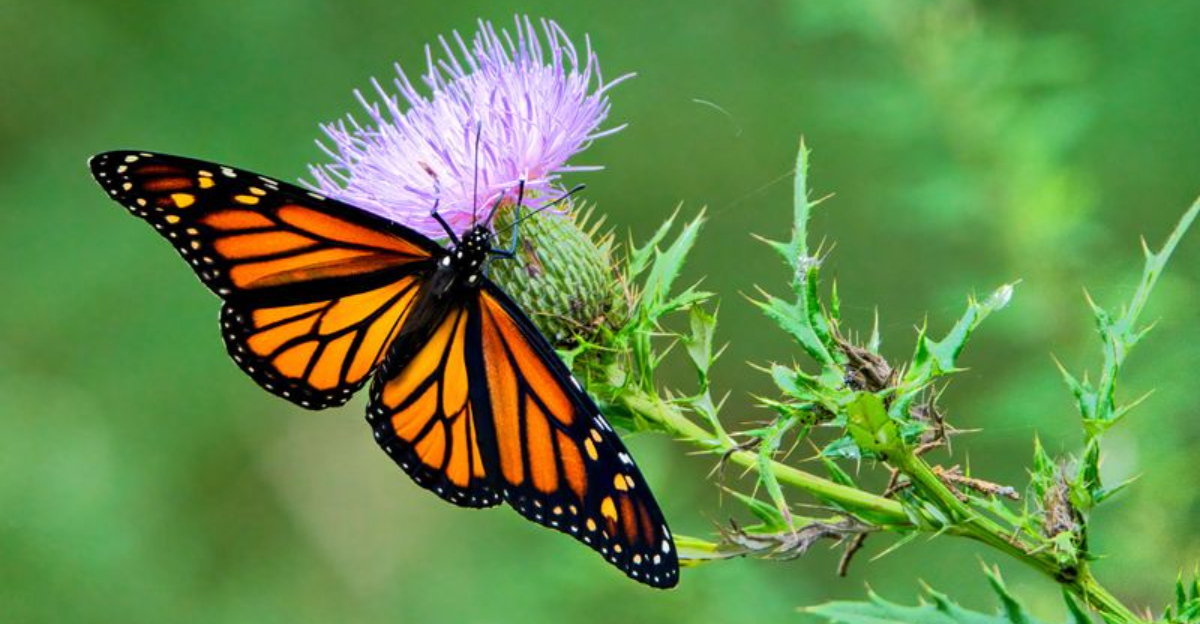
Your backyard might be hosting a butterfly road trip without you even realizing it. One morning, you notice a monarch drifting past your flowers.
Then another appears. Suddenly, your garden seems to have become a busy little rest stop for orange-and-black travelers.
It may look like they showed up out of nowhere, but September brings a very good reason for the sudden activity. Monarchs are making their long fall journey south, and Virginia sits along an important route for these remarkable travelers.
Along the way, they need places to stop, refuel on nectar, and gather the energy to keep moving. Your yard can become one of those stops if it has the right mix of late-blooming flowers, sunny spots, and shelter.
That makes a sudden burst of monarchs more than a pretty sight. It is a small glimpse of a much bigger journey happening right over your fence.
Your Yard Suddenly Becomes A Monarch Stopover, And Here’s Why
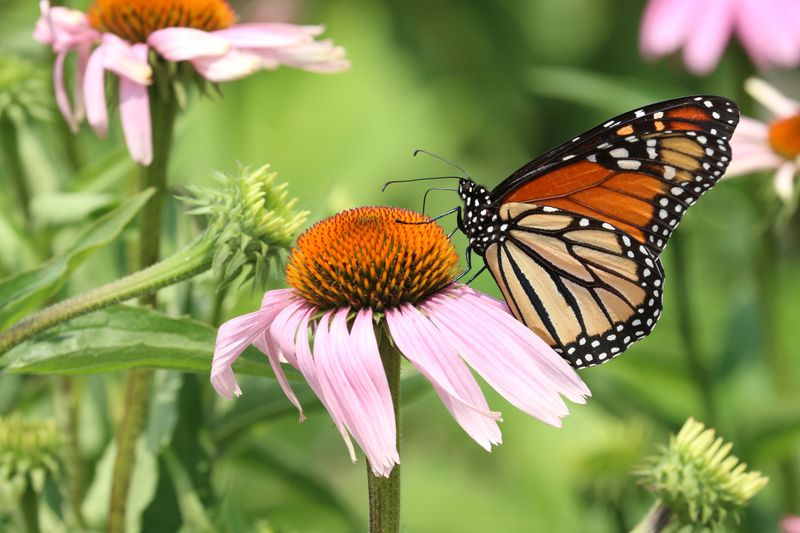
Picture a tired traveler spotting a diner with the lights still on. That is roughly how a migrating monarch sees a well-stocked yard in September.
The butterflies are not wandering randomly. They are scanning for fuel, water, warmth, and a windbreak.
Yards that work as monarch waystations offer all four at once.
Nectar-heavy blooms in red, orange, yellow, or purple stand out to monarch eyes from surprising distances. Sunny open beds matter too, because monarchs need warmth in their wings before they can fly well.
Water counts more than most gardeners expect. A patch of damp soil, a shallow dish with pebbles, or a muddy low spot gives butterflies minerals and moisture they cannot get from flowers alone.
Flat rocks warmed by morning sun turn into basking pads where monarchs spread their wings and soak up heat.
Shelter finishes the picture. Shrubs, hedges, and small trees block gusty afternoon wind and give butterflies somewhere protected to tuck in when a storm rolls through.
A yard with only mowed grass has none of that, which is why the neighbor with a messy pollinator border always seems to get all the butterflies.
Location plays a huge role in Virginia.
The Eastern Shore sits directly inside the Atlantic Flyway, a natural migration corridor that squeezes monarchs into a narrow strip of land as they push south. Homes there can see dozens or even hundreds of butterflies in a single afternoon.
Inland yards in the northern part of the state, the Piedmont, and the Shenandoah Valley still pull in plenty of visitors.
The trick is being predictable year after year. Monarchs pass through the state year after year, but their exact routes and stopover locations can vary with weather, wind, and available food.
The Long Journey That Brings Monarchs To Your Yard
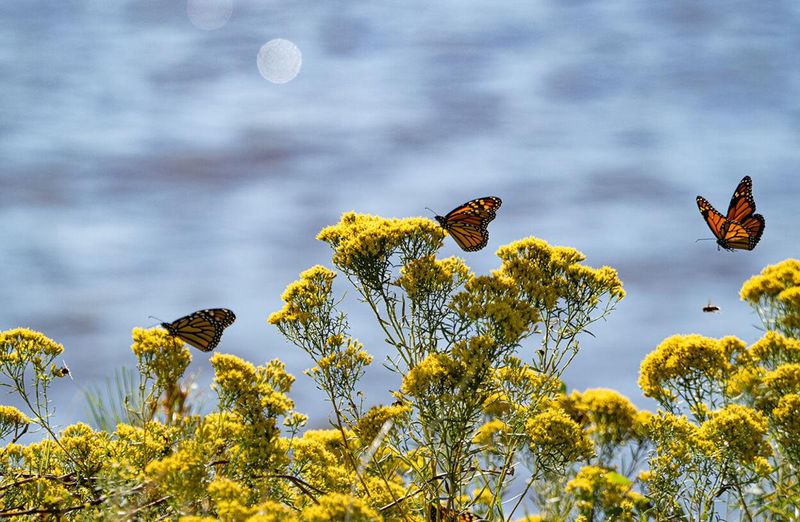
Few creatures the weight of a paperclip attempt anything as bold as this.
Eastern monarchs begin their fall trip in eastern and central Canada, the Northeast, and the Midwest, then aim for a small cluster of mountains in central Mexico. Virginia sits squarely along that path.
Your Virginia Garden Changes Every Week. Your Plan Should Too.
Gardening in Virginia changes quickly throughout the season. Every Friday you’ll receive a simple weekly plan showing exactly what to plant, prune, fertilize, harvest, and protect so you never miss the right timing.
Shorter days and cooler nights flip the switch. Starting in late August and running through September and October, monarchs stop acting like summer butterflies and start acting like long-distance athletes.
The generation making the trip is often called the super generation because it can live up to eight months, while summer monarchs last only a few weeks.
What makes that possible is a pause button on reproduction. Instead of mating and laying eggs, these butterflies pour every bit of energy into flying and storing fat.
The payoff is a journey that can stretch close to 3,000 miles.
Monarchs can cover substantial distances during migration, but their daily progress varies greatly with wind, weather, and how often they stop to feed and rest. Favorable winds can help them travel much farther than they would on a calm or windy day.
Timing varies across the state and from year to year. Monarch activity generally increases during the fall migration, with September and October bringing plenty of opportunities to see passing butterflies.
Weather steers the whole show. Weather and wind can strongly influence when monarchs take flight and how quickly they move through an area.
Favorable conditions can sometimes bring a noticeable wave of migrating butterflies, making a close look at the garden especially rewarding.
Nectar-Rich Flowers Give Monarchs A Reason To Stay
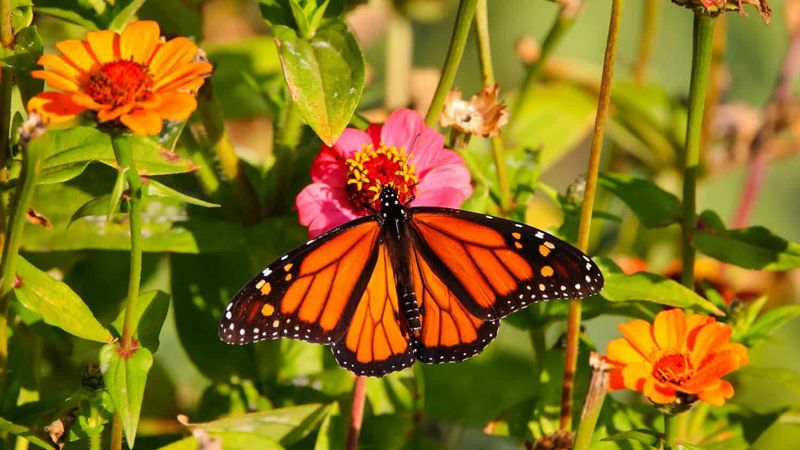
Flowers are the reason a monarch slows down instead of sailing over your roof.
Adult butterflies burn enormous amounts of energy in flight, and nectar is the only thing that refills the tank. They also convert that sugar into lipids, the fat reserves that carry them through winter.
Color guides their search. Red, orange, yellow, and purple blooms sitting in full sun get noticed first, especially when planted in wide drifts rather than scattered singles.
A cluster of ten plants pulls far more attention than one lonely stem.
Virginia happens to be loaded with native fall bloomers. Narrow-leaf sunflower carries nectar right through September and October, while oxeye sunflower and Eastern rosemallow feed butterflies into September.
Summer phlox holds on from July through September and never seems to go unvisited.
Goldenrod deserves top billing. Sweet goldenrod blooms from August into October and ranks among the best fall nectar sources monarchs can find anywhere in the state.
New York ironweed adds deep purple through September, and New York aster plus threadleaf coreopsis stretch the buffet into October.
Sneezeweed, blue mistflower, Joe-Pye weed, and purple coneflower round out the native menu.
Blue mistflower in particular keeps blooming late, which matters when the last stragglers pass through.
Gardeners who want extra insurance can add buttonbush, wild bergamot, zinnia, sedum, hollyhock, and verbena.
A practical tip: resist the urge to cut everything back in early fall. Those slightly ragged goldenrod stems and spent-looking asters are exactly what a hungry monarch wants.
Leaving the September garden a little wild costs you nothing and can turn an ordinary yard into a stop worth remembering on a 3,000-mile trip.
The Plants Monarchs Need Before Their Journey South
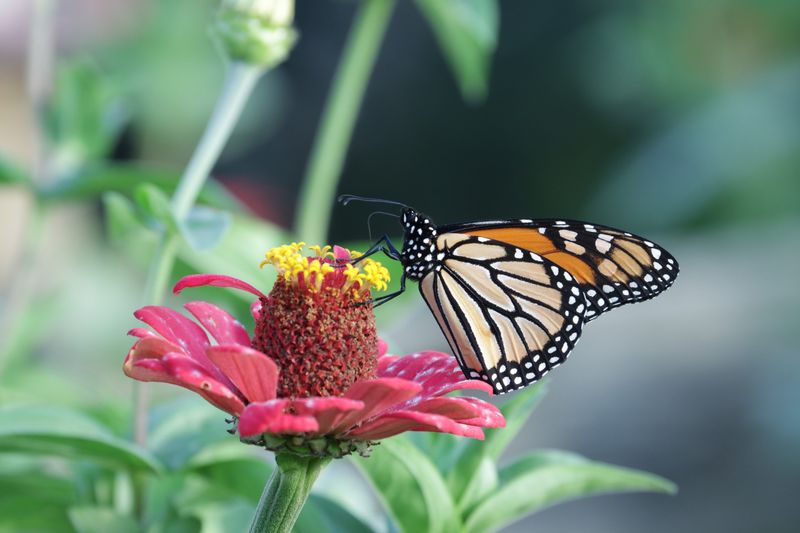
Ask any monarch gardener what plant matters most, and you will hear one word: milkweed. Caterpillars eat nothing else.
Every species in the genus Asclepias is fair game, and everything outside it is off the menu.
Female monarchs lay eggs only on milkweed leaves, which ties the entire species to one group of plants.
No milkweed means no caterpillars, and no caterpillars means no butterflies flying over the state next September. It is a simple chain with no spare links.
Here is the part that confuses people. The fall-migrating generation enters reproductive diapause, meaning reproduction is greatly reduced while the butterflies focus on migration and building energy reserves.
That means adult monarchs passing through in September primarily need nectar rather than milkweed for feeding.
Planting it anyway still matters enormously. Those same butterflies become the ones that head north in spring, and their offspring need milkweed all the way up the map.
Virginia gardens also host earlier summer generations that absolutely do breed here. A milkweed patch planted this year supports several rounds of caterpillars long before the fall travelers arrive.
Three native choices work beautifully across the state.
Common milkweed, Asclepias syriaca, spreads through open sunny areas and handles neglect well.
Swamp milkweed, Asclepias incarnata, thrives in damp low spots and blooms in soft pink clusters.
Butterfly weed, Asclepias tuberosa, brings that unmistakable blaze of orange and tolerates dry, sandy soil.
Pair any of them with fall nectar plants, and you have created a genuine monarch waystation, a yard that serves both caterpillars and adults.
Habitat structure helps too. Leave some leaf litter, skip broad-spectrum sprays, and let a corner of the property stay a little untidy.
Monarchs have been using this state’s land for thousands of years, and they respond quickly when someone gives them room again.
What Monarchs Are Doing When They Stop To Feed
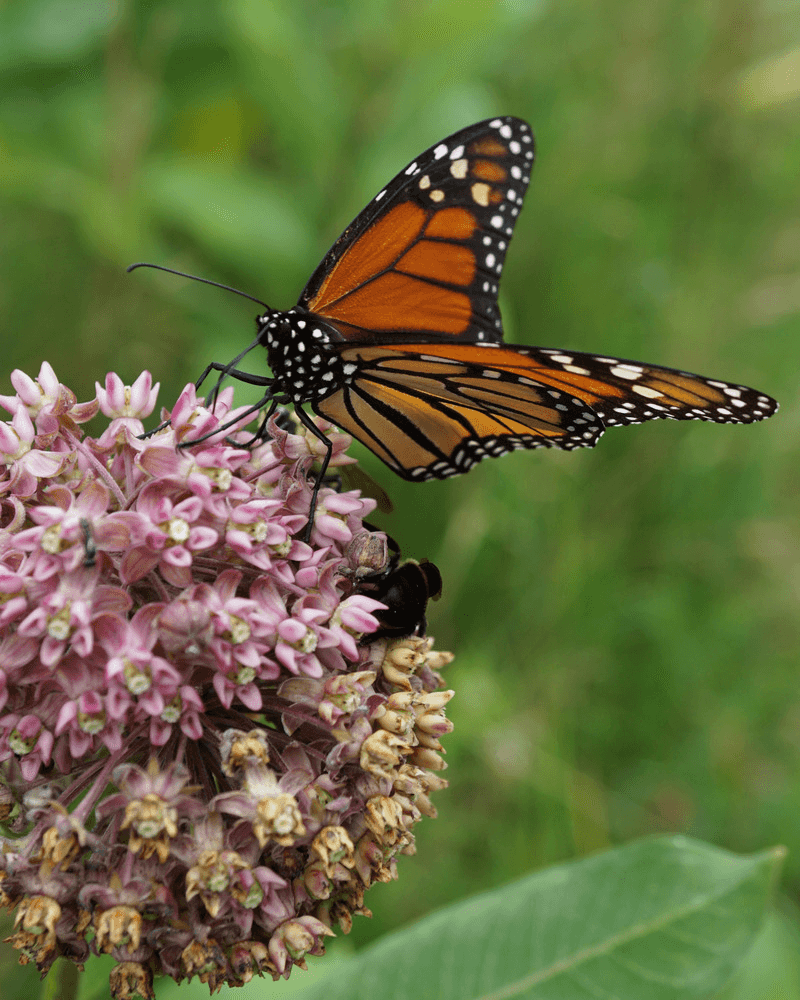
Watch a monarch in your yard for ten minutes, and you will notice it is not sightseeing. Every landing has a purpose.
The butterfly is loading up on nectar and converting it into stored fat, the fuel that must last for months. Those lipid reserves are the whole point of the September feeding frenzy.
Monarchs spend roughly five months clustered in the oyamel fir forests of central Mexico, barely feeding at all. What they store now is essentially their entire winter grocery supply.
Flight itself is cheaper than you might guess. Monarchs soar and glide on rising air and favorable winds, which saves energy compared to constant flapping.
Even so, fat reserves keep them going through calm days, headwinds, and long stretches with no flowers in sight.
Researchers have measured exactly this.
Monarchs collected in the state during migration already carry significantly more lipids than summer butterflies do. Those levels keep climbing as the butterflies move south, hitting their highest concentrations by the time they reach Texas and northern Mexico.
Scientists describe them as opportunistic migrants, meaning they adjust plans based on how full the tank is.
A butterfly arriving in your yard with low reserves may hang around for several days, feeding hard before continuing. One that shows up already heavy might refuel briefly and be gone by afternoon.
Feeding is only part of the job. Stopover sites also give monarchs a chance to rest, dry off after rain, and shelter from wind behind hedges and tree lines.
You may spot one sitting motionless on a warm brick wall, wings open, doing nothing at all. That stillness is work too.
Warming up to flight temperature and conserving energy are both survival tactics on a trip this long.
Why Monarchs Gather In Groups Before Migration
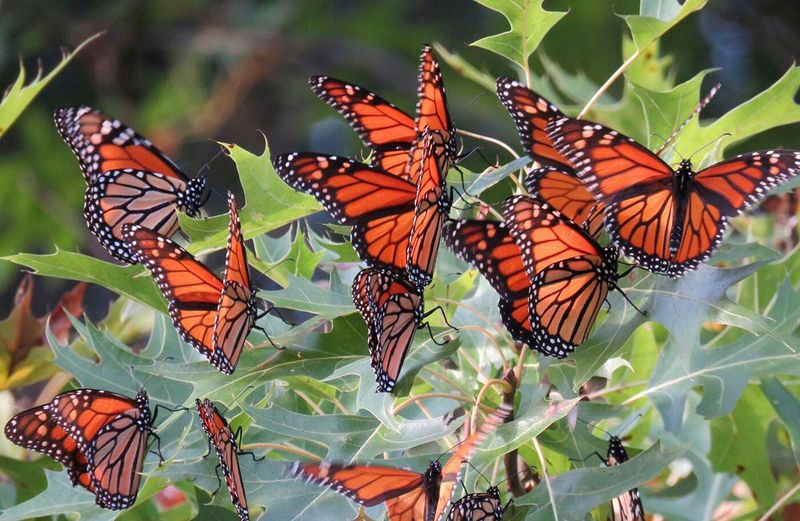
Late one September evening on the Eastern Shore, a plain cedar tree can look like it has grown orange leaves. Look closer, and the leaves are wings.
Monarchs roost together at night, and the sight stops people in their tracks.
Butterflies fly during daylight and shut down after dark. As the sun drops, migrating monarchs search out sheltered trees and settle in, packing tightly along branches in formations called roosts or bivouacs.
Some roosts hold a handful of butterflies; others hold thousands.
Huddling serves a real purpose on chilly autumn nights. Clustered bodies hold heat better than scattered ones, and the group buffers wind that would otherwise strip individuals off the branch.
Staying warm overnight means less energy wasted before morning.
Tree choice is not random either. Monarchs often choose sheltered trees and dense vegetation for overnight roosts, where they are protected from wind and exposed conditions.
Dense vegetation can provide useful cover while the butterflies wait for warmer conditions the following morning.
What fascinates researchers is the loyalty to specific spots. Roost sites along the coast get used year after year, even though no individual butterfly has ever been there before.
Something about the landscape, the wind patterns, and the tree structure keeps drawing new generations back.
Mornings are worth setting an alarm for. Cold monarchs cannot fly until their body temperature reaches at least 55 degrees, so they spread their wings and bask in early sunlight like tiny solar panels.
The cluster loosens slowly, a few butterflies drop off, then suddenly the whole tree lifts.
If you have mature evergreens near your property, keep an eye on them in late September. A roost may already be forming, and you simply have not looked up at the right hour.
When The Monarchs Move On And What Comes Next
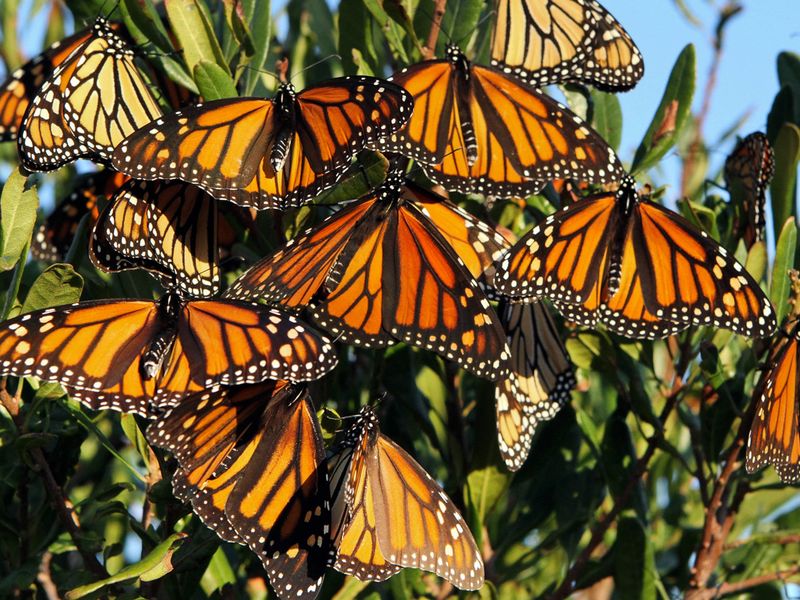
There comes a morning in October when the yard feels quieter.
The asters are still blooming, the sun is still warm, and the orange wings are simply gone. Your visitors caught a north wind and kept going.
Along the coastal peninsula, departures typically begin in mid-September. The peak push comes in late September or early October, and by roughly October 20, most monarchs have cleared the area.
Stragglers occasionally turn up later, especially after a warm spell.
From the coastal region, the route generally bends southwest. Many monarchs follow the Gulf Coast for a stretch before angling toward central Mexico, funneling through Texas along the way.
The crowds thicken as butterflies from across eastern North America converge on the same narrow path.
Their destination is remarkably small. High oyamel fir forests in Michoacan and the State of Mexico, sitting between roughly 8,000 and nearly 12,000 feet, host almost the entire eastern population.
Arrivals start in late October and continue through November and into December. Once settled, millions of monarchs cluster on trunks and branches in reproductive diapause, a paused state that conserves energy.
The cool, moist mountain air keeps their metabolism low so those fat reserves stretch through the season. They stay put from early November until March.
Spring flips the switch again. In late February and March, warmer days and longer light wake them up, mating begins, and the butterflies head north.
They lay eggs on milkweed across the southern United States, and their children continue the trip their parents started. Several generations later, monarchs once again reach the northern breeding grounds.