What The Weeds In Your North Carolina Yard Are Already Telling You About Your Soil
Your yard has a language of its own, and weeds are its most fluent speakers. Every uninvited plant pushing through your North Carolina lawn isn’t just an eyesore.
It’s a message. Compacted soil, poor drainage, nutrient imbalances… weeds don’t hide these problems, they announce them.
Most homeowners yank them out and move on, never stopping to read what they’re being told. But the same weeds keep coming back, don’t they? That’s not bad luck. That’s your soil repeating itself.
Each weed that returns is pointing at something real happening underground, something that won’t fix itself just because you pulled a few stems. The good news is that once you learn to read them, you stop fighting a mystery.
You start solving an actual problem. And that changes the way you care for your lawn completely.
1. Broadleaf Plantain Or Ribwort Plantain
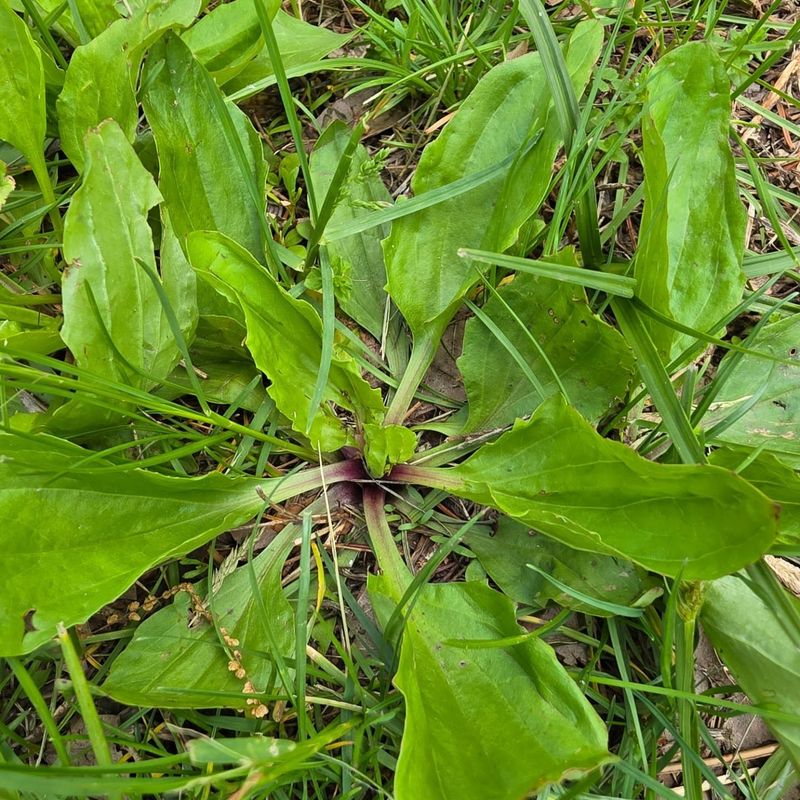
Walk across your lawn and notice where your grass looks flat, thin, and struggling. If you spot broad, oval leaves with thick ribs pressed close to the ground, that is broadleaf plantain, and it is waving a red flag about your soil.
This tough little plant thrives where most grasses give up, especially in heavily compacted ground.
Broadleaf plantain and its narrow-leafed cousin, ribwort plantain, both handle low oxygen and hard soil much better than typical turf grasses. In North Carolina yards, they often show up along paths, near driveways, and in spots where people and pets walk repeatedly.
The soil in those areas gets pressed down over time, and water and air struggle to move through it properly.
Seeing plantain does not automatically mean your soil is ruined. It means compaction, poor drainage, or heavy foot traffic may be working against your lawn.
Core aeration is one of the best first steps you can take to loosen the soil and give your grass a fair chance. After aerating, overseeding with a turf variety suited to North Carolina conditions can help fill in bare spots.
Always confirm your findings with a proper soil test from the North Carolina Department of Agriculture, because compaction is just one piece of the puzzle.
Plantain is a clue, not a complete diagnosis, and treating it like one will save you time and effort in your lawn care routine.
2. Dandelion
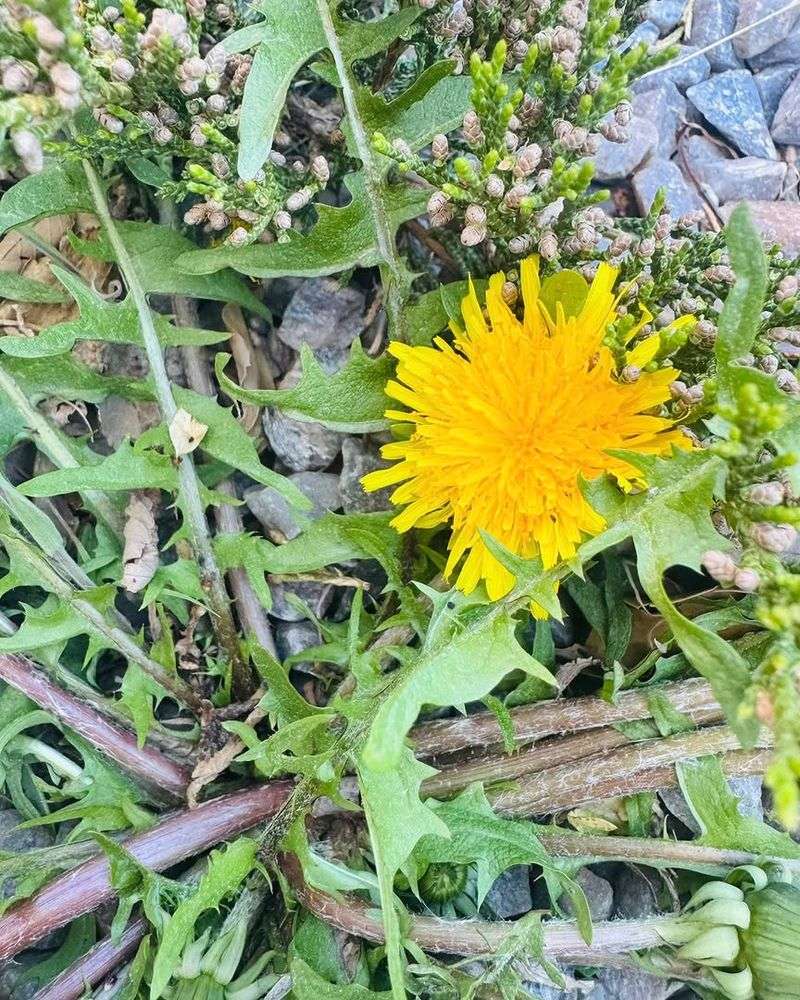
Most North Carolina homeowners know dandelions by sight, but few realize how much information that cheerful yellow flower is actually sharing. Dandelions tend to show up in lawns where the soil is compacted, disturbed, or simply not thriving.
Their long, powerful taproot can push through firm ground that stops shallow-rooted grasses cold.
That taproot is actually doing something useful. As it grows down through compacted layers, it pulls up nutrients from deeper soil and helps loosen the ground over time.
Still, seeing dandelions spread across your lawn is a sign that your turf is thin and struggling to compete. Weak grass means open soil, and open soil is exactly where dandelions set up shop without much trouble.
Your North Carolina Garden Changes Every Week. Your Plan Should Too.
Gardening in North Carolina changes quickly throughout the season. Every Friday you’ll receive a simple weekly plan showing exactly what to plant, prune, fertilize, harvest, and protect so you never miss the right timing.
Some gardeners assume dandelions always mean low calcium, but that is not reliably true. Calcium levels vary widely across North Carolina, and only a soil test will tell you what is actually going on.
The North Carolina Department of Agriculture offers affordable soil testing that checks pH, phosphorus, potassium, calcium, and magnesium. Getting that test done before adding lime or fertilizer is the smartest move you can make.
Once you know your soil numbers, improving drainage, aerating compacted areas, and overseeding with a strong turf variety will help your grass crowd out dandelions naturally.
Think of dandelions as your lawn sending a message, and take the time to actually read it before reacting.
3. White Clover
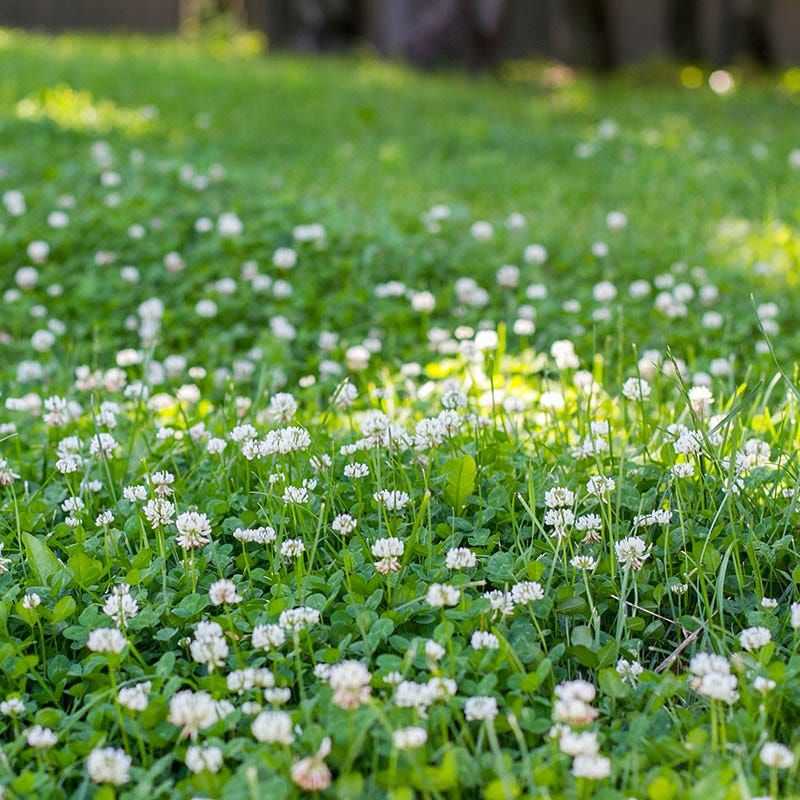
Spotting white clover spreading through your North Carolina lawn might feel frustrating, but this little plant is actually one of the most honest reporters in your yard. Clover thrives where nitrogen levels are low, and it has a clever trick for surviving those conditions.
Tiny bacteria living in its roots pull nitrogen right out of the air and convert it into a form the plant can use.
When grass is well-fed and nitrogen levels are healthy, clover has a harder time competing. But when fertilization is skipped or inconsistent, grass weakens and clover moves in fast.
Across North Carolina, lawns that go years without a proper fertilization schedule often end up with significant clover coverage, especially in spring and early summer when the plant spreads quickly.
The good news is that white clover is one of the easier problems to address once you understand what it is telling you. A soil test will confirm whether nitrogen is genuinely low or whether another nutrient imbalance is making things worse.
From there, a consistent fertilization plan matched to your specific turf type can make a real difference. Warm-season grasses like bermudagrass and zoysiagrass, both popular in North Carolina, respond well to properly timed nitrogen applications.
Over time, thicker, healthier grass will naturally crowd out the clover without needing aggressive intervention. White clover is not your enemy. It is just your lawn asking for a little more attention and nutrition.
4. Crabgrass
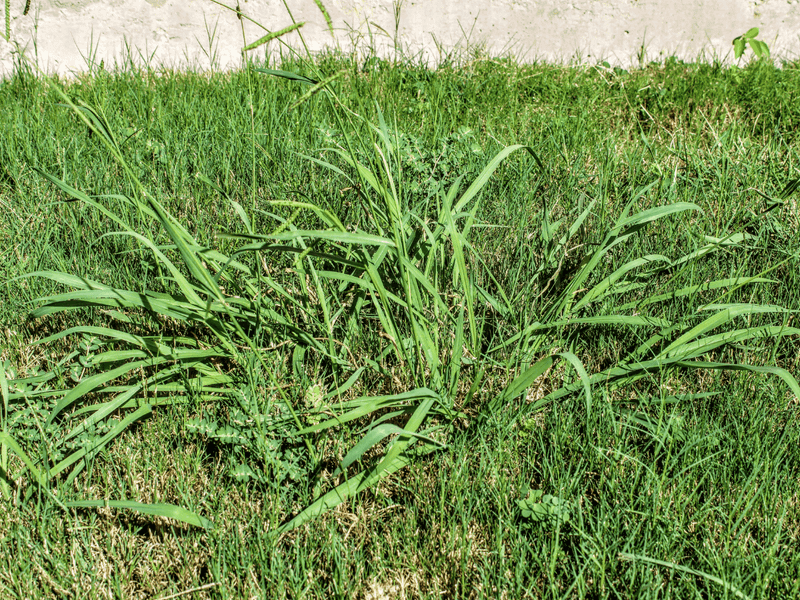
Few weeds in North Carolina are as recognized or as disliked as crabgrass. It spreads fast, looks messy, and seems to appear overnight during the hottest weeks of summer.
But before you focus entirely on getting rid of it, pay attention to where it is growing, because location tells you a lot about what your soil is dealing with.
Crabgrass seeds need warmth and light to sprout, which means they almost always pop up in bare, thin, or stressed areas of the lawn. Compacted soil, worn-out turf, and spots damaged by summer heat stress are prime targets.
In North Carolina, where summer temperatures can push turf grasses to their limits, any weak spot in your lawn becomes an open invitation for crabgrass to move in and spread quickly.
Improving your lawn’s overall health is the most effective long-term strategy. Thick, dense turf shades the soil surface and prevents crabgrass seeds from getting the light they need to sprout.
Core aeration helps with compaction, and overseeding bare patches in the fall with a suitable grass variety closes the gaps where crabgrass gets started.
Pre-emergent herbicides applied in early spring before soil temperatures reach 55 degrees Fahrenheit can also help.
A soil test from the North Carolina Department of Agriculture will tell you whether fertility issues are weakening your turf and making it easier for crabgrass to take over.
Healthy grass is your best defense, and crabgrass is simply pointing out where that health is missing.
5. Nutsedge
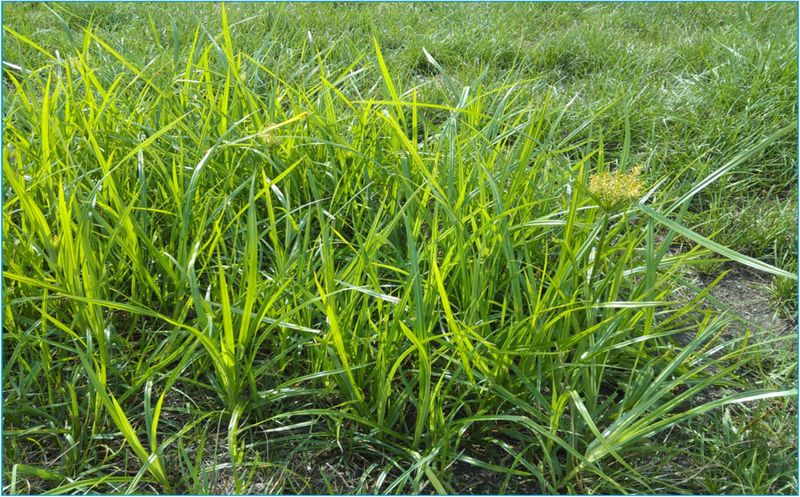
Nutsedge is one of those weeds that no amount of mowing seems to slow down. It grows faster than surrounding grass, stays bright green even when turf looks tired, and keeps coming back no matter how many times you pull it.
If nutsedge is taking over sections of your North Carolina yard, your soil is almost certainly dealing with a moisture problem.
Both yellow nutsedge and purple nutsedge love wet conditions. They thrive in poorly drained soil, low spots where water collects after rain, and areas that get watered too frequently.
Heavy clay soils, which are common across many parts of North Carolina, hold water longer than sandy or loamy soils, making them especially welcoming to nutsedge. The more waterlogged the ground, the more aggressively nutsedge spreads.
Addressing the drainage issue is the real fix here. Adding organic matter to clay-heavy soil improves its structure over time and helps water move through more efficiently.
Raised planting areas, French drains, and adjusting irrigation schedules can also reduce the excess moisture that nutsedge depends on.
Pulling nutsedge by hand rarely works long-term because the underground tubers it produces can stay in the soil and sprout new plants.
Targeted herbicides labeled for sedge control are more effective, but improving drainage is the step that actually prevents it from returning. A soil test is still worth doing to check for any additional imbalances making your turf vulnerable in those wet areas of your yard.
6. Chickweed
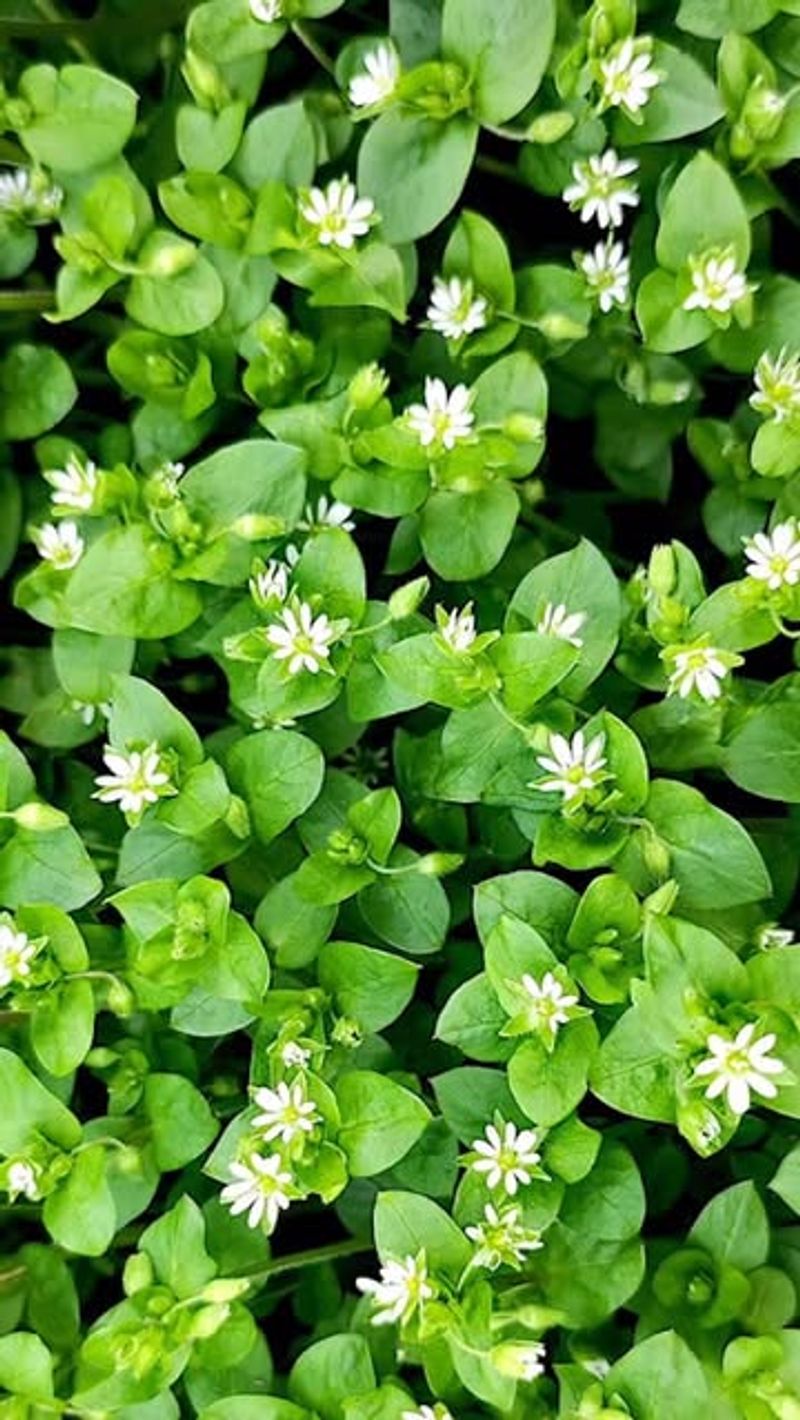
Chickweed has a way of appearing almost magically in late winter and early spring, carpeting bare garden beds and thin lawn areas with a soft, bright green mat. It seems to know exactly when conditions are right and wastes no time spreading.
Seeing chickweed in your North Carolina yard is actually less alarming than many people think, because it tends to grow in reasonably healthy soil.
Unlike many weeds that signal poor or compacted conditions, chickweed usually shows up where the soil is cool, moist, and relatively fertile.
It loves open ground with consistent moisture and mild temperatures, which is exactly what many North Carolina yards offer from late fall through early spring.
Its presence is more of a sign that bare soil is available and conditions are comfortable than a warning about something seriously wrong underground.
That said, chickweed does show you where your turf coverage is thin and where the soil surface stays exposed long enough for seeds to sprout and establish.
Improving ground cover through overseeding or mulching open beds can reduce how much chickweed returns each season.
In lawn areas, thickening turf density is the most effective long-term approach. Chickweed is also a cool-season plant, so as temperatures rise in spring, it naturally fades on its own.
Still, a soil test is a smart move to confirm that fertility and pH are in a healthy range for your turf or garden plants. Chickweed is one of the friendlier weeds your North Carolina yard can host.
7. Henbit And Purple Deadnettle
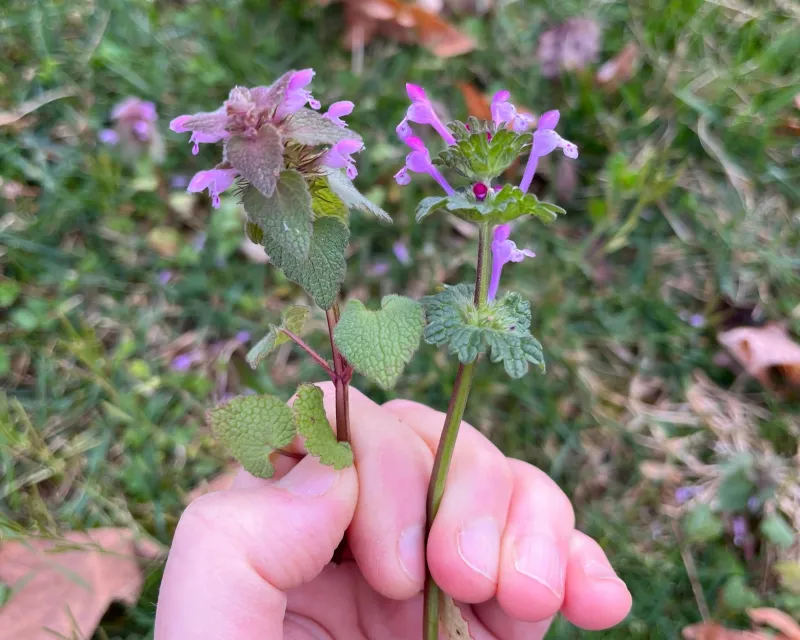
Every winter, lawns across North Carolina start showing patches of small purple flowers tucked close to the ground, and most homeowners have no idea what they are looking at.
Henbit and purple deadnettle are two closely related winter annual weeds that look almost identical at first glance.
Both arrive in cool weather, flower early, and disappear as summer heat moves in, almost like seasonal visitors that overstay their welcome.
These two plants tend to take hold where turf is thin, bare soil is exposed, and there is not much competition from other ground cover. They do not necessarily mean your soil is low in fertility or heavily compacted.
What they do mean is that your lawn has open spots that are not being covered by healthy grass during the cool months, and any open spot is an opportunity for weeds to move in first.
The most practical response is improving turf density so that bare patches close up before winter arrives.
Overseeding in the fall with a grass variety suited to North Carolina conditions, like tall fescue in the Piedmont or Transition Zone, gives your lawn a much better chance of staying thick through winter.
Mulching garden beds heavily also reduces the bare ground these weeds need to get started. They are not dangerous to your soil, but they are a reliable signal that your ground cover strategy has some gaps worth addressing.
A soil test can confirm whether low fertility is contributing to thin turf in your North Carolina yard.
8. Goosegrass
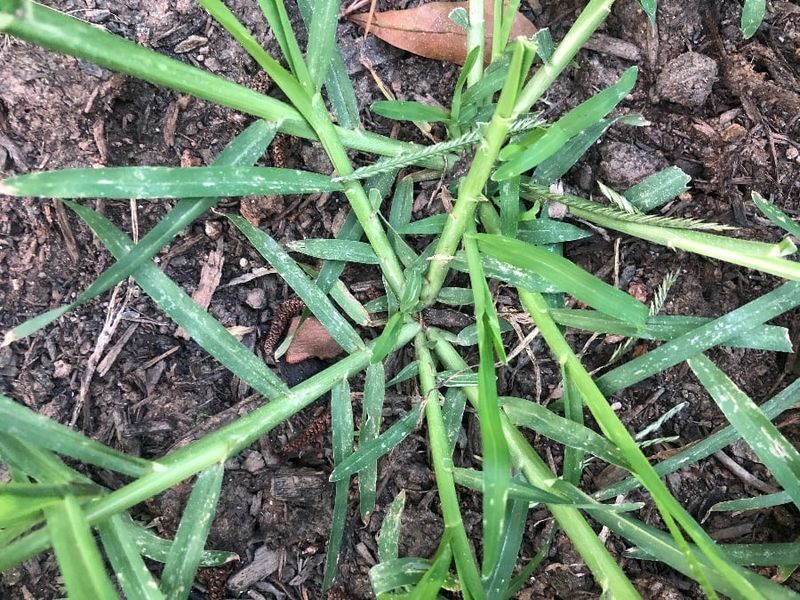
Goosegrass has a distinctive look that sets it apart from other lawn weeds. Its stems radiate outward in a flat, almost perfect circle from a central point, and the base of each stem has a pale, almost white color that makes it easy to spot once you know what to look for.
In North Carolina, goosegrass almost always grows in one specific type of situation: ground that has been packed down hard.
Compacted soil is goosegrass territory. It shows up consistently along driveways, sidewalk edges, sports fields, heavily used lawn paths, and any area where foot traffic or equipment has pressed the ground firm over time.
Like broadleaf plantain, it can tolerate the low oxygen and poor drainage that come with compacted soil far better than most turf grasses. Where grass thins out from compaction stress, goosegrass moves in without hesitation.
Core aeration is the most direct way to address the compaction that goosegrass signals. Running a core aerator over affected areas in late summer or early fall, which is the ideal timing for many North Carolina lawns, pulls small plugs of soil out and creates channels for air, water, and nutrients to reach grass roots.
Overseeding after aeration helps fill in thin areas before goosegrass can reestablish. Pre-emergent herbicides applied in spring can also reduce germination.
But the real solution is always improving soil structure so that your turf can thrive in conditions where goosegrass cannot easily compete. Your soil is asking for breathing room.
9. Spotted Spurge
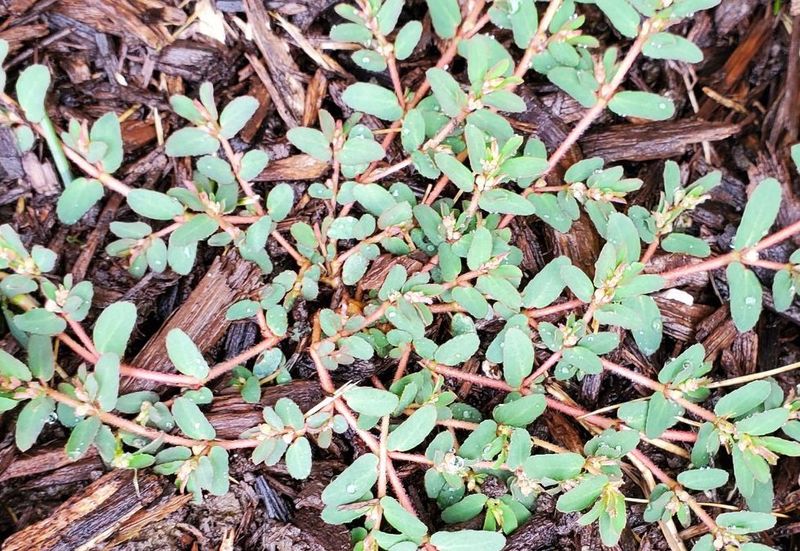
Spotted spurge is a summer weed with a talent for surviving in places where almost nothing else will grow. It hugs the ground tightly, spreads outward in a flat mat, and produces tiny leaves marked with a distinctive reddish-purple blotch in the center.
If you are seeing spotted spurge in your North Carolina yard, look closely at where it is growing, because the location is the message.
This weed loves hot, dry, thin, and compacted areas. It is extremely common in sidewalk cracks, along driveway edges, in bare patches of stressed lawns, and anywhere the soil surface is exposed and baking in the summer sun.
North Carolina summers are intense, and turf grasses that are already struggling with compaction, low fertility, or drought stress become very vulnerable to spurge invasion during the hottest months of the year.
Improving soil health from the ground up is the most reliable way to reduce spotted spurge over time. Thicker turf shades the soil and keeps surface temperatures lower, making conditions less comfortable for spurge to sprout and spread.
Adding organic matter to compacted or sandy soils improves moisture retention and creates a better environment for grass roots to establish deeply. Pre-emergent herbicides applied before summer heat arrives can also limit germination.
A soil test will reveal whether low organic matter, pH imbalance, or nutrient deficiencies are weakening your turf and leaving it open to spurge pressure. Spotted spurge is small, but it is telling a very clear story about your soil.
10. Ground Ivy
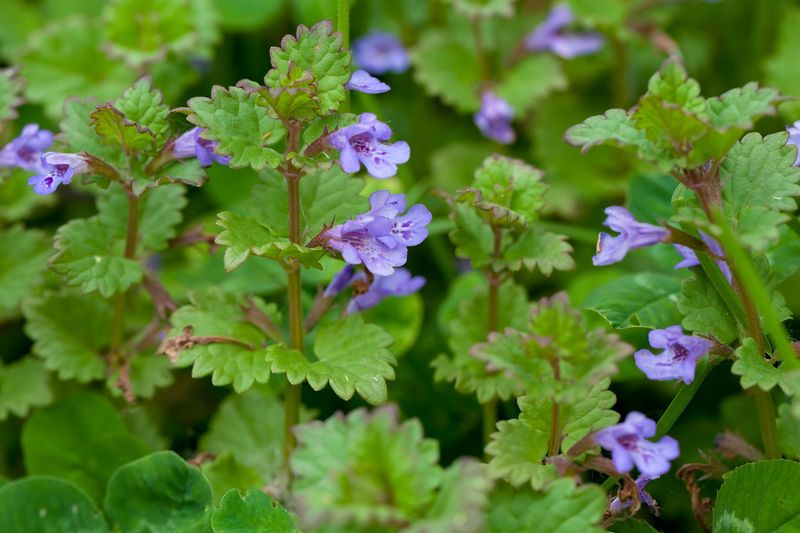
Ground ivy is one of those plants that sneaks into a yard quietly and then suddenly seems to be everywhere. Its rounded, scalloped leaves and creeping stems spread outward in every direction, rooting at each node as they go.
Once it gets established in a shaded corner of a North Carolina lawn, it can cover a surprisingly large area in just one growing season.
Shade and moisture are the two conditions ground ivy loves most. It thrives under trees, along fence lines, and in areas where turf grass struggles to get enough sunlight to stay thick and competitive.
Poorly drained spots where water lingers after rain also encourage ground ivy to spread more aggressively.
In many North Carolina yards, especially in the Piedmont region where mature trees are common, these shaded and moist conditions exist naturally and create perfect ground ivy territory.
Managing ground ivy starts with honestly evaluating the conditions of the area it is growing in.
If a spot is too shaded for lawn grass to perform well, switching to a shade-tolerant ground cover or mulching under trees may be a smarter long-term choice than fighting ground ivy repeatedly.
Improving drainage in wet areas reduces the moisture advantage ground ivy relies on. In areas where you want to maintain turf, choosing a shade-tolerant grass variety and overseeding regularly can help thicken coverage.
Ground ivy is not a sign of terrible soil quality, but it is a reliable indicator that your current plant selection may not match your site conditions well.
11. Wild Violet
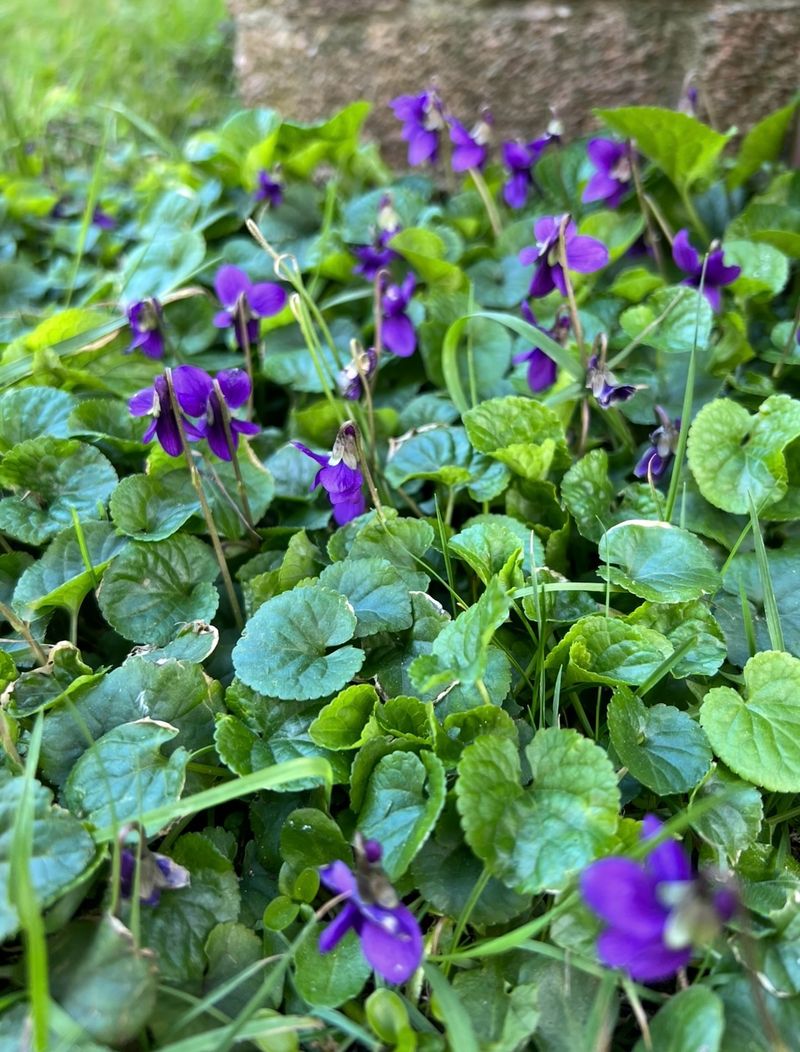
Wild violets have a certain charm that makes some homeowners hesitant to deal with them at all. Their heart-shaped leaves are deep green and glossy, and their small purple flowers add a soft pop of color to shaded lawn areas in spring.
But once wild violets get established in a North Carolina yard, they spread persistently and can be surprisingly difficult to manage.
These plants are most comfortable in shady, moist, or partially compacted areas where turf grass is not performing at full strength. They do not need poor soil to survive, but they do take advantage of conditions where grass is thin and competition is low.
North Carolina yards with mature shade trees, low spots that stay damp, or areas with clay-heavy soil that compacts easily are especially prone to wild violet pressure.
One of the most honest things wild violet tells you is that your grass variety may not be well matched to that particular spot. Turf grass needs a certain amount of sunlight and good drainage to stay dense enough to compete with spreading plants like wild violet.
If the shade is too deep for even shade-tolerant grasses, converting the area to a mulched bed or planting shade-loving ground covers may be a more realistic solution. Improving soil drainage and aerating compacted areas can also help turf recover in marginal spots.
A soil test from the North Carolina Department of Agriculture is a worthwhile step to rule out pH or nutrient issues contributing to thin turf in those shaded areas of your yard.
12. Bermuda Grass Invading Garden Beds
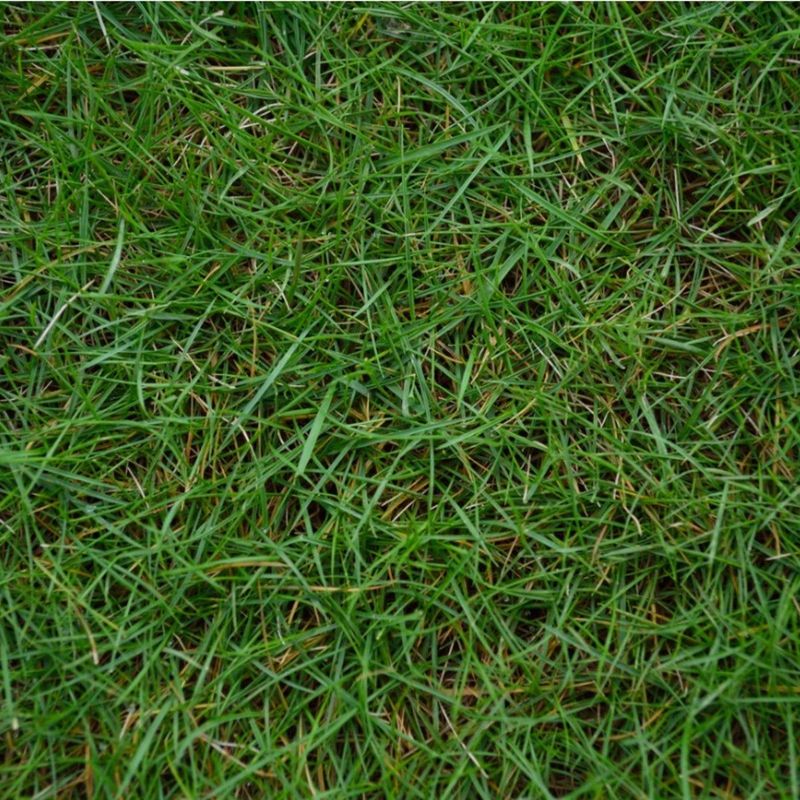
Bermuda grass is a tough, heat-loving turf grass that many North Carolina homeowners intentionally grow in their lawns. But when it starts creeping into garden beds, it shifts from a welcome ground cover to a persistent and frustrating invader.
Its ability to spread through both above-ground runners called stolons and underground stems called rhizomes makes it one of the most determined plants in any Southern yard.
When bermuda grass pushes aggressively into garden beds, it is often a sign that the surrounding soil conditions are warm, sunny, and somewhat dry, exactly the conditions bermuda thrives in.
Disturbed soil with loose surface layers gives its stolons and rhizomes easy pathways to travel.
In North Carolina, where summer heat and humidity create nearly perfect conditions for bermuda growth, garden beds that border bermuda lawns need consistent attention to stay clear.
Physical barriers like deep edging or root barrier materials can help slow bermuda’s spread into beds. Mulching garden areas thickly also makes it harder for surface runners to root and establish.
Removing bermuda by hand is possible but requires persistence, because any small piece of rhizome left in the soil can sprout a new plant.
Targeted herbicides labeled for grass control in garden beds offer another option, but they require careful application to avoid affecting nearby plants.
Bermuda grass in your beds is less about poor soil quality and more about matching your management strategy to a very vigorous plant that thrives in North Carolina’s warm climate.
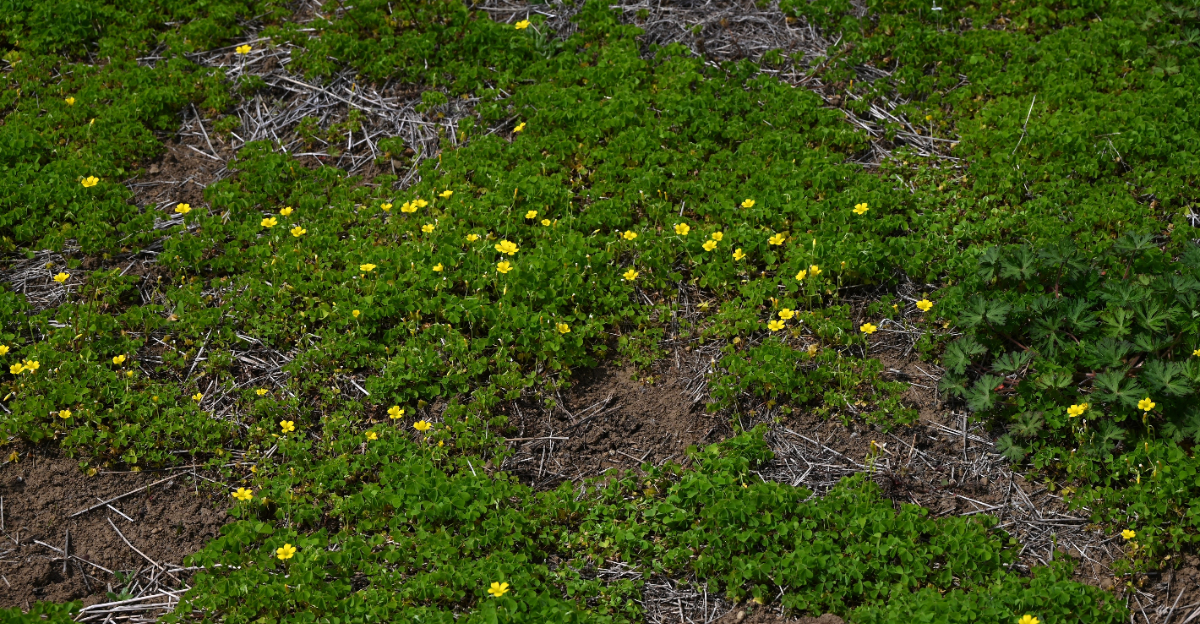
13. Yellow Woodsorrel
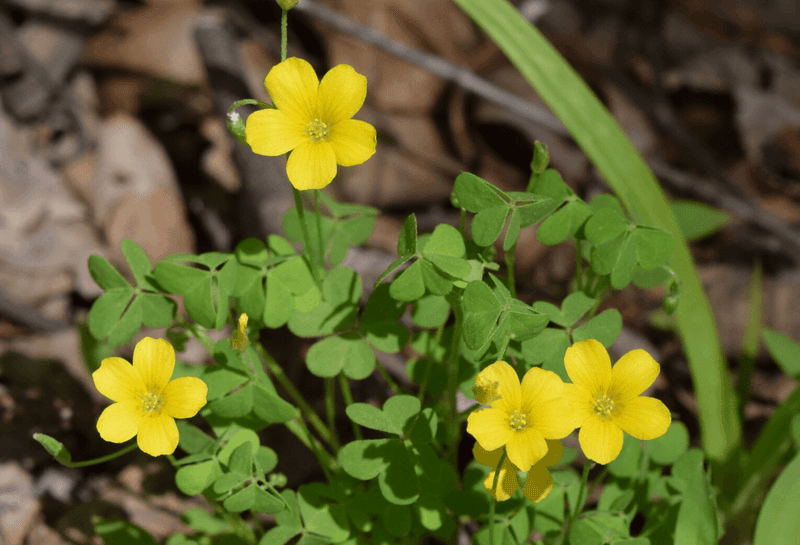
Yellow woodsorrel is easy to mistake for clover at first glance, with its cheerful three-part leaves that fold gently along the center vein. Look closer and you will notice the leaves are heart-shaped, and the small flowers are bright yellow rather than white.
It pops up in the most unexpected places, from the edges of container plants to the cracks between stepping stones to thin spots in garden beds across North Carolina.
This weed is not a precise indicator of a specific soil problem the way some other weeds are. What it does signal reliably is that the soil has been disturbed recently, that ground cover is thin or inconsistent, and that maintenance in that area has been light.
Woodsorrel is an opportunist. It moves into open spaces quickly and produces seed pods that shoot seeds several feet away when they ripen, which helps it spread faster than many gardeners expect.
Keeping mulch layers at a consistent depth of two to three inches in garden beds reduces the light and open soil surface that woodsorrel needs to get started.
In lawn areas, improving turf density through overseeding and consistent fertilization closes the gaps where it tends to appear.
Hand-pulling works reasonably well when plants are young, before the seed pods mature and launch their seeds into the surrounding soil.
Yellow woodsorrel is not a crisis for your North Carolina yard, but it is a gentle reminder that open, lightly managed ground is always going to attract something. Staying ahead of bare spots is the best prevention strategy.
14. Annual Bluegrass
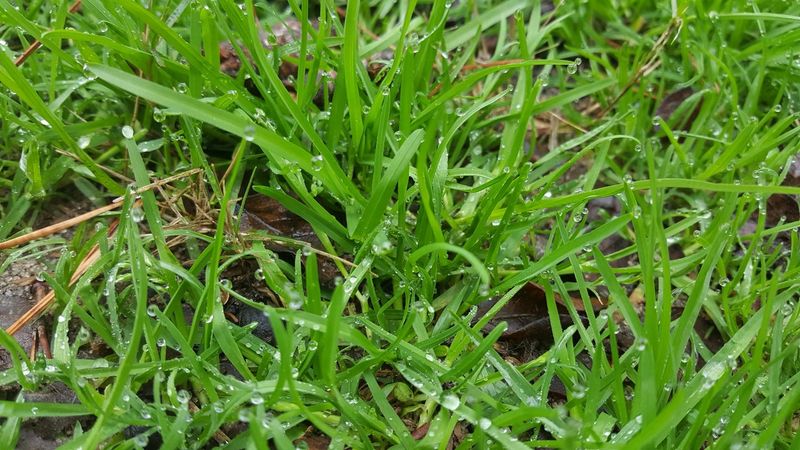
Annual bluegrass might look like just another grass in your lawn at first, but it stands out if you know what to watch for. Its light green color is noticeably paler than most warm-season turf grasses, and it produces small white seed heads even when mowed short.
In North Carolina, it tends to appear during the cooler months, often popping up in winter and early spring before fading as temperatures rise.
The conditions annual bluegrass prefers tell a useful story about your soil. It thrives in moist, slightly compacted, cool-season lawn areas where turf coverage is thin enough to let its seeds reach the soil surface and germinate.
Low spots where water collects, areas near irrigation heads, and shaded sections of the lawn that stay damp longer than surrounding areas are all common spots for annual bluegrass to establish.
It is a cool-season annual, so it completes its entire life cycle in a single season, but it produces enormous numbers of seeds before fading, which means it comes back reliably year after year.
Reducing excess moisture through better drainage and adjusting irrigation schedules can make your lawn less hospitable to annual bluegrass. Core aeration in the fall addresses compaction and improves the overall health of your turf.
Overseeding thin areas with a suitable North Carolina grass variety helps close the gaps where annual bluegrass gets its start each season. Pre-emergent herbicides applied in early fall before soil temperatures drop can also significantly reduce germination.
Annual bluegrass is manageable, but it does require consistent attention to the underlying soil and turf conditions driving its return.
15. Lespedeza
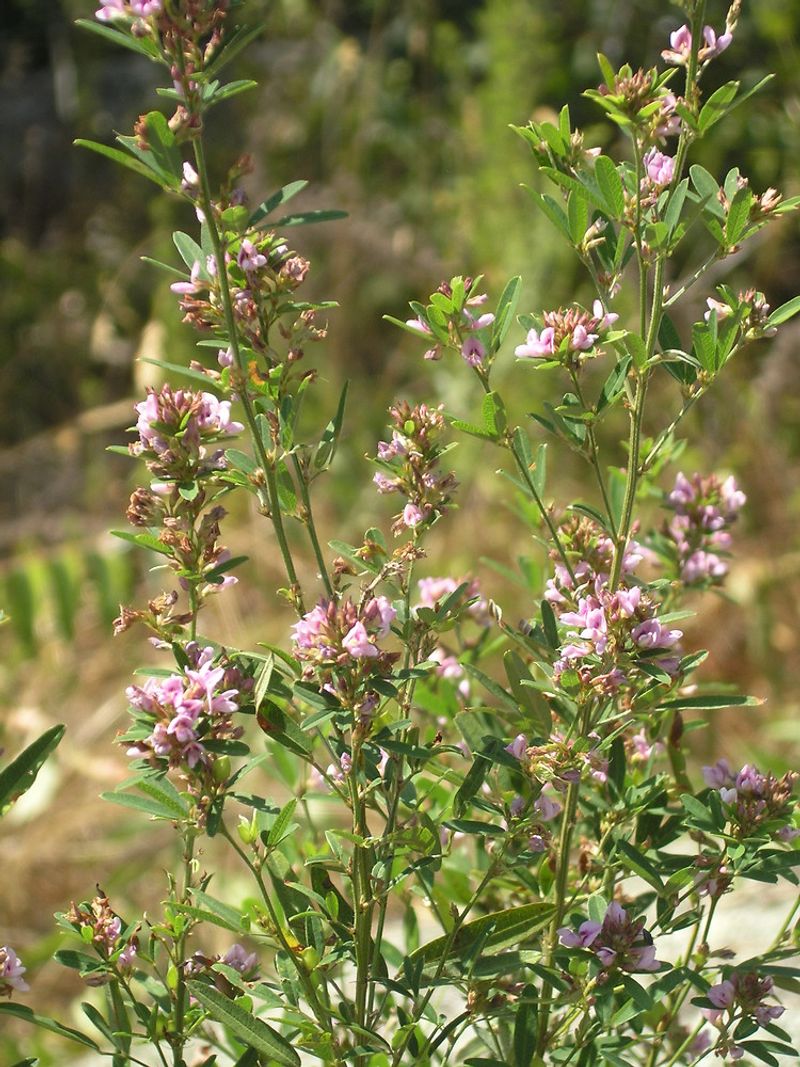
Lespedeza is a weed that earns a certain grudging respect from anyone who has tried to get rid of it.
It spreads flat across the ground, hugs the soil surface, and seems completely unbothered by summer heat, drought, and poor growing conditions that leave surrounding turf looking worn and thin.
In North Carolina, lespedeza is a common sight in lawns that have been pushed to their limits by a combination of heat, dry spells, and low soil fertility.
The conditions lespedeza thrives in are very specific. It performs best in dry, low-fertility, compacted lawns where warm-season turf grasses are struggling to maintain density.
Like white clover, lespedeza can fix atmospheric nitrogen through root-associated bacteria, which gives it a real advantage in soils where nitrogen levels are low.
That ability to generate its own nitrogen supply means it can survive and spread in conditions where fertilized turf would normally outcompete it easily.
Improving soil fertility through regular, properly timed fertilization is one of the most effective ways to reduce lespedeza pressure over time.
A soil test through the North Carolina Department of Agriculture will tell you exactly which nutrients are low and what amendments will make the biggest difference for your specific lawn.
Core aeration to address compaction, combined with overseeding in early fall, helps turf recover density before lespedeza gets another opportunity to spread. Post-emergent herbicides labeled for broadleaf weed control can also be effective.
Lespedeza is tough, but a well-nourished, healthy North Carolina lawn will always be its strongest competition.