What Those Old “Boots” On A Florida Palm Trunk Actually Are
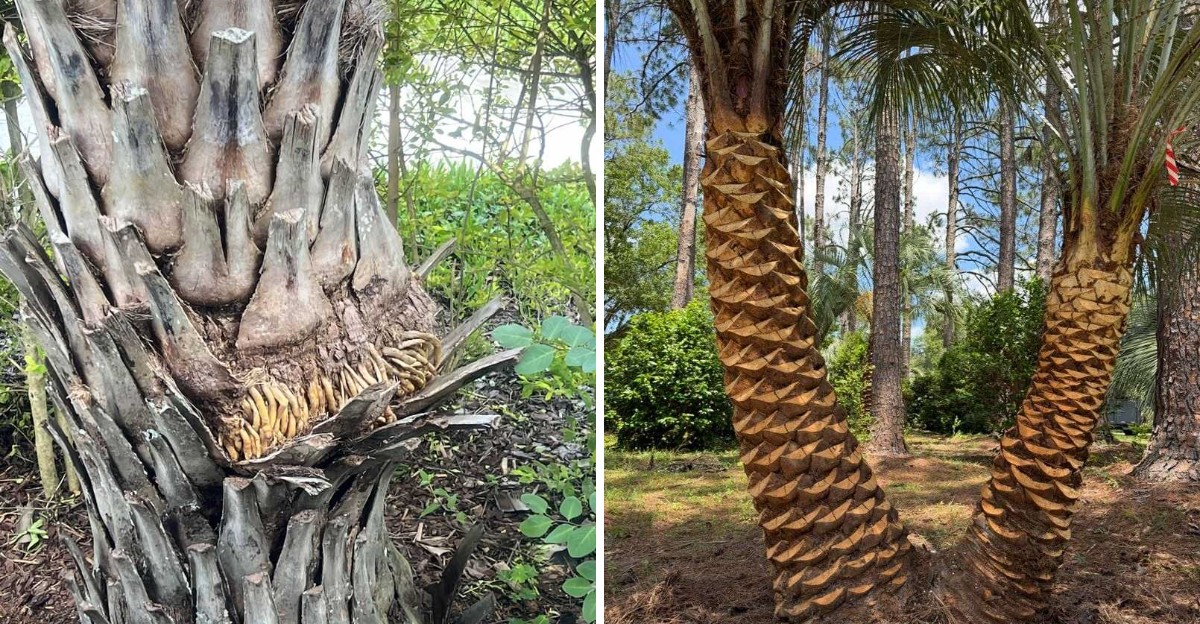
Your Florida palm is wearing a jacket it never asked for, layers of crusty brown triangles stacked up the trunk like scales on a pinecone.
Homeowners call them boots without ever asking what they actually are, and the answer surprises most people who’ve walked past the same tree for years without a second glance. Some palms shed them naturally over time.
Others hold on for years, building up a shaggy, textured trunk that looks nothing like the smooth columns you see in postcards.
Here’s the part most people get wrong: those boots aren’t just debris waiting to be cleaned up. What’s tucked inside them, and what happens if you rip them off too soon, might change how you look at your own trunk completely.
Look closer at that texture next time you walk past. What seems like a tree that needs tidying up might be doing exactly what nature intended.
1. Those “Boots” Are Leftover Palm Leaf Bases
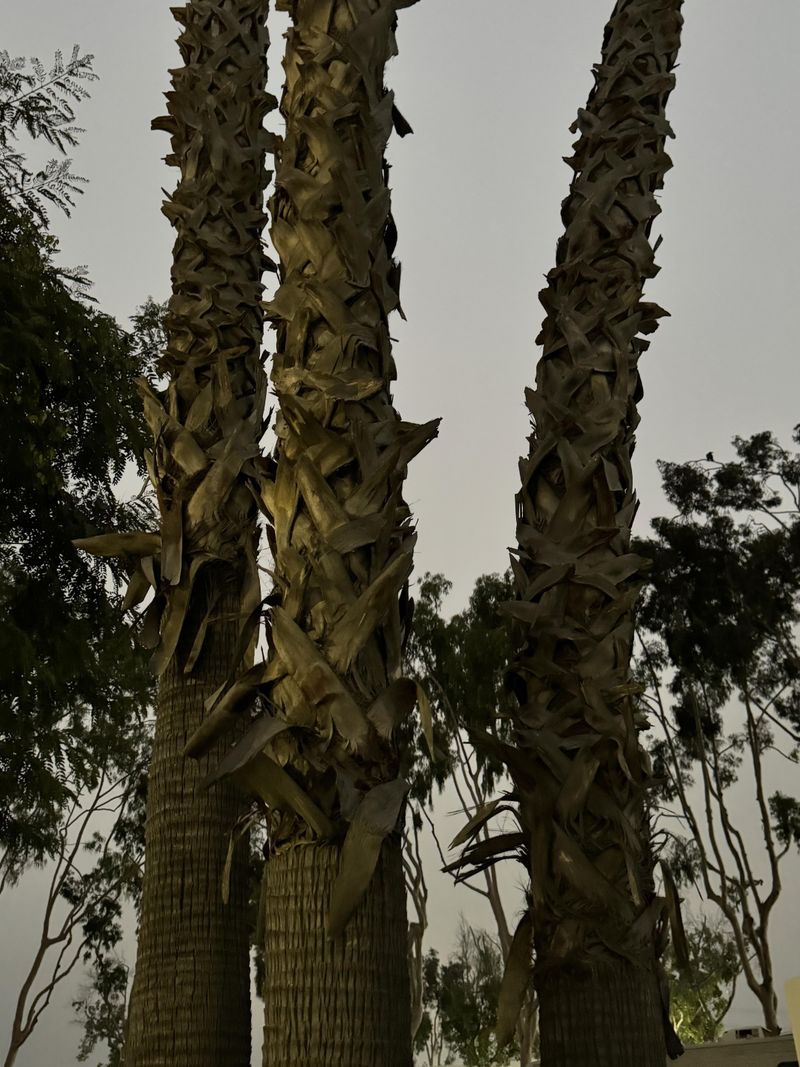
Run your hand along a rough palm trunk and you are touching leftovers rather than bark. Those wedge-shaped chunks stacked in a spiral have a nickname among tree folks: boots, sometimes called bootjacks.
The name traces back to old-fashioned Y-shaped tools people used to tug muddy footwear off their heels. Pull one of these leaf bases loose and the resemblance is honestly hard to miss.
Each piece is the bottom portion of a petiole, the sturdy stem that once held up a wide fan or feathery frond. Once the leafy blade finally drops away, the stubborn base stays clamped onto the trunk.
Year after year, layer piles onto layer, giving the trunk that woven, basket-like texture that homeowners either adore or want scrubbed off.
Getting this one fact straight changes how you treat your tree. Boots are not a fungus, not a disease, and not proof that somebody skipped a trimming appointment.
They are the tree’s own record, stacked neatly from the ground upward.
Walk past one tomorrow and try counting the rows. You are basically reading a calendar written in retired leaf stems, one frond at a time, and most of Florida drives right by it without a second glance.
2. Each Boot Shows Where An Old Frond Once Grew
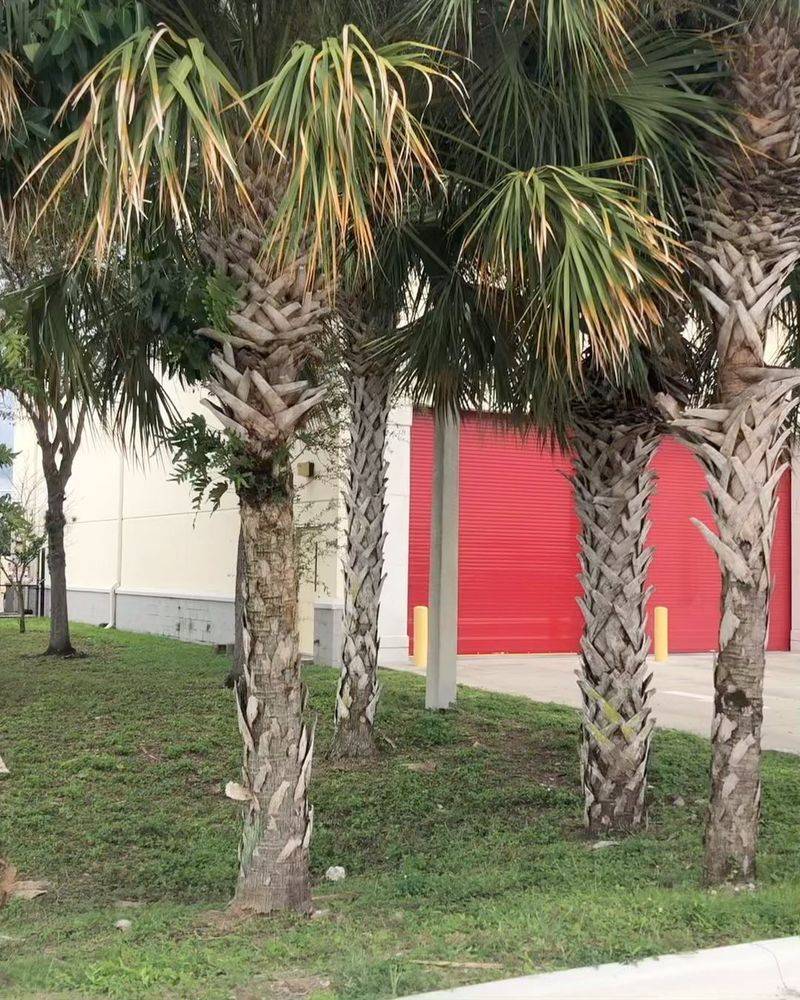
Picture the crown of a palm as a factory running a single production line. New fronds push out from one growing point at the very top, unfurl, stretch wide, then gradually age toward the bottom of the canopy.
When an older frond finishes its shift, the blade breaks free and the base it sprouted from stays put. That leftover chunk marks the exact address where the leaf once lived.
Look closely and you will see the boots wrap around the trunk in a spiral instead of tidy stacked rings. Palms make leaves in a rotating sequence, so the scars follow that same twist upward.
Gardeners can read the pattern like a rough diary. The pattern can reflect how the palm has produced leaves over time, but it is not a reliable record of rainfall or nutrition.
Your Florida Garden Changes Every Week. Your Plan Should Too.
Gardening in Florida changes quickly throughout the season. Every Friday you’ll receive a simple weekly plan showing exactly what to plant, prune, fertilize, harvest, and protect so you never miss the right timing.
Here is a fun wrinkle: palms do not add growth rings inside their trunks the way oaks and maples do. What you see on the outside is about as close to a growth record as they keep.
So when a neighbor calls those bumps damage, feel free to politely set the story straight. Each one is a receipt for a leaf that fed the tree through a season.
3. Some Florida Palms Naturally Shed Them Over Time
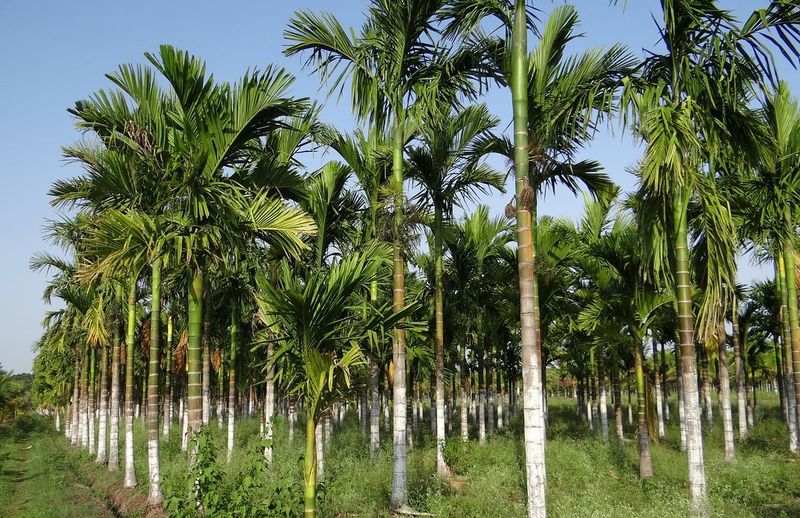
Ever notice how a royal palm along a Miami boulevard looks like it was polished by hand? Nobody climbed up there with sandpaper.
That species handles its own housekeeping.
Palms with this habit are described as self-cleaning. Older fronds loosen at the base, break free on their own schedule, and thump onto the ground, leaving a smooth column behind.
Royal palms and Christmas palms are the classic Florida examples. Both drop the whole leaf, base included, which is why their trunks stay sleek without a crew showing up every spring.
Mexican fan palms, known botanically as Washingtonia robusta, join the club a bit later. As Mexican fan palms mature, they may begin shedding older leaves and their bases, eventually developing a cleaner trunk.
Even the state tree gets in on it. Sabal palmetto can slowly shed its boots as the decades pass, though genetics decide how quickly that happens for any individual tree.
Practical takeaway for homeowners: if your palm is a self-cleaning type, plan for falling fronds rather than climbing crews. Keep cars, patio furniture, and pool floats out of the drop zone, because a shed royal palm frond can weigh as much as a bag of mulch.
4. Others Hold Their Boots Tightly Against The Trunk
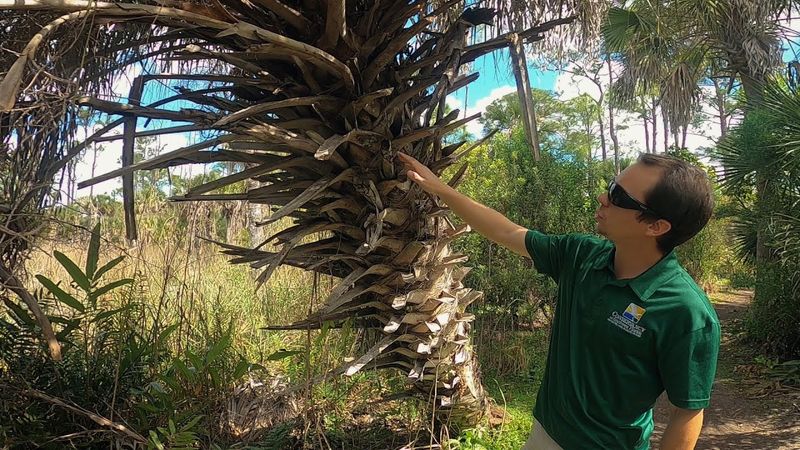
Fifty years. That is how long a sabal palmetto may cling to its old leaf bases before letting go, and some hold on even longer than that.
Genetics run the show here. Two sabal palms planted side by side on the same day can look wildly different at age thirty, one shaggy and armored, the other smooth as a fence post.
Sylvester palms are another species famous for keeping their bases. Landscapers often trim them into that diamond-cut pineapple pattern you see in fancy entryways, which only works because the boots stay attached.
Young Mexican fan palms belong in this group too. Before about age ten, they grip old leaves and bases firmly, building that thick, shaggy column before the shedding years arrive.
For a homeowner, retention is good news in some ways. Those tight layers create a naturally textured trunk with real character, plus handy footholds for climbing lizards.
What it also means is patience. Trying to speed up the process with a blade rarely improves the tree, and the layers usually loosen on their own timeline.
Curious how long yours will hold? Mark the lowest row with chalk and check back in a couple of years.
5. Never Assume Every Palm Should Have A Clean Trunk
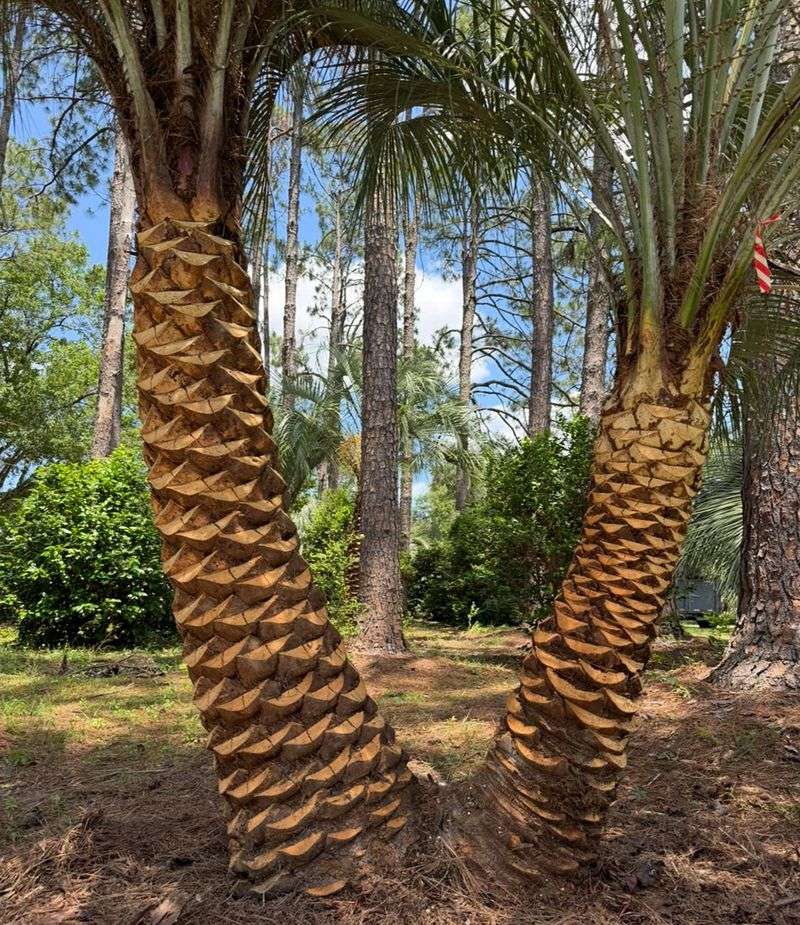
A tidy trunk is a style, not a health report. Plenty of folks assume a rough, bumpy palm has been ignored, when the tree is simply doing what its species has done for thousands of years.
Whether boots stay or go depends mostly on which palm you planted. Expecting a sabal to look like a royal palm is a bit like expecting a golden retriever to shed less than a poodle.
Most of the scraping that happens in Florida yards is driven by appearance, not by anything the tree requested. There is nothing wrong with liking a smooth look, as long as you know the trade-off.
Here is the catch. Peeling healthy leaf bases off a trunk by force can leave marks that stay for the life of the tree, because palms handle injuries very differently than hardwoods.
Before hiring anyone with a saw, identify your species first. A quick photo sent to your county extension office usually gets you a confident answer within a day or two.
Once you know the name, you know the expectations. Some trunks are meant to look sculpted and bare, others are meant to look rugged, and both versions are perfectly normal.
6. Check The Boots Before Blaming Them For Trunk Problems
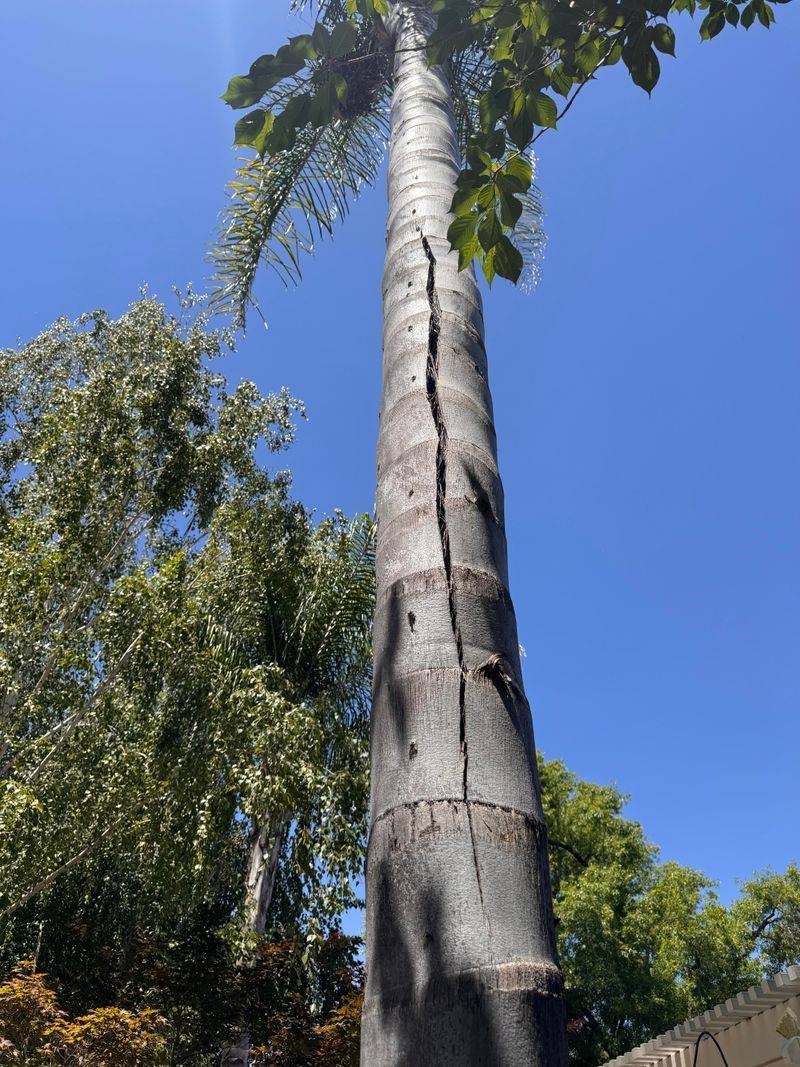
Something looks off with the palm, and the boots are the obvious suspect. Nine times out of ten, they are the wrong one.
Left alone, those old leaf bases cause very little trouble. They help hold moisture near the trunk and add a layer of insulation, which the tree can use during rough weather swings.
Real trouble usually comes from two places: sloppy removal work, or a health issue happening somewhere else in the tree. The boots just happen to be the part you notice first.
Run through a quick checklist instead of guessing. Look for a new lean in the trunk, splits or cracks in the wood, soft spots, shelf fungus pushing out near the base, or fronds that yellow and droop and stay that way.
Also glance at the crown. Palms grow from a single bud up top, so problems appearing in the newest spear leaf deserve fast attention from a certified arborist.
Snap a few photos every few months from the same spot in your yard. Comparing images makes slow changes much easier to spot than memory ever will.
Once you rule out the real warning signs, the rough trunk usually turns out to be just texture.
7. Avoid Hacking Away Healthy Leaf Bases
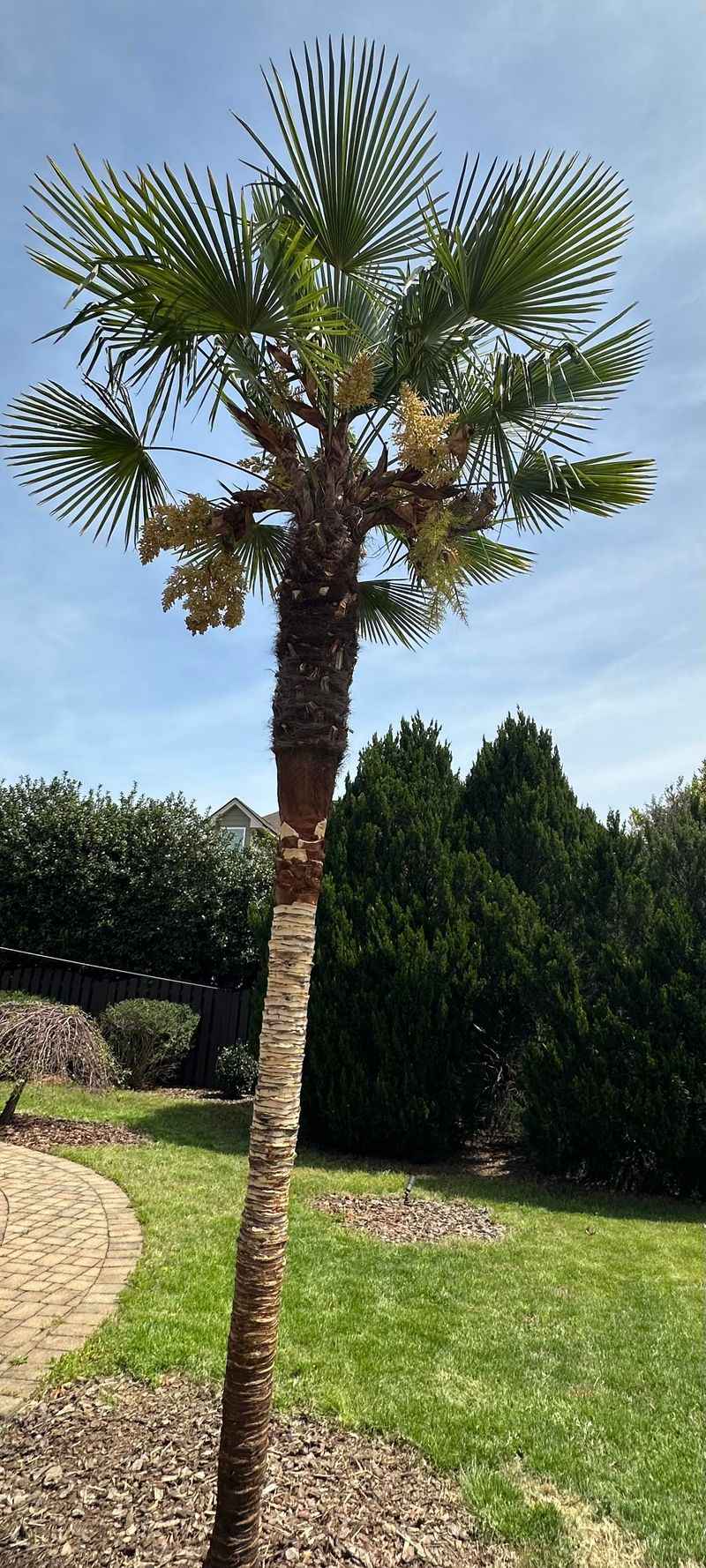
Chainsaws and palm trunks make a terrible couple. One pass that bites too deep leaves a gouge, and that gouge stays exactly where it is for the rest of the tree’s life.
Oaks and pines can grow fresh wood over an injury. Palms cannot.
Palms respond to trunk injuries differently from hardwood trees, and significant damage can remain visible for a long time.
Stripping boots aggressively also exposes soft inner tissue that the palm has no way to rebuild. That opening becomes an easy doorway for insects and rot organisms looking for a soft landing.
There is a seasonal angle as well. Many Florida growers suggest leaving old bases alone heading into winter, since that layer offers a bit of protection when a cold front sweeps down the peninsula.
During long dry spells, the same layer helps shade the trunk and slow moisture loss. Free insulation is hard to argue with.
If the look truly bothers you, hand the job to a certified arborist who removes only bases that are already loose. A gentle tug test tells the whole story: if it resists, leave it.
Patience costs nothing here, while a careless afternoon with power tools can mark a beautiful tree for decades.
8. Boots Buffer Heat, Cold, And Moisture Loss
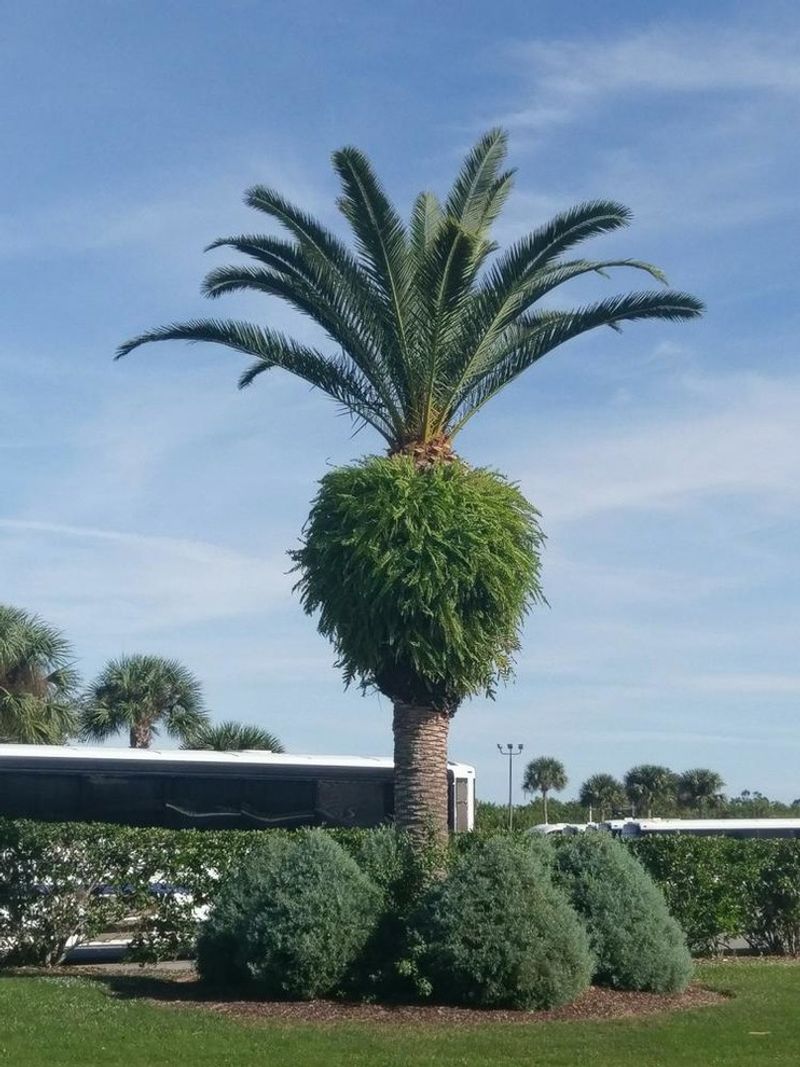
Think of the layered leaf bases as a jacket the palm made for itself. Rough on the outside, surprisingly useful underneath.
Those overlapping wedges trap a thin cushion of air against the trunk. That pocket slows temperature swings, which matters when a January cold snap rolls through central Florida after a week of eighty-degree afternoons.
Heat works the same way in reverse. Summer sun beating on exposed trunk tissue can stress a palm, while a boot-covered trunk stays shaded and noticeably cooler to the touch.
Moisture gets a boost too. Rain and dew linger in the crevices instead of evaporating right away, giving the outer trunk a little humidity buffer during dry season.
Wildlife appreciates the setup as well. Resurrection ferns unfurl in the seams after a storm, and small tree frogs tuck in when the air turns dry.
For homeowners, this means the shaggy look is doing quiet work. Leaving boots in place through winter costs nothing and gives the tree one more layer of protection during unpredictable weather.
If you want a compromise, tidy the lowest section of trunk near walkways and leave the upper layers untouched. The tree keeps its insulation, and your yard still looks intentional.
9. Know When Old Boots Become A Maintenance Problem
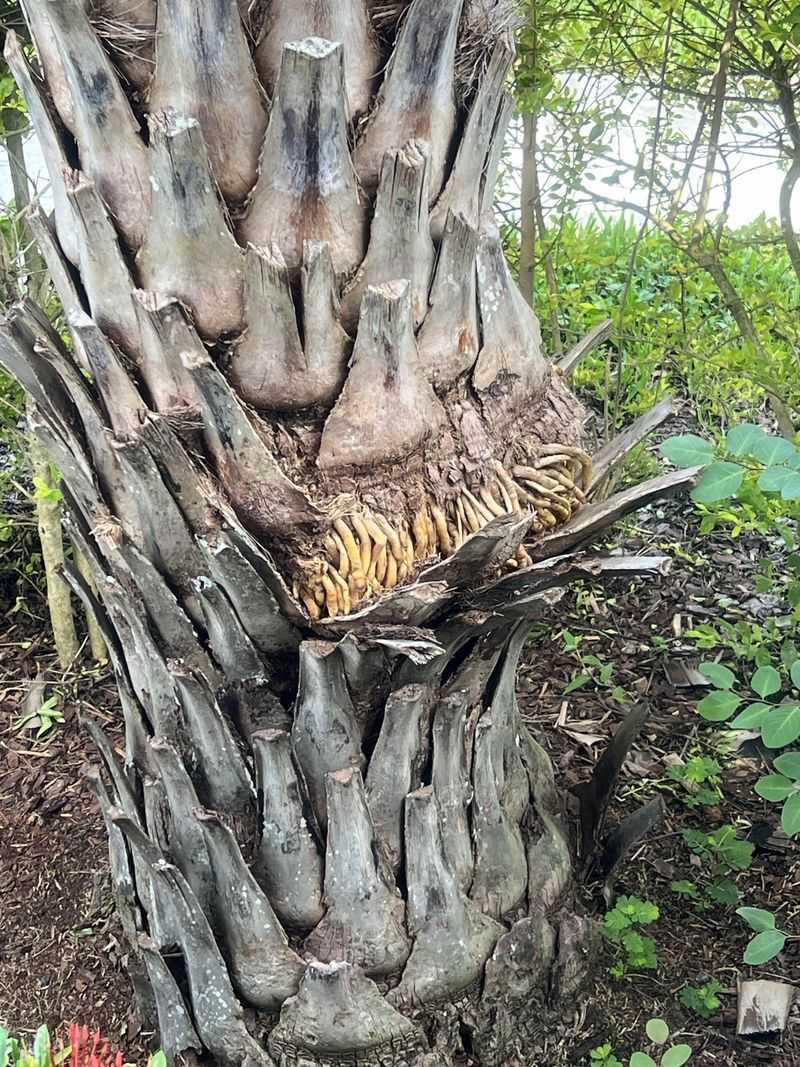
Most of the time, boots mind their own business. Occasionally they invite guests you did not plan for.
Rats, roaches, and wasps sometimes find the gaps convenient, especially on trunks close to rooflines or trash areas. A palm leaning against a house can turn those crevices into a ladder.
Loose bases are worth watching too. A loose or deteriorating base can eventually drop, which matters if the tree stands over a driveway, walkway, or other high-traffic area.
Plants move in as well. Ferns, air plants, and the occasional strangler fig seedling sprout in the pockets, and opinions split hard on whether that counts as charm or clutter.
Small critters like snails, anoles, and tree frogs treat the trunk as prime real estate. Some homeowners love that.
Others would rather not share the porch.
Here is the honest part: genuine maintenance headaches usually trace back to the palm’s overall condition rather than the boots. Steady yellowing, sagging fronds, or an insect infestation deserves attention long before a cosmetic cleanup does.
Do a slow walk around your trees each season. Tug lightly on low bases, peek for nests, and handle problems while they are still small.
10. Let The Palm Species Decide How Clean The Trunk Looks
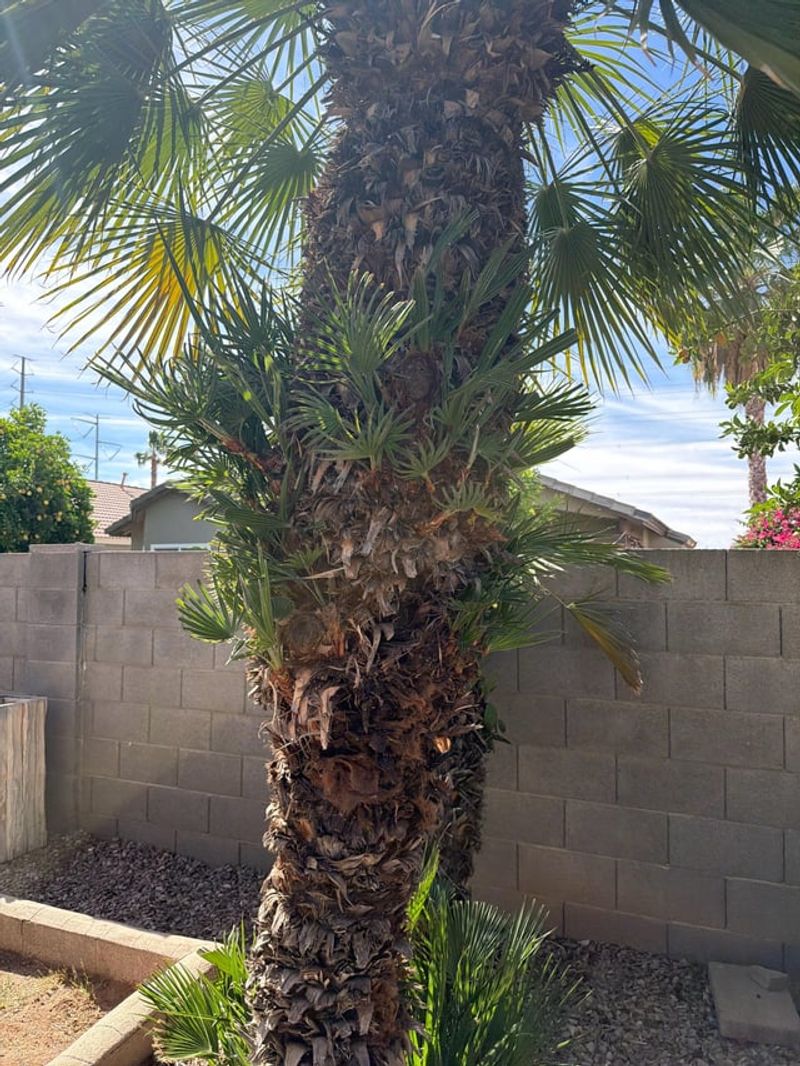
Best landscaping advice anyone ever gave me about palms: work with the tree you planted, not the tree in the magazine photo.
Species sets the standard. Royal palms and Christmas palms handle their own cleanup and reward you with those smooth, column-like trunks people photograph constantly.
Sabal palmettos and Sylvester palms take the opposite approach, holding their leaf bases as part of their natural build. Fighting that habit with tools usually ends with a scarred trunk and a disappointed homeowner.
Washingtonia palms sit somewhere in the middle. They keep their bases through the early years, then shift toward self-cleaning as they mature, so today’s shaggy teenager becomes tomorrow’s tidy adult.
Design around those tendencies instead of against them. Place smooth-trunk species where you want a formal, architectural feel, and let booted palms anchor the wilder, more naturalistic corners of a property.
Your wallet notices the difference too. Skipping unnecessary trunk work saves money each year and spares the tree from injuries it cannot repair.
Next time you stroll a Florida street, look up and take inventory. Once you can tell a self-cleaning palm from a boot-keeper, the whole neighborhood starts reading like a field guide you never knew you had.