What to Do With Your Mums After They Finish Blooming in Arizona
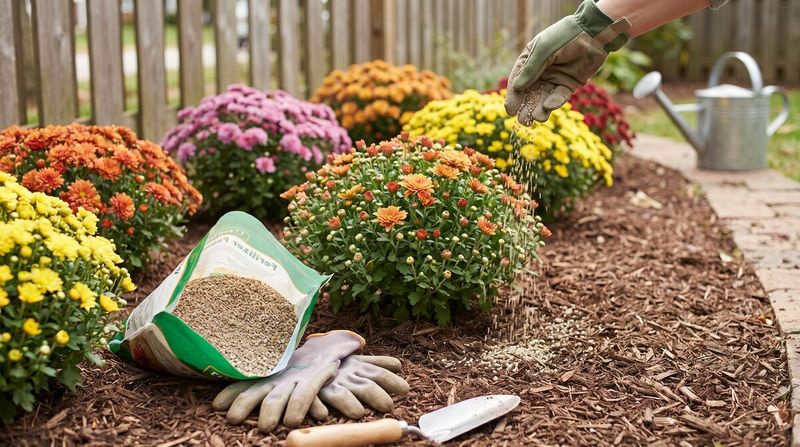
A pot of mums can look tired in just a few weeks, and that leaves many of us staring at brown petals. Before you toss it out, you have a real choice to make.
You can enjoy it as a seasonal display or try growing it on. Arizona has hot deserts and chilly mountain towns, so the best next step depends on your plant and your yard.
Remove Faded Flowers While the Display Continues
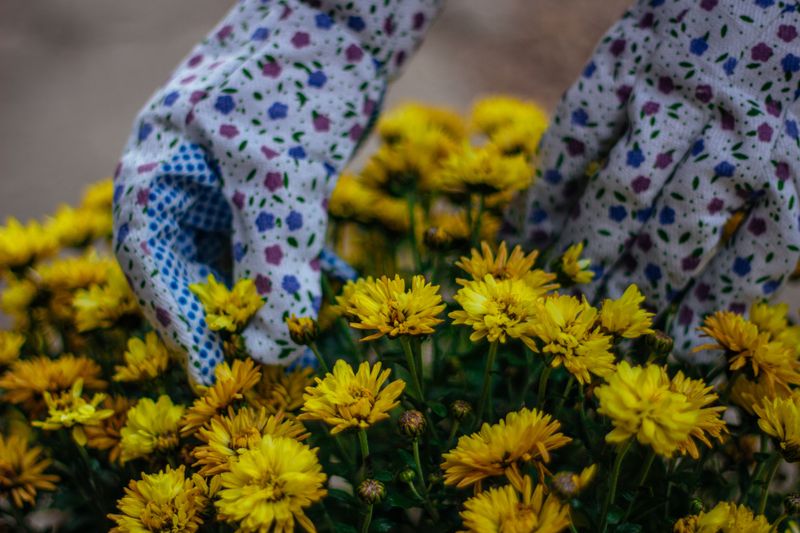
If your mum still has plump, unopened buds, a little tidying can make the whole pot look fresh again. Pinch or snip off the faded blooms and leave the buds to open.
It takes a couple of minutes and keeps the color front and center.
Penn State Extension describes removing spent flowers during the bloom period as a way to keep a plant looking good while flowering continues. That is the key detail.
The trick works while the display is still going.
When your blooms fade and no buds remain, the situation changes. Snipping off the old flowers at that point is simply housekeeping, and it will not reliably bring on another round of flowers.
Think of it as a neat cleanup, then move on to the label check and the care steps in the sections ahead.
A good habit is to look closely at the plant before you cut. Tight green buds mean the show is not over.
Papery brown heads with no buds left mean you are in the next stage.
Check the Label to Identify Your Mum
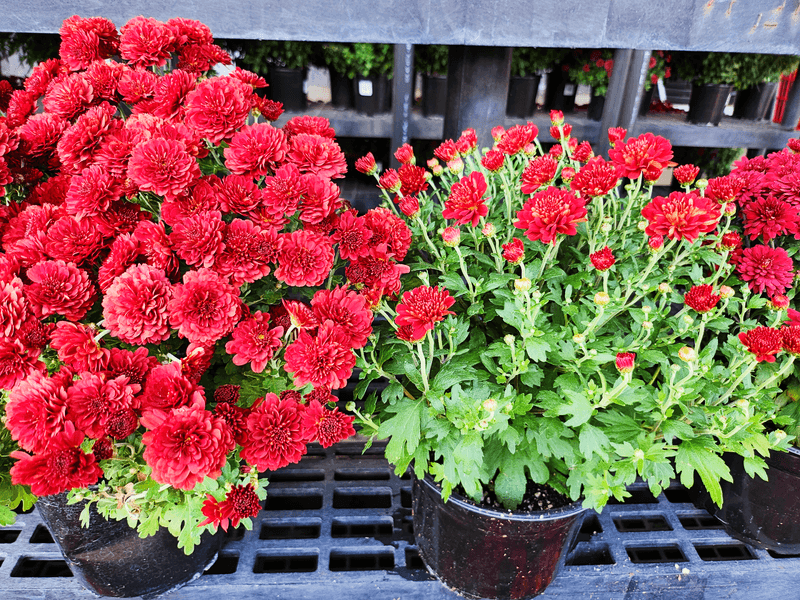
That little plastic tag stuck in the soil is your best clue. The word mum on its own does not tell you much, because garden mums and florist mums are different kinds of plants.
Look for wording that names the type or cultivar before you decide what to do next.
According to Virginia Cooperative Extension, garden mums are perennials, but cultivars vary in how hardy they are and how well they survive. Florist mums are not bred for freezing conditions.
So a label that says garden mum gives you a fair reason to try growing it on, with no promises attached.
UC IPM also notes that chrysanthemums come in many forms and bloom across late summer and fall. That is one more reason not to guess from flower shape or color.
If the tag is missing, do not try to work out the type by looking at the plant. Treat any further care as an experiment, and treat survival as uncertain.
A lost label is not a reason to give up, just a reason to keep expectations modest.
Arizona’s Microclimates Change the Overwintering Odds
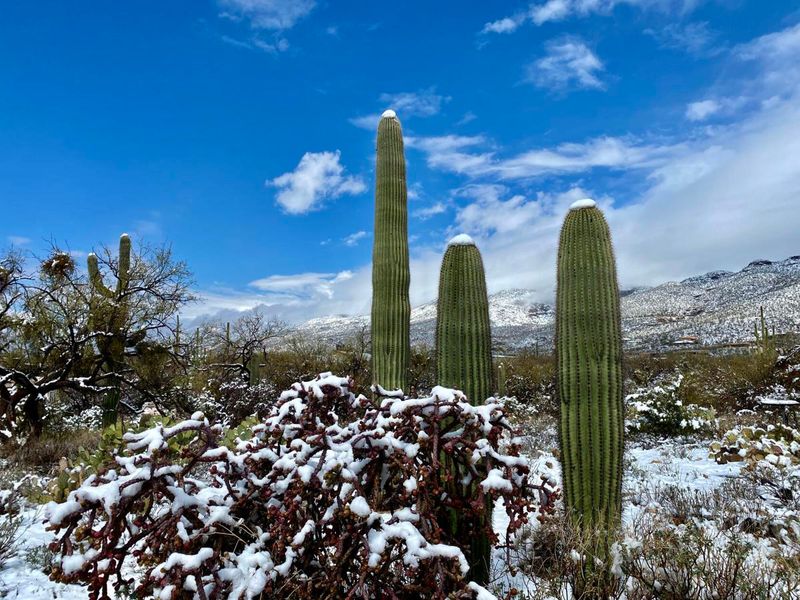
Ask five Arizona gardeners whether their mums came back and you may hear five different answers. That is not surprising.
The state covers low desert, high desert, and cool mountain country, and winter looks very different in each.
The University of Arizona Extension describes large differences in elevation and temperature across the state, along with local microclimates. Heat, water, soil, and light all shape how a plant performs.
So a tip that works in one town may not fit a yard a few hours away.
Your own site matters even more than your zip code. A pot against a warm south wall faces different nights than one in an open yard or at the bottom of a slope.
Cold air tends to settle in low spots, so frost risk can change from corner to corner.
University of Arizona guidance on frost protection says frost risk varies by location and microclimate, and it suggests monitoring local conditions. Watch your own yard on cold nights.
No single statewide answer can predict what your mum will do.
Keep a Container Mum Moist and Well Drained
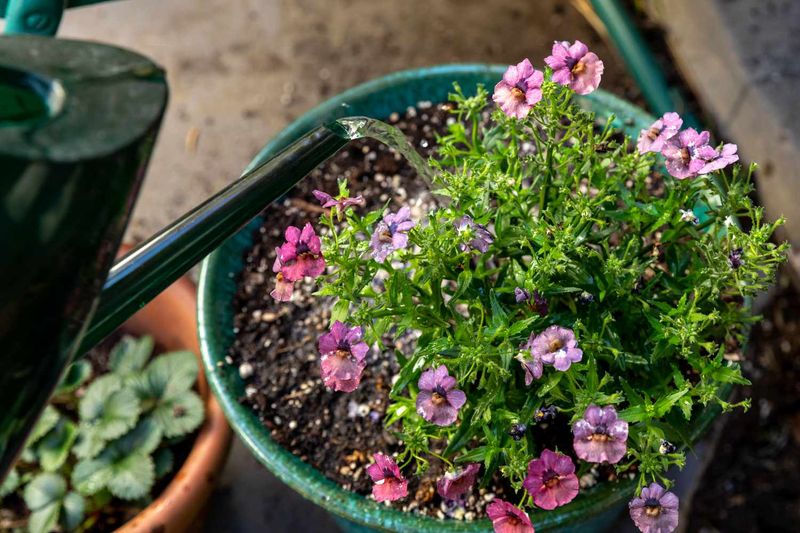
Whether you plan a seasonal display or just want to see how your mum fares, the pot comes first. Make sure it has drainage holes so extra water can escape.
Soggy roots are a common reason container plants struggle.
General guidance from UC IPM says chrysanthemums need regular water while growing and prefer well-drained soil. Aim for soil that stays evenly moist, not dry and cracked and not waterlogged.
Push a finger into the soil to check before you add more.
There is no one watering schedule that fits every Arizona porch. Pot size, sun, wind, and temperature all change how fast soil dries out, so let the soil guide you.
The same source notes that in hot climates, chrysanthemums can benefit from protection from afternoon sun. If your patio bakes in the afternoon, a spot with morning light and later shade may help.
Treat that as general advice, not a guarantee that the plant will survive.
Spring Gives Garden Mums More Time to Establish
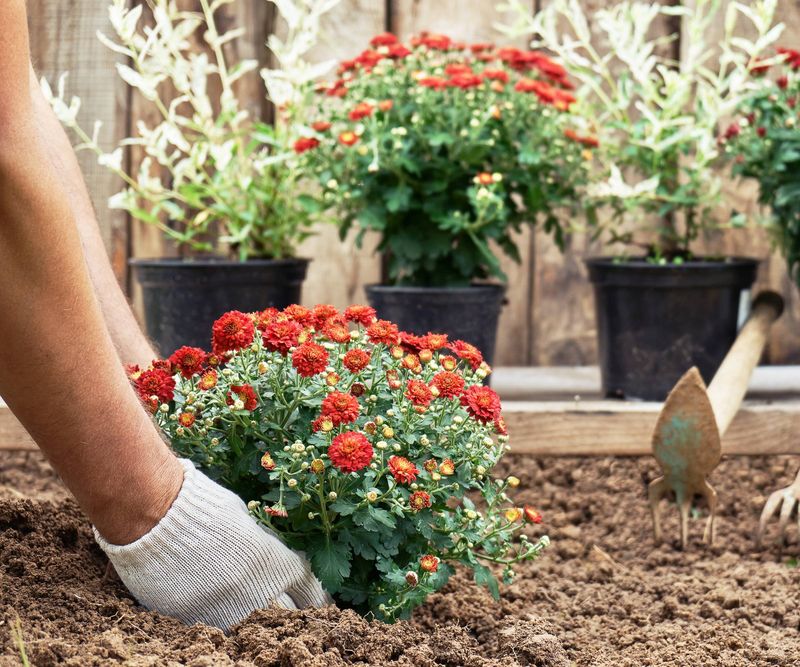
If you have a labeled garden mum and want to plant it out, timing matters. Extension guidance from Illinois Extension explains that fall mums often struggle when planted late.
They have little time to build roots before winter arrives.
Wisconsin Extension offers a similar message. Fall-purchased plants already in flower can be hard to establish before cold weather.
Spring planting gives a garden mum a longer runway.
Those are general recommendations, so adapt them to your yard. In Arizona, the time left for roots to settle and the chance of a freeze depend on elevation and site.
Some gardeners have more mild weeks than others, and some face cold nights early.
In the meantime, a pot can hold your mum until you decide. Keep it watered, watch the weather, and plant in spring if you choose to try.
A spring planting gives it a better chance, but it does not promise survival.
Wait for Frost Clues Before Major Pruning
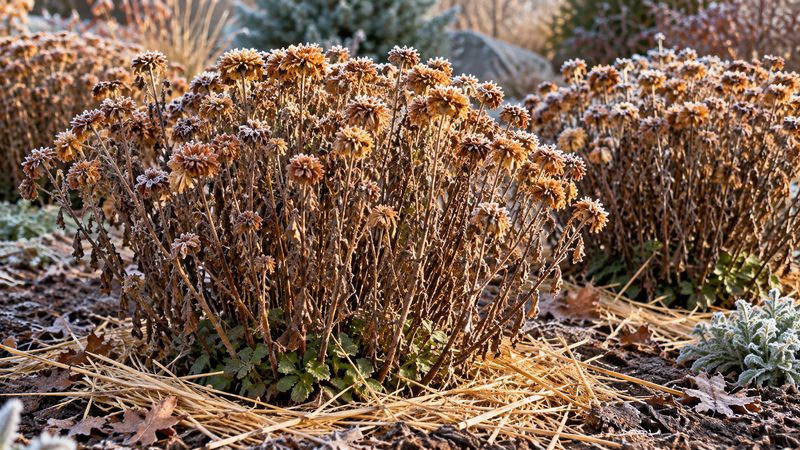
Extension advice on cutting back mums is not unanimous. Some northern guidance suggests leaving stems and foliage in place through winter for protection.
Other advice, like that from Virginia Cooperative Extension, describes cutting plants back after frost affects the foliage.
Illinois Extension also discusses cutback timing for mums. Those directions come from colder climates, so they do not map neatly onto Arizona.
No single date or height will suit every mum here.
A cautious approach is simple. Remove spent blooms, keep healthy green foliage while the plant is still active, and wait to see what frost does before any big cut.
Frost-damaged growth is your cue to prune.
Cover only if frost is a real concern where you live. University of Arizona frost protection guidance favors cloth or paper over plastic and advises removing covers as temperatures rise.
It also cautions against leaving sheets or blankets on plants all winter in southern Arizona.
Keep Chrysanthemums Away from Curious Pets
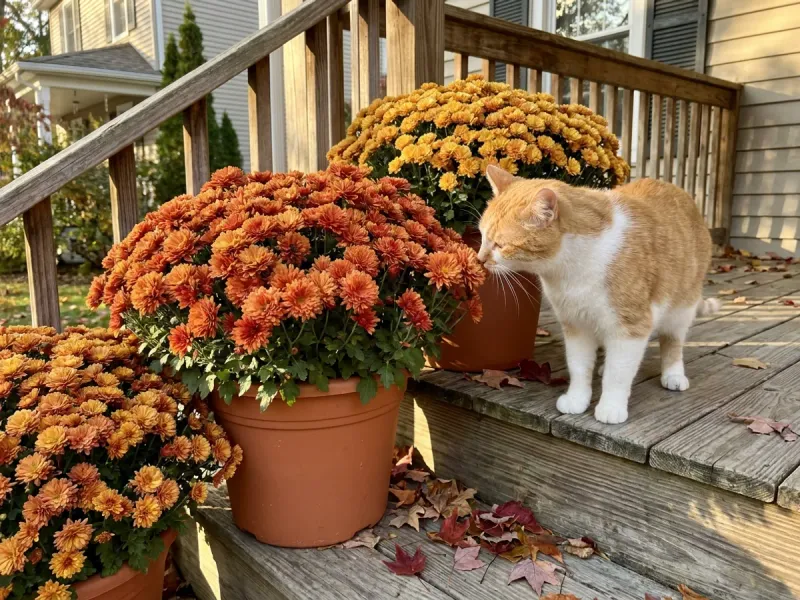
Pretty plants can still cause trouble for four-legged family members. The ASPCA lists chrysanthemums as toxic to dogs, cats, and horses.
Reported signs can include vomiting, diarrhea, excess salivation, incoordination, or skin irritation.
Keep your mum where pets cannot nibble or knock it over. A high shelf or a closed-off patio area works well.
Remember that fallen petals and leaves can also tempt a curious pet.
If you suspect your pet has eaten any part of the plant, contact a veterinarian promptly. Do not try to guess what is wrong on your own.
Your vet can tell you the safest next step.
Treat a Return as a Bonus, Not a Promise
Start with the tag. A labeled garden mum is a reasonable candidate for a low-expectation trial, and Virginia Cooperative Extension notes that cultivars differ in hardiness.
A florist mum or an unlabeled pot is better enjoyed as a seasonal display.
Then look at your yard. As the University of Arizona Extension explains, elevation and microclimate vary widely across the state.
Your frost exposure, not a statewide rule, shapes the odds.
Keep the pot drained and evenly moist, watch the weather, and decide about spring planting later. If the plant comes back, enjoy it.
If not, you still had weeks of cheerful color.
A mum that returns is a gift, and one that does not was still a good run.