What White Mushrooms Along Your Virginia Foundation Are Really Telling You
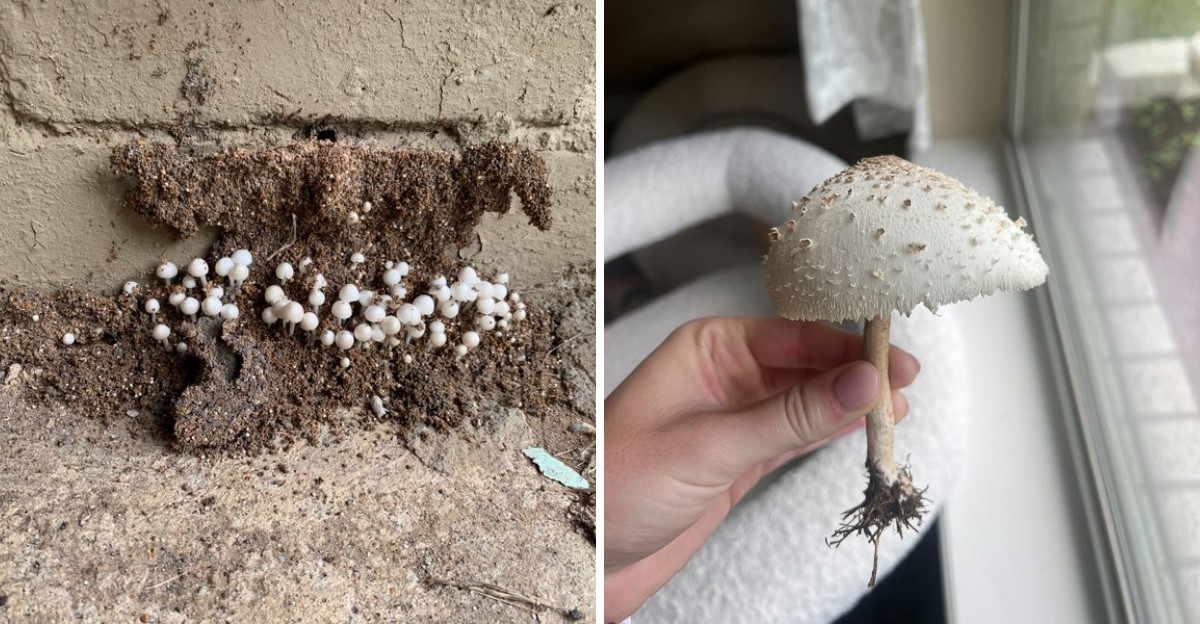
One damp morning, you step outside and spot a tiny crowd of pale caps huddled against your house. They look harmless, almost cute, like little umbrellas left behind after a party.
Yet those white mushrooms popping up along your foundation are sending a message. Fungi don’t show up at random, appearing only where water, food, and warmth come together.
Virginia gives them plenty of help, with sticky summers, soaking storms, and clay soil that holds moisture like a sponge. That combination turns many foundation beds into perfect mushroom nurseries.
Some of what they reveal is a healthy sign for your yard. Other clues point toward drainage trouble, hidden decay, or safety concerns for curious kids and pets.
The clues below explain what each sighting really means. Those little caps might even save you from a big repair bill later.
Moisture Is Collecting Near Your Foundation
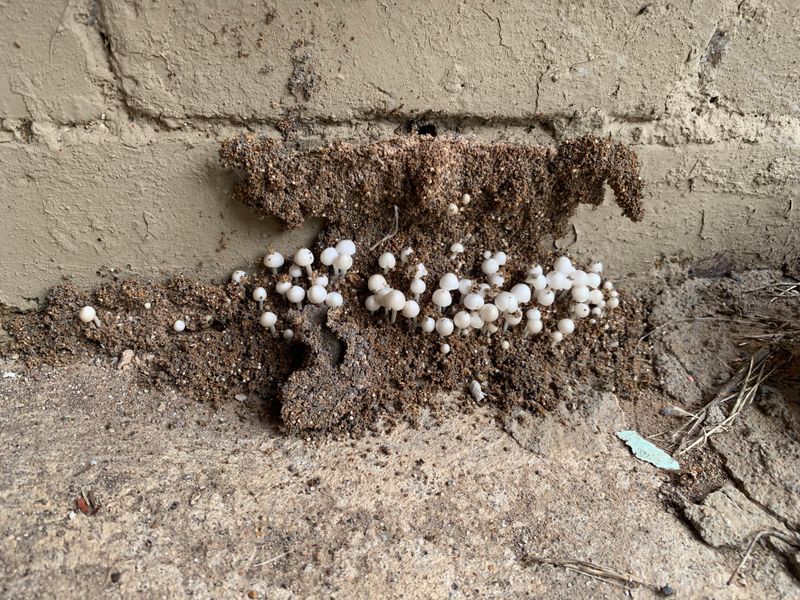
Picture a sponge left on the counter overnight. Soil near your walls can act the same way, staying soggy long after a storm passes.
Mushrooms love that kind of steady dampness. Their presence often points to hidden moisture, standing water, or high humidity close to the house.
Virginia makes the problem worse in a few sneaky ways. Humid summers, heavy seasonal rain, and clay-rich soil all keep water hanging around.
Clay soil holds water tightly and swells when wet. When it dries, it shrinks and pulls away, creating a stressful cycle for foundation walls.
Over time, that swelling and shrinking can lead to small cracks. Water then finds those openings and slips toward your basement or crawl space.
Concrete itself can soak up groundwater too. Add poor airflow along a shady wall, and humidity lingers like an unwanted houseguest.
Start with a simple detective walk after the next big rain. Look for puddles, dark wet patches, or soil that stays muddy for days.
Press your finger into the dirt near the wall. If it feels wet an inch down while the lawn feels drier, water is gathering there.
Snap a few photos over several days to track the pattern. Seeing where water sits helps you or a contractor find the real source faster.
Catching moisture early is much cheaper than repairing cracks later. Those white caps are basically a free early warning system, so take the hint seriously.
Gutters And Downspouts May Be Dumping Water There
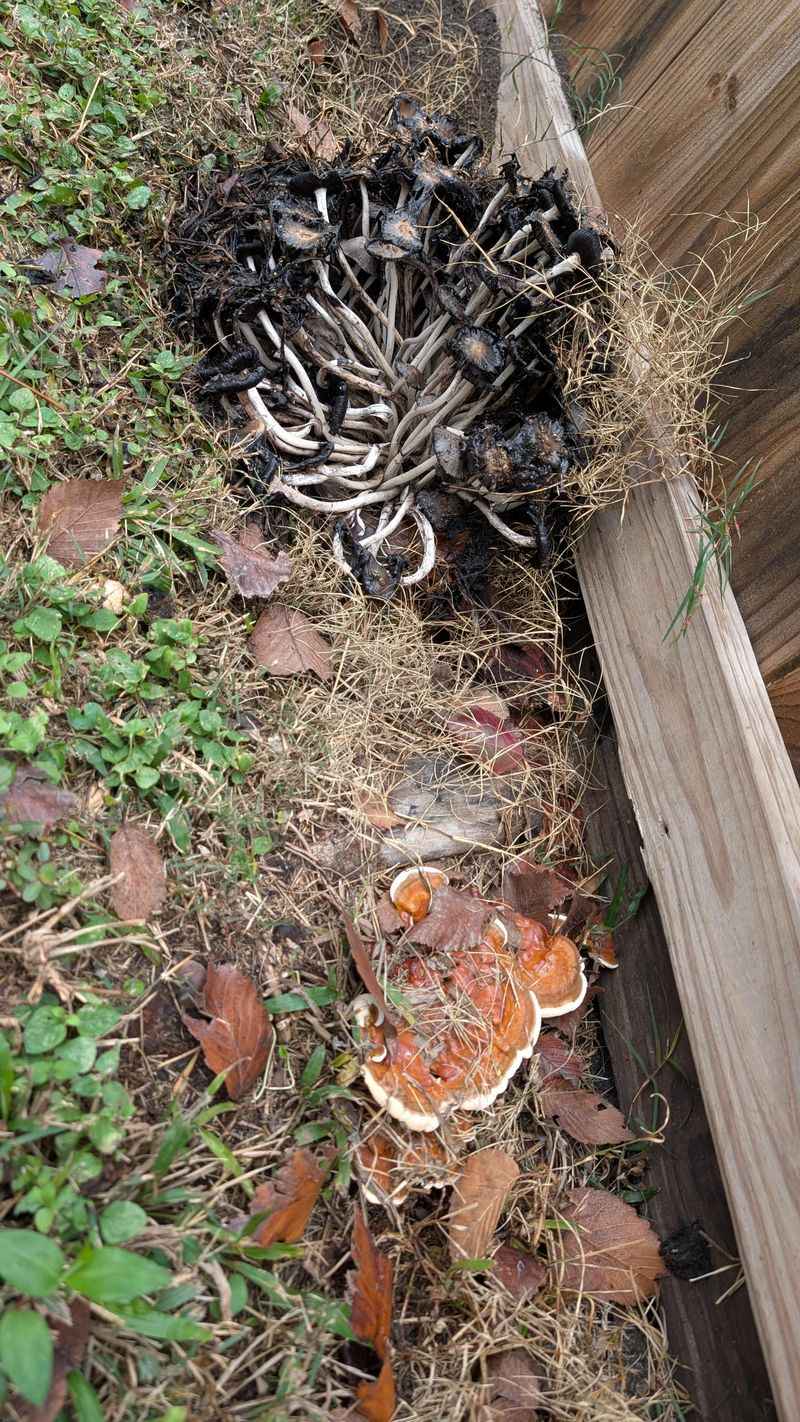
A single inch of rain on an average roof can send hundreds of gallons into your gutters. Where all that water lands matters more than most folks realize.
Clogged gutters overflow right along the edge of the house. Short downspouts do something similar, emptying a steady stream at the base of your walls.
Soil there becomes soaked, and mushrooms happily move in. Meanwhile, the extra water builds pressure against the foundation and washes away supporting soil.
Here in Virginia, clay soil turns that runoff into a bigger headache. It swells with water, then shrinks during dry spells, stressing concrete over and over.
Luckily, the fix is often cheap and simple. Most experts suggest downspouts carry water at least 5 to 10 feet away from the house.
Your Virginia Garden Changes Every Week. Your Plan Should Too.
Gardening in Virginia changes quickly throughout the season. Every Friday you’ll receive a simple weekly plan showing exactly what to plant, prune, fertilize, harvest, and protect so you never miss the right timing.
Plastic extensions from the hardware store cost only a few dollars each. Splash blocks help too, spreading water out instead of letting it dig holes.
Clean your gutters in late fall after the leaves drop. Check again in spring, since seeds, twigs, and pollen can create surprising clogs.
Stand outside during a heavy rain with an umbrella for a quick test. Watch where water spills, drips, or pools, and note any overflowing corners.
If mushrooms cluster right below a downspout, you have likely found your culprit. Redirect the water, and the fungi often fade within a season or two.
Your Yard May Slope Toward The House
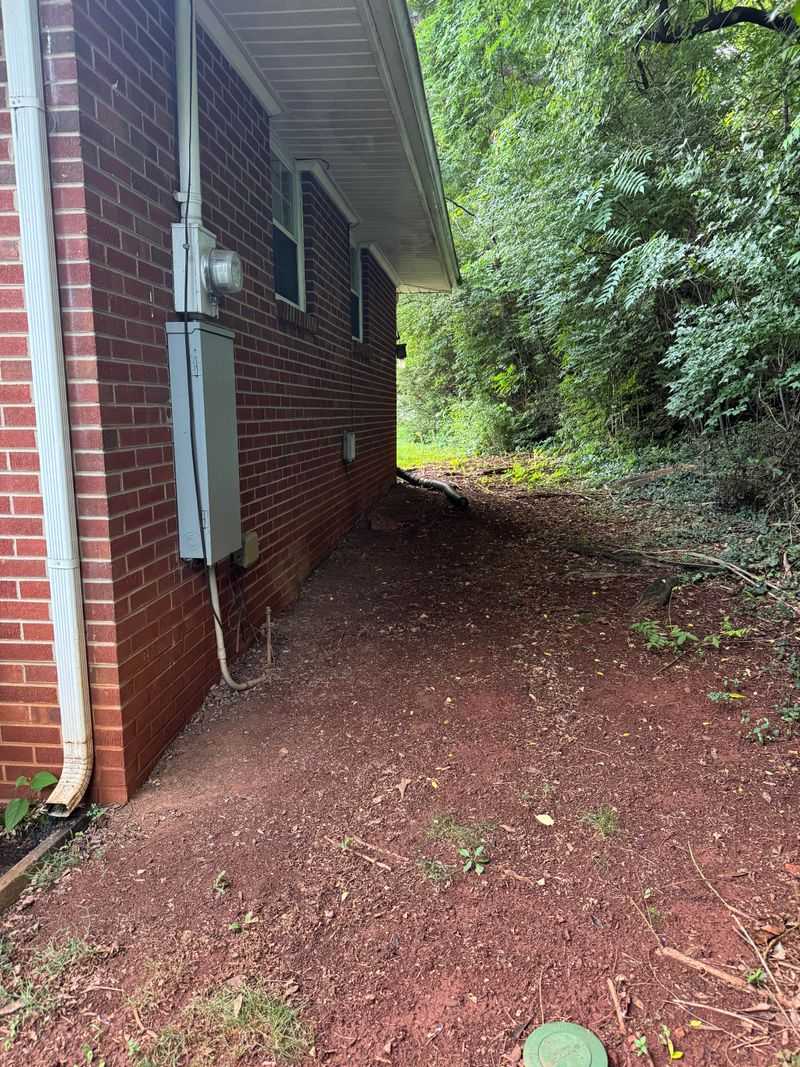
Grab a marble and set it on the ground by your wall. If it rolls toward the house, you might have a grading problem.
Builders call that negative grading. It means the land tilts inward, guiding rainwater straight to your foundation instead of away from it.
Many older homes settle over the years, and soil sinks near the walls. New flower beds or piled soil can also accidentally change the slope.
With storms dumping lots of rain quickly, a bad slope turns your foundation into a drain. Water pools, soaks in, and invites mushrooms.
Poor grading also raises pressure against basement walls. That pressure can push water through tiny cracks and raise humidity in crawl spaces.
The goal is a gentle drop away from the house. Aim for about 6 inches of fall over the first 10 feet.
Measuring is easier than it sounds. Tie a string to two stakes, level it with a line level, and measure the ground gap.
Small problems can often be fixed with a few bags of topsoil. Add soil near the wall, pack it firmly, and shape it outward.
Keep the soil line several inches below siding, though. Bigger slopes or tricky yards may need a French drain or help from a landscaper.
Buried Wood Or Old Roots Are Breaking Down Below
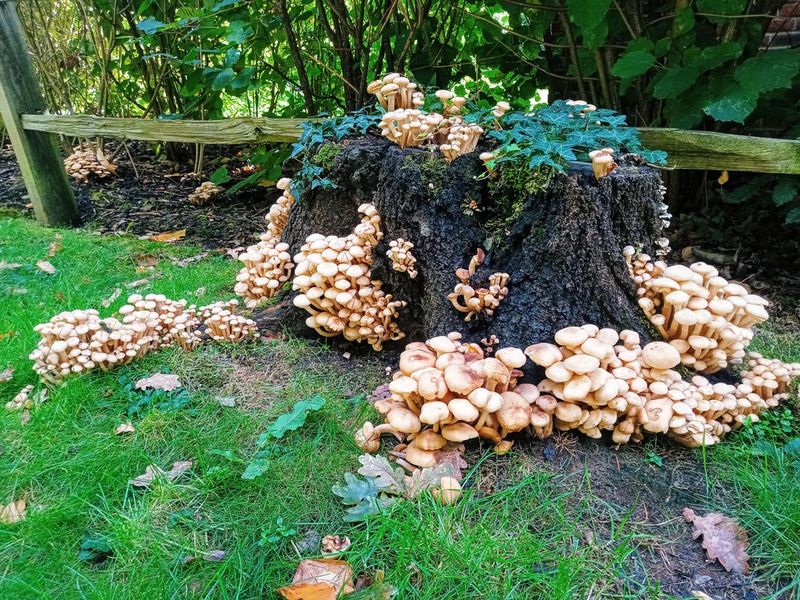
Homebuilders sometimes leave surprises behind. Scrap lumber, old stakes, and broken boards occasionally get buried in the backfill right beside new foundations.
Mushrooms are the fruit of fungi, nature’s cleanup crew. When they pop up in one tight spot, something woody may be rotting underneath.
Old tree roots count too. A stump removed years ago can leave a big root system slowly breaking down under your lawn.
Wood-rotting fungi need wood with more than about 20 to 30 percent moisture. They also like temperatures between roughly 40 and 90 degrees.
White rot fungi leave wood looking pale, yellowish, and spongy. Brown rot fungi create darker, crumbly chunks that crack into little cubes.
Watch nearby trees closely as well. Honey mushrooms, from the Armillaria group, attack roots and can make trees unstable over time.
Clues include white fungal mats under loose bark near the trunk base. Black strands that look like shoelaces in the soil are another warning.
Dig carefully with a hand trowel where mushrooms keep returning. If you hit soft wood, remove as much as you safely can.
Call an arborist if a tree near the house shows signs of root rot. A weakened tree leaning toward your roof is not worth gambling on.
Thick Mulch Is Feeding Them
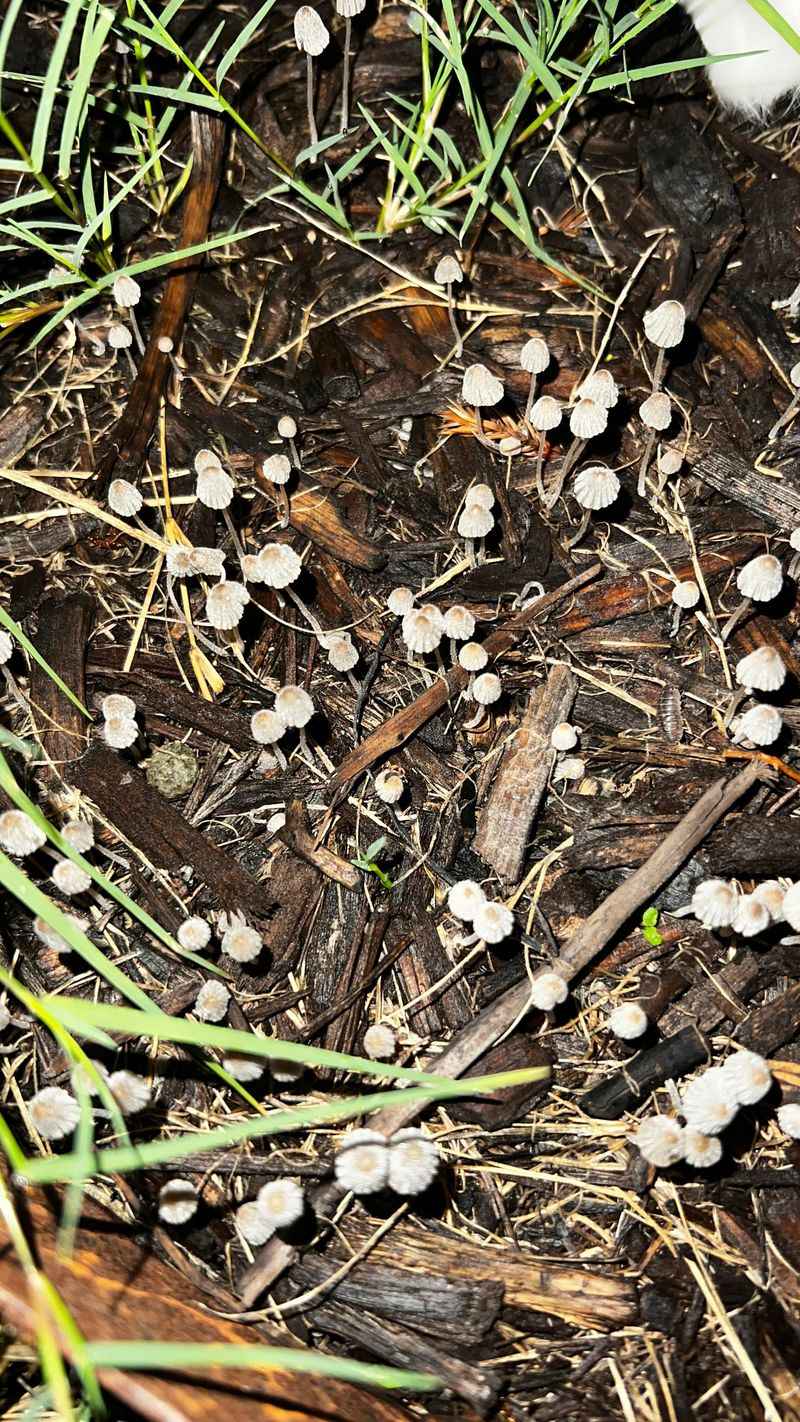
Fresh mulch smells wonderful and makes flower beds look tidy. Fungi agree, though they see it as an all-you-can-eat buffet.
Wood chips and bark are full of the fibers fungi love to digest. Mulch also holds moisture like a sponge, slowing evaporation for days.
Piled thick against the house, it keeps soil wet right at the foundation. That constant dampness can creep into basements and crawl spaces.
Virginia’s humidity and frequent rain make mulch mushrooms extremely common. Many are harmless decomposers, but they still hint at trapped moisture.
Watch out for artillery fungus in particular. Its tiny sticky black spores shoot onto siding and cars, leaving specks that are tough to remove.
High mulch can also hide insect activity. Termites and ants enjoy moving through damp mulch that touches your siding or sills.
Follow a simple rule of thumb. Keep mulch no deeper than 2 to 3 inches, and pull it at least 6 inches from the walls.
Fill that gap with gravel or river rock if bare soil bothers you. Stones dry quickly and give fungi much less food.
Rake old mulch every few weeks to fluff it and let air in. Before adding a new layer, remove some old stuff instead of piling higher.
Your Soil Is Actually Full Of Life
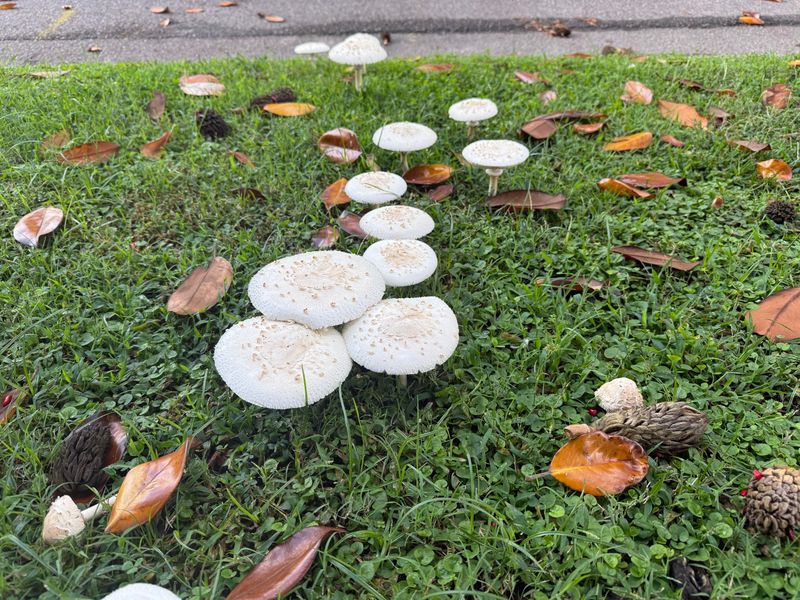
Here comes some good news for a change. Those pale little caps often mean your ground is buzzing with healthy activity.
Underground, fungi spread out as tiny threads called mycelium. The network can stretch for many feet, quietly working beneath your feet.
Their job is recycling. Fungi break down old roots, leaves, and plant scraps, returning nutrients to the soil for your plants to use.
Some soil fungi even team up with plants. Called mycorrhizal fungi, they wrap around roots and act like extra plumbing.
Their threads help plants drink more water and grab nutrients such as phosphorus and nitrogen. In return, plants share sugars made from sunlight.
Fun fact: fungi are not plants at all. Scientists place them in their own kingdom, and they are more closely related to animals.
Fungi also improve soil structure by binding particles together. That creates small spaces where water and air can move more easily.
So how do you balance the good and the bad? Welcome mushrooms out in garden beds, but fix moisture issues right against the house.
Skip harsh chemicals that can harm helpful microbes. Compost, gentle watering, and healthy plants support a balanced soil community across your whole yard.
Mushrooms On Siding Or Sills Signal Wood Decay
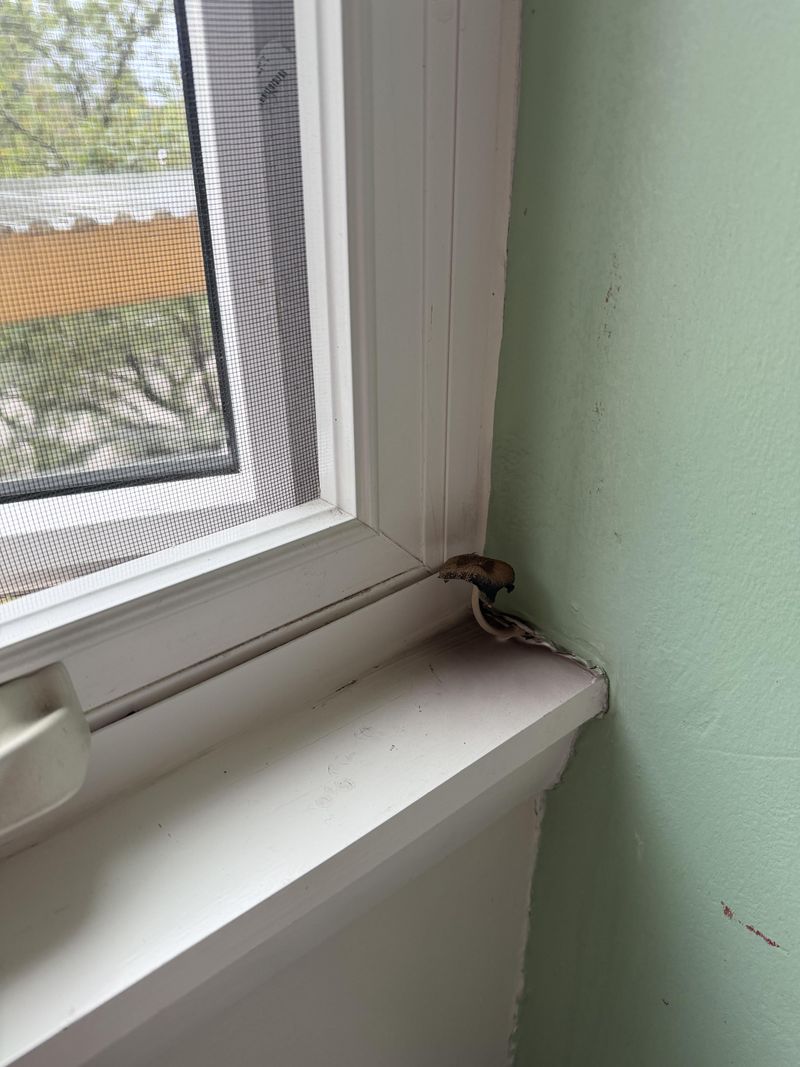
Spotting a mushroom on the lawn is one thing. Finding one sprouting from your window sill is a whole different story.
Fungi growing on siding, trim, or sills are eating the wood itself. They feed on the fibers that give lumber its strength.
Wood usually needs to stay wet for these fungi to settle in. Moisture above 20 to 30 percent gives them the perfect setup.
Leaky windows, cracked caulk, and bad drainage are common causes. Poor ventilation can also keep wood damp long after rain stops.
Rot can sometimes move faster than termite damage. Weakened wood may crack, sag, or let even more water into your walls.
Look for bubbling paint, soft spots, or boards that pull away. A musty odor after rain is another strong clue that decay is active.
Try the screwdriver test on suspicious areas. If the tip sinks easily into the wood, the board is likely rotting.
White rot often feels spongy and looks pale yellow. Brown rot turns wood dark and crumbly, breaking it into small blocks.
Fix the water source first, then replace damaged boards. Seal fresh wood with primer, paint, or preservative to guard against a repeat.
Crawl Space Humidity Deserves A Check
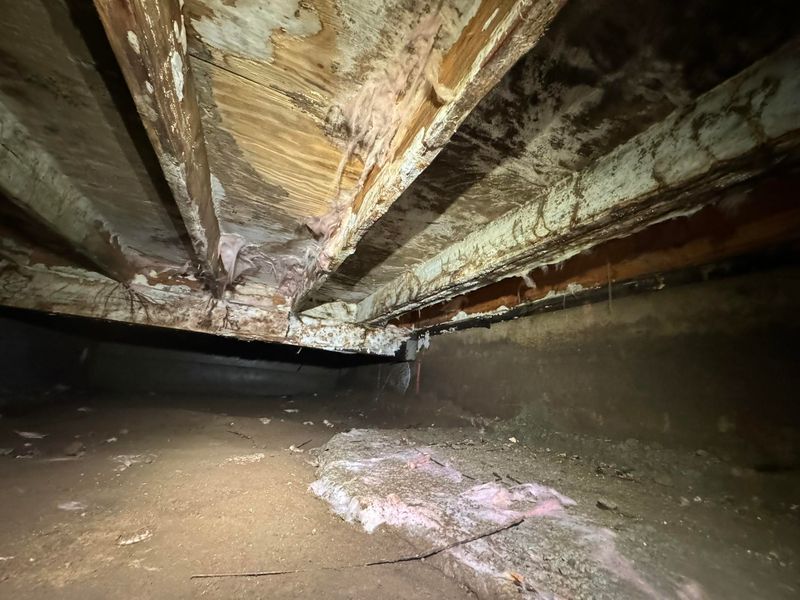
Out of sight should not mean out of mind. That dark space under your floors can quietly become a humid little jungle.
Warm, sticky summer air sneaks in through vents. When it hits cool joists and pipes, it turns into water droplets, just like a cold glass.
Many homes sit over vented crawl spaces. Surprisingly, those vents can pull in more damp air and make moisture problems worse.
Once humidity climbs above about 60 percent, fungi and mold feel right at home. Mushrooms outside may be a hint of trouble underneath.
Fungal growth can start within a day or two of water exposure. From there, it spreads to wood, insulation, and even dirt floors.
Watch for musty smells inside the house, sagging floors, or more bugs than usual. Discolored or droopy insulation is another warning sign.
Air from below does not stay below. Warm air rises through your home, carrying crawl space odors and moisture into living areas.
An inexpensive digital hygrometer can reveal what is happening. Place one in the crawl space and check readings over a week.
High numbers might call for a vapor barrier, sealed vents, or a dehumidifier. A crawl space specialist can recommend the best fix.
Some Are Toxic, So Keep Kids And Pets Away
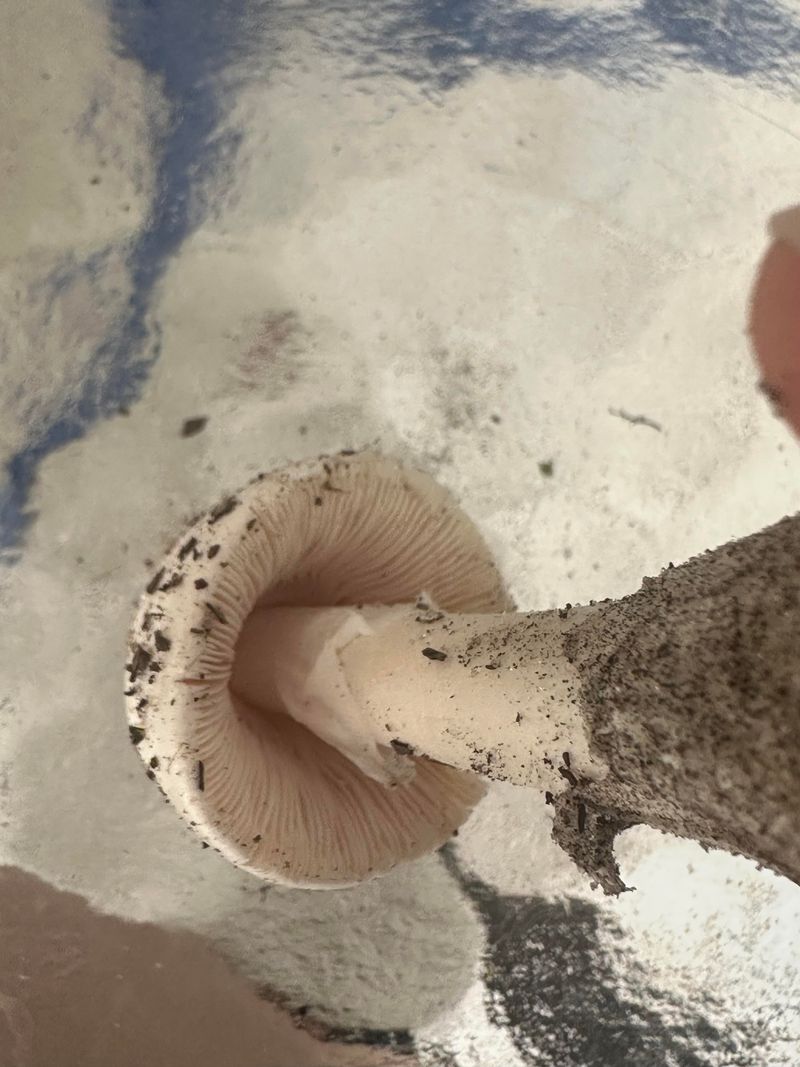
Toddlers and puppies share one bold hobby. They love to put strange things in their mouths, including mushrooms.
Many yard mushrooms are harmless, but some can cause serious illness. Telling them apart takes real training, so treat wild mushrooms as unsafe.
Virginia hosts a few dangerous white species. The destroying angel is tall, bright white, and often grows near oak trees.
Watch for white gills, a ring on the stem, and a swollen base. Those features show up on some of the most harmful Amanita mushrooms.
The false parasol is a common lawn mushroom here too. People nicknamed it the vomiter because of the stomach trouble it causes.
Symptoms in kids and pets can include vomiting, diarrhea, drooling, or sluggish behavior. Serious cases may bring tremors, seizures, or organ damage.
Some toxic mushrooms cause delayed symptoms, which makes quick action important. Dogs face extra risk since certain mushrooms smell a bit fishy.
Thankfully, touching them is generally not a problem. Poisoning happens from eating them, so wear gloves and remove caps before playtime.
Bag removed mushrooms and toss them in the trash. If you suspect anyone ate one, call Poison Control at 1-800-222-1222 or your veterinarian right away.
Picking Them Won’t Stop Them From Coming Back
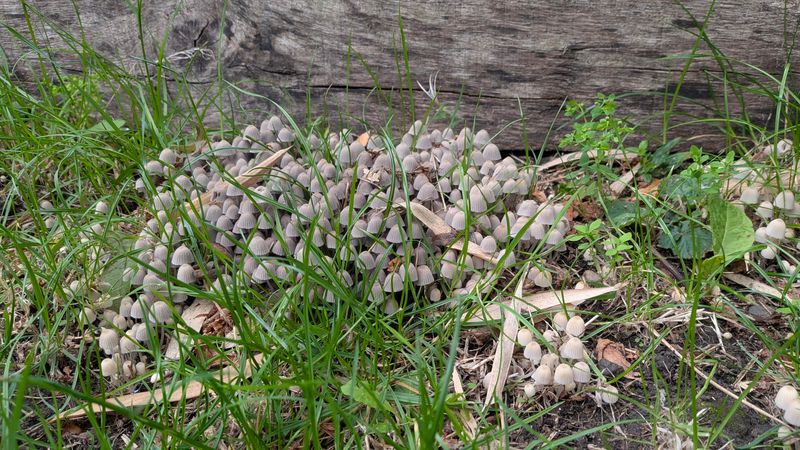
Plenty of homeowners pull every mushroom, feel victorious, and then find a fresh batch two days later. Frustrating, right?
The cap you see is only a small part of the fungus. Most of it lives underground as a hidden web of thin threads.
Picking a mushroom is a lot like picking an apple. The tree stays put and happily grows more fruit next season.
That underground network can hang around for months or even years. As long as conditions stay right, mushrooms return to the same spot.
Mowing over them is a bad idea too. The blades can scatter spores and help the fungus spread across more of the yard.
Fungicide sprays usually disappoint as well. Most yard mushrooms are recyclers, not plant diseases, so the chemicals miss the real issue.
Instead, remove what the fungus is eating. Clear buried wood, old stumps, soggy leaves, and heavy grass clippings near the house.
Next, tackle moisture with better drainage and shorter watering sessions. Aerating packed soil helps water soak in instead of sitting on top.
Once the food runs out and the ground dries, mushrooms fade on their own. For any Virginia homeowner, patience plus smart fixes beats pulling caps every morning.