Your Arborvitae Is Turning Brown This Fall In Virginia. Here’s Why
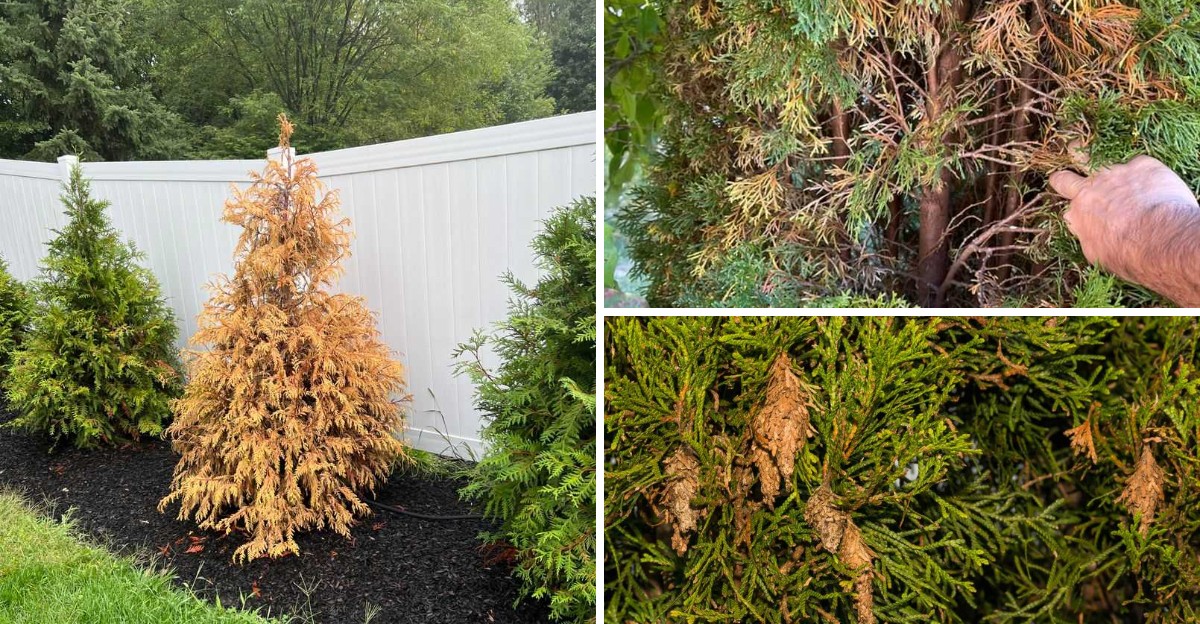
Evergreens shed foliage too, and some do it every autumn right on schedule. Plenty of gardeners panic the first time they see it.
I sure did. One October, I spotted rusty patches deep inside my privacy hedge and assumed the worst. I was ready to call a tree service before lunch.
Across Virginia, fall brings cooler nights, shorter days, and sometimes a stretch of dry weather after a hot summer. Your hedge feels all of it. Some of those brown patches are a healthy routine, while others are a quiet request for help.
So how do you tell the difference? The answer is usually written right there on the branches, in where the color shows up, how fast it spreads, and what the tips look like. Once you learn to read those clues, you may look at your hedge in a whole new way.
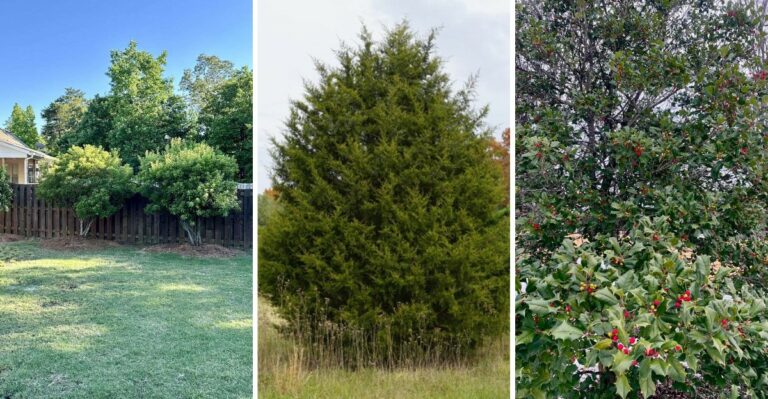
Brown Needles Deep Inside The Arborvitae Are Usually No Cause For Alarm
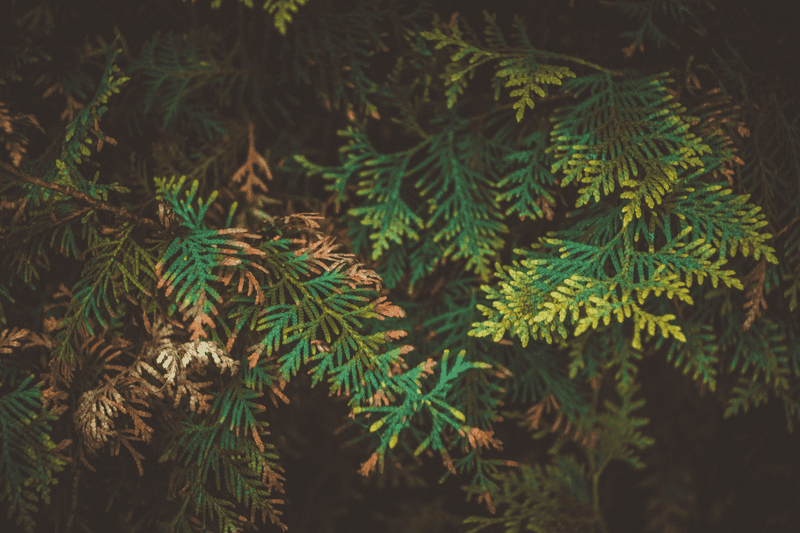
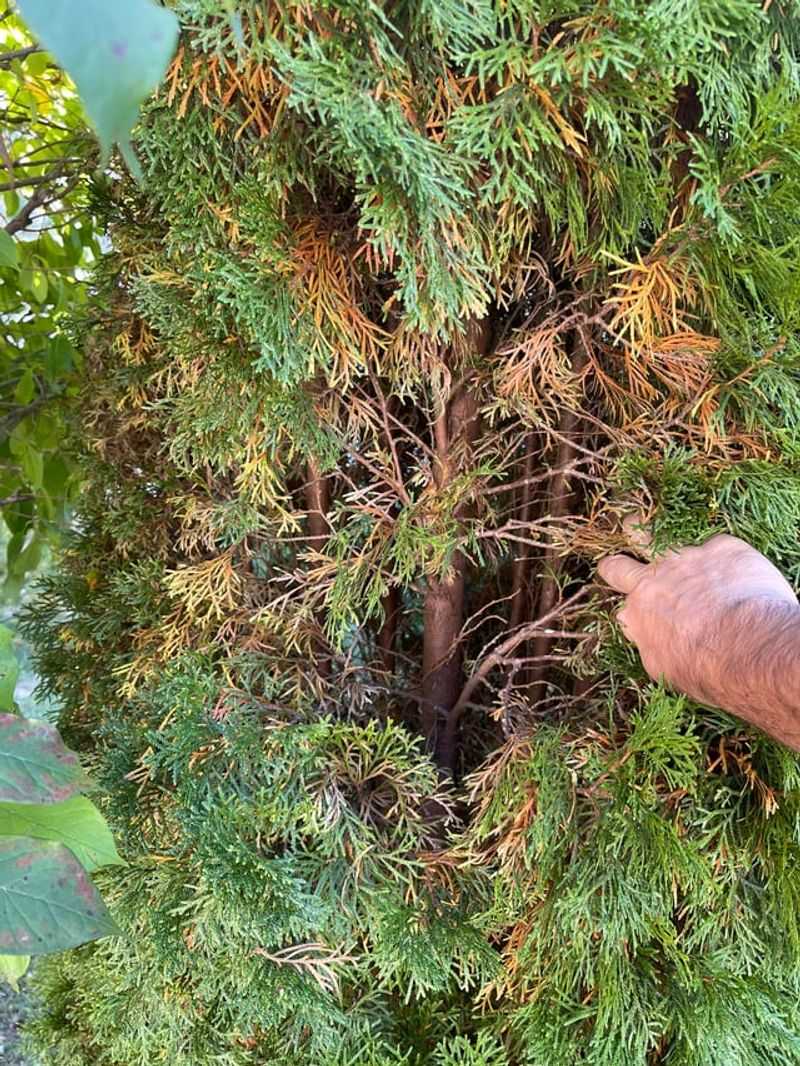
Push a few branches aside and peek toward the trunk. If the brown and orange scales are tucked inside while the outer tips look fresh and green, you are likely seeing seasonal needle drop.
Arborvitae, like pines and other conifers, hold their foliage for a few years and then let the oldest sprays go. Extension specialists at schools like Iowa State note that this shedding usually shows up from late summer into fall.
Shaded inner foliage gets little light, so the plant retires it and puts energy into the healthy outer growth instead.
The color change can be surprisingly bold. Depending on the variety, old foliage may turn yellow, orange, reddish, or tan before it falls.
Green Giant and Emerald Green types both do it, though some years are more noticeable than others.
A dry summer can make the show more dramatic. Stressed plants sometimes drop more interior foliage than usual, which can look alarming even when the plant is fine.
Personally, I treat this as a fall checkup reminder rather than a problem. You can gently shake the shrub or run a gloved hand through it to remove loose brown bits, which tidies things up and improves airflow.
The key clue is location. Inside browning with green tips usually means normal shedding, while brown outer tips point to something else.
Thirsty Arborvitae Roots Show Stress Through Browning Branch Tips
Late summer and early fall can turn surprisingly dry in parts of the Commonwealth. When rain goes missing for a few weeks, arborvitae are often among the first shrubs to complain.
Drought stress looks different from normal shedding. Instead of tidy interior browning, you may see dull, grayish, or brown foliage on the outer tips, sometimes spreading from the top down.
Newly planted hedges are especially at risk because their roots have not spread far beyond the original root ball.
Shallow sprinkling rarely helps much. Most arborvitae roots sit in the top foot or so of soil, and a quick spray from the hose barely wets the surface.
Your Virginia Garden Changes Every Week. Your Plan Should Too.
Gardening in Virginia changes quickly throughout the season. Every Friday you’ll receive a simple weekly plan showing exactly what to plant, prune, fertilize, harvest, and protect so you never miss the right timing.
You need to water slowly and deeply instead. A soaker hose or a hose on a slow trickle at the base works well, giving roughly an inch of water per week when rain falls short.
Plants in their first two years may need checks every few days during dry spells.
Test before you water by pushing a finger or a screwdriver a few inches into the soil. If it feels dry, it is time for a long drink.
Keep watering through fall until the ground freezes. That steady moisture sets your hedge up for winter, which brings its own set of challenges.
Bagworm Cases Dangling From Arborvitae Branches Tell A Hungry Story
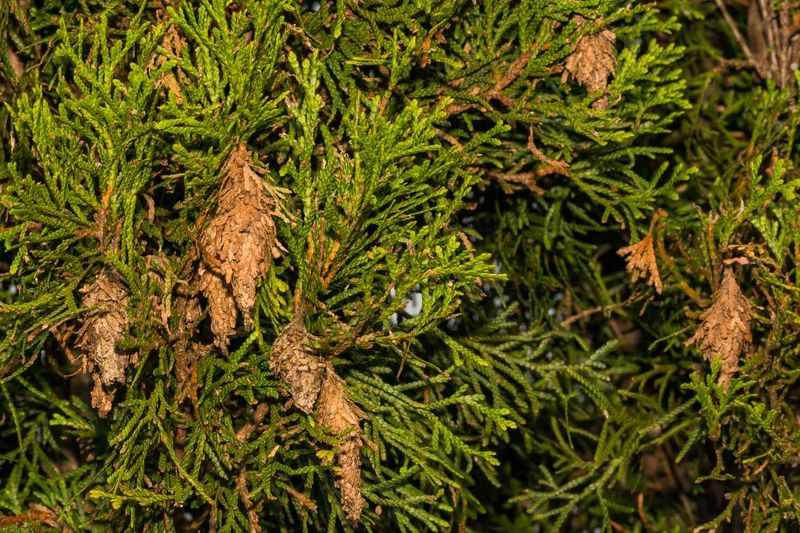
Those little brown ornaments hanging from your hedge are not pine cones. They are bagworm cases, and Virginia has plenty of them.
Bagworm caterpillars hatch in late spring and early summer, then spend months chewing foliage while hiding inside silk bags covered in bits of plant material. Virginia Cooperative Extension lists arborvitae and junipers among their favorite meals.
By fall, the feeding is over, but the brown, stripped branches they leave behind become easy to spot.
Light damage is mostly cosmetic. Heavy infestations can strip large sections, and arborvitae rarely regrow from bare, brown wood.
Here is the satisfying part. Each bag left by a female over fall and winter can hold hundreds of eggs waiting to hatch next spring, so picking them off now makes a real difference.
Grab the bags by hand or snip them with pruners, then drop them in a bucket of soapy water or seal them in the trash. Cut away the tight silk band around the twig too, since it can girdle branches over time.
Tossing bags on the ground is not enough because eggs may still hatch. If you missed them this year, plan to treat young caterpillars in early summer, when products like Bt work best on small larvae.
Spruce Spider Mites Love Arborvitae When Fall Weather Turns Cool
Some pests prefer sweater weather. Spruce spider mites are cool-season feeders, so they become active in spring and again in fall, just when many gardeners stop looking for bugs.
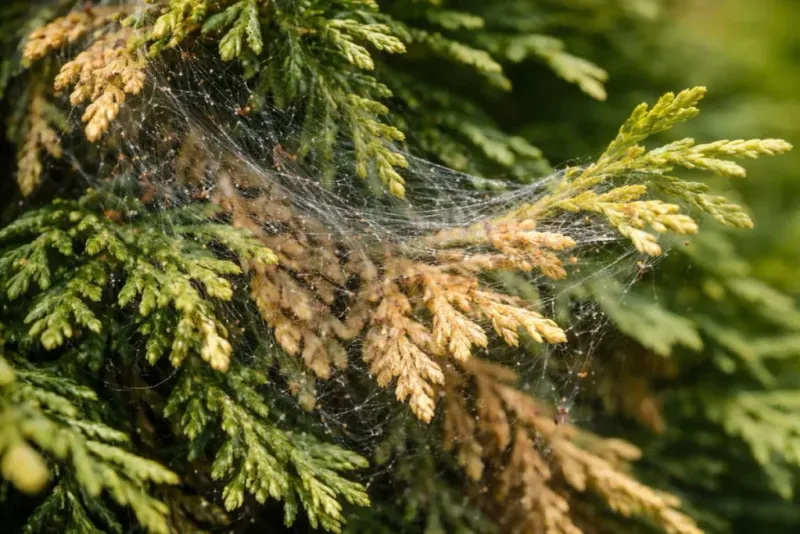
These mites are smaller than a period on this page. They pierce foliage and suck out the contents, leaving tiny pale speckles that eventually turn branches yellowish, bronze, or grayish brown.
Fine webbing between scales is another clue.
Damage often starts on the inner and lower parts of the plant, which can make it easy to confuse with normal shedding. The difference is that mite damage looks dusty and speckled rather than cleanly orange or tan.
Try the paper test. Hold a sheet of white paper under a branch and tap the branch sharply a few times.
If you see tiny specks crawling around, you have mites, and green streaks when you smear them confirm plant feeders.
A strong blast of water from the hose knocks many of them off and disrupts their webs. Horticultural oil or insecticidal soap labeled for conifers can help with heavier populations, applied when temperatures are mild.
I like that the fix starts with something as simple as a hose. Keeping plants well watered also helps, since stressed shrubs tend to suffer more from mite feeding.
Soggy Soil Around Arborvitae Roots Can Cause Hidden Trouble
Too much water can hurt just as much as too little. Arborvitae love steady moisture, but they struggle when their roots sit in soggy ground.
Much of central and western Virginia has heavy clay soil that drains slowly. Add a rainy stretch, a downspout aimed at the hedge, or an irrigation system running too often, and roots can run short of oxygen.
That opens the door to root rot organisms like Phytophthora.
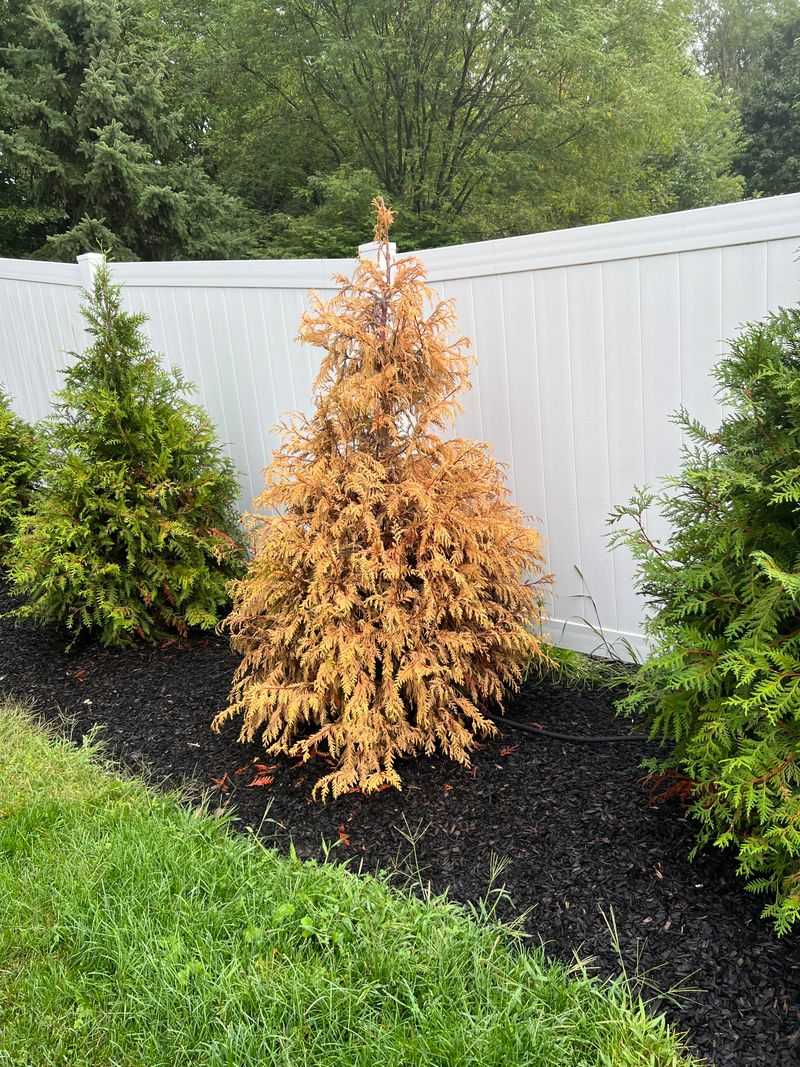
Root rot often shows up as a general decline. Foliage may yellow, fade, then brown across the whole plant, sometimes starting on one or two shrubs in a row and moving down the line.
Check the soil a few inches down after a day without rain. If it feels sticky and wet or smells sour, drainage is likely the issue.
Adjust sprinklers so they run less often, redirect downspouts, and pull mulch back so it is only two to three inches deep and not piled against the trunks. For new plantings, choose a spot where water does not pool, or plant slightly high in a raised bed.
Badly affected shrubs rarely bounce back, so replacing them with a better-suited plant for wet areas may be the wiser choice. Virginia Cooperative Extension can help you test soil and confirm a diagnosis.
Blighted Arborvitae Branch Tips Point To Fungal Trouble
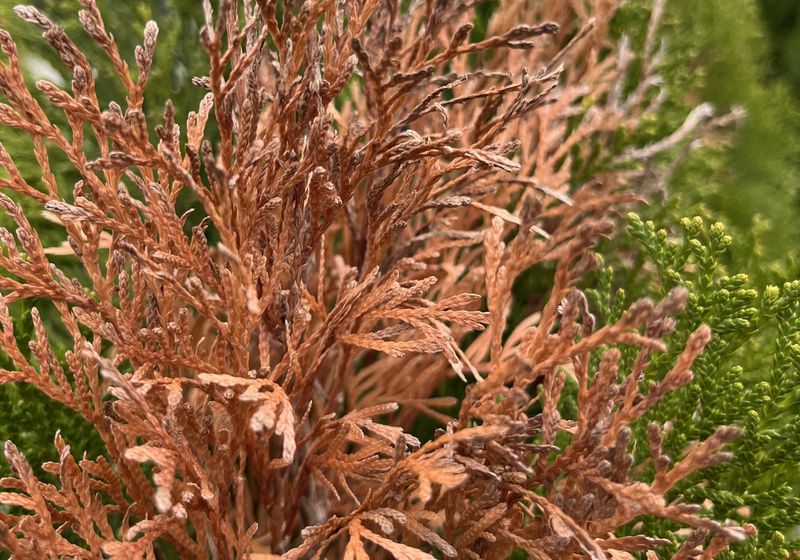
Wet weather and crowded hedges create a cozy home for fungi. Tip blights such as Pestalotiopsis and Kabatina can cause browning on arborvitae, especially after rainy spells.
Unlike interior shedding, blight usually begins at the branch tips and moves inward. Infected foliage turns brown, gray, or even nearly black, and you may spot tiny dark fruiting bodies with a magnifying glass.
The damage often appears scattered across the plant rather than in one tidy area.
Most of the time, blight on established shrubs is more of an eyesore than a crisis. Stressed plants, however, have a harder time shaking it off.
Start by pruning out brown tips on a dry day, cutting back into healthy green wood. Clean your pruners between cuts with rubbing alcohol or a diluted bleach solution so you do not spread spores.
Airflow matters a lot. Hedges planted shoulder to shoulder stay damp longer, so thin crowded plants if possible and avoid overhead watering that soaks the foliage.
Fungicides are rarely needed for home hedges. If blight keeps returning, a sample sent through your local extension office can identify the exact fungus.
That way you treat what is actually there instead of guessing.
Winter Burn On Arborvitae Often Starts With Late Fall Neglect
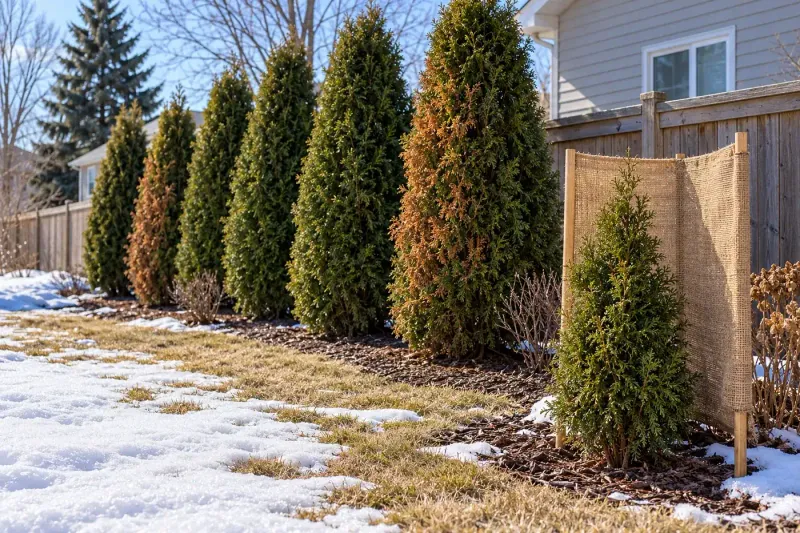
Some browning you notice in late fall or early spring started weeks earlier. Winter burn, also called desiccation, is a common reason arborvitae look scorched as the cold season settles in.
Evergreen foliage keeps losing moisture all winter. When the soil is frozen or dry, roots cannot replace that water, and wind plus bright sun pull even more moisture from the scales.
The result is bronzing or browning, often on the south and west sides.
Exposed spots in the western mountains and open, windy yards tend to see more of it. Even milder areas like Hampton Roads can get burn after a dry fall or a sudden hard freeze.
The best prevention happens now. Give your hedge a deep soak in late fall before the ground freezes, especially if autumn rain has been light.
A two to three inch layer of shredded bark or pine needles over the root zone holds moisture and keeps soil temperatures steadier. For young or very exposed plants, a burlap screen on the windy side can help.
Skip wrapping shrubs tightly in plastic, which traps heat and moisture. Antitranspirant sprays have mixed research results, so watering and mulching remain the most dependable steps.
A Quick Hedge Checkup Helps Your Arborvitae Bounce Back
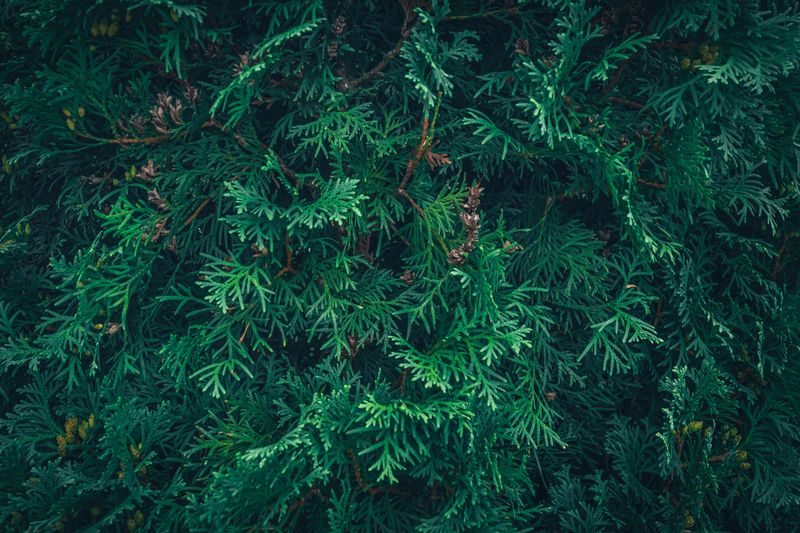
Every brown patch tells a story, and you can read most of them in ten minutes with a walk around the hedge.
Look at where the color sits first. Inside browning with green tips points to normal shedding, while brown outer tips suggest drought, blight, or winter burn.
One-sided damage on a sunny or windy face hints at desiccation, and scattered decline across the whole plant can mean root trouble.
Next, check for pests. Pick off bagworm cases and run the paper test for spider mites.
Then feel the soil. Dry soil calls for deep watering, while soggy soil means it is time to fix drainage and ease up on irrigation.
Prune brown sections back to healthy green growth, but go easy. Arborvitae rarely sprout from bare wood, so heavy cuts into old branches can leave holes that stay empty for years.
Hold off on fertilizer this time of year. Feeding in fall can push tender growth right before cold weather, and early spring is a better window if a soil test shows a need.
I believe a calm, curious look beats a panicked trip to the garden center every time. If you are still unsure, Virginia Cooperative Extension offices offer plant diagnostic help that is well worth using.