What Wilting Basil In North Carolina Heat Really Means Even After You Watered It Yesterday
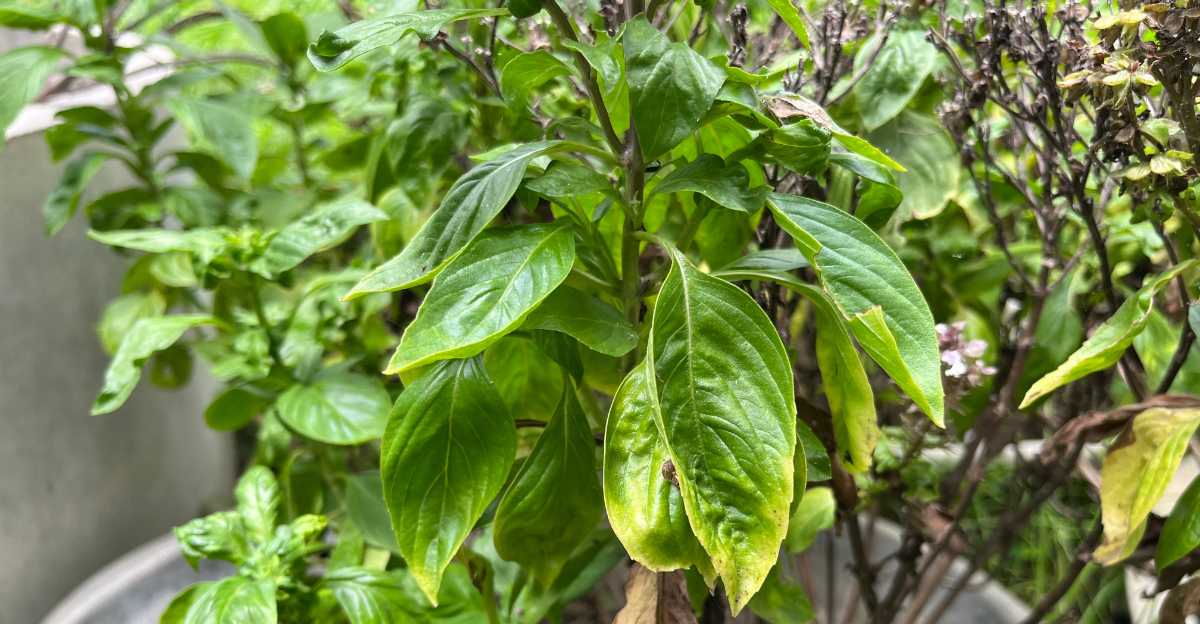
Basil that wilts in North Carolina July after being watered the day before is not asking for more water. It is telling you something different, and adding more water is often the worst possible response to what is actually happening.
Soggy soil in summer heat creates root stress that looks identical to drought stress from above the soil line. A pot sitting in full afternoon sun heats the root zone to temperatures that damage roots regardless of moisture levels.
Downy mildew weakens stems before visible symptoms appear on the leaves. Each of these causes produces the same drooping plant and requires a completely different fix.
Checking the right things before reaching for the hose saves more basil plants in North Carolina than any watering schedule ever will.
1. The Potting Mix Dried Again Faster Than Expected
Surprise, your soil can go from moist to bone dry in less than 24 hours during a North Carolina summer. Small containers are the biggest culprits here.
A tiny pot simply doesn’t hold enough moisture to carry a basil plant through a blazing hot afternoon, especially when temperatures regularly climb into the 90s.
Dark-colored pots make things even trickier. Black, navy, or dark green containers absorb sunlight and heat up fast, pushing moisture out of the soil quicker than you’d expect.
A pot sitting on a concrete patio in full sun can feel almost hot to the touch by midday, and that warmth pulls moisture right out of the root zone.
Wind is another sneaky factor. A breezy patio might feel pleasant to you, but moving air accelerates evaporation from both the soil surface and the plant’s leaves, creating a double demand for water.
If your basil sits in a windy spot with afternoon sun, yesterday’s watering may genuinely not be enough.
Before you water again, press your finger about two inches down into the potting mix. If it feels dry at that depth, the plant needs water regardless of what you did yesterday.
Surface moisture can be misleading because the top inch may look okay while the root zone underneath is completely parched. Checking deeper gives you a much more honest answer about what your basil actually needs right now.
2. The Water Did Not Reach The Full Root Zone
A quick splash of water on top of the soil might feel like enough, but basil roots grow deeper than most people realize.
When you water fast, moisture often soaks into only the top inch or two of the potting mix, leaving the lower root zone completely dry and stressed.
That stressed root system simply cannot pull up enough water to keep the leaves firm and upright through a hot afternoon.
This problem is especially common in containers where the potting mix has become compacted over time.
Compacted soil can actually repel water rather than absorb it, causing water to run down the sides of the pot and out the drainage hole without ever reaching the center of the root ball.
Your North Carolina Garden Changes Every Week. Your Plan Should Too.
Gardening in North Carolina changes quickly throughout the season. Every Friday you’ll receive a simple weekly plan showing exactly what to plant, prune, fertilize, harvest, and protect so you never miss the right timing.
If you’ve ever watered a pot and seen water drain out almost immediately, this is exactly what’s happening.
Garden beds with heavy clay soil face a similar challenge. Clay holds water near the surface, but it can also form a hard crust that keeps moisture from soaking evenly down to where the roots actually live.
Basil planted in compacted garden soil can wilt even when the surface looks damp. The fix is straightforward. Water slowly and directly at the base of the plant, giving the soil time to absorb moisture gradually.
Keep watering until you see steady drainage from the bottom of the pot. For garden beds, a slow drip or soaker hose works far better than a quick overhead spray, ensuring the entire root zone gets the steady drink it needs.
3. The Pot Is Heating The Roots
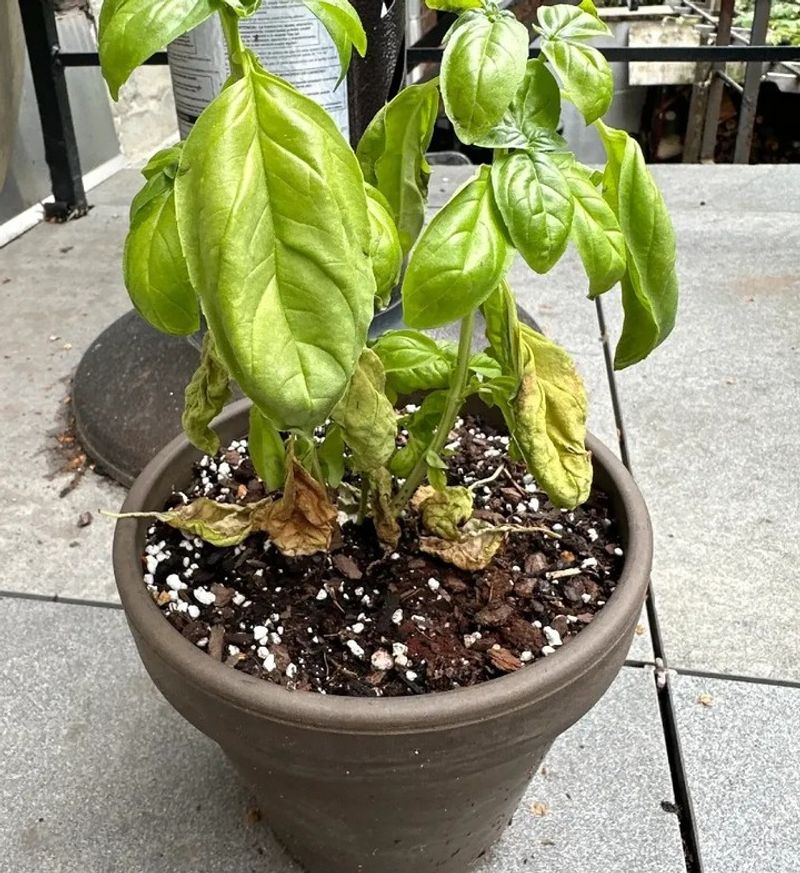
Most gardeners think about watering but rarely think about root temperature. In North Carolina summers, a pot sitting in full afternoon sun can reach internal temperatures that genuinely stress a basil plant, even when the soil still holds some moisture.
Roots that are too hot simply cannot function properly, and the leaves droop as a result.
Dark plastic pots are the worst offenders. They absorb solar energy all day and transfer that heat directly into the soil.
Concrete and brick patios also radiate stored heat upward into the bottom of containers, creating a kind of slow oven effect.
Even a pot that feels merely warm on the outside can have a root zone that’s significantly hotter than the surrounding air temperature.
Reflected heat adds to the problem. Walls, fences, and light-colored surfaces can bounce sunlight back onto containers from multiple directions, raising temperatures even further.
A basil plant tucked against a south-facing wall might receive more heat than one sitting in open sun simply because of how heat bounces around in that space.
Moving your pot is often the most effective solution. Shifting basil to a spot that receives morning sun but is shaded during the hottest part of the afternoon, roughly between noon and four, can dramatically reduce root temperature stress.
You can also set dark pots inside lighter-colored outer containers to create an insulating air gap, or simply wrap the pot with a light-colored cloth to reflect rather than absorb that intense summer sunshine.
4. Afternoon Sun Is Stronger Than The Plant Can Handle
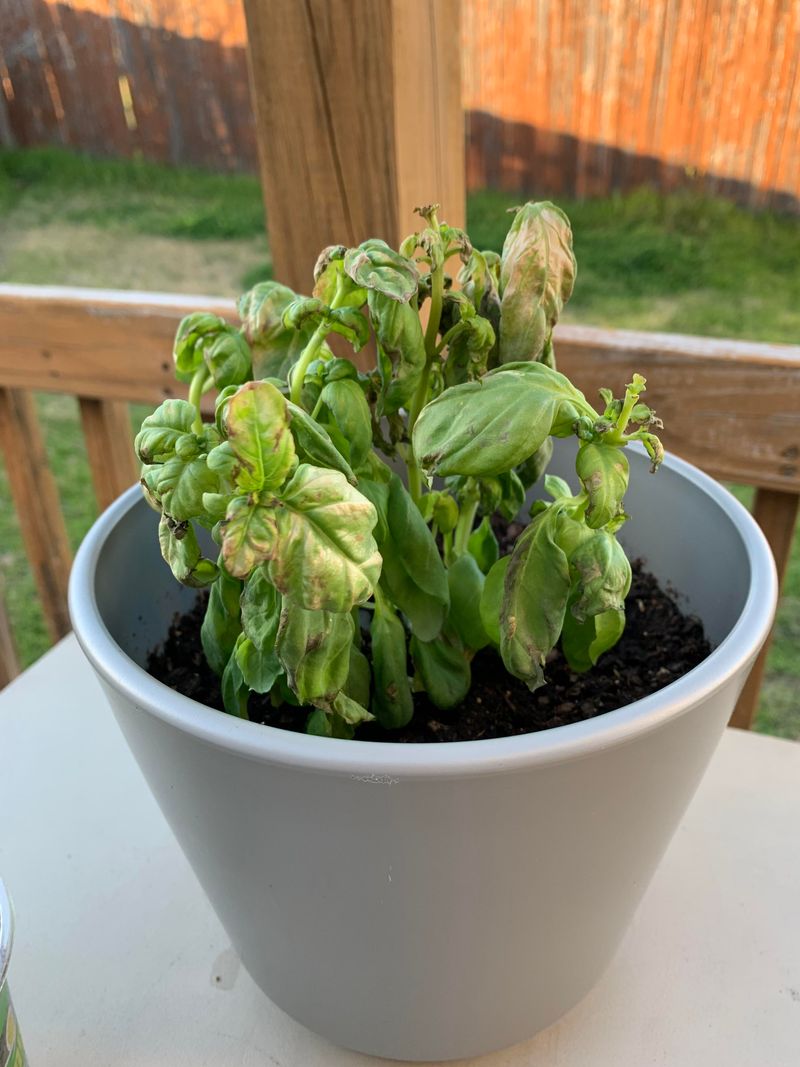
Basil genuinely loves sunshine. It thrives in warm weather and needs good light to produce those flavorful, aromatic leaves everyone grows it for.
But there’s a real difference between a healthy morning sun and the intense, punishing rays that hit a North Carolina garden between noon and four in the afternoon during July and August.
Potted basil is more vulnerable than basil planted in the ground because it has a smaller root reservoir to draw from. When heat and light intensity spike in the afternoon, the plant loses water through its leaves faster than the roots can replace it.
The result is a dramatic droop that can look alarming, even though the plant often bounces back on its own once evening arrives and temperatures cool down.
Newly planted basil is even more sensitive. A transplant that just went into a container or garden bed hasn’t had time to establish a strong root system, so it struggles with afternoon sun stress far more than a well-established plant would.
Giving new transplants a week or two of afternoon shade protection can help them settle in without constant heat stress.
Morning sun is ideal for basil. Six hours of bright morning light, followed by dappled or light shade during the hottest afternoon hours, gives the plant the energy it needs without overwhelming its water management system.
A simple shade cloth rated at around 30 percent can make a noticeable difference for container basil on an exposed patio, keeping plants upright and productive all summer long.
5. The Soil Is Too Wet Around The Roots
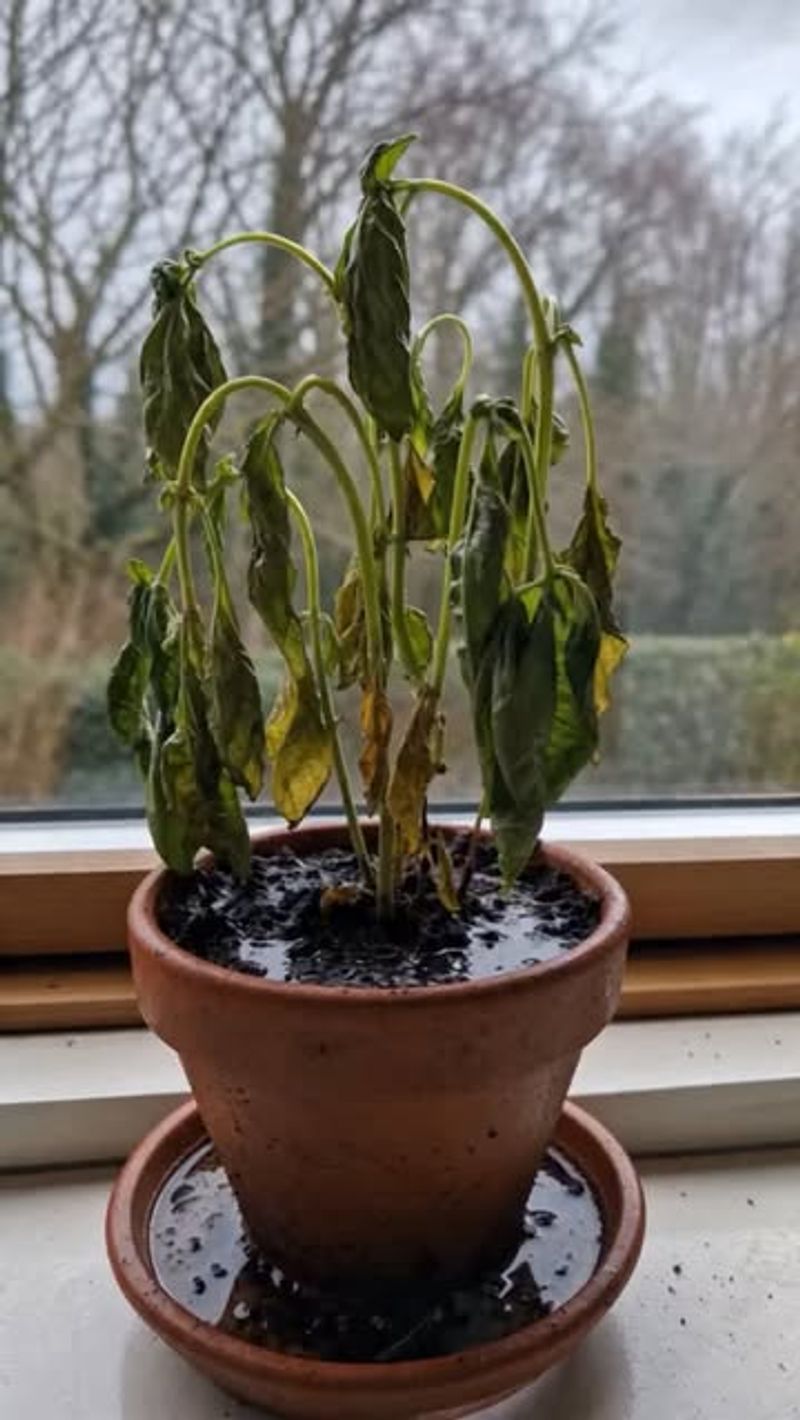
Here’s something that surprises a lot of gardeners: basil can wilt from too much water just as easily as it can from too little. When the soil around the roots stays soggy for too long, roots can’t get the oxygen they need to function.
Without enough oxygen, roots weaken and lose their ability to move water up into the plant, causing leaves to droop even though the soil feels soaking wet.
Poor drainage is usually at the root of this problem, literally. Containers without enough drainage holes, or with holes that are blocked by soil or sitting in a saucer full of standing water, trap moisture around the roots.
Heavy potting mixes that include too much peat or poor-quality filler can also hold water far longer than basil prefers, creating conditions where roots stay wet for days at a time.
There’s a simple smell test that many experienced gardeners swear by. Healthy, well-draining potting mix smells earthy and clean.
Waterlogged mix that has been sitting wet for too long often smells sour or slightly unpleasant, a sign that the root environment has become unhealthy.
If you notice that smell, hold off on watering and improve drainage before adding more water.
Check your drainage holes first. Make sure they’re clear and that your saucer isn’t collecting water under the pot.
If your potting mix feels heavy and dense, consider repotting into a lighter, well-draining mix that includes perlite or coarse sand. Basil roots need both moisture and air to stay strong through the summer season.
6. The Plant Needs More Steady Moisture Not Random Rescue Watering
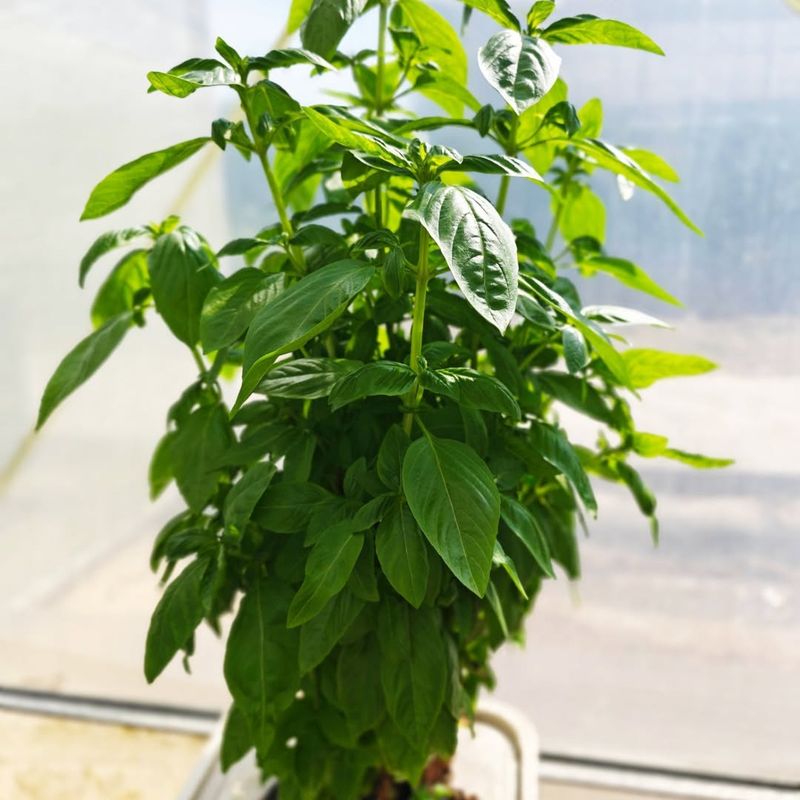
Watering basil only when it looks desperate is one of the most common mistakes summer gardeners make.
The cycle of letting the plant get very dry, then flooding it with water, then letting it dry out again keeps the roots in a constant state of stress.
Roots that go through repeated wet and dry extremes become less efficient at absorbing moisture, which means the plant never quite catches up even after a good watering.
Basil prefers what gardeners call even moisture, not wet, not bone dry, but consistently slightly moist around the root zone. Achieving that in a North Carolina summer takes some planning.
Watering at the base of the plant every morning before temperatures rise gives roots a steady supply without letting the soil stay waterlogged overnight.
Morning watering also means the foliage dries quickly, which reduces the chance of fungal problems developing on wet leaves.
Mulch is an underrated tool for container basil. A thin layer of straw, shredded leaves, or even coarse bark chips placed on top of the potting mix slows evaporation significantly.
It acts like a little insulating blanket, keeping the surface cooler and helping moisture stay in the root zone longer between waterings. Even a half-inch layer makes a real difference on a hot patio.
Self-watering containers are worth considering if you struggle to maintain consistent moisture.
These pots have a built-in reservoir at the bottom that wicks water up to the roots gradually, mimicking the steady moisture supply that basil genuinely thrives on throughout the long North Carolina summer season.
7. Leaf Problems May Be Starting Underneath
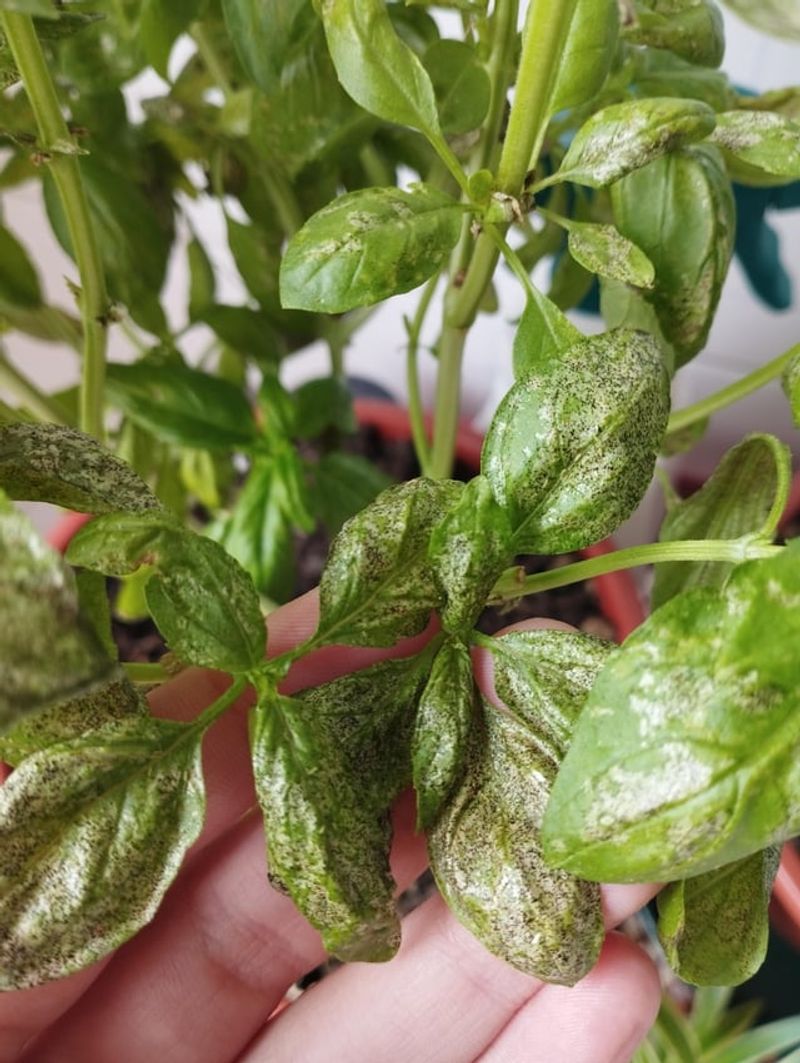
Not every case of wilting basil is purely about water or heat. Sometimes the leaves are telling a more specific story, and the clues are hiding on the underside of the foliage.
Basil downy mildew is a fungal-like disease that has become increasingly common in the southeastern United States, including North Carolina, where summer humidity creates ideal conditions for it to spread.
The early signs are easy to miss. Leaves may start looking slightly pale or yellowish on top, almost like the plant just needs fertilizer.
Flip those leaves over, though, and you might see a gray or purple-brown fuzzy coating on the underside. That coating is the spore mass of downy mildew, and it spreads fast in warm, humid, poorly ventilated conditions.
A wilting plant with yellowing leaves and that fuzzy underside growth needs a different response than one that simply dried out.
Watering habits play a big role in how quickly this disease spreads. Overhead watering that wets the foliage, especially in the evening, creates exactly the moist leaf surface that downy mildew spores love.
Switching to base watering keeps leaves drier and removes one of the main conditions the disease needs to thrive.
Airflow matters just as much as watering technique. Crowded plants with leaves touching each other trap humidity between them and create a microclimate that favors disease development.
Spacing plants a bit further apart, removing any crowded lower leaves, and placing containers where a gentle breeze can move through the foliage all help keep basil healthier through the sticky North Carolina summer months.
8. The Plant May Need Pinching And A Better Summer Setup
Wilting basil is sending you a message, and the full message is actually a checklist.
Between dry soil, shallow watering, hot pots, brutal afternoon sun, soggy roots, inconsistent moisture, and possible disease pressure, there are several things that might need adjusting at once.
The good news is that most of these fixes are simple, and making even a couple of changes can turn a struggling plant into a genuinely productive one.
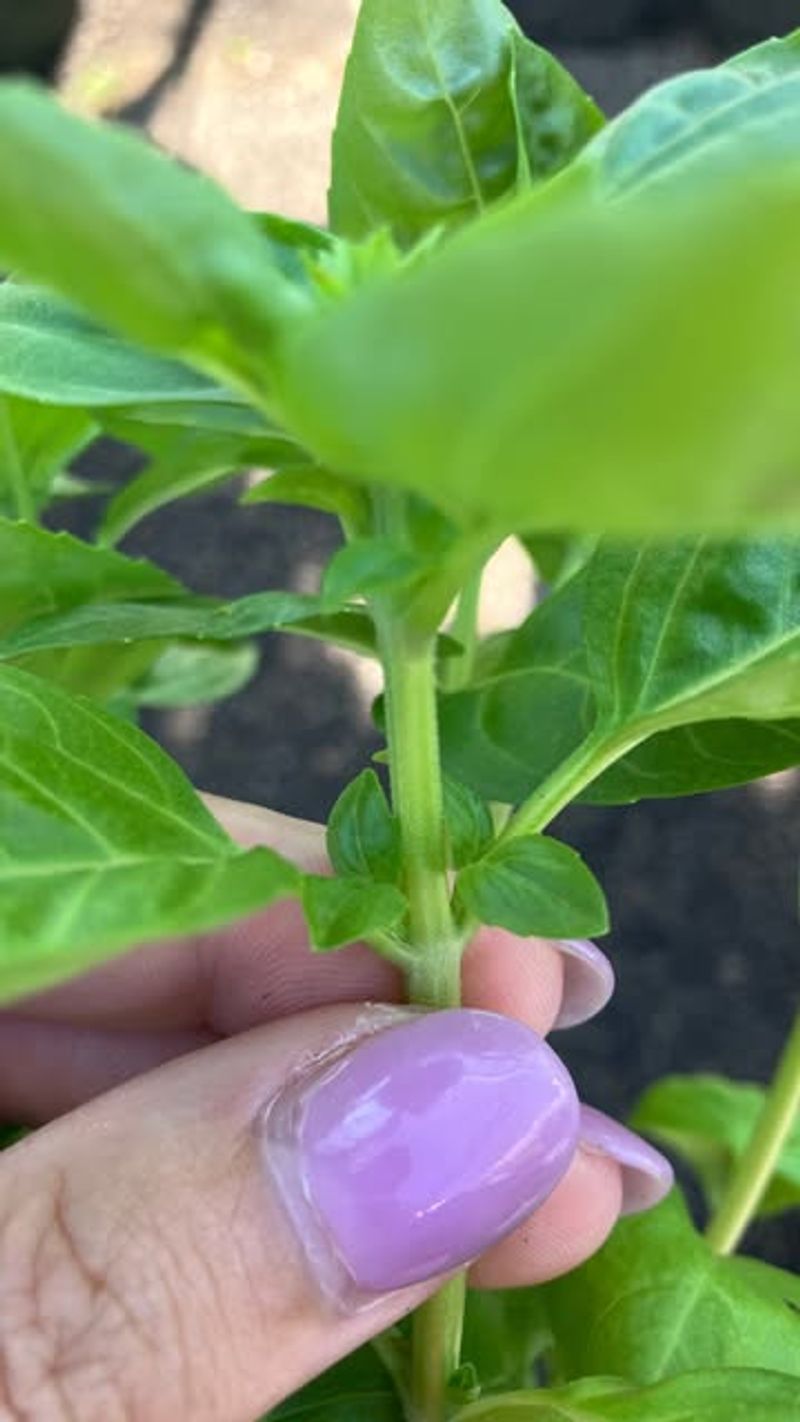
Pinching is one of the most powerful and overlooked tools in summer basil care. When basil starts sending up flower stalks, the plant shifts its energy away from producing leaves and toward making seeds.
Pinching those flower buds off as soon as you spot them redirects that energy back into leafy growth.
Regular pinching also keeps the plant more compact and bushy, which means less surface area losing water to the heat and better airflow through the canopy.
A smarter summer setup makes a real difference too. Move containers to a spot with morning sun and afternoon shade.
Switch to a light-colored or double-walled pot to keep root temperatures lower. Add a thin mulch layer on top of the potting mix.
Start watering slowly at the base every morning rather than giving a quick spray whenever you remember. These small changes stack up into a noticeably stronger plant. Think of wilting as feedback rather than failure.
Your basil is responsive and honest about what it needs, and once you dial in the right combination of shade, steady moisture, good drainage, and regular pinching, it rewards you with abundant, fragrant leaves right through the end of summer and into early fall.