What Your Tennessee Garden Is Telling You When A Praying Mantis Moves In
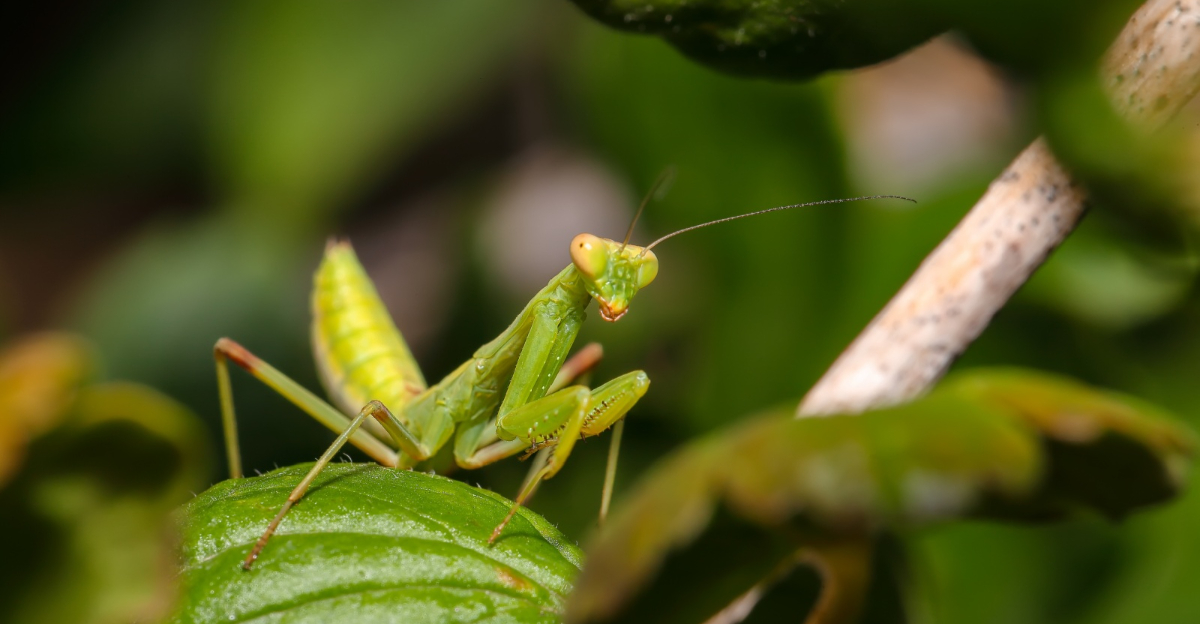
A praying mantis in your garden is one of nature’s most rewarding surprises.
These ancient, alien-looking insects are remarkably selective about where they settle. They do not wander in by accident.
When one appears among your plants, it is responding to something genuine about the environment you have built. Tennessee gardeners who spot one can take it as a quiet but meaningful sign.
The mantis is drawn to spaces with healthy plant diversity, minimal chemical interference, and a steady supply of prey.
It is a living indicator of balance, one that scientists and naturalists alike regard as a marker of a thriving ecosystem.
Not every garden earns this kind of visitor. What you choose to plant, and what you choose to avoid, shapes the life your garden attracts.
Tennessee gardeners are seeing that firsthand, one native plant and one skipped pesticide at a time.
A praying mantis does not just visit your garden. It validates it.
1. It Means Your Garden Has Plenty Of Insect Life
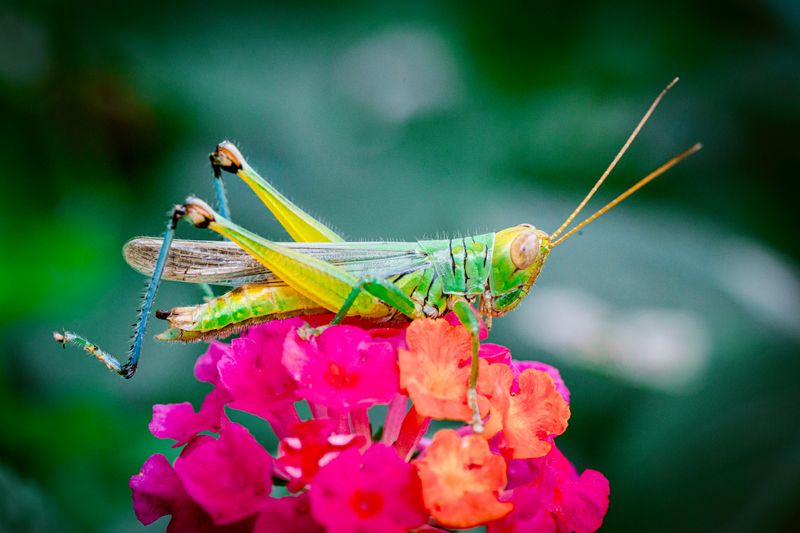
A praying mantis does not settle into just any garden.
Finding one perched on your tomato cage or hiding in your rosebush is a sign that your outdoor space has built a thriving, layered insect community.
Think of it like a neighborhood.
For the praying mantis to move in, the neighborhood has to already be buzzing with life.
Aphids, beetles, grasshoppers, and flies all need to be present before this predator even considers staying.
Healthy ecosystems are not accidents.
They develop over time when a gardener avoids harsh chemicals, plants a variety of species, and lets the soil breathe.
Your garden’s insect population is essentially a living report card, and the mantis just handed you an A.
Every layer of that ecosystem, from the soil up to the tallest flower, plays a role in keeping things balanced.
Seeing a mantis means your garden is not a monoculture desert.
It has texture, variety, and enough food to support a predator near the top of the insect food chain.
That kind of richness takes patience and intention to build.
You should feel genuinely proud of what your space has quietly become.
2. It Suggests You’re Avoiding Heavy Pesticide Use
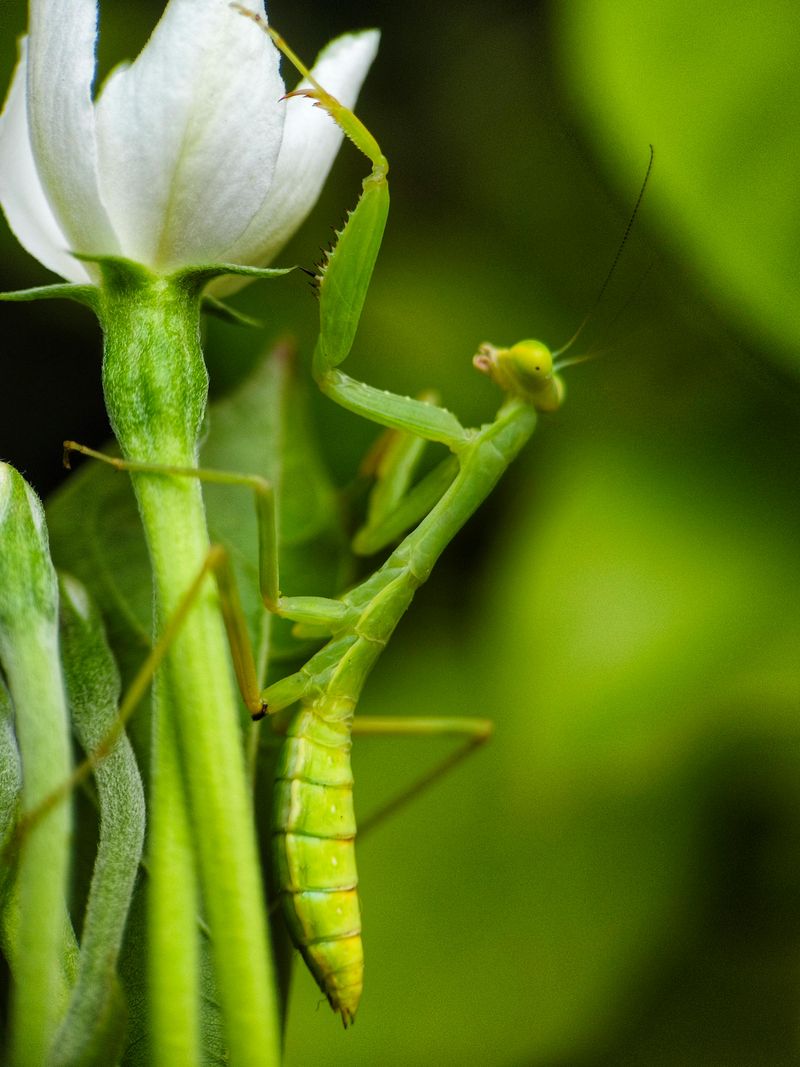
Before a praying mantis can hunt, it needs a well-stocked pantry. Your garden is clearly offering exactly that.
Mantises eat moths, crickets, flies, aphids, and even small caterpillars. If they are hanging around, those insects are present in good numbers.
This is not a bad thing. A garden with a diverse insect population is far more resilient than one that appears perfectly clean.
Gardeners sometimes panic when they see bugs crawling around their plants. The truth is, a bug-free garden is often a sign of trouble, not success.
Insects pollinate flowers, break down organic matter, and feed the birds and reptiles that visit your space.The praying mantis moving in confirms that your garden has hit a natural sweet spot where prey species are plentiful but not overwhelming.
Your Tennessee Garden Changes Every Week. Your Plan Should Too.
Gardening in Tennessee changes quickly throughout the season. Every Friday you’ll receive a simple weekly plan showing exactly what to plant, prune, fertilize, harvest, and protect so you never miss the right timing.
Attracting the right prey is about planting smart. Native flowers, herbs like dill and fennel, and letting a small patch go slightly wild all invite beneficial insects.
Those insects then attract predators like the mantis.Your garden has essentially set a beautifully stocked table, and a very impressive dinner guest has pulled up a chair.
3. Your Plants Offer Good Cover For Hunting And Egg-Laying
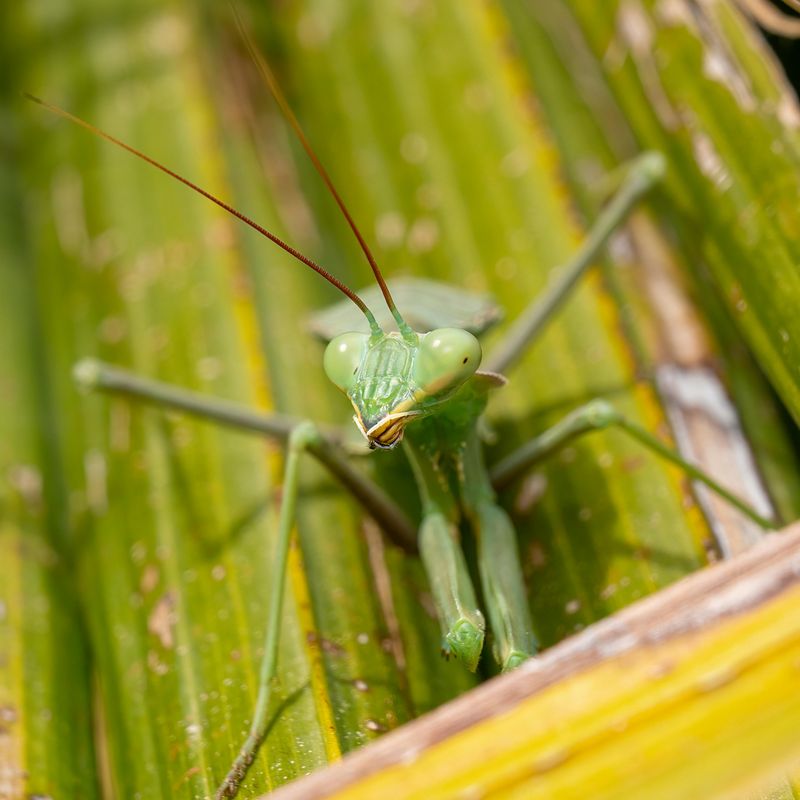
Praying mantises are incredibly sensitive to chemical pesticides.
Even mild sprays can seriously reduce mantis numbers over a single season.
If one has moved into your garden, that is strong evidence that you are keeping the chemical use low or skipping it entirely.
That choice, whether intentional or not, has paid off in a big way.
Pesticides do not discriminate.
They target the bad bugs, sure, but they also wipe out the beneficial ones, the bees, the ladybugs, the mantises, and the ground beetles.
Gardeners who go organic or low-spray often notice that their spaces start to feel more alive after a season or two.
More birds show up. More butterflies pass through.
And eventually, a praying mantis decides to stay.
Skipping pesticides can feel scary at first, especially when you spot caterpillars on your kale.
But nature tends to balance itself when given the chance.
Your mantis is proof of that self-regulating system clicking into place.
The garden you have been tending without heavy chemical intervention has become a sanctuary, and that is something no store-bought spray could ever create.
4. It Provides The Kind Of Shelter Wildlife Actually Needs
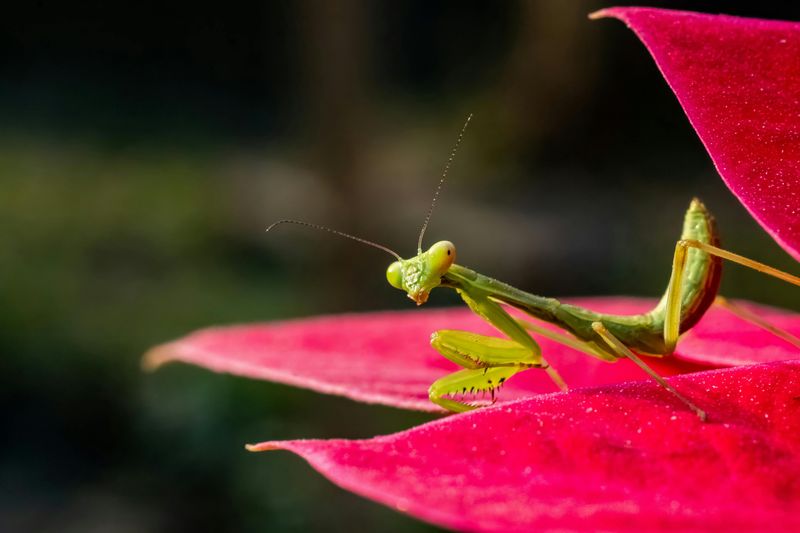
Praying mantises are masters of camouflage, but they still need the right environment to pull it off.
Your garden must be giving them exactly what they need.
Dense plantings, tall grasses, layered shrubs, and thick flower beds all create the kind of structural complexity that mantises love.
Without good cover, they cannot hunt effectively or stay safe from their own predators.
Think about what your garden looks like from a mantis’s point of view.
They need stems to grip, leaves to blend into, and enough vertical space to ambush passing insects from above.
A garden that has been over-pruned or kept too tidy actually works against these hunters.
A little wildness, a few untrimmed edges, and some overlapping plant layers make all the difference.
Shelter is not just about hiding.
For female mantises, it is also about finding safe spots to lay their egg cases, called oothecae, in late summer and fall.
If your garden has shrubs, woody stems, or even an old fence post, those are prime real estate for future generations.
That a mantis chose your garden says something real.
Your space has the kind of layered, generous structure that wildlife genuinely depends on.
5. It Shows Signs Of A Genuinely Balanced Ecosystem
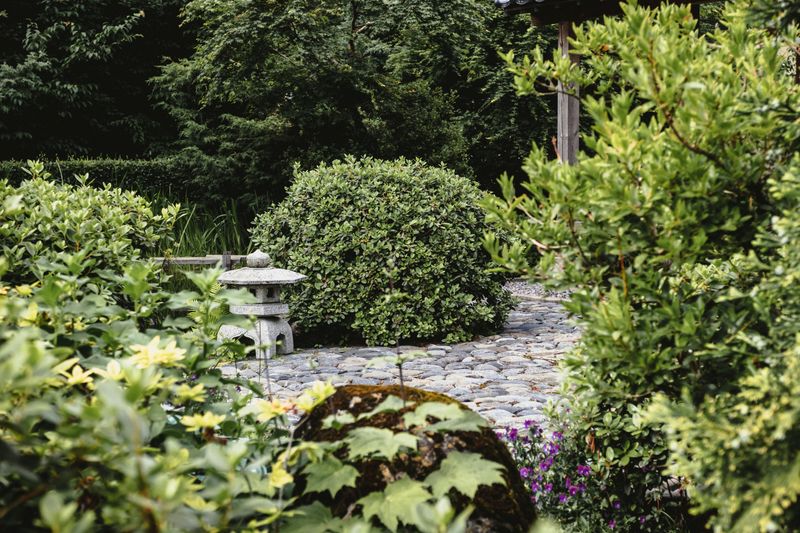
Balance in a garden is one of those things that is easy to talk about and hard to actually achieve.
When a praying mantis shows up, you have achieved it.
A balanced garden is built on relationships. Predators keep prey in check.
Pollinators and decomposers each do their part. Sun and shade plants fill every layer.
The whole system holds itself together.That kind of harmony does not happen by accident.
Most gardeners spend years chasing balance without ever knowing if they have found it. You have a pretty clear indicator right now.
The praying mantis sits near the top of the garden insect food chain. For it to thrive, every level below it must also be functioning.
That means your soil is in good shape, with the structure and organic matter that give plants the best possible start.
A well-balanced garden also tends to be more drought-resistant, more disease-resistant, and more productive over time.
It is a system that supports itself.
You are not just growing vegetables or flowers.
You are running a small, self-sustaining ecosystem.
The praying mantis moving in is basically nature handing you the keys and saying the system works.
That is a reward worth pausing to appreciate.
6. Garden Is Taking Care Of Its Own Pest Problem
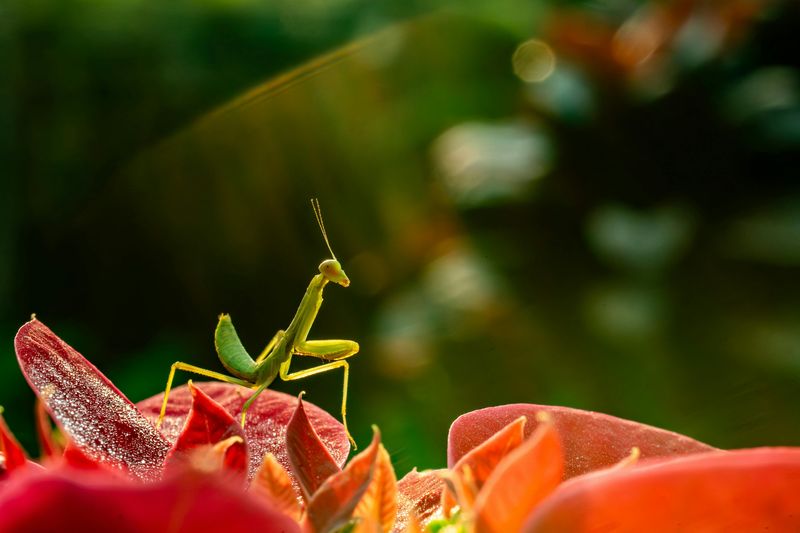
Forget the spray bottle. Your garden has its own natural pest control at work, and the praying mantis is leading it.
A single adult mantis can consume several insects each day.
Grasshoppers, aphid colonies, and caterpillars are all on the menu.
Having one stationed in your garden means your plants have a chemical-free natural predator keeping pest numbers in check.
Natural pest control is the gold standard for any garden.
It keeps populations in check without disrupting the wider ecosystem or leaving chemical residue on your food.
Birds, spiders, ladybugs, and mantises all play a role in this invisible defense network.
When they work together, pest outbreaks become rare events rather than seasonal emergencies.
Gardeners who rely on natural predators often report spending less time fighting infestations and more time enjoying their space. That is the real payoff.
Your mantis is not just a cool bug to photograph.
It is actively protecting your plants every single day.
And because it is a native predator that evolved alongside your local pest species, it is far more effective than any product you could buy off a shelf.
Nature designed this solution long before we ever thought to look for one.
7. Food Chain Is Being Well-Supported
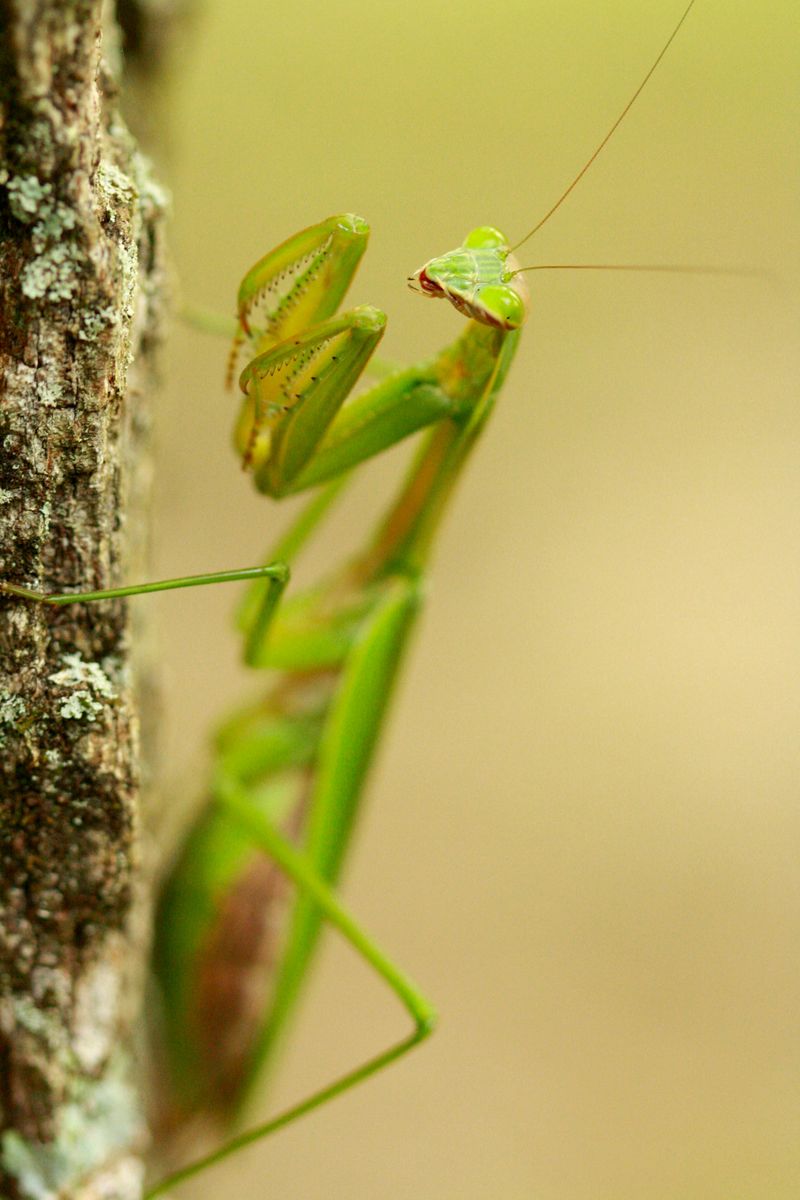
A food chain sounds like something from a science textbook, but yours is playing out in real time right outside your back door.
Soil microbes feed the plants. Small insects feed on the plants.
The praying mantis feeds on those insects. Birds and small reptiles feed on the mantis.
Not every mantis in Tennessee is native.
The Carolina mantis is the local native, but Chinese and European mantises are widespread across the eastern U.S. and commonly found in residential gardens.
Every link in that chain depends on the others, and right now, all of yours appear to be in place.
Many suburban gardens have broken food chains.
Pesticides remove the middle links. Concrete and turf eliminate the base.
Without those foundational layers, larger animals tend to disappear.
Your garden seems to have kept the chain reasonably whole, which is fairly rare in a residential setting.
That is something worth protecting and building on as the seasons change.
A functioning food chain also means your garden may be contributing to the broader local wildlife network. Birds that feed in your space carry seeds elsewhere.
Reptiles that hunt in your yard move between properties, connecting green spaces.
The praying mantis is not just a resident.
It is part of a living network that reaches well beyond your fence line.
Your garden is quietly doing ecological work that can benefit your entire neighborhood, one link at a time.
8. It Attracts The Kind Of Insect Diversity That Benefits Everything Around It
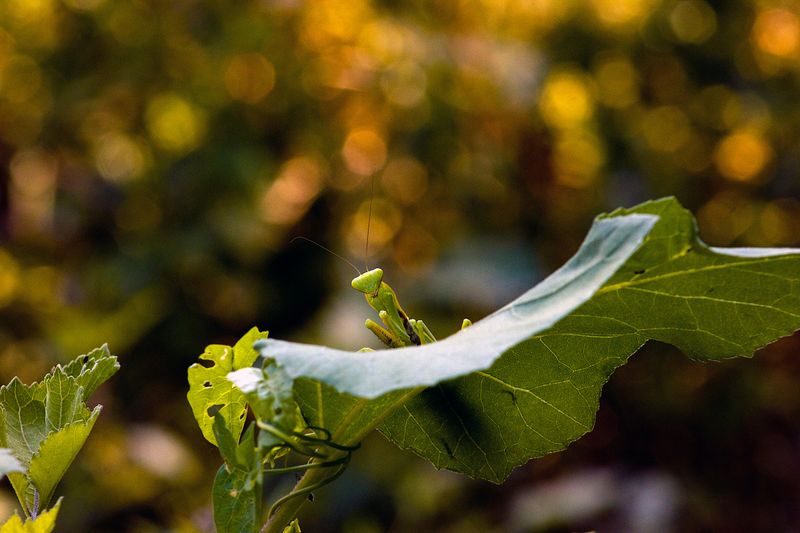
Insect diversity is one of the most important signs of a healthy outdoor space, and it is one of the hardest things to fake. It builds slowly, through consistent choices and a little patience.
That kind of variety takes a thoughtful planting approach and a willingness to let nature do its thing.
Planting a mix of native flowers, herbs, and vegetables creates microhabitats within your garden.
Some insects need open blooms. Others need dense foliage or bare soil patches.
Layering your plants and leaving some areas slightly undisturbed encourages a wider range of species to move in and stay.
The more diverse your insect population, the more stable and self-sufficient your garden becomes over time.
Entomologists estimate that a healthy garden can host hundreds of insect species throughout a single growing season. Most go completely unnoticed.
They are pollinating, decomposing, and hunting in the background while you tend to your tomatoes.
The praying mantis is the most visible sign of that invisible abundance.
Spotting one is your reminder that the garden is far more alive and complex than it appears on the surface.
9. Your Garden Is A Safe Haven For Wildlife
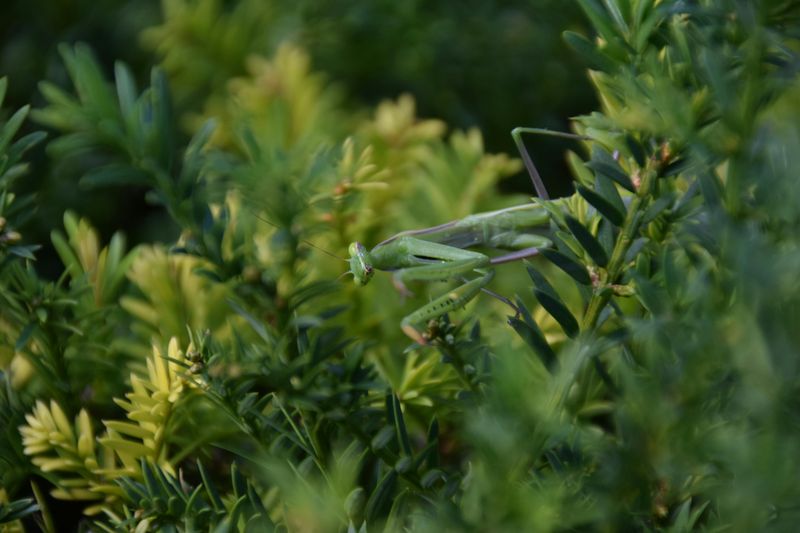
Not every yard qualifies as a safe haven for wildlife. Yours apparently does, and the praying mantis is one of the clearest signs.
A safe haven offers food, shelter, water, and freedom from chemical threats. When all four of those elements are present, wildlife notices.
Birds linger longer. Frogs appear near water features.
And predatory insects like the mantis choose to raise their young there.
Creating a wildlife-friendly garden does not require a massive overhaul.
Small choices add up fast.
Small habits add up. A shallow dish of water.
Native plants. Skipping the leaf blower in fall.
Leaving hollow stems standing through winter. Each one makes the space more hospitable.
Your garden has clearly been accumulating those small, smart choices, and the results are showing up in the most literal way possible.
The praying mantis is often used as an indicator species by naturalists. Where mantises thrive, the surrounding environment tends to be in good shape.
Your garden earning that designation is not a small thing.
In a world where wild spaces are shrinking fast, a backyard that functions as a genuine refuge for wildlife is an act of quiet environmental leadership.
The mantis moved in because you built something worth moving into. That says everything.