When Crows Gang Up On One Tree In Your Indiana Yard, Look For An Owl
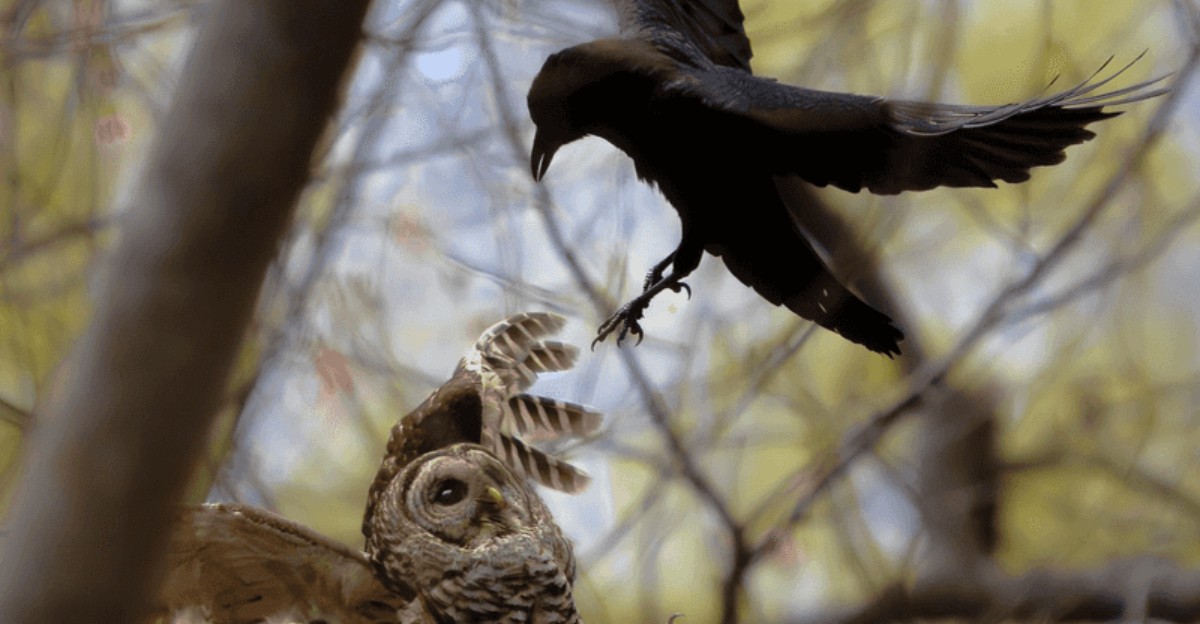
Crows can remember a human face for years, and they pass grudges along to their kids. I learned that fact after a loud gang of them spent a whole morning screaming at one maple in my Indiana yard.
I used to think they were fighting over a snack. Truth is, they were yelling at something hiding in plain sight.
The noise wasn’t random, and that was the giveaway. The whole flock stayed on that one tree, diving, hopping, and calling like a neighborhood alarm system.
Fair warning, once you learn what that racket means, you’ll start running to the window every time it happens. That wall of noise has a target, and finding it takes nothing more than knowing where to look.
That Screaming Crow Mob Is Pointing Right At A Hidden Branch
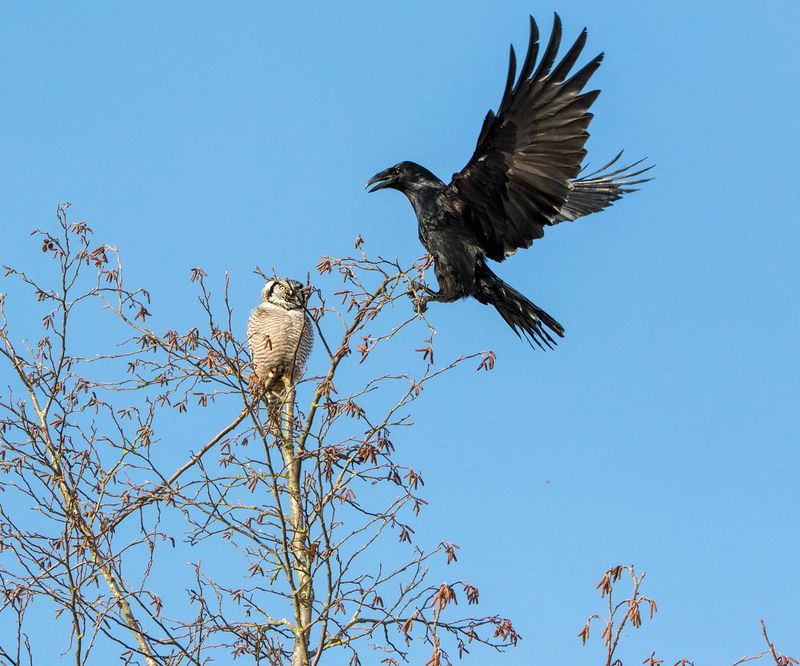
Crows rarely waste that much energy for nothing. When a dozen of them circle one tree, call nonstop, and dive at the same branch, they have found something they don’t like.
Scientists call this behavior mobbing. Small birds and big birds both do it, but American crows are the loudest experts around. Their harsh, repeated caws are a public announcement that says a predator is here and everyone should know about it.
I noticed something else the first time I watched closely. The crows kept their distance, usually a few feet away, and kept flipping around on nearby branches. They were bold, but not careless.
So the mob itself is your clue. Instead of looking at the crows, look where they are looking. Follow their beaks and their swoops to the thickest part of the canopy, the trunk fork, or a shadowy evergreen limb.
Mobbing can also target hawks, cats, foxes, or even a person crows remember. Still, a long session focused on one tree during daylight very often means a resting owl. That makes it one of the easiest owl-finding tricks a backyard gardener can learn, and it costs nothing but a little patience.
Owls Are The Crows’ Nighttime Enemy
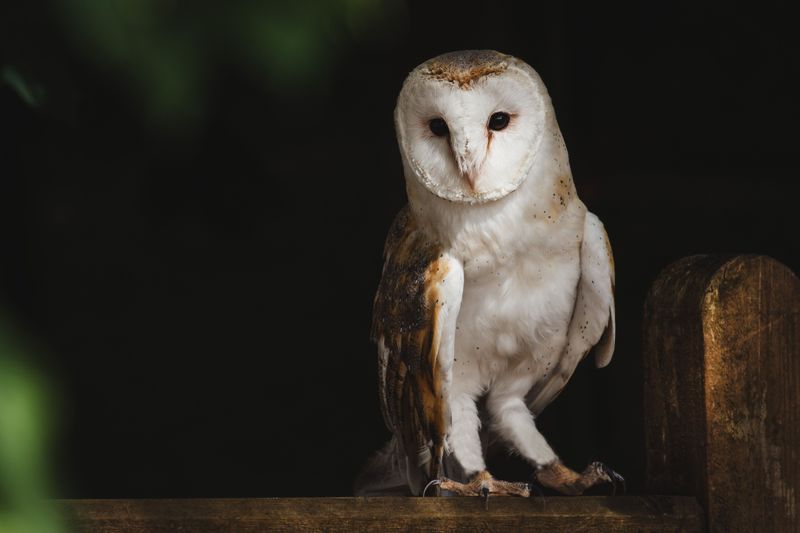
Picture-perfect revenge isn’t quite the right phrase, but crows sure act like they have a score to settle. Great horned owls hunt crows at night, and they are one of the few predators that can grab adults right off their roosts.
Crows are active by day and sleep in groups after dark. That leaves them open to a silent owl attack while they rest. Researchers who study crows have documented owls as a major threat to both adults and nestlings.
Daylight flips the power. Most owls want to sleep through the afternoon, and their eyes and hunting style work best in low light. A drowsy owl surrounded by shouting crows has a rough day ahead.
By mobbing, crows try to push the owl out of their home range. They also teach young crows exactly what a dangerous predator looks like. Studies show crows learn threats from each other, so one noisy morning can educate a whole family.
That’s the real story behind the ruckus. It’s a protective move, not random bullying, and it has been shaping crow and owl behavior for a very long time.
Scan The Trunk And Thick Branches For An Owl’s Shape
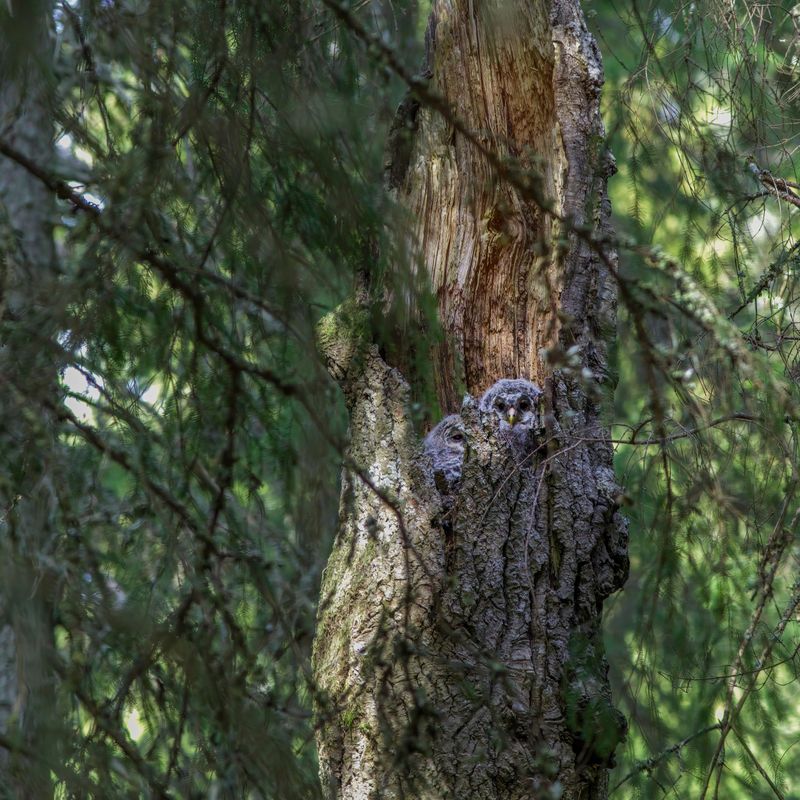
Owls are masters at looking like bark. Brown, gray, and streaky feathers help them disappear against a trunk, so you need to search smart instead of just staring.
Start at the spot where the crows gather most. Look for a lump on a branch that seems too round, or a shape tucked close to the trunk. Owls often sit right next to the main stem, where shadows hide them best.
Binoculars help a lot here. Slowly scan from the trunk outward, checking forks and thick limbs. Watch for ear tufts, a flat round face, or two eyes suddenly opening at you.
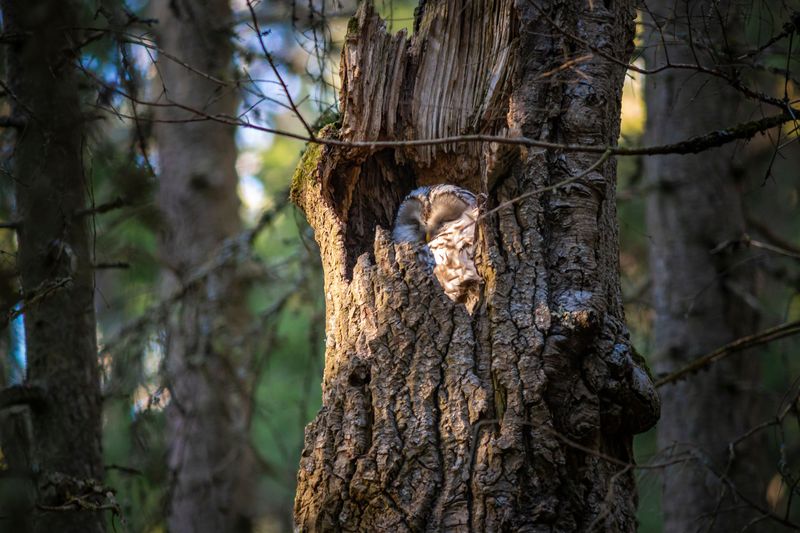
Evergreens like white pine, spruce, and eastern red cedar are favorite hiding places in winter. Thick ivy-covered trunks and tree cavities also work for smaller owls.
If you still can’t find it, check the ground under the tree. Pellets, which are small gray bundles of fur and bones, and white splash marks on the bark can point to a regular roost. Coming back at dusk might reward you with a glimpse as the owl stretches and flies off to hunt.
Great Horned Owls Top The Suspect List
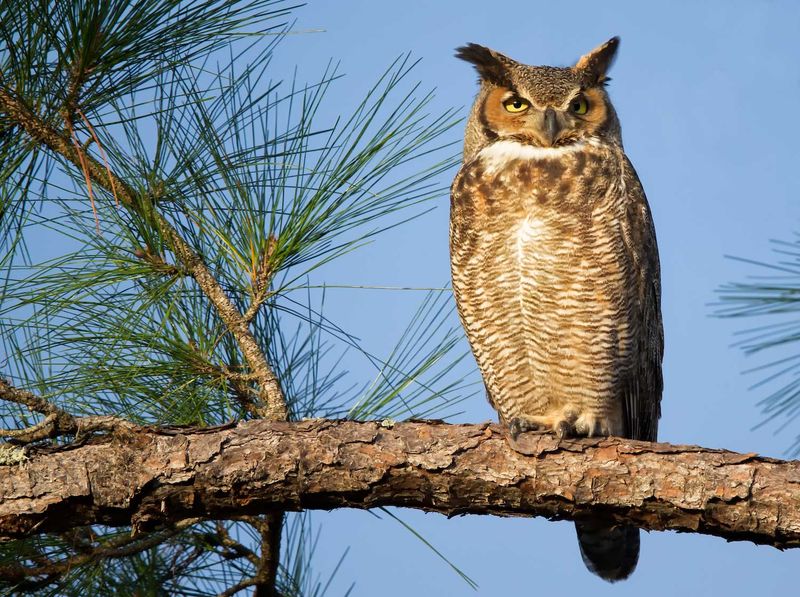
Big, tough, and grumpy-looking, the great horned owl is the bird crows hate most. It lives year-round across Indiana, from farm woodlots to city parks.
You’ll know it by those feathery ear tufts, which aren’t ears at all. It also has bright yellow eyes, a white throat patch, and a body that can reach nearly two feet tall. Its wingspan can stretch past four feet.
These owls eat a huge variety of prey. Rabbits, mice, skunks, ducks, and other birds are all on the menu, crows included. That wide diet is exactly why crows treat them like public enemy number one.
I’m the first to admit I mistook one for a broken branch the first time. It sat so still that only a slow head turn gave it away.
Listen at night too. A deep, soft hoot pattern, often sounding like who’s awake, me too, means a great horned owl is nearby. Hearing those hoots in your neighborhood makes a daytime crow mob much more likely to lead you to one.
Barred Owls And Little Screech-Owls Get Mobbed Too
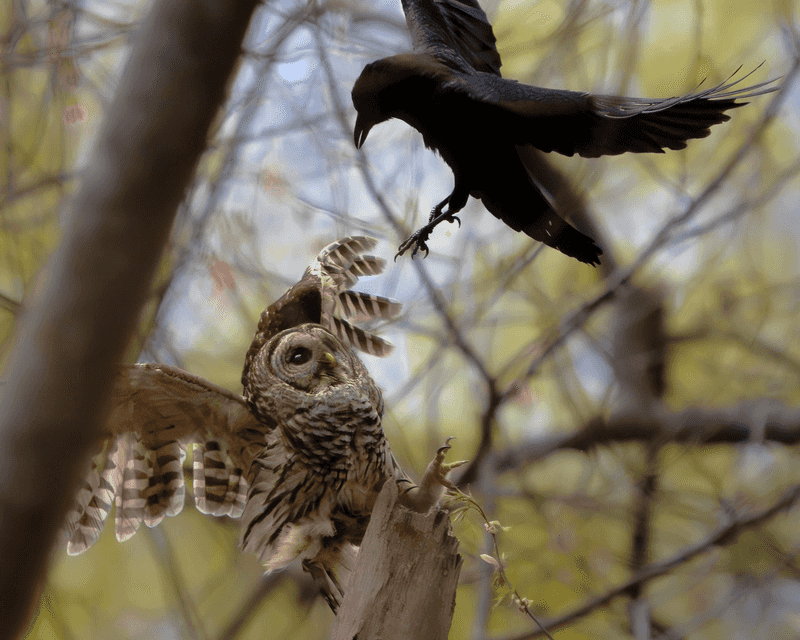
Not every mobbed owl is a giant. Indiana has two other common year-round owls that crows like to harass.
The barred owl has dark brown eyes, a round head with no tufts, and stripes running down its belly. It loves wet woods, river bottoms, and big old trees near creeks. Its famous call sounds like who cooks for you.
The eastern screech-owl is much smaller, about the size of a robin with a chunky build. It comes in gray or reddish forms and has little ear tufts. Many folks don’t realize these tiny owls live in suburban yards, often inside old tree holes or nest boxes.
Crows, blue jays, and chickadees all scold screech-owls when they spot one peeking from a cavity. A smaller mob of songbirds often points to this little guy.
Other owls pass through in winter, like long-eared and northern saw-whet owls, but they are uncommon. Short-eared owls prefer open fields. So in a typical backyard, your best bets remain the great horned, barred, and screech-owl.
Bare Winter Trees Make Crow And Owl Showdowns Easier To See
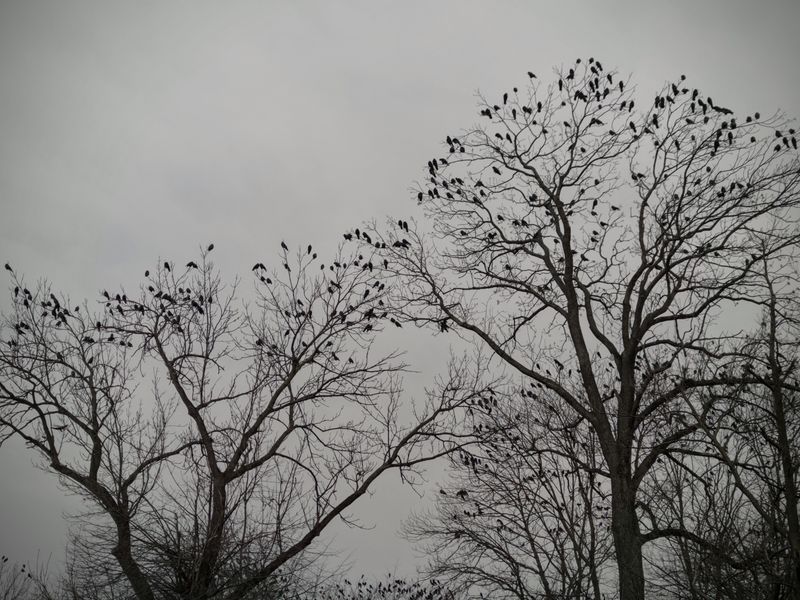
Every winter, I hear more crow drama than I do in July. Part of that is simple, because leafless trees put the whole show on display.
Crows also form big communal roosts from late fall into early spring. Some Indiana towns host thousands of them each evening. More crows moving around means more eyes searching for owls.
Great horned owls add to the action. They start courting and hooting in early winter, and many lay eggs in January or February. Nesting owls stay close to one area, which makes them easier for crows to find again and again.
Spring brings another bump. Crows nest in March and April, so they get extra protective of their young. Any owl near a crow nest is in for loud company.
Summer mobbing still happens, but thick leaves hide much of it. If you want the best odds of matching a crow mob to an actual owl, cold months are your golden season. Grab a coat, a warm drink, and your binoculars when the cawing starts.
Give The Roosting Owl Plenty Of Space
Trust me on this one, the urge to get close is strong. But a stressed owl already has a crow mob to deal with, so it doesn’t need you too.
Watch from a comfortable distance, ideally from a window or patio. If the owl stares at you, flattens its feathers, or shifts around nervously, back off. Flushing an owl in daylight can push it into more crow attacks.
Skip calling playback recordings to lure owls, especially during nesting season. It can disturb them and waste their energy. Flash photography close up isn’t kind either.
Keep pets inside if a small owl is roosting low. Outdoor cats can bother screech-owls, and the owls may avoid your yard afterward.
Owls are protected under the federal Migratory Bird Treaty Act. Harming, capturing, or keeping one, even feathers, is illegal without a permit. If you find an injured owl, call the Indiana Department of Natural Resources or a licensed wildlife rehabilitator rather than handling it yourself. A respectful viewer often gets to enjoy the same owl for weeks.
Old Trees And Owl Boxes Turn Your Yard Into A Hangout
Here’s my favorite part, because gardeners can actually shape this story. Owls stick around yards that offer shelter, food, and safe nooks.
Big mature trees matter most. Oaks, sycamores, and native evergreens like white pine and eastern red cedar give owls cover all year. If an old tree has a hollow limb that poses no safety risk, consider keeping it for cavity nesters.
Snags, or standing dead trees, are wildlife hotels. When one is far from your house and walkways, leaving it up helps owls, woodpeckers, and more.
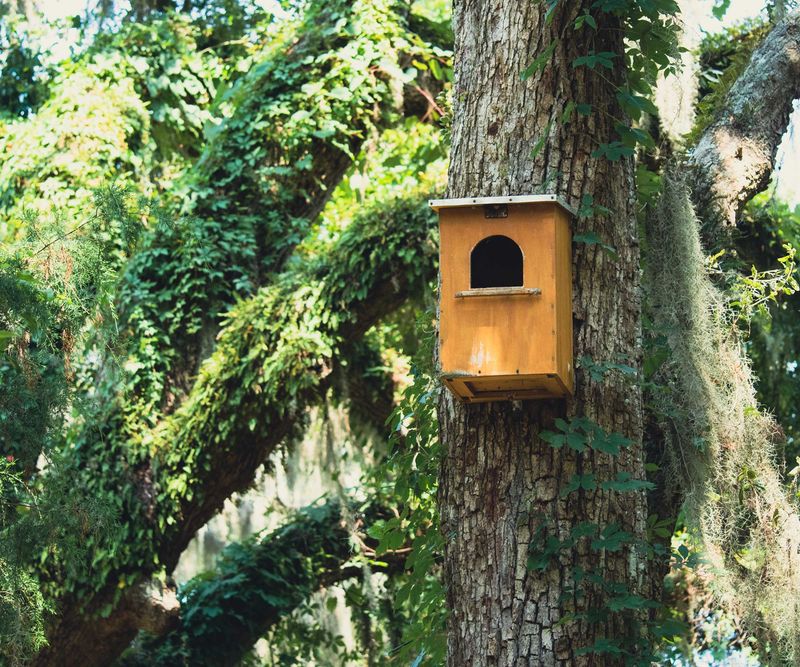
Screech-owls readily use nest boxes. Mount one 10 to 30 feet high on a tree trunk, with a 3-inch entrance hole and a couple inches of wood shavings inside. Late winter is a fine time to put it up.
Go easy on rodent poison too. Owls that eat poisoned mice can get sick. Letting owls handle rodent control is free and natural.
Next time crows start yelling, smile and grab your binoculars. Your yard just told you it’s good enough for an owl.