When Swainson’s Hawks Pass Through Arizona: The Usual Fall and Spring Pattern
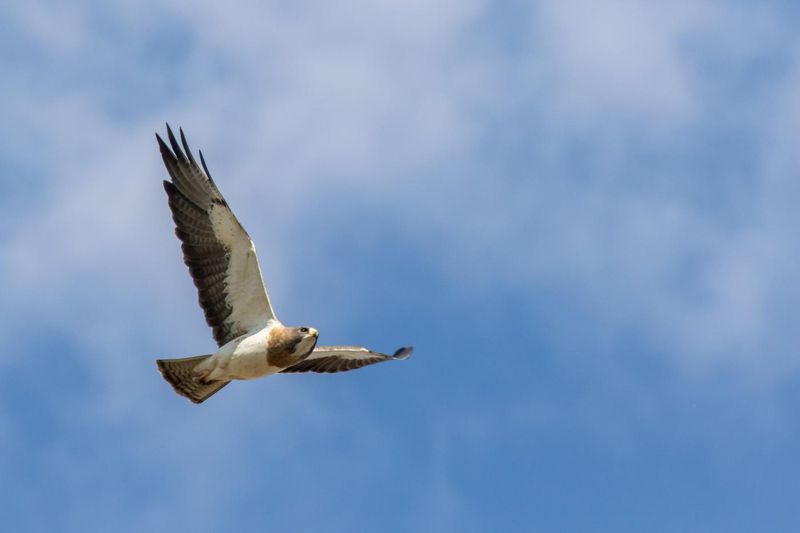
Look up on a fall day in Arizona, and a slim hawk riding the wind might be a traveler on a very long trip. Swainson’s Hawks pass through the state each year, but they are not easy to catch in the act.
Knowing when they move and where to look gives you a much better shot at spotting one. Here is what the usual pattern looks like, and what a single glimpse can and cannot tell you.
October falls within Arizona’s usual fall passage
Mark the calendar and you will see why October sightings come up. Arizona’s species account places fall migration from August to mid-October, and spring migration from mid-March to May.
So a hawk circling overhead early in October could well be a migrant on its way south. The window is a general pattern for the species across the state, and it works like a rough season, not a schedule.
That matters because passage varies. Some places may see many birds on a good day, while other neighborhoods see none at all.
Weather, wind, food, and local landscape all shape where a hawk happens to be on a given afternoon.
A glimpse in October is a fun reason to keep watching the sky, not a sign that a hawk is about to leave on a certain date. By mid-October the fall window is closing, so later sightings become less typical, though birds do not follow a calendar perfectly.
Treat the dates as a guide to when your odds are better, and enjoy whatever the sky offers.
A hawk overhead does not make a yard its regular stop
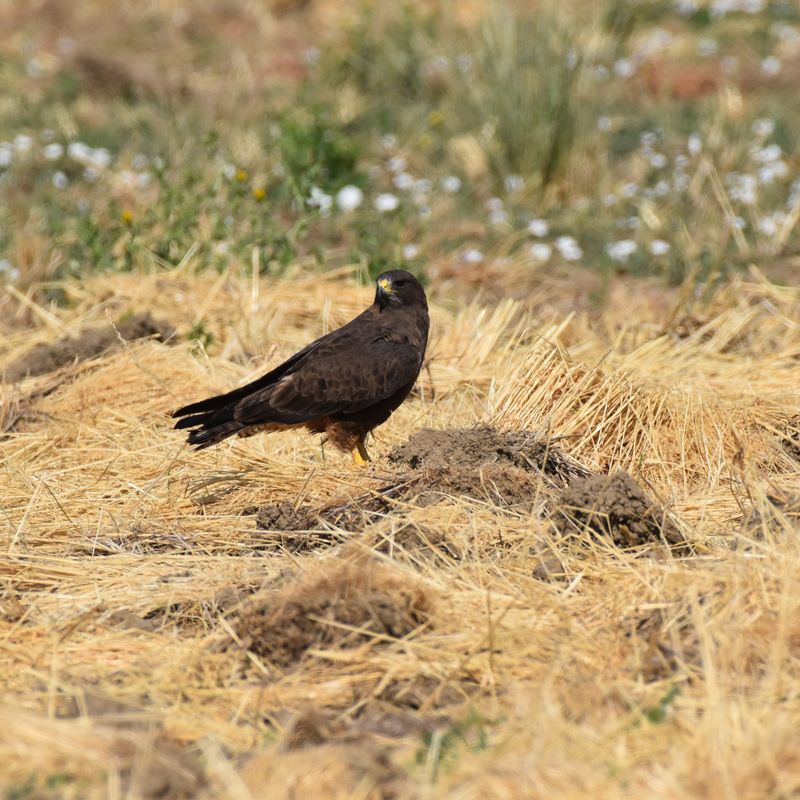
Picture a hawk crossing the sky above your block. It may be a traveler, but that does not turn your yard into a regular stop on its route.
Swainson’s Hawks are tied to wide open country. Arizona’s species account describes them using open grassland and agricultural fields, with the species concentrated in southeastern Arizona.
Typical residential yards are not prime habitat for them. A bird may pass over town while following a broad migration path, then settle somewhere with open ground and plenty of room to hunt.
Audubon Southwest points birders toward farm country rather than backyards when watching fall passage. That is a useful reminder that a rare overhead moment is different from a repeat visitor.
If you do spot one, it is a bonus. Plenty of Arizona yards will go years without one, and that is normal.
Field marks can help identify a hawk overhead
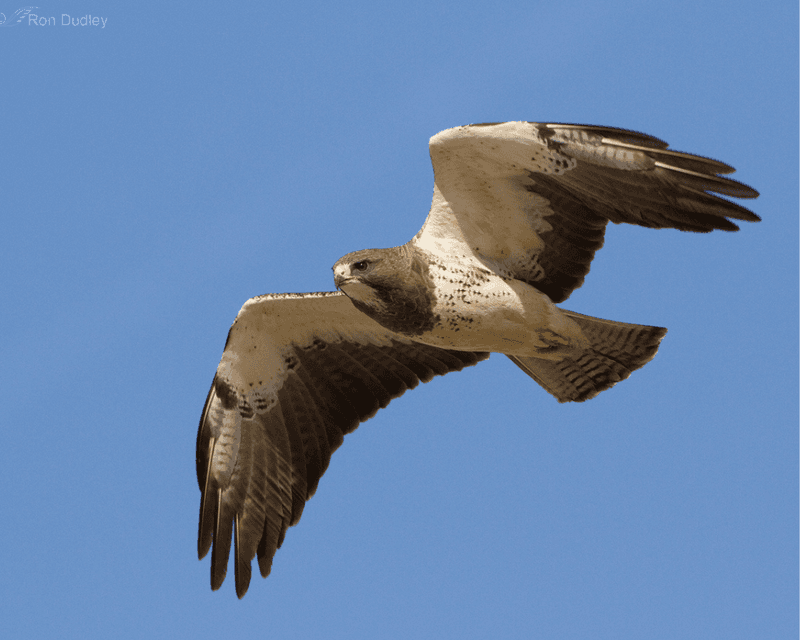
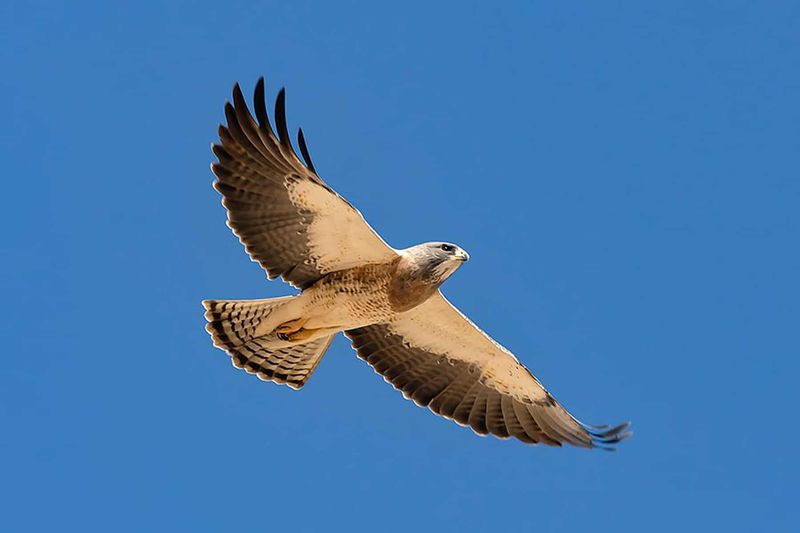
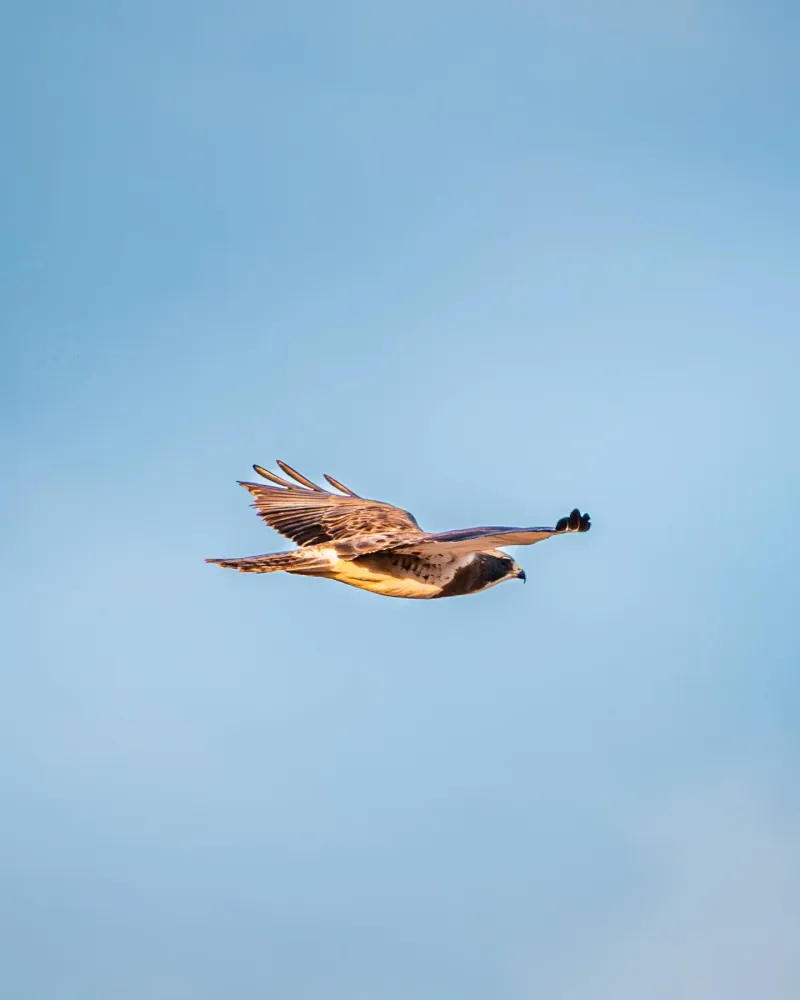
Shape and flight style are your best clues when a hawk is high up. Cornell’s identification guide describes a relatively slender hawk with long, pointed wings.
Watch how it soars. Swainson’s Hawks often hold their wings slightly raised in a shallow V, and may rock a little as they ride the air.
On many light-morph birds, the pale linings under the wings stand out against darker flight feathers. That two-tone look can be a handy clue when the light is good.
Your Arizona Garden Changes Every Week. Your Plan Should Too.
Gardening in Arizona changes quickly throughout the season. Every Friday you’ll receive a simple weekly plan showing exactly what to plant, prune, fertilize, harvest, and protect so you never miss the right timing.
Still, plumage varies quite a bit from bird to bird. A distant silhouette, a backlit view, or a quick pass may not be enough for a confident call.
If you cannot be sure, that is okay. Binoculars, a few photos, and a note of the time and place help you look closer later, and it is fine to log it simply as a hawk.
Winter absence is typical, not certain
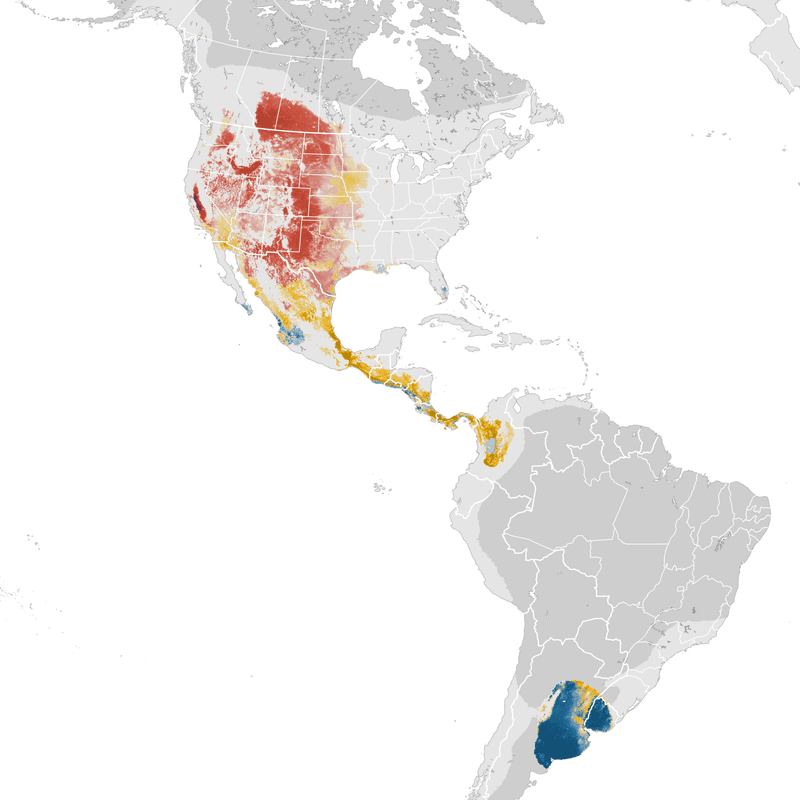
By November, Arizona’s skies usually look different. The state species account lists the hawks as typically absent from November through February.
Most of them spend the winter far away in South America. Range maps from Cornell show just how long that trip is.
Routes are not identical, either. A USGS migration study found hawks spread across a broad front, and some used stopover areas in places such as southern Arizona and New Mexico.
That means not every bird takes the same path or pauses in the same spot.
The word to remember is typically. It describes the usual pattern, not an ironclad rule, so a hawk seen in winter is not impossible.
If you do see a hawk in December, take a careful look, since many other hawks live in Arizona year round.
Open country offers better-supported viewing chances
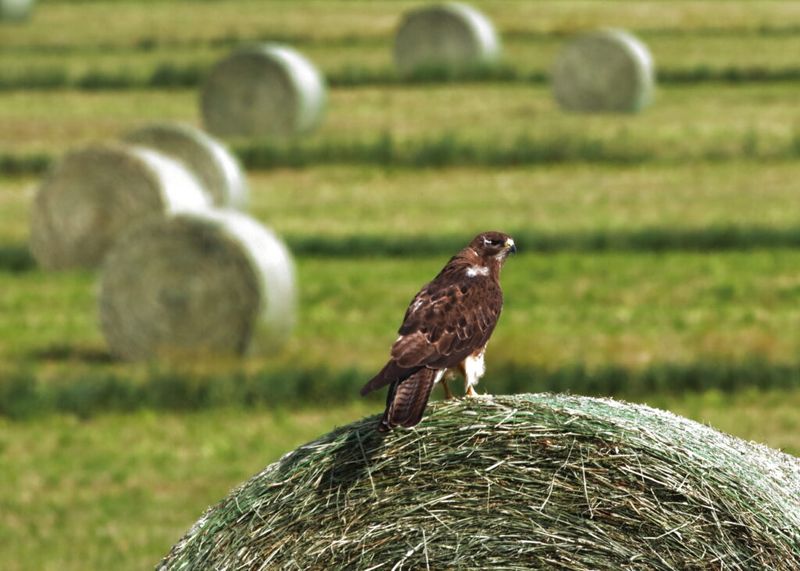
If you want to improve your odds, head for wide-open land. Audubon Southwest highlights agricultural areas west of Phoenix and southeastern Arizona as places to watch fall passage.
Fields and grasslands give the hawks room to soar and hunt. Even so, nothing here guarantees a sighting, and a quiet afternoon is part of birding.
Bring binoculars, a hat, water, and patience. Scan the sky over fields, and check fence posts and power poles where raptors sometimes perch.
Keep a respectful distance. Arizona Game and Fish notes that raptors are protected, so do not approach, harass, trap, or handle one.
Steer clear of any area where a bird seems to be defending a nest. If a hawk circles loudly or dives toward you, back away quietly and give it space.
A spring passage does not identify the same hawk
Spring brings the story full circle. Arizona’s species account lists northbound migration from mid-March to May, so the species usually passes through again.
That is a pattern for the whole population. Researchers who followed tagged birds in a USGS migration study used special equipment, something an ordinary sighting cannot match.
So the hawk you spot this fall cannot be tied to the one you might see next March. You would not know if it was the same bird, and it may take a different route entirely.
Seasonal migration is a rhythm you can count on loosely. A particular bird is a mystery that stays in the sky.