When to Cut Back Overwintered Geraniums in Michigan for Fuller Spring Plants
The flowers we call geraniums are not true geraniums at all. They belong to a South African group called Pelargonium, and their wild relatives grow on sunny, rocky slopes with no snow in sight.
That sun-loving history explains a lot. Those pots sulking in your basement or sunroom right now are basically tourists waiting for a warmer climate.
I like how stubborn they are, though, because a bare, lanky stem can still turn into a flower machine by June. Here in Michigan, our long winters push these plants to their limits.
Short days, dry indoor air, and a dim window can leave them looking like tired green spaghetti. You may be tempted to toss them out and buy fresh ones. Personally, I think that would be a mistake. A few well-timed snips can change everything.
1. Those Leggy Geranium Stems Are Sending You a Message
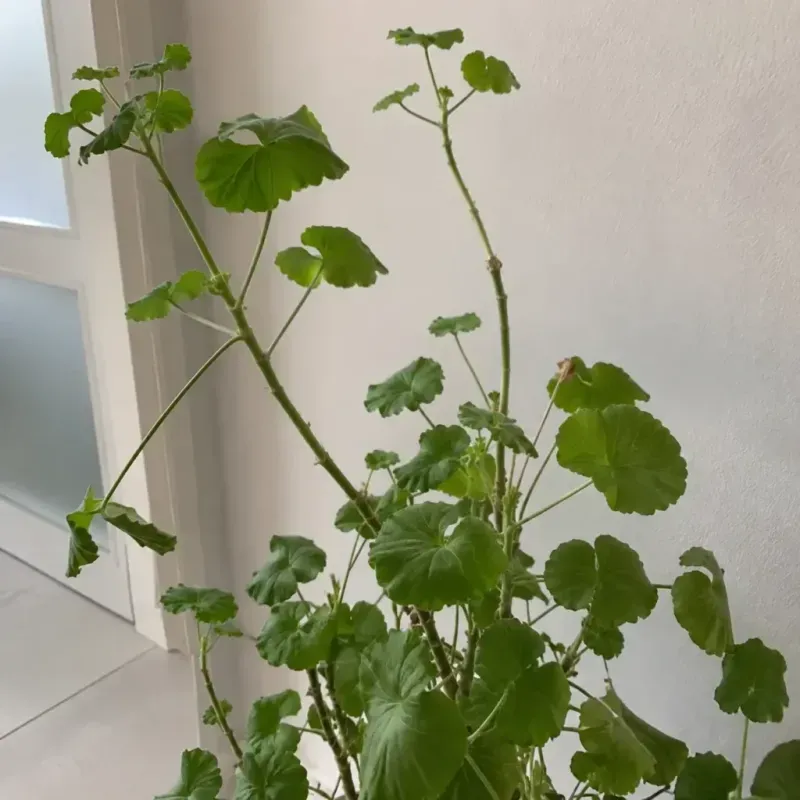
Every winter, my windowsill geraniums put on the same odd show. Their stems stretch out like they are trying to climb right through the glass. By February, they look more like skinny broomsticks than bedding plants.
That stretching has a clear cause. Indoor light in winter is far weaker than summer sun, so the plant grows longer spaces between its leaves while reaching for brightness.
Gardeners call this legginess, and university extension experts note it is a normal response to low light.
Warm rooms make the problem worse. When temperatures stay cozy but light stays dim, the plant keeps growing without the energy to grow sturdy. You end up with soft, pale shoots and a few leaves clustered at the tips.
Left alone, those long stems rarely fill back in on their own. The bare lower sections tend to turn woody, and new leaves mostly appear only at the ends. That means fewer branches and fewer spots for flower clusters later.
Here is the hopeful part of the story. Those stretched stems still hold plenty of hidden buds along their length. Cut them at the right time, and the plant wakes those buds up, trading one lanky stem for several bushy ones.
2. Late February Through March Is Prime Time for Pruning Geraniums
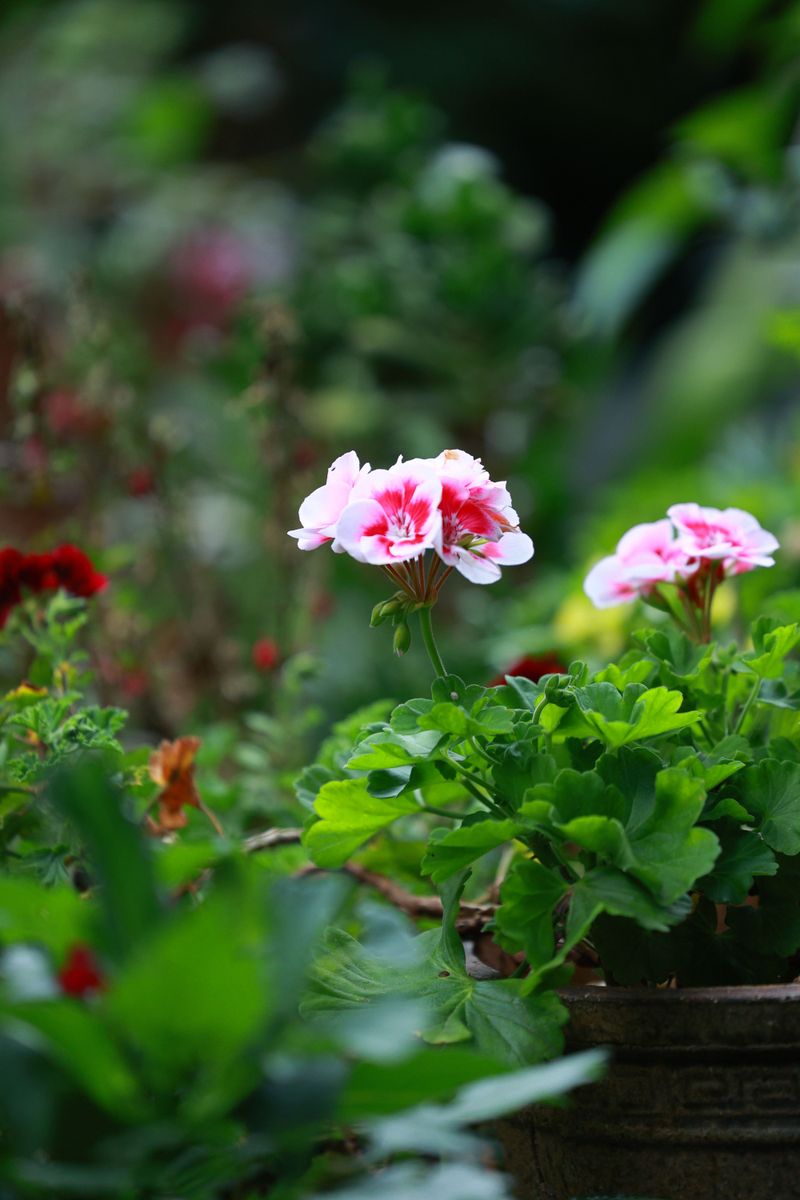
Mark your calendar for late winter. For most Michigan gardeners, late February through March is the sweet spot for cutting back overwintered geraniums. Many extension and horticulture sources point to this same window.
Timing comes down to simple math. Geraniums need roughly eight to ten weeks after a hard pruning to grow new branches and set buds. Most of the state does not see safe planting weather until mid to late May, so a March trim lines things up nicely.
Regional differences matter too. Gardeners in southeast Michigan, closer to Detroit, often plant out a bit earlier than folks in the northern Lower Peninsula or the Upper Peninsula. If you live farther north, leaning toward mid or late March works well.
Plants stored dormant in a cool, dark basement need one extra step. Pot them up and bring them into light first, then wait for small green shoots before you prune. Those shoots tell you the plant is awake and ready.
Your Michigan Garden Changes Every Week. Your Plan Should Too.
Gardening in Michigan changes quickly throughout the season. Every Friday you’ll receive a simple weekly plan showing exactly what to plant, prune, fertilize, harvest, and protect so you never miss the right timing.
Cutting too early, like in December, often leads to a second round of weak, stretched growth. Waiting until April can delay flowers into summer. March gives you the best balance.
3. Snip Just Above a Leaf Node for Bushier Geraniums
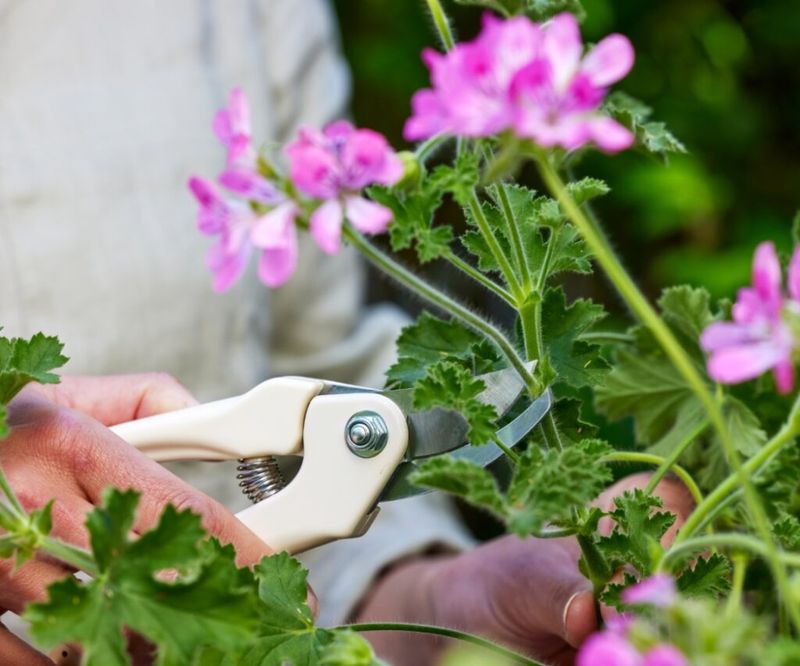
A healthy geranium can bounce back from a surprisingly bold haircut. Most gardeners do well cutting each healthy stem back by about one-third to one-half. Very leggy plants can go even shorter, down to a few inches tall.
Now look closely at a stem. You will spot small, slightly swollen bumps where leaves once grew. Those are leaf nodes, and each one holds a dormant bud ready to sprout.
Make your cut about a quarter inch above a node. A slight angle helps water roll off the wound. Leaving a long stub above the node invites rot, while cutting right into the node can harm the bud.
Try to keep at least two or three nodes on each stem. Those are your future branches. I like to aim for an even, rounded shape, trimming taller stems more and shorter ones less.
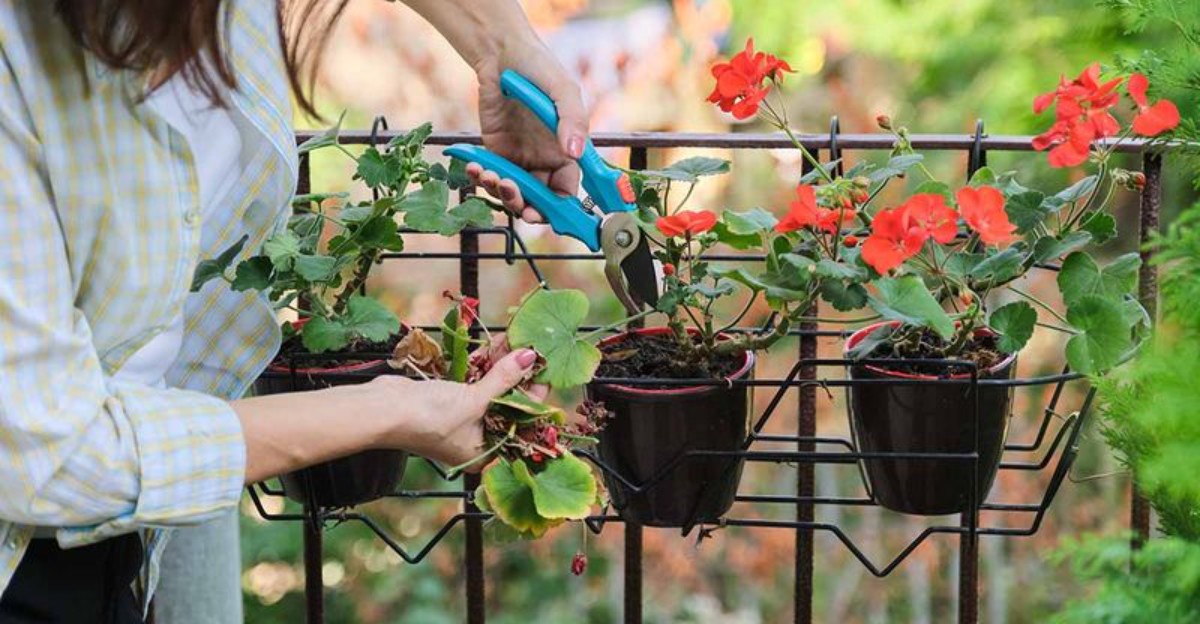
Use sharp, clean snips or scissors. Wiping blades with rubbing alcohol between plants helps reduce the spread of disease. Ragged cuts heal slowly and can leave openings for trouble.
Within two or three weeks, tiny green shoots should appear right below your cuts. That is your fuller plant getting started.
4. Clear Out Shriveled Geranium Stems and Yellow Leaves First
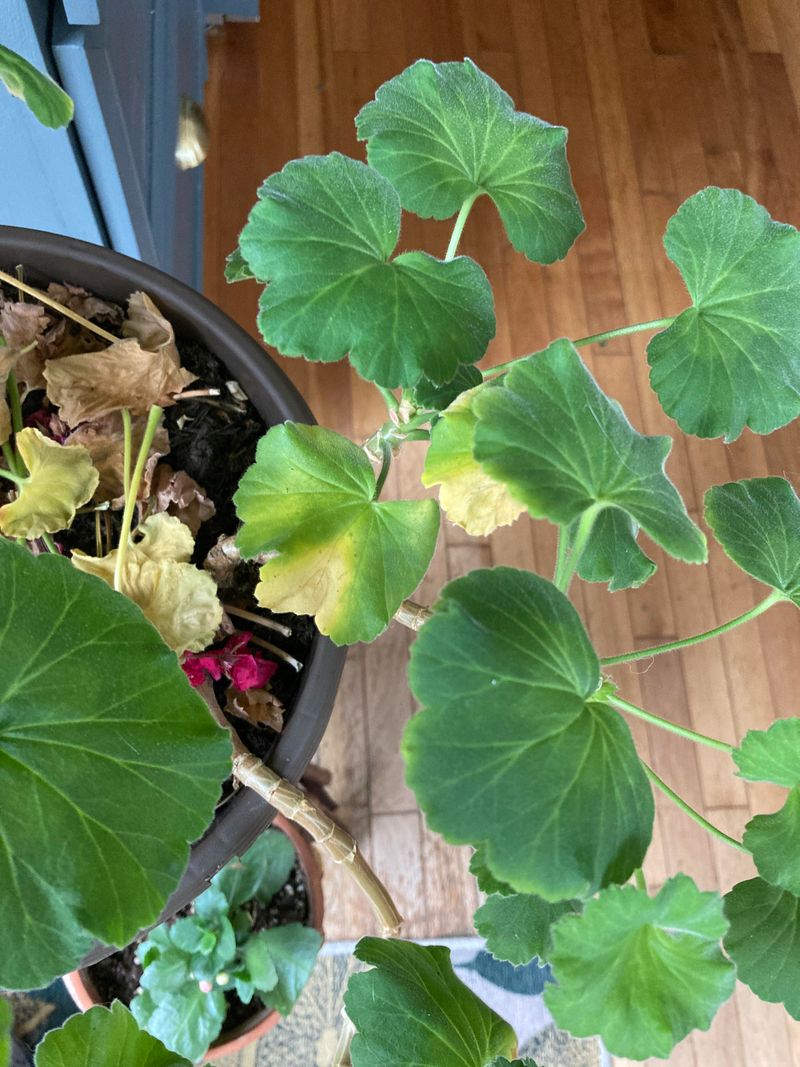
Cleanup comes before shaping. A winter indoors usually leaves some casualties, like crispy stems, yellowed leaves, and mushy spots. Removing them gives you a clear view of what you are working with.
Give each stem a gentle squeeze. Healthy ones feel firm and look green or tan inside when scratched. Stems that feel hollow, papery, or soft and dark at the base are past saving and should come off.
Soft, blackened stem bases deserve extra attention. That can signal stem rot, which often follows overwatering in a cool spot. Cut well into clean, firm tissue, and toss the removed pieces in the trash instead of the compost.
Fuzzy gray mold on leaves is another common winter visitor. Called botrytis, it thrives in damp, still air. Pick off affected leaves and give the plant better airflow going forward.
Brush away fallen leaves from the soil surface too. That litter can hold fungus spores and hide pests like whiteflies or aphids. Check under the leaves while you are there.
Once the cleanup is finished, the plant may look a bit sparse. Do not worry. You just made room for fresh growth.
5. Turn Those Geranium Cuttings Into Brand New Plants
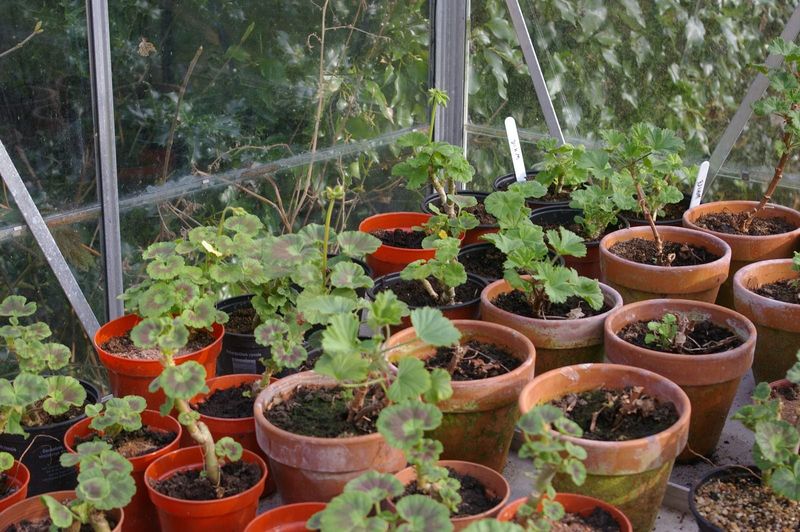
Free plants, anyone? Those trimmed stems do not have to go in the bin. Geraniums are among the easiest plants to root from cuttings, and spring pruning hands you a pile of them.
Choose healthy tip pieces about three to four inches long. Strip off the lower leaves and any flower buds, leaving two or three leaves on top. Cut the base just below a node, since roots form most readily there.
Many growers let cuttings sit out for a few hours so the ends dry slightly. Then stick them into moist, well-draining potting mix or a seed-starting blend. Rooting hormone can help, though geraniums often root fine without it.
Skip the plastic bag dome. Unlike many plants, geraniums are prone to rot in high humidity. Bright, indirect light and lightly moist soil work best.
Roots usually form in about three to four weeks. A gentle tug that meets resistance tells you they have taken hold. At that point, move them into slightly larger pots.
I love this part of spring. One overwintered plant can become a whole windowbox by May, and your favorite colors carry on another year.
6. Bright Light and Careful Watering Help Pruned Geraniums Rebound

After a trim, your geranium has one big job. It needs to grow new shoots, and that takes light. Plenty of it.
Move the pot to your sunniest south or west window. If Michigan skies stay gray, which happens often in March, consider an LED grow light. Keep it a few inches above the plant and run it about 14 to 16 hours a day.
Cooler temperatures help too. Daytime readings in the mid 60s and nights near 55 to 60 degrees encourage compact, sturdy growth instead of more stretching.
Watering needs drop right after pruning since there are fewer leaves using moisture. Water thoroughly, then let the top inch of soil dry before watering again. Soggy soil is the quickest route to root rot.
Hold off on fertilizer for a couple of weeks. Once new leaves are clearly growing, start a balanced water-soluble fertilizer at half strength every two weeks or so.
Rotate the pot a quarter turn every few days. That keeps growth even, so you do not end up with a lopsided plant leaning toward the glass. Small habits like these add up quickly.
7. Pinching New Geranium Tips Doubles the Branching
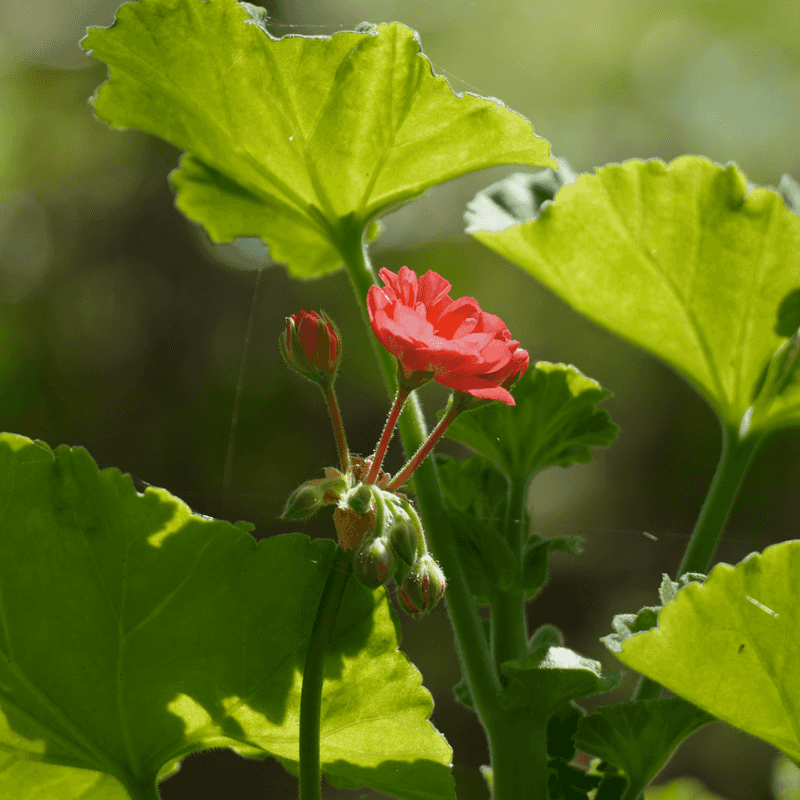
Picture this as round two of shaping. Once new shoots grow about four to six inches long, a quick pinch can push your plant from decent to downright bushy.
The method is wonderfully simple. Use your thumb and finger to nip off the soft growing tip just above a set of leaves. No tools needed.
Removing that tip shifts the plant’s energy to the buds below. Instead of one shoot heading straight up, you often get two side branches. More branches mean more spots for flower clusters.
You can repeat this every few weeks through April. Just stop pinching roughly six weeks before you want strong blooms outdoors. Late pinching removes developing flower buds and delays your color.
Do you see an early flower bud forming in March? Many gardeners pinch those off too. It sounds harsh, but the plant puts that energy into leaves and roots instead.
I find pinching oddly satisfying, like tidying up a messy drawer. A few seconds per plant pays off with a dense, rounded shape by Memorial Day. Your neighbors may wonder whether you bought new plants.
8. Harden Off Your Geraniums Before Moving Them Outside in May
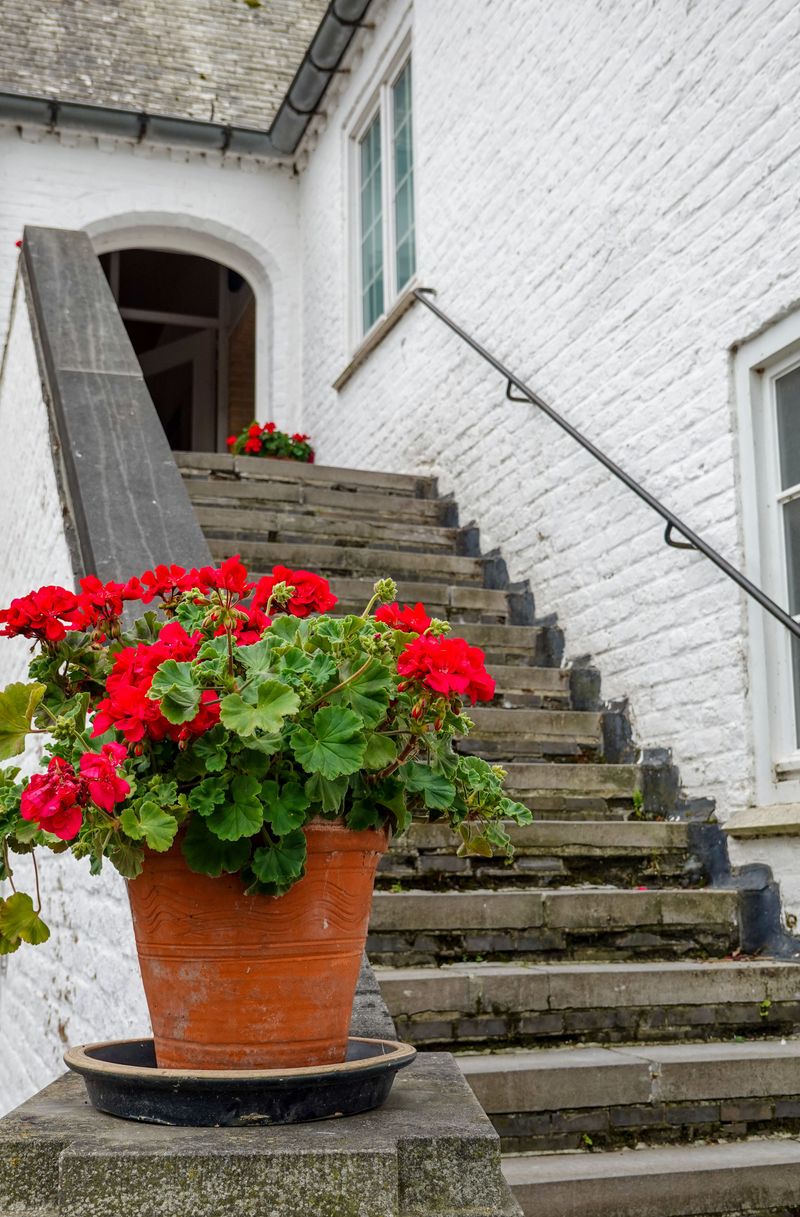
Patience pays off in the final stretch. Geraniums are tender plants that struggle with frost, and Michigan springs love surprise cold snaps. A sudden move outdoors can scorch or stunt them.
Hardening off eases the transition. Start about one to two weeks before planting. Set pots in a sheltered, shady spot for a few hours, then bring them in.
Each day, add more time outside and more sun. By the end, they should handle a full day of sunshine and breezy weather. Bring them indoors on nights forecast below about 45 to 50 degrees.
Final planting time depends on where you live. Southern Michigan often reaches its average last frost date in early to mid May, while northern areas and the Upper Peninsula may wait until late May or early June.
Check your local frost date through MSU Extension resources. Plant in a sunny spot with well-drained soil. Geraniums bloom best with at least six hours of direct sun daily.
That bare stick from February should now be a full, branching plant. A March cut, steady light, and a slow move outdoors make all the difference.