8 Things Michigan Rose Bushes Need In November To Survive A Hard Winter
Parts of Michigan’s Upper Peninsula can drop to minus twenty degrees or colder during a January cold snap. That kind of cold can split woody stems open, and a few garden favorites suffer more than most.
What I find interesting is how much of their survival gets decided weeks before the first big snowfall arrives.
Moisture in the soil and leftover leaves on the ground can quietly tip the balance one way or another.
I learned this the hard way after losing a gorgeous shrub I had babied all summer long in Michigan. You might be surprised by how small and simple the fixes turned out to be the following year.
Most of these jobs take an afternoon and cost little more than a few bags of soil and leaves.
So which November chores actually make the difference between bare stubs and a yard full of June color?
1. Leave Fading Rose Hips On The Canes
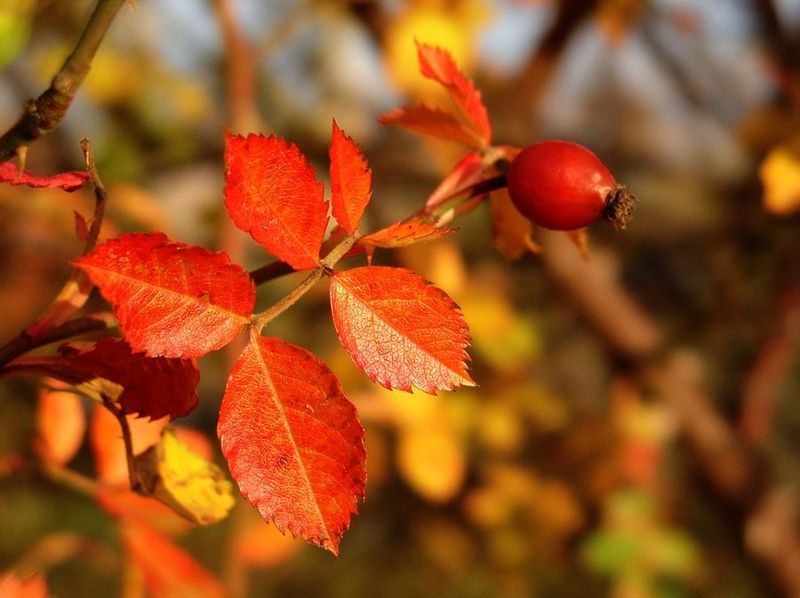
Those plump orange rose hips forming on your bushes right now are doing far more than looking pretty. Once a rose sets seed, it gets a strong signal that the growing season is winding down for the year.
I used to snip off every faded flower until Thanksgiving because I hated seeing scruffy brown petals hanging around. Then a rosarian friend explained that late deadheading can push out soft new shoots right before hard frost.
Tender growth like that has no time to toughen up, so cold snaps often damage it within days. Most extension experts suggest you stop deadheading in early fall and let the last blooms fade naturally on the plant.
Feeding works the same way, which is why fertilizer should have stopped by around mid-August in most gardens. If you slipped and fed late this year, skip any more products and simply let nature take over.
Those hips also bring a bonus, because hungry birds like cedar waxwings and robins will snack on them. Some shrub roses produce especially large hips that look like little tomatoes glowing against a snowy backdrop all winter.
Not every hybrid tea forms hips reliably, and that is perfectly fine for this step to still work. The main goal is simply to stop encouraging growth so the canes can harden before the deep freeze.
Putting down the pruners for a few weeks feels strange, but your roses will thank you next June. I now think of those scruffy seed heads as tiny winter coats rather than an untidy eyesore in the garden.
2. Deep Watering Before The Ground Freezes

Winter wind can pull moisture right out of rose canes, even when the plants look sound asleep outside. Gardeners call this winter desiccation, and it explains a lot of those shriveled brown canes we find in April.
Frozen ground locks water away from the roots, so the plant has nothing to replace what it loses. That makes the weeks before freeze-up your last real chance to fill the tank for the long haul.
I aim for about an inch of water each week if autumn rain has been stingy around here. A simple rain gauge or an empty tuna can set near the bush makes tracking that amount easy.
Aim the hose right at the base and let it trickle slowly so water soaks deep instead of running off. Keeping the leaves dry matters too, since wet foliage in cool weather invites fungal trouble on many varieties.
Morning is my favorite time to water, because the soil absorbs it before temperatures dip at night again. Remember to drain and store your hoses afterward so they do not crack during the first hard freeze.
Sandy soils along the Lake Michigan shoreline dry out faster, so roses there may need extra attention this month. Heavy clay holds moisture longer, so poke a finger into the soil before reaching for the hose each time.
A well-watered rose heads into winter plump and ready, a bit like a camel before a desert trek. Keep the routine going until the ground freezes solid, then put the watering can away until spring finally arrives.
3. Raking Black Spot Leaves From Rose Beds

Those yellowing leaves scattered under your roses might look harmless, but they can hide a nasty springtime surprise. Black spot, caused by the fungus Diplocarpon rosae, happily spends the winter tucked inside fallen foliage and infected canes.
When spring rain splashes on that old debris, spores bounce up onto fresh leaves and start the cycle again. I find it fascinating that one messy autumn bed can shape how your roses look all next summer.
Grab a rake and gently gather every leaf and petal you can find around the base of each bush. A pair of gloves helps here, because rose thorns seem to love grabbing at bare wrists in fall.
Bag up the spotted leaves or send them out with yard waste instead of tossing them in compost. Home compost piles rarely get hot enough to reliably break down fungal spores before you spread them again.
You might also notice a few leaves still clinging to the canes after several hard frosts have passed. Pluck off any spotted ones by hand so they do not drop later and reinfect the soil surface.
Cleaning up also removes cozy hiding spots where some insect pests like to wait out the cold months. Afterward, wipe your rake and pruners with a household disinfectant to avoid carrying spores to other plants nearby.
Healthy perennials and pollinator plants elsewhere can keep their standing stems, since this tidy rule mainly targets roses. Twenty minutes with a rake now often means far fewer spotted leaves when June blooms finally open up.
4. Trimming Tall Rose Canes Before Winter Winds
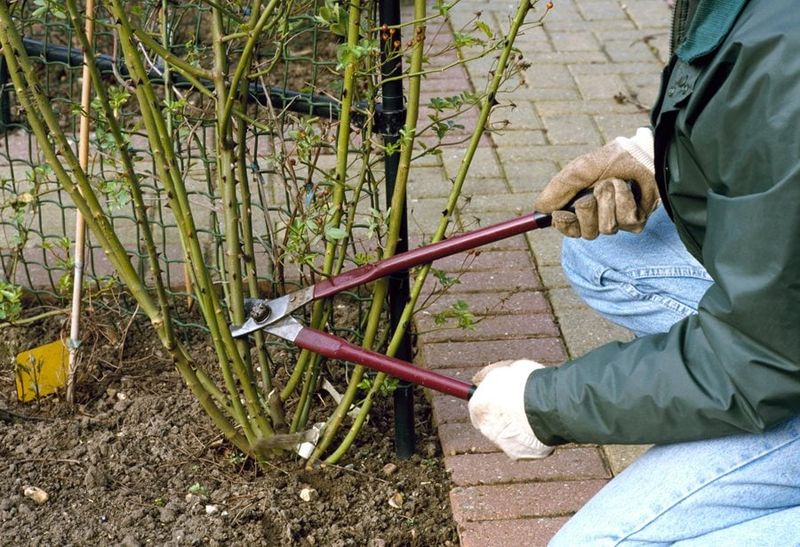
A six-foot rose cane flapping in a November gale acts a lot like a lever yanking on the roots. All that rocking can loosen the soil around the crown and snap canes right where they join the base.
I wouldn’t necessarily call this pruning, because the goal is just to shorten the tallest whips a bit. Many gardeners cut long canes back to around three or four feet before mounding and covering the plant.
Heavy fall pruning is a different story, and most rose experts recommend saving it for early spring instead. By then you can clearly see which canes made it through winter and which ones turned brown and brittle.
Wait until the plant is fully dormant after a few hard frosts so cuts do not trigger new growth. Sharp bypass pruners make clean slices that heal better than the crushed edges left by dull old blades.
While you are in there, snip out any broken or obviously diseased canes you spot along the way. Removing damaged wood now keeps it from rubbing against healthy canes when the wind starts howling all winter.
Tall shrub roses can also be loosely tied together with soft twine to keep them from whipping around. I like old cotton strips from worn-out shirts because they stay gentle on the bark all season long.
Keep your expectations simple here, since this trim is about stability rather than shaping a perfect bush today. A shorter, steadier rose rides out the windiest Michigan nights far better than a towering one ever could.
5. Mounding Soil Over The Rose Graft Union
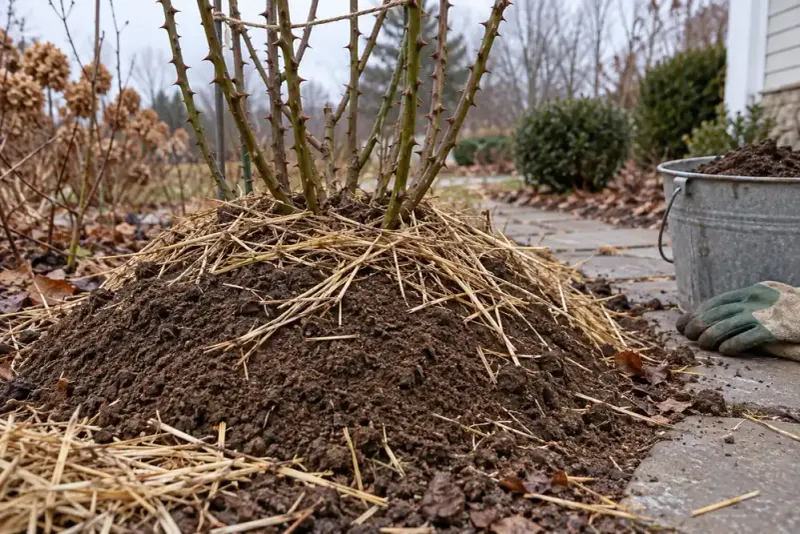
That knobby bump near the bottom of many roses is the graft union, and it is surprisingly fragile. Growers join a fancy flowering variety onto tough rootstock there, so losing it means losing the bloom you bought.
Hilling up soil over that spot is one of the oldest tricks in cold-climate rose growing for good reason. University guides commonly suggest a mound around eight to twelve inches tall after the first few hard frosts.
Timing matters more than you might expect, because mounding too early can trap warmth and invite rot underneath. In much of the Lower Peninsula, that window usually opens sometime in mid to late November each year.
Bring in fresh soil or compost from somewhere else instead of scraping it up from around the plant. Digging near the crown can expose shallow roots right when they need the most protection from freezing air.
What the mound really guards against is the constant freeze and thaw cycle that heaves and cracks tissue. A steady cold temperature is far easier on a dormant rose than wild swings between sunny and frigid.
Own-root roses and hardy shrub types like many Canadian Explorer varieties often need far less fuss here overall. Hybrid teas and grandifloras, however, tend to appreciate every inch of that soil blanket you provide.
Come spring, pull the soil away gradually once nights stay above freezing and new buds start swelling on canes. I usually spread that extra soil across nearby flower beds, so nothing goes to waste in my garden.
6. Shredded Leaves Piled Inside Wire Rose Cages
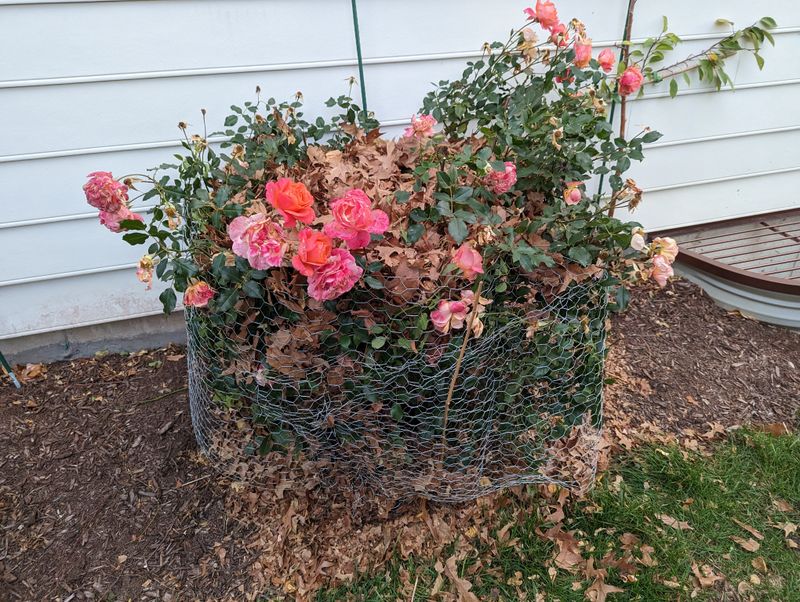
Your maple tree has been quietly producing free rose insulation all autumn, and you might be bagging it up. Shredded leaves packed around tender roses create a fluffy layer that traps air and softens bitter cold nicely.
Whole leaves tend to mat down into a soggy pancake, so run them over with a mower first. I love this chore because the shredded pile smells earthy and sweet, almost like a forest trail in fall.
To keep everything in place, circle each bush with a cylinder of chicken wire or hardware cloth this month. Make the cage a little taller than the trimmed canes so leaves can cover the tips well later on.
Fill it over the soil mound after the ground starts to freeze, which helps discourage mice from moving in. Rodents love a warm nest, and waiting until real cold arrives makes your cage less tempting to them.
Plenty of folks ask me about the foam rose cones sold at big garden centers every single fall. They can work, but solid cones may trap heat on sunny days and encourage mold underneath them quite quickly.
If you do use cones, choose vented styles or cut a few holes near the top for airflow. Weigh them down with a brick so a strong gust does not send them rolling across the yard.
Personally, I prefer the leaf cage method because it breathes better and costs almost nothing to build each year. By spring, those leaves have started breaking down and can go right into the compost pile or beds.
7. Climbing Rose Canes Wrapped In Burlap

Many climbing roses form their best blooms on canes that grew in earlier years, which raises the winter stakes. If those tall canes freeze back to the ground, you could spend next summer staring at bare trellis.
Exposed up high on a fence or arbor, they catch every icy blast that sweeps across the yard. You can see why northern gardeners have come up with some creative ways to shelter them over winter.
One popular approach is to gather the canes together and tie them loosely with soft garden twine first. Then wrap the bundle in breathable burlap, leaving it attached to the support for extra stability all season.
Stuffing a few handfuls of dry leaves inside the burlap adds another layer of cozy insulation for tender types. Skip plastic wraps, since they trap moisture and can cook the canes on bright winter afternoons in February.
In colder northern spots, some rose lovers go further and carefully lower the canes right to the ground. They pin them with landscape staples, then cover them with soil and a thick, fluffy blanket of leaves.
I’m continually surprised by how flexible climbing canes can be when you bend them slowly on a mild day. Frozen canes snap easily, so try to finish this job before temperatures drop well below freezing for good.
Hardier climbers like William Baffin often handle the cold with little help beyond a deep watering in fall. Check the plant tag for its hardiness zone, then decide how much bundling your climber truly needs this year.
8. Hardware Cloth Guards Against Hungry Rabbits
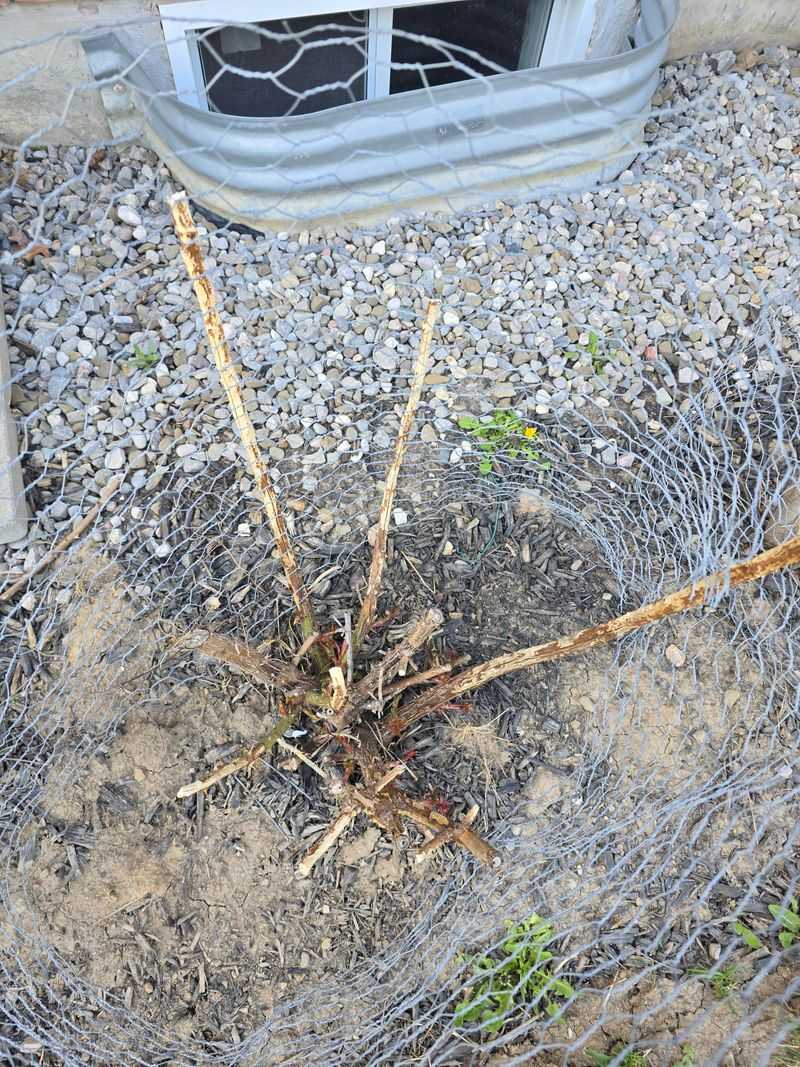
Fresh rabbit tracks in the snow look adorable until you follow them straight to your chewed rose canes. Once tender plants disappear under snow, hungry bunnies happily gnaw woody stems for a winter meal or two.
Rabbit damage is easy to spot, because they leave clean angled cuts that look almost like pruner work. Deer leave ragged, torn edges instead, since they have no upper front teeth for clean snipping at all.
Hardware cloth with quarter-inch or half-inch openings makes a sturdy barrier that rabbits struggle to chew through easily. Form it into a ring around each bush, tall enough to reach about two feet above expected snow.
That height matters, because deep drifts can turn a short fence into a handy step stool for bunnies. Bury the bottom edge a couple of inches into the soil so nobody sneaks underneath during a thaw.
Voles can also nibble roses below the snow, especially when thick mulch gives them a sheltered tunnel system. Pulling loose straw back slightly from exposed canes helps make that hidden buffet a little less inviting overall.
Deer pressure varies a lot across Michigan, and some neighborhoods see them browsing yards almost nightly in winter. Taller fencing or burlap screens can help there, though a determined deer may still find a way inside eventually.
I could be wrong, but I think a little wire now beats replacing a prized rose next spring. Set up your guards before the snow piles high, and enjoy watching those bunnies hop past empty-handed outside.