When To Plant Paperwhites And Amaryllis In California For Holiday Blooms
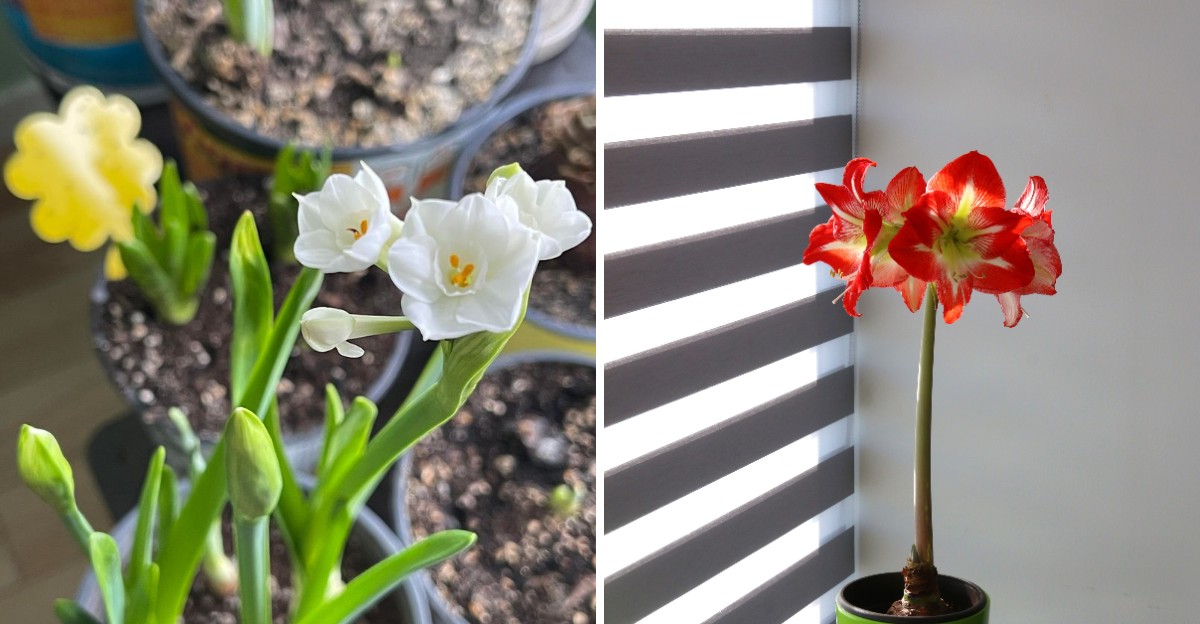
One winter bulb can go from a dry, papery lump to fragrant flowers in about four weeks, with nothing but pebbles and water.
Its showy cousin needs closer to eight weeks, and it rewards you with blooms the size of a dinner plate.
I love that neither one asks for the long cold nap tulips demand. That makes them a natural fit for California homes, where winters are mild and fridges are already crowded.
You need just two things to pull this off: a calendar and a little patience. Personally, I count backward from the holidays every fall, and it feels a bit like planning a surprise party.
The tricky part is that each bulb runs on its own clock. Plant too early and the show ends before guests arrive. Plant too late and you get green stalks on Christmas morning, so which date belongs on your calendar?
Those Papery Bulbs Run On Two Very Different Clocks
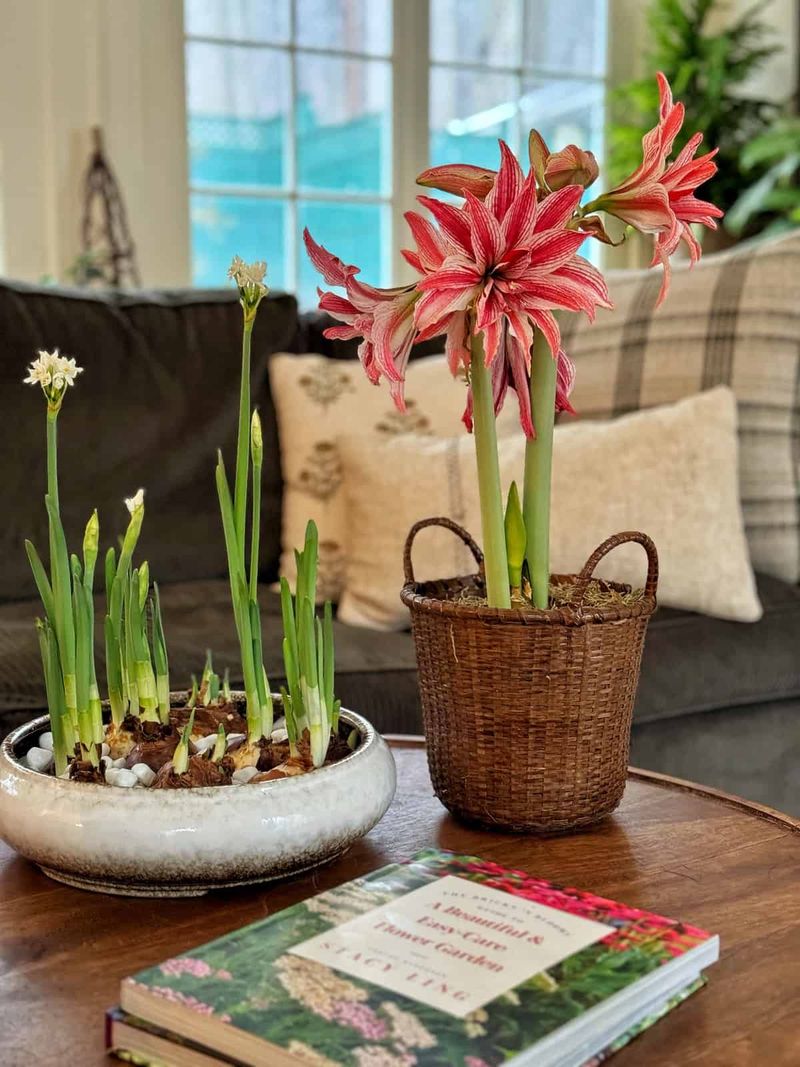
Hold a paperwhite bulb in one hand and an amaryllis bulb in the other, and the size difference tells part of the story. The small one sprints. The big one takes its time.
Paperwhites usually bloom about four to six weeks after planting. Amaryllis typically needs six to eight weeks, and some varieties stretch to ten. That gap is the whole secret to holiday timing, and it trips up plenty of gardeners every year.
Both bulbs come pre-chilled or need no chill at all. Growers have already done the hard work, so the flower bud is tucked inside the bulb when you buy it. You only supply water, warmth, and light to wake it up.
I like to think of it as two runners in one race. If they start together, the paperwhites cross the finish line weeks before the amaryllis. That can work if you want a long parade of flowers, but it can also leave you with faded paperwhites on Christmas Eve.
The fix is simple. Give each bulb its own planting date based on its speed, and mark both on your calendar. Once you see them as separate projects, holiday blooms become far more predictable and a lot more fun.
Mid-November Is The Sweet Spot For Christmas Paperwhites
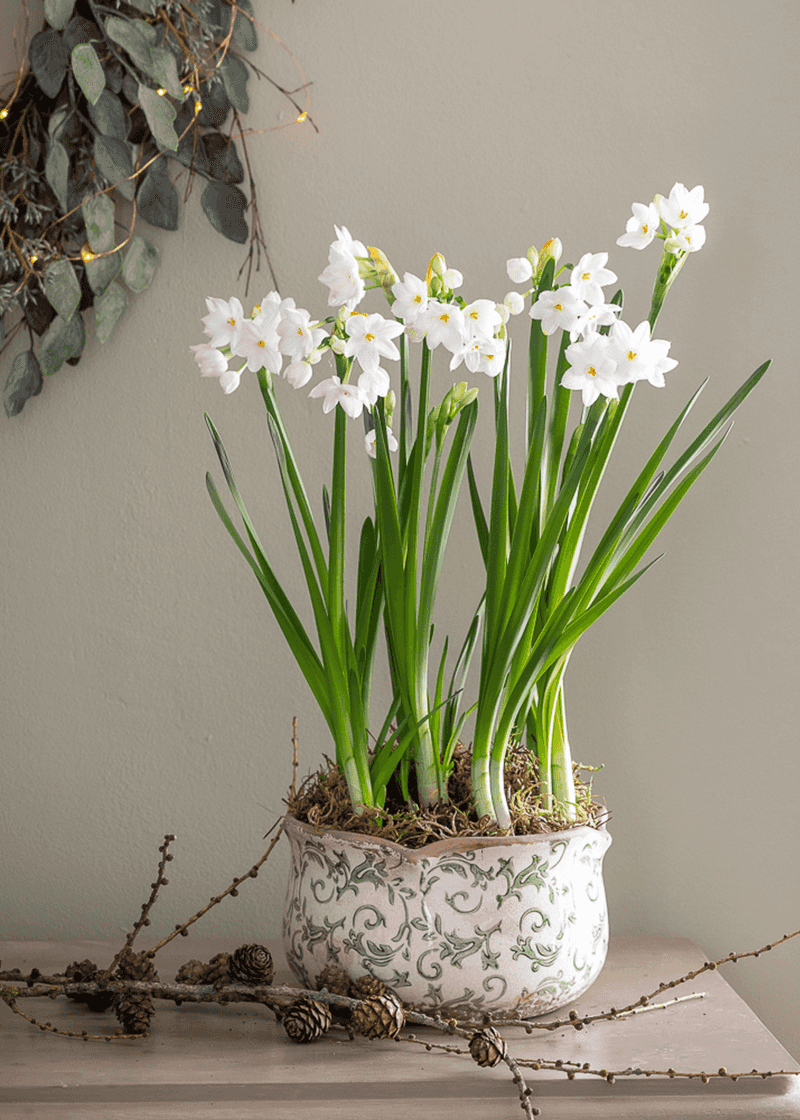
Count back about four to six weeks from Christmas and you land in early to mid-November. That window is when most growers suggest planting paperwhites for blooms on December 25.
Want flowers earlier for a holiday party in mid-December? Start your bulbs in mid to late October instead. Warm California homes can speed things up, so coastal and Southern California kitchens may see buds a few days sooner than chilly Northern rooms.
My favorite trick is succession planting. Pot up a fresh batch every two to three weeks from October through January. You get a steady stream of starry white clusters from Thanksgiving into late winter instead of one quick burst.
Buy extra bulbs early, since garden centers tend to sell out by December. Store unplanted ones in a cool, dry, dark spot with good airflow, like a garage shelf. Skip the fridge if you keep fruit there, because ripening apples release ethylene gas that can harm the flower buds.
One warning for sensitive noses: paperwhites have a strong musky scent. Some folks adore it, while others find it overpowering. Try the variety Ziva for classic fragrance, or look for milder types if your household is picky.
Amaryllis Bulbs Want Their Start By Late October
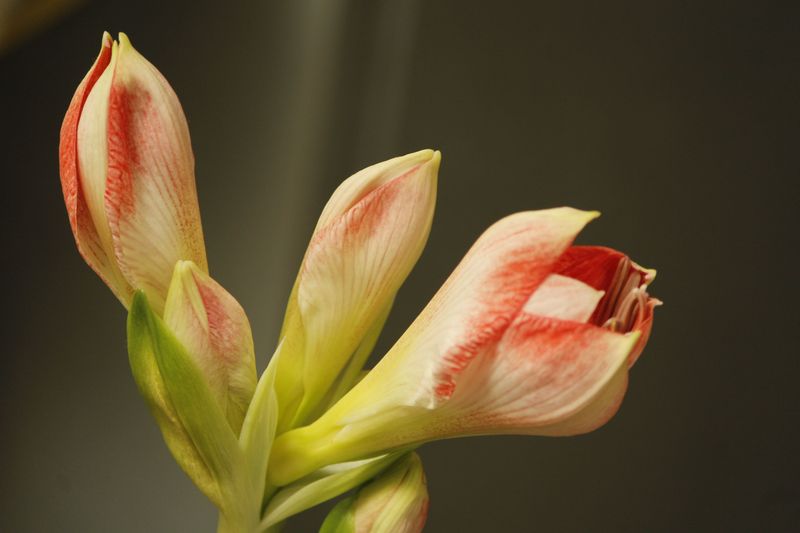
Patience pays off with amaryllis. These giant bulbs usually need six to eight weeks to bloom, so late October to early November is the planting window for Christmas or New Year flowers.
Planting in the third week of October gives you a comfortable cushion. If your house stays on the cool side, expect things to move slower, and the stalk may need closer to ten weeks. Warmer homes in places like Los Angeles or San Diego might bloom right on the early end.
Variety matters too. Big Dutch hybrids like Red Lion and Apple Blossom tend to bloom on a fairly reliable schedule. South African grown bulbs often bloom faster and are sold specifically for early holiday color, so check the label or ask the nursery.
Not sure about timing? Stagger a few bulbs a week or two apart. One may open for Christmas Eve and another may carry the color into January, which keeps the table cheerful after the decorations come down.
Pick firm, heavy bulbs with no soft spots or mold. Larger bulbs usually send up more stalks, and more stalks mean more of those huge trumpet flowers stealing the spotlight.
A Bowl Of Pebbles Is All Paperwhites Really Need
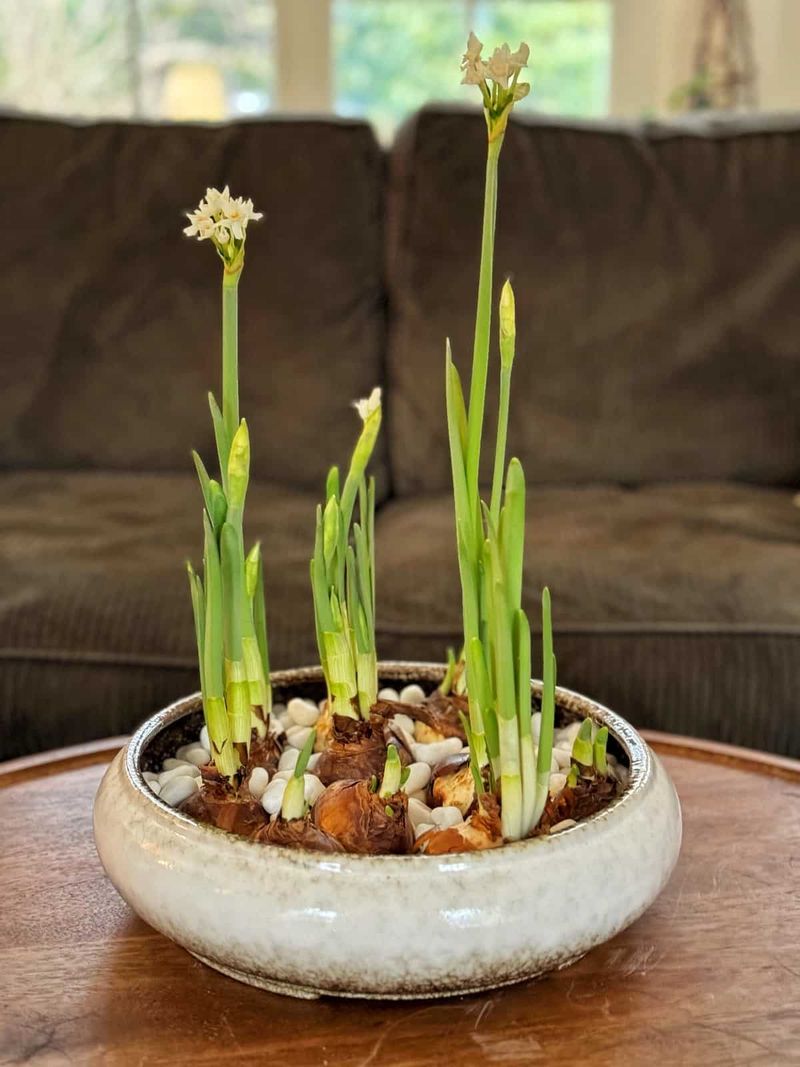
Honestly, paperwhites might be the easiest flowers you will ever grow. A shallow bowl, some pebbles, and water can carry them all the way to bloom.
Fill your container with two or three inches of gravel or glass stones. Set the bulbs close together, pointed ends up, and add a little more gravel around them for support. Pour in water until it sits just below the base of the bulbs.
That small gap matters. Roots will reach down to drink, but bulbs that sit in water can rot. Check the level every day or two and top it up as needed.
Prefer soil? Use a regular potting mix and plant bulbs with their top third showing. Keep the mix lightly moist, never soggy.
For the first week or so, keep the bowl in a cool spot with indirect light so roots can grow. Once green shoots appear, move it to a bright window with a few hours of sun. Room temperatures in the low to mid 60s help keep stems sturdier than warmer spots do.
Glass containers are a bonus. Watching those white roots weave through the stones is half the fun.
Snug Pots Make Amaryllis Stalks Shine
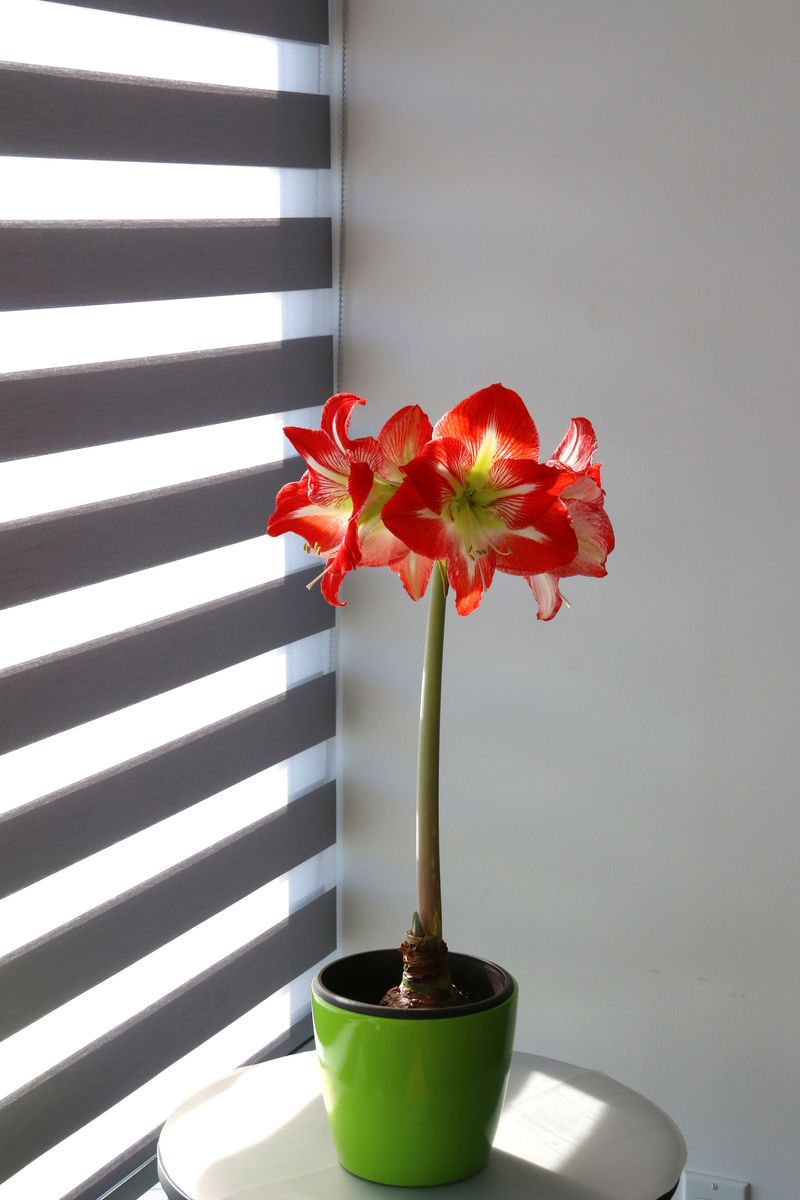
Amaryllis loves a tight squeeze. A pot only about an inch wider than the bulb on all sides often gives the best bloom show.
Choose a heavy container with drainage holes. Terracotta or ceramic works well, since tall flower stalks can make lightweight plastic pots tip over. Fill it with a rich, well-draining potting mix.
Plant the bulb so the top third to half sits above the soil line. Firm the mix around it gently, then water thoroughly once. After that, go easy on the water until you see green growth poking out the top.
Overwatering is the most common problem at this stage. Without leaves, the bulb uses very little moisture, and wet soil invites rot. A light drink when the top inch feels dry is plenty.
Set the pot in a warm, bright spot around 68 to 70 degrees. Once the stalk grows, turn the pot every few days so it grows straight instead of leaning toward the window.
When the first buds open, move the plant somewhere a bit cooler, around 65 degrees, out of direct sun. That small change can stretch the bloom time noticeably, giving you extra days of color.
Floppy Paperwhite Stems Have A Clever Fix
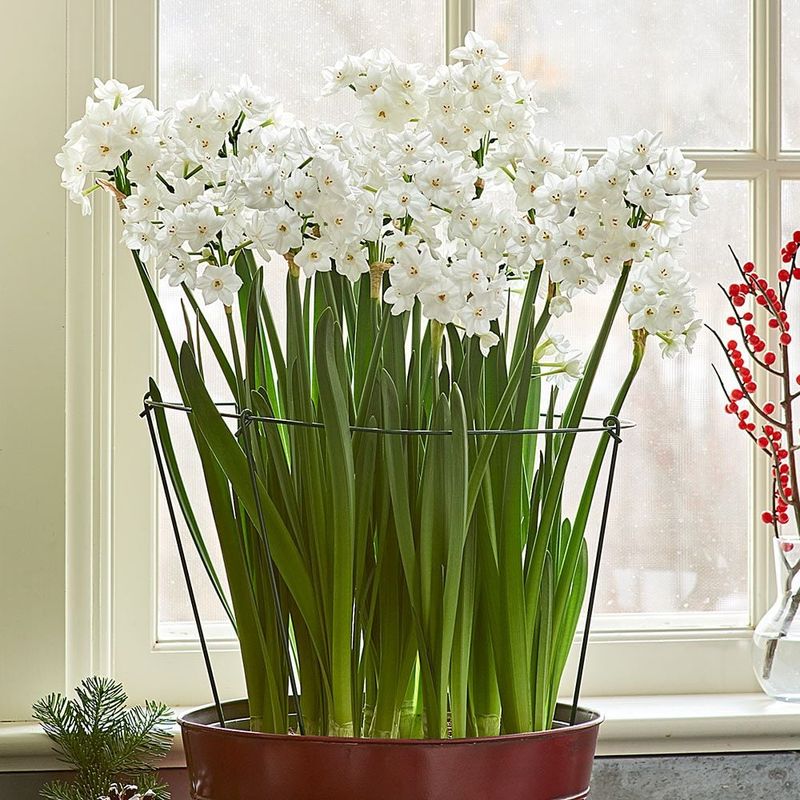
Ever watched a pot of paperwhites flop over like tired party guests? It happens a lot, and warm rooms with low light are usually behind it.
Bright light is your first defense. Paperwhites stretch toward weak light, making stems tall and weak. Give them a sunny window and keep the room on the cool side, around 60 to 65 degrees, to encourage shorter, stronger growth.
Cornell University researchers found another trick. Watering paperwhites with a diluted solution of rubbing alcohol, roughly one part 70 percent isopropyl to about ten parts water, once shoots are a couple of inches tall, can shorten stems without shrinking the flowers. Mix carefully, since too strong a solution harms the plant.
Simple supports help too. Tuck birch twigs, bamboo stakes, or curly willow branches into the pot, then tie the bundle loosely with twine or ribbon. It looks festive and keeps stems upright.
Amaryllis stalks can also lean under heavy blooms. Slide a thin stake in beside the bulb early so you avoid piercing roots later.
Rotate both pots every few days. That quick quarter turn keeps growth even and saves you from a crooked centerpiece.
California Gardens Can Keep These Bulbs Blooming Outdoors
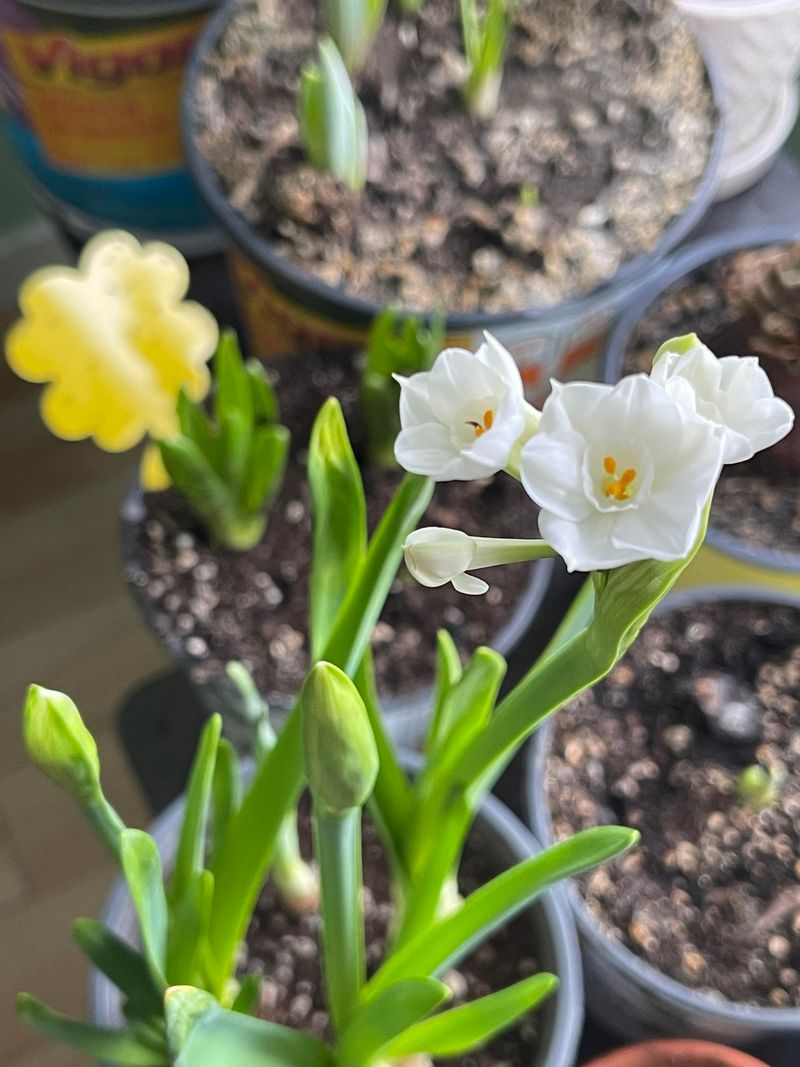
Gardeners in much of California get a bonus most of the country misses. In mild winter areas, roughly USDA zones 8 through 11, both bulbs can live outdoors for years.
Paperwhites naturalize nicely in coastal and Southern California gardens. Planted outside in fall, about five to six inches deep and a few inches apart, they often bloom in winter on their own schedule and slowly multiply. Forced bulbs may skip a year before flowering again outdoors, so patience helps.
Amaryllis also settles in well in frost-free or nearly frost-free spots. Outdoors, it usually switches to blooming in spring instead of December. Plant it with the neck and top third above the soil in a sunny bed with good drainage.
Inland valleys get hot in summer, so a bit of afternoon shade keeps leaves happier. Colder mountain and high desert areas see hard freezes, so keep bulbs in pots there and bring them inside when frost threatens.
Both plants are toxic if eaten, which helps them shrug off gophers and deer. Keep curious pets and kids away from the bulbs, though. Water deeply during growth, then let the soil dry out in summer.
Faded Amaryllis Flowers Mean It’s Time To Plan Next Year
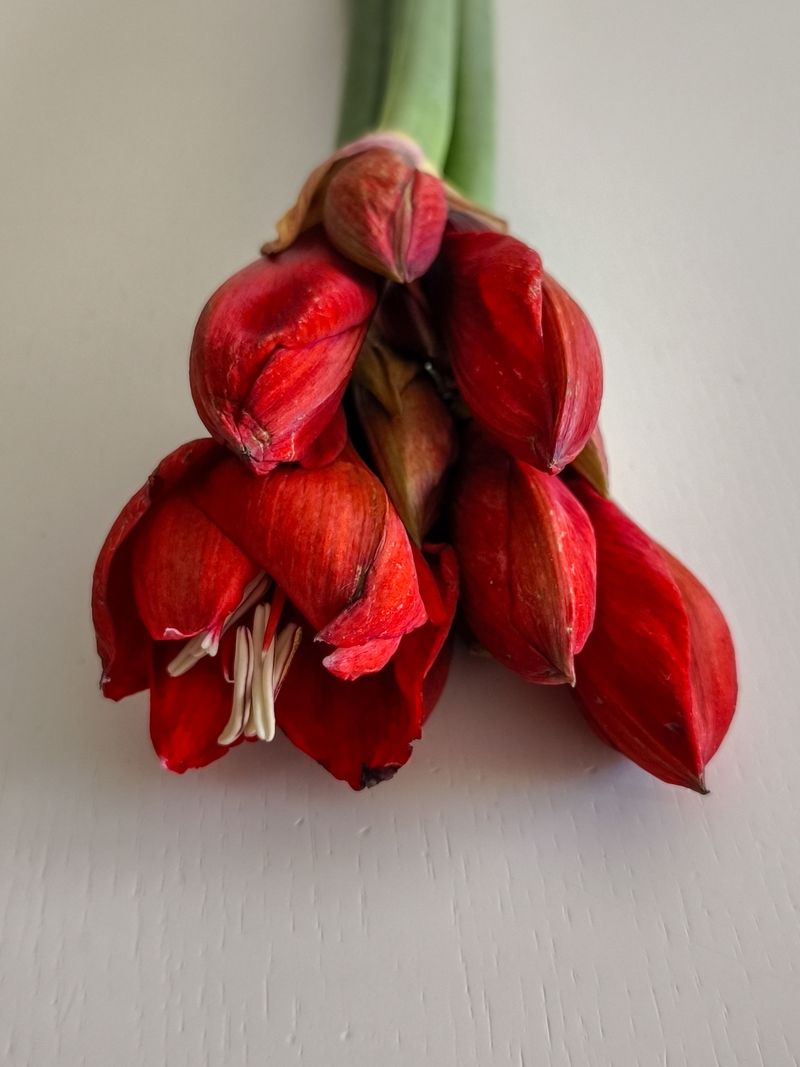
When the last trumpet fades, your amaryllis is far from finished. With a little care, that same bulb can bloom again next winter.
Cut the flower stalk a couple of inches above the bulb, but leave the long strappy leaves alone. They act like solar panels, feeding the bulb for future flowers. Keep the pot in bright light, water when the soil dries, and feed with a balanced fertilizer every few weeks through spring and summer.
Once frost danger passes, you can move the pot outside to a partly sunny spot. California summers suit it well.
In late summer or early fall, start the rest period. Stop watering, let leaves yellow, then store the bulb somewhere cool, dark, and dry for about eight to ten weeks. Count backward so the rest ends by late October, and your next holiday planting date lines up perfectly.
Paperwhites are a different story. Forced bulbs rarely rebloom well indoors, so most people compost them or tuck them into a mild garden bed.
My takeaway? Write both planting dates on next year’s calendar right now. Future you will be thrilled when December rolls around full of flowers.