Who Is Responsible When Storm Runoff From A Neighbor’s Yard Floods Yours In California?
A California Supreme Court ruling from 1966 still helps decide what happens when rainwater crosses a property line, even though many backyard disputes begin with something as ordinary as a new patio.
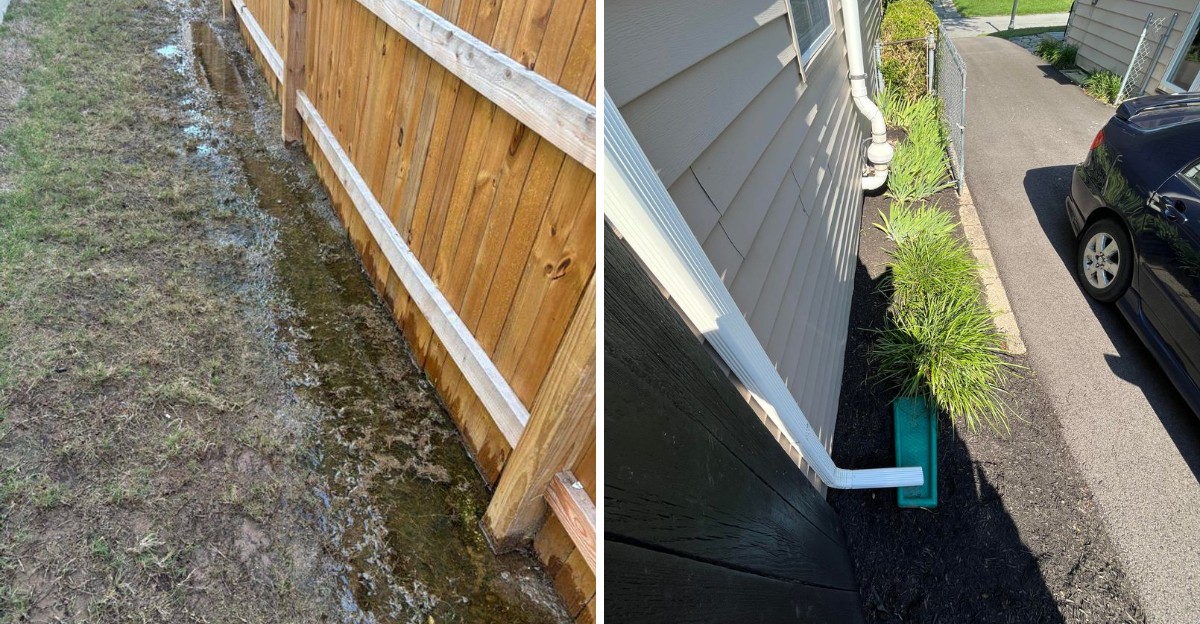
After a hard storm, muddy water can leave silt across stepping stones, flatten seedlings, and turn a garden bed soggy. The frustrating part is figuring out whether the flow is following the land or arriving in a newly concentrated stream.
That distinction matters under California’s approach, which weighs whether each owner acted reasonably. Changes to grading, paving, gutters, and drainage can matter, but the downhill homeowner’s choices may count too. A fence-line puddle alone does not settle responsibility.
Before a tense conversation begins, careful observations can clarify what changed, when it changed, and what evidence is worth saving. The answer may be less obvious than the muddy trail suggests.
That Muddy Stream Across Your Fence Line Tells A Legal Story
Rain falls, gravity pulls, and water heads downhill. Courts in California accept that simple fact, so a neighbor is rarely on the hook just because their yard sits higher than yours.
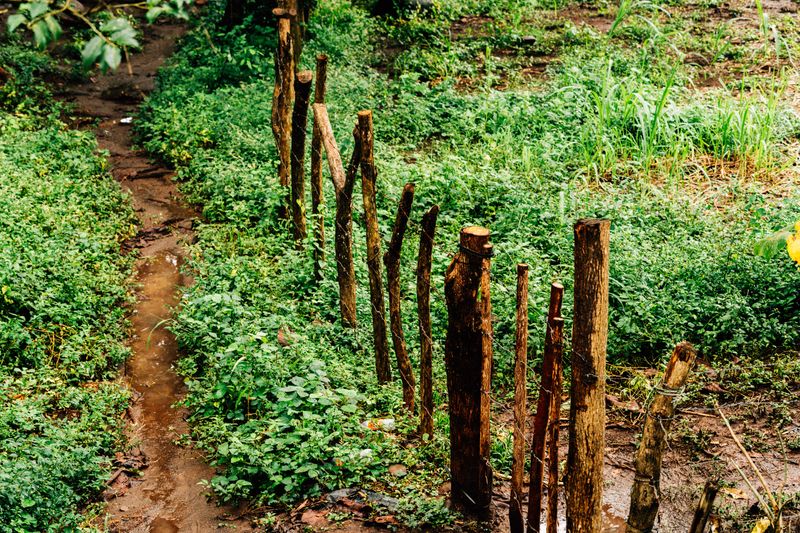
Natural runoff is treated as part of owning land. If rain soaks a slope and trickles onto your lawn the same way it has for decades, that flow is usually nobody’s fault. Your garden is expected to receive some of it.
The story changes when someone alters the land. A new patio, a raised planter wall, fresh grading, or a downspout aimed at the property line can turn a gentle sheet of water into a focused stream. Concentrated, redirected, or increased flow is where responsibility starts to shift.
I like to think of it as the difference between weather and workmanship. Weather is shared by everyone on the block. Workmanship belongs to whoever picked up the shovel or hired the contractor.
So before you march next door, ask yourself one honest question. Did the water pattern change after a project, or has your yard flooded like this for years? Your answer points to whether a neighbor may truly be responsible or whether you simply live at the bottom of the hill.
California Judges Weigh Reasonable Use On Both Sides Of The Property Line
Back in 1966, the Keys v. Romley decision set the rule that still guides drainage fights statewide. It is called the rule of reasonableness, and it applies to both the uphill and the downhill owner.
Under that rule, each neighbor must act reasonably with their land. An uphill owner who paves a big area or pipes roof water straight toward you may be liable if that change was unreasonable and caused harm. A downhill owner who could have prevented damage cheaply, but did nothing, may share the blame.
Courts look at several factors. Was the change done for a sensible purpose? How much harm did it cause? Could either side have avoided the problem with modest effort? Was the work done carefully?
When both neighbors acted reasonably, the uphill owner often avoids liability, and the downhill owner absorbs the loss. That surprises many people. Fairness, in the court’s eyes, means looking at conduct rather than elevation alone.
Later rulings, like Locklin v. City of Lafayette in 1994, carried this thinking into cases involving public agencies and streams. For everyday backyard disputes, though, reasonableness is the yardstick you want to understand before taking any step.
New Patios, Gutters, And Graded Lawns Can Redirect Rainwater
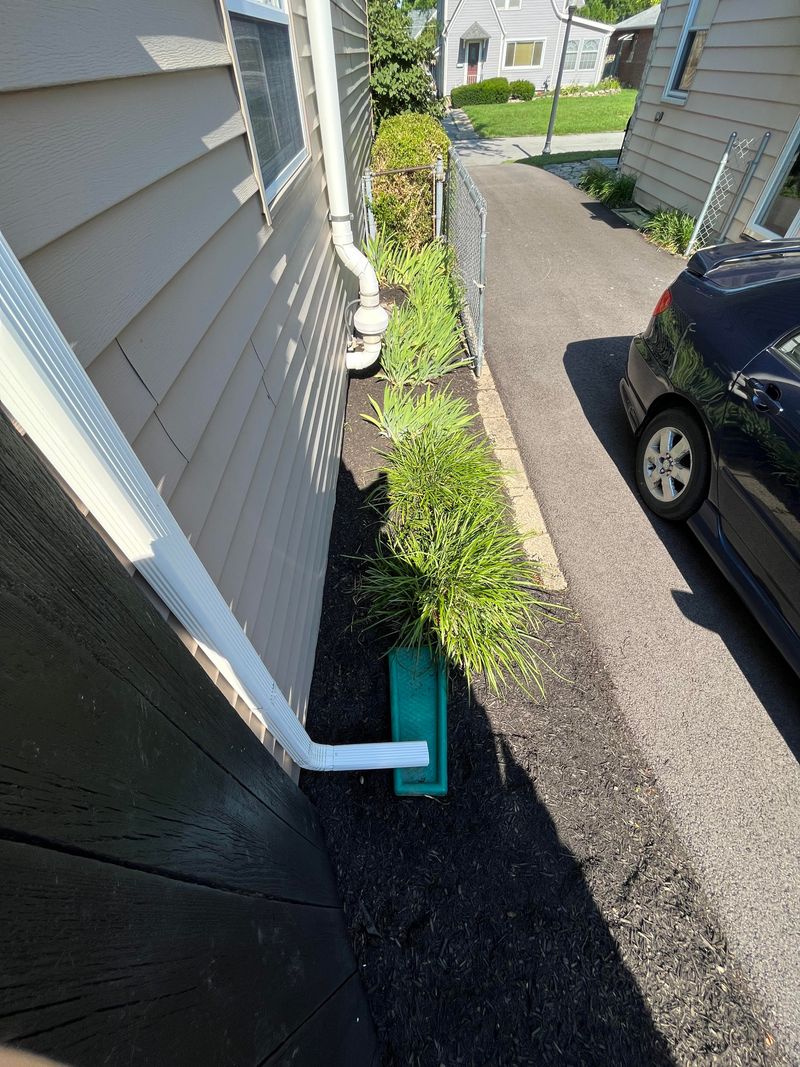
Hardscape is thirsty for attention but terrible at drinking. A new concrete patio or driveway sheds nearly every drop that lands on it, while the lawn it replaced used to soak much of that rain in.
Gutters and downspouts add another twist. A single roof can collect hundreds of gallons in a heavy storm, and an extension aimed at the fence dumps that load in one spot. That is a classic example of concentrated flow.
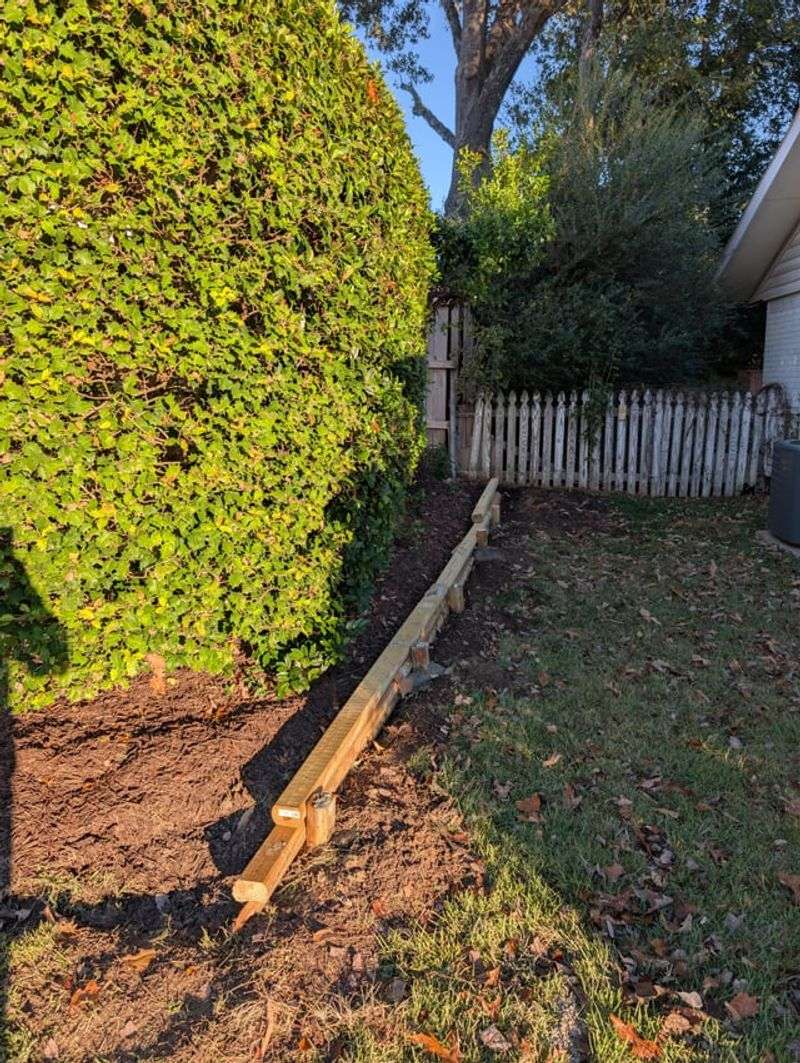
Grading changes are sneakier. Building up soil for a raised lawn, a retaining wall, or a play area can tilt the surface just enough to send water somewhere new. Even large planters lined up along a fence can act like a dam with a single spillway.
Watch for these clues in your own yard:
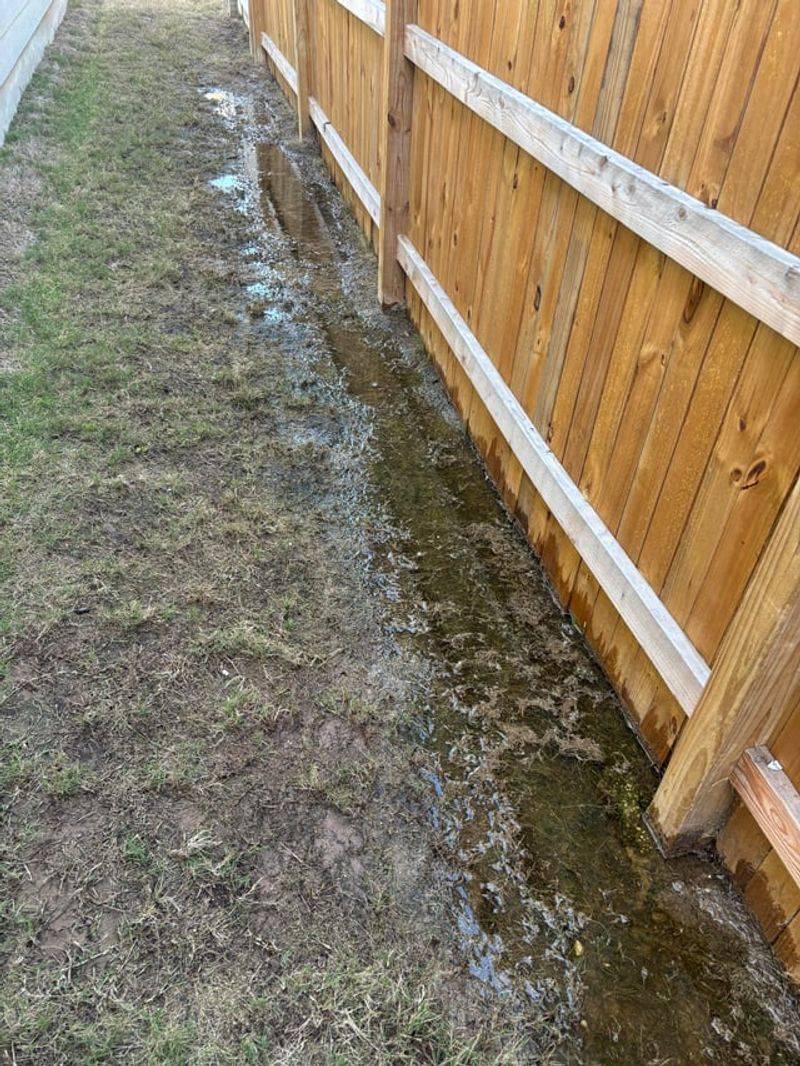
Fresh erosion channels, standing puddles in new places, silt fans on your patio, or water spilling at a specific gap in the fence. If these appeared soon after construction next door, write down when you first noticed them.
Patterns matter more than one wild storm. A record downpour can overwhelm almost any setup, but repeat flooding during ordinary rains suggests the landscape itself has changed.
Your Phone Camera Becomes Your Best Rainy Day Tool

Grab an umbrella and your phone the next time clouds roll in. Videos taken during a storm show what a dry photo never can, which is the actual path and speed of moving water.
Record where water enters your yard, where it pools, and what it damages. Narrate the date and time out loud, or make sure your phone saves that information automatically. Short clips from several storms build a stronger picture than one long dramatic video.
Keep a simple log as well. Note rainfall amounts from a local weather station, damage you observed, and costs for repairs, replanting, or cleanup. Save receipts and contractor estimates in one folder.
Older photos help too. Pictures of your yard before the neighbor’s project can prove the problem is new. Real estate listings and online map imagery sometimes show earlier landscaping.
Property surveys and grading plans add weight. Many cities keep permit records you can request, and those files may show whether a patio or wall needed approval.
Personally, I keep a dedicated album labeled by season. It sounds a bit obsessive, yet that tidy record can make a calm conversation or an insurance claim much easier.
A Friendly Chat Over The Garden Fence Solves More Than Lawsuits
Most neighbors have no clue their new patio is soaking your roses. They see water vanish off their property and assume it simply went somewhere harmless.
Start with a calm, curious tone. Invite them over after a storm, or show them a short video on your phone. Seeing mud on your walkway tends to land better than a list of complaints.
Offer solutions instead of blame. Ideas like redirecting a downspout, adding a drain line to the street, or installing a small swale can be simple fixes. Suggesting that you both consult a drainage contractor or civil engineer keeps the focus on the water rather than on each other.
Put any agreement in writing, even an informal email. Note who will do which work, who pays, and when it will happen.
If talks stall, community mediation programs exist in many California counties, often at low or no cost. A neutral mediator helps both sides hear each other.
I believe a damp yard is easier to repair than a soured friendship. Keeping the relationship intact also matters if you live side by side for years to come.
French Drains And Swales Keep Your Own Garden Beds Above Water
Downhill gardeners have homework too. Under the reasonableness rule, you are expected to take sensible steps to protect your property, and doing so can also strengthen your position if a dispute grows.
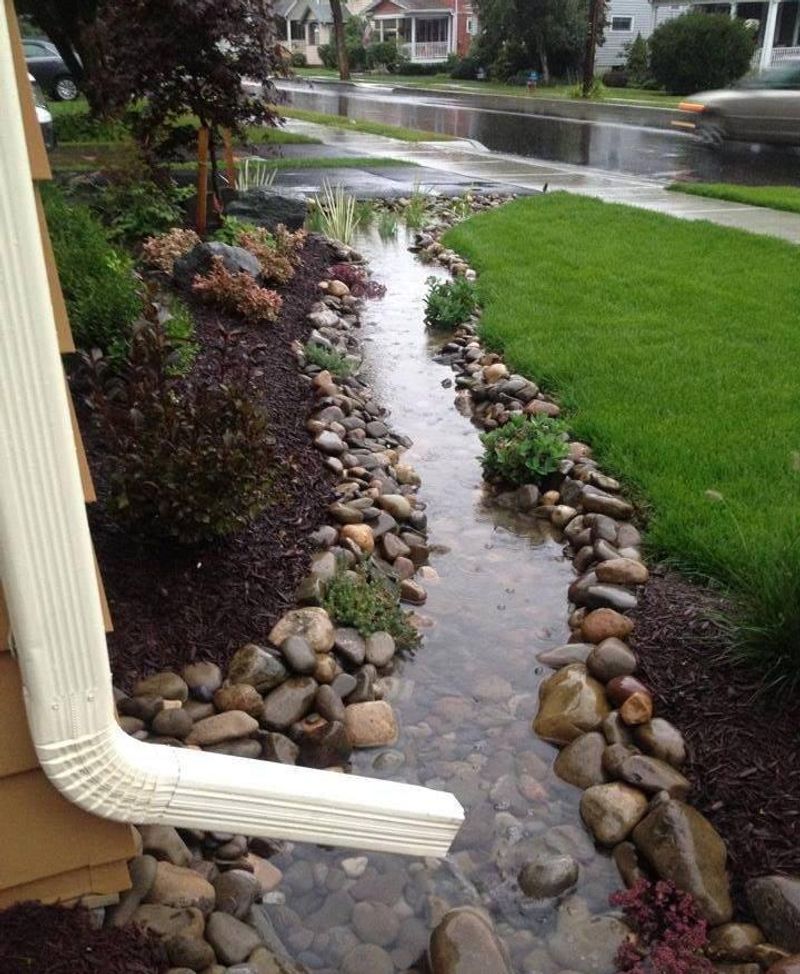
A French drain is a gravel trench with a perforated pipe that collects water and carries it away. A swale is a shallow, planted channel that guides runoff gently across the yard. Both work well along a shared fence line.
Rain gardens are another favorite of mine. These shallow basins, often planted with California natives like deergrass, yarrow, or California gray rush, catch water and let it sink in slowly. The UC Master Gardener program shares helpful guides for building them.
Mulch and plant cover reduce erosion on bare slopes. Roots hold soil, and a layer of wood chips softens the impact of heavy drops.
Here is the catch, though. You cannot simply wall off natural drainage and push water back onto the uphill yard or onto another neighbor. That could make you the unreasonable party.
Plan new drainage so it outlets safely, often toward the street or an approved storm drain. Fall is the ideal season to install it, before winter storms arrive.
City Grading Codes And Building Permits Add Another Layer
State law is only part of the puzzle. Many California cities and counties have grading and drainage rules that limit how owners can reshape their lots.
Los Angeles, for example, has building code sections on grading that require drainage to be directed to the street or an approved device rather than onto neighboring property. Other cities have similar language. The details vary a lot from place to place.
Some projects need permits, especially larger grading jobs, retaining walls over a certain height, and major hardscape. If your neighbor skipped a required permit, the local building department may inspect and order corrections.
Call or visit your city or county planning office. Ask whether permits were issued for the property and whether drainage plans were included. Many departments let you search records online.
Code enforcement can be a gentle nudge that avoids court entirely. An inspector’s letter often carries more weight than a neighbor’s request.
Homeowners associations may have their own drainage and landscaping rules too. Check your CC and Rs if you live in a planned community. Between city codes and HOA rules, you might discover extra protection you did not know existed.