Who Owns a Tree on the Property Line in Virginia, and Can One Neighbor Cut It Down Alone?
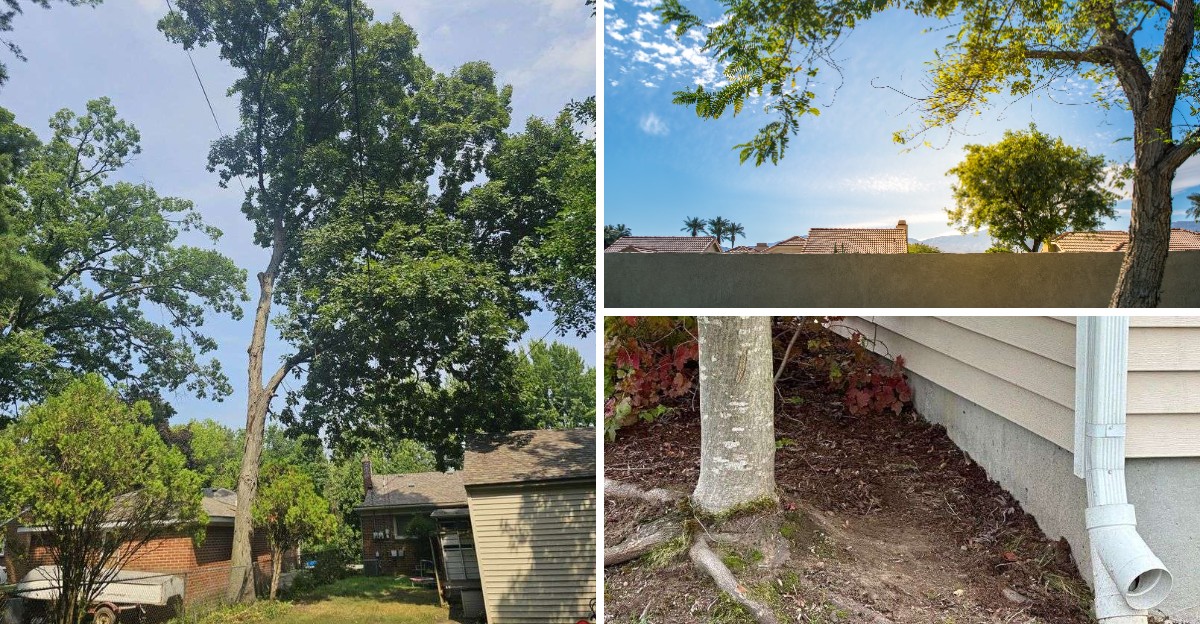
A sweetgum tree once sent two Fairfax County neighbors all the way to the Supreme Court of Virginia. Its roots had cracked a townhouse foundation, and the 2007 ruling still shapes backyard squabbles today.
Trees ignore property lines. Roots wander under fences, and branches drape over patios like they pay rent on both lots.
Leaves blow wherever the wind feels like. So who actually owns that big oak growing right on the line?
Take it from someone who once eyed a neighbor’s maple with loppers in hand. I assumed a fence settled everything.
Funny thing is, fences are often built a little off the true boundary, and the trunk tells a different story.
The rules on trimming, sharing, and removal surprised me more than any pest ever has. Before anyone fires up a chainsaw, wouldn’t you want to know whose permission you need?
That Tree Trunk Straddling the Fence Line Tells the Whole Story
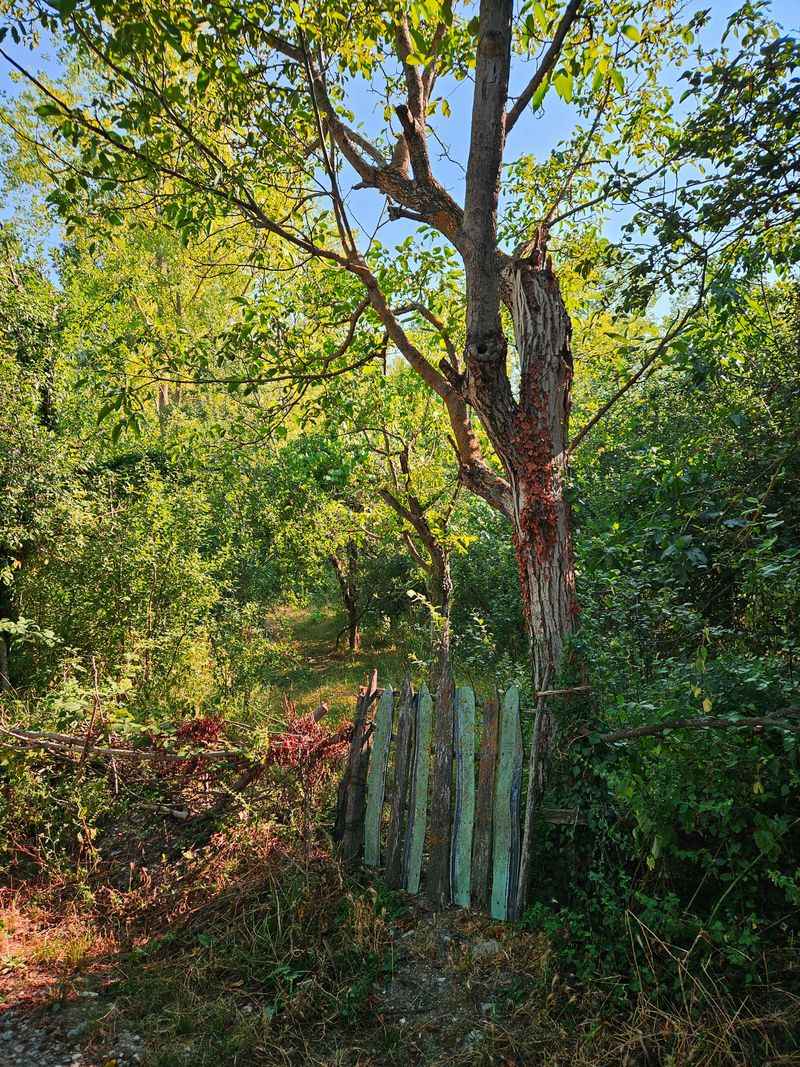
Walk out to that big maple along your fence and look down, not up. The trunk at ground level matters far more than where the branches wander.
Under Virginia common law, a tree belongs to the owner of the land where its trunk stands. If the whole trunk sits on your neighbor’s side, the tree is theirs, even when half the canopy shades your patio.
The same goes in reverse if the trunk is fully on your lot.
Things change when the trunk crosses the line itself. Courts generally treat that tree as a boundary tree, owned jointly by both neighbors.
Neither owner gets the final say alone.
Most of us guess wrong about where the line sits. Fences are often built a foot or two inside a property line, and old hedges drift over the decades.
Your plat, the map that came with your closing papers, gives a better starting point than the fence does.
For what it’s worth, I check the trunk where it meets the soil, not a few feet up. Trees lean, and a trunk that tilts over your yard can still be rooted on the other side.
If the base truly looks split by the line, treat it as shared until a survey says otherwise.
A Shared Oak on the Boundary Needs Two Yeses Before Any Chainsaw Starts
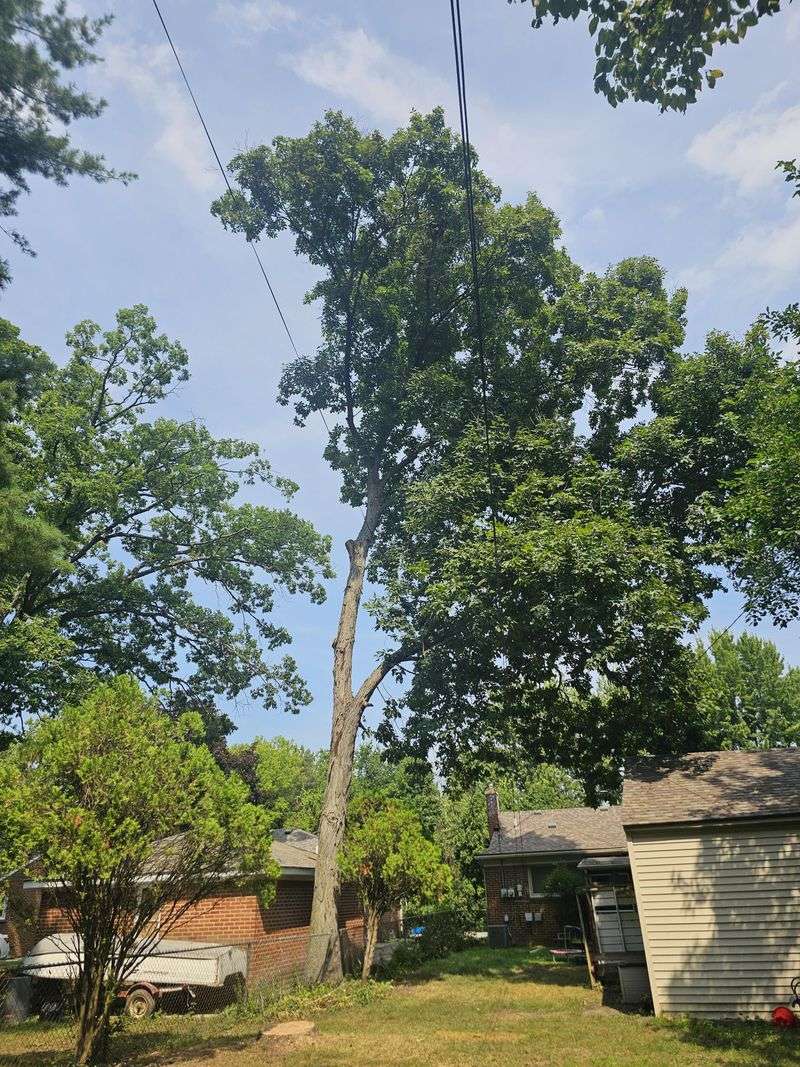
Shared ownership sounds cozy until one of you wants the tree gone. With a true boundary tree, the short answer is no, one neighbor cannot cut it down alone.
Because both owners hold an interest in the whole tree, removing it without consent can expose you to a damage claim. Virginia also has a timber trespass law that can allow triple damages for cutting trees that are not yours, though courts look at the facts of each case.
Mature shade trees can be valued in the thousands of dollars, so the bill can climb fast.
Healthy trees get the most protection. Even serious pruning on a shared tree, like topping it or removing big limbs from the trunk, should be agreed on first.
Take it from someone who has watched a grudge grow faster than any oak. Get the agreement in writing, and even a simple signed email helps.
List who pays, which company does the work, and what happens to the wood and stump.
A hazardous boundary tree changes only the urgency. If a certified arborist says it is unstable, share that report with your neighbor right away.
Most people agree quickly once they see a professional’s notes, and splitting the cost is a common, fair outcome.
Trimming Your Neighbor’s Overhanging Branches Is Usually Your Call

Long branches from next door hanging over your vegetable bed? State law gives you a handy tool called the self-help rule.
When a tree belongs to your neighbor, you can trim branches and roots that cross onto your land, up to the property line. You do not need permission for that work.
The state Supreme Court confirmed this right in its 2007 decision in Fancher v. Fagella.
There is a catch most gardeners miss. The cost is usually yours, not the tree owner’s, when the branches are simply in the way.
That includes hiring the crew and hauling off the brush.
In my own yard, I’ve found that late winter is a smart time for this job. Leaves are off, so you can see the branch structure clearly, and many trees handle cuts well before spring growth.
Oaks deserve extra care, because pruning them in spring and early summer can attract the beetles that spread oak wilt in some areas.
Make clean cuts just outside the branch collar, the slightly swollen ring where a limb meets a larger branch. Skip wound paint, since extension research shows trees seal cuts better on their own.
A pole saw handles most small limbs from the ground.
Heavy Pruning Cuts and Root Slicing Can Turn a Simple Trim Into a Lawsuit
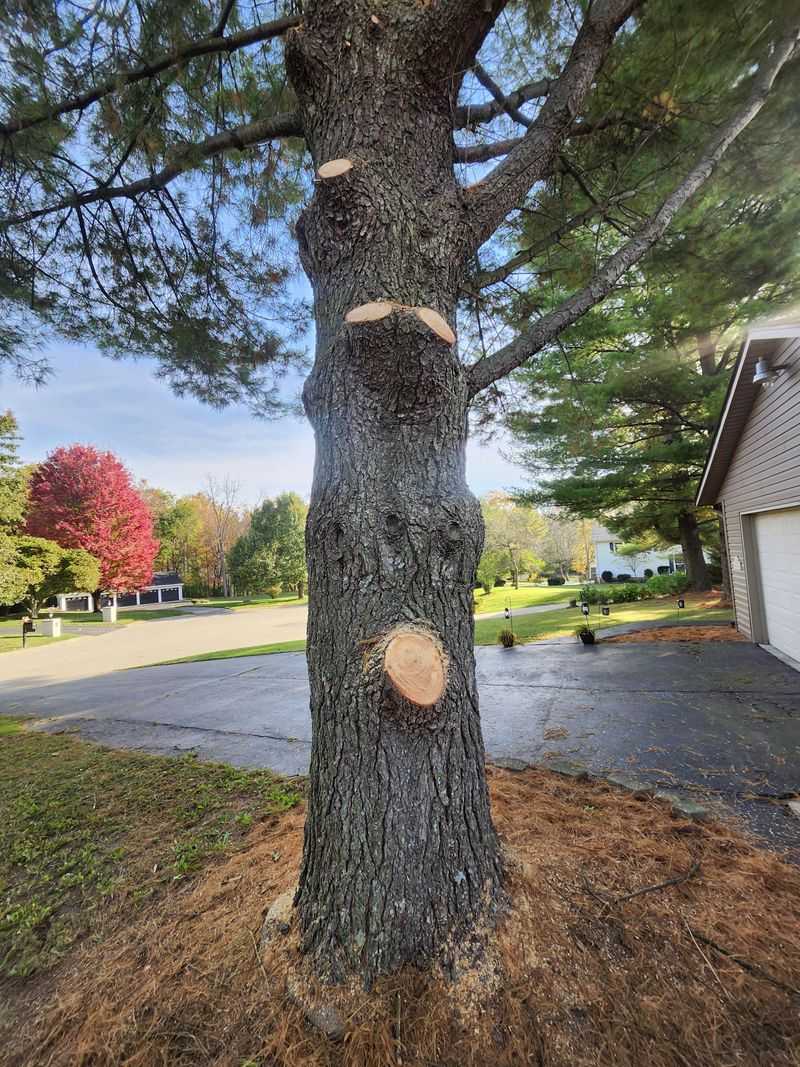
Trimming up to the line sounds simple. The limits on that right matter just as much as the right itself.
First, stay on your own ground. Stepping into your neighbor’s yard, or parking a bucket truck on their driveway, without permission counts as trespass.
Ask first if the best angle is from their side.
Second, your cuts cannot seriously harm the tree. Removing a huge share of the canopy or slicing through major roots near the trunk can cause the whole tree to decline or topple.
If that happens, you could owe the owner for the loss, and timber trespass rules may allow up to triple the value.
Roots deserve extra caution. Arborists often warn that cutting large roots close to the trunk can make a tree unstable in the next windstorm.
A common guideline keeps root cuts several times the trunk’s diameter away from the base.
Let’s just say a chainsaw and a bad mood make poor partners. If the job involves big limbs or roots, hire an ISA certified arborist and ask for a written plan.
That paper trail shows you trimmed responsibly, which can matter a lot if your neighbor complains later.
Tree Roots Cracking Your Foundation Change the Rules
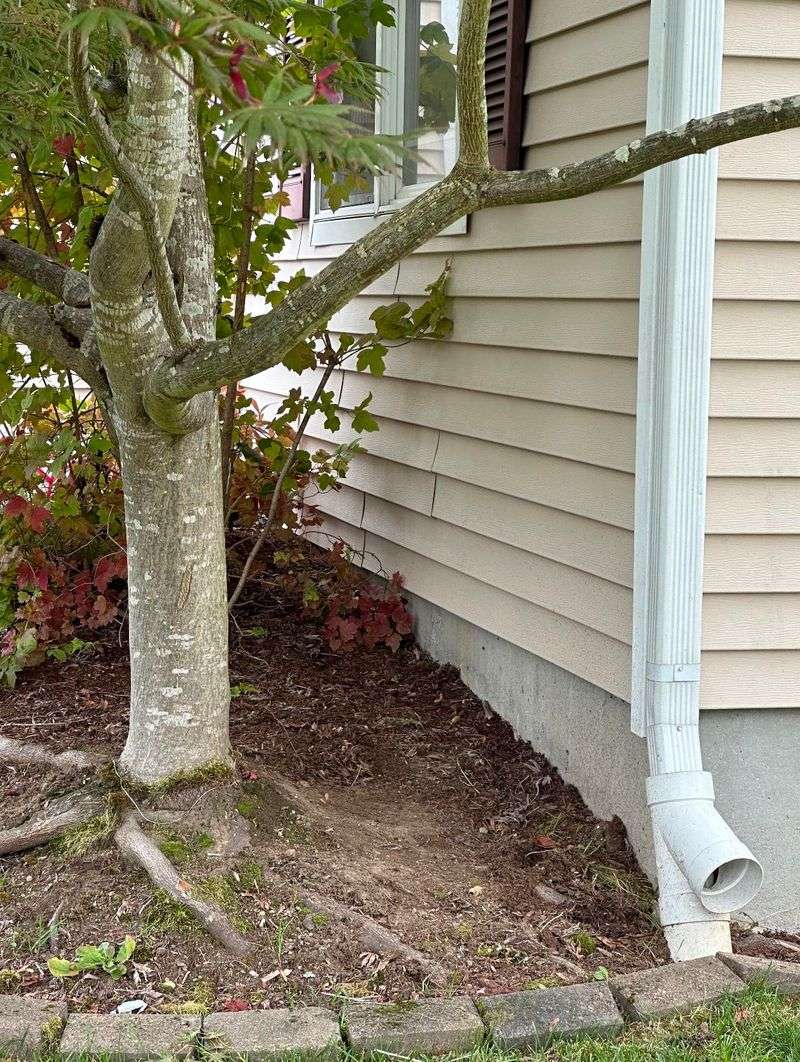
A sweetgum in Fairfax County changed the state’s tree law. Its roots and branches were pushing on a neighboring townhouse, damaging the foundation, walls, and drainage pipes.
Before 2007, Virginia courts mostly told frustrated owners to handle encroaching trees themselves. In Fancher v.
Fagella, the Supreme Court of Virginia updated that rule. A tree owner can now be held responsible when encroaching roots or branches cause actual harm to a neighbor’s property, or pose an imminent danger of it.
That means you may be able to ask a court to order the owner to cut back the tree, or even remove it, and to pay for repairs. The tree has to be the clear cause, and the damage has to be real, not just possible someday.
Common examples include roots lifting a driveway, cracking a sidewalk, or invading a sewer line. A heavy limb resting on your roof or grinding against gutters can also qualify.
Looking back, the smartest move is documentation. Take dated photos, keep repair estimates, and ask an arborist or plumber to note the tree’s role in writing.
Send your neighbor a polite letter describing the problem, and if talks stall, a local real estate attorney can tell you whether your case meets the standard.
Falling Leaves, Acorns, and Shade Rarely Count as a Legal Problem
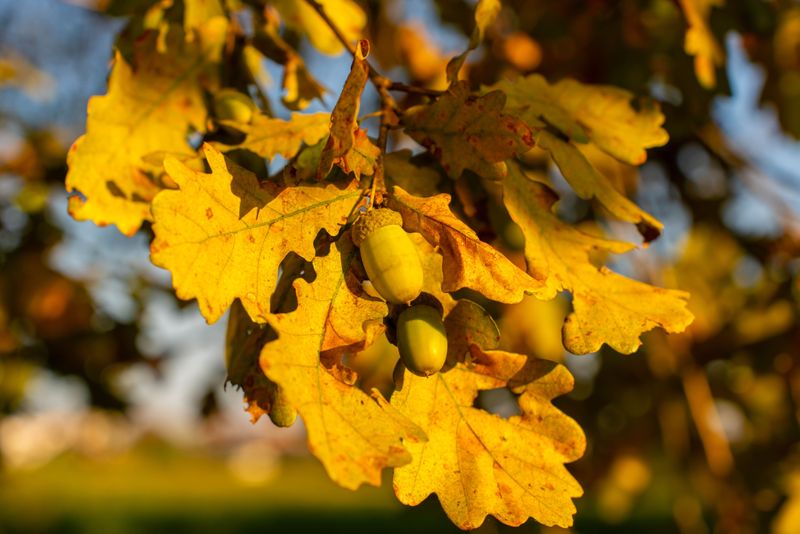
Autumn in a leafy neighborhood can feel like a confetti storm you never ordered. Still, piles of leaves blowing in from next door are rarely a legal problem.
Courts generally treat leaves, acorns, pine needles, seed pods, sap, and shade as natural parts of living near trees. The Fancher ruling itself noted that a tree is not a nuisance just because it casts shade or drops leaves, flowers, or fruit.
Your main fix is still the self-help right to trim what crosses the line.
Between you and me, this is the hardest rule for gardeners to accept. Losing afternoon sun can ruin a tomato patch.
Sadly, sunlight is not a property right in most cases.
Instead of fighting the canopy, work with it. Shredded leaves make excellent free mulch and compost, and many native woodland plants thrive in partial shade.
Try wild ginger, Christmas fern, or foamflower in spots that now get filtered light.
Gutter guards cut down on cleanup if branches hang near the house. A leaf vacuum with a mulching feature turns a weekend chore into a quick job.
If shade is the real issue, ask your neighbor about a light thinning cut by an arborist, which lets more sun through without harming the tree.
A Surveyor’s Stake and a Certified Arborist Can Settle the Tree Argument
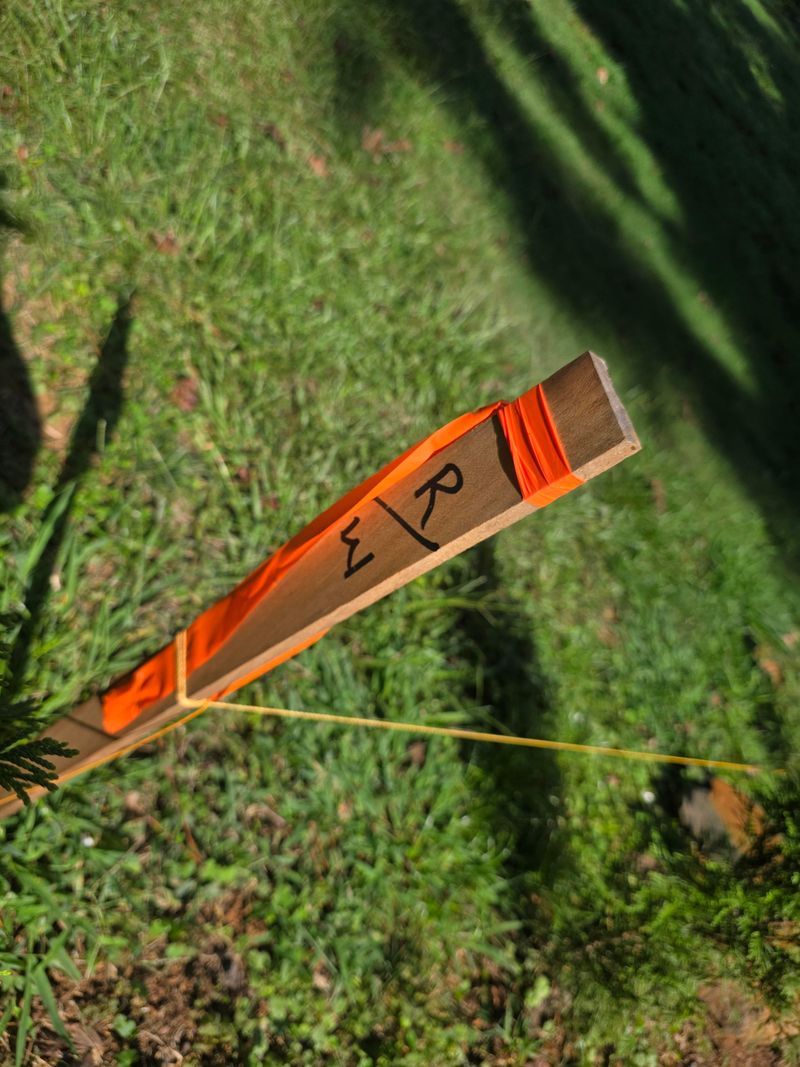
Arguments about a tree often turn out to be arguments about a line nobody has checked in years. A licensed land surveyor can settle that question fast.
Surveys commonly cost several hundred dollars or more, depending on lot size and terrain. Splitting the fee with your neighbor is a fair move, since you both benefit from knowing the answer.
Ask the surveyor to flag the line right near the trunk.
Local rules matter too. Some cities and counties have tree protection ordinances, and homeowners associations often require approval before removing large trees.
Lots near streams in Tidewater localities may fall under the Chesapeake Bay Preservation Act, which limits clearing in buffer zones.
Power lines add another layer. Leave any work near utility wires to the power company or a line-clearance crew, and call 811 before grinding a stump or digging around roots.
If you ask me, a certified arborist is just as valuable as the surveyor. A trained eye can spot decay, cracks, or root problems that make a tree risky.
Their written report helps both households decide whether to prune, cable, or remove the tree, and it carries weight with insurance companies if a limb ever comes down.
A Friendly Chat Over the Backyard Fence Beats a Courtroom Every Time
Most tree disputes start with a branch and end with a conversation. Getting to that conversation early saves money, stress, and friendships.
Knock on the door before you buy a pole saw. Explain what bothers you, whether it is a limb over your roof or roots near your patio, and ask what they think.
Many neighbors have no idea their tree is causing trouble.
Come with options rather than demands. You might offer to split an arborist visit, share pruning costs, or plant a replacement tree after a removal.
Native choices like redbud, serviceberry, or American holly fit smaller yards nicely.
If things stay tense, community mediation is an affordable middle step. Virginia has court-connected mediation programs and local dispute resolution centers in many areas, and mediators help neighbors reach written agreements without a trial.
Don’t make my mistake of trimming first and talking later. Even when the law is on your side, a surprise pile of branches on the lawn can sour a relationship for years.
A quick chat, a clear plan, and a little patience protect your yard, your wallet, and the shade both families enjoy.