Who’s Responsible When a Fallen Branch Lands on Power Lines in Your Ohio Yard?
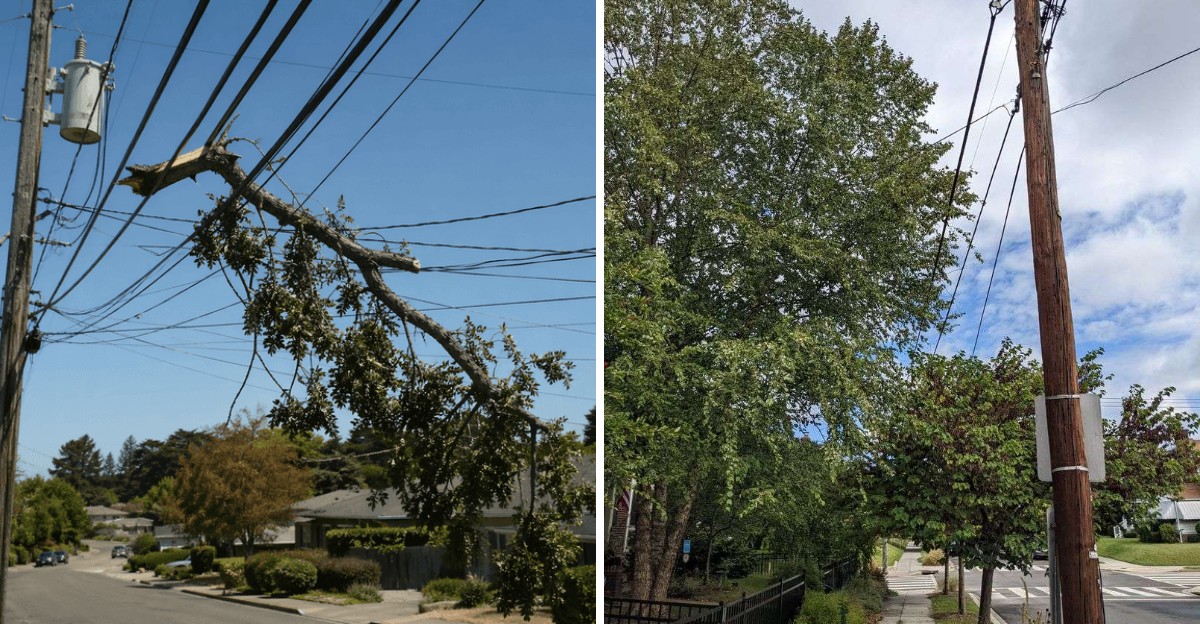
That skinny wire running from the pole to your roof may be partly your problem. I learned this after a spring thunderstorm dropped a maple limb across it.
Truth is, I assumed the electric company handled every wire in sight. Utilities in Ohio do trim around their main lines, but the rules shift once a line heads toward your house. Wires also look harmless when they sag low, which is exactly why people get hurt.
I get it. We fuss over our trees for years, then one gusty night turns a favorite branch into a puzzle with a safety warning attached. Who calls whom, who pays for cleanup, and who trims next time?
The answers depend on which line got hit, what the tree looked like before the storm, and one quick phone call. So which wire is hanging over your garden right now?
That Branch On The Wire Belongs To A Bigger Puzzle
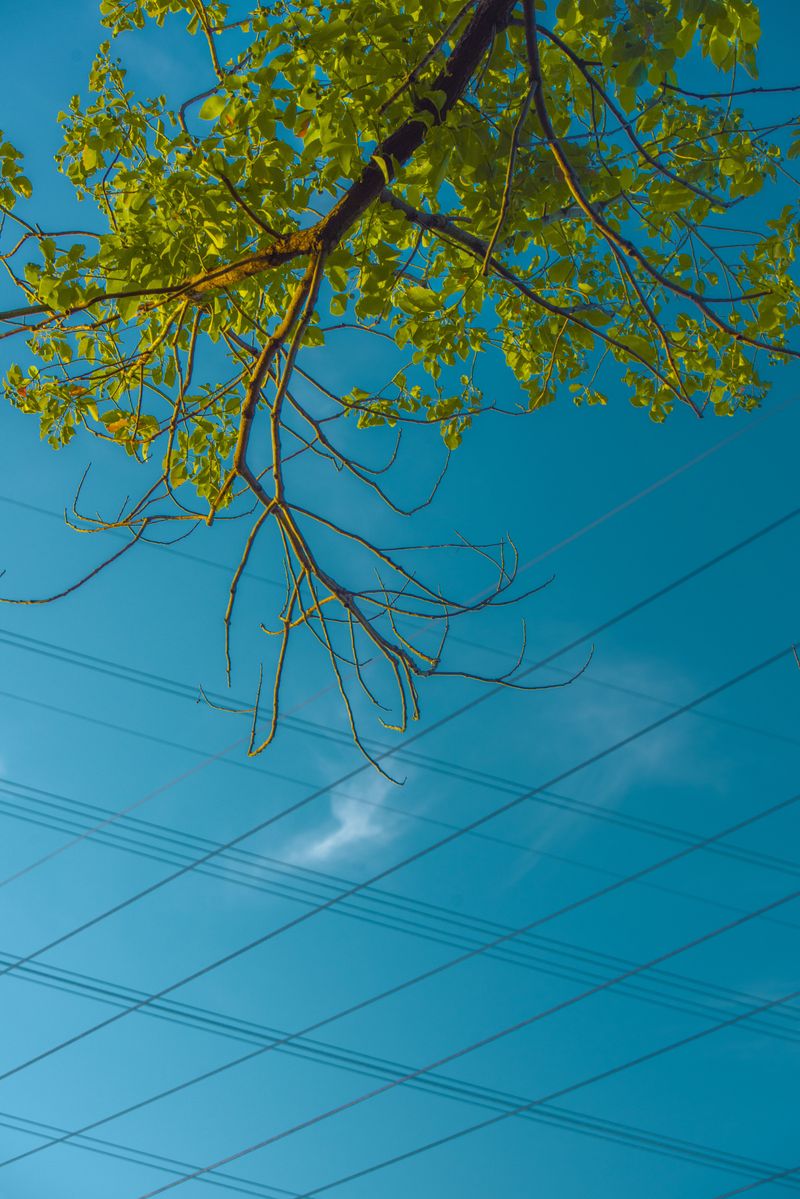
Storm cleanup in my yard once started with a simple question nobody in my family could answer. Whose job was it to deal with the maple limb drooping across the wires?
Responsibility in Ohio mostly comes down to which line the branch landed on. Utilities like AEP Ohio, AES Ohio, FirstEnergy, and Duke Energy handle trees around their primary distribution lines. Those are the higher wires strung from pole to pole along streets, alleys, and back property lines.
Electric companies often hold easements, which are legal rights to reach those lines on private land. That lets crews trim or remove trees threatening the main system, even in your backyard. The Public Utilities Commission of Ohio oversees how each utility runs its tree program.
The picture changes near your house. The single drop wire from the pole to your home is called the service line, and homeowners are usually asked to keep trees clear of it.
So a branch on the street line is generally the utility’s to clear. A branch on your service drop is a gray area worth sorting out before the next storm. Either way, your first step stays the same, and the next section covers it.
Stay Thirty Feet From Any Sagging Power Line
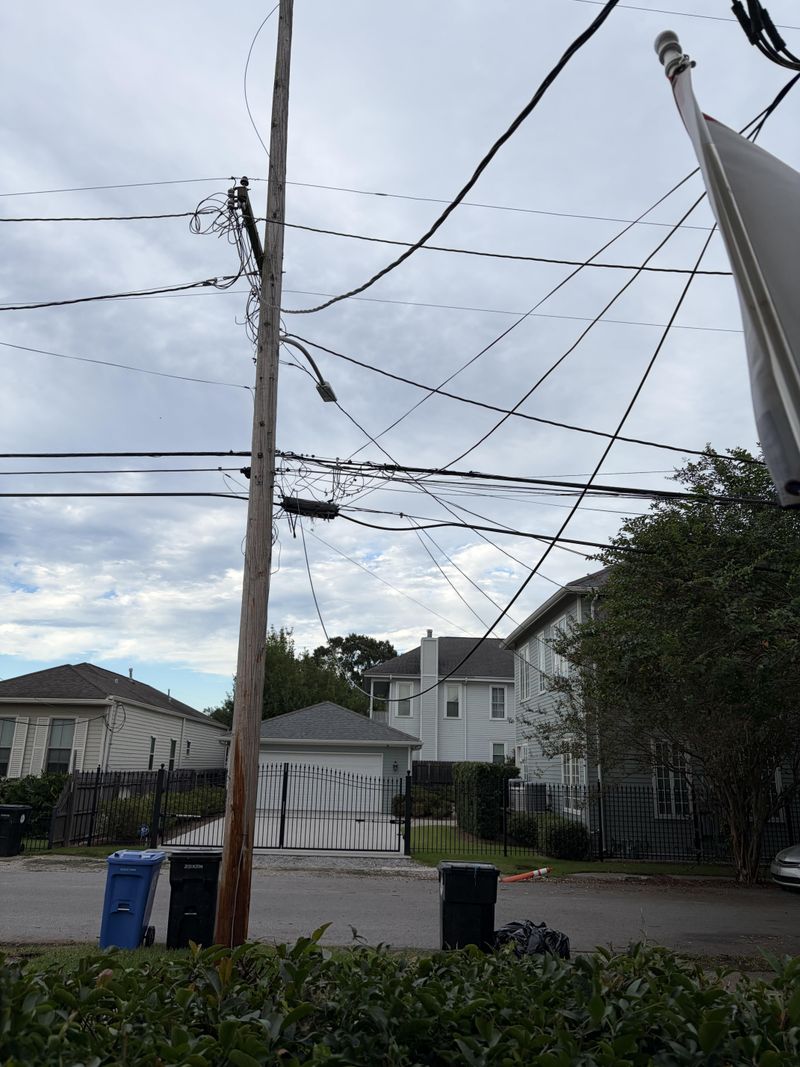
Fair warning, this is the part I want every gardener to memorize. Any branch touching a wire should be treated as a live electrical hazard, no matter how quiet it looks.
Ohio utilities ask people to stay at least 30 feet away from downed or sagging lines. That distance is roughly the length of a school bus. Electricity can travel through wet ground, a metal fence, a garden hose, or the branch itself.
Keep kids and pets inside. Leave the rake, pole saw, and ladder in the garage, and resist the urge to nudge that limb with anything.
Call 911 if there is fire, sparking, or someone in danger. Otherwise, report the line to your electric company right away using its outage number, app, or website.
Give clear details when you call. Mention whether the branch is on the street line or the wire to your house, and whether the power is out.
If a line falls on your car while you are inside, stay put and call for help. Utility crews are trained and equipped for this mess, and they would much rather get a hundred calls than one injury report.
Utility Crews Clear The Main Lines But Often Leave The Wood
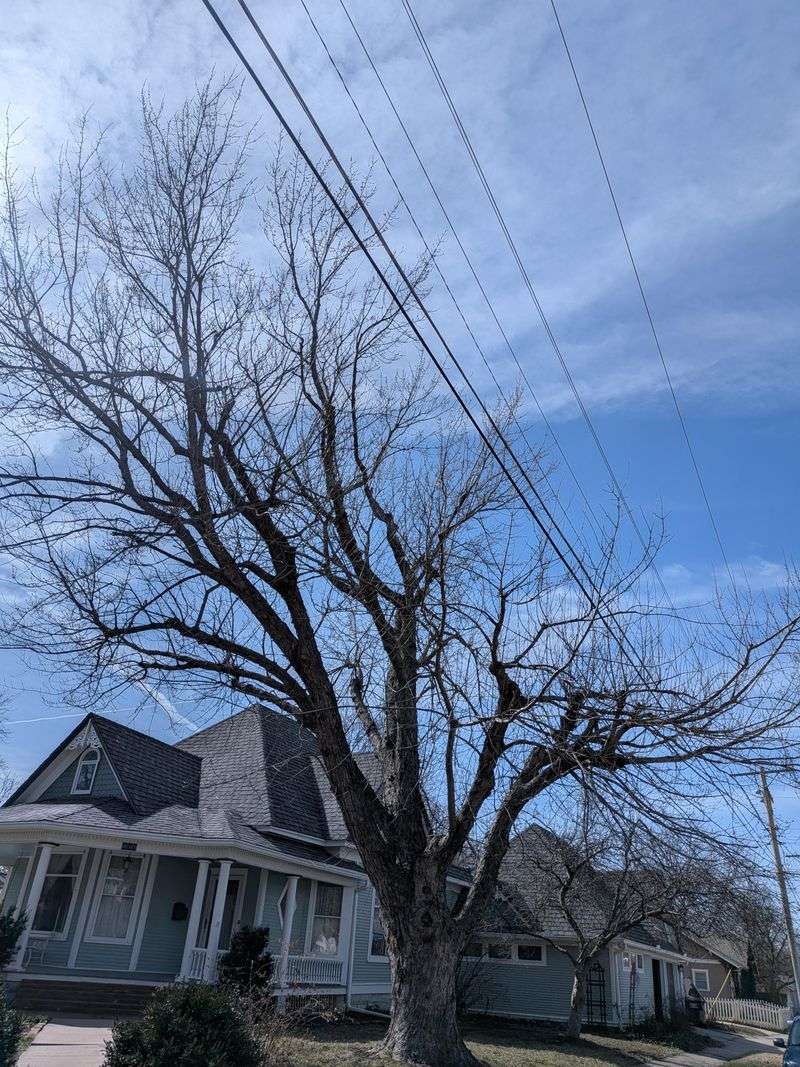
Bucket trucks rolling down the street after a storm are a welcome sight. Crews focus on one job during emergencies, which is making lines safe and restoring power fast.
That speed comes with a catch many homeowners do not expect. Once the electrical hazard is cleared, utilities commonly leave cut branches and logs on your property. AEP Ohio and AES Ohio both note that storm debris on private land is generally the owner’s to haul away.
Routine trimming works a bit differently. Each Ohio utility follows a vegetation management plan filed with PUCO, usually working through circuits on a multi-year cycle. Crews often use directional pruning, cutting back to natural branch points to steer growth away from wires.
Not going to lie, those trims can look lopsided. A tree shaped like a giant V or a sideways L is a common sight in older neighborhoods.
Notice of scheduled work is typically provided, and you can call with questions about your trees. Some utilities may chip small brush during planned maintenance, so ask ahead. Planning ahead for storm debris, such as checking with your city about curbside brush pickup, saves a lot of weekend frustration.
The Service Drop To Your House Is Mostly Your Watch
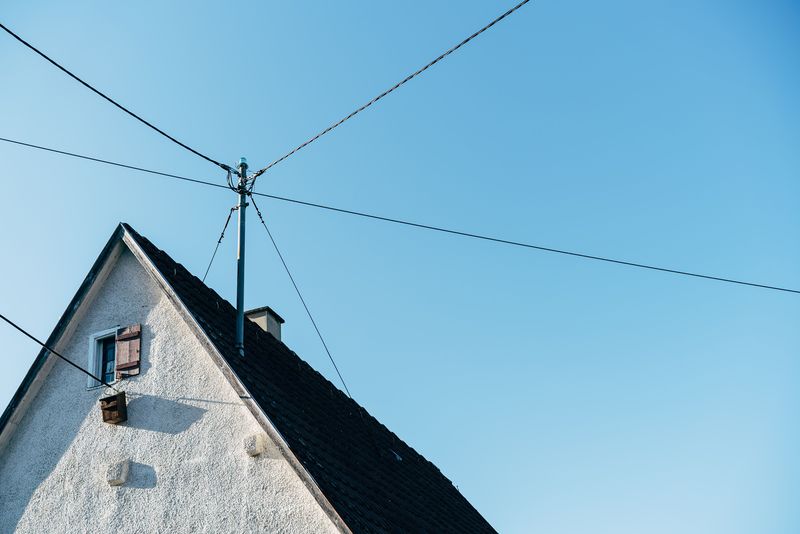
Guilty as charged, I let a silver maple grow right into my service line for years. I figured the power company would notice and handle it.
Most Ohio utilities say otherwise. Trees around the service drop, the wire running from the pole to your home’s weatherhead, are generally the homeowner’s to maintain. The utility still owns and repairs that wire if it breaks, but preventing branch contact usually falls on you.
Policies vary by company, so check yours. Some utilities will help when a branch is actively damaging the line, while others only disconnect it temporarily for safe trimming.
Walk your yard each season and look up. Watch for limbs rubbing the wire, branches leaning toward it, or vines climbing the pole.
Your meter base and the mast on your house are typically your property too. If a falling limb rips those loose, an electrician must repair them before the utility can reconnect power.
That surprise repair bill can sting after a storm. A quick spring and fall inspection costs nothing and keeps you ahead of trouble. Snap a photo each time so you can spot slow changes in how close branches are creeping.
Call A Line Clearance Arborist Before Touching That Pole Saw
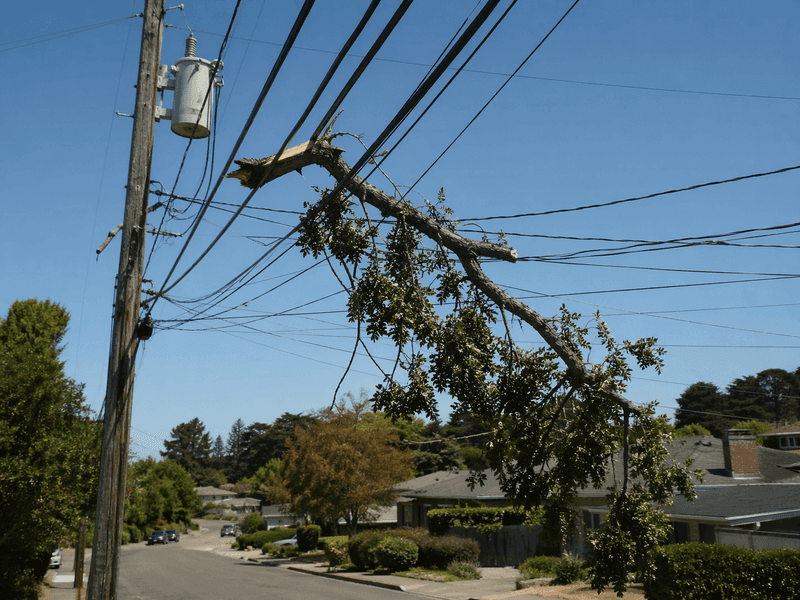
I am the first to admit I love a good weekend project. Trimming near power lines is one job I happily hand off.
Federal safety rules from OSHA limit tree work near energized lines to trained line clearance professionals, and everyone else should stay at least 10 feet away from overhead lines. Pole saws and aluminum ladders can carry current straight to you.
So who do you hire? Look for an arborist certified by the International Society of Arboriculture, ideally one with line clearance training and liability insurance. Ask for proof of insurance in writing before work begins.
Now for a handy trick many folks miss. Call your utility before the arborist arrives and ask about a temporary service disconnect. Many Ohio utilities will drop your service line for free so the tree can be trimmed safely, then reconnect it.
Book that disconnect a week or two ahead during busy seasons. Storm recovery periods can stretch wait times.
Good arborists also make proper pruning cuts outside the branch collar. Those cuts help the tree seal wounds and reduce decay, which means fewer weak limbs dropping onto wires later.
A Healthy Oak Toppled By Wind Changes The Insurance Story
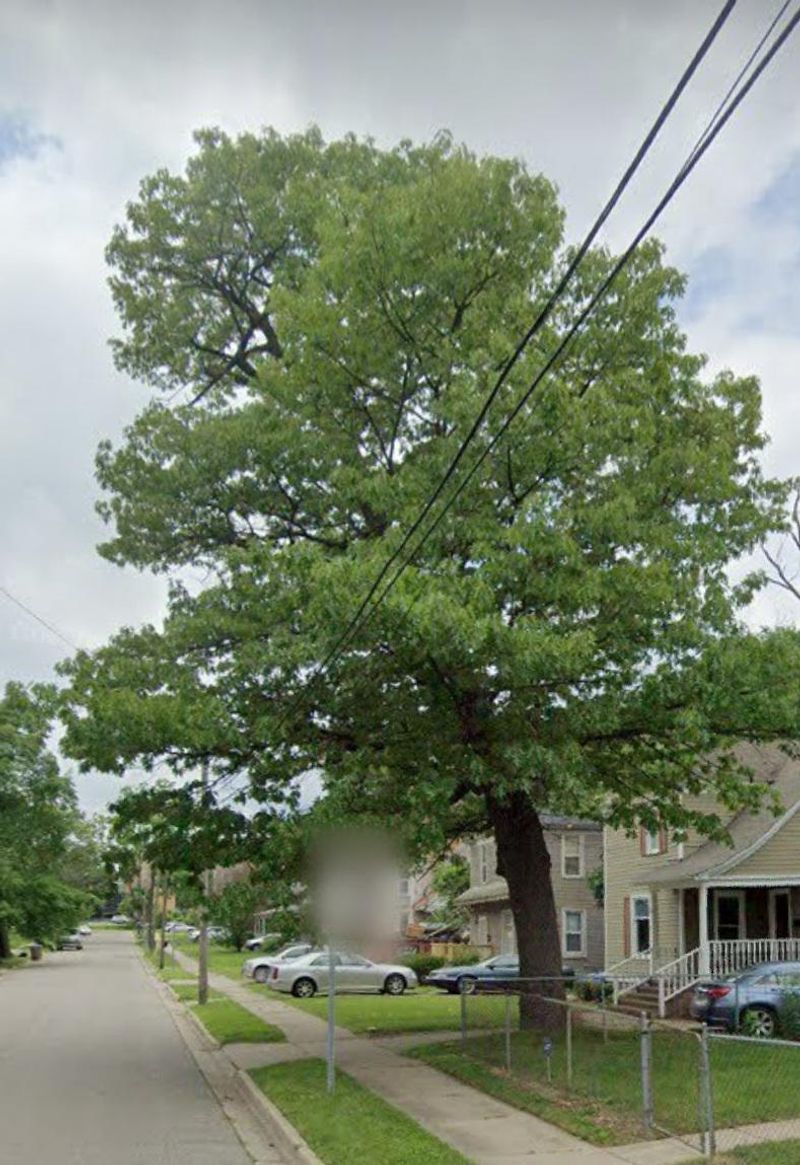
Insurance questions pop up right after the chainsaws go quiet. Who pays depends a lot on the tree’s condition before it fell.
When a healthy tree breaks in a windstorm or lightning strike, insurers often treat it as an act of nature. Your own homeowners policy usually covers damage to your house or covered structures, even if the tree stood in a neighbor’s yard.
Neglect shifts the conversation. If a tree was visibly decayed, hollow, or leaning, and the owner knew or reasonably should have known, that owner may be liable under Ohio negligence principles.
Debris removal coverage is often limited. Many policies pay a set amount, commonly around 500 to 1,000 dollars, and only when the tree hits a covered structure or blocks a driveway.
Damage to utility equipment is usually the utility’s concern. Your meter base and mast are a different story, since they belong to you.
Take photos before cleanup starts. Save receipts from arborists and electricians, and call your agent early. Policies differ, so read yours or ask directly rather than guessing. A short call now beats a confusing claim later.
Cracked Limbs And Fungus Are Warning Signs Worth Spotting
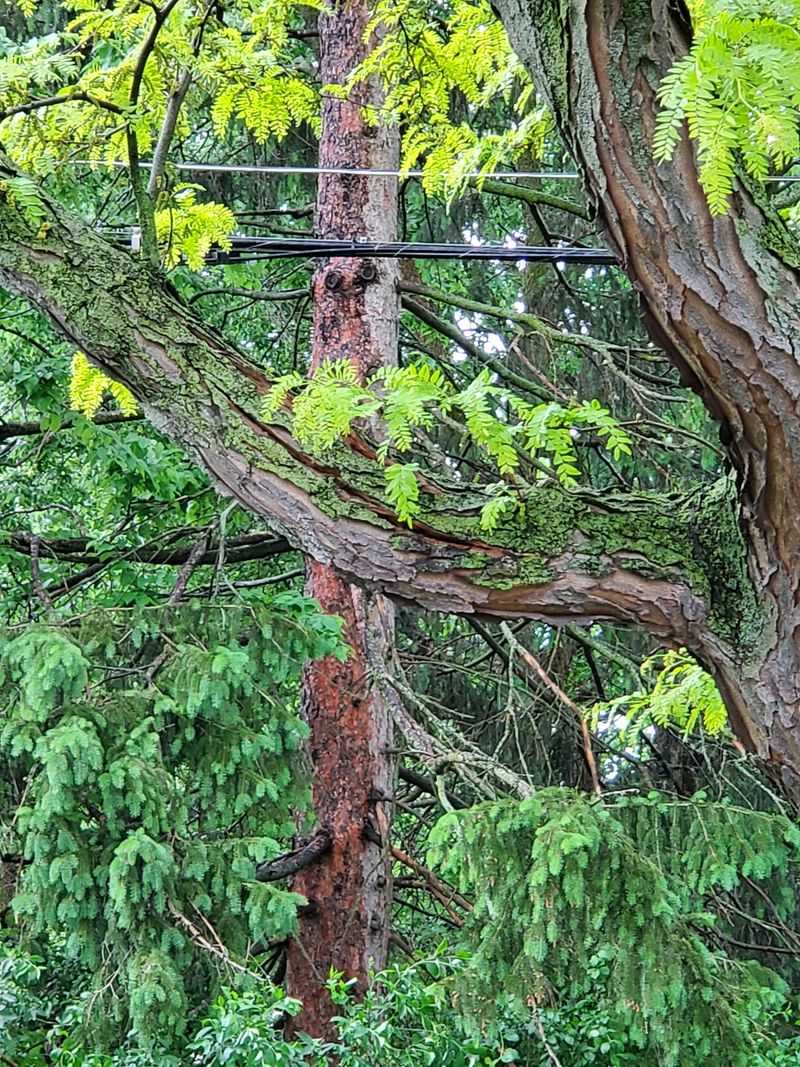
Trees usually drop hints long before a limb crashes down. I started noticing them once I knew what to look for.
Ohio State University Extension points out several common red flags. Watch for deep cracks in the trunk or major limbs, mushrooms or bracket fungi growing on bark, and hollow cavities. Leafless branches in summer and peeling bark patches deserve attention too.
Tight V-shaped branch unions can split under heavy wind or ice. Silver maples, Bradford pears, and willows are known for weaker wood, so keep a closer eye on them near wires.
Emerald ash borer left many ash trees across Ohio brittle. An ash with thinning crowns, D-shaped exit holes, or woodpecker damage can shed limbs suddenly.
Spotted something worrying near the street line? Report it to your utility, which may inspect and trim it. Near your service line, call an arborist for a professional assessment.
Documenting a problem tree also matters for liability. If a neighbor’s tree looks hazardous, a polite written note sharing your concern is a fair first step. It keeps things friendly while creating a record if trouble follows.
Plant Short Trees Under Wires And Call 811 First
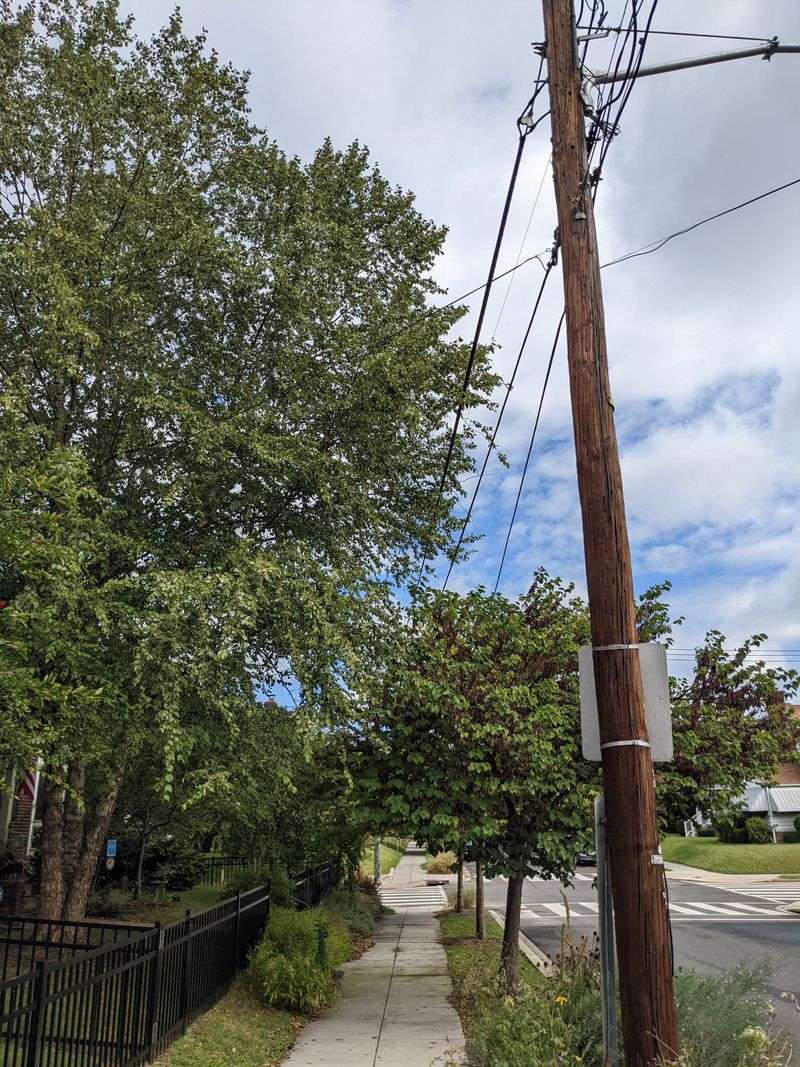
Every fall, I catch myself eyeing empty spots for new trees. Lately, I look up at the wires before I look down at the soil.
Many Ohio utilities recommend keeping trees under or near power lines to a mature height of about 25 feet or less. Taller species belong farther away, often 50 feet or more from lines for large shade trees.
Native options shine here. Serviceberry, redbud, flowering dogwood, and pagoda dogwood stay modest in size while feeding pollinators and birds. Skip invasive choices like Callery pear, which also tend to split.
Digging comes next, and Ohio law requires a locate request first. Contact Ohio811 by dialing 8-1-1 or 1-800-362-2764 at least 48 hours ahead, not counting weekends and holidays. The service is free.
Crews mark buried lines with colored flags or paint. Red marks electric, yellow marks gas, so plant clear of both.
Right tree, right place is the simplest way to keep branches off wires for decades. A little planning today means fewer frantic storm calls, healthier trees, and a yard that stays lit when the wind howls.