Why A Walking Stick Insect In Your Georgia Yard Is Nothing To Worry About
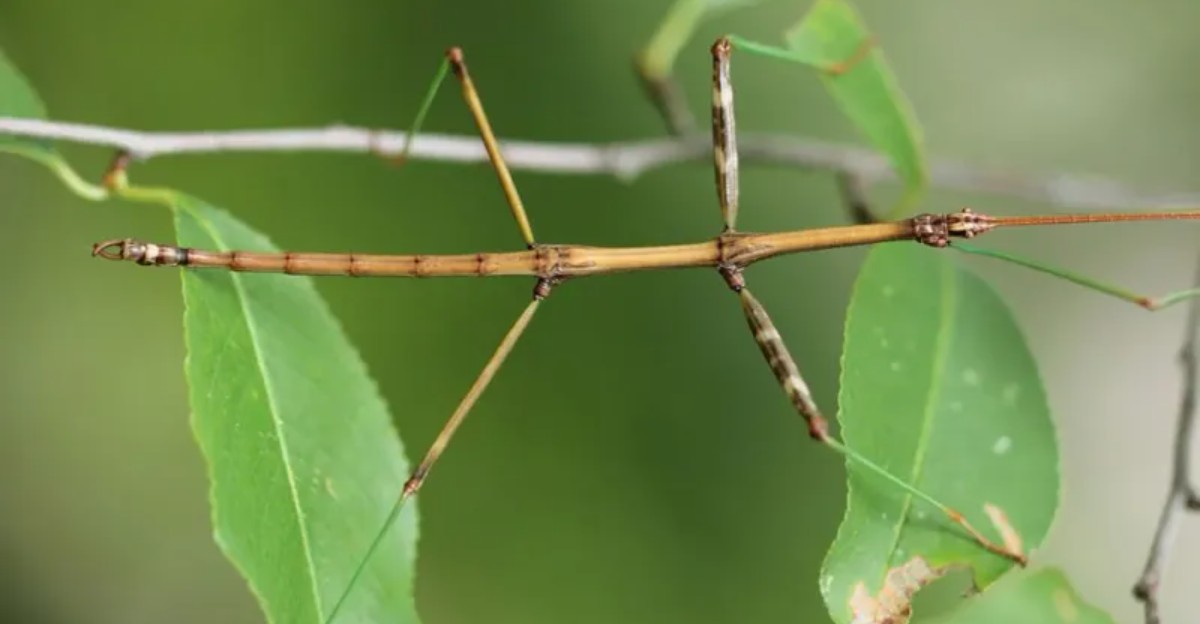
Few insects can disappear against a branch as convincingly as the strange visitor resting in your yard. Its long body may leave you wondering exactly what you found.
That unusual shape is camouflage, helping the insect blend with twigs while spending time among plants.
Stick insects live in Georgia, and their surprising appearance can make a first encounter seem more concerning than necessary. Once you recognize one, the mystery quickly fades.
These quiet insects are not looking for trouble around your home or garden.
Give your visitor some space, and there is usually little reason to interfere with what it is doing. Watching from nearby can reveal just how effective that twiglike disguise really is.
Know this harmless garden guest, and the next sighting can become interesting rather than unsettling.
1. Its Strange Shape Can Make It Look More Threatening
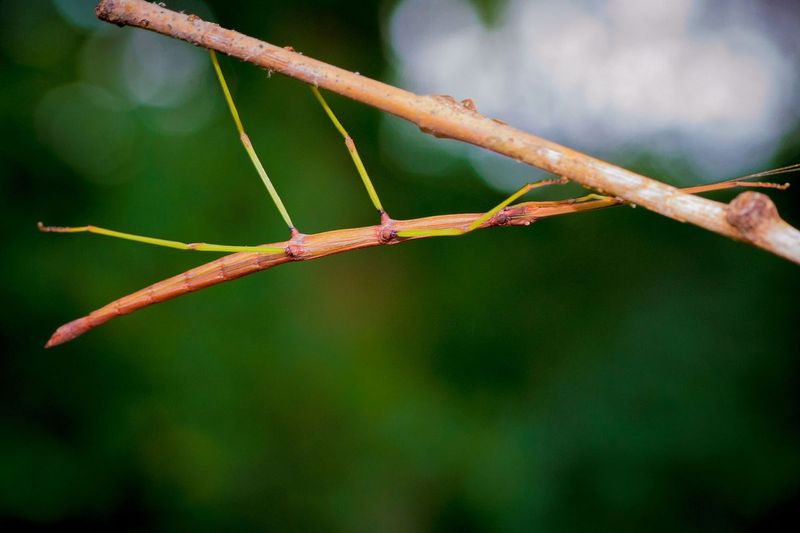
Long legs, a stretched body, and antennae that twitch. Everything about a walking stick reads as strange, and strange usually feels risky to us.
Georgia homeowners often describe them as looking part twig, part spider. Once you get a closer look, the scary details fall apart pretty fast.
Walking sticks have no stinger and no venom fangs.
Their mouthparts are built for chewing soft plant tissue, not for breaking skin. Some species can grow several inches long, which only adds to the surprise factor.
Size does not equal danger here.
A few kinds found in the Southeast can release a defensive spray when handled roughly, and that spray may irritate eyes. Washing your hands after contact and keeping fingers away from your face is enough to avoid the problem.
Beyond that, there is not much to guard against.
The insect usually stays still or sways gently instead of trying to escape.
Appearance is doing all the heavy lifting in the fear department.
Once you separate how something looks from what it actually does, a walking stick becomes one of the more interesting visitors on a hedge. Kids especially tend to lose their nervousness within a minute of watching one move.
2. Walking Sticks Rely On Camouflage To Stay Hidden
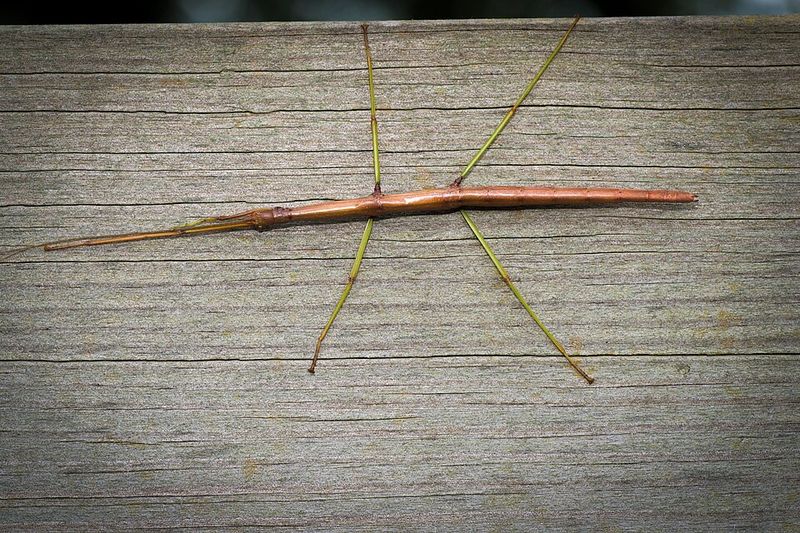
Blending in is their whole survival plan. Instead of fighting or fleeing, a walking stick works hard at being overlooked.
Bodies that mimic twigs, stems, and dry plant stalks let them sit in plain sight for hours. Colors range from green to tan to grayish brown, often matching whatever they are resting on.
Birds are their main concern, not people.
Songbirds hunting through shrubs will pass right over an insect that looks like part of the plant. That trick works well enough that walking sticks rarely need any other defense.
Stillness is part of the disguise.
Many hold their front legs straight forward, lined up with the antennae, which stretches the twig illusion even further. Some will sway slightly, imitating a stem moving in a breeze.
That behavior explains why you usually find one by accident.
Homeowners across Georgia tend to spot them while pruning, watering, or brushing against a branch. The insect was probably there for days before anyone noticed.
Your Georgia Garden Changes Every Week. Your Plan Should Too.
Gardening in Georgia changes quickly throughout the season. Every Friday you’ll receive a simple weekly plan showing exactly what to plant, prune, fertilize, harvest, and protect so you never miss the right timing.
Camouflage also means numbers are hard to judge.
Your yard might host a few at once without you ever seeing more than one. Since hiding is their main defense, disturbing a walking stick rarely triggers anything more dramatic than a slow shuffle toward a shadier branch.
3. Leaves Make Up Most Of Their Everyday Diet
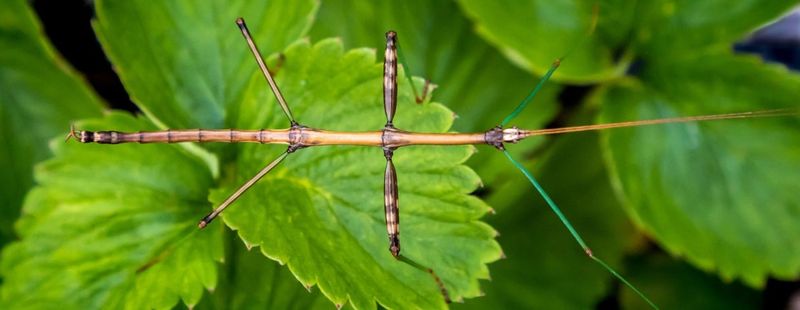
Leaves, and pretty much only leaves. Walking sticks are plant eaters with simple tastes and no interest in anything else on the menu.
Oak and other hardwood foliage ranks high on their list, along with shrubs growing near wooded edges. In Georgia, backyards that back up to trees are the most likely spots to find them feeding.
They do not bother other insects.
Since walking sticks are not predators, you will not see one stalking bees, spiders, or caterpillars. Their chewing mouthparts handle soft leaf tissue and little else.
Feeding usually happens at night.
Cooler evening hours give them cover from hungry birds, which is why daytime sightings often show an insect sitting motionless. That resting pose can look like nothing is happening at all.
Their appetite stays modest.
A single walking stick eats a small amount of leaf material compared with caterpillars or beetles working the same plant. The notches they leave behind are easy to miss.
Heavy feeding is uncommon in home landscapes.
Large populations have been reported in some forested areas, mostly on oaks, but suburban yards rarely see anything close to that.
If you notice chewed leaf edges near a walking stick, the plant will almost certainly push out new growth without any help from you.
4. Garden Plants Usually Handle Their Light Feeding
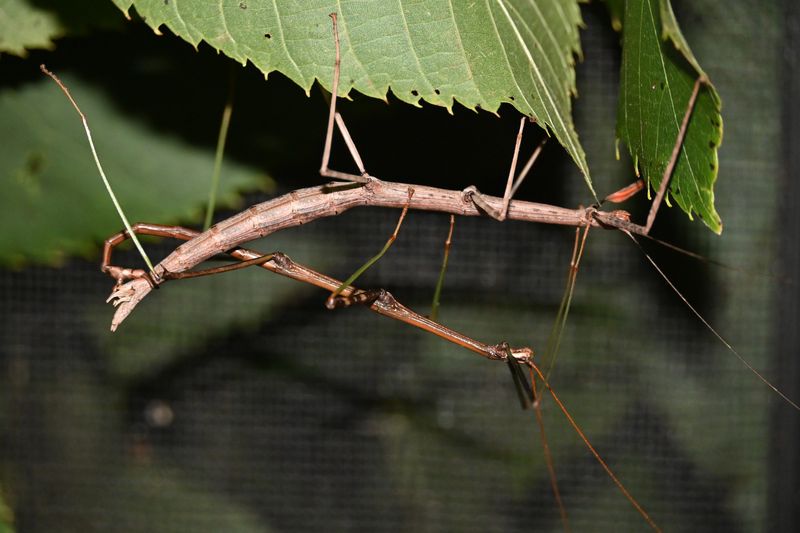
Your tomatoes are not in trouble. Walking sticks may wander through a garden bed, but they are not the pest a gardener needs to plan around.
Damage tends to look like small notches or ragged leaf edges. Compare that with a hornworm or a bean beetle, and the difference is obvious.
Vegetables are not their preferred food anyway.
Woody plants and tree leaves suit them better, so a walking stick on your trellis is often just passing through or resting. It may move on within a day.
Healthy plants shrug off minor leaf loss.
Established shrubs and perennials can lose a bit of foliage without any effect on growth or blooms. Recovery depends on the plant, the season, and how much water it is getting.
Sprays are almost never worth it here.
Broad insecticide use in a Georgia yard hits pollinators and helpful predators along with anything else, which creates a bigger problem than a few chewed leaves. Skipping treatment is usually the smarter call.
Watch instead of reacting.
Checking the plant over a week tells you whether feeding is meaningful or just cosmetic. In the vast majority of home gardens, walking sticks fall firmly into the harmless-visitor category rather than the pest column.
5. Slow Movements Are Part Of Their Natural Defense
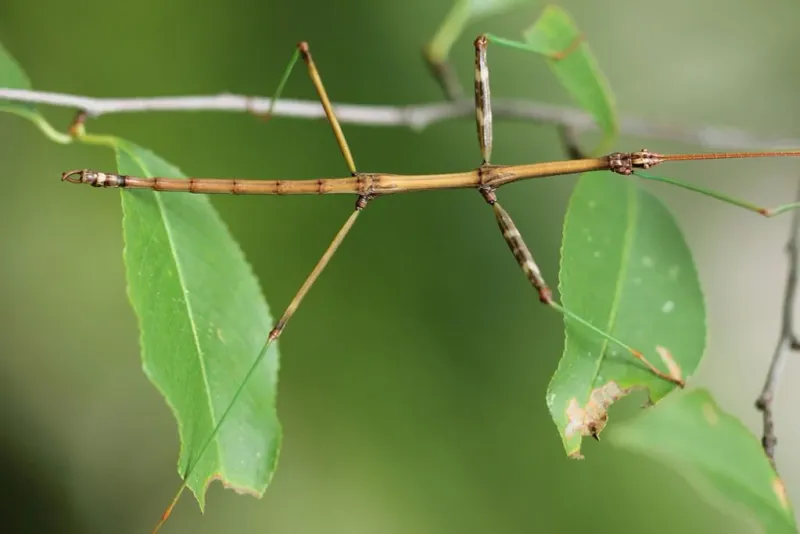
Speed is not their thing. A walking stick moves like it is thinking through every single step, and that is exactly the point.
Quick motion attracts a bird’s attention, while slow motion blends into the background. Staying deliberate keeps them safer than running ever could.
Some will freeze completely when touched.
Holding still, sometimes with legs pulled tight against the body, makes them look even more like a broken stem. That reaction is defense, not aggression.
Others rock gently side to side.
The swaying mimics a twig catching a light breeze, which is surprisingly convincing on a windy afternoon in Georgia. It also buys them time while a threat passes by.
None of that behavior involves lunging or biting.
A walking stick has no way to chase anything, and it would not benefit from trying. Its entire strategy depends on being boring to look at.
Rushing the process is the only real mistake. Their unhurried style is also what makes them fun to watch.
Kids who expect a bug to bolt are often surprised when it just keeps strolling along a fence rail at its own speed.
6. They Have No Interest In Chasing Homeowners
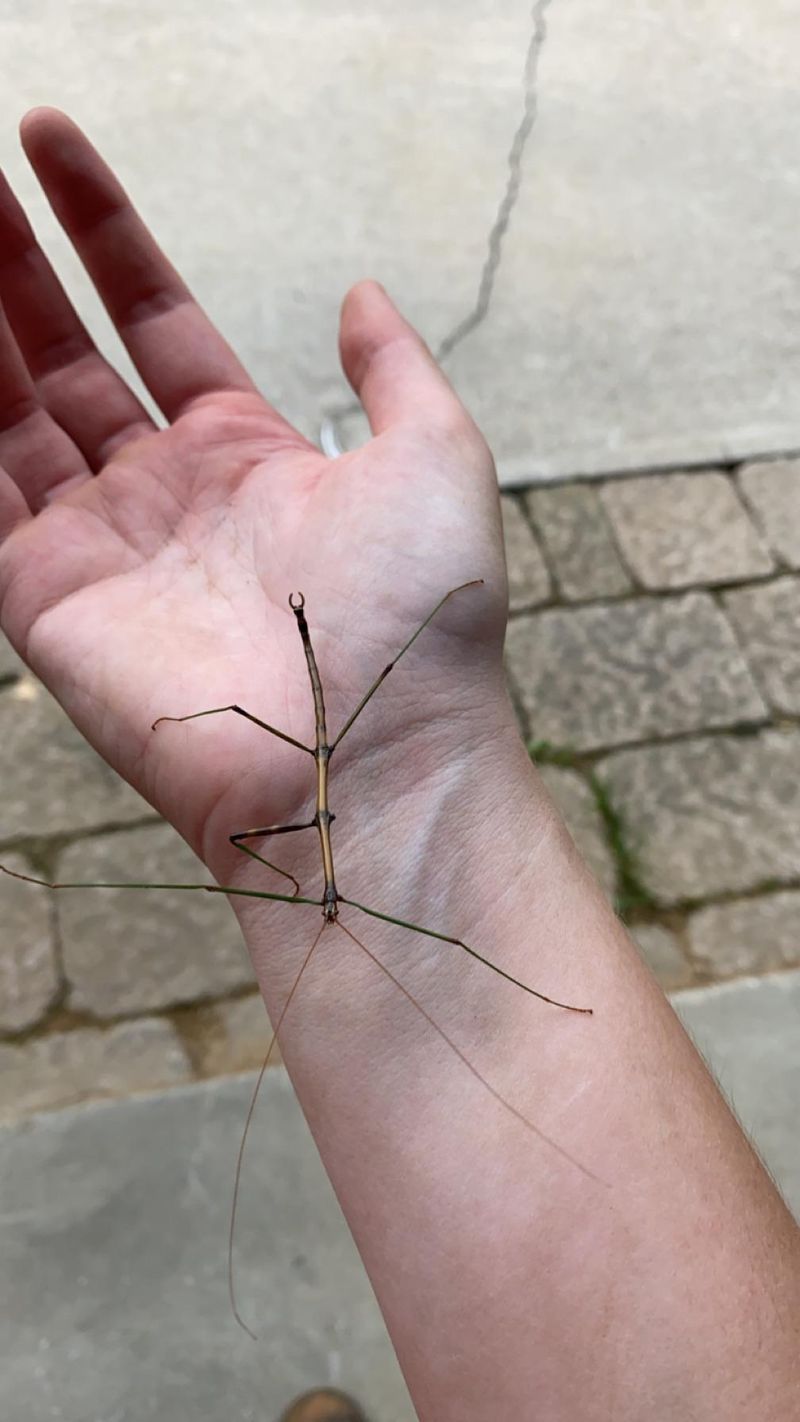
Nobody gets chased by a walking stick. These insects avoid attention, and a person walking through the yard is the last thing they want to approach.
Their nervous system is wired for hiding and feeding, not for confrontation. Defense means looking like a stem, nothing more.
Wasps and yellow jackets defend nests, which is why they sometimes come at you.
Walking sticks have no nest, no colony, and nothing to guard. There is simply no reason for them to react to your presence.
Pets tend to lose interest fast too.
Curious dogs may sniff one, but a slow insect on a branch offers very little entertainment. Keeping a pet from mouthing insects is still a good general habit.
Indoor visits are rare.
Since their food is outside on leaves, a walking stick that ends up in a Georgia home almost certainly hitched a ride on clothing, firewood, or a potted plant. It will not settle in or reproduce indoors.
Moving one back outside takes seconds.
Coax it onto a piece of paper, carry it out, and set it on a shrub near trees. Handling gently protects both you and the insect, and washing your hands afterward is a sensible finishing step.
7. Leaving Them Alone Is Usually The Best Response
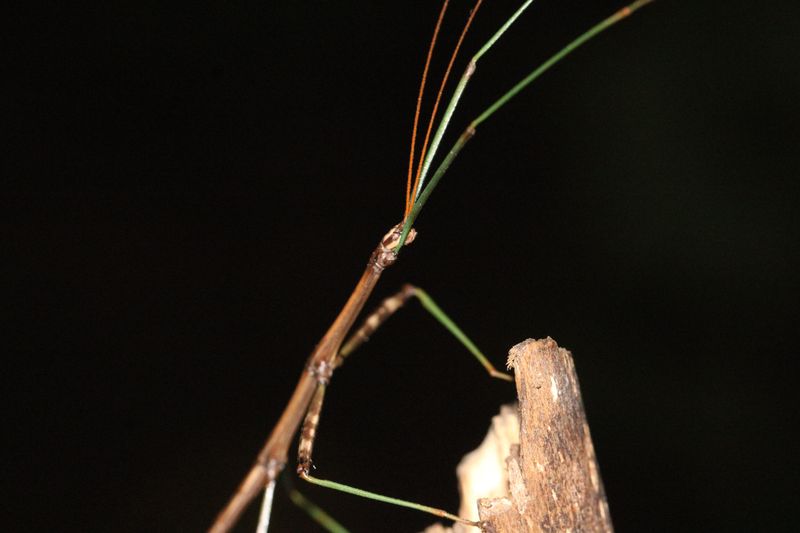
Doing nothing works. Of all the insects that show up in a yard, walking sticks may be the easiest to simply ignore.
They feed lightly, stay put for long stretches, and serve as food for birds and other wildlife. That makes them part of a working backyard food web.
Removing them offers no real benefit.
No disease is spread by walking sticks, and they do not damage siding, wood, or structures. A yard with a few of them is not a yard with a problem.
Relocation is fine when you want it.
Anyone who would rather not have one on the patio can move it to a shrub or tree line without stress on either side.
Skip the pesticide reflex.
Treating for something harmless in a Georgia landscape usually costs more than it helps, especially with pollinators active well into fall. Spot problems deserve spot solutions, and this is not one of them.
Numbers can shift year to year based on weather and nearby woods.
Even so, noticeable damage in home landscapes stays uncommon, and populations tend to level out on their own.
Curiosity beats concern here.
Point one out to a kid, take a photo, and let the strangest twig on your hedge keep doing its thing.