Why Africanized Bee Swarms Are More Common In California Than Most People Realize
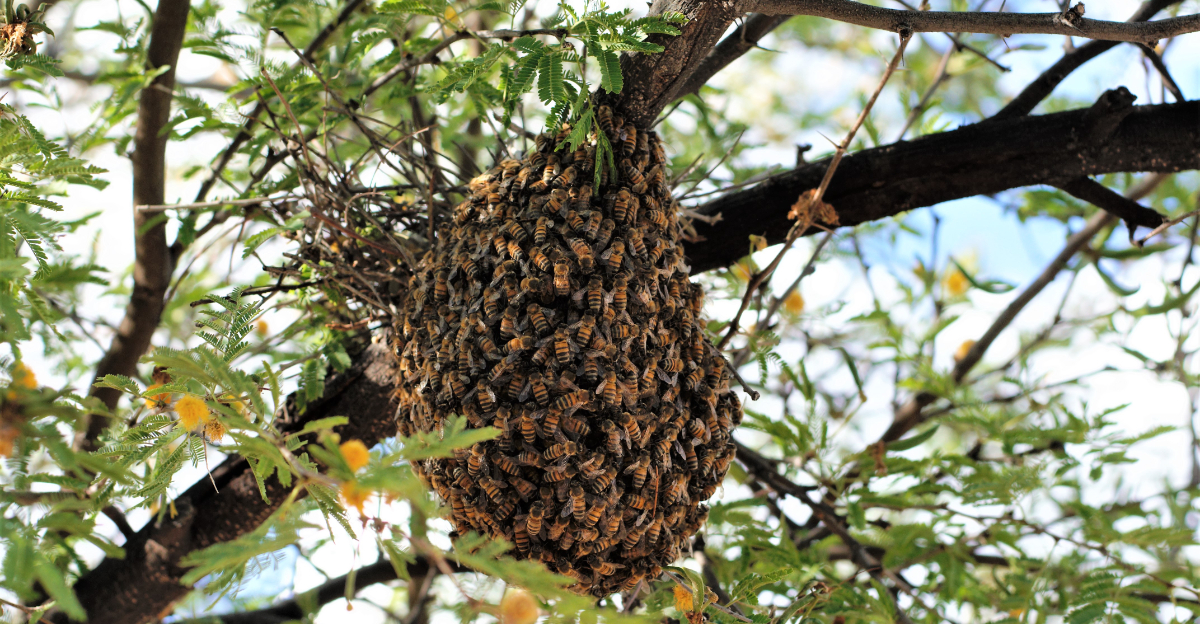
A basketball-sized cluster of bees hanging from a California tree can look like an invasion, but swarming is simply how a colony searches for a new home.
In Southern California, some of those wild swarms may be Africanized honey bees, which have been established across the region for decades.
Their visibility is easy to underestimate because they look much like other honey bees and cannot be reliably identified by appearance alone.
Warm weather supports longer breeding seasons, while plentiful wall gaps, utility boxes, sheds, and hollow trees offer ready-made nesting sites.
Africanized colonies also tend to swarm more frequently and settle into smaller spaces, helping them spread through neighborhoods without attracting immediate attention.
A resting swarm is not automatically attacking, but disturbing bees after they begin nesting can trigger intense defensive behavior.
That makes distance, caution, and professional identification far smarter than grabbing a hose, ladder, or can of spray.
1. California’s Warm Weather Keeps Swarm Season Going
Most parts of the country get a hard freeze that slows bee colonies down for months. California rarely gets that kind of cold, especially in the southern half and the Central Valley.
That means Africanized bee colonies stay active for a much longer stretch of the year.
In many regions here, swarm season can run from late winter all the way through early fall. Some years it never fully stops.
Bees swarm when a colony gets too large and splits, sending a group out to find a new home.
Warmer temperatures speed up colony growth, which means splitting happens more often. A colony that might swarm once in a cooler climate could swarm two or three times in a single warm season here.
That adds up to a lot more swarms floating through neighborhoods.
Residents in coastal areas sometimes assume they are safe because of the ocean breeze, but mild winters there still allow colonies to thrive year-round.
The extended warm season is one of the biggest reasons swarm sightings are reported so frequently across California compared to places like the Midwest or the Northeast.
2. Why Southern Counties See More Activity
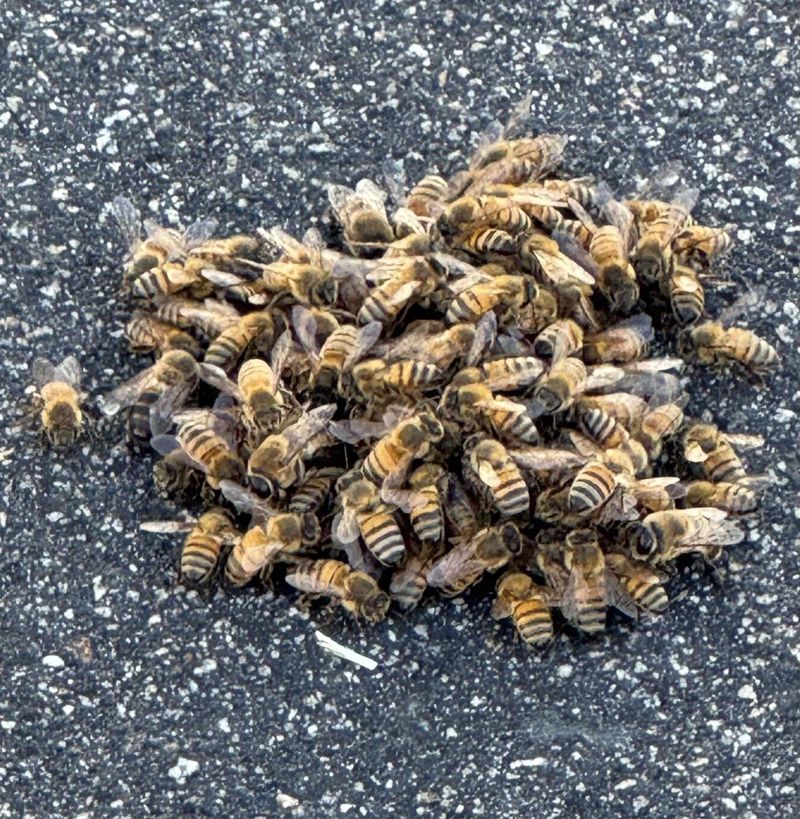
Africanized honey bees first crossed into the United States through Texas and Arizona, and they moved west along warm, dry corridors. Southern counties were the first areas in our state to see established populations, and those numbers have only grown since.
Places like San Bernardino, Riverside, and San Diego counties have reported swarm activity consistently for over two decades. The desert-like climate in those areas suits Africanized colonies very well.
Food sources and nesting spots are plentiful, and the heat keeps colonies productive all year.
Over time, colonies have pushed further north into the Central Valley and even into some Bay Area communities. But the southern regions still see the highest concentration of activity.
Local pest control professionals in those counties handle swarm calls on a regular basis throughout the year.
One reason southern areas stay hot spots is that Africanized bees are very competitive. They often take over hives started by European honey bees, replacing the gentler population with their own more defensive genetics.
Your California Garden Changes Every Week. Your Plan Should Too.
Gardening in California changes quickly throughout the season. Every Friday you’ll receive a simple weekly plan showing exactly what to plant, prune, fertilize, harvest, and protect so you never miss the right timing.
That gradual replacement has made Africanized bees the dominant wild bee type across much of the southern part of California, a shift most people outside those communities have not fully noticed yet.
3. Tiny Nesting Spots Are Everywhere
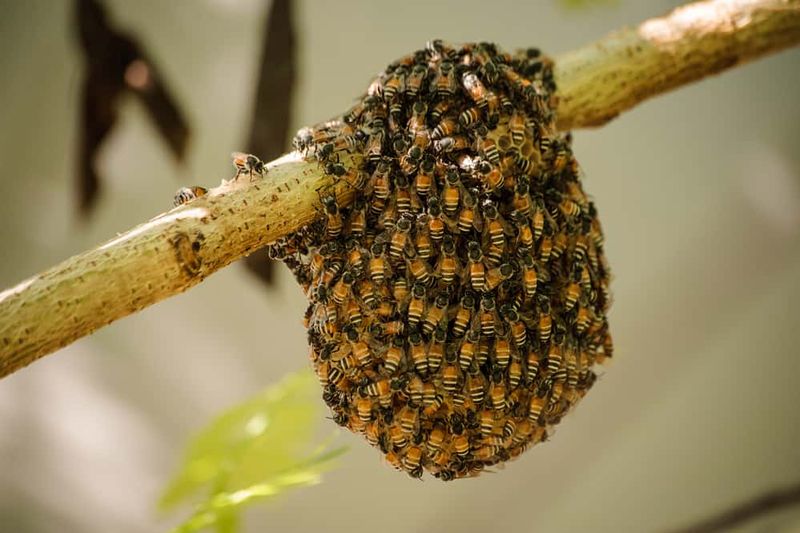
European honey bees tend to prefer large, roomy cavities for their hives. Africanized honey bees are far less picky.
They will set up a colony in almost any small enclosed space they can squeeze into, and that flexibility makes them remarkably hard to avoid.
Common nesting spots include water meter boxes, gaps in stucco walls, hollow fence posts, overturned flowerpots, old tires, and even spaces inside unused BBQ grills. Basically, if there is a cavity with some shelter, an Africanized colony might consider it home.
Homeowners are often shocked to find a fully developed hive in a spot they walk past every day. The bees build comb quickly and quietly.
By the time most people notice something is wrong, the colony is already well established and protective of its space.
Urban and suburban neighborhoods actually provide more of these tiny cavities than open wilderness does.
Construction materials, landscaping features, and stored equipment all create accidental nesting opportunities.
Regular property checks can help catch a new colony early, before it grows large enough to become a serious concern. Checking utility boxes, garden sheds, and fences a couple of times a year is a simple habit that can prevent a big surprise later on.
4. Dry Summers Push Colonies To Move Around
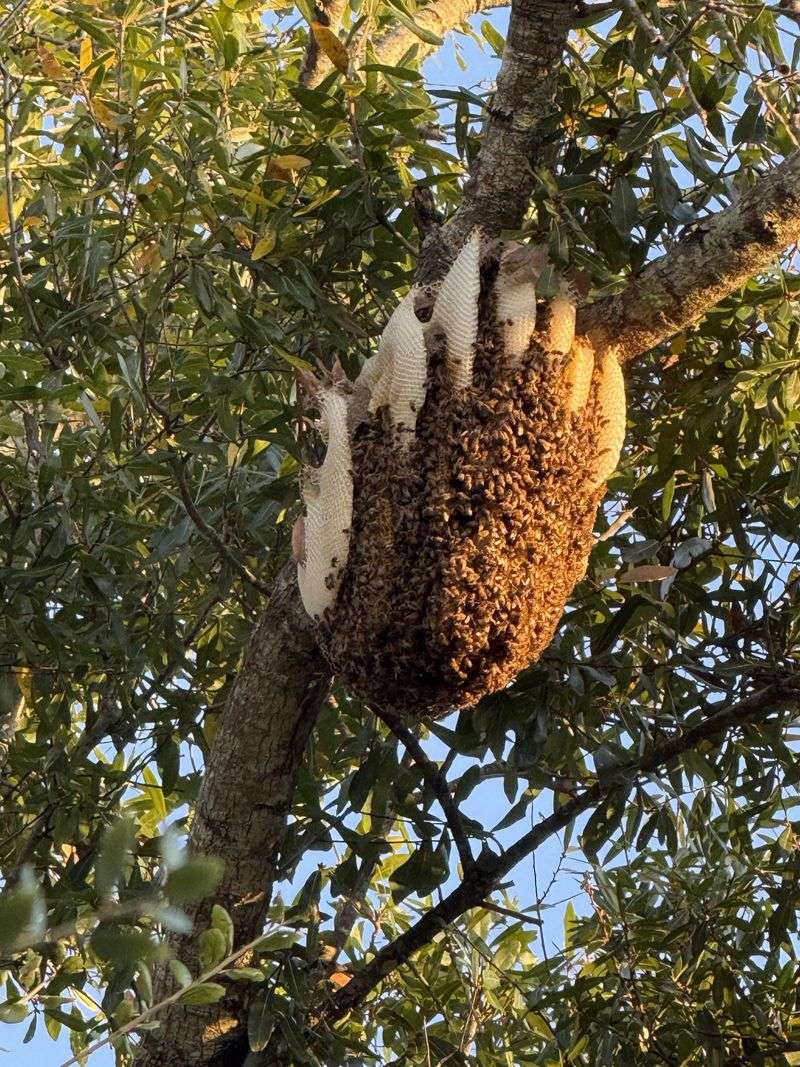
When food and water become scarce, bee colonies do not just sit still and wait. They move.
Africanized honey bees are especially known for their tendency to relocate when conditions get tough, and our state’s long, dry summers create exactly those tough conditions.
During drought years, flowers stop blooming early, water sources dry up, and nectar becomes hard to find. A colony that was doing fine in spring may find itself struggling by July.
Rather than slowly weaken, Africanized colonies often abscond, meaning the entire group leaves to search for a better location.
This movement pushes swarms into unexpected places. A colony that absconded from a hillside might land temporarily in a backyard tree, a park, or along a busy street.
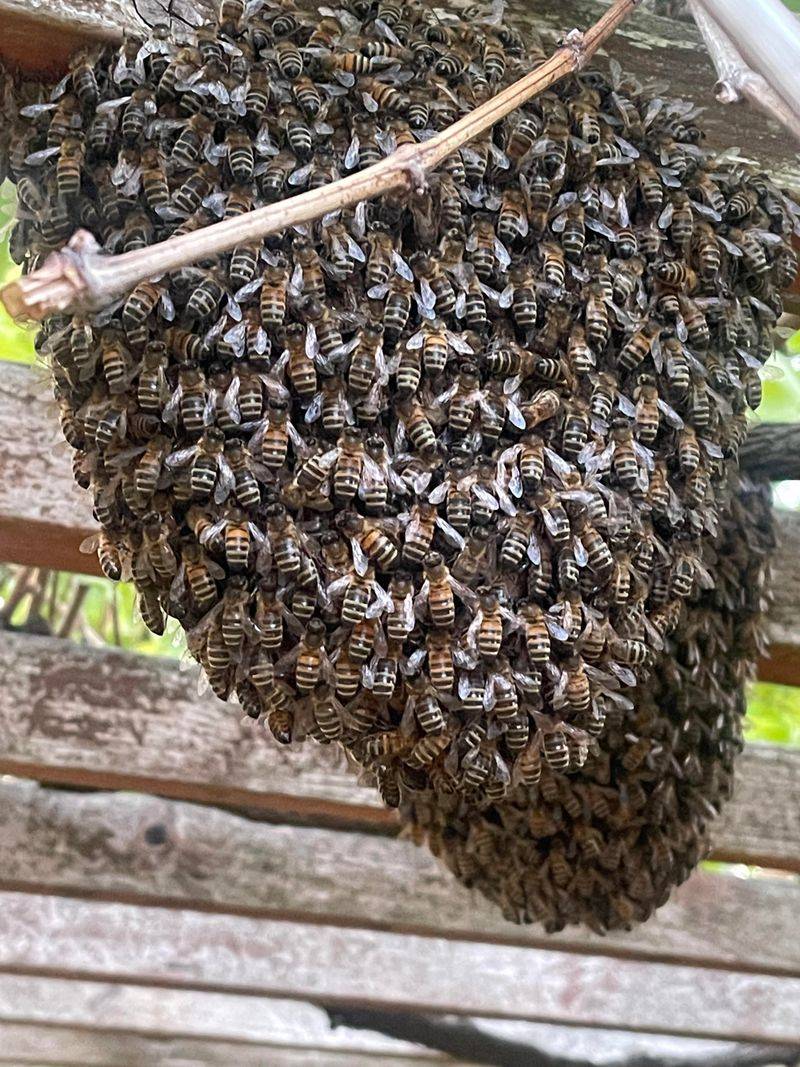
These resting swarms look alarming because they cluster in a large, visible mass while scout bees search for a permanent home.
Northern regions of California have seen an increase in swarm activity during drought years, partly because colonies are moving further to find resources. Climate trends that produce hotter and drier summers are likely making this movement more frequent.
Understanding that drought drives relocation helps explain why swarms sometimes seem to appear out of nowhere, even in areas that rarely saw them before.
5. Backyards Offer More Shelter Than You Think
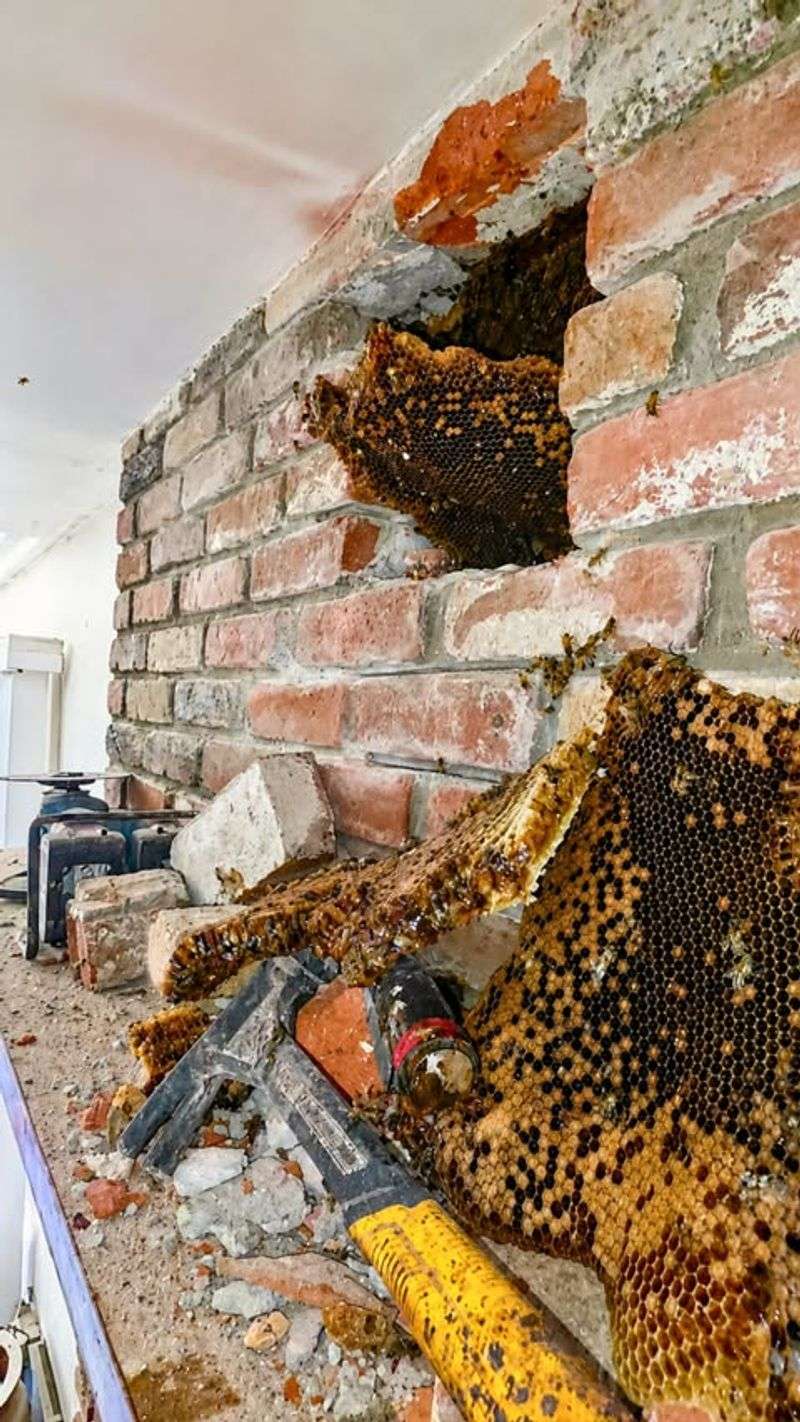
A well-maintained backyard might look tidy and safe, but from a bee’s perspective it is packed with potential real estate.
Africanized honey bees scout aggressively for nesting sites, and residential yards offer a surprising number of options that most homeowners never think about.
Garden sheds with small gaps under the door are popular choices. So are spaces beneath wooden decking, inside compost bin lids, and behind outdoor electrical panels.
Even a gap where a dryer vent meets the wall can be wide enough for a small colony to start building.
Fruit trees and flowering plants in yards also act as magnets for foraging bees. Once scouts identify a yard as a good food source, they may also start checking it out as a nesting location.
That combination of food and shelter is exactly what a relocating swarm is looking for.
Removing or sealing potential entry points before swarm season begins is one of the most effective steps a homeowner can take. Walk around your property and look for gaps larger than about a quarter inch.
Use caulk, mesh, or foam to close them off. Removing piles of old wood, unused containers, and stored equipment also reduces the number of inviting cavities available.
A few hours of prevention can save a lot of stress later in the season.
6. Swarms Can Look Scarier Than They Are
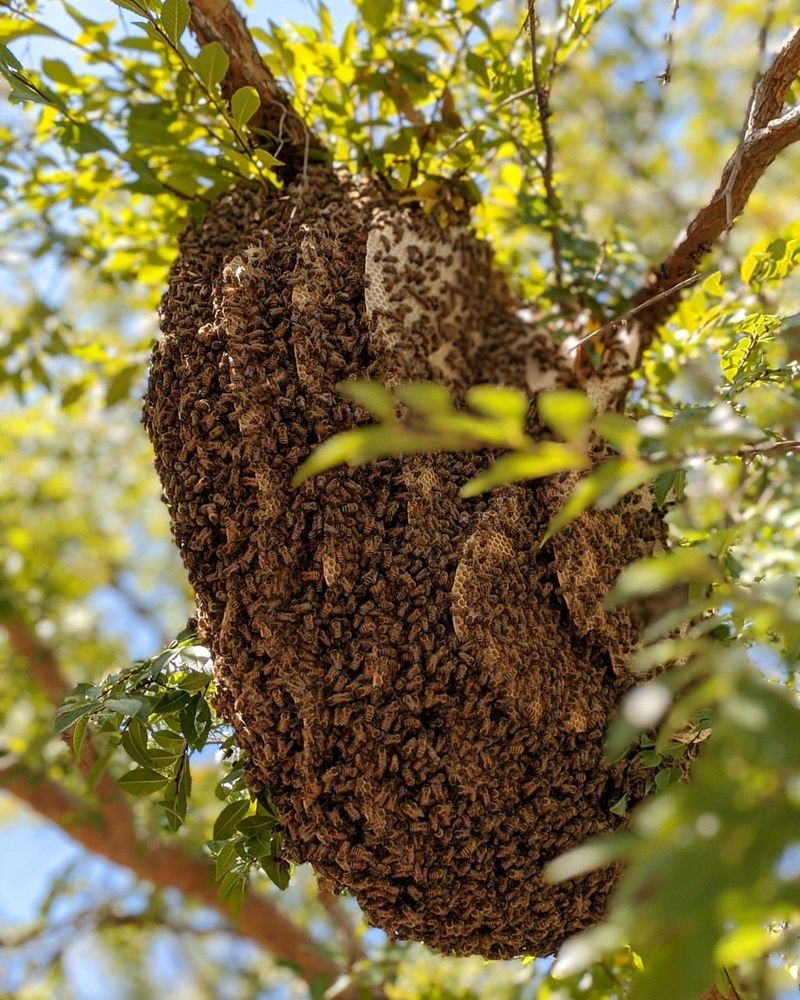
Stumbling across a swarm of bees clinging to a tree branch or fence post can make your heart race. The cluster can be basketball-sized or even larger, and the buzzing sound is hard to ignore.
But a resting swarm is actually at one of its calmest states.
When bees swarm, they leave the old hive with a queen and travel as a group. While they rest, they have no home to protect.
Scout bees are out looking for a permanent location, and the swarm is just waiting. Without a nest full of honey and young bees to defend, they are far less likely to sting.
That said, Africanized swarms are still more sensitive than European honey bee swarms. Loud noises, vibrations, and sudden movements can provoke them even in this resting state.
Keeping a safe distance is always the right call, no matter how calm they seem.
Most resting swarms move on within a day or two once scouts find a suitable new home. If one lands on your property, the safest approach is to keep people and pets away from the area and contact a local beekeeper or pest control professional.
Many beekeepers will remove a swarm for free since they value the colony. Watching from a distance is fine, but getting close is never a good idea.
7. The Difference Between Swarming And Defending A Hive
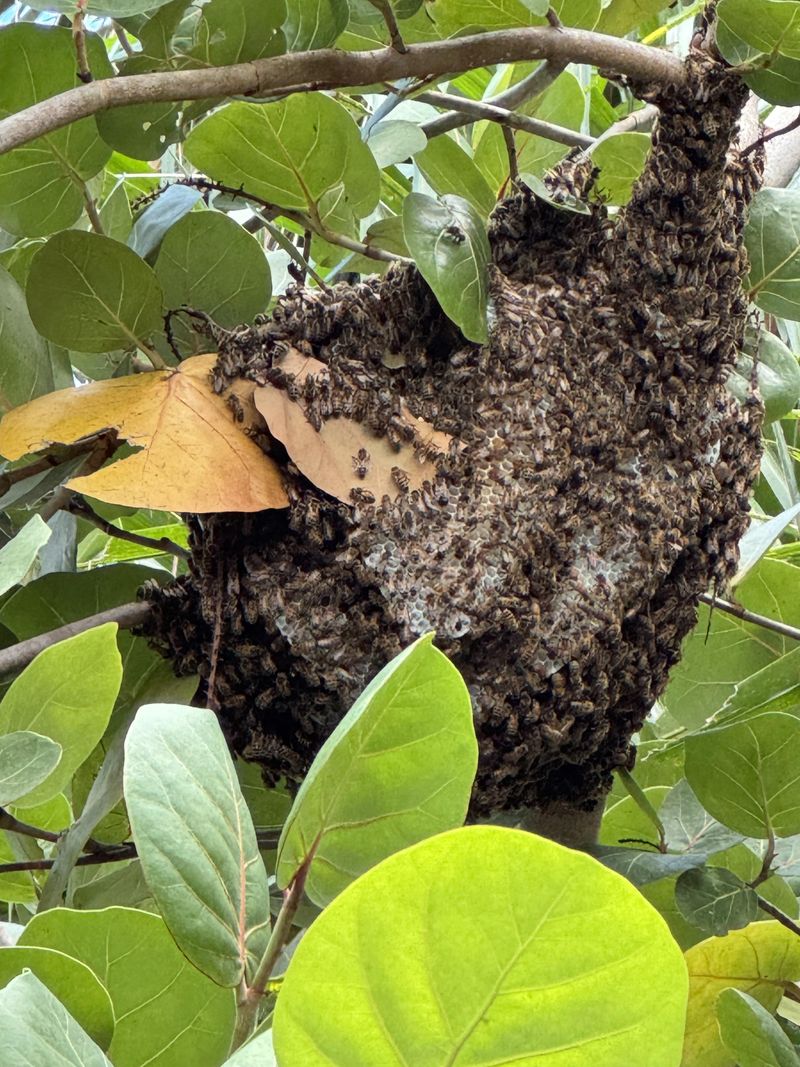
A lot of people use the word swarm to describe any bee encounter, but there is an important difference between a swarm and a colony that is defending its established home.
Knowing which one you are dealing with changes everything about how you should respond.
A swarm is a traveling group of bees looking for a new place to live. They are between homes and relatively calm, as mentioned earlier.
A colony defending an established hive is a completely different situation. Those bees have honey, eggs, and young bees to protect, and they take that job seriously.
Africanized colonies are known for responding to threats in much larger numbers than European honey bees. While a European colony might send out a few dozen guard bees, an Africanized colony can mobilize hundreds.
They also pursue perceived threats over a greater distance, sometimes following for a quarter mile or more.
If you notice bees flying in and out of a hole in a wall, a tree trunk, or any fixed structure on your property, that is an established colony, not a swarm. Do not block the entrance, spray it with water, or try to handle it yourself.
Call a licensed pest management professional who has experience with Africanized colonies. Acting quickly when you first notice the activity is far safer than waiting until the colony grows larger and more defensive.
8. Why Identifying Them By Sight Is Tricky
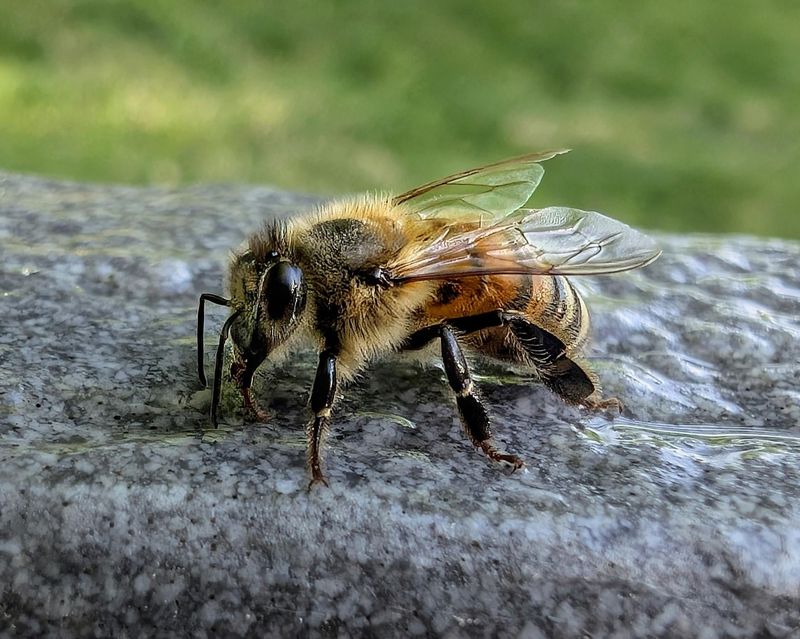
One of the most surprising facts about Africanized honey bees is how ordinary they look. Even trained entomologists cannot tell them apart from European honey bees with the naked eye.
The two types are almost identical in size, color, and shape, which creates a real challenge for homeowners trying to figure out what kind of bees they are dealing with.
Africanized bees are slightly smaller on average, but the difference is so minor that it is not reliable as a field identification method.
The only accurate way to confirm the species is through laboratory measurement of specific body parts, a process called morphometric analysis. Some labs also use DNA testing.
This visual similarity means that treating every wild bee colony as potentially Africanized is the safest approach, especially in southern and central regions of California.
Assuming a colony is gentle because the bees look like the ones you see at a flower shop is a mistake that has led to many unexpected stinging incidents.
Behavior can offer some clues. Africanized colonies tend to react faster, in greater numbers, and with less provocation than European colonies.
But by the time you notice that behavioral difference, you are likely already too close. Trusting a professional to assess any wild colony near your home is far smarter than trying to figure out the species on your own.
9. What To Do When A Swarm Shows Up Nearby
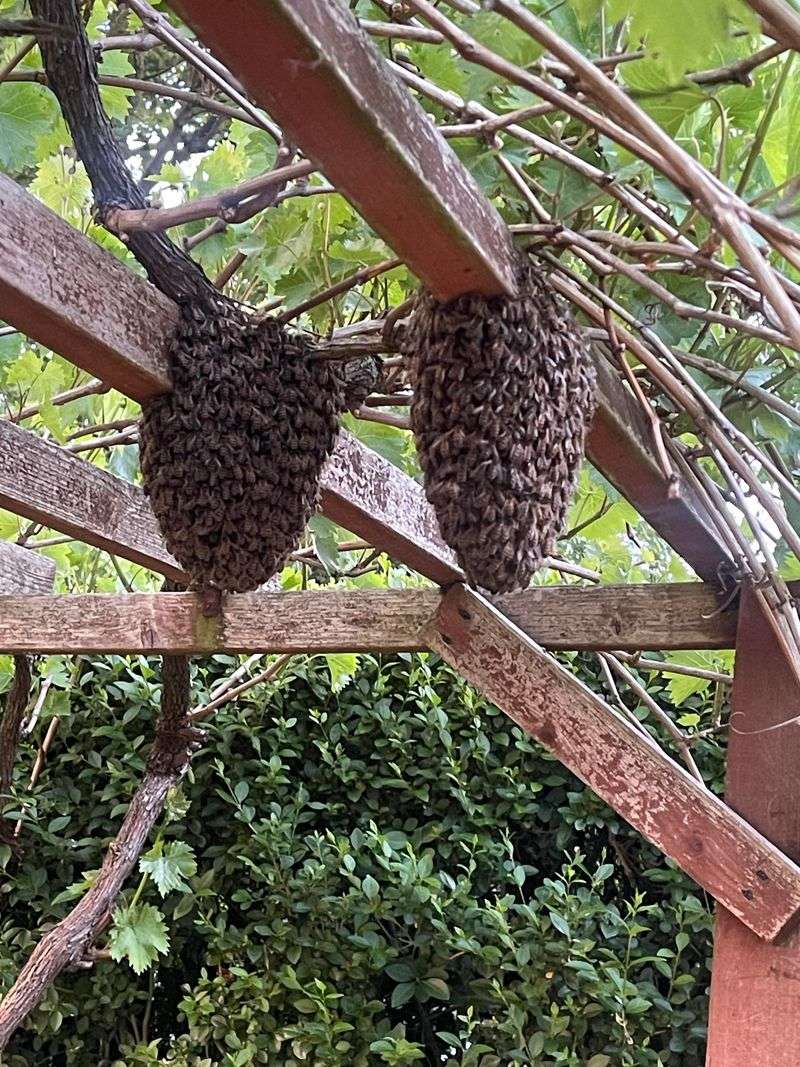
Seeing a swarm land near your home is startling, but having a clear plan makes the situation much easier to handle. The first and most important step is to stay calm and move away from the swarm slowly.
Running or swatting at bees can trigger a defensive response even from a resting group.
Get everyone indoors, including children and pets. Close windows and doors near the swarm if possible.
If you are stung, move away quickly and calmly. Seek medical attention right away if you experience any signs of an allergic reaction, such as swelling beyond the sting site, difficulty breathing, or dizziness.
Once you are safely away, contact a local beekeeper association or a licensed pest control company. Many areas in California have hotlines specifically for bee removal calls.
Beekeepers often prefer to relocate a swarm rather than exterminate it, which is better for the local bee population overall.
While waiting for help, keep others away from the area and put up a simple barrier like a piece of tape across a gate or a sign on a door. Do not try to spray the swarm with a hose or any chemical product.
Water and strong scents can agitate bees quickly. Patience and distance are your best tools until a trained professional arrives to handle the situation safely.