Why Aloe Vera Turns Mushy Or Brown In Arizona Heat And How To Fix It
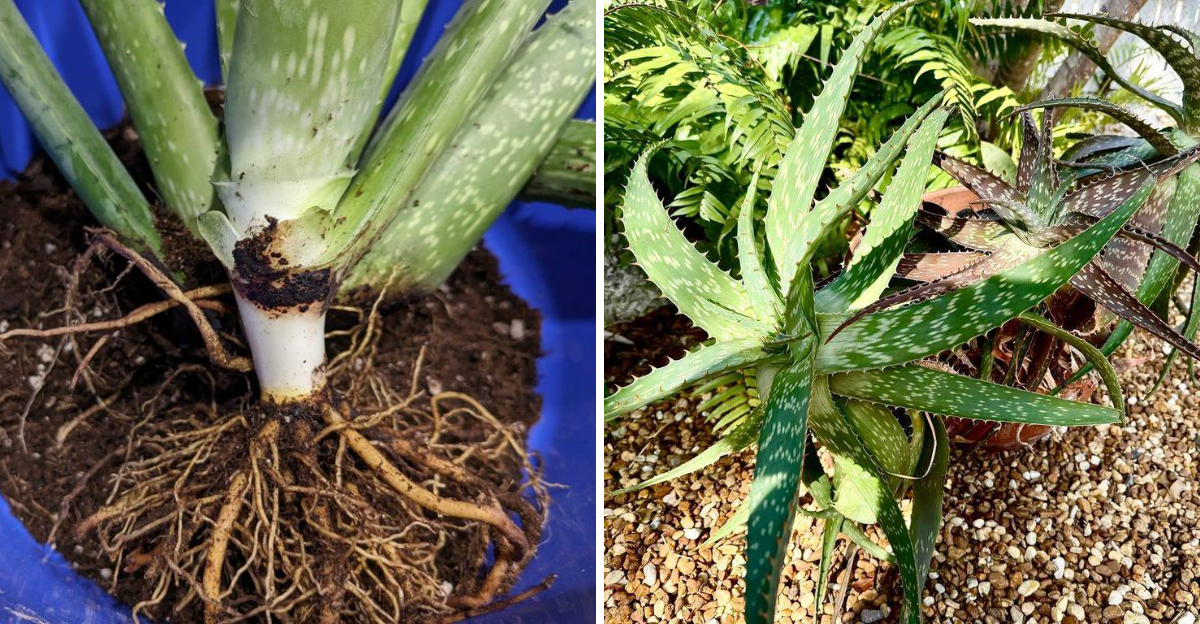
Aloe vera has a reputation for being one of the easiest plants to grow, which is why changes in its appearance can feel so unexpected.
One day the leaves look firm and healthy, and before long they start turning brown, soft, or unusually weak.
The confusing part is that heat is not always the only thing involved. Watering habits, container conditions, sunlight exposure, and soil drainage can all affect how aloe responds during the hottest part of the year.
Arizona summers put even tough plants under pressure, especially when temperatures stay high for weeks at a time.
Small issues that seem harmless earlier in the season can become much more noticeable once intense heat settles in.
Figuring out what caused the problem is often the first step toward helping aloe recover. The good news is that many of the most common causes can be corrected before lasting damage occurs.
1. Too Much Water During Extreme Heat
Watering more during a heatwave feels like the right move, but aloe vera does not work that way. When temperatures spike, the plant slows down.
Roots absorb less water, and moisture lingers in the soil far longer than expected.
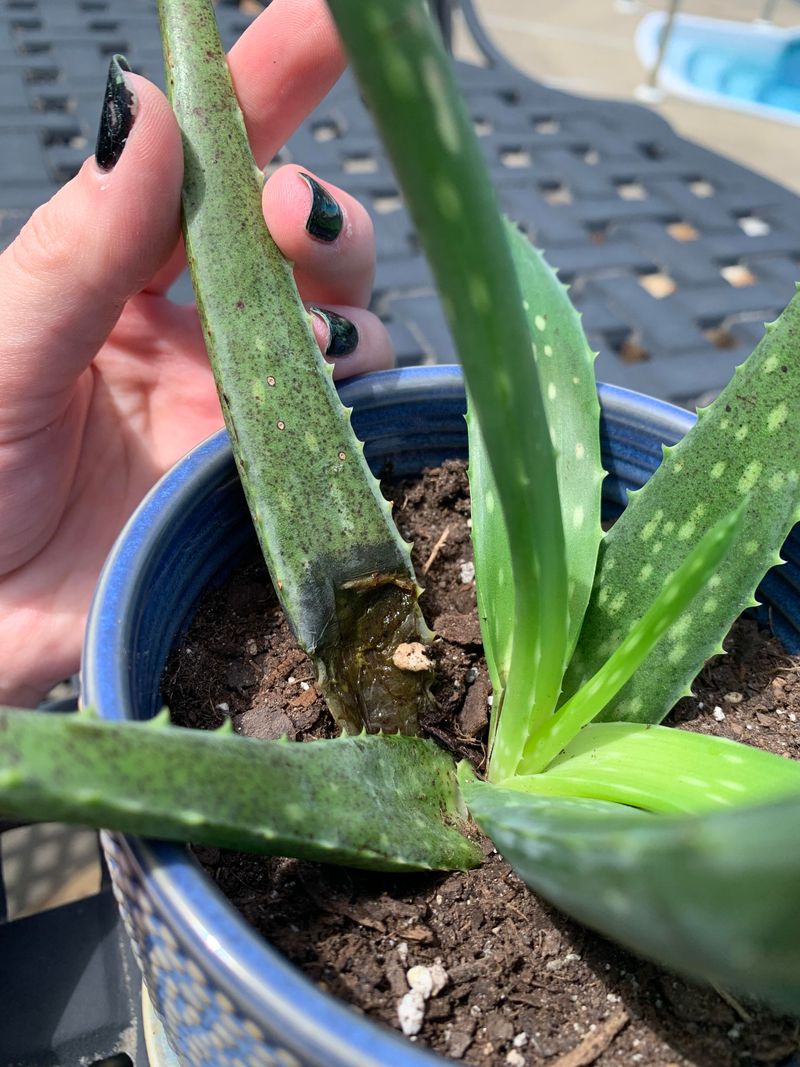
Soggy soil is the fastest way to turn firm leaves into soft, watery mush. Overwatered aloe leaves lose their structure.
They start to look glassy or almost see-through before they eventually collapse.
In hot desert climates, aloe actually needs less water during peak summer, not more. Watering once every two to three weeks is usually enough when heat is intense.
Always check the soil before adding any water.
Push your finger two inches into the soil. If it still feels damp, skip the watering.
Come back in a few days and check again.
A moisture meter can take the guesswork out completely. They are inexpensive and available at most garden centers.
Using one regularly helps you avoid the most common mistake aloe growers make.
When leaves do turn mushy, stop watering immediately. Let the soil dry out fully before you water again.
2. Poor Drainage Keeps Roots Too Wet
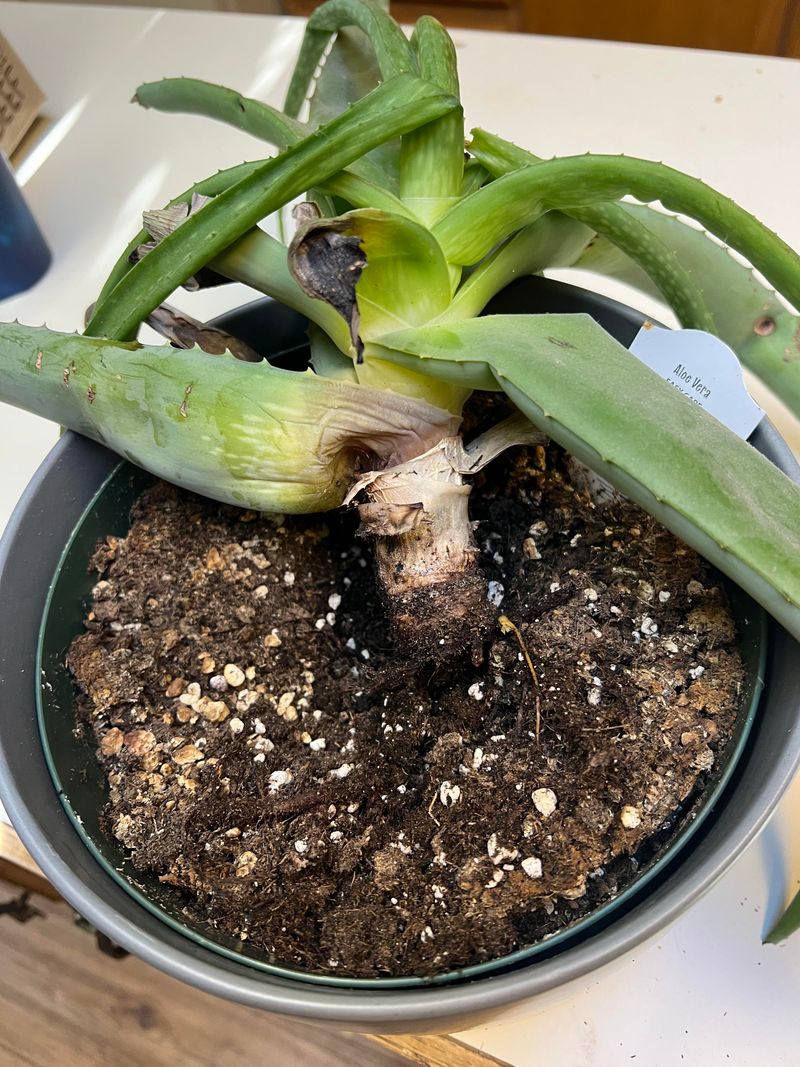
Bad drainage is a silent problem. Water collects at the bottom of the pot, roots sit in it for days, and the damage builds slowly before you notice anything above the soil line.
Aloe vera roots are not built to handle standing water. When they stay wet too long, they begin to soften and break down.
Rotting roots cannot pull nutrients or water properly, and the whole plant starts to suffer.
Leaves turn yellow first, then brown at the tips. Eventually the base of the plant feels squishy when you press it.
At that stage, root rot has likely already set in.
Check your pot immediately. Every container used for aloe needs drainage holes at the bottom.
No exceptions. If water cannot escape, the setup is working against the plant from day one.
Soil mix matters just as much as the pot itself. Standard potting soil holds too much moisture for aloe.
Use a cactus and succulent mix, or blend regular potting soil with coarse perlite at roughly a 50/50 ratio.
Your Arizona Garden Changes Every Week. Your Plan Should Too.
Gardening in Arizona changes quickly throughout the season. Every Friday you’ll receive a simple weekly plan showing exactly what to plant, prune, fertilize, harvest, and protect so you never miss the right timing.
Repotting into fresh, fast-draining soil can save a plant showing early signs of root trouble.
3. Intense Afternoon Sun Scorches Exposed Leaves
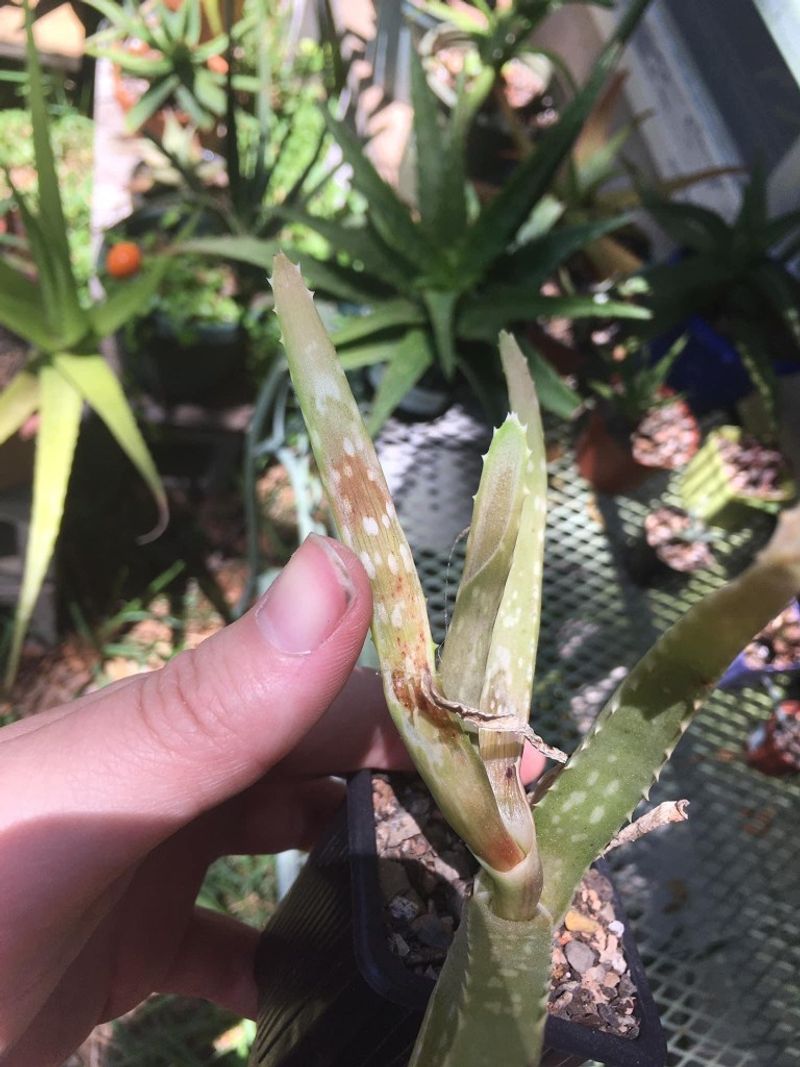
Full afternoon sun in the desert Southwest is brutal. Temperatures near the soil surface can reach 150 degrees on a hot summer day.
Aloe vera can handle a lot of sun, but that level of direct heat is simply too much.
Sunburned aloe leaves show up as dry, papery brown patches. Unlike overwatering damage, these spots are not soft or mushy.
They feel dry and almost crispy when you touch them.
Burn marks usually appear on the side of the plant facing west or south. That is the direction getting hit hardest during the hottest hours of the day.
Moving the plant slightly is often all it takes. A spot with morning sun and afternoon shade works very well for aloe in hot climates.
Even a shade cloth rated at 30 to 40 percent can make a noticeable difference without blocking too much light.
Established aloe growing in the ground tends to handle heat better than container plants. Pots heat up fast, and roots near the edges can get cooked even when the leaves look fine on the surface.
Burned leaves do not recover. Once a patch turns brown and dry, that section of the leaf stays that way.
4. Containers Heat Up Faster Than Expected
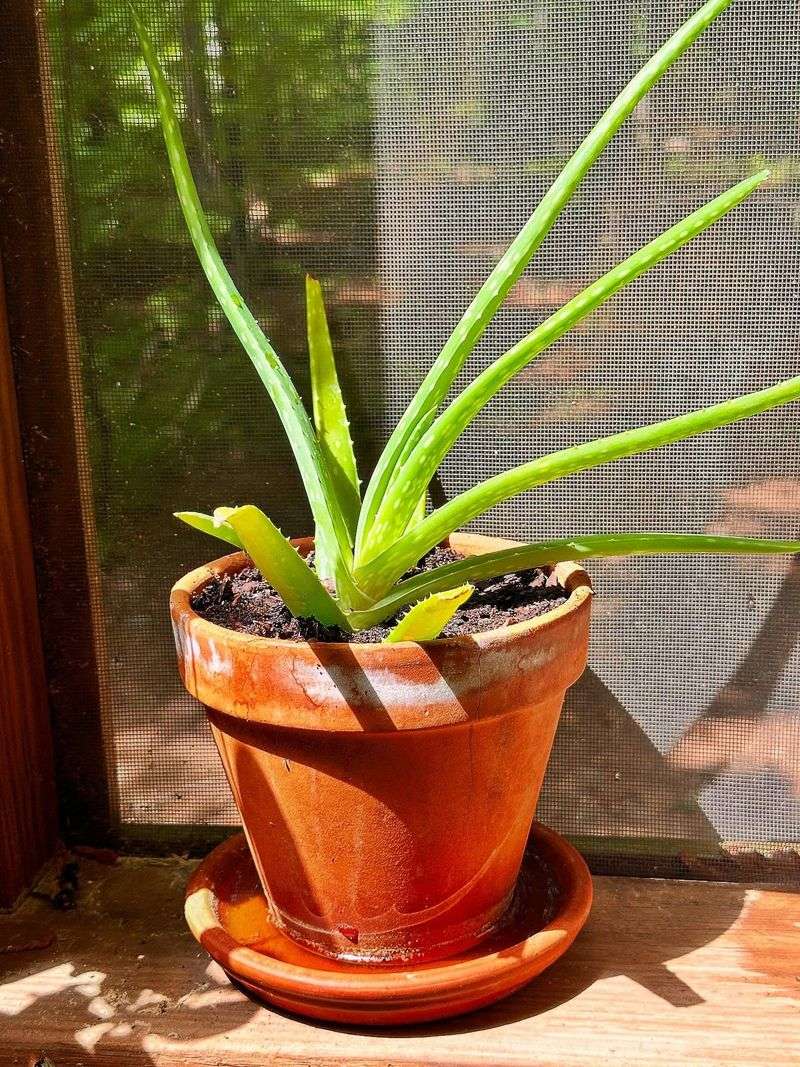
Dark-colored pots sitting on concrete in full sun can reach dangerously high temperatures inside. Roots near the container walls get cooked while the top of the soil still looks completely fine.
It is one of the sneakiest causes of aloe decline in hot climates.
Plastic pots heat up the fastest. Black or dark-colored plastic is especially bad during summer.
Light-colored containers, unglazed terracotta, or thick ceramic pots stay cooler and protect roots much better.
Where you set the pot matters too. Concrete, pavers, and asphalt radiate enormous amounts of heat upward.
Placing a pot directly on these surfaces amplifies the temperature inside the container significantly.
Raise containers off the ground using pot feet or a simple wooden board. Even an inch of airflow underneath makes a real difference.
Moving pots to a shaded or semi-shaded surface during peak summer months helps even more.
Terracotta is a solid choice for hot, dry climates. It breathes, which helps the soil dry out at a more even rate.
The downside is that it also dries out faster, so you will need to monitor soil moisture a bit more closely.
5. Crowded Growth Reduces Air Movement
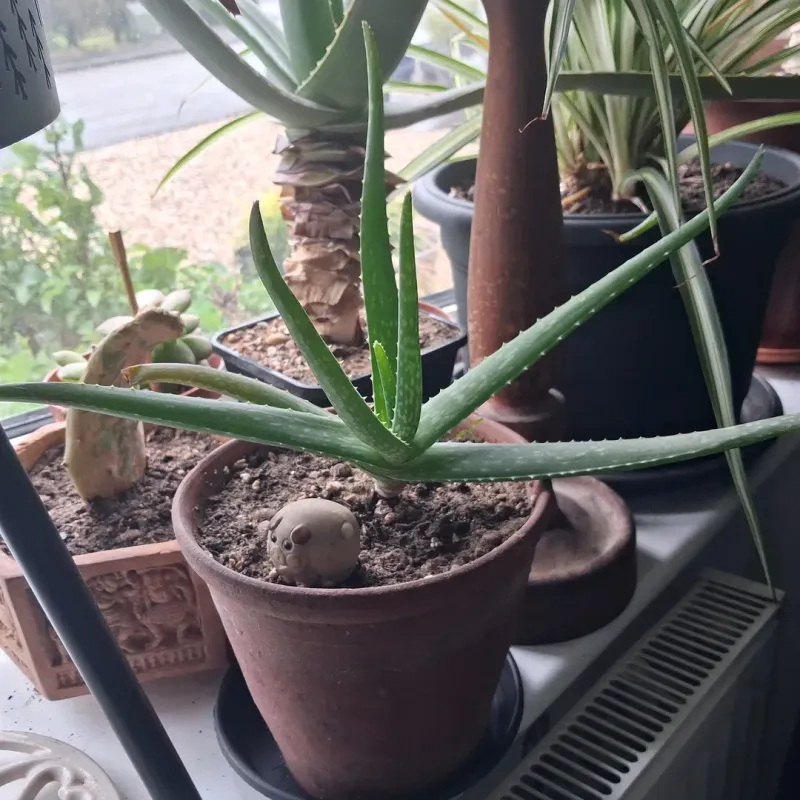
Aloe vera produces offsets, also called pups, constantly. Left unchecked, a single plant can fill a pot completely in just a couple of seasons.
Once a container is packed solid, problems follow quickly.
Poor airflow is the first consequence. When leaves press tightly against each other, moisture gets trapped between them.
In dry desert air that seems harmless, but in monsoon season or after watering, that trapped moisture creates soft spots and encourages rot.
Crowded plants also compete for nutrients. Soil gets depleted faster when multiple plants share the same small volume of growing medium.
Leaves start to look pale, thin, or washed out when nutrients run short.
Separating pups is straightforward. Wait until they are at least a few inches tall and have their own visible roots.
Gently work them free from the parent plant, let the cut ends dry for a day, then pot them up individually.
Give each plant room to breathe. A container that feels slightly too large now will be just the right size in a season or two.
Overcrowding a new pot immediately defeats the purpose of separating them in the first place.
After dividing, hold off on fertilizing for a month. Roots need time to settle into their new space.
6. Damaged Roots Struggle To Support Healthy Growth
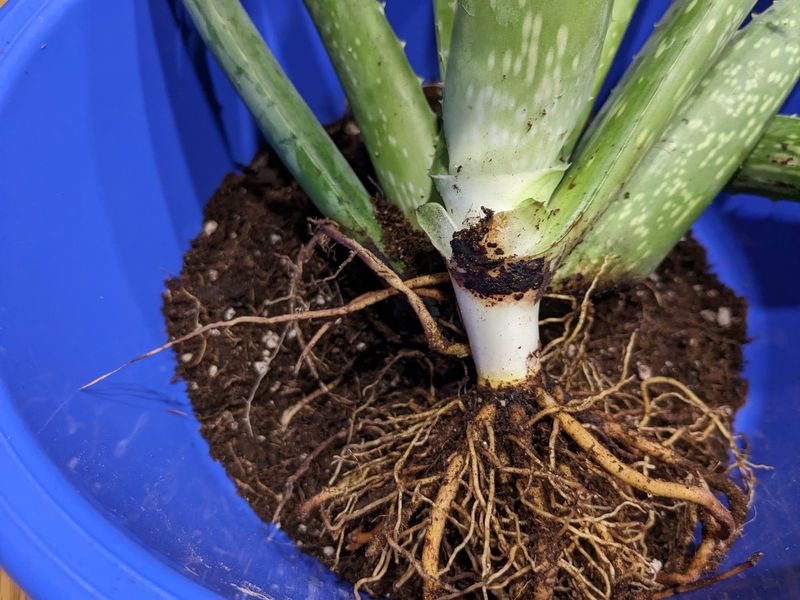
Roots are doing all the heavy lifting. When they get damaged, whether from overwatering, heat, or rough repotting, the whole plant pays the price.
Leaves start to look dull, limp, or discolored long before the root problem becomes obvious.
Root damage does not always mean rot. Sometimes roots dry out too much, especially in containers sitting on hot concrete.
Bone-dry roots cannot absorb water even when you do water correctly.
Compacted or circling roots are another issue. When aloe stays in the same pot too long, roots wrap around themselves and stop functioning well.
Growth slows, leaves thin out, and the plant looks generally unhealthy.
Checking roots once a year is a smart habit. Gently slide the plant out of its pot and take a look.
Healthy roots are pale, firm, and spread evenly. Dark, mushy, or stringy roots need attention.
Trim damaged roots with clean, sharp scissors. Cut back to where the tissue looks healthy and firm.
Letting the trimmed roots dry out for 24 hours before replanting reduces the chance of further problems.
After repotting, hold off on watering for at least a week. Newly trimmed roots need time to settle.
7. Move Stressed Plants Out Of Harsh Afternoon Sun
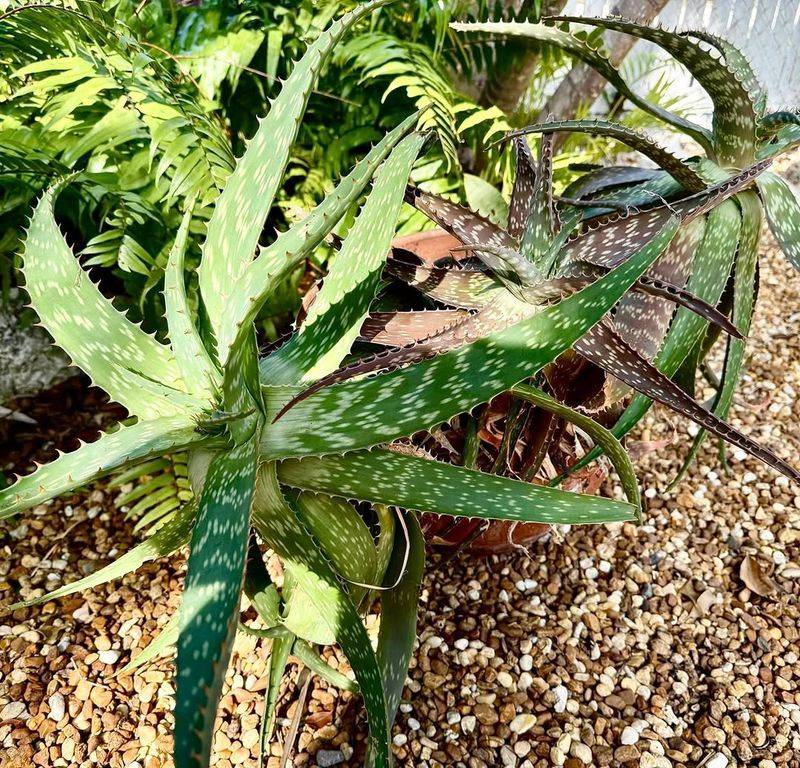
Relocating a struggling plant sounds simple, but the timing and destination both matter. Moving aloe from full sun to deep shade all at once can actually shock it further.
A gradual transition works better.
Start by moving the plant to a spot that gets morning sun and light shade from midday onward. Keep it there for one to two weeks before moving it to a shadier location if needed.
Sudden changes in light stress plants that are already weakened.
A covered patio, the east side of a wall, or a spot under a large tree canopy are all good options. The goal is bright indirect light, not darkness.
Aloe still needs light to recover and grow.
Once relocated, assess the damage honestly. Trim off any leaves that are fully brown, mushy, or collapsed at the base.
Clean cuts help the plant focus energy on healthy tissue instead of trying to maintain damaged sections.
Avoid fertilizing a stressed plant right away. Fertilizer pushes growth, and a plant dealing with heat stress or root damage cannot support new growth reliably.
Wait until you see fresh new leaves emerging before feeding.
Check soil moisture carefully after the move. A shaded spot dries out slower than a full-sun location.