This Native Texas Plant Helps Bring Fireflies Back To Summer Yards
There used to be more fireflies. Many Texans over forty know what that sentence means from personal experience.
Warm summer evenings with dozens of lights blinking across the yard. The kind of thing that made you stop what you were doing and just watch.
That experience has become rarer, and the reasons are mostly things happening right in our own backyards: habitat loss, pesticides, light pollution, the removal of leaf litter and low vegetation that fireflies depend on to complete their life cycle.
Bringing them back is not a complicated project, but it does start with understanding what fireflies actually need. And one native Texas plant turns out to be an unusually good answer to several of those needs at once.
It is not flashy. It does not bloom with dramatic color. It thrives in the shady spots many gardeners find difficult. It creates the kind of cool, moist, sheltered microhabitat that firefly larvae and adults both rely on to survive through a Texas summer.
Want to know what it is and how to use it?
1. This Is The Native Texas Grass Worth Getting To Know First
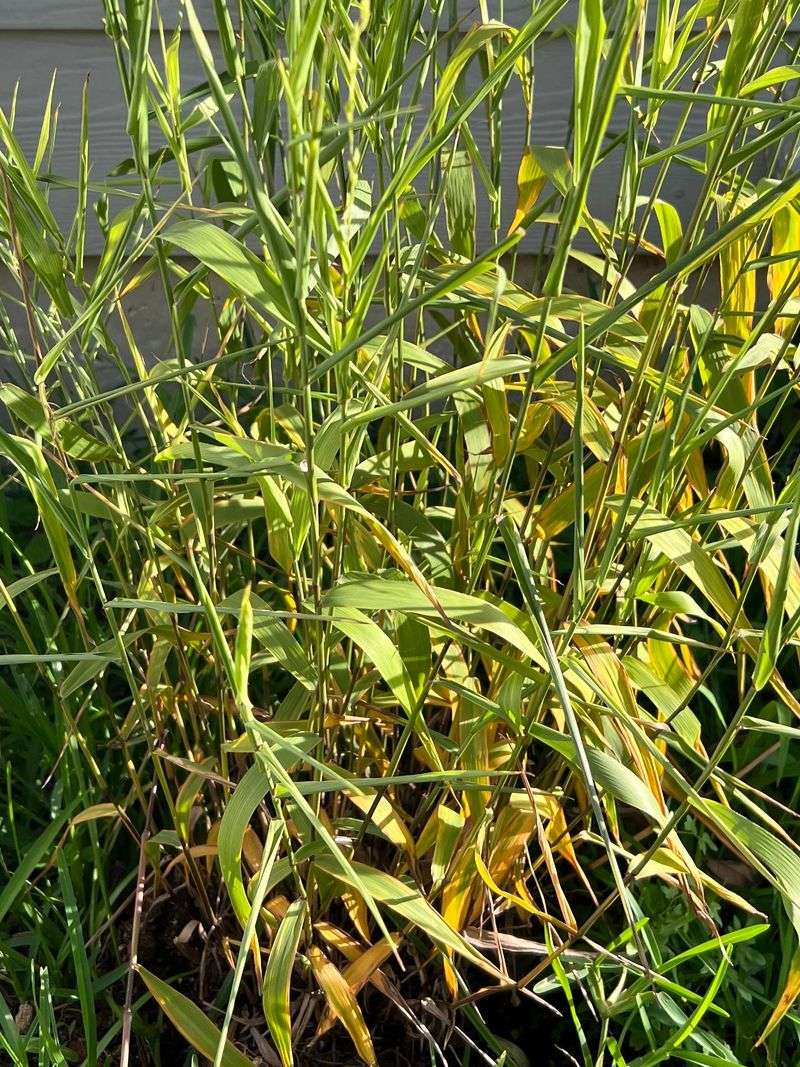
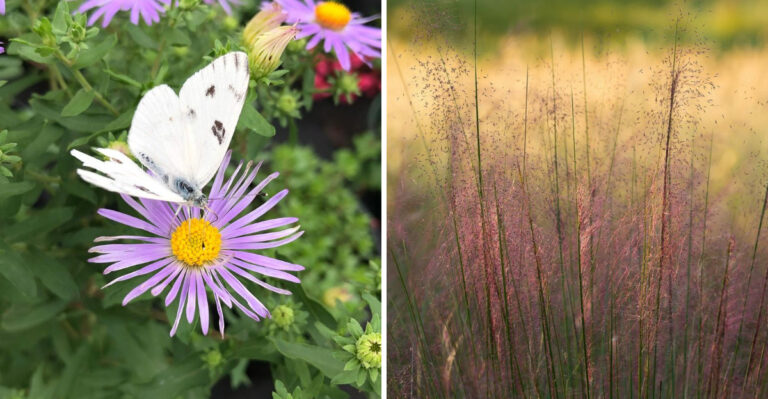
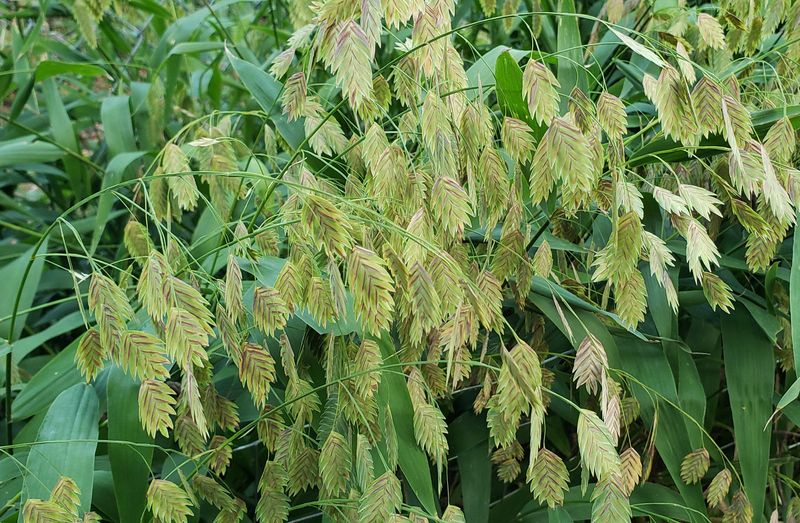
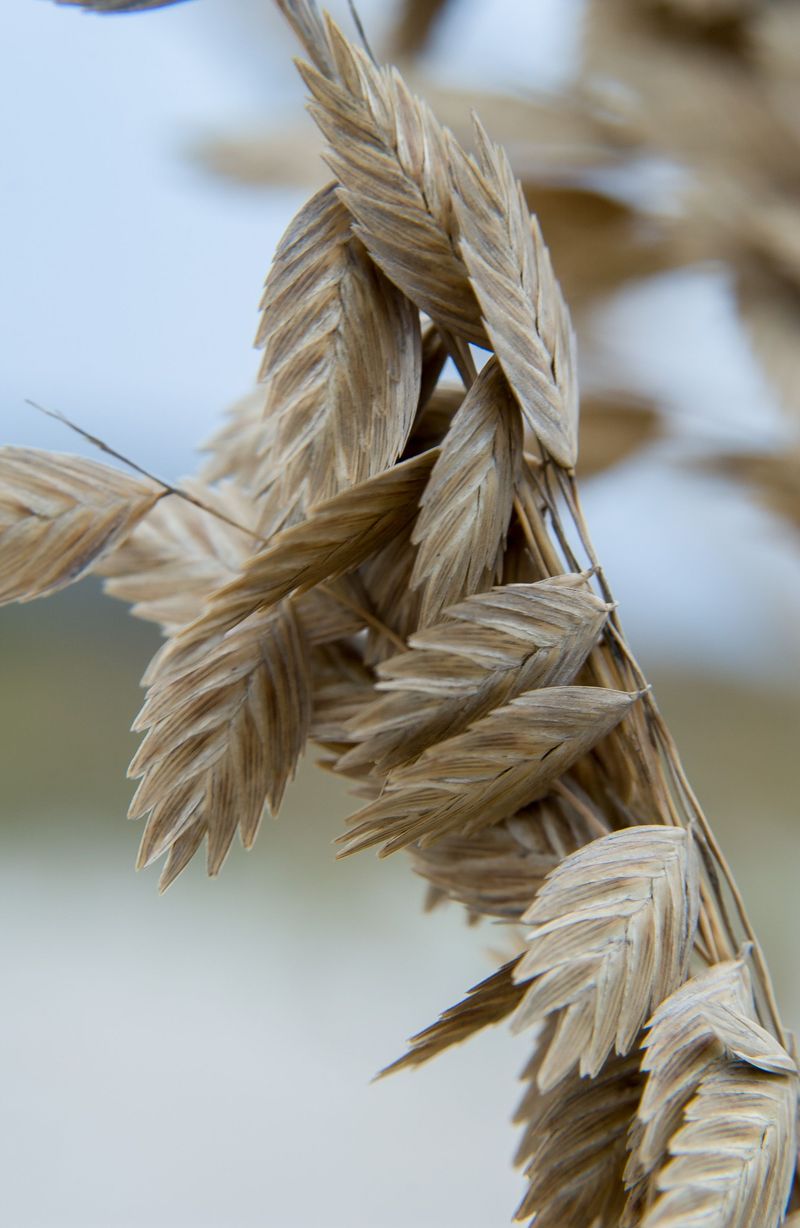
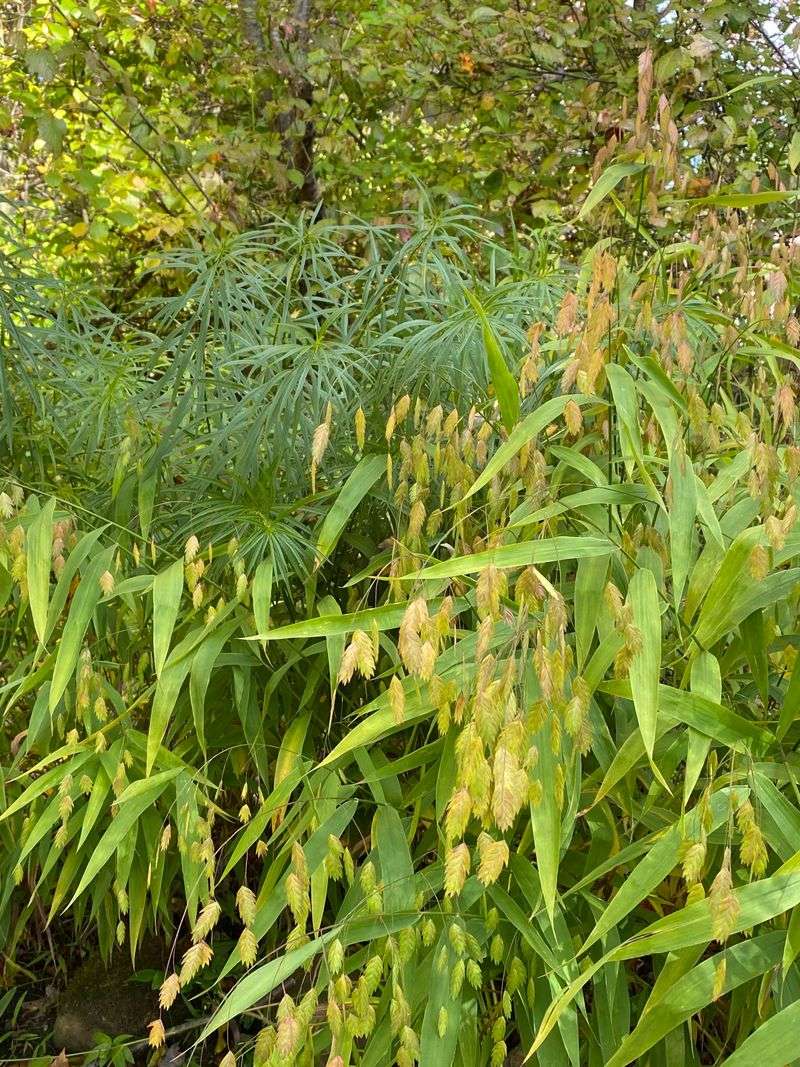
Inland sea oats is a graceful native grass with flat seed clusters that dangle like tiny green paddles and catch the slightest movement of air.
It is one of the most useful native plants for shaded Texas yards, and it belongs in the conversation long before most gardeners ever encounter it.
Known botanically as Chasmanthium latifolium, it has been growing naturally along Texas creek banks and woodland edges for a very long time, long before anyone was thinking about container plantings and landscape design.
Unlike most ornamental grasses that demand full sun and dry conditions, inland sea oats actively thrives in shade.
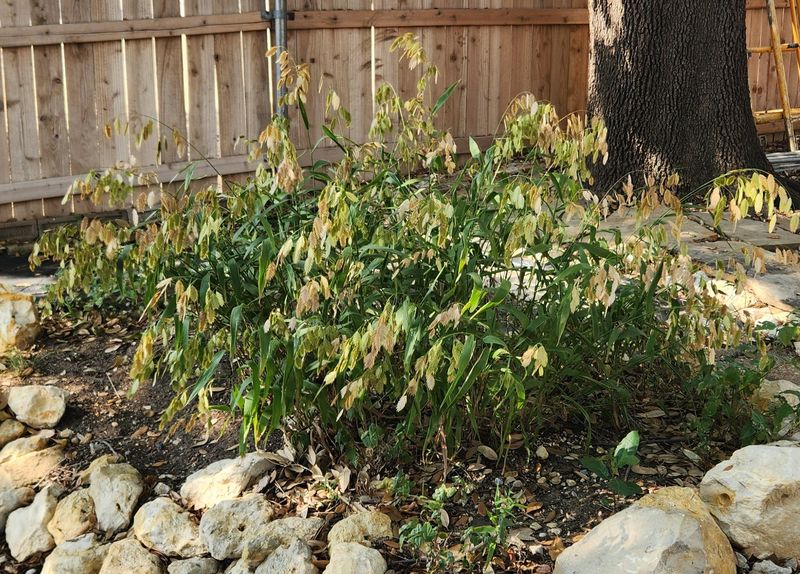
Dim areas under large live oaks, shadowy strips along fence lines, the forgotten north-facing corner that nothing else wants: these are exactly the spots where inland sea oats performs its best work.
That adaptability makes it genuinely useful in a state where shaded ground under mature trees is one of the most common and most difficult landscaping situations homeowners face.
The plant forms tidy clumps reaching two to four feet tall, with wide, flat leaves that give it a lush, almost tropical look for a grass.
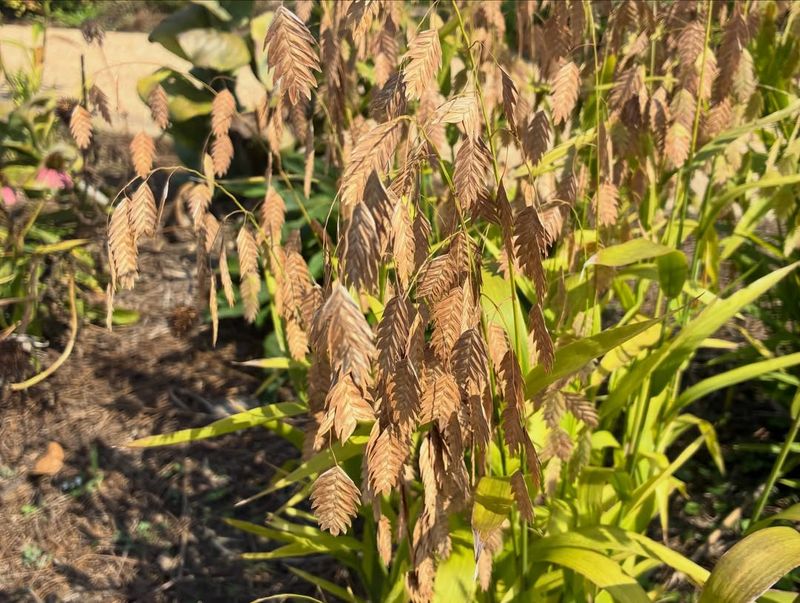
The seed heads shift to a warm copper-bronze in fall, adding seasonal interest without requiring any effort from you. It spreads slowly by seed and can naturalize into a soft carpet of ground cover over time.
Inland sea oats is deer resistant, genuinely low maintenance, and ecologically connected to the local environment in ways that imported ornamental grasses simply are not.
For firefly-friendly gardening in Texas, it is an exceptional starting point, and one that happens to look very good while doing its ecological work.
Not every useful native plant makes a dramatic first impression. Inland sea oats earns its reputation quietly, season by season, which is exactly the kind of plant worth knowing about before you need it.
2. Moisture Near The Ground Is What Fireflies Actually Need
Fireflies are particular about where they set up home, and moisture is one of the non-negotiable requirements.
Your Texas Garden Changes Every Week. Your Plan Should Too.
Gardening in Texas changes quickly throughout the season. Every Friday you’ll receive a simple weekly plan showing exactly what to plant, prune, fertilize, harvest, and protect so you never miss the right timing.
Adult fireflies lay eggs in soil, and the larvae spend months or even years living underground, hunting soft-bodied prey in damp earth.
Without consistent moisture near the ground, firefly larvae face conditions they cannot survive in. In a Texas summer, where exposed soil can bake completely dry within hours of a rain event, creating sustained ground-level moisture is a real challenge.
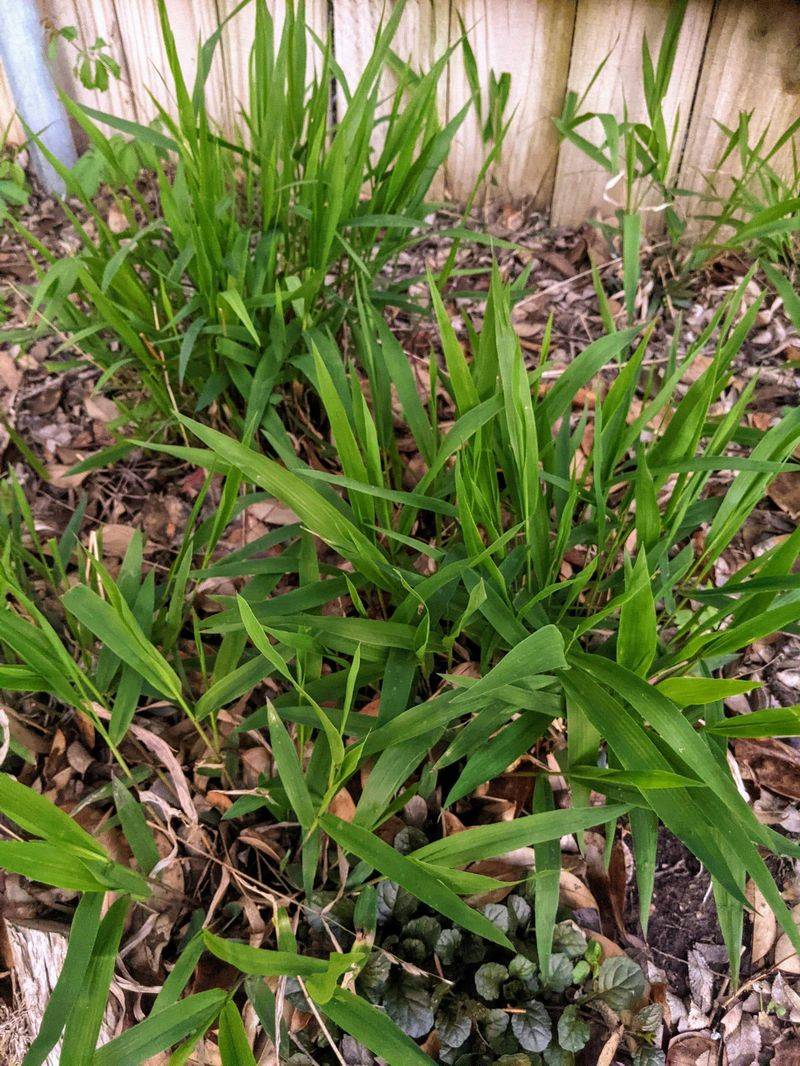
Inland sea oats addresses this directly. Its dense clumps shade the soil beneath them, slowing evaporation and keeping the ground noticeably cooler and moister than surrounding open areas.
That shade effect is not minor. In full Texas heat, the difference between shaded and exposed soil temperature can be significant, and for a creature living just below the surface, that difference determines survival.
The root system of inland sea oats also improves soil structure, which increases the soil’s capacity to absorb and hold rainwater after storms.
Healthy, well-structured soil stays moist longer between rain events, creating a more stable microhabitat for larvae throughout the months they spend underground before emerging as adults.
Planting inland sea oats along the north or east side of the yard, under trees, or along a fence where afternoon shade falls naturally gives the best moisture-retention results.
Pair with occasional deep watering during dry spells and you are building the kind of cool, moist underground environment that firefly larvae need to complete their development.
The fireflies do not care about the plant’s botanical name or its design appeal. They care about the moist, shaded soil it creates.
That is one of the simpler endorsements any plant can receive, and inland sea oats earns it reliably.
3. Dense Summer Cover Is Where Adult Fireflies Spend Their Days
On a hot Texas afternoon, adult fireflies spend the daylight hours resting in low vegetation.
They need dense, cool cover close to the ground where they can stay protected from heat and predators until nightfall signals it is time to flash and find a mate.
Without that kind of sheltered resting space, adult fireflies are exposed to conditions that wear them down before they ever get the chance to reproduce.
Inland sea oats clumps fill this role naturally. The plant grows in thick, leafy bunches that create a sheltered microworld at ground level.
Between the stems and broad leaves, there is enough cool, shaded space for fireflies to rest comfortably through the hottest part of the day.
Each clump functions like a small refuge: shade above, humidity slightly higher than the open air, and minimal disturbance from foot traffic or wind.
Allowing the grass to grow to its natural height makes the shelter significantly more effective.
A frequently trimmed or aggressively managed grass clump provides much less protective cover than one allowed to develop fully through the growing season.
Leaving inland sea oats in place until late winter or early spring, then cutting it back once before new growth emerges, gives fireflies the undisturbed, dense cover they rely on all summer.
Resisting the urge to tidy up constantly pays dividends here. A little wildness in the right corner of a Texas yard goes a long way for these small beetles. The clumps do not need to look manicured to be doing their most important work.
Inland sea oats in full growth during a Texas summer is a shelter system running on autopilot. The fireflies find it, use it, and return to it.
Your contribution is mostly just agreeing not to cut it back in July. That is a very achievable level of gardening effort.
4. The Leaf Litter Underneath Does More Work Than It Looks Like
Raking fallen leaves feels like the responsible thing to do. Tidy garden beds. Clean lawn edges. Bags lined up at the curb. It looks managed and intentional.
For fireflies, that same cleanup removes one of the most critical pieces of their habitat, and it happens in yards across Texas every autumn without most homeowners knowing what they are removing.
Leaf litter is where firefly larvae live after hatching.
The tiny larvae move into the moist layer of decomposing leaves, where they hunt snails, slugs, and worms for food through the months they spend near the surface.
That leaf layer also moderates soil temperature and maintains the moisture consistency that larvae depend on. Remove it and you remove the conditions that make the microhabitat functional.
Inland sea oats naturally collects fallen leaves beneath its clumps. The broad leaves and dense stems act like a gentle net, catching leaf debris and holding it in place even when wind moves through the yard.
The plant shades that collected litter from direct sun, keeping it moist longer than leaves on open ground. This creates an ideal nursery zone right at ground level, built and maintained by the plant itself.
Skipping the rake under inland sea oats plantings is genuinely one of the lowest-effort habitat improvements available.
Leave at least a few inches of natural leaf accumulation in shaded garden beds and around tree bases. The yard will look a little wilder in those spots. The fireflies that show up in June will make that trade feel completely worth it.
Leaf litter under a clump of inland sea oats is not yard waste. It is a firefly nursery operating on a multi-year timeline. The rake can wait. The larvae cannot.
5. Pesticides Around This Area Set Firefly Populations Back
Fireflies are beetles, and like most insects, they are highly vulnerable to pesticides.
Products designed to target mosquitoes, grubs, or general garden pests do not distinguish between the insects you want gone and the ones you are trying to protect.
Firefly larvae in the soil, adults resting in the vegetation, and the snails and worms that larvae depend on for food are all affected.
One pesticide application can set back a local firefly population for an entire season without anyone ever making that connection.
Inland sea oats is a naturally tough plant that rarely needs chemical treatment. It has few serious pest problems and handles most Texas conditions without intervention.
That makes it an easy anchor for a pesticide-free zone in the yard, a defined area where you commit to skipping sprays and letting the ecosystem function on its own terms.
The stakes are higher than a single season. Firefly larvae spend up to two years in the soil before emerging as adults.
Any chemical disruption during that long underground development period can prevent them from completing their life cycle entirely.
Protecting the ground beneath the inland sea oats means protecting multiple generations simultaneously, not just the ones visible this summer.
For mosquito management, focus on eliminating standing water rather than spraying the yard.
A bat house nearby is an effective, chemical-free alternative since bats consume large numbers of mosquitoes each night. Native plants and native insects tend to find their own balance when given the chance to do so.
The fireflies you are trying to bring back have been managing without pesticide assistance for millions of years.
The least helpful thing you can do is introduce chemicals to the one corner of the yard they were starting to consider moving into.
6. Artificial Light Near The Planting Disrupts More Than Just The Mood
Fireflies communicate through light. Each species uses its own specific flash pattern, a private code that males and females use to find each other in the dark.
It is genuinely remarkable biology, and it depends entirely on darkness being available. When artificial lighting floods a yard all night, those signals get washed out.
Fireflies cannot read each other clearly, mating slows, reproduction drops, and the population quietly contracts over several seasons.
Light pollution is one of the most significant and least discussed drivers of firefly decline in suburban areas.
Floodlights, always-on porch lamps, and decorative string lights left running overnight all contribute to a brightness level that disrupts firefly communication in ways that are not immediately visible but accumulate over time.
Inland sea oats thrives in low-light conditions, which means placing it in naturally darker corners of the yard serves both the plant and the fireflies it supports.
A dim corner under trees, away from strong fixtures, becomes functional firefly habitat when the grass is in place and the lights nearby are managed thoughtfully.
Motion-activated outdoor lights stay off when no one is moving and minimize overall nighttime brightness. Warm amber bulbs are less disruptive to insect behavior than bright white LEDs.
Turning off decorative lights by nine or ten at night during firefly season, which in Texas typically runs from late May through July, gives fireflies the darkness they need to do what they evolved to do.
Darkness is a resource that fireflies genuinely need and that costs nothing to provide. Turning off a string of lights at 9 p.m. in June is one of the simplest conservation actions available to any Texas homeowner.
The fireflies are not going to send a formal thank-you. Their presence is the thank-you.
7. The Bare Ground Under Your Trees Is Actually The Right Place For This
That bare patch of compacted soil under a large live oak or pecan is one of the most common problem spots in a Texas yard. Grass struggles there because of the shade and the root competition.
Mulch works but contributes nothing to wildlife.
Inland sea oats, on the other hand, was ecologically shaped for exactly that situation over thousands of years of growing along shaded creek banks and under woodland canopies across Texas.
In its natural habitat, inland sea oats grows where tree canopy blocks most direct sunlight and tree roots compete aggressively for moisture.
Its biology is calibrated to those conditions. That is why it performs reliably in spots that defeat most other ornamental plants, and why planting it under established trees produces results that look intentional rather than desperate.
A sweep of inland sea oats under a tree creates a layered habitat that fireflies find genuinely attractive.
The tree canopy provides high shade, the grass provides mid-level cover and moisture retention, and the accumulating leaf litter creates the moist ground environment that larvae need.
That three-layer structure, tree above, grass at mid-level, leaf litter below, closely resembles the natural woodland edge habitat where fireflies are most abundant in the wild.
Inland sea oats pairs naturally with other native woodland plants like wild ginger, turk’s cap, and native ferns.
Building a small native understory community under established trees turns a difficult, underused space into a functioning habitat area. The maintenance requirement drops and the ecological output increases at the same time.
The bare dirt under the live oak was a problem looking for the right solution for a long time. Inland sea oats is that solution, and it brings fireflies along with it as a bonus.
That is a very good return on a shady corner of the yard that was not doing anything useful before.