Why Asian Lady Beetles Head Indoors When North Carolina Nights Turn Cooler
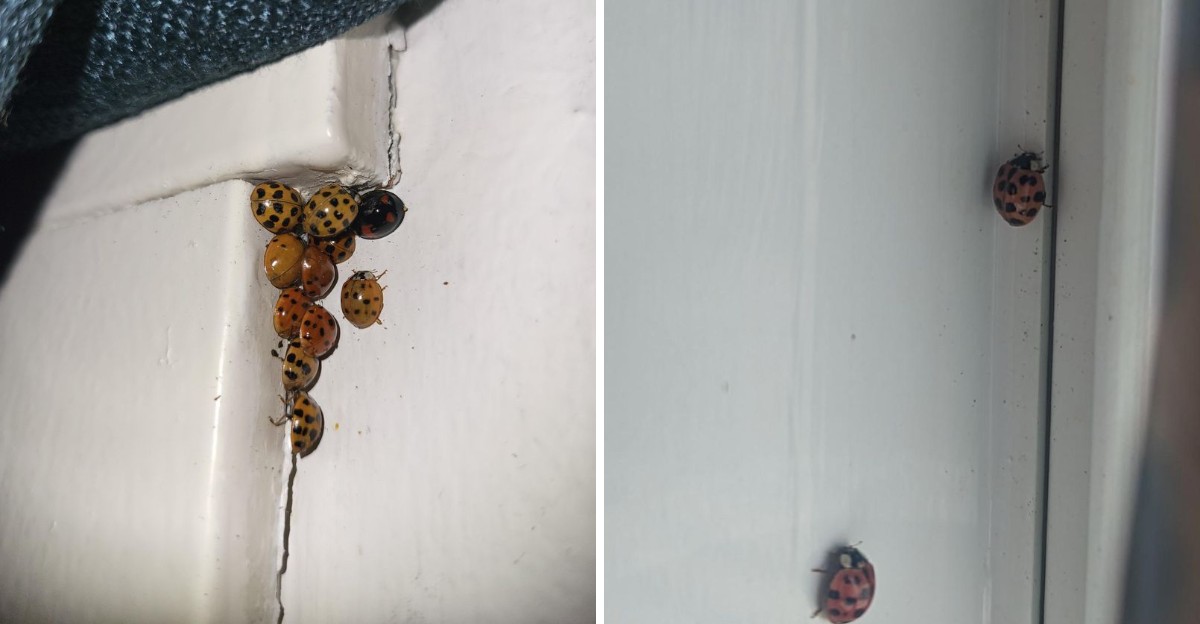
A sudden cluster of orange, dome-shaped beetles gathering on a sunny wall or windowsill each fall is a familiar sight for many North Carolina homeowners.
As nighttime temperatures start dropping, Asian lady beetles instinctively search for tight, protected crevices to spend the winter, and the warm, south-facing sides of houses happen to mimic the rocky cliff faces they’d naturally seek out in their native range.
Once a few beetles find a promising crack or gap, they release a scent that attracts others to the same spot, which is why an entire cluster can appear seemingly overnight.
While mostly harmless, these beetles can release a foul odor and yellow staining fluid if crushed or disturbed indoors.
Understanding why this happens makes it easier to seal up entry points before beetles find their way inside for the season.
1. Cooler Nights Trigger Fall Movement
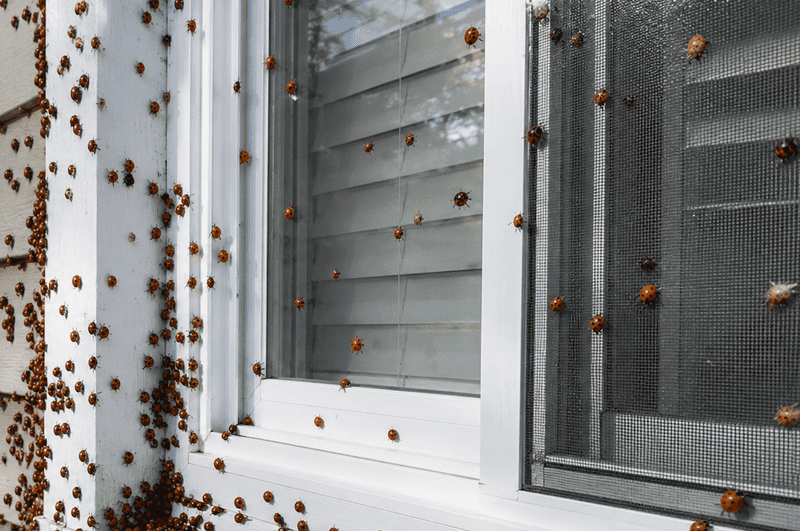
It’s a crisp October afternoon in Raleigh, the first one after a chilly night that sent you hunting for a sweater. Suddenly, the side of your house is speckled with orange and black beetles, and you wonder where they all came from.
That swarm is no accident, because the cooler weather flipped a switch inside every one of those tiny insects.
Asian lady beetles are cold-blooded, which means their bodies stay about as warm as the air around them. When nights begin dipping into the 40s and 50s, their food supply also shrinks.
Aphids and other soft-bodied pests that fed them all summer start disappearing as crops are harvested and leaves fall.
Shorter days add another clue. Scientists believe the beetles read both the dropping temperatures and the fading daylight as a signal that winter is on the way.
Adults then stop focusing on eating and start looking for a safe, protected place to rest until spring.
In North Carolina, the big flights usually happen in October and early November. They often show up on the first warm, sunny afternoon after a cold snap, when temperatures climb back into the mid 60s or higher.
Mountain towns like Boone may see them earlier, while coastal areas often see them a little later.
Here is a helpful tip for your calendar. Keep an eye on the forecast once fall arrives, and watch for that pattern of a chilly night followed by a bright, mild day.
Knowing when the beetles are likely to move gives you a head start on keeping them outside where they belong.
2. Buildings Provide Protected Overwintering Sites
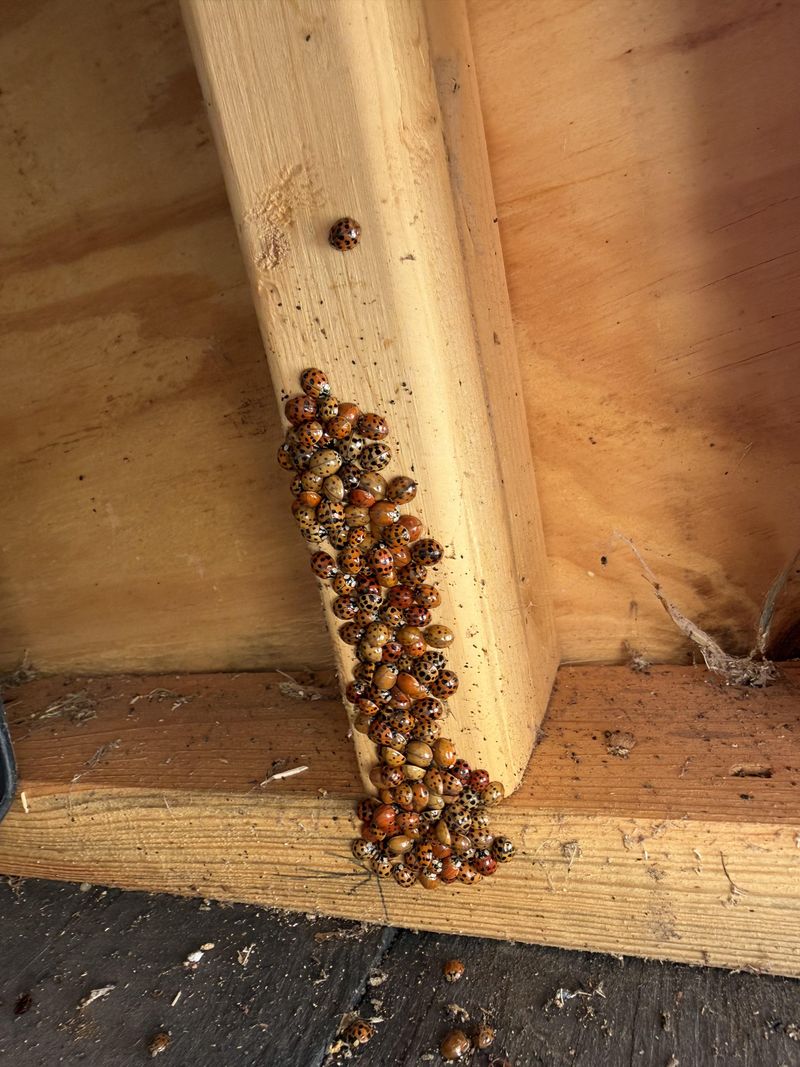
Back in their native lands of China, Japan, Korea, and eastern Russia, Asian lady beetles have a favorite winter hideout. They crowd into cracks along cliffs and rocky outcrops, where the stone blocks wind and holds onto warmth.
North Carolina has mountains, of course, but in most neighborhoods your house looks like the next best thing.
To a beetle searching for shelter, a home is basically a giant artificial cliff. Tall walls stand out against the landscape, and the spaces behind siding, under shingles, and inside wall cavities feel a lot like the tight crevices of a rock face.
Your North Carolina Garden Changes Every Week. Your Plan Should Too.
Gardening in North Carolina changes quickly throughout the season. Every Friday you’ll receive a simple weekly plan showing exactly what to plant, prune, fertilize, harvest, and protect so you never miss the right timing.
Attics, sheds, garages, barns, and even stacks of stored firewood can all fill the same role.
Protection matters because winter can be rough on a small insect. Snug spots shield the beetles from freezing wind, soaking rain, and hungry birds.
The temperature inside a wall void also stays steadier than the open air, which helps the beetles save energy while they rest.
During this resting stage, the beetles slow way down. They do not lay eggs indoors, and they eat very little, if anything, so they are simply waiting out the season. Once spring warms things up, most of them try to head back outdoors to find aphids.
Want a quick project that helps? Take a slow walk around your shed and home this fall, and look for loose siding, gaps near the roof, or firewood piled against the walls.
Moving wood piles away from the house removes one handy stepping stone.
3. They Can Gather On Sunny Walls
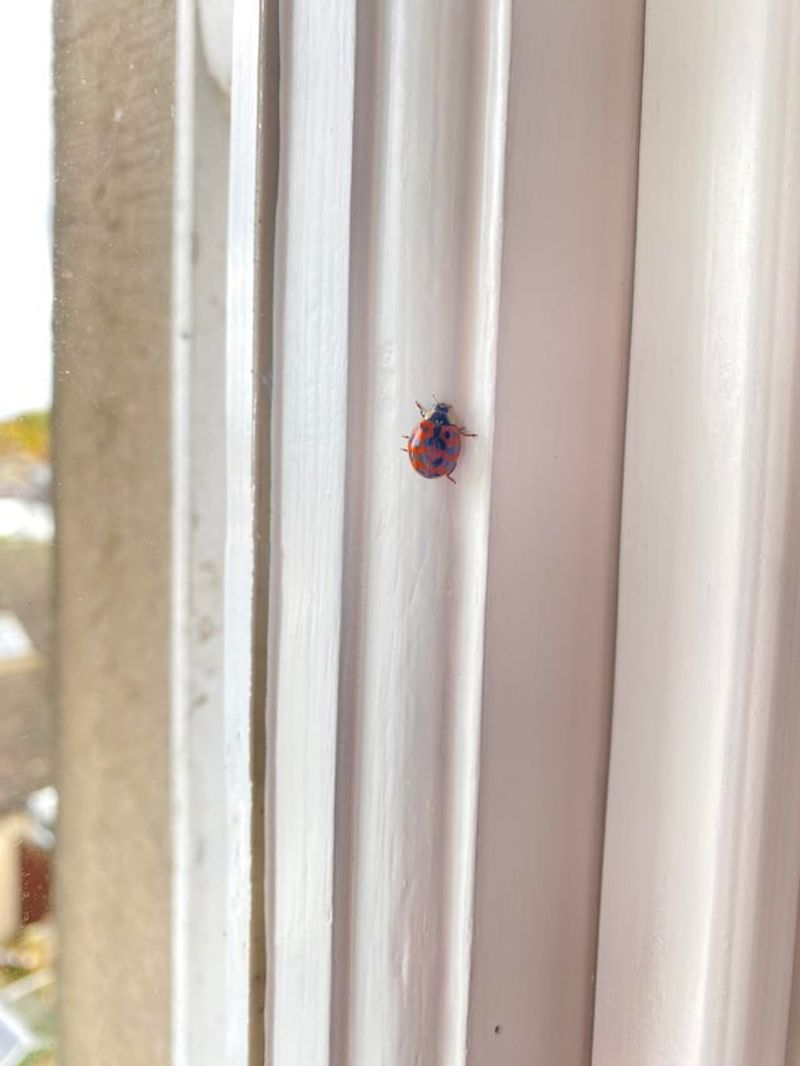
Ever noticed that beetles seem to love one side of your house more than the others? You are not imagining things.
On bright fall afternoons, Asian lady beetles tend to pile up on the south and west walls, where the sun shines longest and the siding soaks up the most heat.
Color plays a part, too. Research has shown that the beetles are drawn to light-colored surfaces, especially buildings that stand out against darker trees or hills.
A pale yellow farmhouse near a wooded ridge in the Piedmont can look like a glowing billboard to them.
Warm walls give them a place to soak up heat before the chilly evening sets in. Once they land, the beetles crawl around, bump into each other, and explore every seam and corner.
Scientists think they release chemical signals that help others find the same spot.
Here is the surprising part. Some homes seem to get hit year after year, even when the owners change nothing, so if your house is one of them, you are far from alone.
Experts suspect the beetles leave behind scent traces that can guide new groups back to the same building the next fall.
As the sun sets and temperatures fall, the wall-hugging crowd starts slipping into cracks, gaps, and tiny spaces nearby. That makes those sunny walls your best place to focus.
Check them closely for openings, and if you ever plan to paint, remember that shade and color can make a small difference in how attractive your house looks to a passing swarm.
4. Small Openings Are Enough
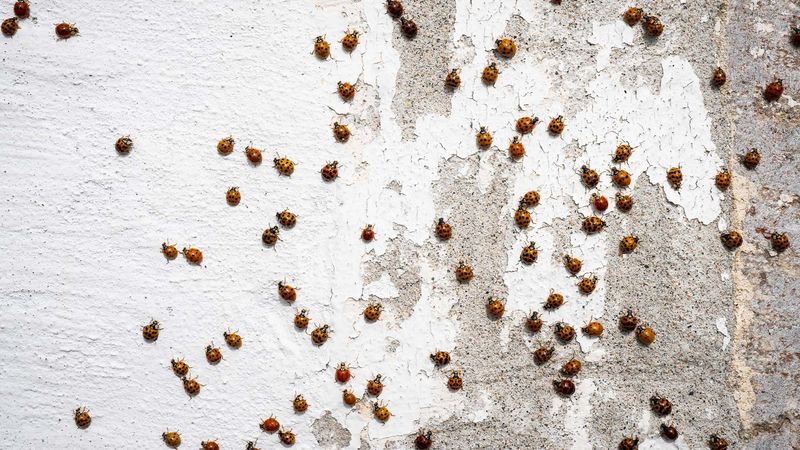
Grab a pencil and look at the eraser on the end. An adult Asian lady beetle is only about a quarter inch long, so it can squeeze through a gap much smaller than that eraser.
Some experts say an opening about an eighth of an inch wide can be enough.
Houses have far more tiny openings than most people realize. Beetles slip in around window frames and door edges, through torn screens, and along spots where siding meets the foundation.
They also find their way through attic vents, soffits, gaps near the roofline, and holes where pipes, cables, or wires enter the house.
Older homes often have more trouble spots because wood shrinks, caulk cracks, and weatherstripping wears thin over time. Even a newer house can have a few weak points, especially around outdoor faucets, dryer vents, and air conditioning lines.
Every single one of those gaps can act like a welcome mat.
A fun way to find hidden openings is to do a flashlight check at night. Have one person stand inside a dark room with a flashlight while someone outside looks for spots where light peeks through.
Anywhere light escapes, a beetle can probably sneak in. Crawl spaces and basements deserve attention as well, since beetles can wander in through foundation vents and gaps around sill plates.
Once inside the walls, they may travel quite a distance before popping out in a bedroom or kitchen.
That is why a beetle on your living room ceiling may have started its trip on the far side of the house.
5. Indoor Beetles Usually Arrived From Outside
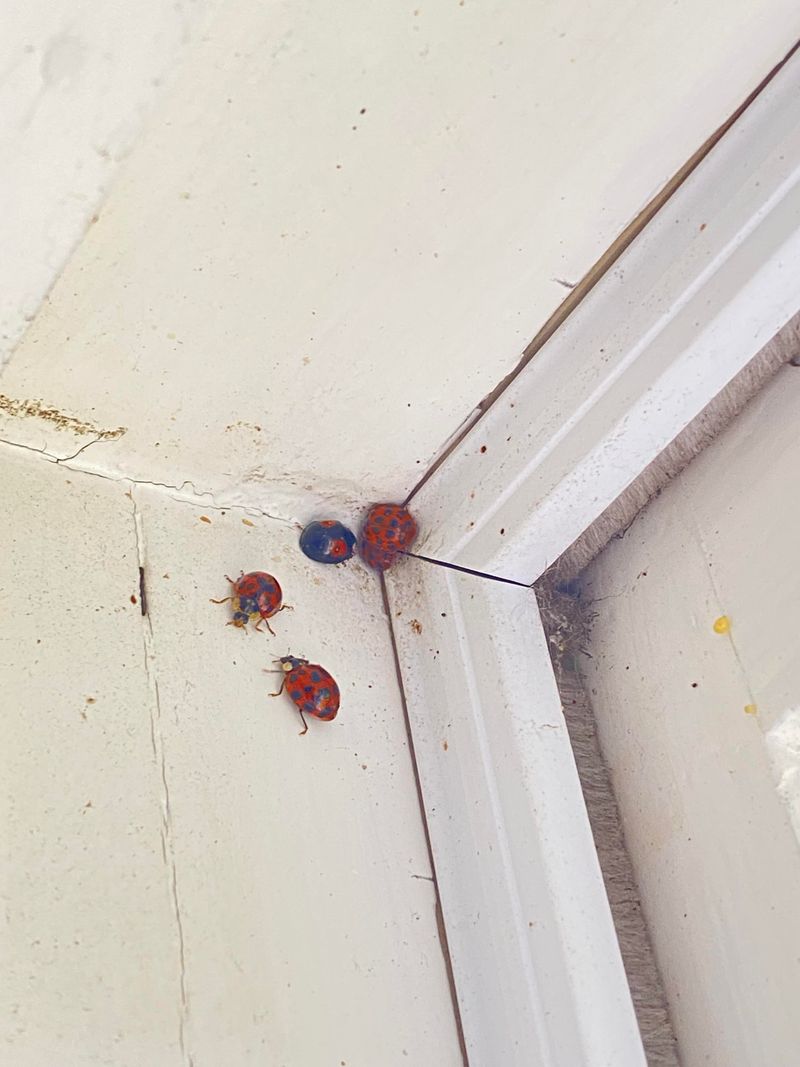
Finding a dozen beetles on your kitchen window can make your stomach drop. Many people panic and assume the bugs are breeding somewhere inside the house, maybe in the carpet or pantry.
Take a deep breath, because that is almost never the case, and the real story is much less scary.
Asian lady beetles need living prey, mainly aphids, to grow and raise young. Their larvae hunt on trees, shrubs, and crops, not on couches or kitchen counters.
Your home simply does not offer the food they need to build a new generation.
So where did your visitors come from? Nearly every beetle you see indoors in fall or winter flew in from outside during those warm, sunny afternoon flights in October.
Some came straight through a gap near a window, while others spent weeks tucked inside the walls before wandering into your living space.
The beetle was deliberately imported and released in parts of the United States in the late 1970s for biological control, but those releases apparently did not establish lasting populations.
The widespread populations seen today are believed to descend largely from accidental introductions in the late 1980s
Understanding their outdoor origin changes how you handle them. Spraying inside the house usually does little good, since new beetles keep arriving from outside and many stay hidden in wall voids.
Your energy is better spent closing entry points and gently removing the ones that show up, knowing they will try to leave once spring returns.
6. They Can Become Active On Warm Winter Days
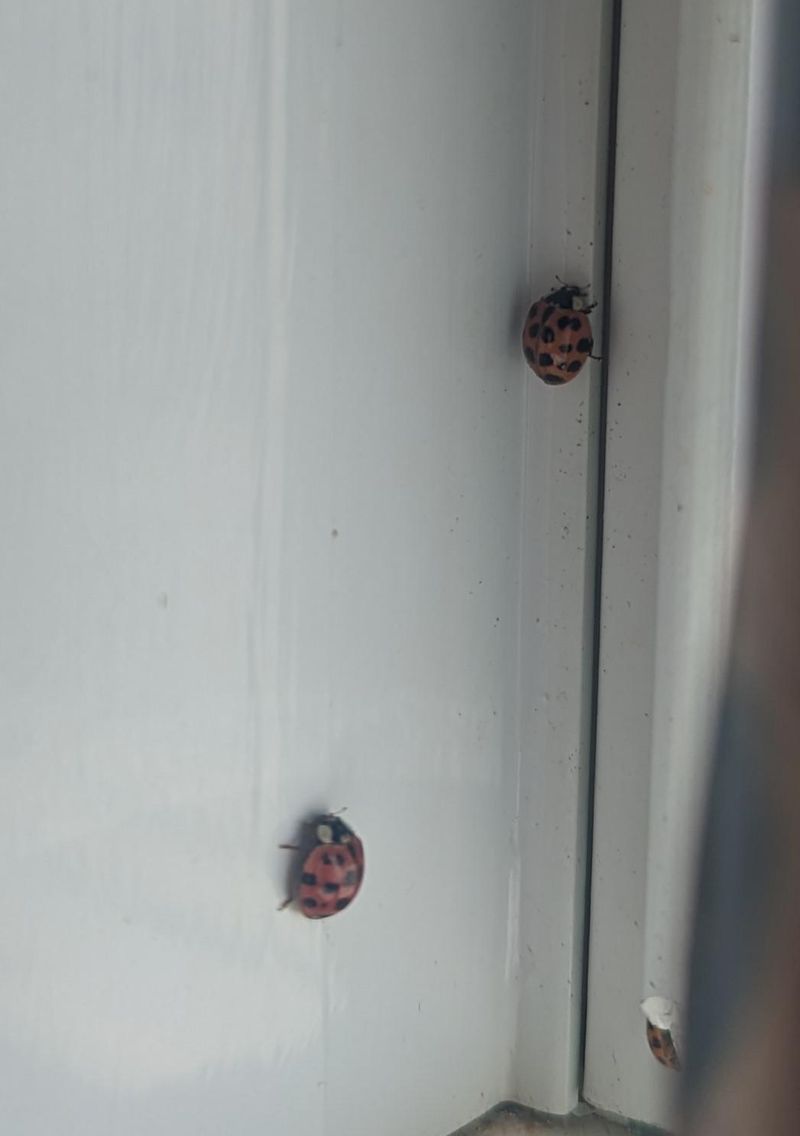
January in North Carolina can feel like a roller coaster. One week brings frost on the windshield, and the next brings a 70 degree afternoon perfect for shorts. Asian lady beetles hiding in your walls notice those swings, too.
Remember that these insects warm up or cool down along with their surroundings. When sunshine heats a south-facing wall or your furnace runs hard, the spaces inside the walls can warm up enough to wake the beetles from their rest.
Suddenly they feel ready to move, even though it is the middle of winter.
Confused and restless, many of them crawl toward light because they are trying to find their way back outdoors. That is why you often spot them clustered around windows, skylights, ceiling fixtures, and lamps.
To a beetle, a bright window looks like the path to spring. Indoor air is usually dry, and your home offers nothing to eat, so these wanderers are not happy guests. They are not there to cause harm, and they cannot breed indoors either.
Their only goal is to get outside. A little planning makes these winter surprises easier to handle. Keep a vacuum with a hose attachment handy near sunny rooms, and check windows on warm afternoons when activity tends to peak.
Closing blinds on bright days and sealing gaps around light fixtures and ceiling fans can also reduce the number of beetles that sneak into your rooms.
Some homeowners also set a light trap in the attic, since the beetles gather toward the glow on active days.
7. Prevention Starts Before They Enter

Benjamin Franklin once said an ounce of prevention is worth a pound of cure, and he could have been talking about lady beetles. Once thousands of them are tucked inside your walls, there is not much you can do until spring.
Stopping them at the door, however, is surprisingly doable.
Timing is the secret. In North Carolina, late summer and early September are ideal for sealing up the house, well before the October flights begin.
Waiting until beetles are already swarming the siding means you are playing catch-up.
Start with a tube of good quality silicone or silicone-latex caulk and seal cracks around window frames, door trim, siding joints, and the spots where pipes and wires enter.
Foam sealant works well for larger holes, while fine mesh screening can cover attic vents, soffits, and roof vents without blocking airflow.
Doors and windows need a quick checkup as well. Replace worn door sweeps and weatherstripping so no daylight shows underneath, and patch or replace any torn window screens.
Even a small tear the size of a fingernail can let dozens of beetles through. Some homeowners with big beetle problems hire a pest professional to apply a barrier treatment to exterior walls in early fall.
That can help, but sealing is still the most lasting solution because it keeps working year after year.
Think of caulk as a one-time investment that pays off every October, and your future self will be very grateful when the orange swarm arrives and finds the doors firmly closed.
8. Avoid Crushing Large Numbers Indoors
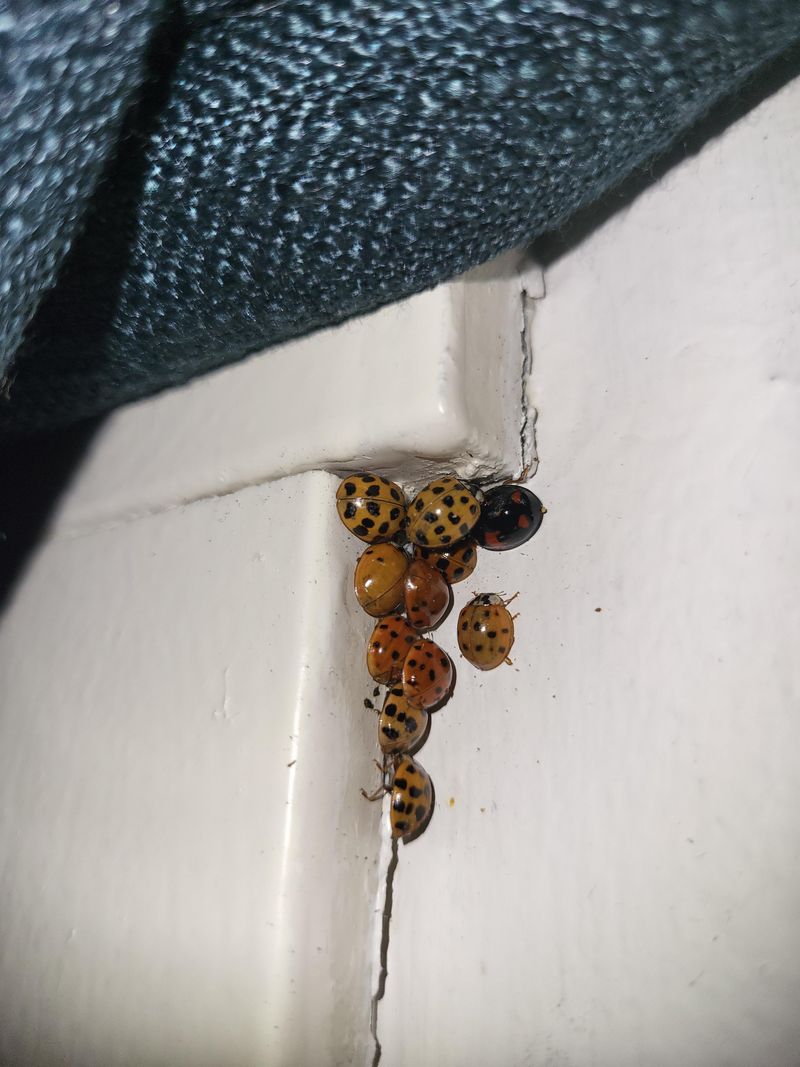
Squish one beetle with a tissue, and you will probably learn a lesson fast. A yellowish liquid oozes out, leaving a stain and a sharp, bitter smell that lingers.
That fluid is the beetle’s secret defense system, and it works well on predators and homeowners alike.
Scientists call it reflex bleeding. When an Asian lady beetle feels threatened, it releases small droplets of its own body fluid from its leg joints.
The liquid contains chemicals that taste awful to birds and other hungry animals, so they learn to leave the beetles alone.
Inside your home, that same fluid can leave orange-yellow marks on walls, curtains, carpet, and light fabrics. Crushing dozens of beetles at once makes the problem worse, and the odor can hang around in a room.
Fun fact: the smell is so strong that wine makers in some regions have had trouble when beetles got mixed in with harvested grapes.
A gentler approach works much better. Slip a knee-high nylon stocking into the hose of your vacuum, secure it with a rubber band, and suck up the beetles so they collect in the stocking instead of the bag.
Afterward, simply empty the stocking outdoors, well away from your walls.
A broom and dustpan also work for small groups, as long as you sweep gently. Wear gloves if you pick them up by hand, since the beetles sometimes give a tiny pinch.
Pair these easy removal habits with the sealing tips from earlier, and your North Carolina home can enjoy a calmer, cleaner, and far less smelly fall season.