Why Blue Spruce Are Struggling Across Ohio Yards – And The Evergreens Replacing Them
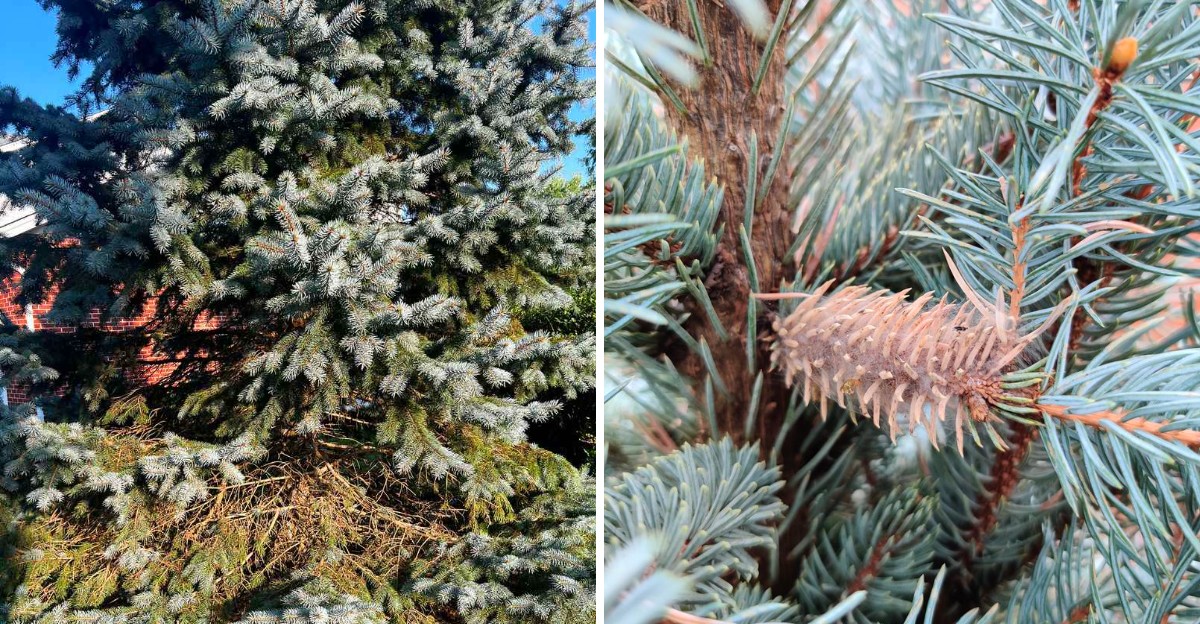
On the slopes of the Rocky Mountains, a blue spruce can live for centuries. Plant that same tree in a suburban Ohio front yard, though, and it often starts thinning out after just a few decades.
That gap caught me off guard the first time I read about it.
The trouble usually starts at the bottom. Lower branches turn purple-brown, drop their needles, and end up as bare sticks while the top of the tree still looks perfectly healthy.
It’s easy to see why so many families planted one by the driveway. That silvery-blue color looks stunning against winter snow, and garden centers sold these trees by the thousands for years.
Now plenty of them are hitting middle age, and many are looking worn out.
The culprit isn’t one bad summer or a careless gardener. What’s really wearing these trees down, and which evergreens are taking their place?
1. Those Bare Lower Branches On Blue Spruce Are Sending A Message
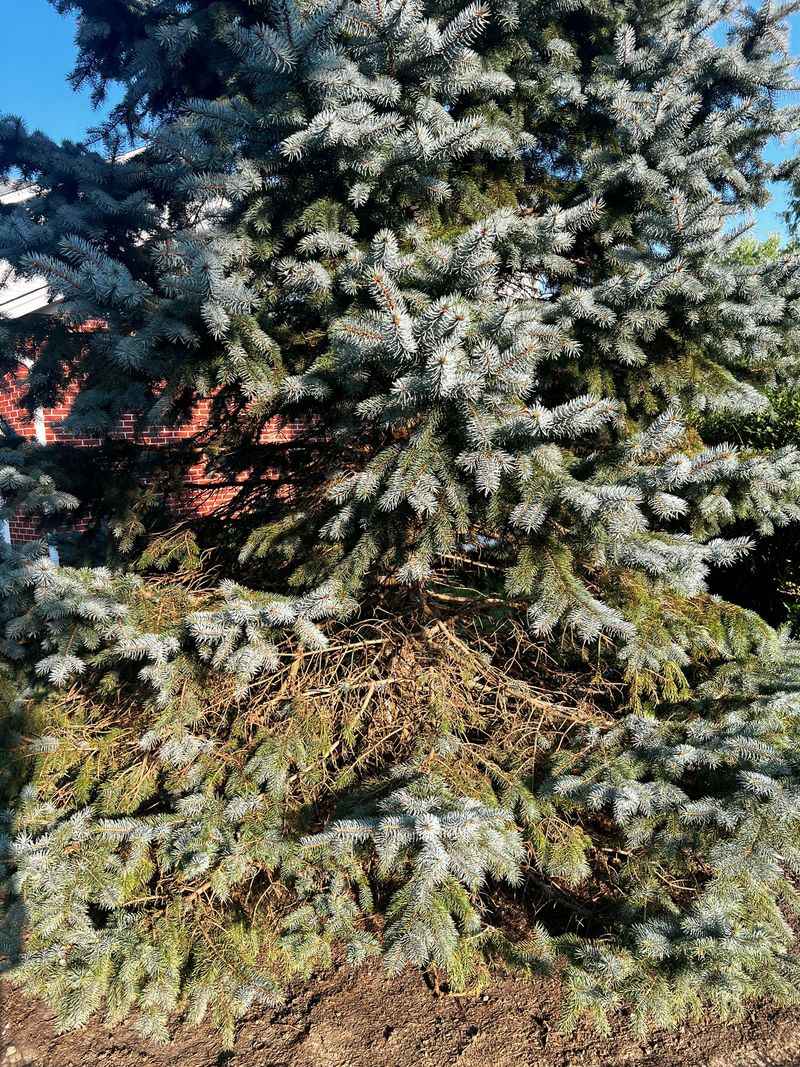
Walk down almost any older Ohio neighborhood and you will spot the pattern. A tall blue spruce stands proud on top, but the bottom third looks like a coat rack with a few needles hanging on.
That bottom-up thinning is the classic sign of what extension experts call spruce decline. It is not one single disease.
Instead, it is a pileup of stress, fungal infections, and sometimes pests that hit the tree all at once.
Needles on the lower, shaded branches stay damp the longest after rain. That moisture gives fungi a head start, so the trouble begins low and works its way upward over several years.
Here’s a quick check you can do this weekend. Grab a lower branch and look closely at the older needles, the ones a few inches back from the tips.
Purple or brown needles, tiny black dots in neat rows, or needles dropping when you brush them are all clues worth noting.
Catching this early matters. A tree with only a few bare branches has more options than one that has lost half its canopy.
Snap a few photos each spring so you can compare and see whether the decline is moving fast or slow.
2. Colorado Mountains And Ohio Clay Make Very Different Homes For Spruce
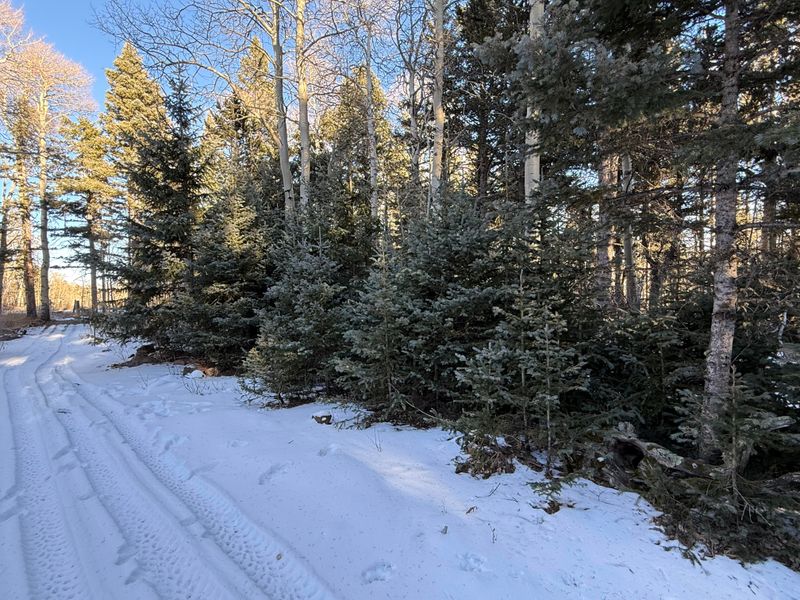
Blue spruce, or Picea pungens, grows wild along streams and slopes in the Rocky Mountains of Colorado, Utah, and nearby states. The air there is dry, the nights are cool, and the soil drains quickly.
Ohio offers almost the opposite. Summers are hot and sticky, rain falls often, and much of the state sits on heavy clay that holds water like a sponge.
Northern areas near Lake Erie can be cooler, but humidity still runs high across most regions.
So why does this matter? A tree living outside its comfort zone spends a lot of energy just coping.
Soggy roots get less oxygen, and hot summer nights make it harder for the tree to recover from daytime stress.
The way I see it, the tree is running a marathon with a backpack full of rocks. It can keep going for a while, and many blue spruce look great for their first 15 to 20 years.
Over time, though, that constant strain weakens the natural defenses that normally fight off fungi and insects.
Understanding this mismatch helps explain why even well-loved, well-watered trees often slide downhill. Sometimes it really is the address, not the care.
3. Needle Cast Fungus Leaves Tiny Black Dots On Spruce Needles
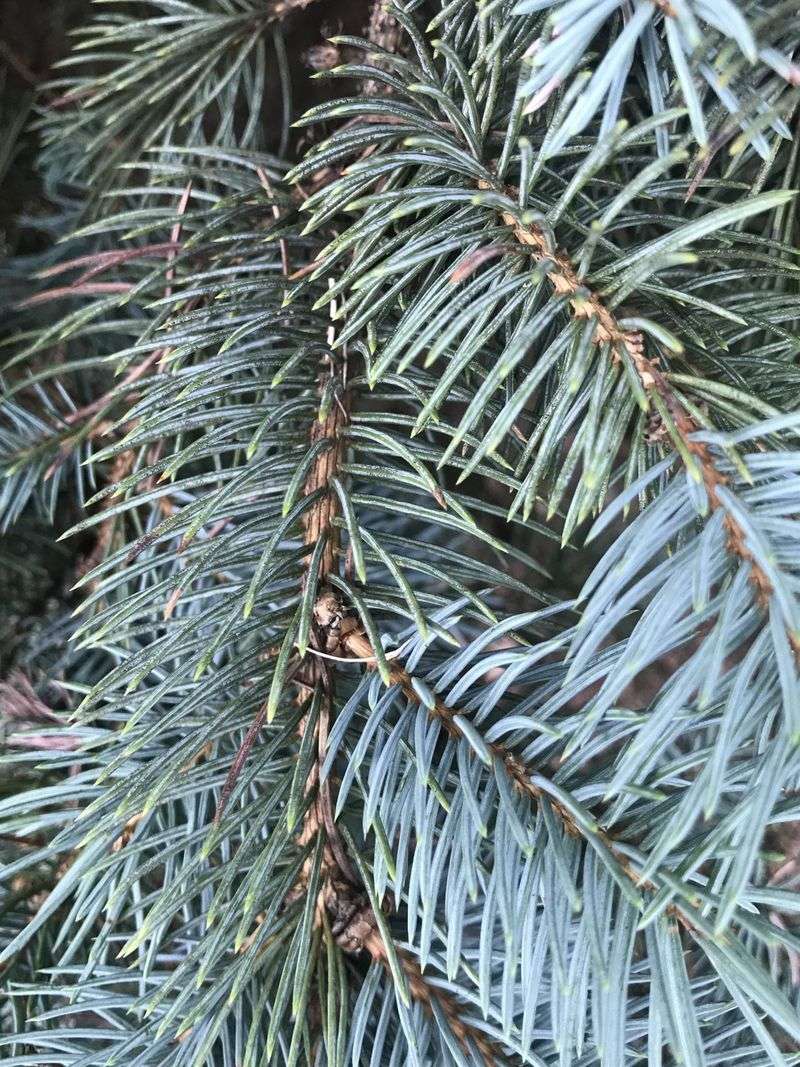
You might need a magnifying glass for this one. Rhizosphaera needle cast, the most common fungal problem on Ohio blue spruce, shows up as tiny black dots lined up in rows along infected needles.
Infection happens in spring when new needles are growing and rain splashes spores around. The odd part is that symptoms often take a year or more to appear.
Older needles turn yellow-mottled, then purple-brown, and finally drop, starting on lower branches.
Another culprit, often reported by plant labs, is Stigmina needle cast. It looks similar and is usually managed the same way, so a lab diagnosis can save guesswork.
For trees worth saving, fungicides containing chlorothalonil can protect new growth. Timing is key.
Treatments usually go on when new shoots are about half grown and again a few weeks later, often for two or more seasons in a row.
Simple habits help too. Improve airflow by trimming nearby shrubs, avoid sprinklers that wet the branches, and rake up fallen needles.
Larger trees may need a certified arborist with the right equipment. Your county OSU Extension office can also point you to a plant diagnostic lab if you want a sample tested.
4. White Resin On Spruce Bark Can Point To Cytospora Canker
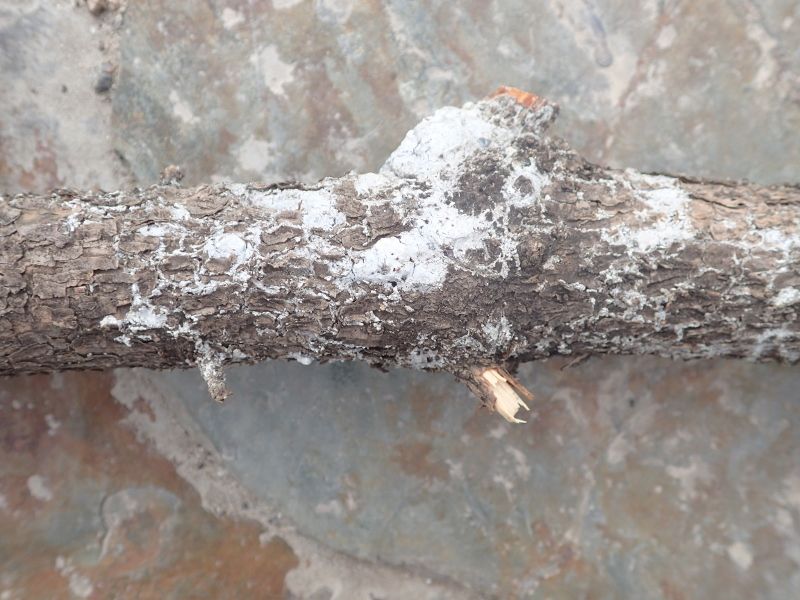
Spotting white, crusty sap streaking down a spruce trunk feels a bit alarming. That dried resin is often a calling card of Cytospora canker, a fungal disease that targets stressed trees, usually ones older than about 15 years.
Unlike needle cast, this fungus attacks the branches themselves. A whole limb may turn brown at once, often on the lower part of the tree, while branches next to it stay green.
Sadly, no spray cures Cytospora. Management focuses on removing infected branches and lowering stress.
Prune in dry weather, cutting back to healthy wood or to the trunk. Clean your pruners with rubbing alcohol or a diluted bleach solution between cuts so you do not spread spores.
Avoid wounding the bark with mowers or string trimmers, since injuries give the fungus an easy way in.
Watering during long dry spells helps, especially in late summer. A deep soak every week or two is better than frequent light sprinkles.
A ring of mulch two to three inches deep, kept a few inches off the trunk, keeps roots cooler and protects bark from lawn equipment. These steps will not reverse damage, but they can slow it.
5. Spider Mites And Bagworms Pile Extra Stress On Weak Spruce
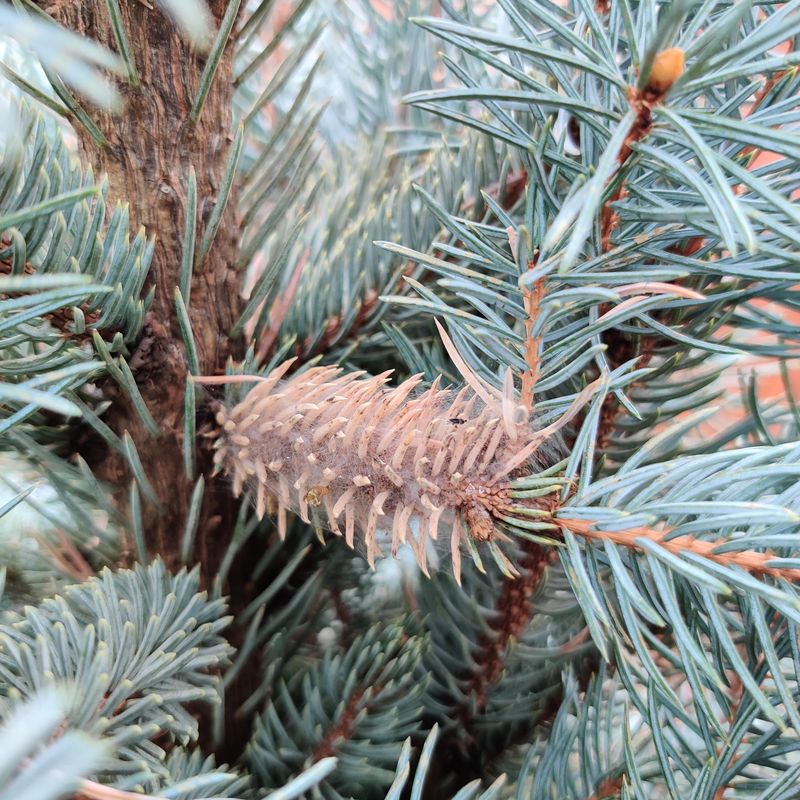
Some of the worst damage comes from creatures smaller than a pinhead. Spruce spider mites are cool-season pests, most active in spring and fall, and they suck juices from needles until the foliage looks speckled, pale, or bronze.
Try the white paper test. Hold a sheet under a branch and tap it sharply.
If tiny specks start crawling around, you have mites. A strong spray of water can knock down light infestations, and horticultural oil is a common option for heavier ones.
Bagworms are easier to see. Their little cone-shaped cases, made from bits of needles and silk, dangle from branches like odd ornaments.
Hand-picking the bags in winter or early spring removes the eggs before they hatch in late spring.
Other pests sometimes show up too. White pine weevils can bend and brown the top leader, while Cooley spruce gall adelgids form cone-shaped galls on branch tips.
These two usually cause more cosmetic damage than serious harm.
On their own, many of these insects are manageable. The real issue is the combination.
A spruce already battling fungi and wet clay has little energy left to handle chewing and sucking pests as well.
6. Norway Spruce And Eastern White Pine Are Stepping Into Those Empty Spots
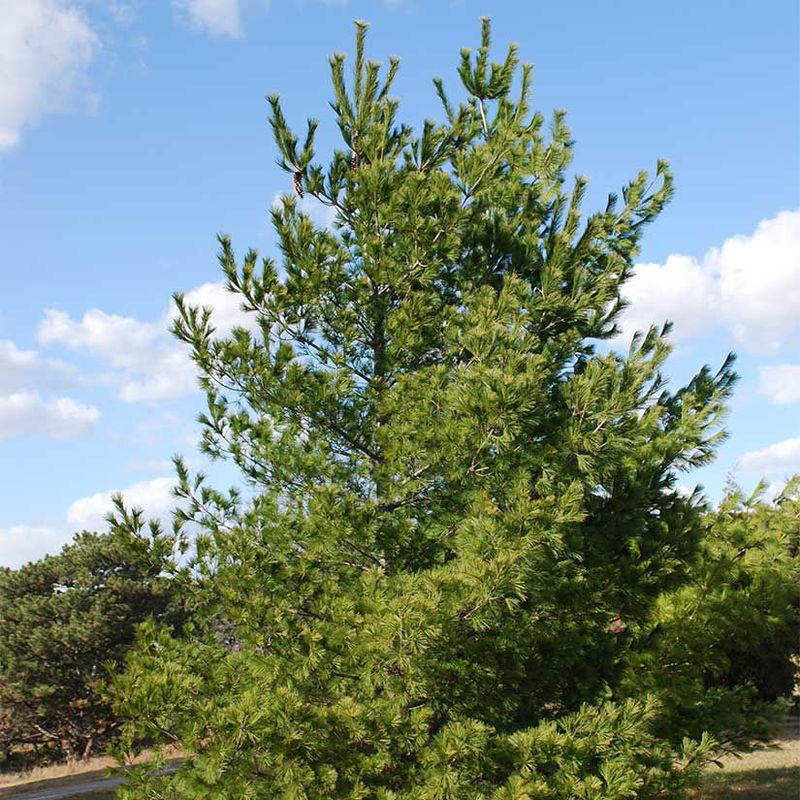
Loads of Ohio homeowners pulling out tired blue spruce are turning to two dependable workhorses. Norway spruce and Eastern white pine handle local conditions far better.
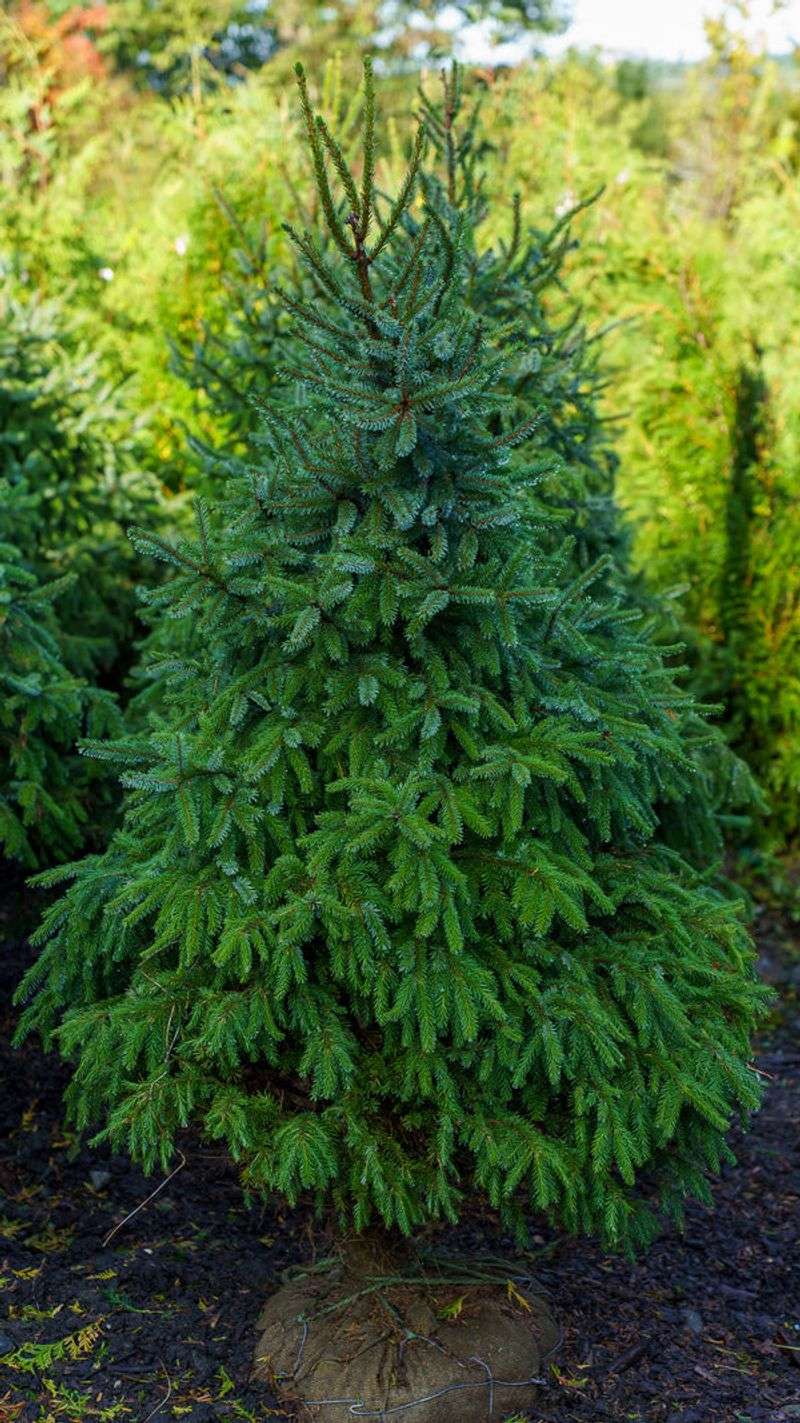
Norway spruce is a big, fast grower with graceful, drooping side branches. It tolerates clay and humidity much better than blue spruce, which makes it a favorite for windbreaks and privacy screens.
Just give it room, since mature trees can easily top 60 feet tall and 25 feet wide. It is not native, but it is widely planted and not considered invasive in Ohio.
Eastern white pine is a true native, found in parts of northeastern Ohio. Its long, soft needles come in bundles of five, and the tree has a feathery, relaxed look that I never get tired of.
Birds use it for shelter and seeds.
A quick caution on white pine. It dislikes road salt, compacted ground, and very alkaline soil, so it may yellow near busy streets or in heavy, high-pH clay.
Plant it away from salted driveways.
Both trees grow quickly, often adding a couple of feet a year once established. That speed fills an empty corner faster than you might expect.
7. Concolor Fir And Serbian Spruce Bring Blue-Silver Color Back
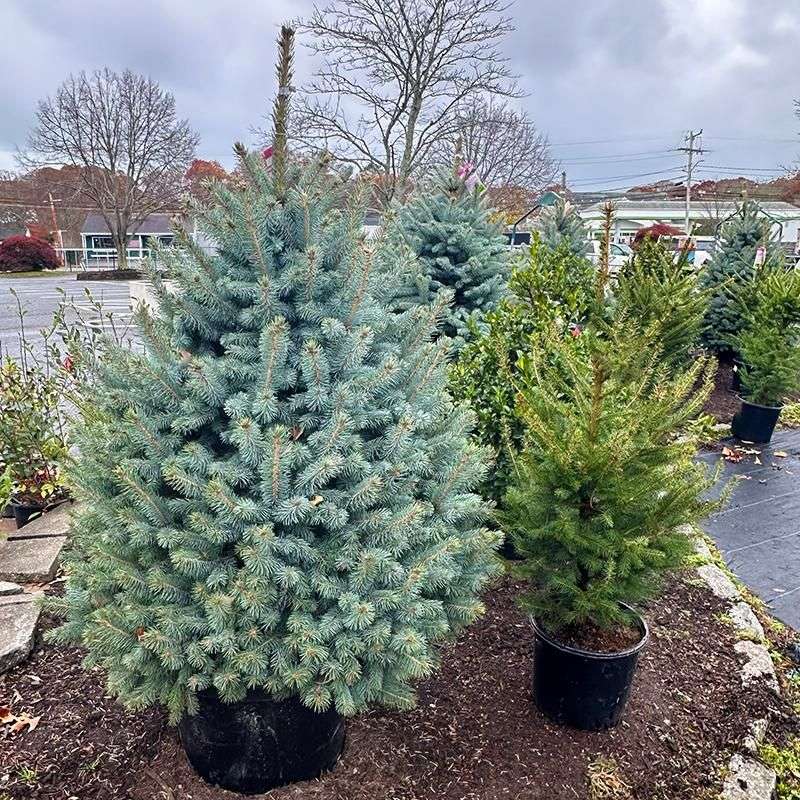
Missing that cool, silvery look? Concolor fir, also called white fir, might be your new favorite.
Its needles have a soft blue-gray tone and feel far gentler than the prickly needles on blue spruce. Crush one, and you get a faint citrus scent.
Concolor fir handles drier spells better than many firs. It still needs well-drained soil, though, so it does best on a slope or in a raised spot rather than a soggy low area.
Serbian spruce is another clever pick. It has a slim, spire-like shape that fits small yards and narrow side spaces.
The needles are dark green on top with silvery white stripes underneath, so a breeze gives the tree a two-tone shimmer.
Fans of hedges often choose ‘Green Giant’ arborvitae, a fast-growing hybrid that forms a dense wall and is less browsed by deer than many other arborvitae. Native options like American arborvitae suit wetter sites too.
Before buying, check the mature height and width on the tag. Many evergreen problems start when trees are crammed too close together, which blocks airflow.
Generous spacing now saves a lot of pruning later.
8. Planting Your New Evergreen Tree Right Pays Off For Decades
Timing makes a real difference. In Ohio, early fall and spring are the sweet spots for planting evergreens, giving roots cool weather and steady moisture to settle in before summer heat or deep winter.
Dig a hole two to three times wider than the root ball but no deeper. The spot where the trunk flares out should sit at or slightly above ground level.
Planting too deep is a common reason young trees struggle, especially in clay.
Water deeply once or twice a week through the first growing season, more during dry stretches. Soak the roots, not the needles, to keep fungi from getting comfortable.
Evergreens also lose moisture in winter, so a good drink before the ground freezes in late fall helps a lot.
Spread mulch two to three inches deep in a wide ring, keeping it a few inches off the trunk. Skip the tall mulch volcano.
If an old blue spruce still looks mostly full, you do not have to rush to remove it. Manage it, enjoy it, and plant its replacement nearby.
That way, the new tree is already growing when the old one finally needs to come down.