Why California Citrus Trees Need Extra Attention After Summer Heat?
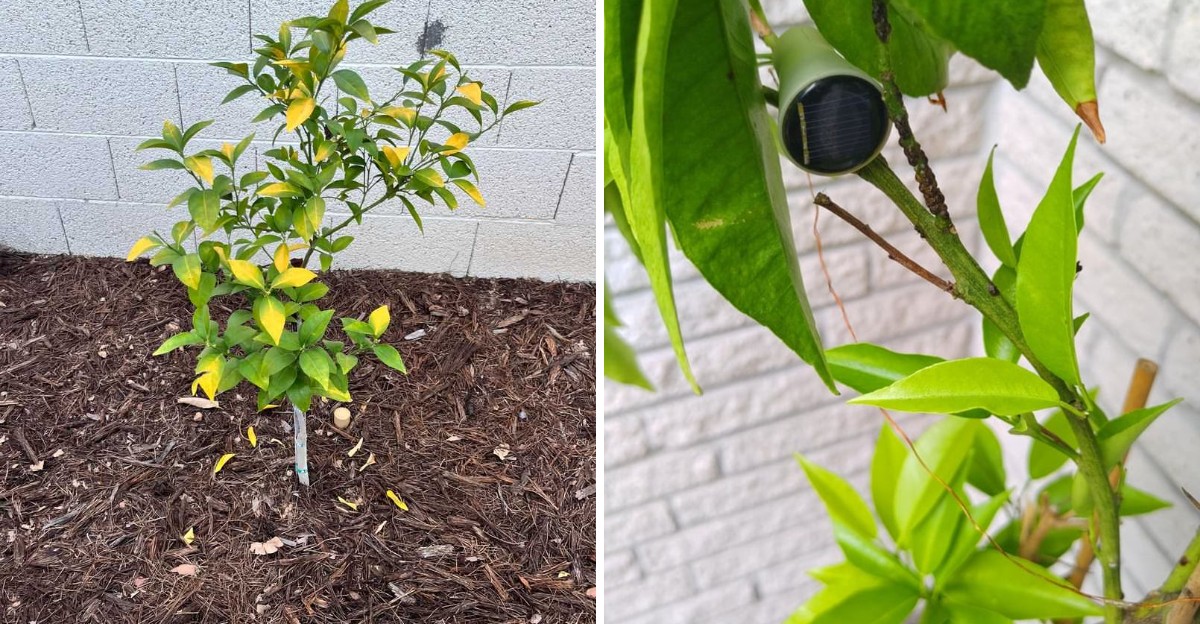
A Valencia orange tree in a Fresno backyard can look almost untouched in early October, still green, still holding fruit, still standing tall after weeks of triple-digit afternoons.
Look closer, though, and the story changes. A pale strip of bark on the south-facing trunk, dusty-looking leaves with faint stippling, and fruit that feels lighter than it should.
California summers push citrus harder than most gardeners realize, and the damage often shows up weeks after the heat wave already ended and faded.
Most homeowners assume a tree that survived summer looking green must be fine, missing the delayed damage building quietly beneath that healthy appearance.
Knowing what to check for now can save your tree a rough winter and protect next year’s crop before problems compound further.
1. Heat Stress Leaves Trees More Vulnerable
Picture a citrus tree as an athlete who just finished a marathon in 105-degree weather without much recovery time built in afterward.
It survived, but its reserves are drained, and it will not perform well if you ask it to sprint again right away.
Hot California summers force citrus to close the tiny pores on their leaves to save water, cutting off part of its own energy supply.
When those pores stay shut, the tree stops making as much food through photosynthesis, even though the sun is blazing down overhead.
UC Agriculture and Natural Resources notes that heat-stressed citrus commonly drop leaves and fruit as a survival tactic during the hottest stretches.
Fewer leaves means less shade for branches underneath, which sets up a second round of problems compounding on top of the first.
Root systems take a hit too during extended heat waves. Soil temperatures in the top foot of ground can climb high enough to damage feeder roots.
A weakened tree becomes an easier target for pests and disease that a healthy tree would otherwise shrug off without much trouble.
What helps most is patience rather than panic. Avoid heavy pruning, skip aggressive fertilizing, and do not suddenly flood the root zone at all.
2. Mite Populations Often Spike After Heat
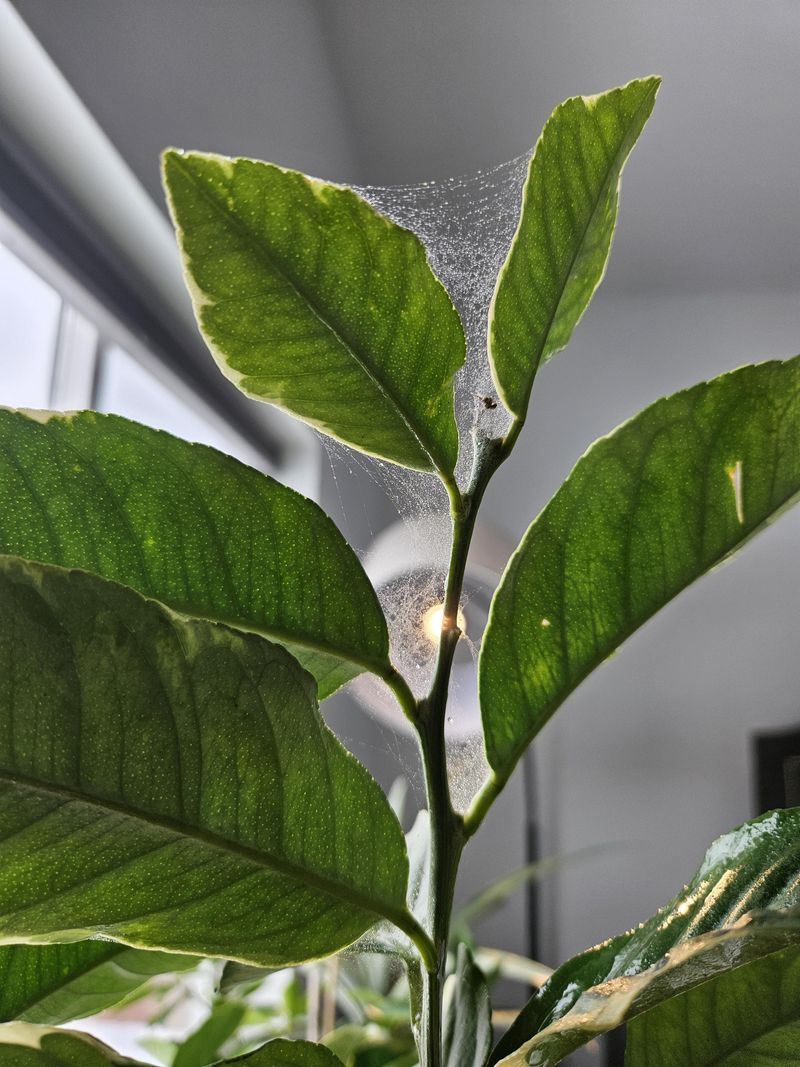
Tiny troublemakers love a dry, dusty summer more than almost any other season throughout the whole year across California.
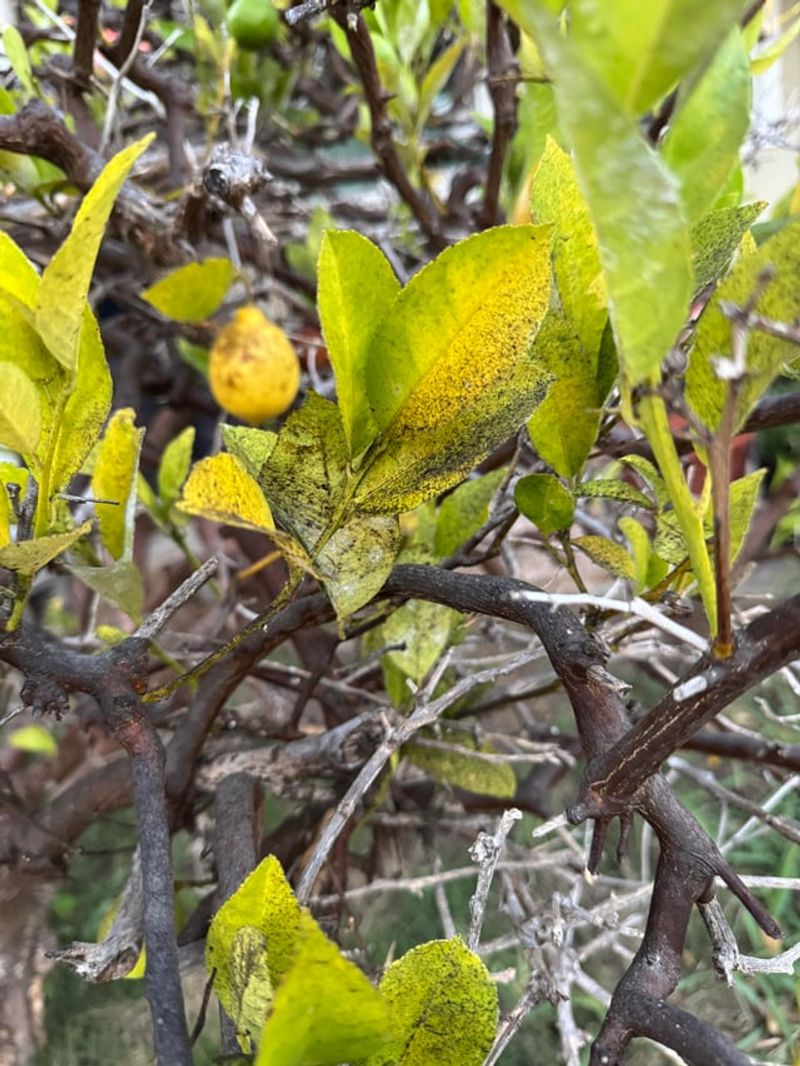
Citrus red mite and twospotted spider mite all tend to build up when conditions turn hot and dry across the growing region.
Damage rarely announces itself loudly at first. Instead you get faint stippling on leaves or a dull, dusty cast across foliage overall.
Grab a hand lens, ideally 10x or higher, and flip a few leaves over to check for signs of activity hiding underneath.
Mites are roughly the size of a grain of pepper, and you may spot moving specks or fine webbing near leaf veins closely.
Here is the part many gardeners get wrong though. Blasting the tree with a broad-spectrum insecticide often makes mite trouble worse rather than better.
Those sprays wipe out predatory mites and other beneficial insects that normally keep populations in check throughout the growing season naturally.
Your California Garden Changes Every Week. Your Plan Should Too.
Gardening in California changes quickly throughout the season. Every Friday you’ll receive a simple weekly plan showing exactly what to plant, prune, fertilize, harvest, and protect so you never miss the right timing.
UC IPM generally recommends starting with the least disruptive options available. A strong spray of plain water can knock dust and mites off foliage.
Timing and temperature matter with oils used for treatment, so read the label carefully and avoid applying during hot spells or drought stress.
3. Sunburned Bark Needs A Closer Look
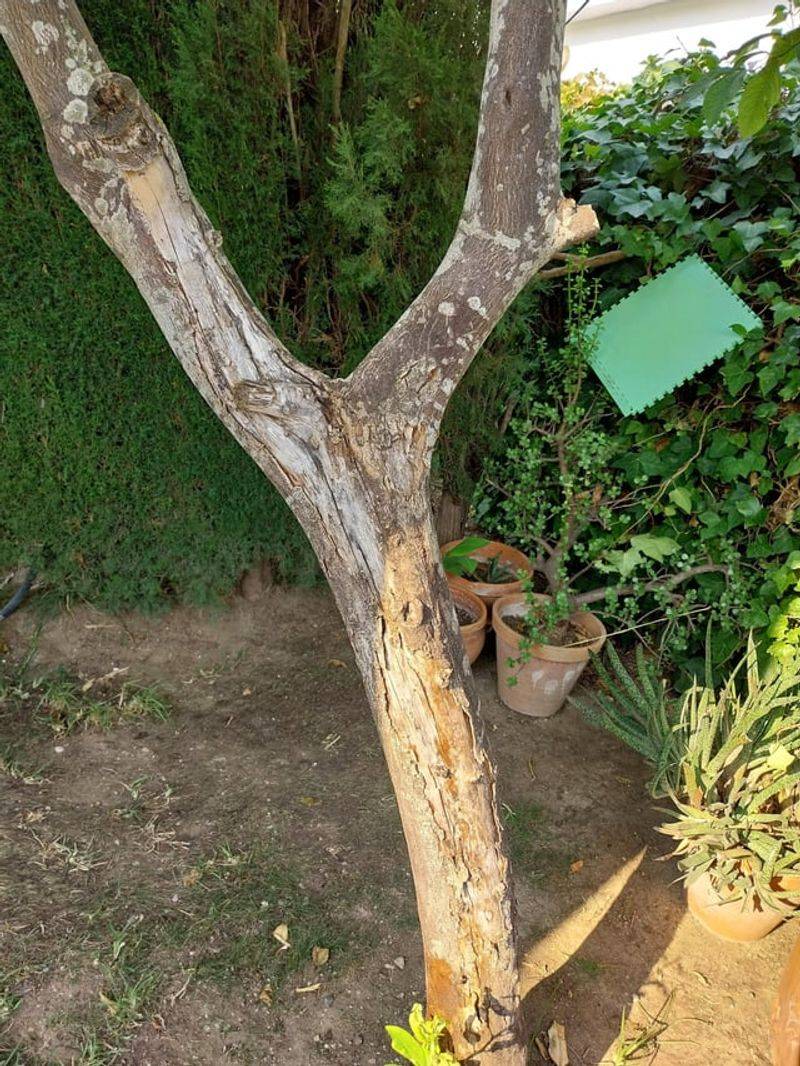
Bark can burn, and in California it happens more often than most homeowners expect throughout a typical growing season each year.
The southwest side of a trunk or a newly exposed branch takes the brunt of late-afternoon sun, when temperature and intensity peak together.
Citrus bark is thin and green underneath, which makes it especially prone to damage compared to thicker-barked species growing nearby.
Signs to watch for include bark that looks bleached, dried, cracked, or peeling away from the trunk in noticeable strips over time.
Sometimes a vertical strip of damaged tissue appears months later, and sap oozing or gumming near the injury can follow that initial damage.
Why it matters goes beyond looks entirely. Damaged bark opens a doorway for wood-boring beetles and interrupts the tree’s ability to move sugars.
Trees that lost a lot of leaves this summer are at the highest risk, since those leaves were providing shade for the bark itself.
The classic fix is simple and cheap to apply. White interior latex paint diluted roughly half and half with water reflects sunlight without harming the tree.
Do not use oil-based paint for this purpose. Tree wraps and shade cloth work as alternatives, especially for young trees planted in full sun.
4. Watering Needs Shift As Temperatures Drop
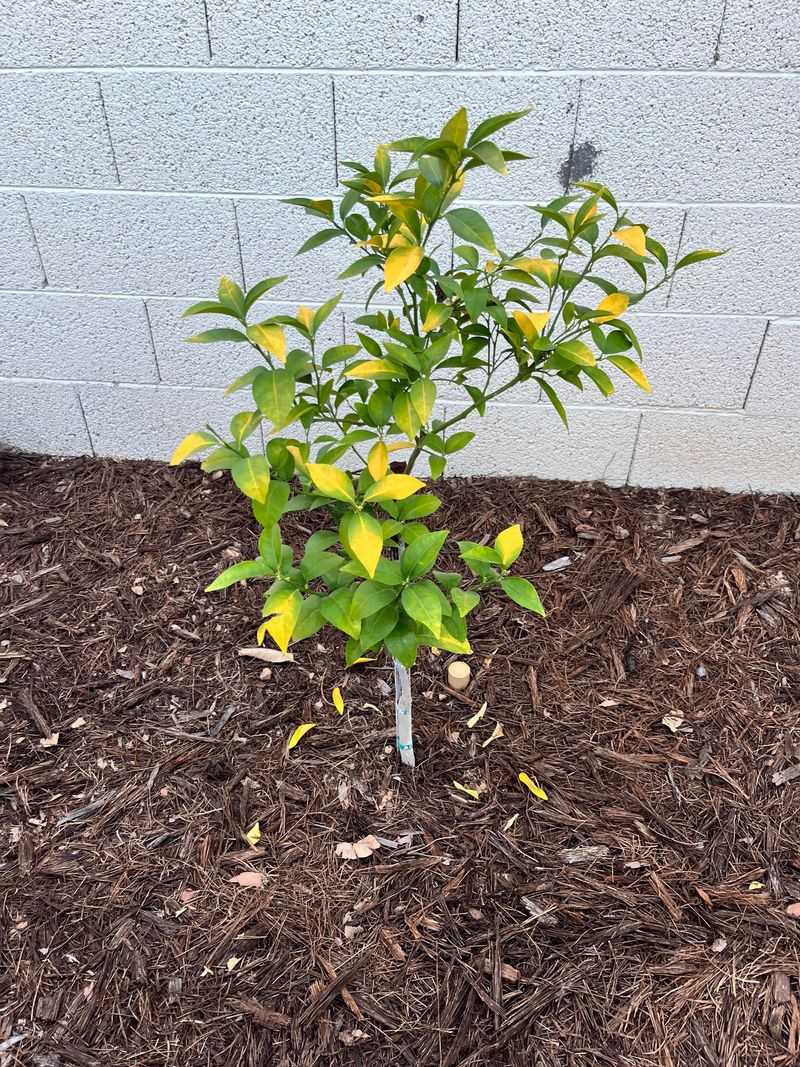
That irrigation schedule you set in July becomes a liability in October without much warning until problems start showing up unexpectedly.
Cooler air, shorter days, and lower evaporation mean the same amount of water now sits in the soil far longer than before.
Overwatering causes real damage in citrus during this transition period. Soggy soil starves roots of oxygen and creates ideal conditions for root rot.
Confusingly, an overwatered citrus tree and a drought-stressed one can look remarkably similar, both showing yellowing leaves and wilting symptoms overall.
Check the soil instead of trusting a calendar blindly. Push a screwdriver or soil probe about six to eight inches down near the drip line.
Deep and infrequent beats shallow and frequent for this species specifically. Citrus roots concentrate in the top two feet of soil available.
Stretch intervals gradually as fall progresses rather than cutting everything at once without transition. A tree recovering from heat still needs consistent moisture.
Keep water off the trunk itself entirely. Move emitters out toward the canopy edge and keep mulch pulled back from the bark carefully.
5. Fruit Quality Reflects Summer Stress Later
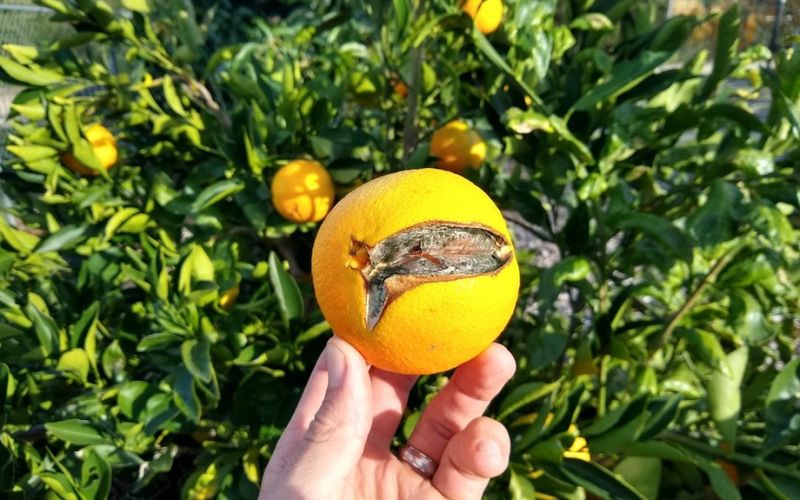
Summer heat writes a note that the fruit does not read aloud until months later once harvest time finally arrives for the season.
Oranges and mandarins developing through a hot July and August may look fine on the branch in September, then disappoint at harvest time.
Water stress during fruit development can reduce juice content and leave segments dry or pithy inside without much visible warning beforehand.
Rind changes are another clue worth checking closely. Sunburned fruit develops tough, leathery, discolored patches on the exposed side facing direct sun.
Size frequently suffers as well throughout the growing season. Fruit that ran short on water during its main growing phase simply does not reach full size.
Heat and irregular watering also contribute to rind splitting, a problem UC ANR associates with navel oranges in particular varieties commonly grown.
Consistency is the real remedy here, and it has to start earlier than the damage itself. Steady deep irrigation through summer prevents most of this.
For now, keep watering even, remove split or rotting fruit promptly so it does not attract pests, and treat this season’s quality as feedback.
6. Fertilizer Timing Matters More Than Usual
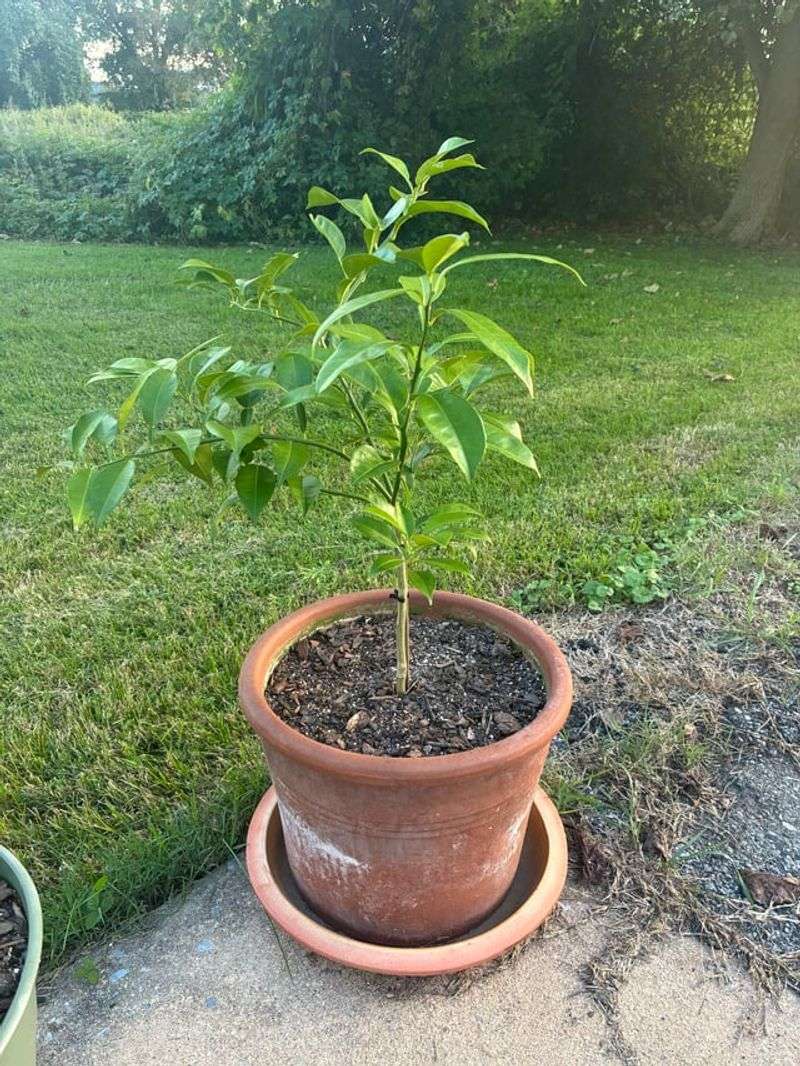
Reaching for fertilizer feels like the caring thing to do after a rough summer, and that instinct can backfire badly on a stressed tree.
Nitrogen pushes soft new growth, and tender shoots are exactly what a tree with damaged roots and sunburned bark does not need right now.
Late-season nitrogen has another downside in California specifically. Fresh flushes of growth are more vulnerable to frost damage during colder months ahead.
UC ANR guidance generally points toward applying nitrogen to citrus from late winter into spring, with the bulk delivered around the bloom period instead.
Skipping a fall feeding does not mean ignoring the tree entirely though. Micronutrient issues show up as distinctive patterns of yellowing between leaf veins.
Soil health deserves attention now instead of fertilizer. A few inches of coarse organic mulch spread under the canopy moderates soil temperature effectively.
Write down what you notice this fall so you can act at the right moment later once spring growth actually begins pushing again.
7. A Quick Check Now Prevents Bigger Problems
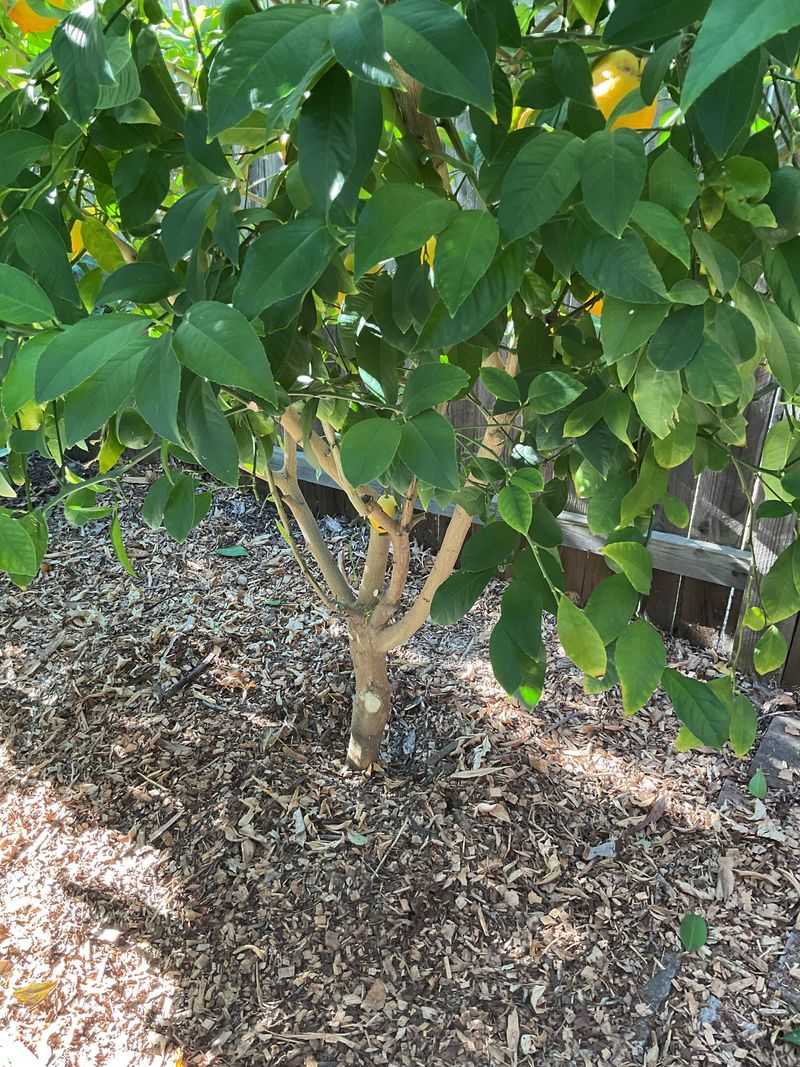
Fifteen minutes with a hand lens beats a season of guessing about what might be happening to your citrus tree throughout fall.
Walk the whole tree slowly, starting at the base and working upward, and you will catch nearly everything discussed here before it worsens.
Begin with the trunk first. Run your hand along the southwest side, feeling for rough, cracked, or loose bark showing signs of sun damage.
Move to the leaves next in your inspection. Turn over a dozen from different parts of the canopy, checking for stippling or webbing closely.
Then test the soil moisture level. Push a probe down near the drip line to see whether your irrigation is still running on a summer schedule.
Finally, cut one piece of fruit open. Juice content and segment texture tell you how hard the summer actually hit the tree overall.
Jot down what you find along with the date for future reference. Comparing notes year to year builds a real picture of tree health.
When something looks serious, your county UC Cooperative Extension office and the UC IPM website offer region-specific help at no cost whatsoever.
8. Ants Often Signal A Secondary Pest Problem
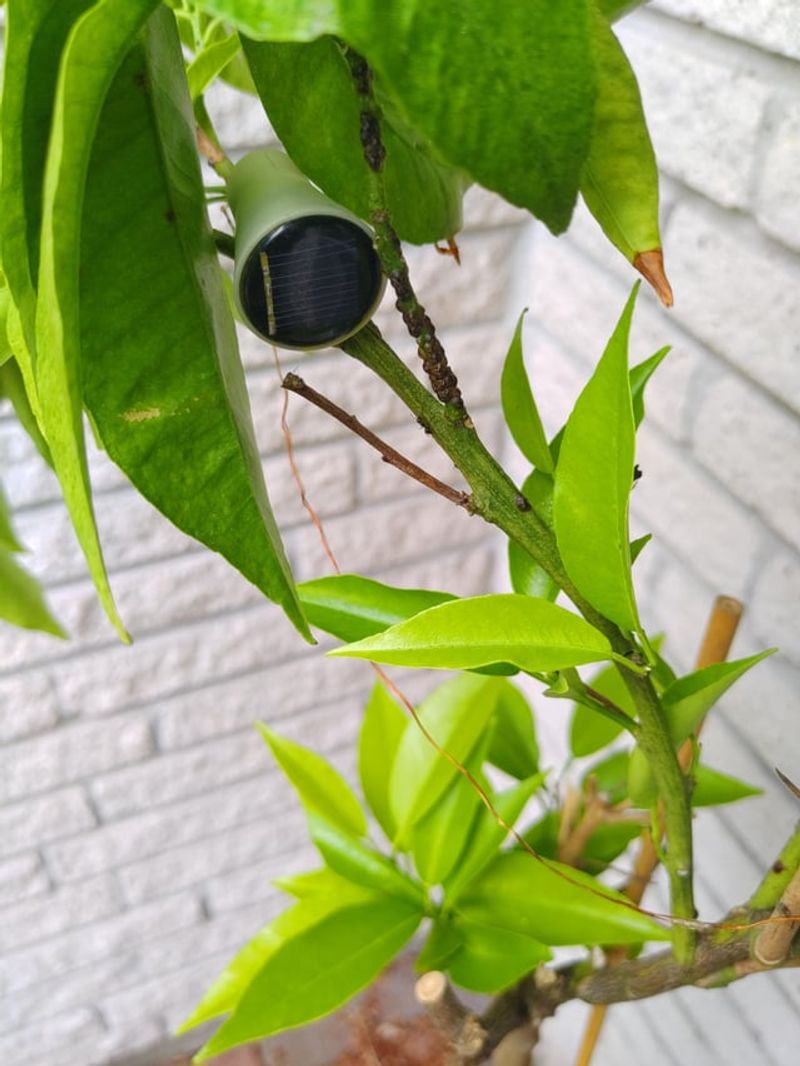
Trails of ants marching up a citrus trunk in fall rarely show up on their own, and their sudden presence usually points toward a sap-feeding pest already established somewhere in the canopy above.
Aphids, scale insects, and mealybugs all excrete a sugary substance called honeydew as they feed, and ants farm that resource enthusiastically, protecting the pests responsible for it from natural predators that would otherwise keep populations in check.
Heat-stressed trees, already covered earlier in this piece, tend to attract these sap feeders more readily, since weakened bark and reduced natural defenses make it easier for pests to establish a foothold on branches and stems.
Following an ant trail usually leads directly to the source, often on the underside of leaves or along tender new growth where scale insects and aphids cluster most densely during the cooler fall months ahead.
A sticky, shiny residue on leaves or on the ground beneath the canopy confirms honeydew production, and sooty mold sometimes grows on that residue, turning affected leaves and fruit a dull black color over time.
Controlling the ants alone rarely solves the underlying problem, since new ants simply move in once the pest population remains untouched and still producing that same attractive food source day after day.
UC IPM generally recommends targeting the actual sap-feeding pest with the same low-disruption approach already discussed for mites, since broad insecticides here also risk wiping out beneficial insects.
9. Leaf Drop Patterns Reveal Different Underlying Causes
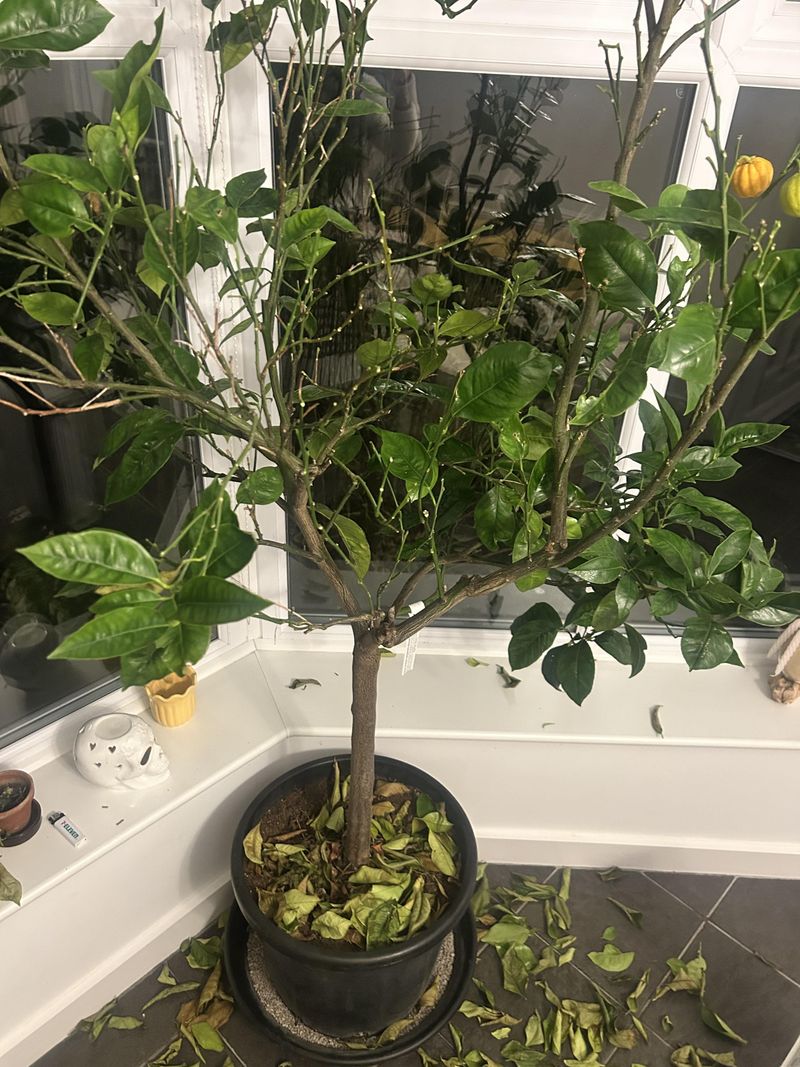
Not all leaf drop on a citrus tree in fall means the same thing, and learning to read the pattern carefully can save considerable guesswork when trying to figure out what actually happened to a struggling tree.
Sudden, widespread leaf drop across the whole canopy at once often points back to the heat stress already covered earlier, especially if it followed closely behind a particularly intense stretch of triple-digit days during summer.
Leaf drop concentrated on one side of the tree, particularly the side facing prevailing hot winds or intense afternoon sun, suggests localized sunburn or heat damage rather than a tree-wide problem affecting the whole canopy evenly.
Yellowing leaves that drop gradually over several weeks, rather than all at once, often points toward a watering issue instead, whether that means overwatering during the cooling fall transition or lingering drought stress from earlier in the season.
Leaves dropping while still mostly green, rather than yellowing first, can sometimes indicate root damage severe enough that the tree is shedding foliage simply to reduce the demand on a compromised root system below.
Checking the drop pattern alongside the other diagnostic steps already covered, bark condition, soil moisture, and pest presence, builds a more complete picture than looking at any single symptom in isolation from the rest.
Keeping fallen leaves off the ground beneath the tree matters too, since decomposing leaf litter can harbor fungal spores or shelter pests through the cooler months, adding yet another layer of risk to an already stressed tree.
Recording which pattern showed up this fall, alongside the other notes already suggested throughout this piece, helps build a year-over-year record that makes next season’s troubleshooting considerably faster and more accurate than starting from scratch each time.