Why California Gardeners Should Check Their Gutters Before The First Heavy Rain
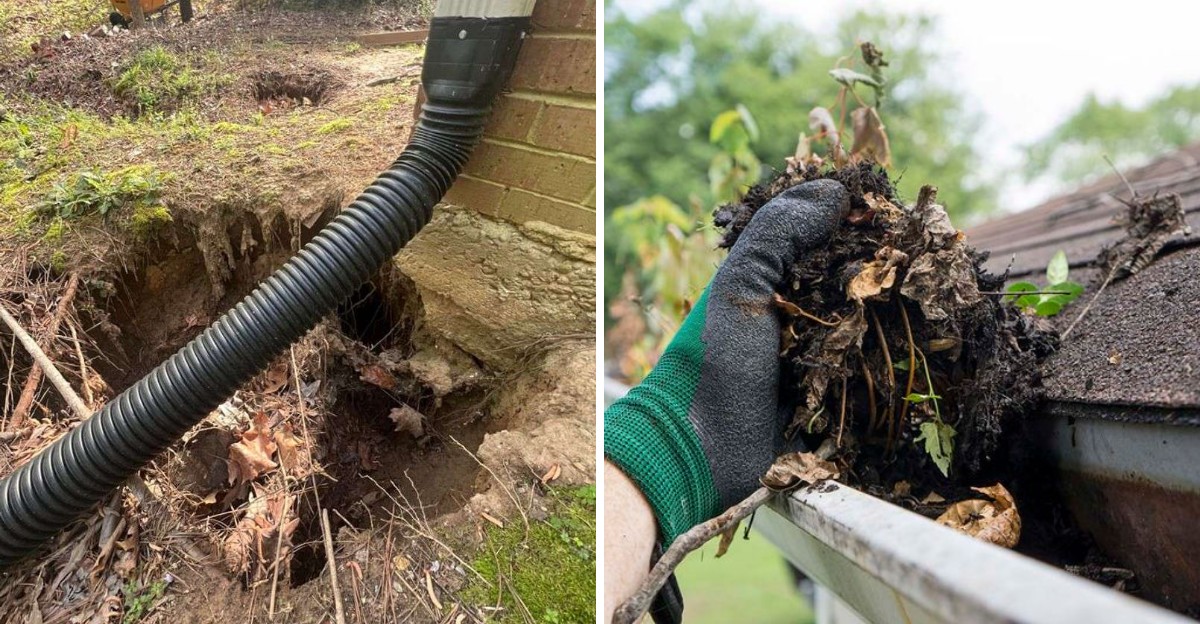
High above your flower beds, a gutter sits packed with a whole summer of dry leaves, pine needles, and dust, and nobody has looked at it in months.
Dark clouds are finally gathering for the first real storm of the season.
When that rain hits, all that water has to go somewhere, and a clogged gutter has a way of sending it exactly where you least want it, straight into the garden bed you’ve spent all season building up.
Something about that first big storm exposes every corner of a yard that got neglected all summer, and gutters top the list of things nobody thinks about until water starts falling.
Curious what’s quietly building up above your own flower beds right now, and where it plans to go once the rain finally arrives? The answer starts with a sycamore shedding leaves nobody noticed.
Summer Debris Builds Up Without You Noticing
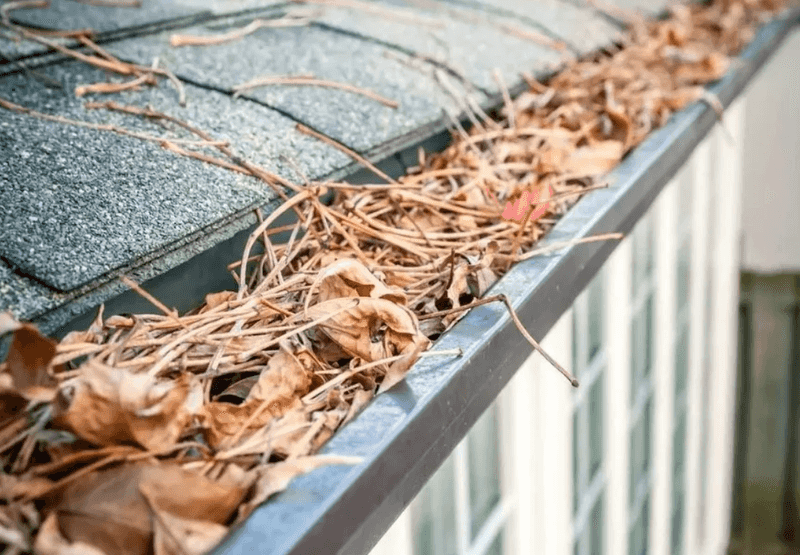
A big sycamore or oak near your roofline in late summer sheds a few crunchy leaves with every warm breeze, and they drift quietly into your gutters without a sound.
Nobody hears it happen, and nobody looks up to check.
California summers are long and dry, so there’s often no rain to push anything down the downspouts for months.
Leaves, seed pods, pine needles, twigs, and blowing dust simply pile up. Over time, that dust mixes with broken-down leaves and forms a gritty sludge that sticks to the gutter floor.
Birds and squirrels can add to the mess, too, dropping nesting material and acorns.
Roof granules from aging shingles collect in corners and near downspout openings. Even ash from fire season can settle in there.
The tricky part is that a gutter looks fine from the ground.
You might see a clean edge while the channel behind it is packed halfway full. Downspouts can hide the worst clogs, since debris tends to jam right at the elbow bends.
A good habit is to take a peek from a sturdy ladder in late summer or early fall.
Scoop out what you find, then flush the line with a garden hose to see if water flows freely and your beds stay safe.
Clogged Gutters Send Water Where It Shouldn’t Go
Gutters have one simple job: catch roof water and guide it to a downspout.
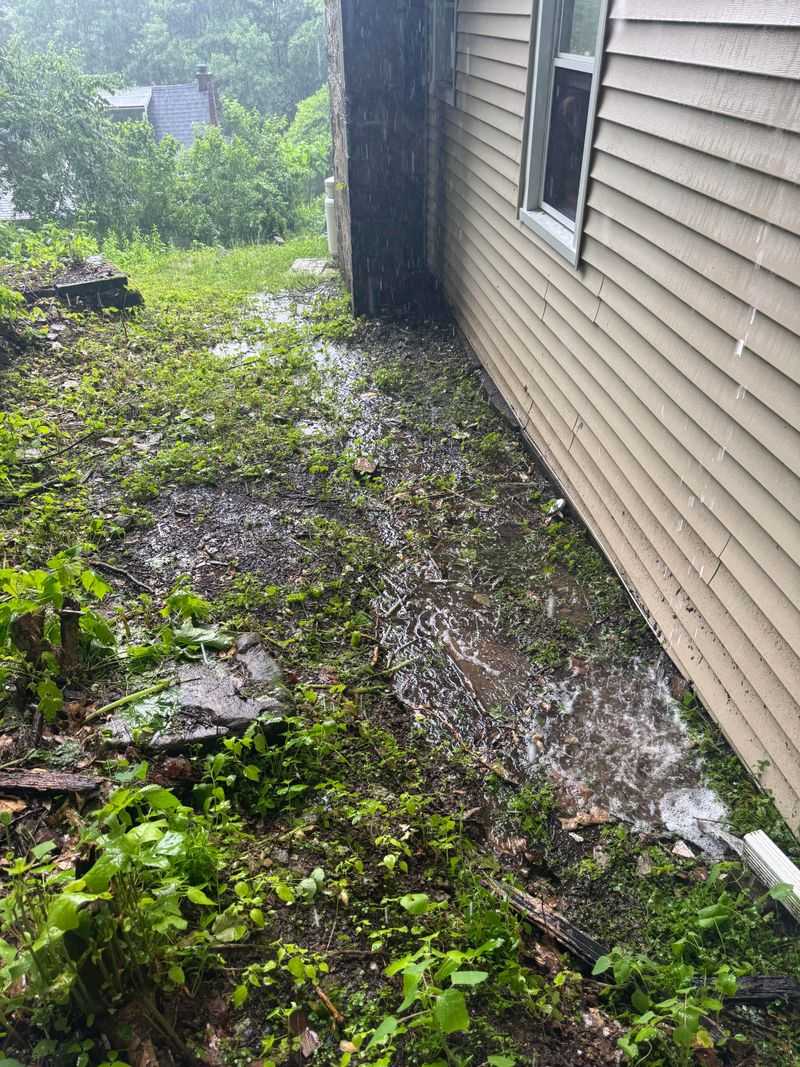
When that path is blocked, the water does not just wait politely. It spills over the edge, wherever it finds the lowest point.
A typical roof collects a surprising amount of water.
During a one-inch rain, every 1,000 square feet of roof sheds roughly 600 gallons. That’s a lot of water looking for somewhere to go all at once.
With a clog, that flow sheets off the front of the gutter or pours out at the seams and corners.
Instead of one controlled stream at a downspout, you get a messy curtain of water falling along the whole roofline. Some of it even backs up under roof edges and drips down the siding.
Your California Garden Changes Every Week. Your Plan Should Too.
Gardening in California changes quickly throughout the season. Every Friday you’ll receive a simple weekly plan showing exactly what to plant, prune, fertilize, harvest, and protect so you never miss the right timing.
For gardeners, this matters a lot.
Plants under the eaves suddenly get a heavy drenching they were never planned for, while other spots get almost nothing. Mulch floats away, soil gets splashed onto leaves, and young plants can be flattened.
Overflowing water also skips the areas you may have designed to soak it up, such as a rain garden or a gravel swale.
Overflow Can Erode Beds Right Below
Stepping outside after the first big storm and finding the roots of your lavender poking out of the dirt is not a rare surprise.
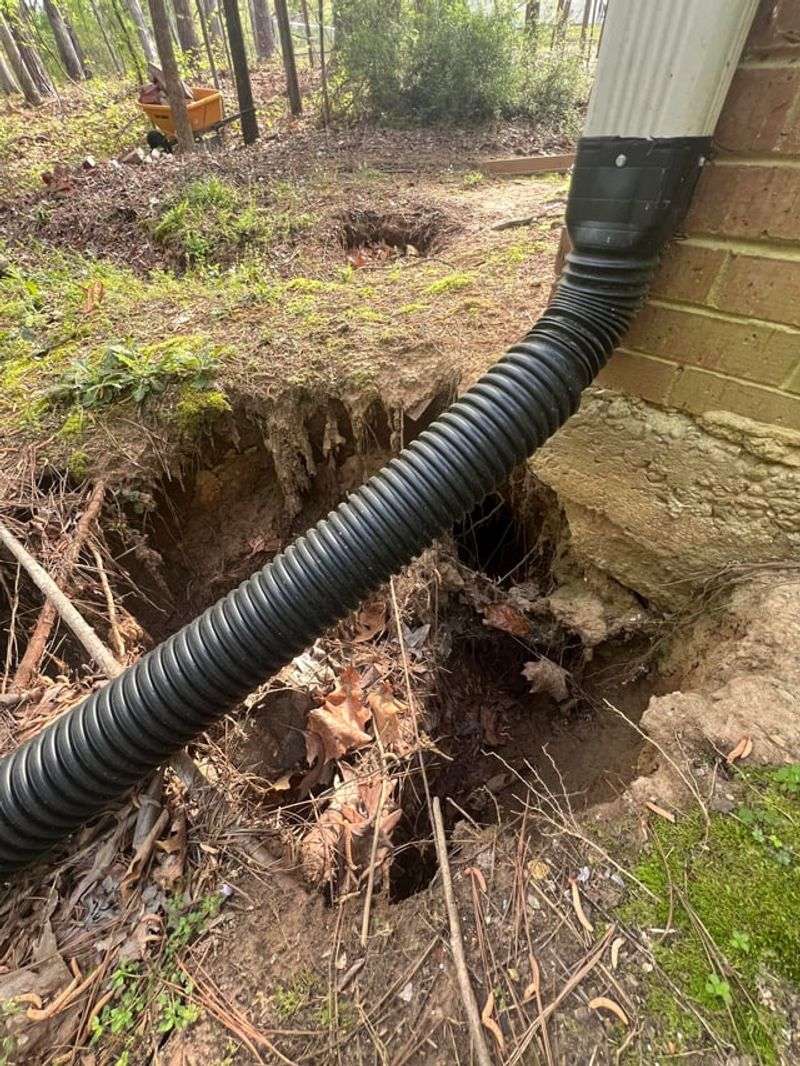
A narrow trench now cuts through the bed, right below a gutter corner that overflowed all night. The plants stayed put, but the soil around them washed away.
Falling water hits the ground with real force, especially from a two-story roof.
Each drop knocks loose tiny bits of soil, and the steady stream carries them off. Over hours, that splash and flow can carve holes, expose roots, and wash away mulch and compost you worked hard to add.
California soils often take a beating in fall.
After months of dry weather, the top layer can be crusty and slow to absorb water, so more of it runs off instead of soaking in. Bare soil suffers the most, since there’s nothing to soften the impact.
Erosion does more than look messy.
It strips away the richest topsoil, where most plant food lives, and can bury nearby plants in mud. Soil washed onto paths or into storm drains is also gone for good.
Cleaning the gutter above is the best fix.
Foundation Areas Are Especially Vulnerable
Your house and your foundation plantings share the same patch of ground.
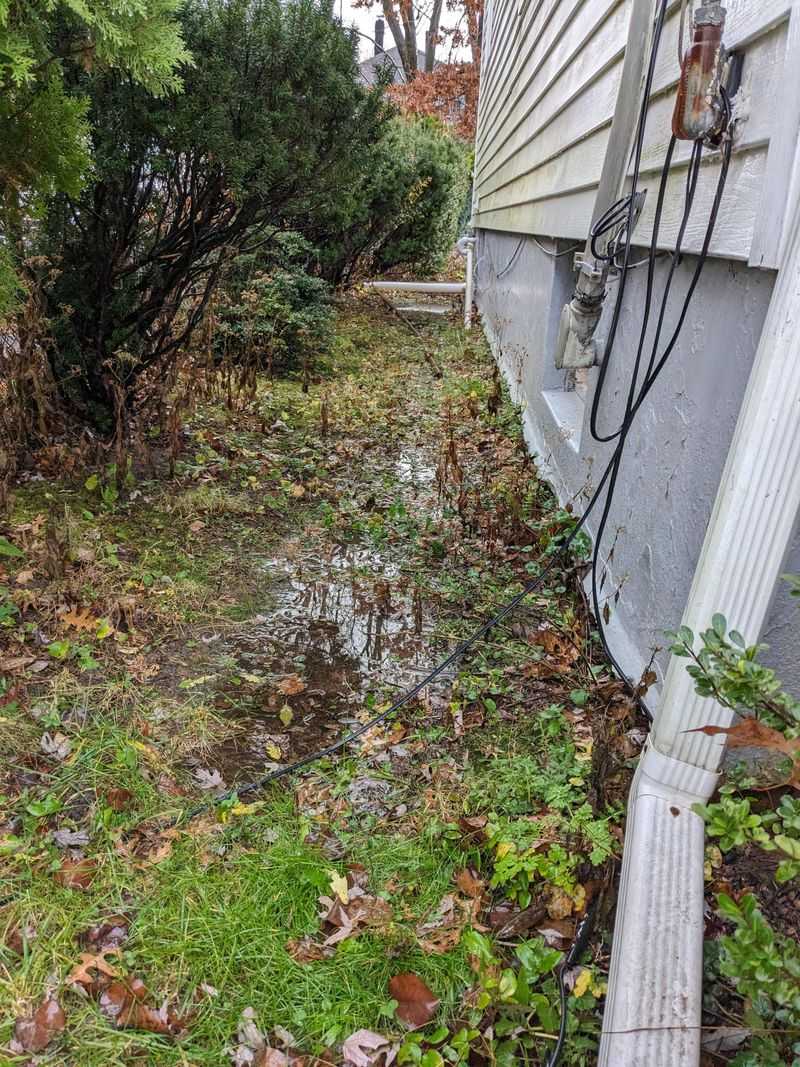
That makes the strip of soil right against the walls one of the most sensitive spots in the whole yard. When gutters overflow, it’s usually this strip that gets soaked first.
Keeping water flowing away from the house rather than toward it matters a great deal here.
Soil near the foundation should slope gently away so rain drains off. A clogged gutter can dump water right at the base of the wall, where it can pool and seep toward the foundation.
Plants in this zone feel the effects fast.
Shrubs like azaleas, boxwood, and many succulents dislike soggy roots, and standing water can lead to root rot. Clay soil, common in many parts of California, drains slowly and can stay waterlogged for days.
There’s a structural side as well.
Repeated puddling can soften soil beside the foundation, and some expansive clay soils swell when wet and shrink when dry, which can stress concrete over time. Mud splashing onto siding can also leave stains and invite pests.
Take a few minutes to look at this area before the rains.
Downspouts Need A Clear Path Away From The House
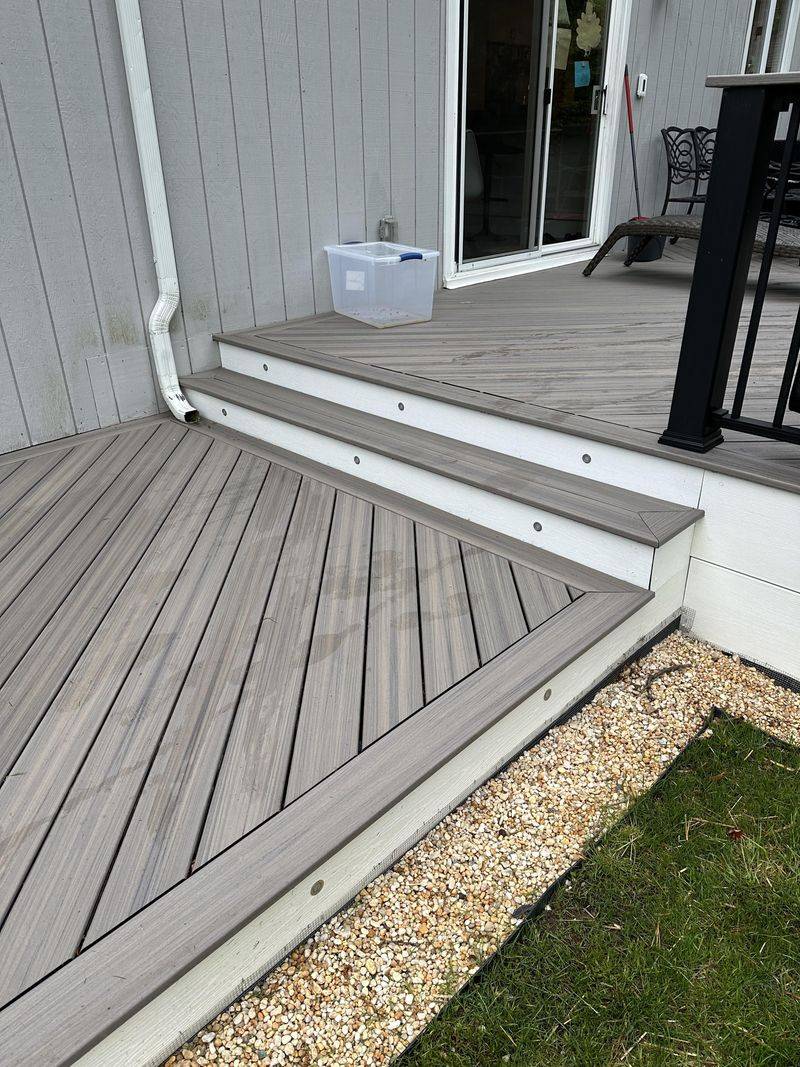
A downspout works like the finish line of a relay race. The gutter does all the running, then hands off the water at the bottom.
If the handoff happens right next to the house, the whole race is lost.
Many downspouts end just inches from the wall, dumping water onto a single spot.
That concentrated stream can flood a bed, drown plant roots, and soak soil near the foundation. A simple extension can change everything.
Moving roof runoff away from buildings makes a real difference.
Many sources suggest sending it at least 4 to 6 feet out, though the right distance depends on your slope and soil. Check local guidance if you’re unsure.
There are several easy options.
Plastic or metal extensions snap onto the end of the spout, and splash blocks spread water out gently. Flexible roll-out sleeves unroll when water flows and curl back up when it stops.
Gardeners have even better choices.
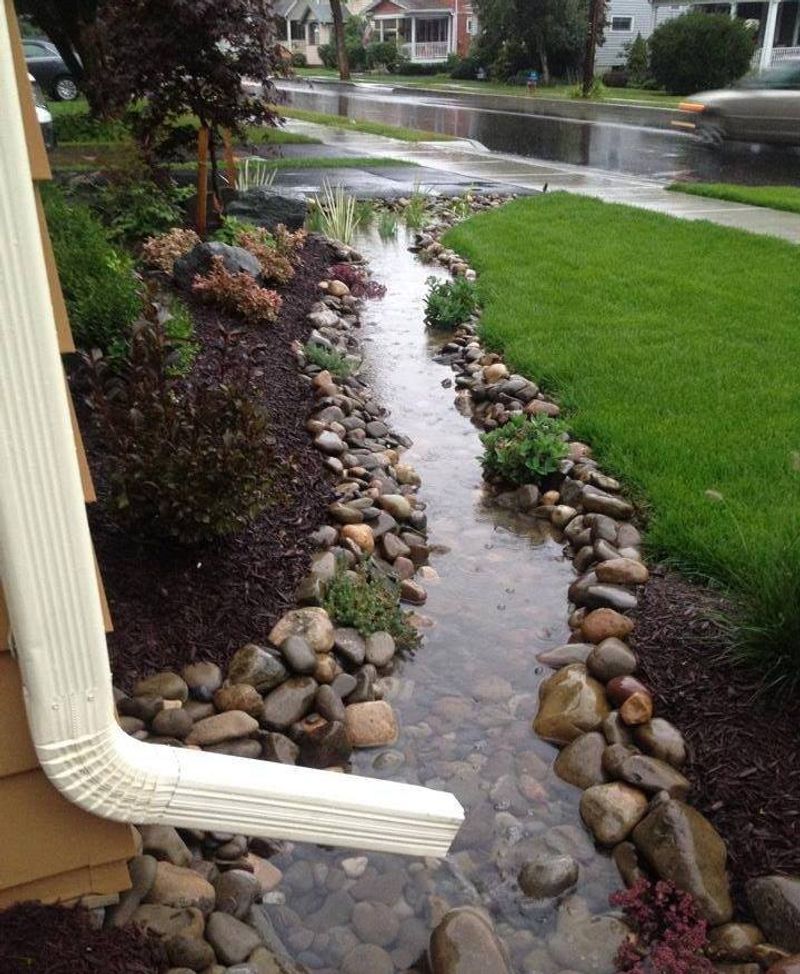
You can send downspout water to a rain garden, a dry creek bed lined with rock, or a rain barrel for watering later.
A Quick Check Beats A Bigger Repair Later
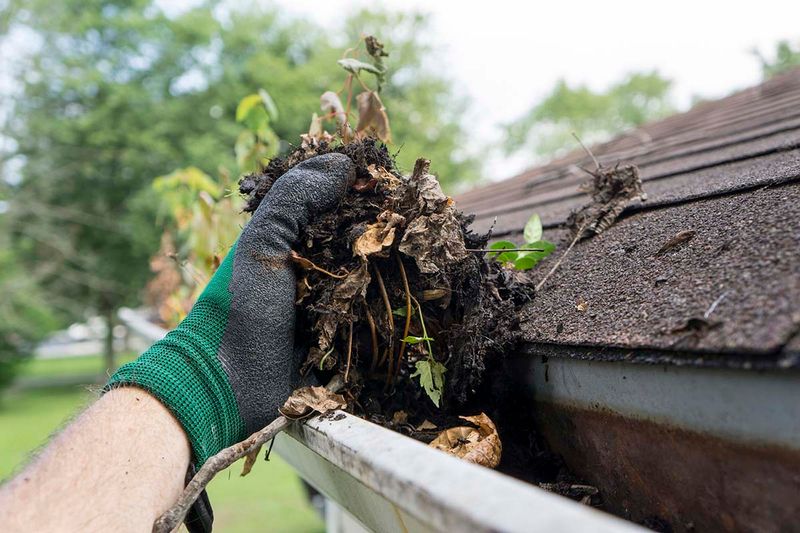
Here’s a simple math problem. An hour on a ladder with a bucket and gloves costs you almost nothing.
Replacing a washed-out flower bed, rebuilding eroded soil, or fixing water damage can cost hundreds of dollars or more.
Gardeners know how much goes into a healthy bed.
There’s the price of plants, compost, mulch, and drip lines, plus many weekends of work. One overflowing gutter during a big storm can undo a good chunk of that in a single night.
Problems also tend to stack up.
Soggy soil leads to root rot, weakened plants leave bare ground, and bare ground erodes even faster in the next rain. Water that pools by the foundation may create repairs that go far beyond the garden.
A quick check is easy to add to your fall routine.
Clear leaves and gunk by hand or with a gutter scoop, flush each run with a hose, and look for sagging sections, loose brackets, or leaky seams.
Safety matters here, too.
Use a stable ladder on flat ground, have someone nearby, and skip the job if your roof is steep or very high.
Do It Before Not During The First Storm
Nobody wants to be on a wet, wobbly ladder in the wind, scooping soggy leaves by flashlight.
Yet that’s exactly what happens when gutter cleaning waits until the rain has already started. Wet roofs and ladders are slippery and dangerous.
In much of California, the first significant storm often arrives in October or November, though timing varies a lot from year to year and region to region.
Weather forecasts usually give a few days of warning. Use that window, or better yet, finish the job in September.
Dry debris is also far easier to remove.
Crispy leaves lift out in handfuls, while wet leaves turn into heavy, smelly muck that clings to everything. Clearing the gutter while it’s dry saves time, effort, and a big mess on your patio.
The first rain is often the hardest on gardens.
Dry, crusted soil sheds water quickly, and a whole summer of debris washes loose at once. If gutters are clear, that water goes where you planned instead of into your beds.