Why California House Finches Keep Nesting In Hanging Plants Near Homes
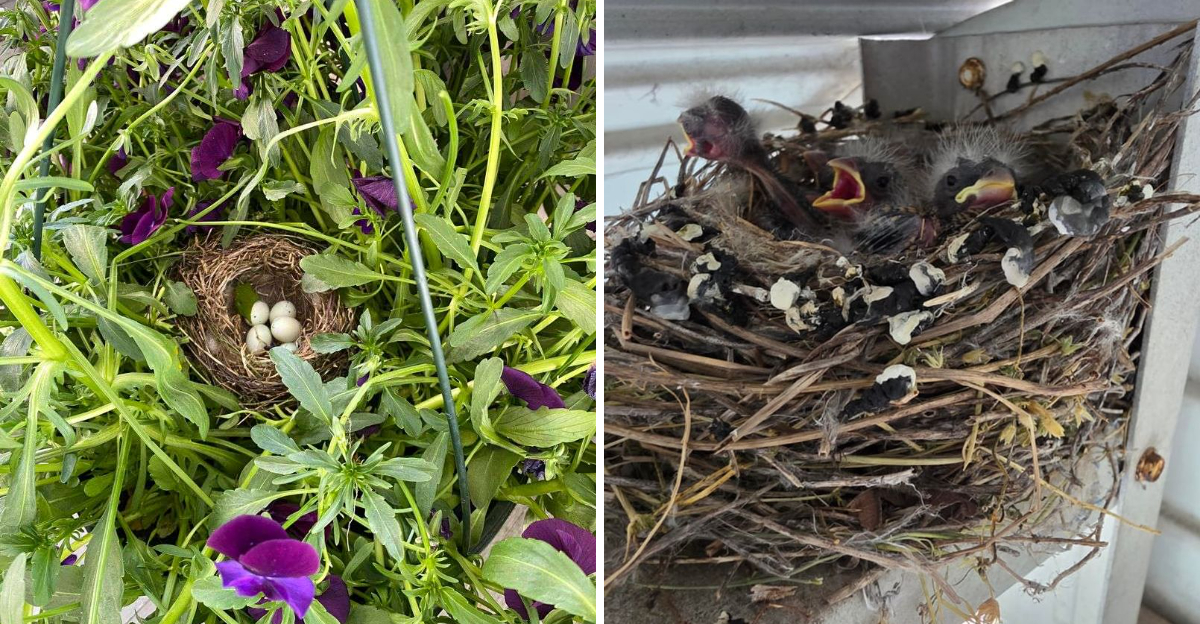
You reach into the fern to water it and stop.
There, tucked deep between the fronds, sits a small cup of woven grass. Inside it, four pale speckled eggs.
Somebody moved in and never asked.
The tenant is a house finch, and it chose your porch for reasons that make complete sense once you understand them. Height, cover, stability, and a food supply about twelve feet away.
Here’s the part that surprises most Californians. Now that the eggs are there, your options have narrowed considerably, and not just as a matter of kindness.
There’s a law involved.
That changes the whole conversation. It also means the useful moves happen before a single twig gets placed, which is a window that opens in late winter.
Prevention is easy. Eviction is not, and in some cases it isn’t legal.
The good news is that finches respond well to redirection when it comes early enough, and giving them somewhere better usually works.
Curious what’s actually going on in that basket?
1. Understand Why Hanging Plants Attract Finches
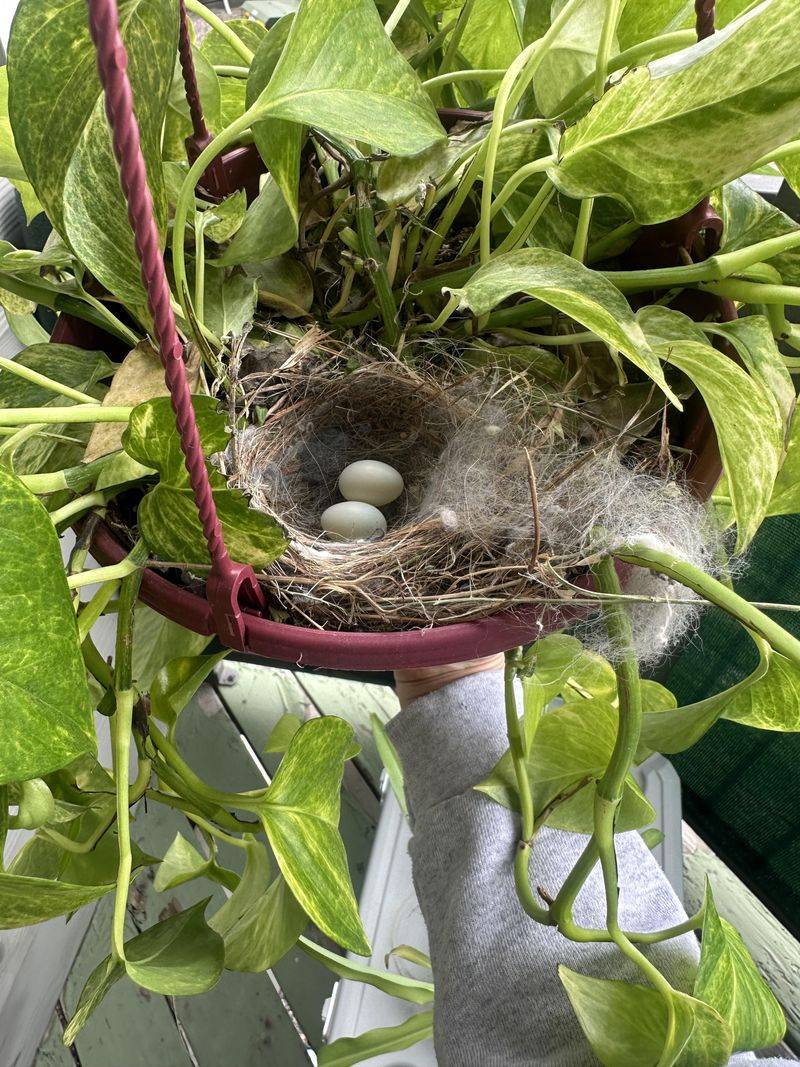
Hanging baskets basically look like the perfect starter home to a house finch. They sit up high, away from cats and other ground animals, which makes them feel much safer for raising babies.
The thick leaves of a fern or ivy give great cover, hiding the nest from hawks and nosy neighbors. According to the Cornell Lab of Ornithology, house finches often nest near people because our yards offer food, water, and cozy spots all in one place.
Stability matters too. A well-watered basket stays firm and steady, giving the nest a solid base that won’t tip over in the wind. Finches build small cup-shaped nests from grass, twigs, and stems, and a plant already holds that structure together.
Being close to your home is a bonus for them. Bird feeders, flowers, and birdbaths are usually just steps away, so parents don’t have to travel far to grab seeds for their chicks.
In California, mild spring weather means finches start nesting early, sometimes as soon as March. Your porch plants happen to be leafing out at the exact same time.
Understanding this appeal helps you make smarter choices.
Once you know finches see your baskets as prime real estate, you can decide whether to welcome them, guide them elsewhere, or simply enjoy the front-row seat to a tiny bird family growing up.
2. Provide Safe Nesting Spots Around Your Home
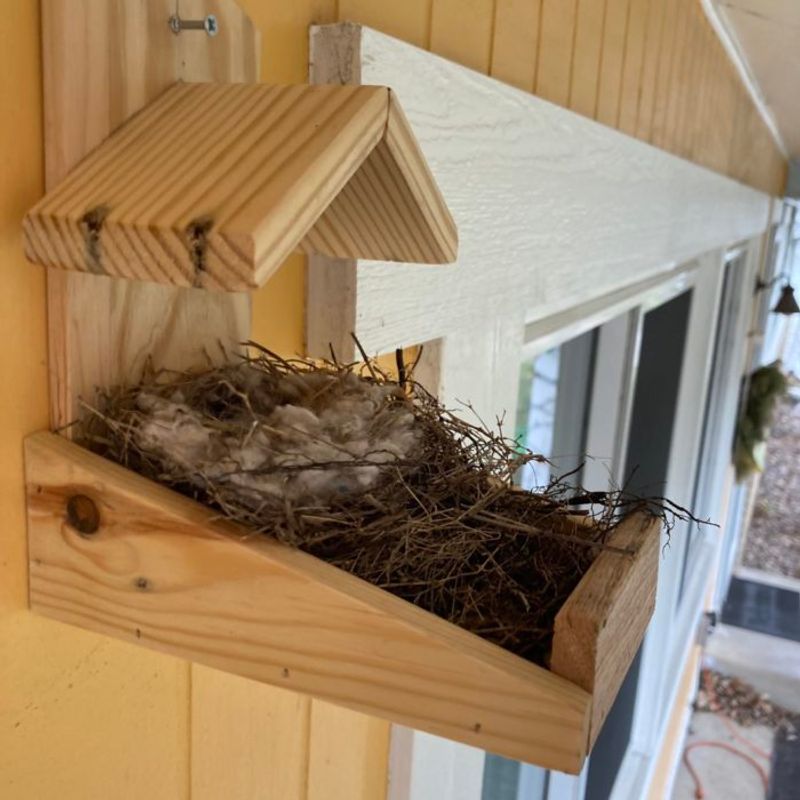
If a certain hanging basket sits in a spot you’d rather keep free, you can gently steer finches toward better options nearby. The trick is giving them something just as appealing before they settle in.
Nesting shelves work wonderfully for house finches. Unlike closed birdhouses, these open-fronted platforms match how finches naturally build in the open, and you can mount one under an eave or covered patio.
Place a couple of extra hanging baskets in quieter corners of your yard, away from doors you use daily. Finches often prefer calm areas, so a peaceful side fence or back porch may pull them away from busy walkways.
Your California Garden Changes Every Week. Your Plan Should Too.
Gardening in California changes quickly throughout the season. Every Friday you’ll receive a simple weekly plan showing exactly what to plant, prune, fertilize, harvest, and protect so you never miss the right timing.
Dense shrubs and small trees also make excellent natural nurseries. Planting bushes like ceanothus or manzanita, both California natives, gives finches leafy hideaways that don’t interfere with your daily routine.
The National Audubon Society suggests offering variety, since birds pick spots that feel safe and sheltered. When you provide several good choices, you’re more likely to guide them toward the one that suits you both.
Timing helps too. Set up these alternatives in late winter, before nesting season kicks off, so the birds notice them first.
By thinking ahead and offering welcoming spaces, you turn a possible headache into a peaceful arrangement. The finches get a home, and you keep your favorite planter exactly where you want it.
3. Choose Plants That Offer Better Bird Cover
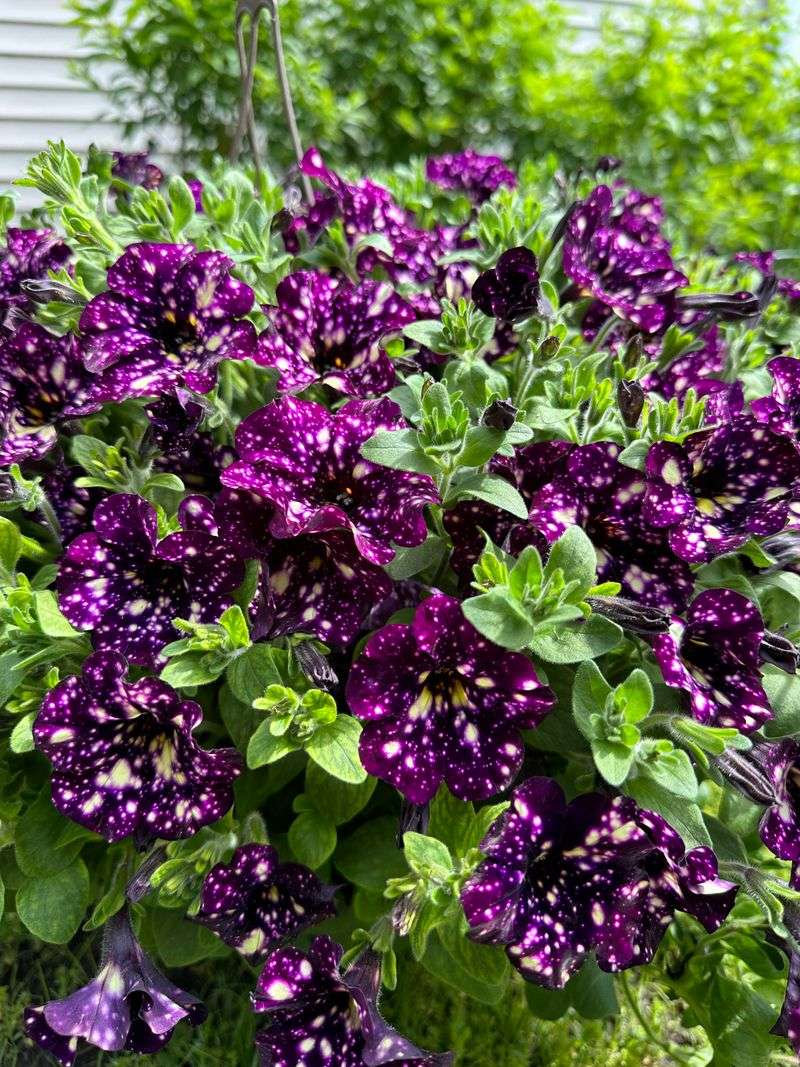
Not every hanging plant is equally tempting to a finch, and the leafiest ones win every time. Birds want thick foliage that hides the nest and shields their eggs from sun and rain.
Boston ferns top the list. Their bushy, drooping fronds create a shady tunnel where a nest can sit completely out of view, which is exactly what finches crave.
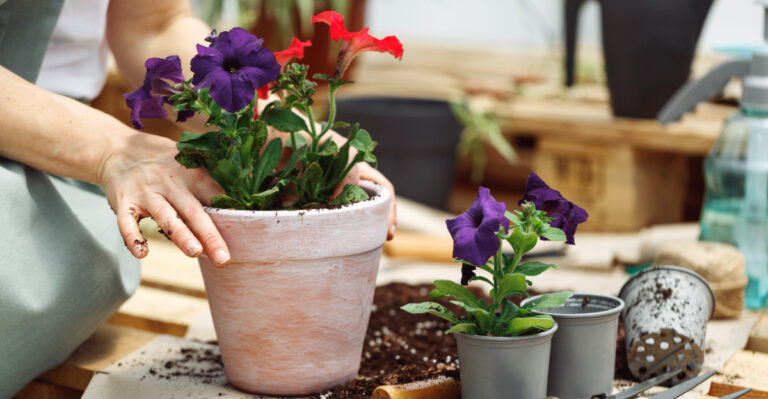
Trailing plants like ivy, sweet potato vine, and petunias also offer nice coverage. The tangled stems give parents something to weave around while keeping predators from spotting the babies.
Spider plants and pothos work well too, since their long leaves layer over each other and form a natural roof. If you love flowers, fuchsias provide both blooms and dense green cover that finches adore.
For California homeowners, drought-friendly choices matter. Look for hardy plants that hold their fullness even in dry heat, so the nest stays hidden all season long without constant watering.
Placement counts as much as the plant itself. Hang the leafiest baskets in shadier, sheltered areas if you want to invite finches, or use thinner, sparse plants in spots where you’d rather not host a nest.
When you match the right plant to the right goal, you gain control over where birds settle. Thick greenery becomes a cozy invitation, while airy plants quietly say this spot is already taken.
4. Avoid Disturbing Active Finch Nests
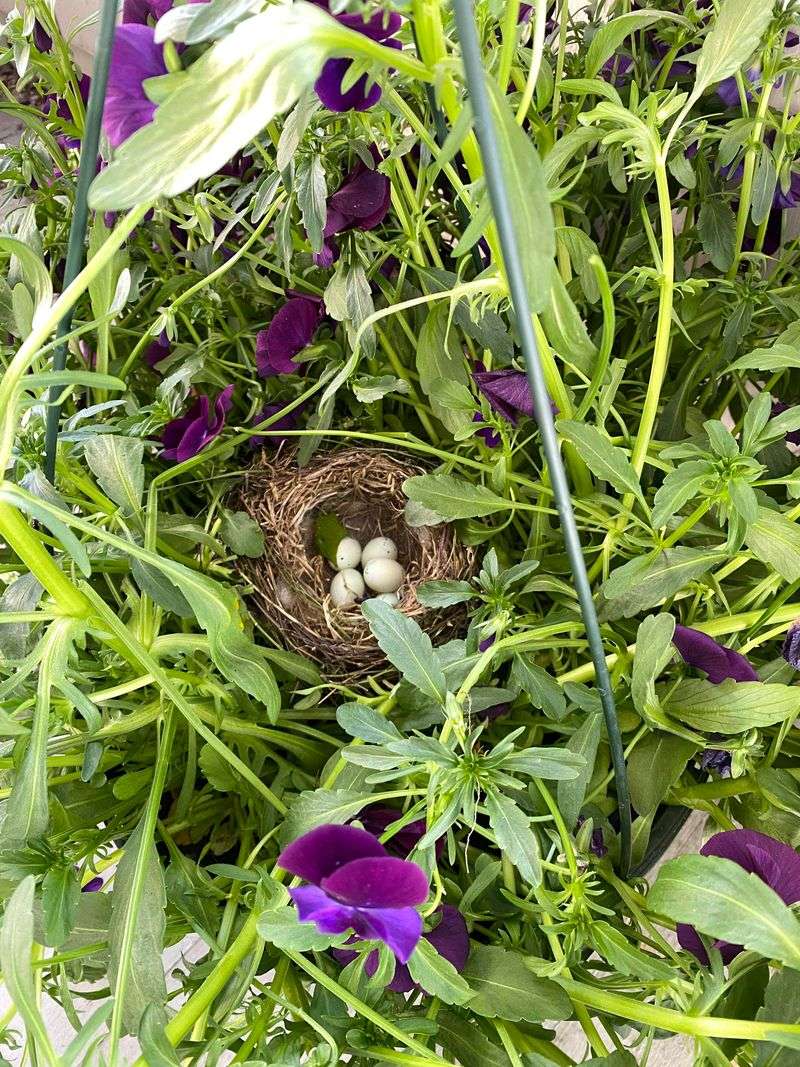
Here’s something many homeowners don’t realize: once a finch builds a nest and lays eggs, that nest is protected by law. The Migratory Bird Treaty Act covers house finches and their active nests across the United States.
In simple terms, an active nest, one with eggs or chicks, generally should not be disturbed or removed. This rule exists to protect native birds during their most vulnerable stage of raising young.
What does that mean for you? If you find eggs or babies in your hanging basket, the kindest and safest move is to wait until the young birds grow up and fly away on their own.
House finch chicks usually leave the nest about two to three weeks after hatching, so the whole process moves fairly quickly. A little patience goes a long way.
Rules can change, and specific situations sometimes have exceptions. For the most accurate and current details, check the U.S. Fish and Wildlife Service guidance rather than relying on rumors or random websites.
Empty, abandoned nests from past seasons are a different story, and those can usually be cleaned out once you’re sure no birds are using them.
Respecting these protections keeps you on the right side of the law while helping California’s finch population thrive. Watching a family fledge from your porch turns a small inconvenience into a memory worth keeping.
5. Keep Hanging Baskets Bird-Friendly
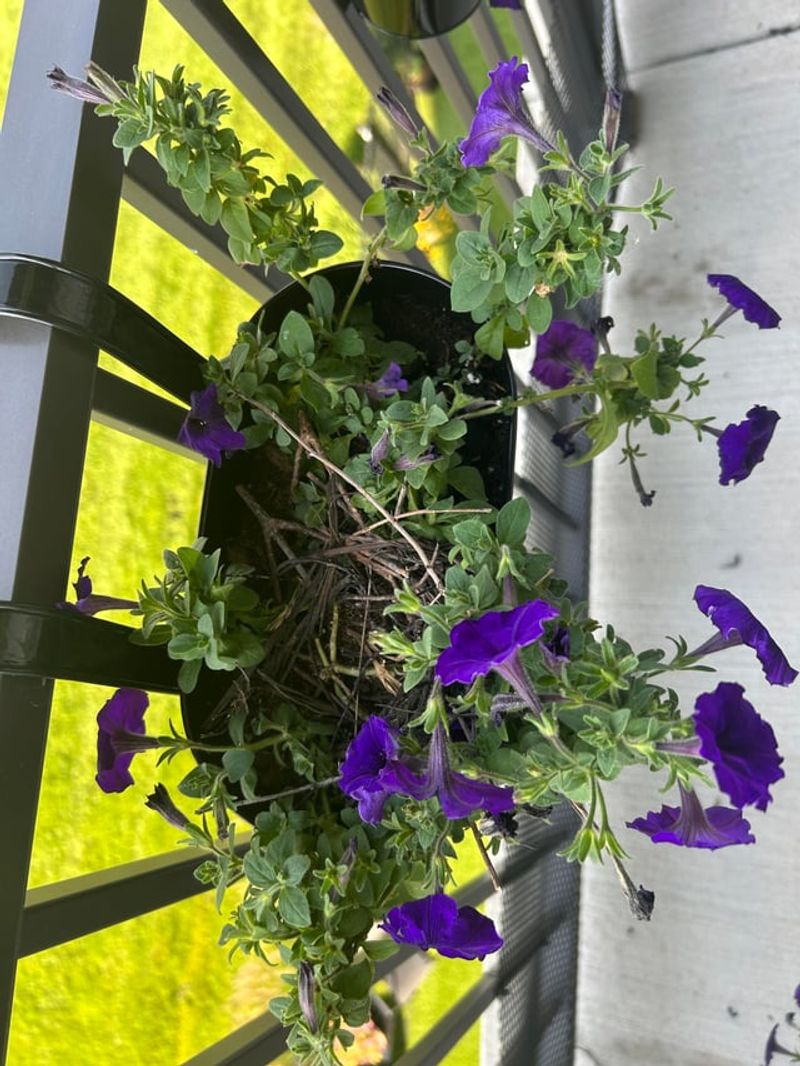
Watering a plant with a nest inside feels tricky, but you can absolutely keep both the greenery and the birds healthy. The goal is simple: hydrate the plant without flooding or scaring the nest.
Aim your water at the soil along the outer edge, away from the nest cup. A small watering can with a narrow spout gives you far better control than a blasting hose.
Water gently and slowly, letting the moisture soak in rather than splashing around. Early morning is a good time, since parent birds are often out foraging and the plant has all day to dry.
Cut back a bit on how much water you use. Plants with a nest tucked inside can usually handle slightly drier soil for a few weeks, especially shade-loving ferns.
Skip the fertilizer and pesticides during nesting. Chemicals can harm eggs and chicks, so hold off until the family has moved on for the season.
Try not to peek too often. Repeated visits can stress the parents, and UC IPM notes that minimizing disturbance helps nesting birds succeed.
Move quietly and calmly whenever you tend the plant, and avoid bumping or spinning the basket. A steady, undisturbed nest gives chicks the best shot at survival.
With these small adjustments, your basket stays green and your feathered tenants stay safe until they’re ready to fly off.
6. Support Finches With Better Habitat Choices
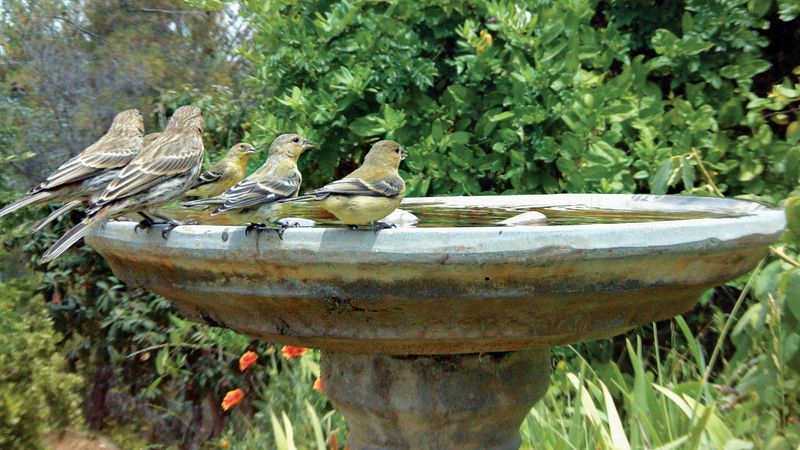
Want to keep finches happy while avoiding constant nest surprises in your planters? Give them a whole yard they’ll love, and they’ll spread out instead of crowding your porch.
Fresh water is a huge draw. A shallow birdbath, cleaned and refilled often, invites finches to drink and bathe, and moving water from a small dripper attracts them even more.
Native California plants offer natural food and shelter. Species like California poppy, sunflowers, and toyon produce seeds and berries that finches feast on all year.
Ceanothus and coffeeberry double as both snack bars and hiding spots, giving birds reasons to nest in your bushes rather than your baskets. Planting these creates a welcoming, low-maintenance habitat.
Bird feeders filled with black oil sunflower or nyjer seed round out the buffet. The Cornell Lab of Ornithology notes that house finches especially enjoy sunflower seeds, so a well-stocked feeder keeps them coming back.
Spreading resources around the yard matters. When water, food, and cover exist in several spots, finches have less reason to pack into one convenient hanging plant.
Skip pesticides so the insects that chicks need to eat stay available. A chemical-free yard supports the whole food chain that finches depend on.
By building a richer habitat, you turn your entire property into finch territory. Everybody wins, the birds get a thriving home base, and your porch plants get a little breathing room.
7. Reduce Nesting Problems Without Removing Plants
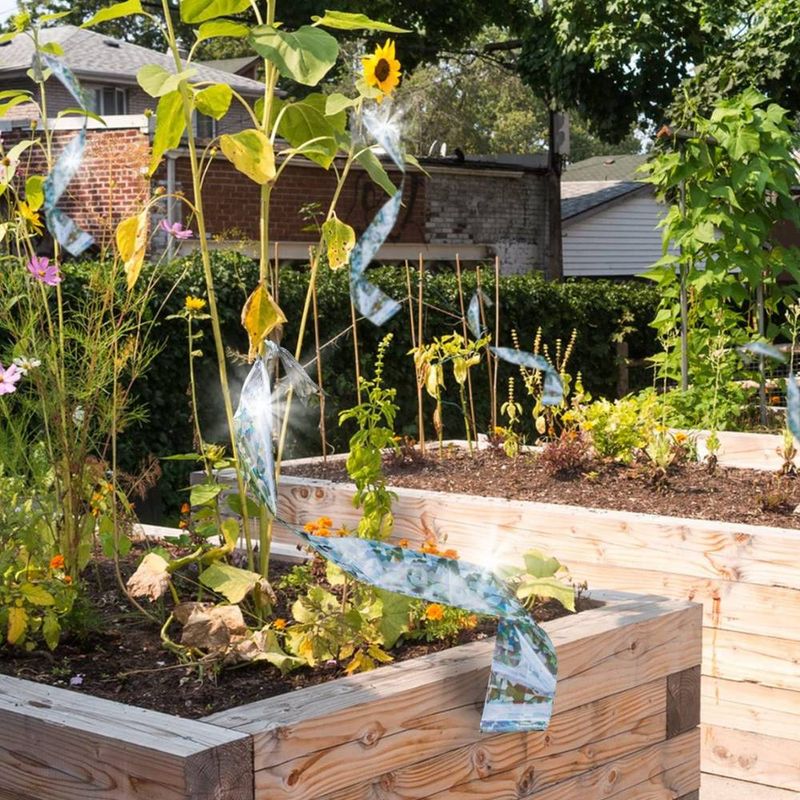
The best way to handle unwanted nests is to act before a single twig gets laid. Once eggs arrive, your options shrink, so early season prevention is your friend.
Timing is everything here. In California, finches often start scouting in late winter, so set up deterrents in February before they commit to a spot.
Shiny, moving objects can gently discourage birds. Hang reflective tape, old CDs, or small wind spinners near baskets you’d rather keep nest-free, since the flashing light makes finches uneasy.
A fake owl or hawk decoy adds another layer of caution. Move it every few days so the birds don’t figure out it’s harmless.
Temporarily thinning a plant’s foliage removes the cover finches love. A less bushy basket simply doesn’t feel safe enough for nesting.
Netting can block access to certain plants, but use it carefully so no bird gets tangled. Check any netting daily and remove it once nesting season ends.
Remember, these tricks only work before a nest becomes active. Never use deterrents to disturb eggs or chicks already in place, since that crosses into protected territory.
Keep everything humane and stress-free for the birds. The idea is to nudge them toward better spots, not to harm or trap them.
With a little planning, you protect your favorite planters and still welcome finches to the rest of your yard, no plant removal required.
8. When Something Goes Wrong In The Nest
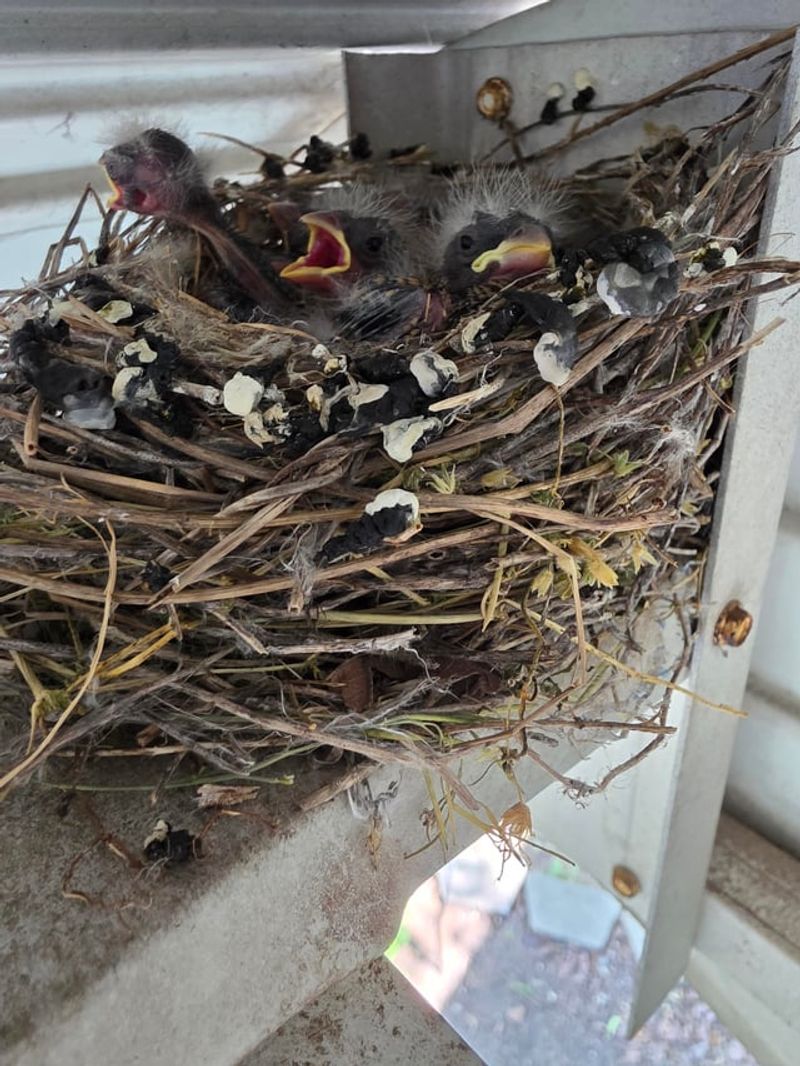
Occasionally a nest runs into trouble, and knowing the right response saves both worry and mistakes.
A fledgling on the ground is usually fine. Young finches leave the nest before flying well, and parents continue feeding them for days afterward.
Moving that bird is generally the wrong call. Watching from a distance to confirm parents are visiting is the better first step.
A featherless or barely feathered nestling on the ground is different, since it fell early. Returning it to the nest is appropriate if the nest is reachable and intact.
Handling a nestling briefly does not cause parents to abandon it, which is a persistent myth worth retiring.
An abandoned nest with cold eggs sometimes just means incubation hasn’t started, since finches lay one egg per day and begin sitting later.
Injured birds and genuinely orphaned nestlings need a licensed wildlife rehabilitator. California has facilities across the state, and county animal services can direct you.
Keeping cats indoors during nesting season prevents most of the problems that lead to these situations.
Eye swelling or crusting on visiting finches indicates conjunctivitis. Taking feeders down for a couple of weeks and disinfecting them slows the spread.
Most nests succeed without help. Knowing when to step back is usually the most useful thing you can offer.