Why Young California Citrus Trees Need Extra Attention Going Into Fall
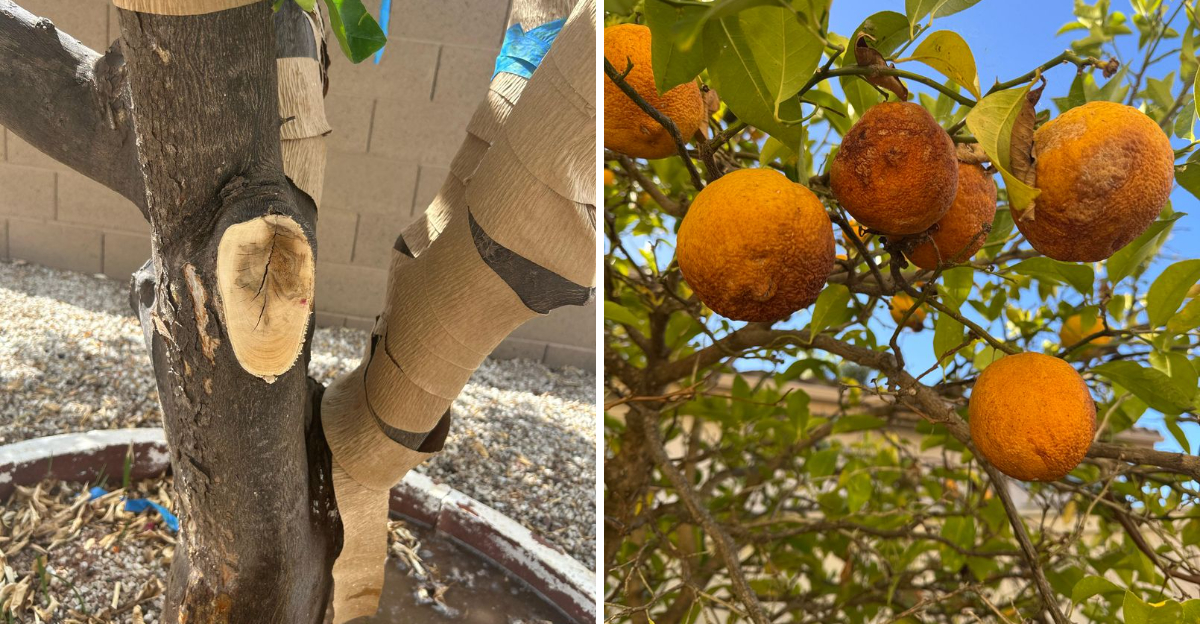
A young citrus tree can look much stronger than it actually is.
The leaves may still be green. New branches may still be stretching outward. The fruit may appear healthy from a distance.
But beneath the soil, the tree is still building the root system that will eventually help it handle California’s intense summers and unpredictable winters.
That transition into fall is when many young citrus trees quietly become vulnerable.
Hot inland afternoons can continue drying the soil long after summer officially ends. Coastal areas may cool down faster but still experience dry stretches before winter rain arrives.
At the same time, young trunks, smaller canopies, and developing roots do not have the protection that established trees have built over years.
The steps you take now can determine how well the tree enters winter.
A little extra attention with irrigation, frost preparation, mulch, and pruning decisions can protect a young citrus tree while it finishes establishing itself.
1. Young Roots Dry Out Faster Than Mature Trees
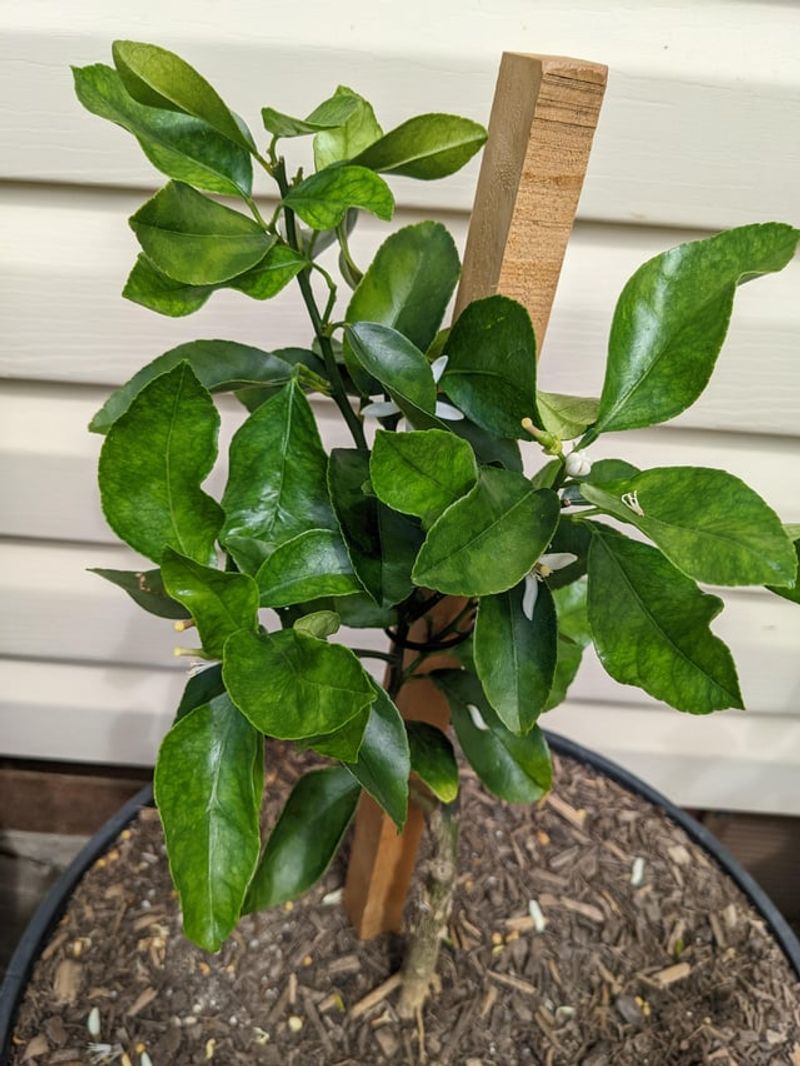
A young citrus tree can appear perfectly healthy above ground while struggling quietly below the surface.
The difference between a young tree and an established one is mostly about reach. A mature orange, lemon, or mandarin tree has a broad root system that explores a large volume of soil.
Those roots can access moisture from areas beyond the canopy and recover more easily when surface conditions become dry.
A tree planted within the last few years has a much smaller root zone.
That smaller area loses moisture faster, especially during California’s warm early fall weeks. Inland regions such as the Central Valley, Sacramento Valley, and parts of Southern California can still experience hot, dry afternoons well into September and October.
Even when daytime temperatures become more comfortable, evaporation from the soil continues.
Checking moisture directly is one of the best habits for young citrus care.
Push a finger, wooden dowel, or soil probe several inches into the root zone. If the soil feels dry where the active roots are located, the tree likely needs irrigation.
Do not judge only by the surface because the top layer can dry quickly while deeper soil still contains moisture.
UC Cooperative Extension emphasizes that young citrus trees need careful irrigation management because their limited root systems cannot access water the way mature trees can.
Avoid letting the root zone repeatedly swing from very dry to saturated. Those stress cycles slow establishment and can weaken the tree heading into cooler months.
A young citrus tree is still investing heavily underground.
Supporting that root growth before winter gives it a much stronger foundation for future years.
2. Fall Irrigation Still Matters Before Winter Rain
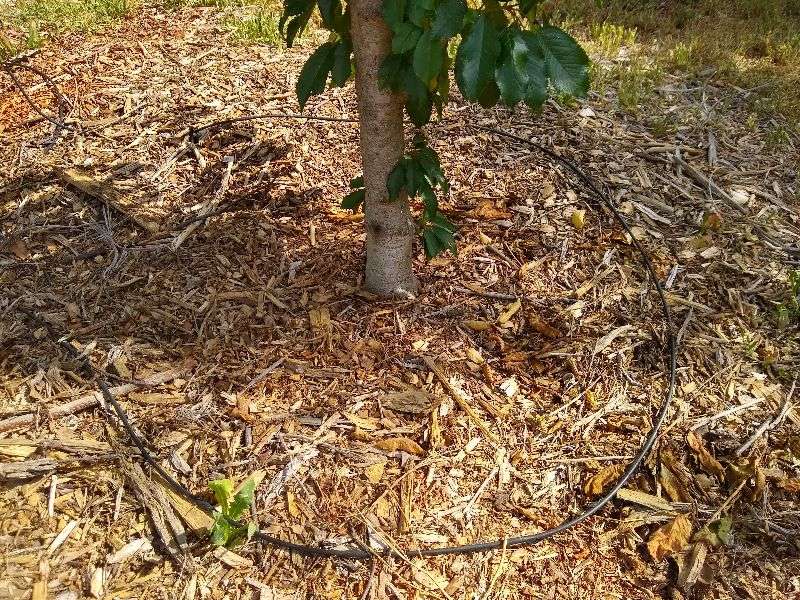
One of the easiest mistakes California gardeners make is assuming the arrival of fall means irrigation can stop.
The calendar changes before the weather does.
September and October can still bring intense heat, especially in inland California. A young citrus tree may continue losing moisture through its leaves while the soil around its roots slowly dries out.
Your California Garden Changes Every Week. Your Plan Should Too.
Gardening in California changes quickly throughout the season. Every Friday you’ll receive a simple weekly plan showing exactly what to plant, prune, fertilize, harvest, and protect so you never miss the right timing.
If irrigation is suddenly reduced too much, the tree can enter winter already stressed.
Young citrus trees do not have the same reserves as mature trees.
Established trees can tolerate longer periods between watering because their roots explore a much larger area.
Newly planted trees depend heavily on the small zone you manage around them, which means irrigation adjustments need to happen gradually.
Using local weather information can help.
California’s CIMIS system tracks evapotranspiration rates across the state and helps growers understand how much water plants are losing from weather conditions.
Combining that information with direct soil checks gives a much better picture than following a fixed calendar alone.
A coastal California tree may need less water as temperatures drop.
A tree in the Central Valley or inland Southern California may still need regular irrigation well into fall because warm, dry conditions continue.
The goal is not constantly wet soil.
Citrus roots need oxygen as well as moisture. The ideal condition is a consistently supplied root zone that dries slightly between irrigation cycles without becoming severely depleted.
When winter rains finally arrive, a tree that entered the season properly hydrated will handle the transition much better than one already under drought stress.
3. Small Canopies Offer Less Cold Protection
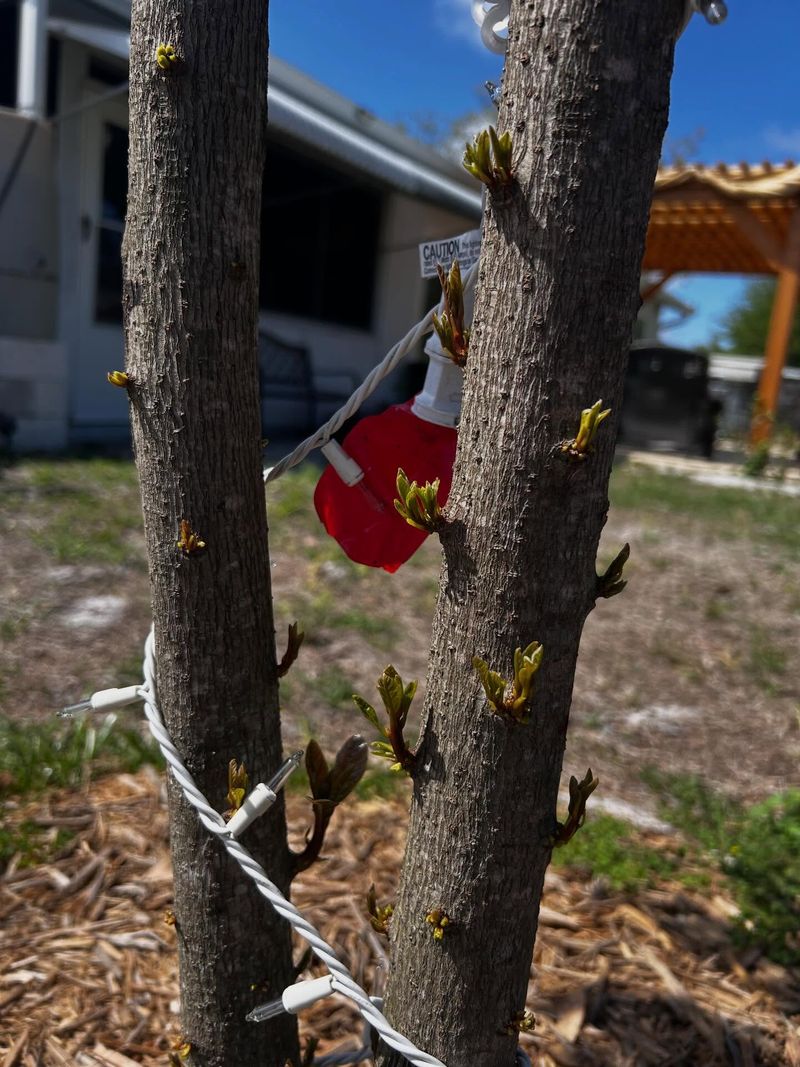
A mature citrus tree has a built-in advantage during cold weather: size.
A large canopy traps heat that rises from the soil overnight. Dense foliage reduces exposure to freezing temperatures and creates a small protective environment around branches and fruit.
Young citrus trees do not have that same protection.
Their smaller canopies leave more trunk and branch tissue exposed to sudden temperature drops.
This matters most in inland California locations where winter nights can fall below freezing, including parts of the Central Valley, foothill communities, and northern growing regions.
The first few years are especially important because young wood is more vulnerable.
A healthy mature citrus tree may recover from occasional cold injury, but a young tree can lose major growth or suffer trunk damage that sets establishment back.
Start thinking about frost protection before the first freeze warning appears.
Know your property’s cold spots. Low areas often collect cold air, while locations near walls, fences, or buildings may stay warmer overnight.
A young tree planted in an exposed area deserves extra attention because it does not yet have the natural insulation of an older canopy.
Mulch, trunk protection, and frost covers all work best when prepared ahead of time.
Waiting until a freeze is already arriving creates unnecessary stress for both the gardener and the tree.
Fall is the time to inspect the tree, understand its vulnerability, and have protection materials ready.
The first cold night should not be the moment you start planning.
4. Young Trees Need Frost Covers Earlier
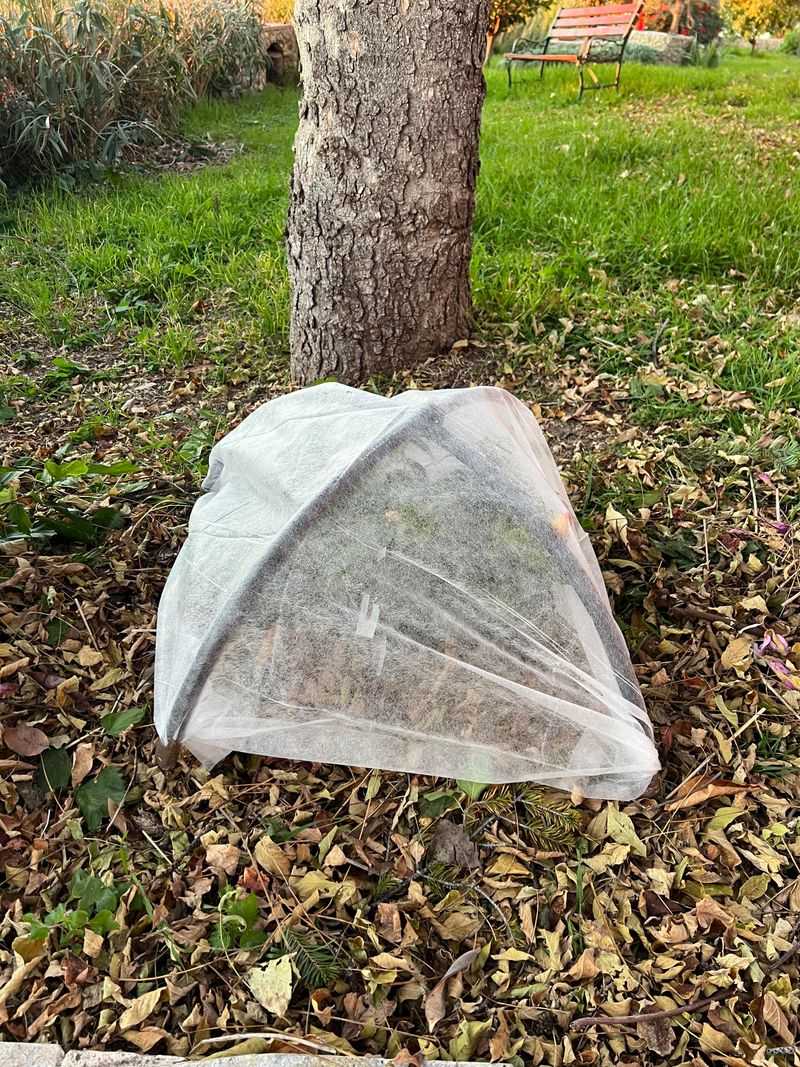
Frost protection is not something to think about only in the middle of winter.
For young citrus trees, preparation before the first cold event can make a major difference.
A sudden October or November cold snap can arrive before gardeners expect it, especially in inland parts of California.
A small tree with exposed branches and a thin trunk has much less ability to absorb and redistribute heat than a mature citrus tree.
Keep frost cloth ready before temperatures drop.
Breathable fabric is preferred because it protects without trapping excessive moisture or overheating the plant during sunny mornings.
Plastic coverings can create problems because they do not provide the same airflow and can cause temperature issues when left in place too long.
When covering a young citrus tree, extend the material close to the ground.
The soil releases heat overnight, and trapping that warmer air beneath the cover provides additional protection. Secure the edges so wind does not lift the cover away during the coldest hours.
Avoid wrapping foliage tightly.
A small frame or support structure can prevent the cover from pressing directly against leaves and branches.
Remove protection once temperatures rise the following day.
Leaving a covered tree exposed to bright California sunshine for extended periods can create unnecessary heat buildup.
The best frost protection is a simple routine:
Know your forecast.
Have materials ready.
Cover early when needed.
Young citrus trees only need protection for a few vulnerable years, but those years are when careful attention has the greatest impact on long-term survival and growth.
5. Tender Bark Is More Vulnerable To Sunburn
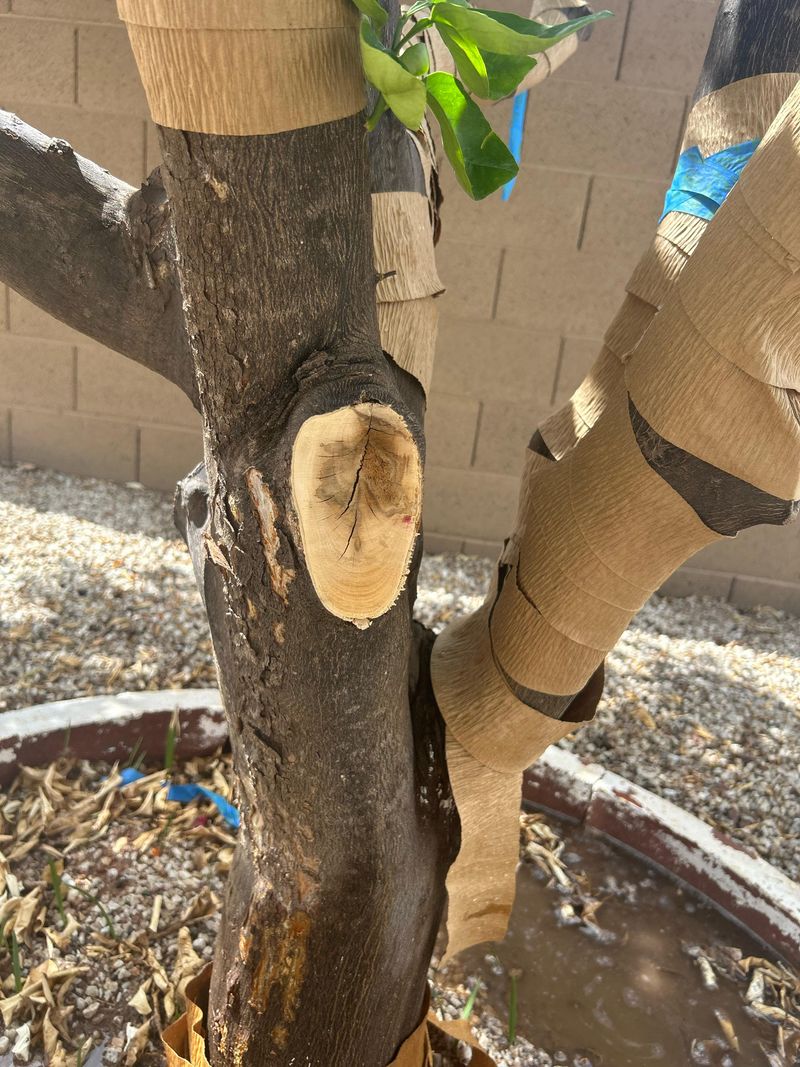
Many gardeners think of winter cold as the main threat to young citrus trees, but California’s intense sunlight can be just as damaging.
Young citrus trunks have thinner bark that has not yet developed the protective texture of older wood.
When that bark is suddenly exposed to strong afternoon sun, especially on the southwest side of the tree, it can overheat during the day and cool rapidly at night.
This repeated temperature swing can damage the living tissue beneath the bark.
Sunburn injuries may not appear immediately. Later, gardeners may notice cracked bark, discoloration, or weakened areas that leave the tree more vulnerable to secondary problems.
This is why maintaining some natural shade on young trunks is valuable.
Avoid unnecessary pruning that removes protective foliage before winter. Branches that seem inconvenient may actually be shielding the trunk from harsh afternoon exposure.
For young trees in very sunny locations, white trunk paint is sometimes used as a protective measure. A diluted white latex paint mixture can reflect sunlight and reduce heating on exposed bark.
This technique is commonly used in commercial citrus areas of California, particularly where young trees are vulnerable to direct sun.
The important thing is prevention.
Once bark is damaged, the injury cannot simply be reversed.
Be cautious with fall pruning, avoid exposing previously shaded trunks suddenly, and remember that a young citrus tree’s canopy is doing more than producing leaves.
It is also acting as a protective umbrella for the delicate wood underneath.
6. Mulch Helps Buffer Root Zone Moisture
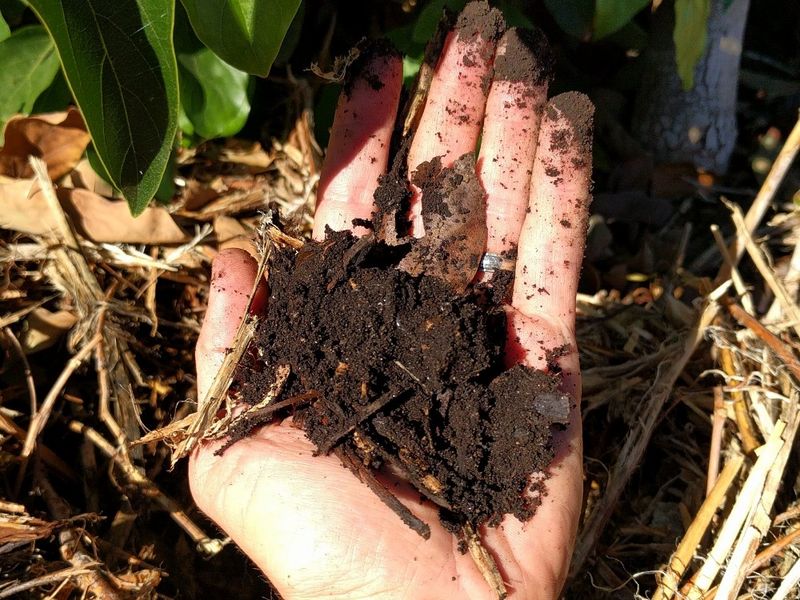
A simple mulch layer can solve several young citrus problems at the same time.
Organic mulch helps slow evaporation, keeps soil temperatures more stable, and reduces the dramatic moisture swings that stress developing roots.
This matters in California because fall often arrives gradually. The air may feel cooler, but the soil can still dry quickly during sunny afternoons.
Wood chips, shredded bark, or similar organic materials work well.
Apply a layer several inches deep across the root zone, extending outward as the tree grows.
The most active young roots are not only directly beside the trunk, so placing mulch across a wider area provides more benefit than creating a small ring right at the base.
The one mistake to avoid is piling mulch against the trunk.
Constant moisture around the trunk can encourage bark problems and create conditions where pathogens become more likely. Leave a clear space around the trunk so the bark stays dry.
Mulch also helps protect soil life.
As organic materials break down, they improve soil structure and support the organisms that help create a healthier root environment.
For young citrus trees, fall is an excellent time to refresh mulch before winter arrives.
A stable root zone allows roots to continue growing during mild California winters, especially in areas where soil temperatures remain favorable.
The tree may look like it is slowing down above ground.
Below the surface, healthy roots are still preparing for the next growing season.
7. Wet Trunks Raise Crown And Bark Problems
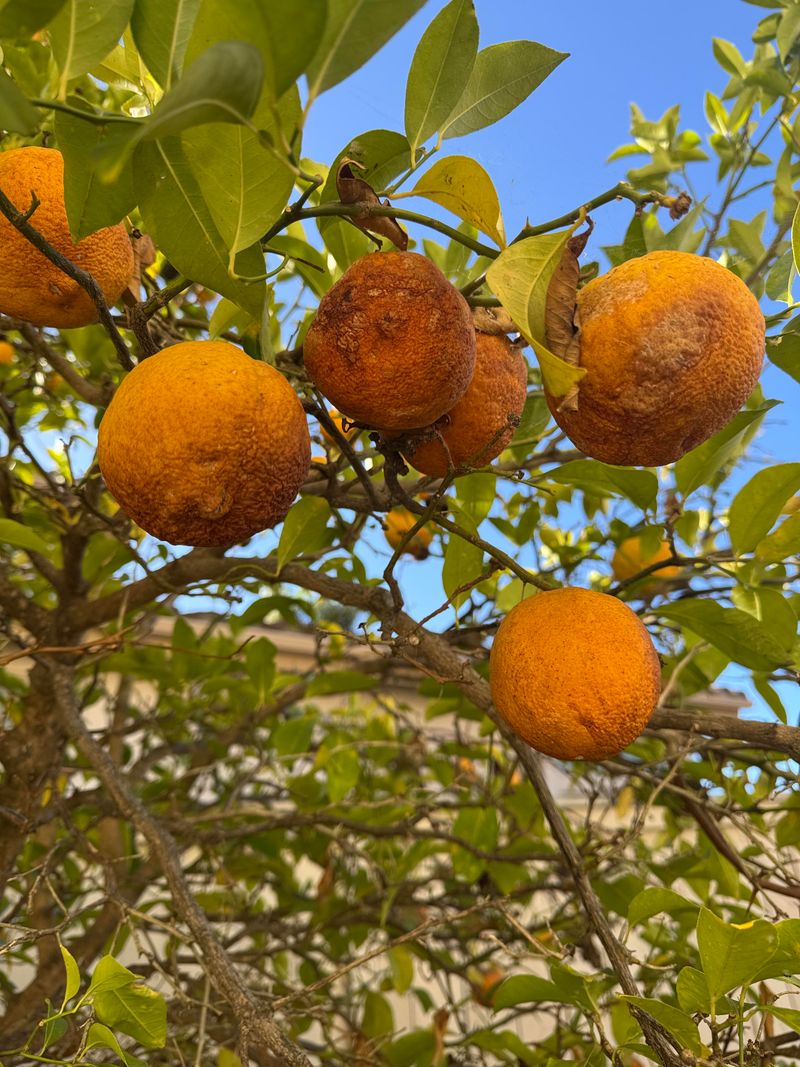
Water placement matters just as much as the amount of water a young citrus tree receives.
An irrigation emitter placed directly against the trunk may seem convenient, but it can create a long-term problem.
Citrus trees do not benefit from constantly wet bark at the base, and repeated moisture around the crown increases the risk of disease issues.
Phytophthora crown and root problems are associated with poorly drained, constantly wet conditions.
Young trees are especially vulnerable because their root systems and trunk bases are still developing. A small planting area can stay wet longer after irrigation or rain, especially in heavier California soils.
Move irrigation outward as the tree grows.
Emitters should gradually follow the expanding root zone rather than remaining fixed at the trunk. The goal is to encourage roots to spread outward into surrounding soil.
Check after irrigation.
Look for standing water, darkened bark, or areas that remain wet long after surrounding soil has dried. Those signs suggest the watering pattern may need adjustment.
Also watch for lawn sprinklers.
A nearby turf irrigation system can accidentally keep a citrus trunk wet even when the tree’s own irrigation is correctly designed.
Good citrus care is not about keeping everything constantly moist.
It is about putting water where roots need it while protecting the trunk and crown from unnecessary exposure.
Small corrections now can prevent much larger problems later.
8. Heavy Pruning Leaves Young Trees More Exposed
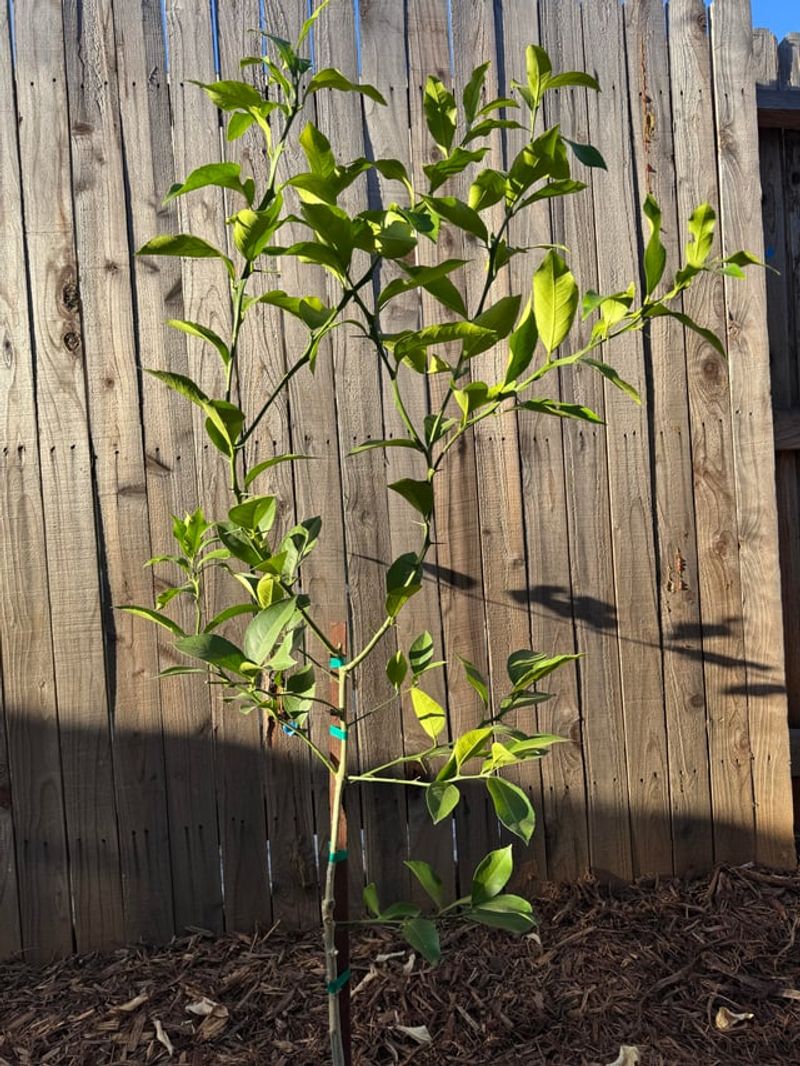
Young citrus trees often need less pruning than gardeners think.
There is a natural temptation to shape a small tree quickly, remove branches that look uneven, or create a cleaner form before the tree becomes larger.
But aggressive pruning during fall can remove exactly the growth the tree needs most.
Leaves are the tree’s energy-producing system.
Every healthy branch left on a young citrus tree contributes to photosynthesis, trunk protection, and future canopy development. Removing too much growth reduces the tree’s ability to build strength before winter.
Fall is especially not the ideal time for major structural pruning.
Removing branches can expose previously shaded bark to stronger sunlight and leave the canopy less capable of protecting the tree during cold nights.
Focus instead on small corrections.
Remove damaged branches or growth that creates obvious structural problems. Avoid large cuts unless there is a clear reason.
A young citrus tree is still creating its future framework.
The goal is not a perfectly shaped tree after one season. The goal is a strong root system, healthy canopy, and sturdy structure that will support years of fruit production.
Let the tree grow.
Guide it carefully.
Save major shaping decisions for when the tree has developed enough structure to respond well.
Going into fall, the best pruning strategy for a young California citrus tree is often simple:
Protect what it already has.