Why California Lemon Leaves Turn Yellow In September And How To Fix It
September heat fades into cooler mornings, and the light over California backyards turns a warm gold. Then you glance at your favorite tree and something feels off.
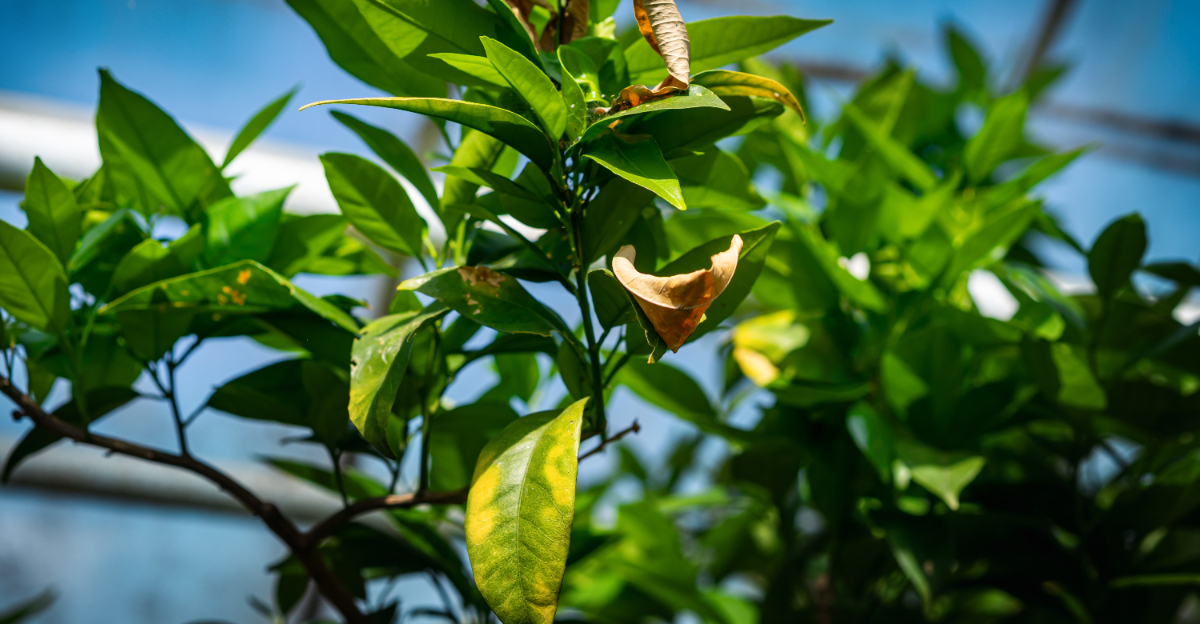
The glossy green you bragged about all summer has faded into pale, blotchy patches. Some leaves look bleached, others look like someone traced their veins with a highlighter.
You should know that yellow leaves are messages, not verdicts. Trees talk through color, and once you learn the vocabulary, the fix is usually simpler and cheaper than you expect.
Look closely at exactly where the yellow shows up first, since the pattern points straight at the cause. Eight explanations below unpack what’s going on, plus the fixes that bring the shine back before winter arrives.
1. Late-Summer Watering Swings Confuse The Roots
Ask most California gardeners what changed in September, and the honest answer is the hose schedule. Summer heat pushed them to water daily, then cooler mornings tricked them into cutting back too fast.
Lemon roots hate that whiplash. When soil swings from soggy to bone dry, fine feeder roots near the surface shrink back, and the tree cannot pull up nutrients even if plenty sit in the ground.
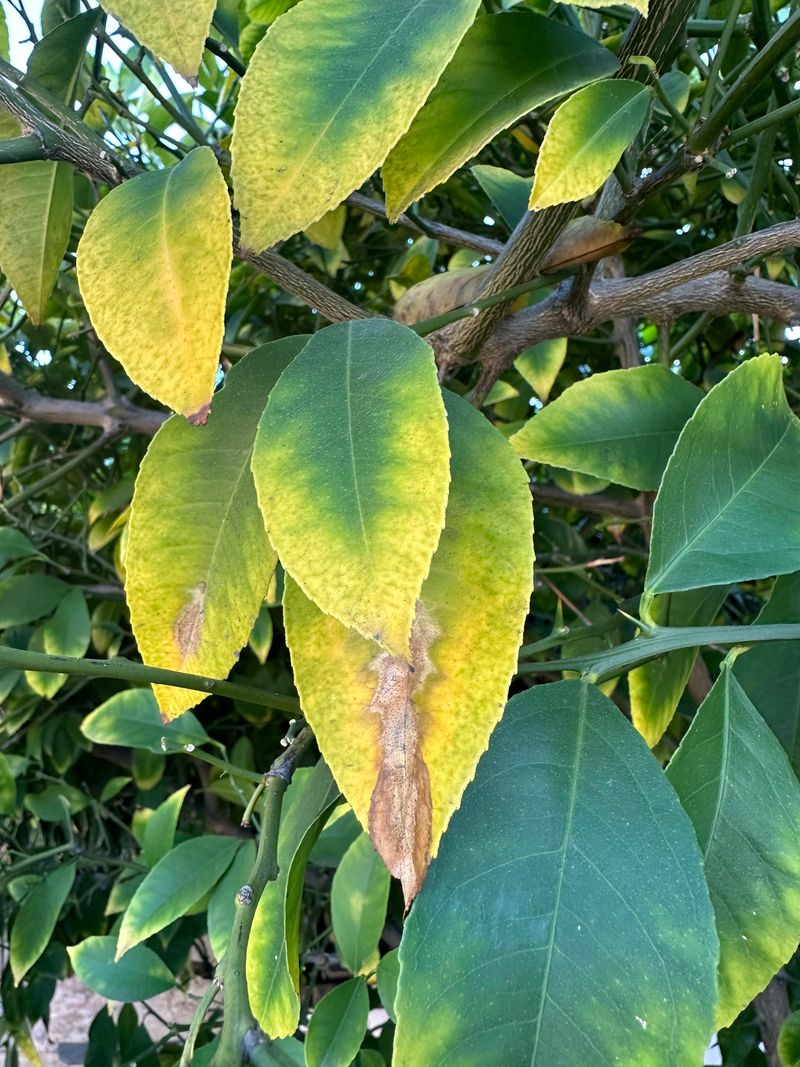
The result is broad, even yellowing across older leaves, often with slight leaf curl.
Overwatering looks surprisingly similar. Waterlogged soil squeezes out air pockets, roots suffocate, and the leaves fade to a dull lemon-lime shade while the soil stays damp for days.
Here is the simple test: push a screwdriver or your finger four inches into the soil under the canopy. Damp means wait, dry and crumbly means water deeply.
Aim for slow, thorough soakings that wet the top 18 inches, roughly once a week in September for in-ground trees and more often for containers. Build a shallow basin at the drip line so water sinks straight down instead of running toward the sidewalk.
Mulch helps enormously. Spread two or three inches of wood chips from about six inches away from the trunk out to the branch tips, keeping the trunk itself bare and breathing.
Within three or four weeks of steady moisture, new growth usually emerges a healthy deep green, and the older pale leaves stop spreading their message of distress.
2. Nitrogen Ran Out After A Heavy Fruiting Season
Picture your lemon tree as an athlete finishing a marathon. It spent spring and summer pumping out blossoms, then fruit, and by September the fuel tank reads close to empty.
Nitrogen goes first because it moves around inside the plant. When supplies run short, the tree pulls nitrogen out of its oldest, lowest leaves and sends it to young growth and developing fruit.
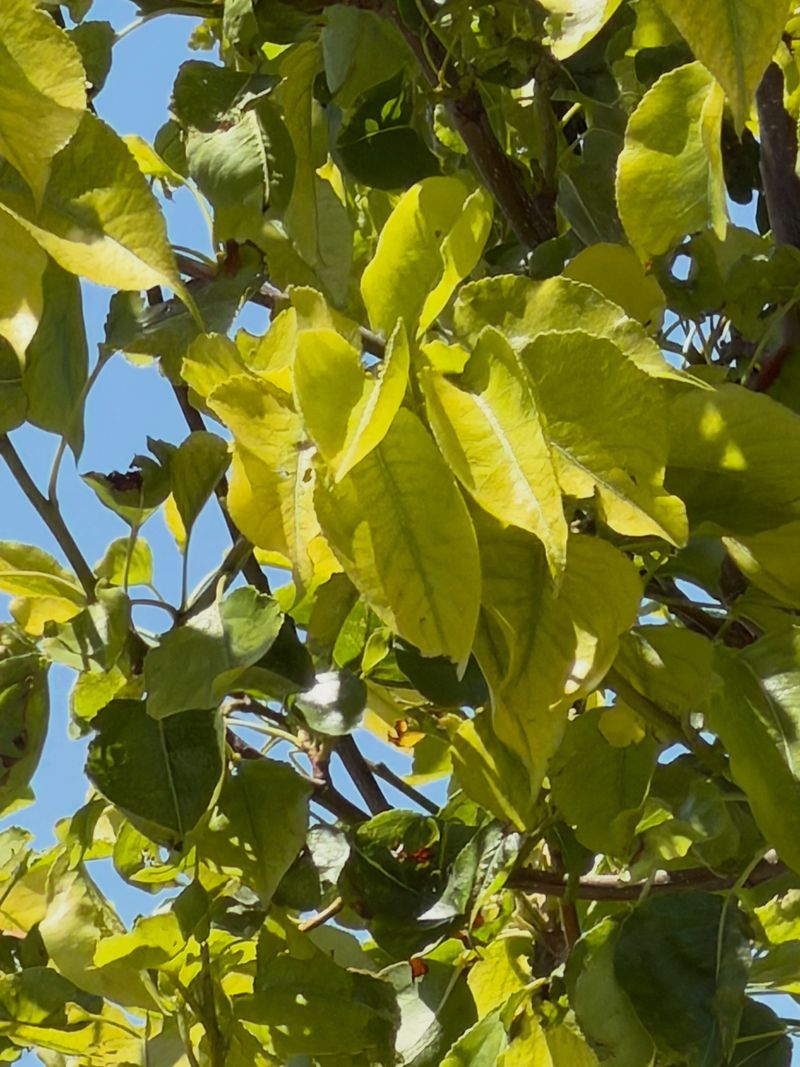
Those sacrificed leaves turn a uniform pale yellow, veins included, and eventually drop. Sandy soils common in Southern California make the problem worse, since nitrogen leaches out quickly with every deep watering.
Use a citrus-specific fertilizer with a nitrogen-forward ratio plus minor nutrients like zinc, iron, and manganese. Feed lightly in early September, since a heavy dose this late pushes tender shoots that struggle once nights cool down.
Your California Garden Changes Every Week. Your Plan Should Too.
Gardening in California changes quickly throughout the season. Every Friday you’ll receive a simple weekly plan showing exactly what to plant, prune, fertilize, harvest, and protect so you never miss the right timing.
Scatter granules evenly over moist soil from a foot away from the trunk out past the drip line, then water it in well. Liquid fish emulsion or a diluted balanced feed works nicely for potted trees, applied every two to three weeks through October.
Compost is your long game. A one-inch topdressing each fall feeds soil microbes that release nutrients slowly and steadily all year.
Long before bagged fertilizer existed, early California growers leaned on manure and cover crops to keep soil fertile.
3. Iron Cannot Move Through Alkaline California Soil
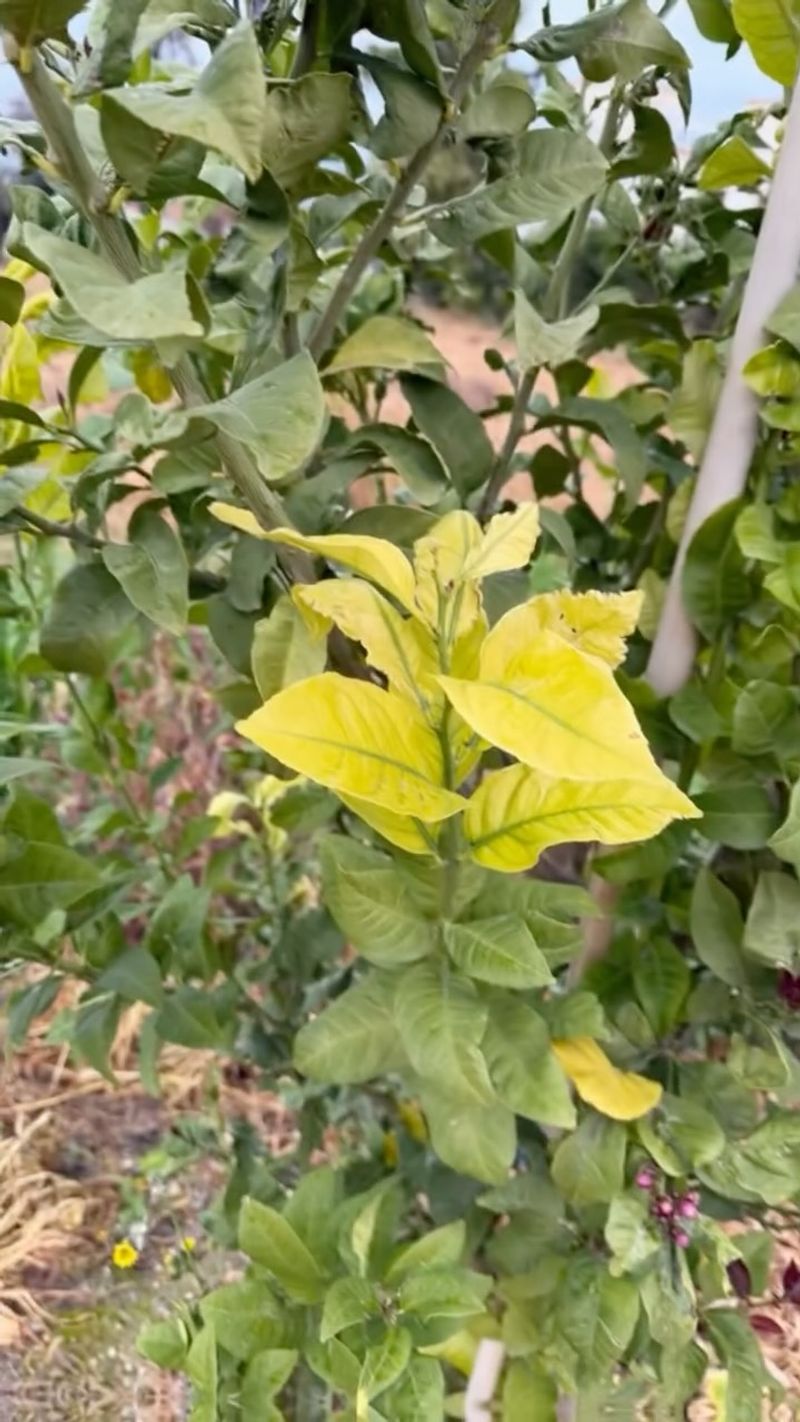
Bright yellow leaf with dark green veins standing out like a road map? That signature pattern points straight at iron chlorosis, and much of California soil practically invites it.
Much of California’s inland soil sits at a pH of 7.5 or higher, especially where caliche layers and hard tap water are common.
Iron exists in that soil, plenty of it, but alkaline chemistry locks the mineral into forms roots cannot absorb. The tree starves while surrounded by food.
September makes symptoms pop because new flushes of growth emerge on depleted reserves and heat-stressed roots absorb even less.
Quick relief comes from chelated iron, specifically the EDDHA form, which stays available at high pH. Water it into the root zone and repeat in about a month if the color stays washed out.
A foliar spray on a cool, overcast morning greens leaves within a week or two, though the effect fades since it does not fix the soil.
For lasting change, acidify gradually. Soil sulfur applied in fall, plus regular compost and a mulch of pine needles or oak leaves, nudges pH downward season by season.
Also check your irrigation source. Hard, salty water raises pH over time, so occasional deep flushing with a longer soak helps push accumulated salts below the roots.
Buy a cheap soil pH test kit before you treat anything. Guessing wastes money, while a two-minute test tells you exactly what your tree is up against.
4. Heat Waves Left Behind Bleached, Sunburned Foliage
Anyone who lived through a 105-degree September afternoon in the Central Valley knows how quickly leaves surrender their color. Lemon trees do not sweat, so they close their pores and simply endure.
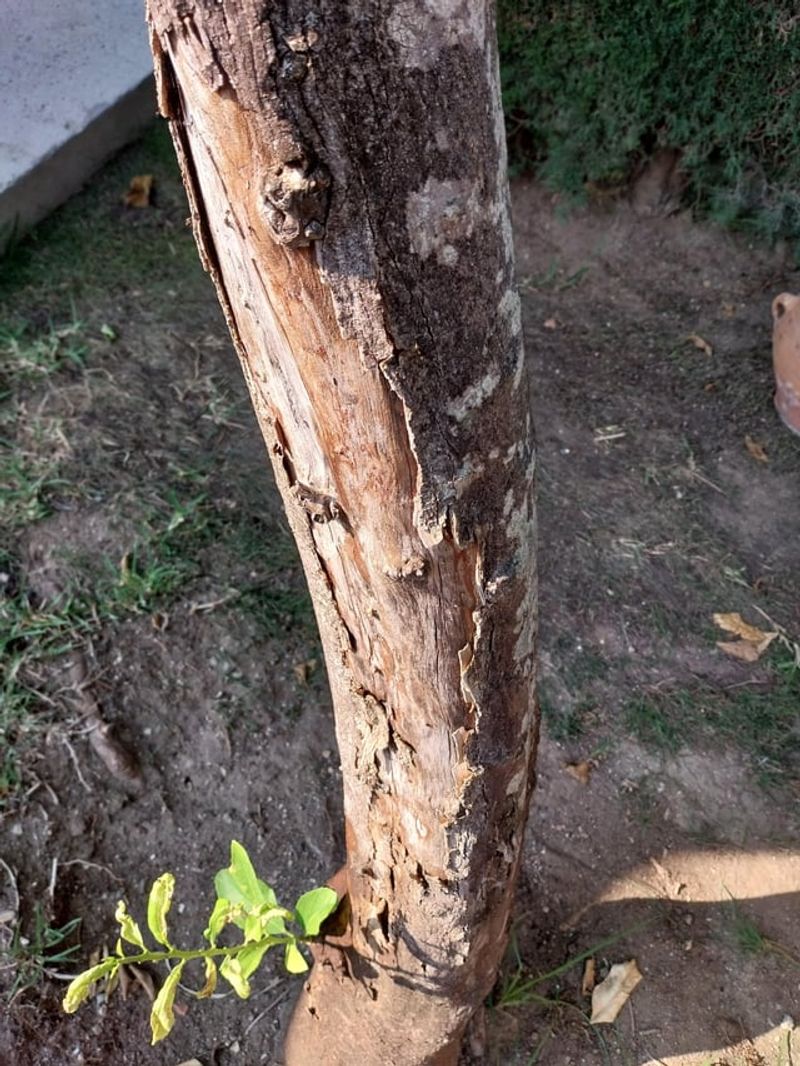
During extreme heat, chlorophyll breaks down faster than the tree can rebuild it. Leaves on the south and west sides go pale yellow first, sometimes with papery tan patches in the middle where tissue got scorched outright.
Exposed bark suffers too. Sunburned trunks develop cracked, flaky areas that interfere with the flow of water upward, which shows up as yellowing higher in the canopy weeks after the heat passed.
Recovery starts with shade and moisture. A 30 to 40 percent shade cloth draped over the sunniest side during forecast heat spikes lowers leaf temperature noticeably, and it stores easily until next year.
Paint exposed trunks and major limbs with white latex paint diluted half and half with water. This trick dates back to early California orchards, and it still works well as reflective sunscreen.
Resist the urge to prune bleached leaves off right away. Even faded foliage shades the branches underneath, so leave it until spring growth takes over the job.
Water deeply the day before a heat wave arrives rather than mid-afternoon during it. A well-hydrated tree handles 100-degree weather far better, and the leaves that emerge in October usually come back rich green with no extra fuss.
5. Tiny Sap Suckers Are Draining Leaves From Underneath
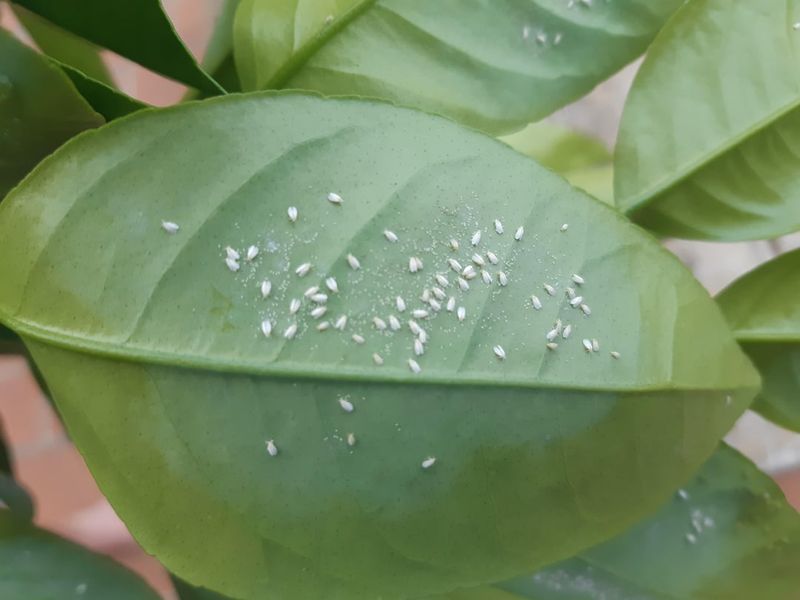
Flip a yellowing leaf over. If you spot fuzzy white specks, sticky shine, or a parade of ants marching up the trunk, you found your culprit without needing a lab.
Aphids, mealybugs, scale, whiteflies, and spider mites all peak in late summer. Each one siphons sap, leaving yellow stippling, curled edges, and sticky honeydew that turns black with sooty mold.
Ants complicate everything. They farm these insects for honeydew and chase off the ladybugs and lacewings that would otherwise handle the problem for free.
Start with water pressure. A firm spray under the leaves, repeated every few days, knocks down mites and aphids surprisingly well.
Follow with insecticidal soap or horticultural oil applied in early morning or evening, coating leaf undersides thoroughly and skipping days above 90 degrees so foliage does not burn. Two or three treatments spaced a week apart break the breeding cycle.
Block the ants with a sticky barrier around the trunk or bait stations nearby, then let natural predators return. Releasing ladybugs works better once the ant highway shuts down.
Keep an eye on suckers sprouting below the graft line, since soft new shoots act like insect hotels. Snap them off whenever you see them, and your canopy gets noticeably less crowded with unwanted guests.
6. Root Rot Sneaks In Where Drainage Fails
Sometimes the trouble hides two feet below the mulch. Trees with root problems look thirsty on top, which fools people into watering more and deepening the trap.
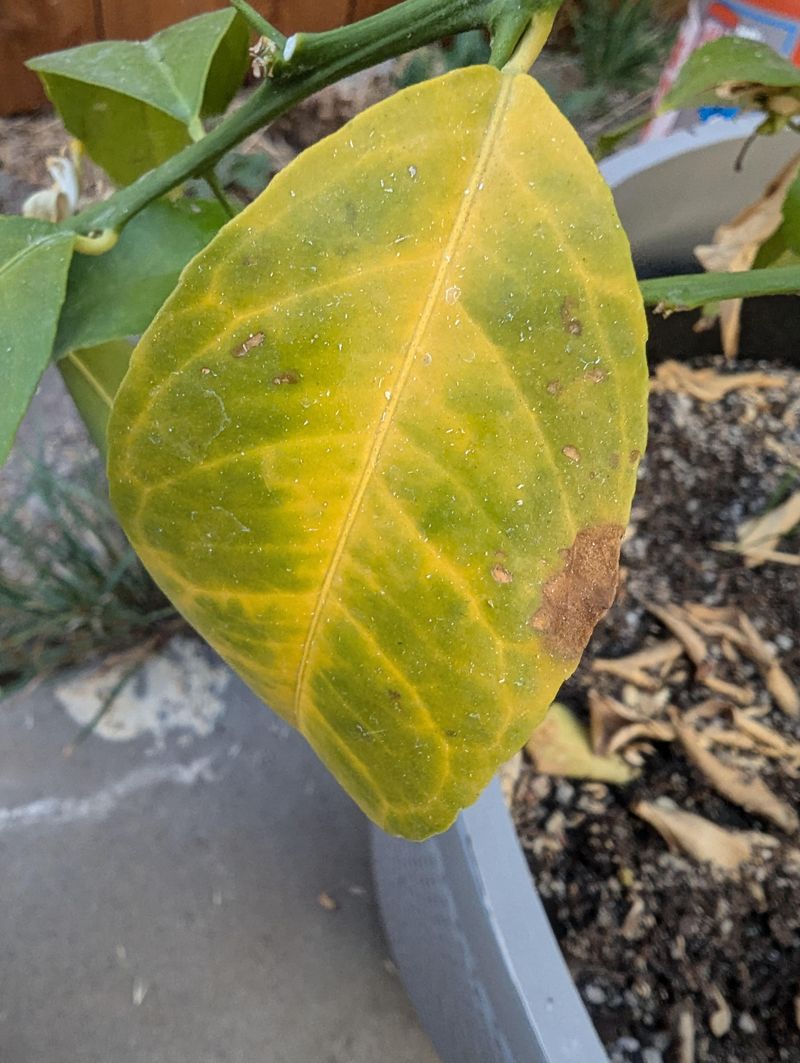
Phytophthora, a water-loving soil organism, thrives in heavy clay and poorly drained beds. Infected roots turn dark and mushy instead of firm and cream-colored, and the canopy responds with dull yellow leaves, thin growth, and fruit that stays small.
Watch for gummy ooze or dark staining near the base of the trunk, a classic warning sign called gummosis.
Drainage fixes matter more than any spray. Pull mulch back from the trunk, clear soil piled against the bark, and let that crown dry out and breathe.
Test drainage by digging a foot-deep hole nearby and filling it with water. If it still holds water after several hours, you have a real problem worth solving.
Raising the planting area helps enormously. Building a wide mound or berm eight to twelve inches high gives roots an oxygen-rich zone above the soggy layer, and it is easier than replacing an entire yard of clay.
Move sprinkler heads so they never spray the trunk directly, and switch to drip emitters placed out at the drip line. For potted lemons, upgrade to a fast-draining citrus mix and confirm the drain holes are not blocked.
Recovery takes patience, often a full season, but new green flushes are the sign your changes took hold.
7. Seasonal Leaf Shedding That Needs No Rescue
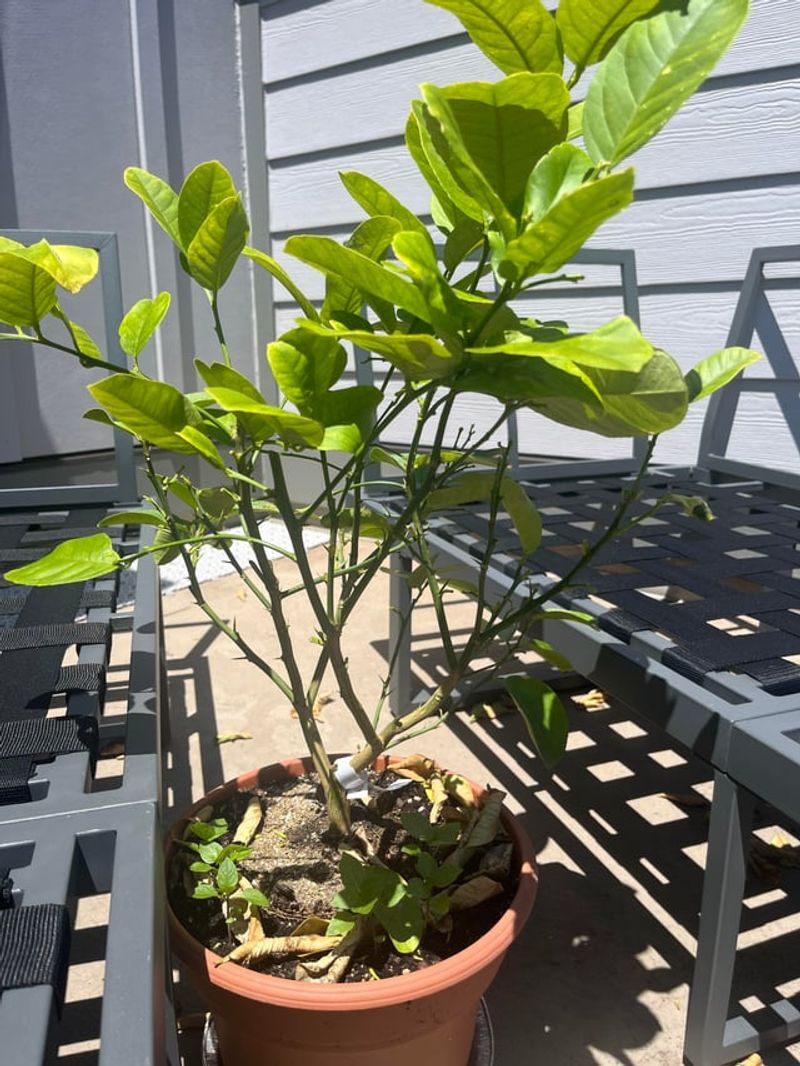
A handful of yellow leaves in September can be totally normal. Lemon trees are evergreen, but evergreen never meant every leaf lasts forever.
Individual citrus leaves live roughly two to three years before retiring. Older interior leaves, the shaded ones tucked deep inside the canopy, tend to yellow and drop as autumn light angles change and the tree shifts energy into ripening fruit.
Trees carrying a big crop shed more than usual, simply reallocating resources toward the lemons you actually want.
How do you tell normal from trouble? Location and quantity. Scattered yellowing on old inner leaves while outer growth stays glossy and dark green means your tree is just housekeeping.
Widespread yellowing on new growth, distinct patterns like green veins, or leaf drop paired with wilting deserves investigation using the earlier sections.
Take a photo of your tree every few weeks. Comparing images beats relying on memory, and you will spot real trends instead of panicking over five leaves.
Keep doing the boring basics: steady deep watering, mulch out at the drip line, a light fall feeding, and a quick pest check under leaves each month. Those habits handle most September color changes before they escalate.
Then step back and enjoy the season. Fruit is swelling, the air smells like citrus blossom memories, and your tree is doing exactly what California lemon trees have done for over a century.
8. Magnesium Deficiency Paints A Green Triangle Near The Leaf Stem
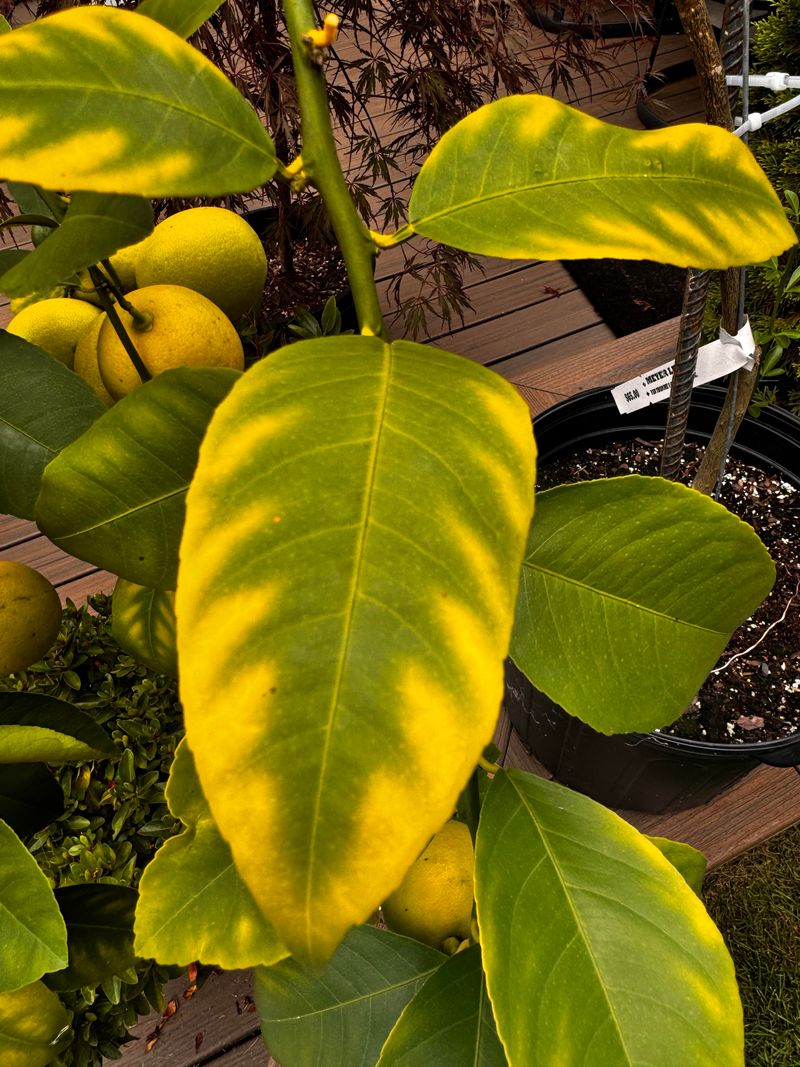
Look closely at older leaves near the canopy’s base, since magnesium deficiency often paints a green triangle near the stem while the edges fade yellow. This mineral moves freely inside the plant, so the tree strips it from mature leaves first.
Sandy, well-drained soils lose magnesium fast with every watering cycle, and heavy potassium fertilizing earlier in the season blocks what remains. The pattern intensifies in September as ripening fruit pulls hard on stored nutrients.
A foliar spray of Epsom salt dissolved in water greens up leaves within two to three weeks. Apply it early in the morning to avoid leaf scorch.
For a longer fix, work granular Epsom salt into the soil at the drip line every six weeks through fall. Taper off once the tree settles into winter dormancy.
Ease off extra potassium fertilizer during this window, since the two minerals compete for uptake in the roots. Flooding the soil with one nutrient crowds out the other.
A basic soil test tells magnesium shortage apart from iron chlorosis, since both cause yellowing but call for different fixes. Container-grown lemons need this feeding schedule even more, since frequent watering flushes nutrients out fast.
Healthy magnesium levels keep leaves a deep, even green well into the colder months ahead. Watch for the same pale triangle pattern returning each fall if soil levels aren’t topped back up.
Epsom salt is inexpensive and low-risk, making it worth trying even before a lab test confirms the diagnosis.