Grow Fresh Asparagus In Your Arizona Garden And Harvest Tender Spears For Over A Decade
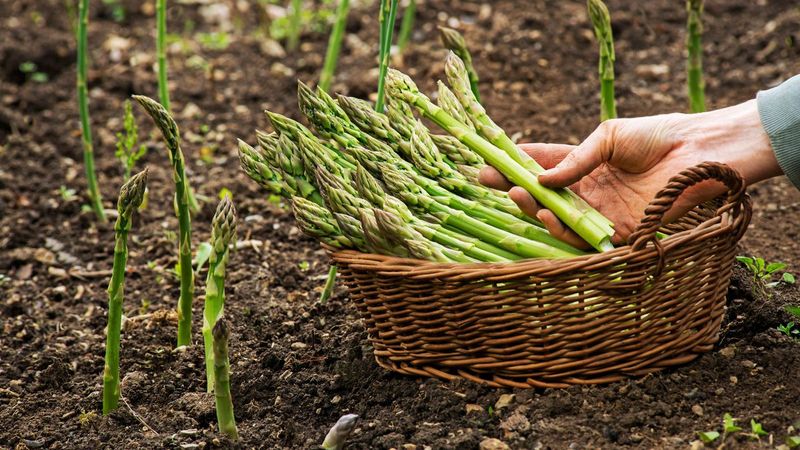
Asparagus is one of the few vegetables you plant once and keep harvesting from for years, and Arizona gardeners can absolutely make it work. A well-tended bed of edible Asparagus officinalis in the low desert can produce tender spring spears for a decade or longer, though that reward takes real preparation and consistent care.
The heat, the alkaline soil, and the dry summers all need to be addressed honestly before the first crown goes into the ground. Get those pieces right, and you have a permanent garden fixture that pays you back every spring.
Arizona asparagus rewards patience with a long-lived harvest bed
Asparagus is not a crop you harvest weeks after planting. Edible Asparagus officinalis is a perennial, and in an Arizona garden, that distinction matters enormously because the plant needs time to build root reserves before it can feed you reliably.
Production develops gradually across the first two to three seasons, and a well-maintained Arizona bed may remain productive for 15 years or longer, though yields will not be identical from one spring to the next.
Arizona gardeners should understand upfront that “over a decade” describes what a carefully managed bed can achieve, not a guaranteed outcome for every planting. NC State Extension’s home asparagus guide notes that beds can last 15 years or more with proper care, while some USDA materials report potential lifespans approaching 30 years for commercial plantings, though commercial beds commonly end production before 20 years.
Longevity depends on cultivar selection, drainage quality, weed pressure, irrigation consistency, disease management, and harvest discipline.
Yields typically increase during the establishment years, peak during the middle of the bed’s life, and may decline as the planting ages or disease accumulates. “Tender” spears are also a matter of harvest timing, not bed age alone. Asparagus fiber develops quickly after the spear is cut, so harvesting at the right stage and cooling spears promptly are just as important as any soil preparation step.
Asparagus officinalis is the edible species Arizona gardeners want. Several ornamental “asparagus fern” plants share the genus name but have very different growing requirements, and Yavapai County’s Arizona plant database distinguishes Asparagus officinalis clearly from those ornamental relatives.
Starting with the correct species is the first step toward a productive Arizona bed.
Choose a permanent Arizona site and a heat-suitable cultivar
Picking the right spot in an Arizona garden before ordering crowns saves a lot of frustration later. Mature asparagus ferns can reach roughly 5 to 6 feet tall, and in an Arizona yard those feathery fronds will shade whatever is planted nearby.
University of Arizona Cooperative Extension recommends placing the asparagus bed on the north or east side of the garden when practical, so the ferns shade a wall or fence rather than neighboring vegetables.
The Arizona light question is more nuanced than the standard “full sun” advice given in general asparagus guides. Strong morning light supports vigorous fern growth, which is essential for crown health.
However, in the extreme low-desert heat of Phoenix and Tucson, some protection from the harshest afternoon sun can reduce heat stress on the foliage without pushing the bed into deep shade. The goal is enough light for robust photosynthesis, not a shaded corner where ferns struggle.
Your Arizona Garden Changes Every Week. Your Plan Should Too.
Gardening in Arizona changes quickly throughout the season. Every Friday you’ll receive a simple weekly plan showing exactly what to plant, prune, fertilize, harvest, and protect so you never miss the right timing.
Cultivar selection is critical in Arizona because not every variety handles the desert summer well. University of Arizona Cooperative Extension’s asparagus guide identifies UC 157 as probably the best variety for Arizona’s climate and also lists Jersey Giant and Jersey Knight as options worth considering.
Some older Washington-type varieties have not performed well in Arizona’s summer heat conditions, so check variety suitability before purchasing.
For the crowns themselves, healthy one-year dormant crowns from a reputable supplier give the most reliable start. Nursery labels sometimes list “two-year” or “three-year” grades, but University of Arizona notes those designations often describe crown size rather than actual plant age.
A larger crown is not necessarily an older or more vigorous plant, so focus on quality and source reputation rather than grade number alone. Spacing requirements for a mature Arizona asparagus bed also mean that crowding in extra plants rarely pays off: permanent access, airflow, and room for the root system matter far more than fitting a few extra crowns into the row.
Test the root zone before you plant into Arizona soil
Alkaline soil alone does not automatically rule asparagus out of an Arizona garden. The more consequential problems are poor drainage, caliche hardpan, soil compaction, salinity, and restricted root depth.
Any one of those conditions can undermine crown health over time, so evaluating the actual root zone before planting protects the investment of time and money that a permanent asparagus bed requires.
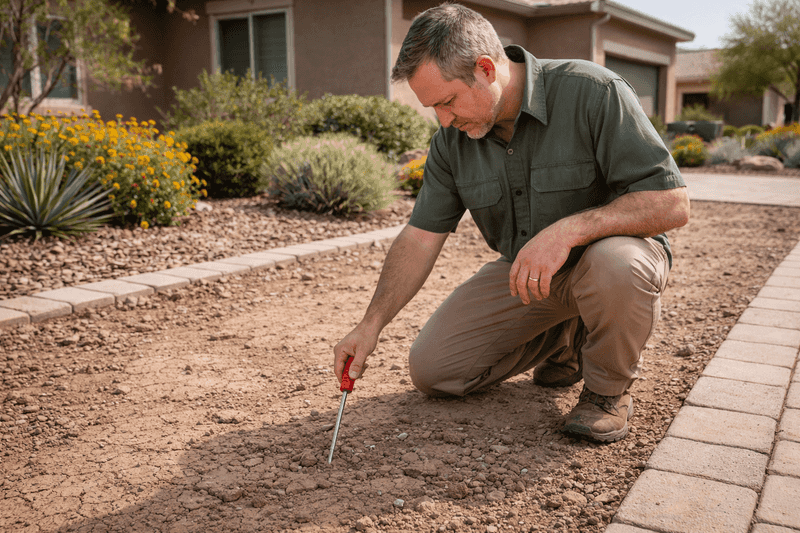
A simple drainage test tells you whether the site can support asparagus roots. Dig a hole about 12 inches deep, fill it with water, and watch what happens over four hours.
University of Arizona’s caliche quick guide states that water should drop at least 4 inches in four hours for adequate drainage. If the water barely moves, a caliche layer or compacted clay is likely restricting drainage, and planting directly into that spot without remediation risks waterlogged roots and crown rot.
When caliche is shallow and limited in area, breaking through it with a pickaxe or auger can open a pocket for roots to penetrate. Larger or deeper caliche layers may require mechanical tools or make native-soil planting impractical.
In those cases, a raised bed with suitable edible-garden materials gives you control over soil texture and drainage depth. University of Arizona school garden planning materials caution that metal or concrete raised beds can heat the soil significantly in Arizona summers, which can stress asparagus roots, so material choice matters.
Raised beds are useful tools for controlling the root zone, but they are not automatic water-saving devices. Arizona’s heat and low humidity mean raised beds often dry faster than in-ground beds, so moisture monitoring becomes more frequent, not less.
Improving drainage and root depth is a different task from correcting soil pH. Arizona’s calcareous soils are difficult to acidify permanently, and relying on compost or sulfur alone to change pH is not a reliable long-term strategy.
Focus remediation efforts on drainage and physical root-zone quality, and use a soil test from New Mexico State University Extension’s asparagus production guide recommendations as a baseline for fertility rather than pH adjustment alone.
Plant crowns carefully during the local Arizona window
Timing the planting correctly in Arizona depends heavily on where in the state the garden sits. Low-desert gardeners in the Phoenix metro area follow the Maricopa County planting calendar, which lists asparagus crown planting from January through mid-April.
The planting method matters as much as the timing. Dig individual holes or a continuous furrow about 10 to 12 inches deep.
Place each crown with the bud cluster pointing upward and the roots spread outward in a natural fan shape rather than bunched or folded. Space crowns approximately one foot apart within the row, and leave four to five feet between rows to accommodate mature fern spread and allow access for weeding, mulching, and harvest.
Backfilling all at once is a common mistake. Instead, cover the crowns with just two to three inches of soil at planting, then add more soil gradually as the first shoots emerge and grow.
University of Arizona’s asparagus guidance describes this progressive filling approach as the standard method for establishing crowns. The technique avoids burying young growth and lets the plant set its depth naturally as it establishes.
Permanent layout decisions made at planting day are difficult to undo later. The irrigation system, access paths, and row orientation all need to fit the mature bed, not just the small crowns going in the ground.
Fitting extra crowns into a tight space to maximize production usually results in overcrowded ferns, reduced airflow, and harder-to-manage weeds. Give the planting room to grow into its full Arizona footprint from the start.
Build strong crowns by protecting summer fern growth
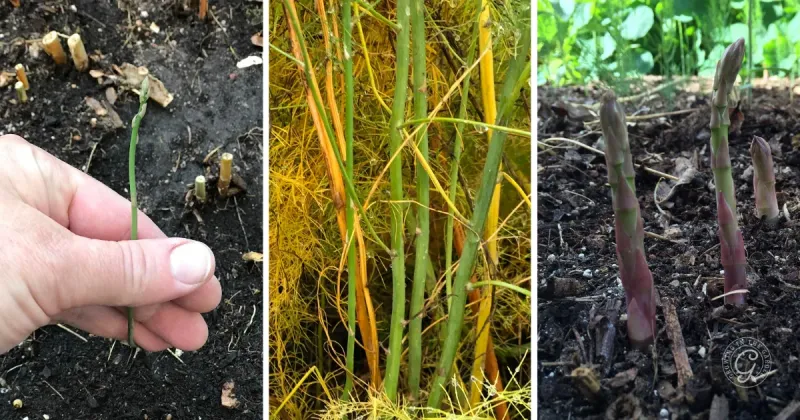
The harvest schedule for a new Arizona asparagus bed requires real restraint. Skip the harvest entirely during the first year so every emerging spear can become fern.
A light, brief harvest may be appropriate in the second year only if the plants are growing vigorously, but that decision should be made conservatively. Regular harvesting begins around the third spring, once the crowns have had adequate time to store energy reserves.
University of Minnesota Extension’s asparagus planting guide explains that unharvested spears develop into fern-like foliage that photosynthesizes and replenishes the carbohydrates stored in the crown, directly fueling the following year’s spear production.
Summer fern care is the most demanding and most overlooked part of growing asparagus in Arizona. Once the harvest window closes, the ferns must grow vigorously through the hottest months.
Drought stress during fern development reduces the size and number of spears the following spring. Irrigation frequency should be adjusted based on soil texture, weather, and delivery method rather than following a rigid calendar.
UC IPM’s desert-region guidance suggests watering roughly every 10 to 14 days in spring and every 7 to 10 days during summer, with each irrigation wetting several feet of soil depth. Drip emitters work well in Arizona because they deliver water directly to the root zone and reduce evaporation, but they require regular monitoring for clogging or uneven distribution.
Weed competition during the fern period is a serious threat to Arizona asparagus beds. Weeds compete directly for water and nutrients during the season when the crowns most need both.
A four- to six-inch layer of straw, hay, or leaf mulch suppresses weeds and conserves soil moisture, but keep the mulch pulled back slightly from the base of the crowns and stems to reduce rot risk and minimize pest habitat.
Asparagus roots run deep, which gives the plants some ability to access subsoil moisture, but that depth does not make them drought-proof in an Arizona garden. Water stress weakens the ferns and reduces crown reserves.
Saturated soil from overwatering or poor drainage creates a different but equally damaging problem. The goal in Arizona is consistent, deep moisture without waterlogging, adjusted as temperatures climb through summer.
Harvest spears briefly and preserve the next crop
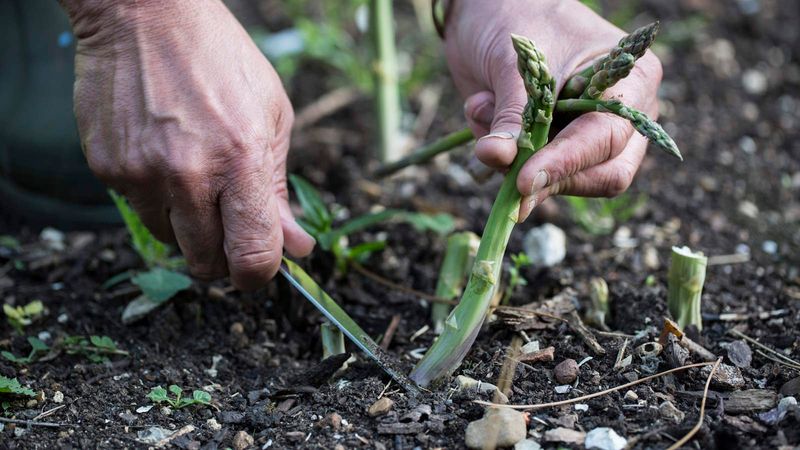
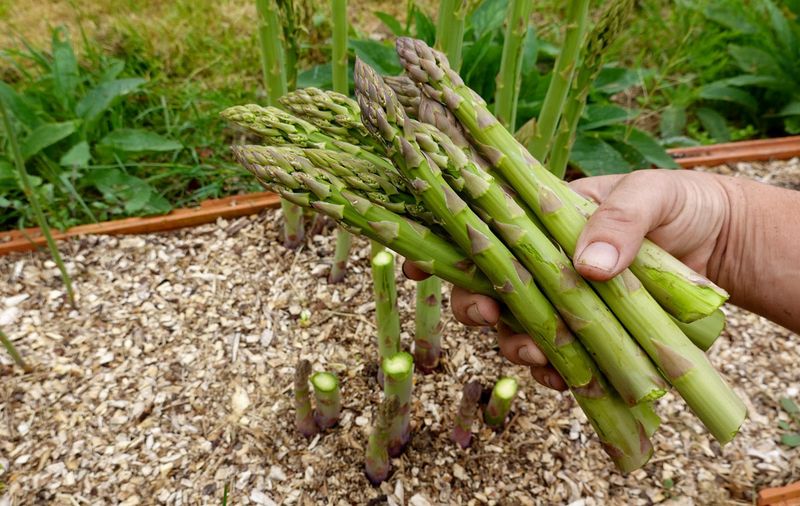
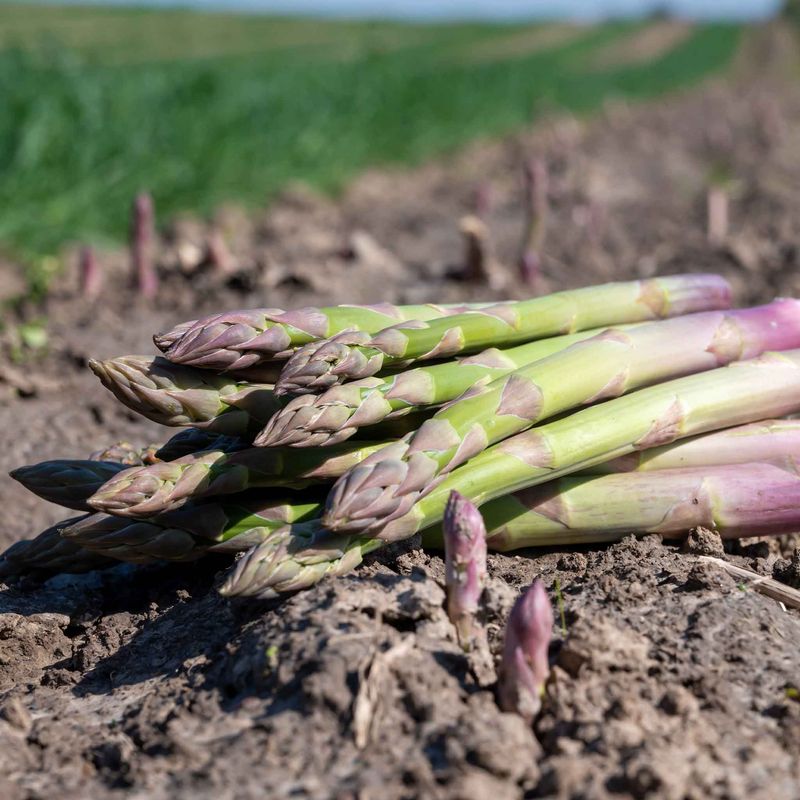
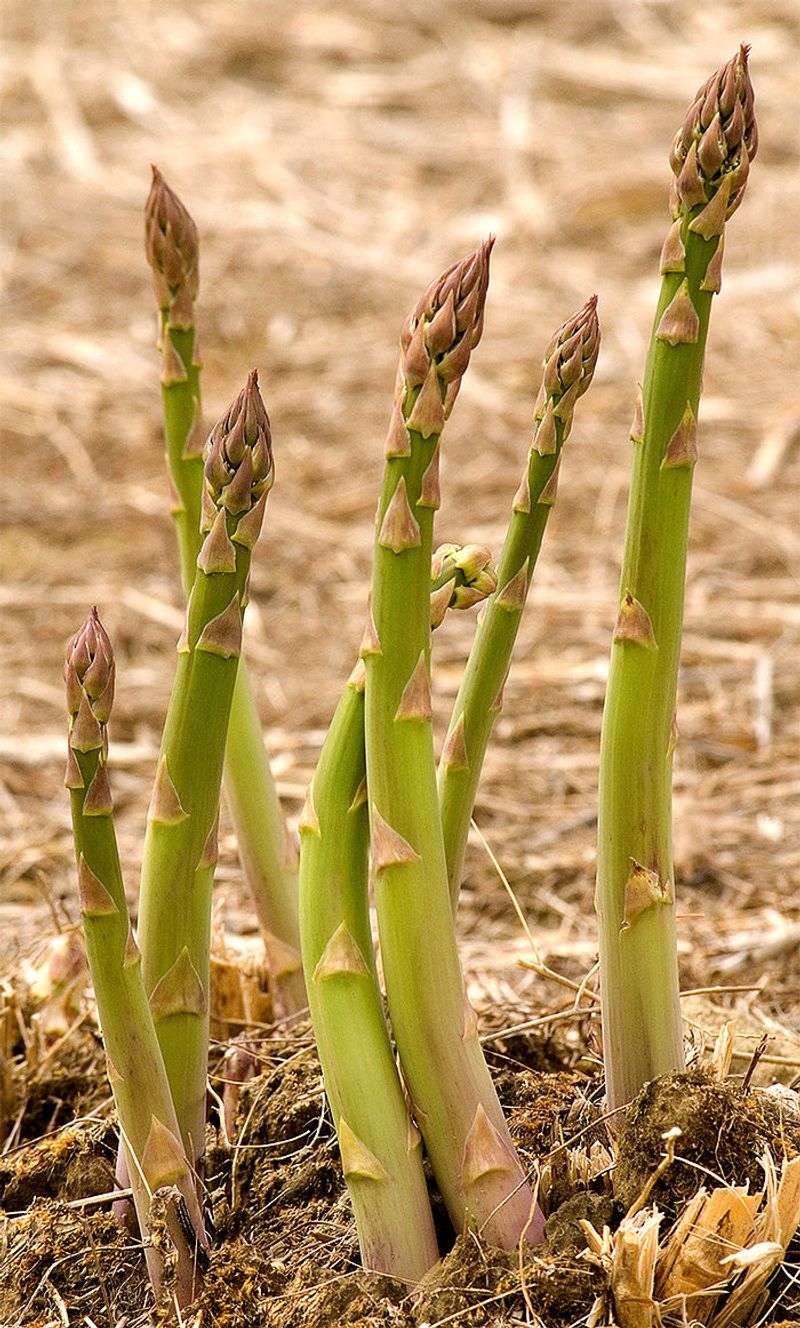
A mature Arizona asparagus bed rewards patience with a genuine spring harvest, but the length of that harvest window is one of the most important variables under the gardener’s control. Harvest spears when they reach about 6 to 10 inches tall and the heads are still tightly closed.
At that stage, the spears are firm, tender, and at peak quality. Once the head begins to open and the tip starts to fern out, the spear has passed its best eating stage and should be left to develop into foliage rather than cut.
Continuing to harvest past those signals removes resources the plant needs to fuel fern growth and replenish reserves for next season.
Cutting technique also affects the plant. Snap or cut spears at or just below the soil surface rather than deep into the crown.
Some gardeners prefer snapping because it naturally breaks at the point where tenderness ends, reducing the need to trim tough bases later. Either method works in an Arizona garden as long as the cut is clean and the crown tissue below is left undisturbed.
Spear quality drops quickly after harvest because asparagus fiber develops rapidly once the spear is cut. Cooling or refrigerating spears as soon as possible after picking preserves tenderness.
In Arizona’s warm spring mornings, that means moving harvested spears into a cool space within an hour or two of cutting. The end of the harvest window is not a disappointment but a transition: stopping on time is what allows the ferns to grow strongly through the Arizona summer and sets up the following spring’s crop.
Maintain the bed through dormancy and changing yields
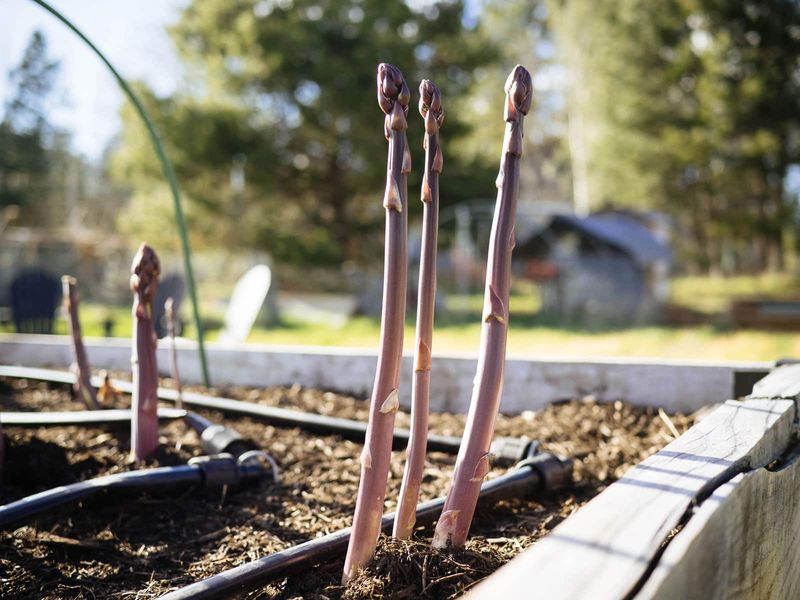
After the harvest ends and the ferns finish their summer growth, Arizona asparagus enters a dormant period. The timing of that dormancy in the low desert differs from colder climates because Phoenix and Tucson winters are mild enough that foliage may not yellow until late fall or early winter.
Leave the ferns standing as long as they remain green, because cutting green foliage interrupts the movement of nutrients back into the crown before the plant has finished storing them.
Remove the ferns only after they have fully yellowed or browned. Clearing dormant foliage reduces overwintering sites for insects and fungal disease, which matters in an Arizona bed that will stay in place for many years.
Cut the old stems close to the ground and remove the debris from the bed rather than leaving it to decompose in place where it can harbor problems. After cleanup, top-dress with compost and check that the mulch layer is still adequate for the coming season.
A favorable Arizona home bed may remain productive for 15 years or longer, but annual harvests will vary with weather, care quality, and the gradual aging of the crowns. Cultivar choice, drainage, consistent irrigation, weed control, disease pressure, and harvest restraint all shape how long and how well the bed performs.
The practical decision rule for Arizona gardeners is straightforward: grow asparagus where you can protect a permanent root zone, maintain adequate drainage, and keep the ferns irrigated through summer. A bed that gets those basics right has a genuine chance at a decade-plus harvest.
One that does not will struggle regardless of how carefully the crowns were planted. Asparagus asks for a long-term commitment, and in Arizona, the gardeners who treat it that way are the ones still harvesting spears years down the road.