Why California Persimmon Trees Need A Different Kind Of Fall Care
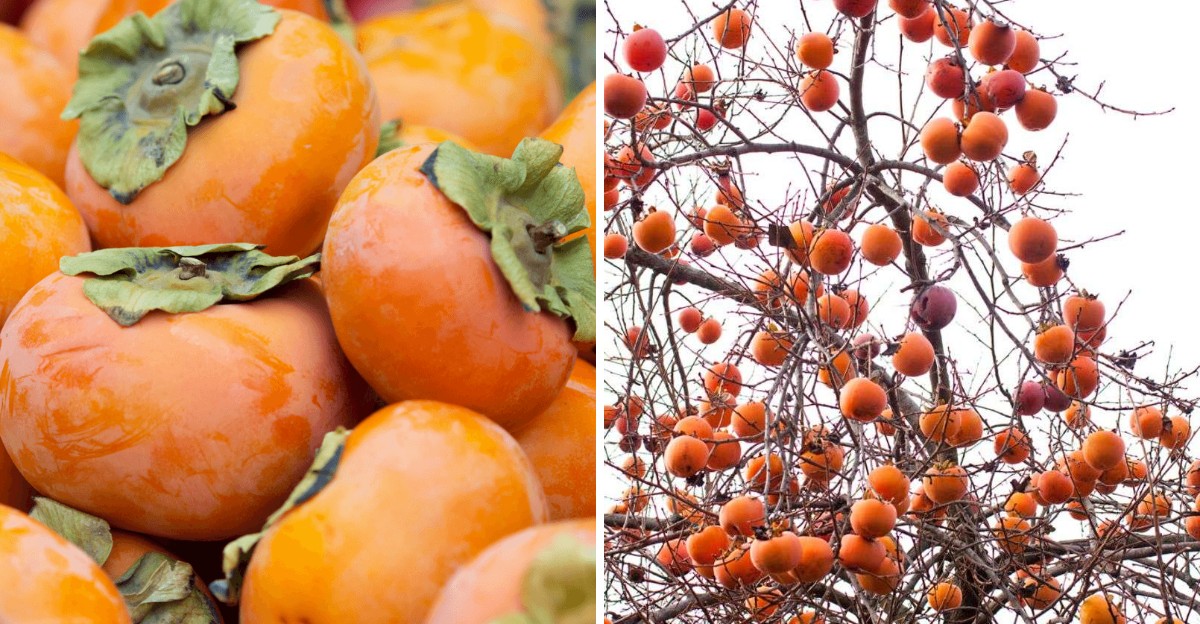
Your persimmon tree just did something that looks like a crisis but isn’t one at all.
Leaves turning bright orange, raining down onto the lawn in sheets, while the branches still sag with heavy orange fruit. Plenty of owners stand there staring, genuinely unsure what happens next.
Here’s the thing nobody explains at the nursery. Persimmons run on their own calendar entirely, and caring for one in California looks nothing like caring for an apple or citrus tree nearby.
Leaves drop on schedule. Water needs shrink fast. Harvest timing depends entirely on whether you’re growing a soft-when-ripe Hachiya or a crisp, apple-like Fuyu.
Get any of that backward, and you either bite into something that puckers your whole mouth or lose a season’s fruit to birds before you even notice.
Eight shifts explain exactly what your tree needs right now, and why the timing matters more than almost anything else you’ll do this fall.
Curious which variety is hanging on your own branches, and what that actually means for harvest day? It starts with a carpet of leaves you shouldn’t worry about at all.
1. Deciduous Leaf Drop Is Completely Normal
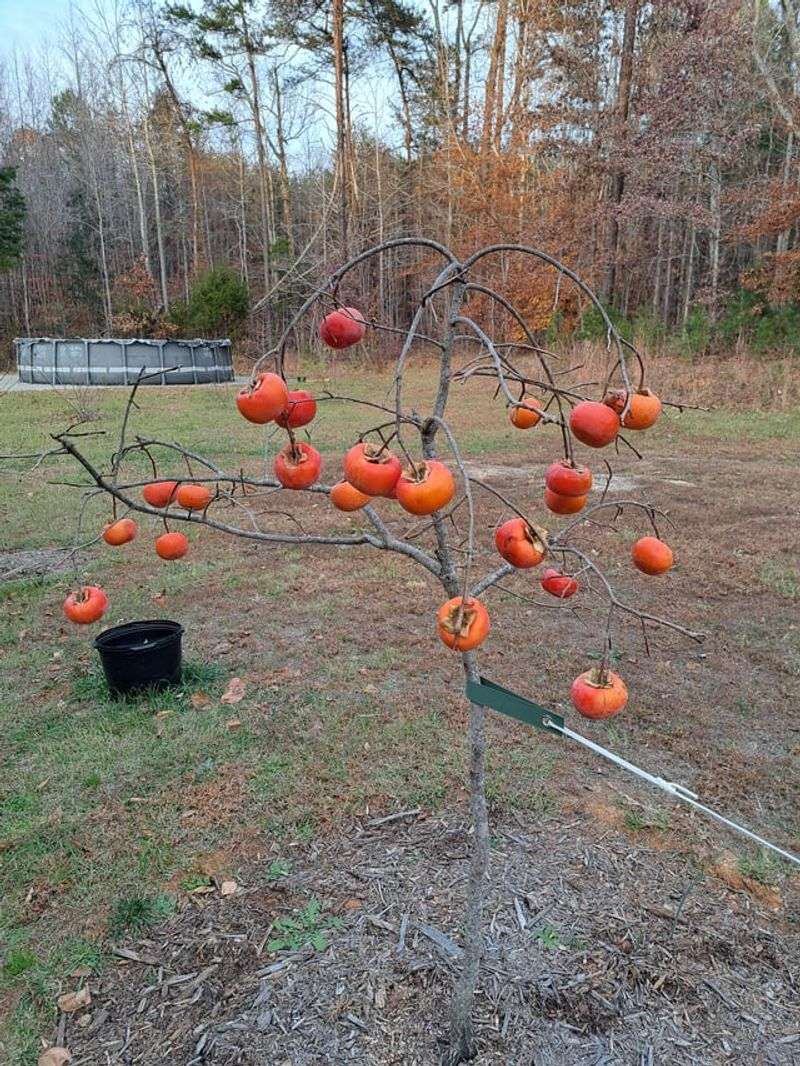
A carpet of orange and scarlet leaves under your tree might make your heart skip for a second. Take a breath first. Persimmons are deciduous, so dropping every leaf in autumn is part of their normal yearly rhythm.
Shorter days and cooler nights tell the tree to pull useful nutrients out of its leaves and store them in the branches and roots instead. Once that work finishes, a thin layer forms where each leaf meets the twig.
The leaf lets go, and the tree seals the spot to protect itself over winter.
Gardeners in warm coastal areas may see this happen later, sometimes stretching into December. Inland valley trees often color up and shed sooner than that.
Many California gardeners notice something odd here too. Fruit often hangs on bare branches long after the leaves are gone, like ornaments on a winter tree.
The look is completely normal and even a little famous, since bare persimmon trees full of fruit are a classic fall sight across the state.
Still, a few clues deserve a closer look. Leaves that brown and drop in midsummer, during a heat wave, can point to water stress rather than the season itself.
Spots, oozing bark, or wilting on only one branch are worth checking with your local Master Gardener program.
Otherwise, grab a rake and enjoy the show. Fallen leaves can go into the compost pile, turning autumn’s mess into next spring’s garden gold.
2. Watering Needs Drop As Leaves Fall
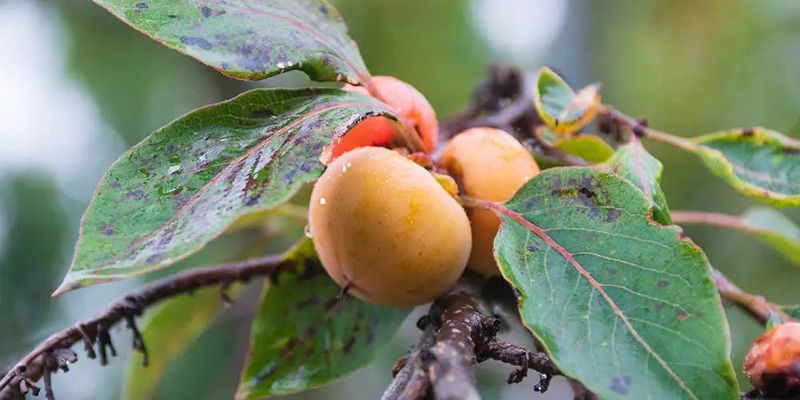
Picture a garden hose running on the same summer schedule in November. Your persimmon would not thank you for that at all. Leaves are the main way a tree loses water, so fewer leaves mean far less thirst.
In summer, a mature persimmon in hot inland valleys may need a deep soak every week or two. As autumn arrives and the canopy thins out, slowly stretch the time between waterings.
Your California Garden Changes Every Week. Your Plan Should Too.
Gardening in California changes quickly throughout the season. Every Friday you’ll receive a simple weekly plan showing exactly what to plant, prune, fertilize, harvest, and protect so you never miss the right timing.
Before turning on the hose, dig down four to six inches with a trowel. Water only when the soil feels dry at that depth. Damp soil tells you the tree can wait a while longer.
Soggy ground in cool weather is a real problem too. Roots sitting in wet, heavy soil can struggle, especially in the clay common across much of California.
Once winter rains show up, you can often turn irrigation off completely. Keep an eye on dry spells, though. California winters sometimes skip the rain for weeks, and a dry January may call for one deep drink.
Fruit still hanging on the tree also matters here. Steady, moderate moisture while the last fruit ripens beats swinging from bone dry to soaked. Mulch spread two to four inches deep, kept away from the trunk, helps hold that steady moisture in place.
Drip systems make the shift easy. Many timers have a seasonal adjust button, so you can cut run times by a percentage instead of reprogramming every zone by hand.
3. Astringent Varieties Need Full Ripening
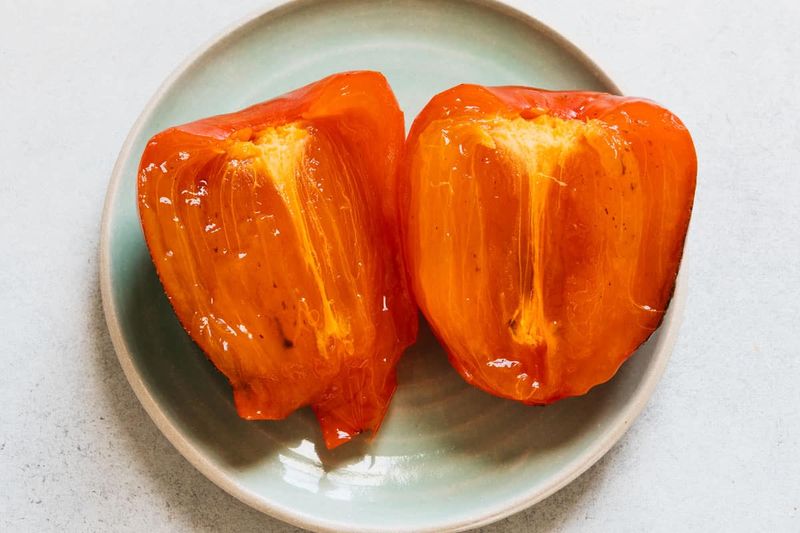
Anyone who’s bitten into an underripe Hachiya remembers it clearly. Your mouth puckers, your tongue feels fuzzy, and the taste lingers like chalky tea. Blame tannins, the same compounds that make strong tea feel dry on the tongue.
Astringent persimmons, including Hachiya, Saijo, and Tamopan, stay loaded with soluble tannins until they soften completely. They’re safe to eat before then, just unpleasant. The flesh must turn soft and jelly-like before the sweetness ever takes over.
Luckily, you don’t have to wait for that stage on the tree itself. Astringent types can be picked once they show full orange color while still firm to the touch. They’ll finish softening indoors at room temperature.
Want to hurry things along? Place the fruit in a paper bag with a ripe apple or banana. Those fruits give off ethylene gas, which speeds softening considerably.
Handle soft fruit gently, since ripe astringent persimmons bruise and split with the lightest squeeze. Set them stem side down on a tray in a single layer.
Patience pays off in the kitchen too. Fully ripe Hachiyas carry a rich, honey-like flavor and work beautifully in breads, puddings, and smoothies. Many cooks scoop the pulp and freeze it for baking later in the year.
Here’s a fun fact worth knowing. In Japan, some growers peel firm Hachiyas and hang them to dry into a treat called hoshigaki. Weeks of gentle massaging help the tannins fade and the flesh turn sugary sweet.
4. Fuyu Types Can Be Eaten Firm
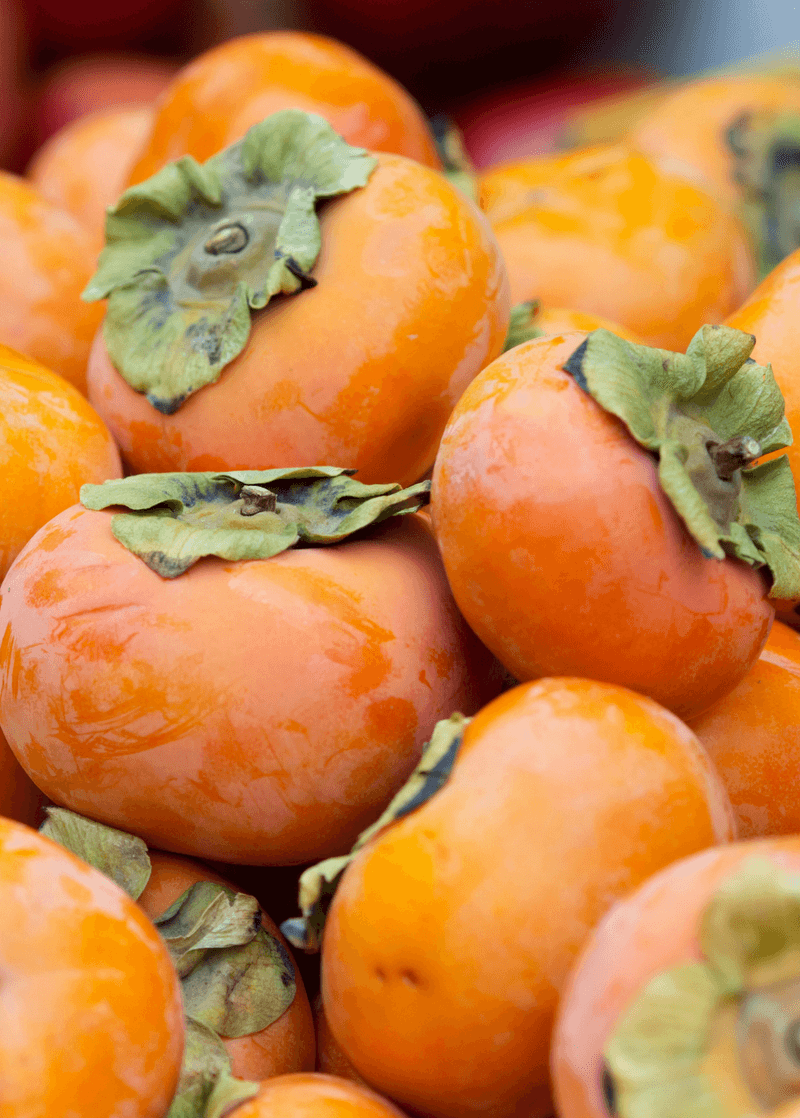
Crunch. Fuyu fans get to skip the waiting game entirely. Non-astringent persimmons lose their puckery tannins while still firm, so you can slice one like an apple and eat it right away.
Fuyu is the best-known non-astringent type in California, along with relatives like Jiro and Izu. The fruit is squat and flat on the bottom, a bit like a tomato. Hachiya, by comparison, runs longer and shaped like an acorn.
Color is your best harvest clue here. Pick Fuyus once they turn a deep, even orange, with little or no green left near the stem. Fruit picked too pale can taste bland and starchy instead of sweet.
Use hand pruners rather than pulling by hand. Clip the stem just above the green cap, called the calyx, and leave the cap attached. Yanking can tear the skin and cut storage time short.
Firm is not the only option, though. A Fuyu left to soften on the counter turns sweeter and silkier, and some people prefer it that way entirely. Try both and see which camp you land in.
Serving ideas are easy to come by. Toss crisp slices into salads with greens and pomegranate seeds, add them to cheese boards, or chop them into a fresh salsa. Kids often like thin crosswise rounds, which show a pretty star pattern in the center.
One caution worth remembering. Mix-ups happen at nurseries and farmers markets. A firm persimmon that makes your mouth pucker is likely an astringent type, so let the rest soften before tasting again.
5. Birds Compete For Fruit Left Too Long
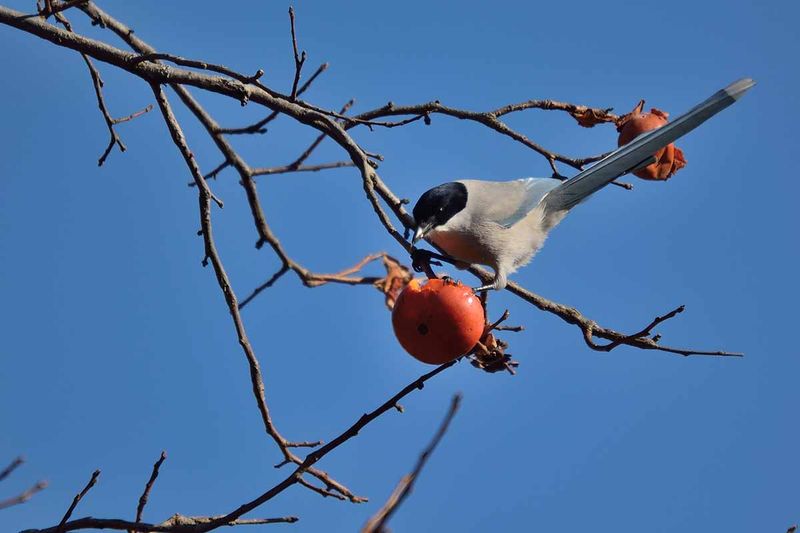
A scrub jay does not care how long you waited for that perfect persimmon. One morning the fruit looks flawless, and by afternoon it has a beak-sized hole in the side. Soft, sweet persimmons are a feast for California’s backyard birds.
Crows, scrub jays, mockingbirds, and cedar waxwings are common visitors to a loaded tree. Softening fruit is the biggest target, which puts astringent types at special risk if left to ripen on the branch too long.
Once a bird pecks an opening, bees, wasps, and fruit flies often move in right behind it.
Picking promptly is your best defense against all of that. Astringent types can come off firm and finish indoors, while Fuyus can be harvested as soon as they color fully. Waiting for every last fruit to look perfect usually means sharing more than you planned.
Netting helps for smaller trees. Drape bird netting over the canopy and gather it closed near the trunk so birds cannot slip underneath. Check it daily, since birds and other wildlife sometimes get tangled.
Shiny scare tape, old CDs, and hanging reflective objects may buy a little time too. Birds tend to get used to them quickly, so move them around every few days for better results.
Some gardeners choose to leave a few fruits high up for the birds on purpose. Watching waxwings feast on the top branches can be a winter treat all its own. Just gather pecked fruit that falls, since rotting persimmons on the ground attract pests.
6. Harvest Timing Affects Storage Length
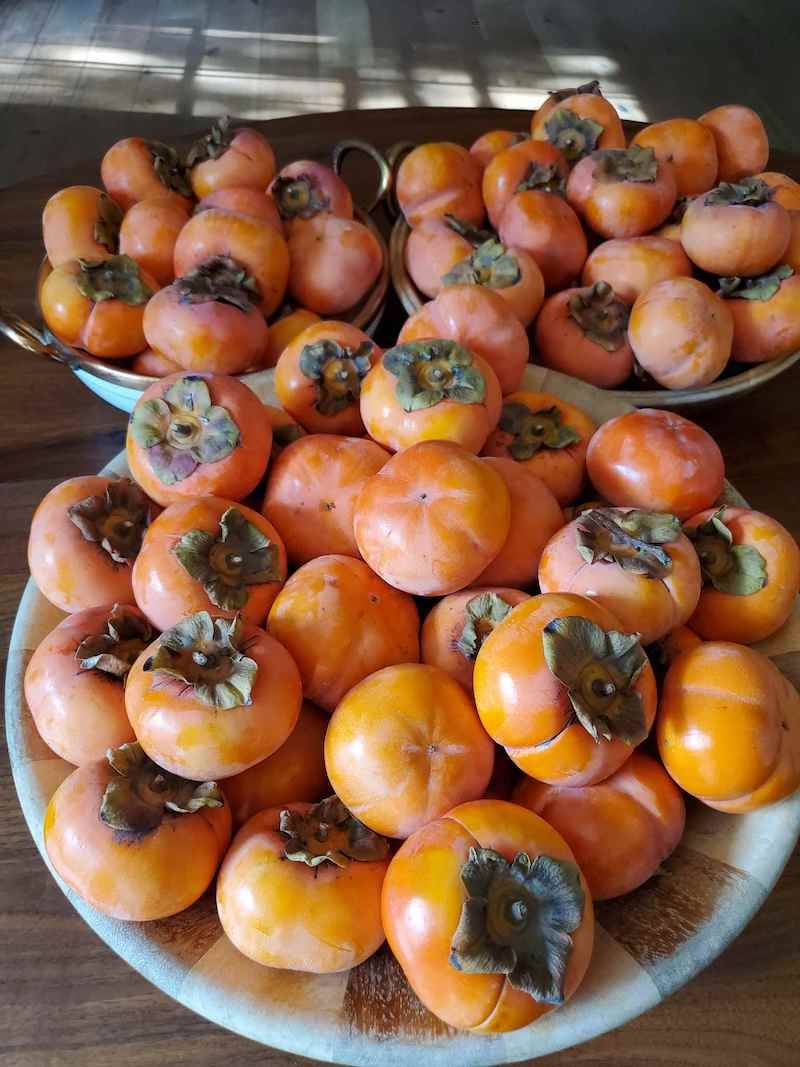
Soft fruit waits for no one. A fully ripe Hachiya might last only a few days on the counter, while the same fruit picked firm can hold for weeks instead. Picking at the right moment decides how long you get to enjoy your crop.
Firm, fully colored fruit stores best of all. Fruit picked while still green often never develops full flavor, and overripe fruit bruises and spoils quickly. Aim for the sweet spot between those two extremes.
Fuyus keep well in the refrigerator, often for several weeks when picked at proper color. Store them loose in the crisper drawer, away from apples and bananas. Those fruits release ethylene, which speeds softening in nearby produce.
Hachiyas picked firm can sit at room temperature until they soften, then move to the fridge for a few extra days. Want them longer? Freeze whole fruit or scooped pulp for baking all winter long.
Weather also plays a role in timing here. Light frost may not harm the fruit, but a hard freeze can damage the flesh and shorten shelf life fast. In colder California spots, such as the Sierra foothills, bring the crop in before a sharp freeze is forecast.
Handle each fruit like an egg from here on out. Leave the green cap and a short piece of stem attached, and lay the fruit in a shallow box in one single layer. Bruised spots turn into soft, spoiled patches fast, even in cold storage.
7. Skip Fertilizer This Late In The Season
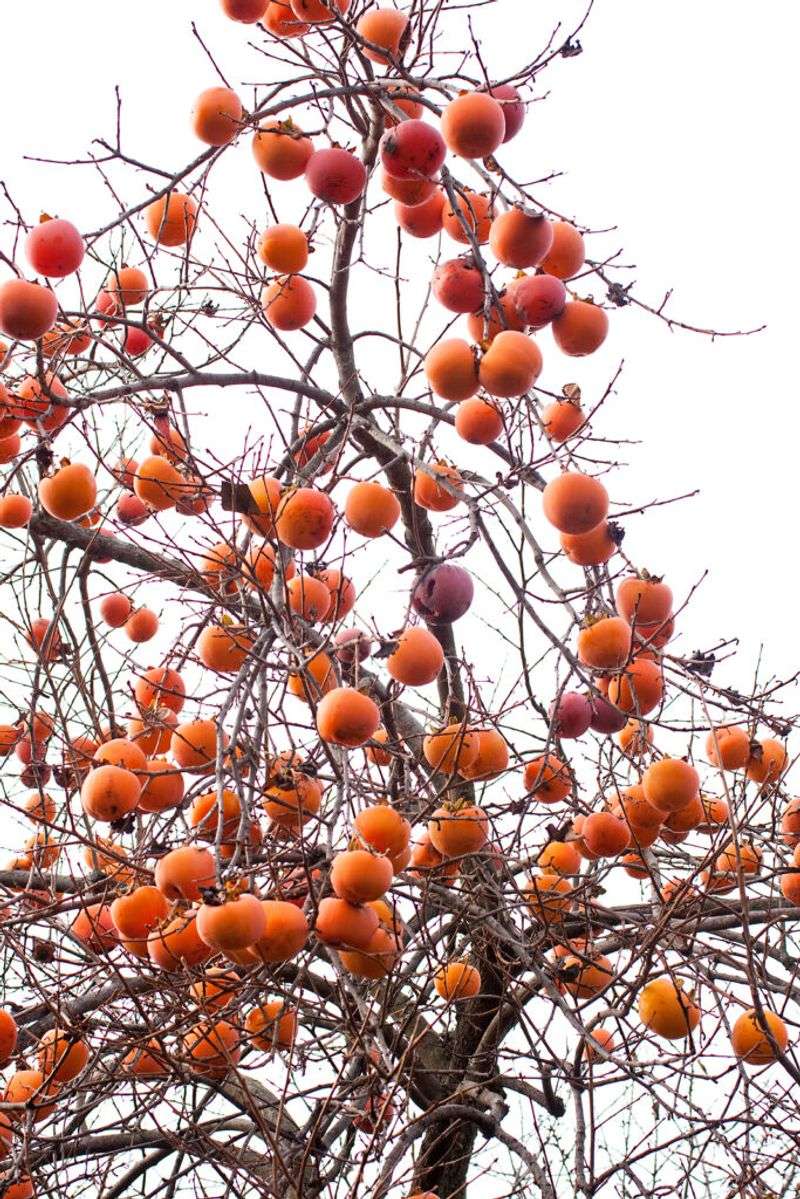
Feeding a sleepy tree is like serving a big dinner at bedtime. Your persimmon is winding down in fall, pulling energy into its roots and branches for winter. Fertilizer now sends exactly the wrong message.
Nitrogen in particular pushes fresh, leafy growth at the worst possible time. Tender new shoots that sprout in late fall have little time to harden before cold weather arrives. Frost can then damage them, wasting the tree’s stored energy.
Persimmons are also light feeders in general, more so than most fruit trees. Too much nitrogen can cause heavy fruit drop, and many healthy backyard trees need little fertilizer at all. Leafy, vigorous growth with a sparse crop often hints at overfeeding.
Timing matters more than the product itself. A light application in late winter or early spring, just before new growth begins, matches the tree’s natural schedule far better. Young trees and those showing pale leaves in summer benefit most from this timing.
Unused fertilizer in fall also tends to wash away with winter rains. Instead of feeding the tree, nutrients can leach past the roots and into groundwater and storm drains. Holding off protects both your wallet and California waterways.
So what can you do instead this fall? Spread a fresh layer of compost or wood chip mulch under the canopy, keeping it several inches away from the trunk. The mulch breaks down slowly over winter, gently improving the soil without triggering a growth spurt.
Save the fertilizer bag for spring, and add a reminder to your calendar right now.
8. Fall Care Sets Up Next Year’s Crop
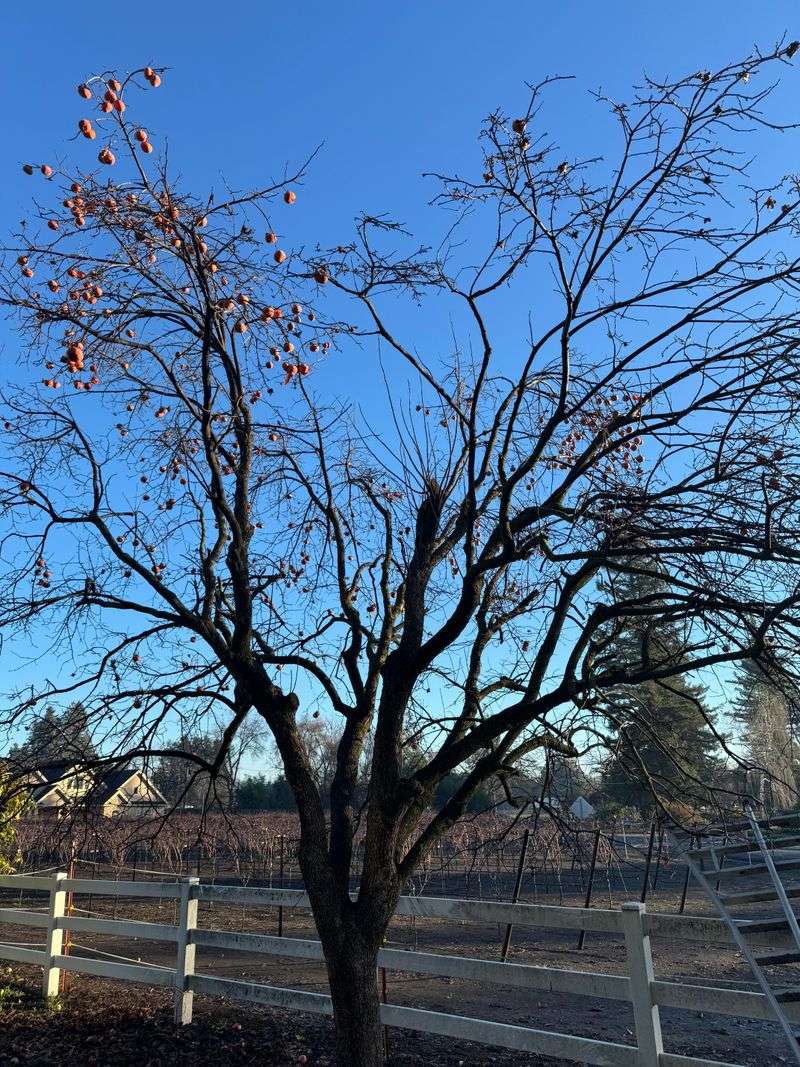
Next summer’s persimmons are already taking shape right now, even though nobody can see them yet.
Buds that will produce leaves, flowers, and fruit form during the growing season and rest through winter. The care you give now helps those buds wake up strong.
Start with cleanup around the tree. Rake fallen leaves and gather dropped or pecked fruit, since both can shelter pests and disease over winter. A tidy orchard floor also means fewer snails and rodents lurking near the trunk.
Pruning comes next, but wait for full dormancy in winter before picking up the shears. Persimmons fruit on new shoots that grow from last year’s wood, so heavy cuts can remove next season’s crop entirely.
Light thinning to open the center works well instead.
Watch for alternate bearing too, since it catches a lot of gardeners off guard. Persimmons sometimes produce a huge crop one year and a small one the next.
Thinning fruit in early summer and avoiding stress this fall can help even out those swings.
Look over the trunk and limbs while the branches are bare and easy to see. Cracks, sunburned bark, or gnawed spots are far easier to spot without leaves in the way.
Young trees may benefit from white interior latex paint, diluted with water, brushed on the trunk to prevent sunburn.
Consider fall a season of quiet investment in next year’s harvest. A little raking, smart watering, and patient pruning now can mean a branch-bending crop next year, which is a genuinely satisfying payoff for the effort.