Why Cardinals Keep Coming Back To The Same Ohio Yards Every Year
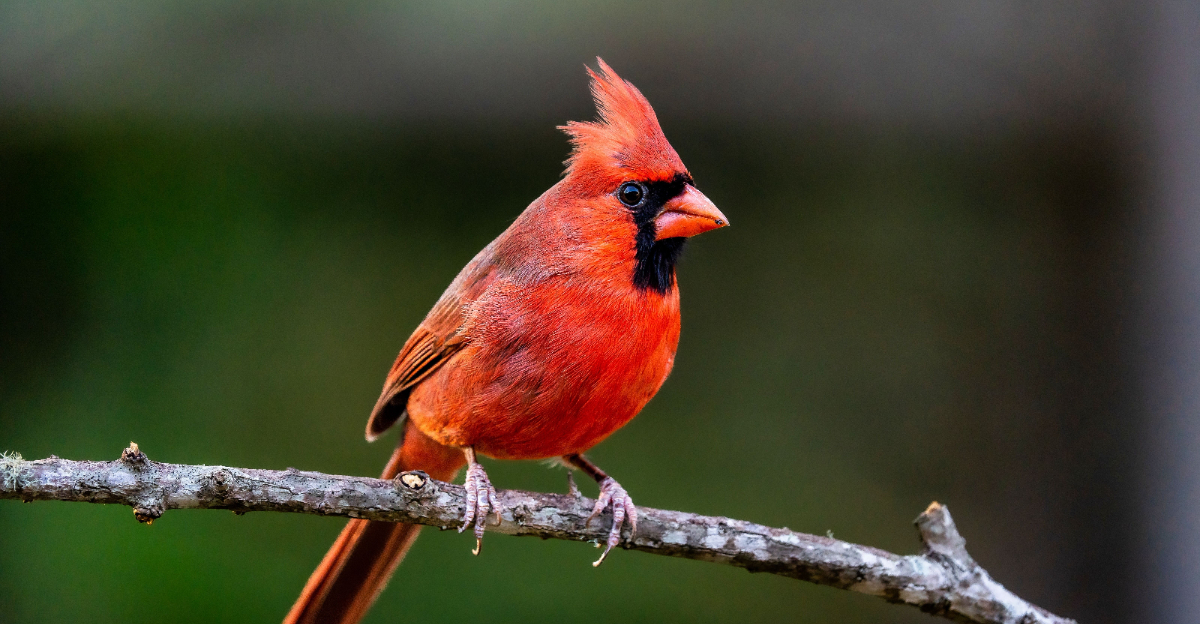
Ohio cardinals tend to make winter feel personal.
Snow stacks along the fence, the garden looks asleep, and one bright red bird lands in the same spot you remember from last January.
It feels like he knows the place. Maybe he does, in his own bird-brained, berry-loving way.
Cardinals are not casual about survival. They return to yards that feel safe, steady, and worth defending. A feeder helps, but it is rarely the whole story.
The best Ohio cardinal yards offer thick cover, dependable food, quiet corners, unfrozen water, and enough structure for a bird to move without feeling exposed.
That is why one backyard becomes a daily stop while the next one gets ignored.
So what makes cardinals choose the same Ohio yards year after year?
Start with the things they can trust. Food matters. Shelter matters more than people realize. And a yard that treats winter birds well usually gets remembered.
1. Dense Shrubs Give Them Cover
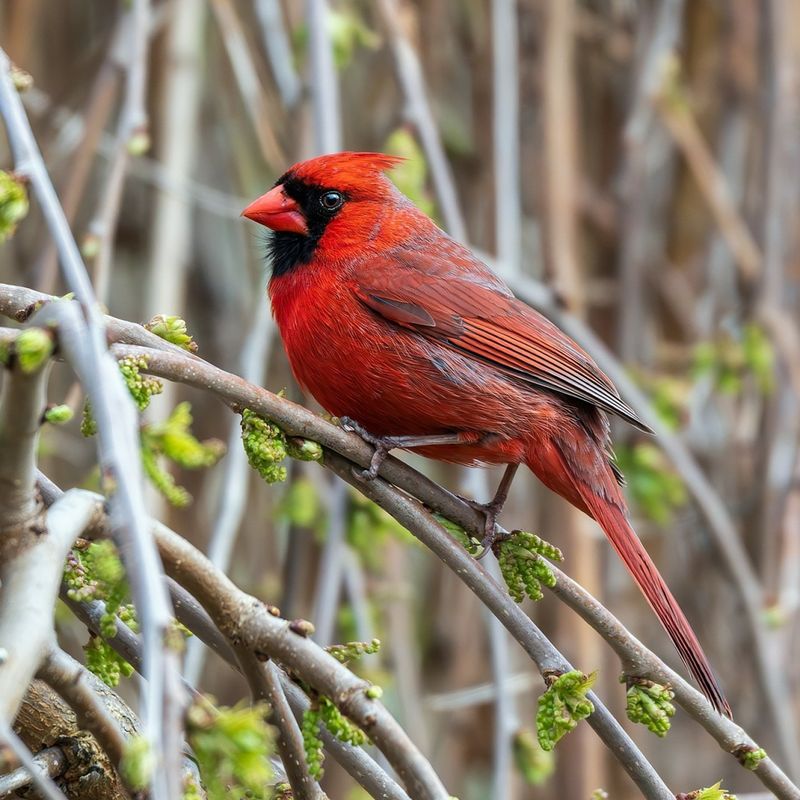
A flash of red disappearing into a thick shrub is one of the most satisfying sights an Ohio bird-watcher can enjoy.
Cardinals are not open-sky birds. They prefer moving through dense, tangled vegetation where they feel hidden from hawks, cats, and other threats. A yard that offers this kind of sheltered movement becomes a place they trust.
Shrubs like American beautyberry, native viburnums, and spicebush create tight, layered cover that cardinals love.
Planting these in clusters rather than lonely single plants gives birds a network of safe paths to travel between feeding and resting spots. Think of it like a connected system of cozy rooms instead of one big open hall.
Ohio winters can be brutal, and dense shrubs act like windbreaks too.
A cardinal tucked into a thick viburnum on a January afternoon is sheltered from wind chill that would drain its energy fast.
Yards with multiple shrub clusters spread around the property give cardinals more options for safe movement throughout the day.
The Ohio Department of Natural Resources recommends native shrubs for backyard wildlife because they support insects, berries, and nesting structure all at once.
Once a bird learns your yard is safe to move through, it tends to come back year after year and bring friends.
2. Seed Feeders Keep The Routine
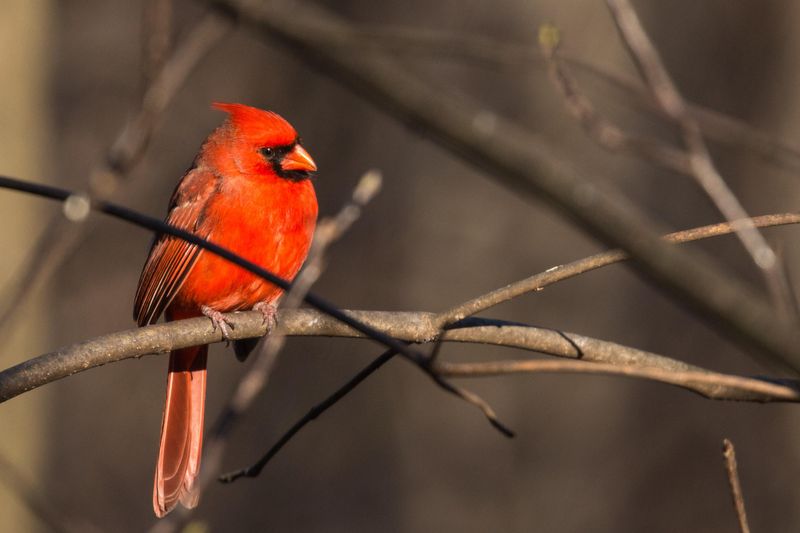
Cardinals are creatures of habit, and a well-stocked feeder becomes part of their daily schedule faster than you might expect.
Once a cardinal discovers a reliable food source, it will return to that exact spot morning after morning, almost like clocking in for work.
Ohio birders who keep feeders filled through winter often notice the same individual birds showing up at predictable times each day.
Black oil sunflower seeds are the gold standard for cardinals.
The shells are thin enough for a cardinal’s strong, cone-shaped beak to crack open easily, and the seeds are packed with the fat and protein birds need to stay warm through Ohio winters.
Safflower seeds are another excellent option because squirrels tend to avoid them, meaning more seed stays available for your birds.
Your Ohio Garden Changes Every Week. Your Plan Should Too.
Gardening in Ohio changes quickly throughout the season. Every Friday you’ll receive a simple weekly plan showing exactly what to plant, prune, fertilize, harvest, and protect so you never miss the right timing.
Feeder placement matters just as much as what is inside.
Cardinals feel more comfortable at feeders positioned near shrubs or tree lines, where they can dart to safety quickly if something startles them.
A feeder sitting in the middle of an open lawn with no nearby cover will see far fewer cardinal visits than one placed within a few feet of protective vegetation.
Keeping feeders clean and consistently filled signals to cardinals that your yard is dependable.
A feeder that runs empty for weeks will cause birds to shift their routine elsewhere. Consistency is everything. A yard that feeds cardinals reliably through January and February earns serious loyalty come spring.
3. Native Berries Sweeten The Deal
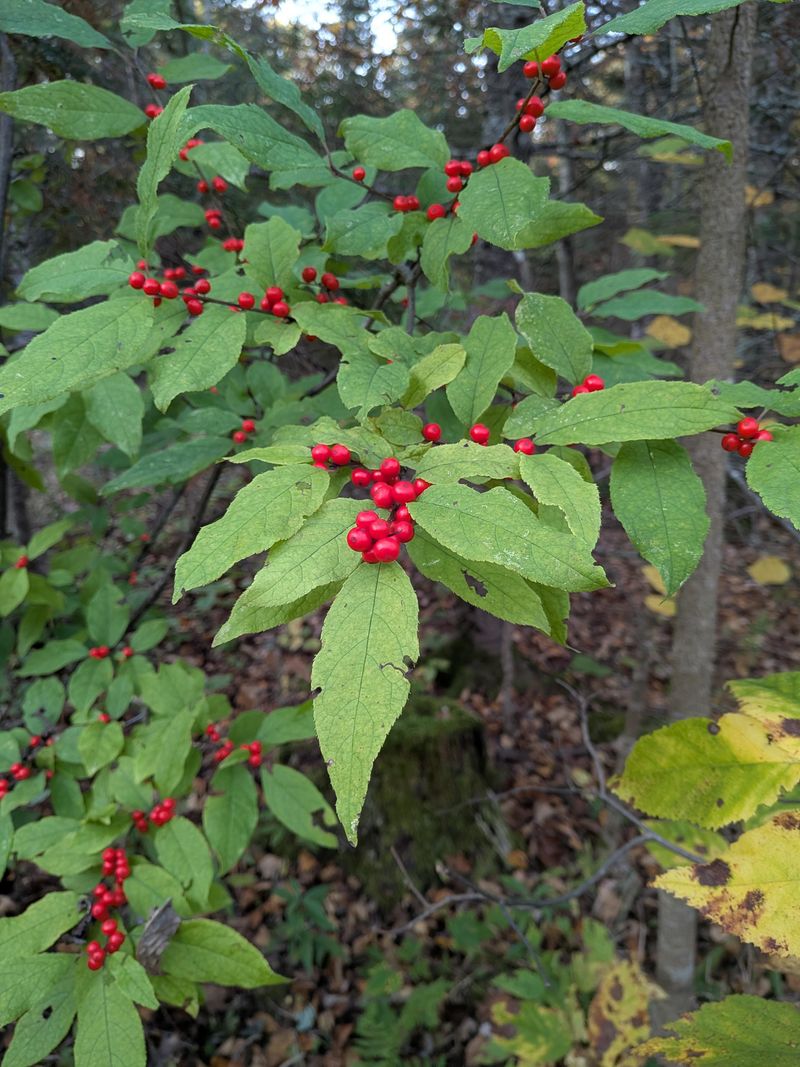
Berries are basically candy for cardinals, and Ohio yards planted with the right native shrubs become irresistible stops on their daily rounds.
Winterberry holly is one of the best choices you can make. Its bright red clusters of berries persist through deep winter, providing a calorie-rich snack exactly when food is hardest to find.
Seeing a cardinal perched in a winterberry holly is one of Ohio’s prettiest backyard moments.
Native dogwoods, serviceberry, and pokeweed are also strong performers for cardinals and a long list of other backyard birds.
These plants evolved alongside Ohio’s wildlife, so the birds know exactly how to use them.
A yard that mixes several native berry-producing plants gives cardinals a buffet that stretches from late summer all the way through winter, reducing how much they depend on feeders alone.
Ohio State University Extension recommends native plantings as the most sustainable way to support backyard wildlife.
Native berries do not just feed birds either. They attract insects in warmer months, which cardinals and their chicks depend on as a protein source during nesting season. A berry shrub is really pulling double duty in your yard.
Spacing berry plants near your feeders creates a natural feeding corridor.
Cardinals can move between berry clusters and seed feeders without ever crossing wide open spaces where they feel exposed.
That combination of reliable food in different forms is a powerful reason a cardinal keeps choosing your yard over the neighbor’s every single year.
4. Brushy Edges Feel Safer
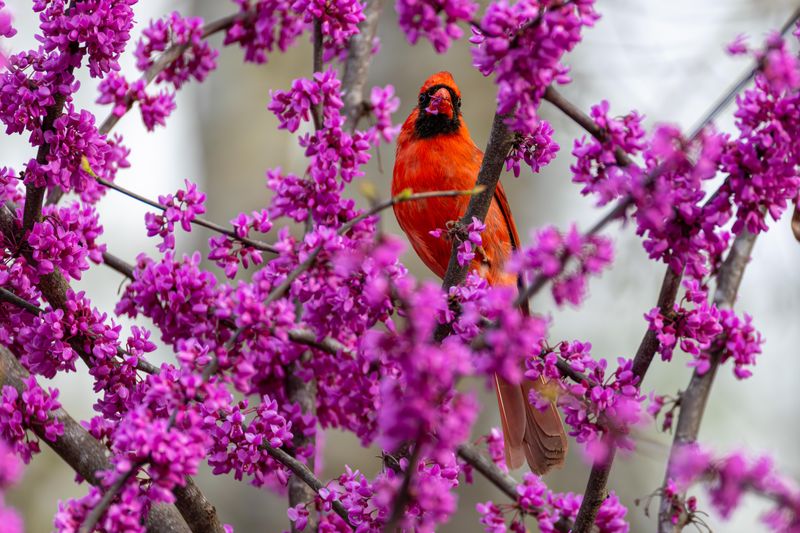
Many people think a tidy, wide-open yard looks nice, but to a cardinal, it looks like danger.
Cardinals are edge birds by nature. They thrive along the boundary where open space meets dense vegetation, a habitat type ecologists call an ecotone.
Ohio yards that replicate this kind of layered edge give cardinals exactly the mix of visibility and cover they feel safest in.
Creating a brushy edge does not require letting your yard go wild.
It means planting layers: tall native grasses or wildflowers at the back, mid-height shrubs in front, and lower ground cover at the base.
This staircase effect mimics the natural woodland edges where cardinals evolved. Birds can perch in the middle layer, scan for threats, then drop into dense cover in a split second if needed.
Cardinals use brushy edges as launching pads for trips to feeders and back.
They rarely fly straight from open sky to a feeder. Instead, they hop through shrubs, pause on a branch, check the area, then move forward.
A yard with a well-planted edge supports this cautious movement pattern perfectly and makes the bird feel confident enough to keep returning.
Leaving a strip of native grasses and shrubs along a fence line or property border is one of the simplest upgrades an Ohio homeowner can make for backyard birds.
Even a narrow brushy strip along one fence side can dramatically increase how often cardinals feel comfortable visiting your yard throughout the year.
5. Evergreens Shelter Winter Visits
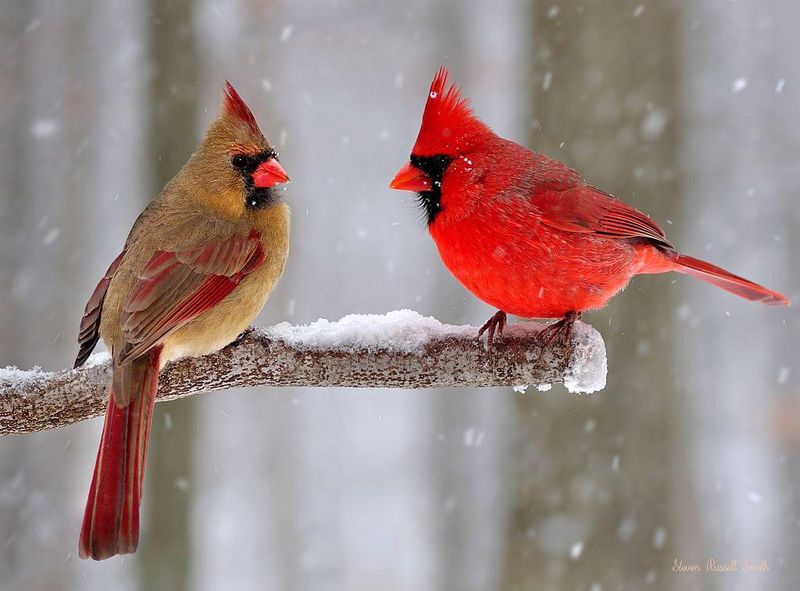
When a January ice storm rolls across Ohio, cardinals need somewhere to wait it out. Evergreen trees and shrubs are the answer.
Unlike deciduous plants that drop their leaves in fall, evergreens keep their dense foliage year-round, creating pockets of warmth and wind protection that cardinals rely on heavily during cold snaps.
A yard without any evergreens is a much harder place to survive an Ohio winter.
Eastern red cedar is one of the best native evergreens for Ohio cardinals. It provides dense cover, produces small berries that birds eat, and grows well in a wide range of Ohio soils.
White pines, arborvitae, and native hollies are also excellent choices that offer protection from wind, snow, and cold without losing their usefulness in warmer months.
Cardinals often roost in groups inside dense evergreens on the coldest nights.
Shared body heat and wind protection from the foliage help them conserve energy through below-freezing temperatures.
A yard with a cluster of well-placed evergreens essentially offers cardinals a warm bunkhouse for winter nights, which is a hard benefit to pass up.
Planting evergreens on the north or northwest side of your yard provides the most effective windbreak against Ohio’s prevailing winter winds.
Even a single large eastern red cedar can make a noticeable difference in how sheltered the rest of your yard feels.
Cardinals notice these details, and a yard that stays comfortable through the worst winter weather earns repeat visits every single season.
6. Water Keeps The Yard Useful
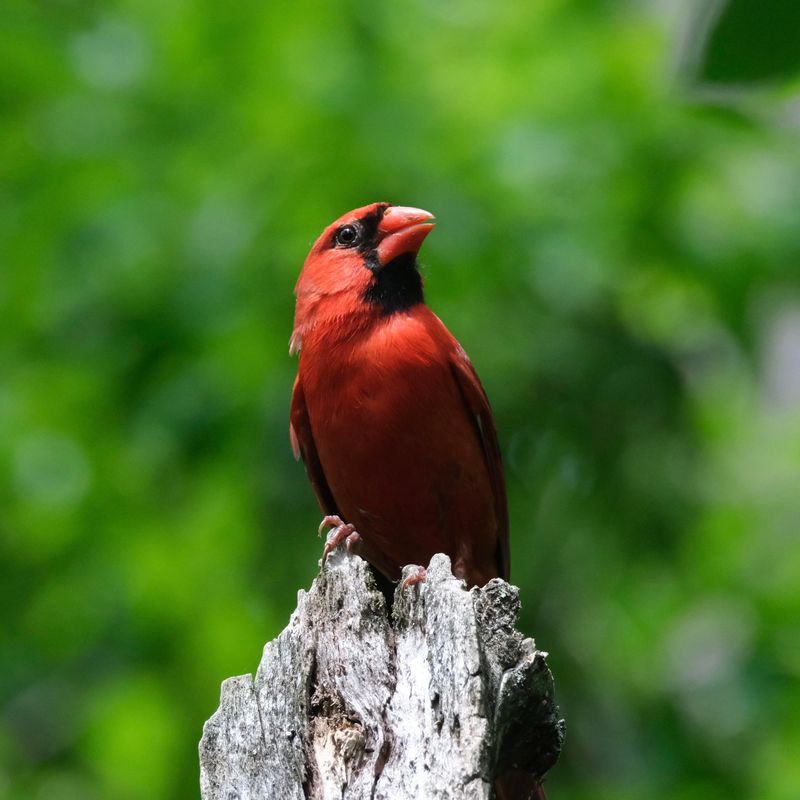
Food gets most of the attention when people talk about feeding birds, but water might actually be the bigger draw.
Fresh, clean water is surprisingly hard for birds to find during Ohio winters when ponds, puddles, and streams freeze solid.
A yard that offers unfrozen water in January stands out like a beacon to every bird in the neighborhood, including cardinals.
A heated birdbath is one of the single best investments an Ohio bird-watcher can make.
These birdbaths use a small, thermostatically controlled heater to keep water from freezing, even on nights that dip well below zero.
Cardinals visit heated birdbaths throughout the day for drinking and light bathing, and they remember which yards have reliable water sources when natural options are unavailable.
Keeping the birdbath clean is just as important as keeping it unfrozen.
Algae, debris, and bird droppings build up quickly and can make water unsafe for birds. A quick scrub and rinse every few days keeps the water fresh and the birds healthy.
Placing the bath near shrubs gives cardinals a safe perch to dry off after bathing without being exposed to wind or predators.
In warmer months, a simple dripper that creates gentle movement in the water surface is remarkably effective at attracting cardinals.
Moving water catches light and makes sound that birds detect from surprisingly far away. A yard that offers clean water in every season becomes a dependable stop that cardinals work into their daily territory year after year.
7. Familiar Nest Spots Bring Them Back
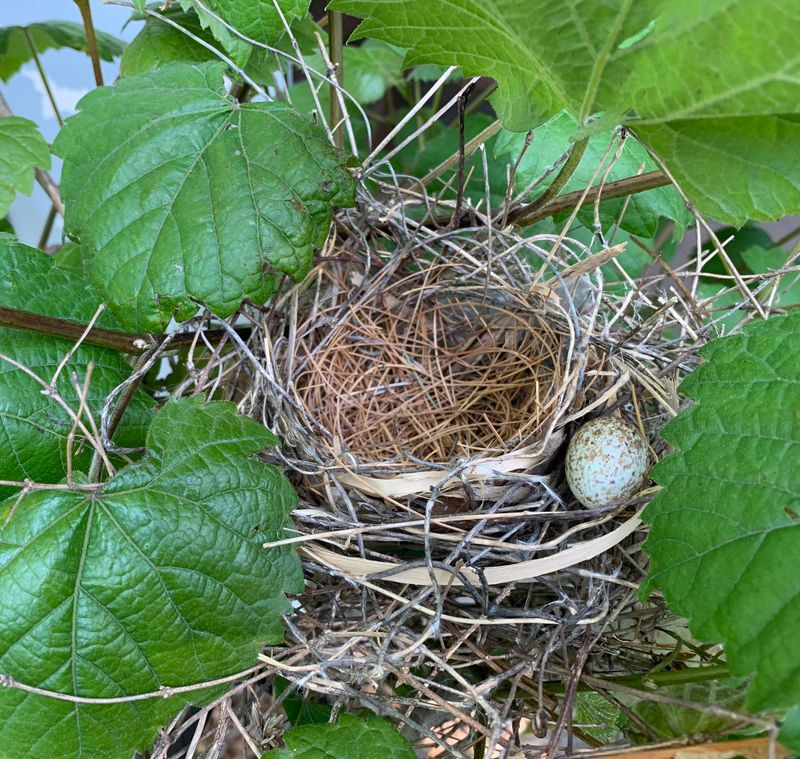
Nesting season reveals just how loyal cardinals can be to a single yard.
Female cardinals choose nest sites carefully, looking for dense shrubs or small trees with tangled interior branches that hide a nest from view.
Once a female raises chicks successfully in a location, there is a strong tendency to return to the same general area the following year. A yard that supported a successful nest once is likely to see nesting attempts again.
Cardinals do not use nest boxes the way bluebirds or wrens do.
They prefer open-cup nests tucked inside dense shrubs like forsythia, native viburnums, or rose bushes. The nest is usually placed between two and ten feet off the ground, hidden inside the shrub’s interior where it is hard to spot from outside.
Leaving established shrubs untrimmed during nesting season protects active nests from disturbance.
Female cardinals build the nest entirely on their own, weaving grass, bark strips, and leaves into a cup lined with softer material.
The male’s job during this time is to feed her and sing from nearby perches to defend the territory. A yard with enough food, water, and shrub cover supports both of these roles without the birds having to travel far.
Keeping a quiet, undisturbed shrub zone in one corner of your yard gives cardinals a place to raise chicks with minimal stress.
A nest that succeeds is the strongest possible signal that a bird will return to your yard the following spring.
8. Fewer Disturbances Build Trust
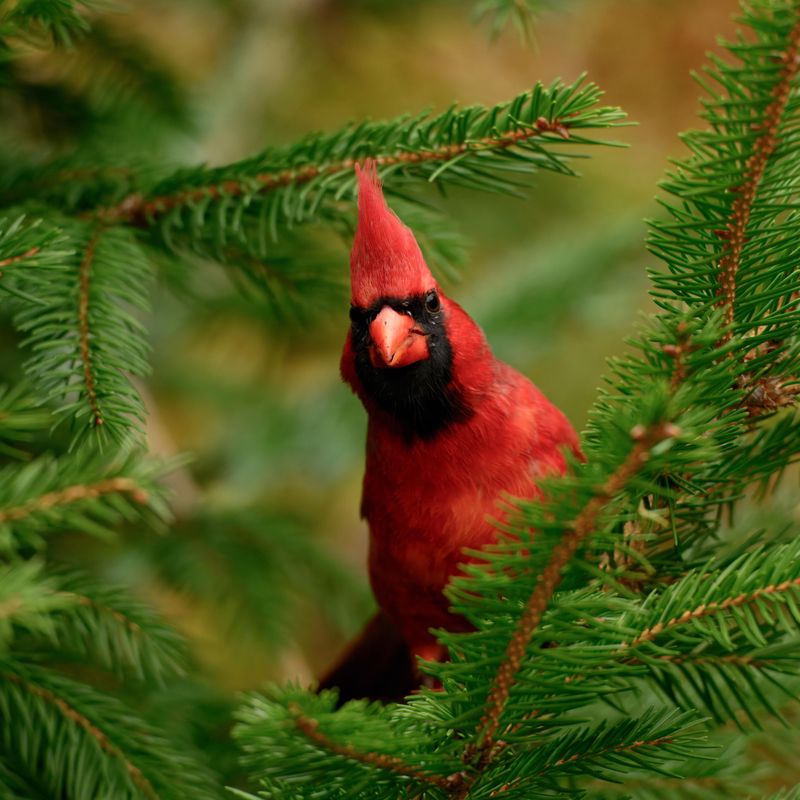
Cardinals are smart enough to notice patterns.
A yard where a cat prowls the shrubs, a dog charges the fence, or a person constantly walks near the feeders quickly gets labeled as risky territory.
Birds adjust their routes to avoid stress, and a yard that feels unpredictable loses cardinal visits faster than one that runs out of seed. Trust, it turns out, is something cardinals extend to places, not just to people.
Outdoor cats are the single biggest threat to backyard songbirds in the United States.
Keeping cats indoors or supervised outdoors makes a measurable difference in how comfortable cardinals feel in your yard.
Even the scent of a cat near shrubs or feeders can cause birds to avoid an area for days. Removing that threat signals to cardinals that your yard is genuinely safe.
Heavy pruning during nesting season is another common disturbance that drives cardinals away.
If you trim shrubs in May or June, you risk disturbing active nests and causing the birds to abandon the area entirely.
Scheduling major pruning for late winter, before nesting begins, protects the shrubs cardinals rely on without disrupting their breeding cycle.
Noise and foot traffic near feeders also matter more than most people realize.
Cardinals that feel watched or crowded will wait at the edge of a yard rather than coming in close.
Giving birds a consistent, quiet routine around feeders and shrubs builds the kind of long-term confidence that brings the same individuals back to your Ohio yard every single year.