Why Citrus Leaves Turn Yellow In May In Arizona And How To Fix It
Citrus trees across Arizona can look rich, full, and completely settled, then May shifts that picture in a way that feels sudden and hard to explain.
Leaf color starts to soften, that deep green tone slips away, and the change shows up fast enough to raise real concern, especially when everything seemed fine just days before.
Doubt creeps in because the routine stayed steady and nothing obvious stands out, yet the tree responds as if something changed behind the scenes.
Heat begins to press harder during this stretch, and citrus reacts in ways that do not always line up with what worked earlier in the season.
Many Arizona yards hit this same moment every year, right as spring gives way to more intense conditions, and what looked stable can quickly feel uncertain. That shift does not come out of nowhere, even if it feels that way at first.
1. Heat Stress Disrupts Normal Leaf Color
Arizona summers do not ease in gently. By May, temperatures in Phoenix and Tucson regularly push past 100 degrees Fahrenheit, and citrus trees feel every degree of it.
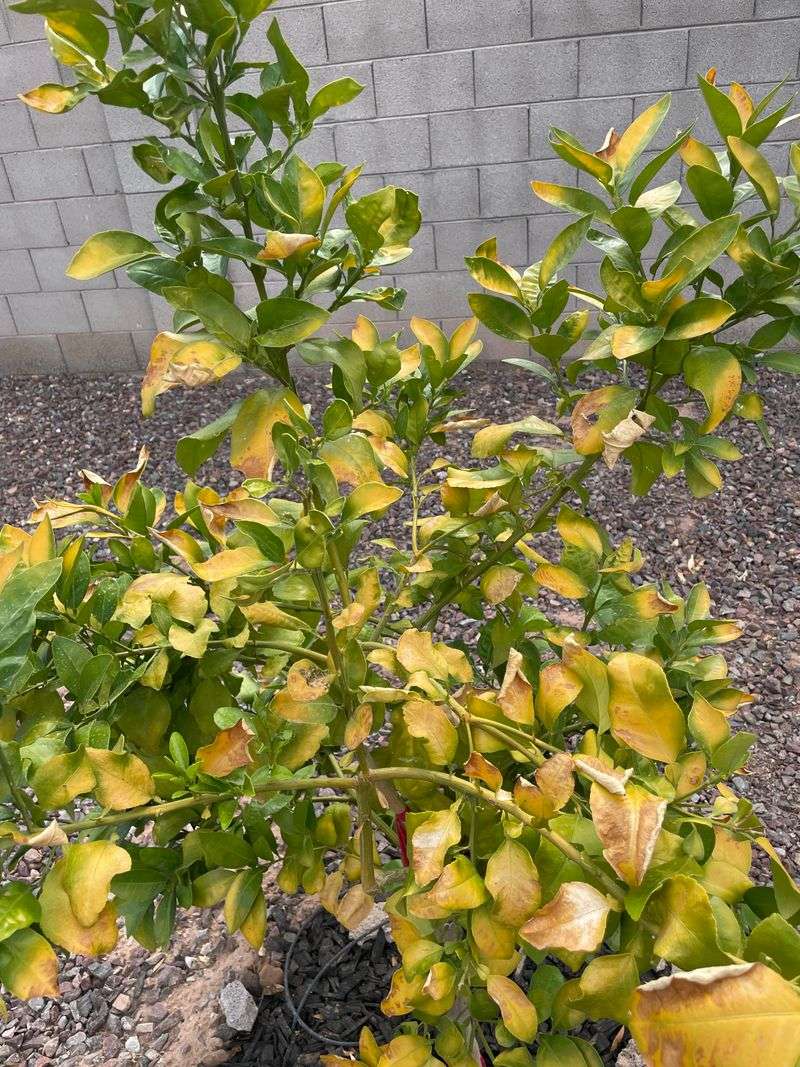
When heat builds up that fast, the tree struggles to move water efficiently from the roots to the leaves, and the result is often a washed-out, yellowish color spreading across the canopy.
Heat stress does not just affect the look of the leaves. It slows down the tree’s ability to absorb nutrients, which makes the yellowing worse over time.
Even if your soil has everything the tree needs, extreme heat can block those nutrients from reaching the leaves in the first place.
Younger trees and recently transplanted ones tend to show heat stress symptoms faster than established trees. If your citrus is less than three years old and planted in full afternoon sun, that southwest-facing exposure in Arizona can be brutal in May.
One practical fix is to provide afternoon shade using a shade cloth rated at 30 to 40 percent. Draping it loosely over the canopy during the hottest part of the day, roughly between 1 p.m. and 5 p.m., can lower leaf temperature noticeably.
2. Inconsistent Watering Leads To Yellowing Leaves
Skipping watering days in May is one of the fastest ways to see your citrus leaves go yellow. Arizona soil dries out incredibly quickly in late spring, and citrus trees need a steady, reliable supply of moisture to stay healthy.
When water comes and goes unpredictably, the tree goes into a kind of stress cycle that shows up almost immediately in the leaves.
Both underwatering and overwatering can cause yellowing, which is what makes this tricky. A tree that gets too little water will show dry, crispy yellow leaves, often starting at the tips.
A tree that sits in soggy soil too long will also yellow, but the leaves tend to look limp and soft rather than crisp.
Checking the soil before watering is the best habit you can build. Push a finger or a wooden dowel about six inches into the ground near the drip line of the tree.
Your Arizona Garden Changes Every Week. Your Plan Should Too.
Gardening in Arizona changes quickly throughout the season. Every Friday you’ll receive a simple weekly plan showing exactly what to plant, prune, fertilize, harvest, and protect so you never miss the right timing.
If it comes out dry, water the tree. If it feels moist, wait another day or two before checking again.
Deep, infrequent watering works much better for citrus in Arizona than shallow daily sprinkles. Watering deeply once or twice a week during May encourages roots to grow downward where soil stays cooler and more stable.
3. Iron Deficiency Causes Yellow Leaves With Green Veins
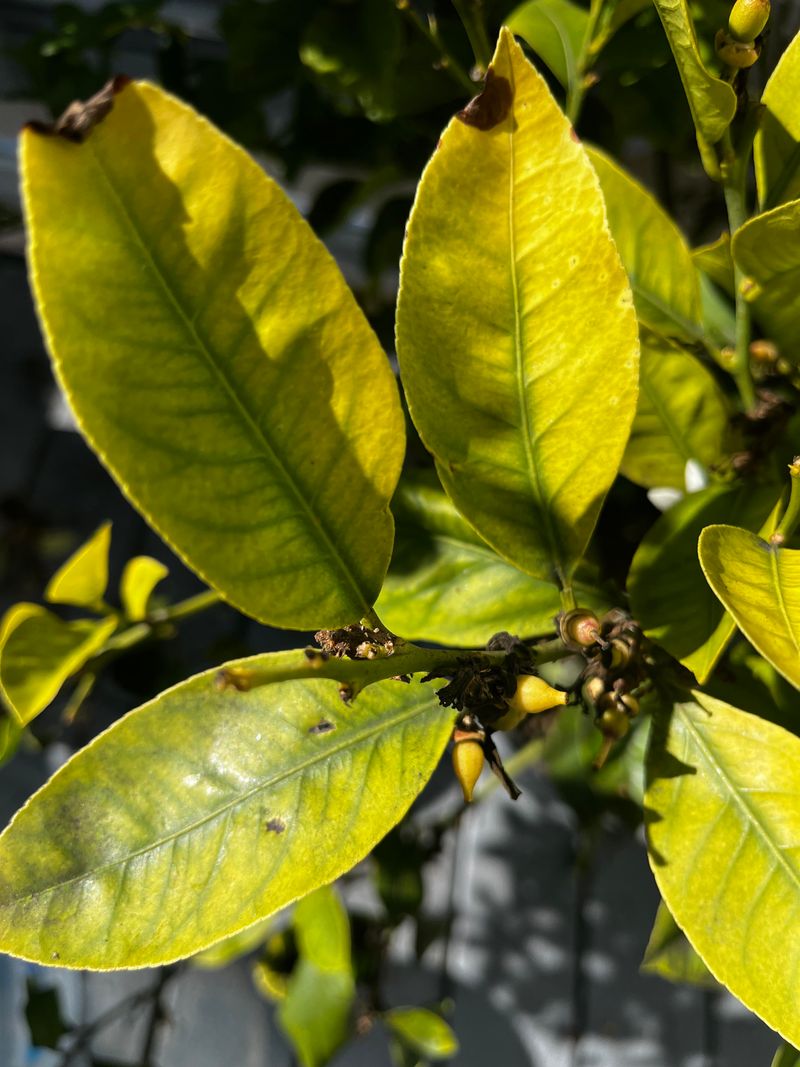
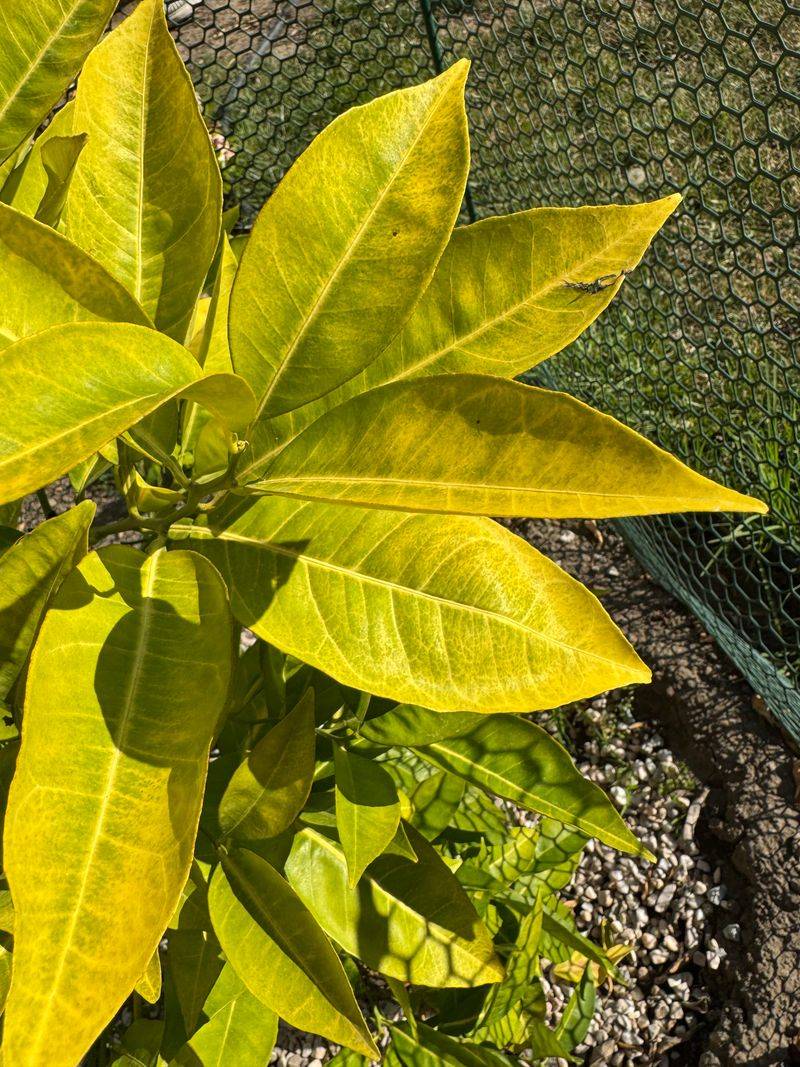
Iron chlorosis has a very specific look that sets it apart from other yellowing problems. Instead of the whole leaf turning yellow, the area between the veins fades to pale yellow or almost white while the veins themselves stay green.
Spotting that pattern on your Arizona citrus tree in May is a strong signal that iron is not making it into the plant properly.
Here is the confusing part: Arizona soil often has iron in it. The issue is soil pH.
Many soils in the Phoenix and Tucson areas are alkaline, meaning the pH sits above 7.0, sometimes well above it. At that pH level, iron becomes chemically locked in the soil and the roots simply cannot absorb it, even when plenty is present.
Alkaline irrigation water makes this worse. If you water with municipal water in Arizona, you are likely adding more alkalinity to the soil every time you run the hose or drip system.
Over time, that builds up and makes iron deficiency more common, especially in spring when trees are actively growing and demand for nutrients goes up.
Correcting the soil pH gradually with sulfur applications can help long term, but results take months.
4. Water Deeply And Keep Soil Evenly Moist
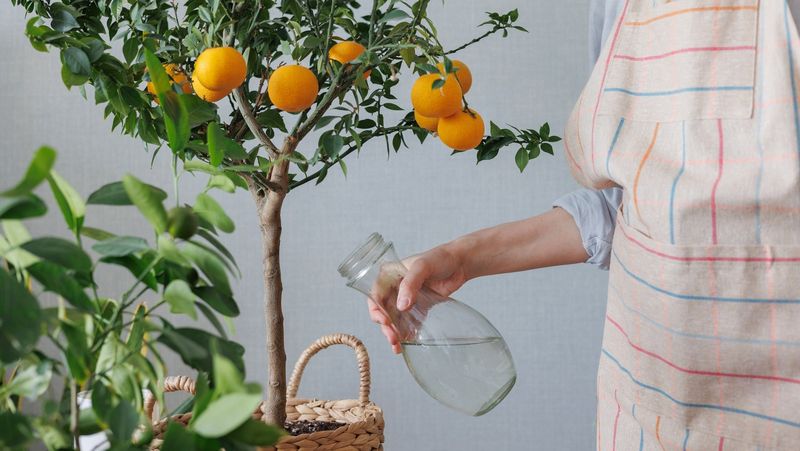
Watering deeply is not just a good idea in Arizona, it is genuinely one of the best things you can do for a citrus tree struggling with yellow leaves in May. Shallow watering keeps moisture near the surface where it evaporates almost immediately in the desert heat.
Deep watering pushes moisture down to where the roots actually live, and that makes a measurable difference in how the tree handles stress.
A slow, long watering session beats a quick sprinkle every single time. For a mature citrus tree in Arizona, running a drip system for two to three hours once or twice a week during May is a reasonable starting point.
Adjust based on tree size, soil type, and how fast your yard dries out. Sandy desert soils drain fast and may need more frequent deep watering compared to heavier clay soils.
Soil moisture consistency matters almost as much as the total amount of water. Letting the soil swing between bone dry and completely saturated stresses the roots and makes nutrient uptake erratic.
That stress often shows up as yellowing leaves within a few days.
A simple moisture meter from a local garden center can take the guesswork out of the process entirely. Insert the probe near the drip line, not directly at the trunk, and aim to keep the reading in the moderate range before adding more water.
5. Apply Chelated Iron If Deficiency Appears
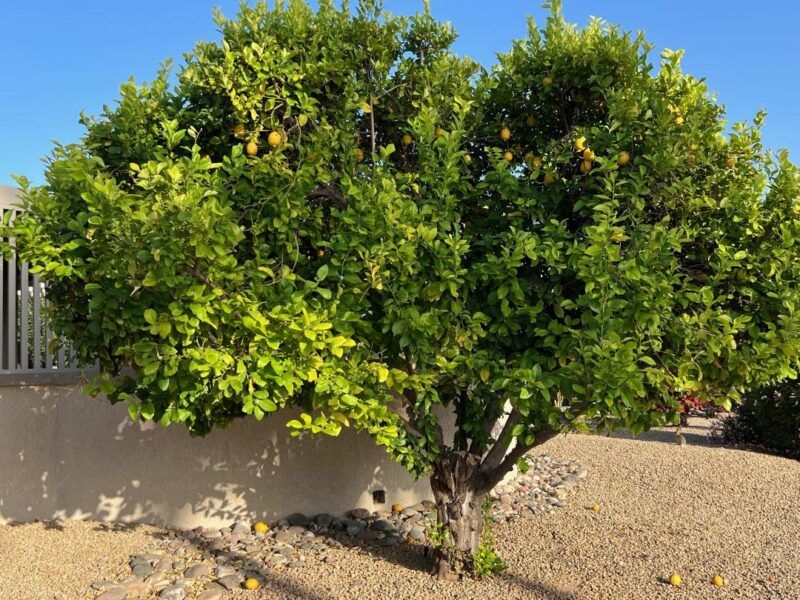
Chelated iron is one of the most reliable fixes for iron chlorosis in Arizona citrus trees, and it works faster than most other iron supplements.
Regular iron sulfate can still get locked up in alkaline soil, but chelated iron uses a special molecular coating that keeps the iron available to the roots even when pH is high.
For Arizona gardeners dealing with persistent yellowing and that classic green-veined pattern, chelated iron is worth keeping on hand.
Products come in granular and liquid forms. Liquid chelated iron can be applied as a foliar spray directly onto the leaves, which gets results within a week or two because the iron absorbs through the leaf surface rather than fighting alkaline soil.
Granular forms work well when watered in deeply around the drip line of the tree.
Timing matters. Applying chelated iron when temperatures are already above 100 degrees can stress the tree if applied as a foliar spray, so early morning applications in May are strongly recommended.
Wait until the sun is low and temperatures are cooler before spraying the leaves.
Read the product label before applying anything, since dosage varies between brands and tree sizes. Applying more than recommended will not speed up recovery and may cause other nutrient imbalances.
Most Arizona gardeners find that one or two applications spaced three to four weeks apart is enough to bring the color back.
6. Mulch Around The Base To Protect Roots
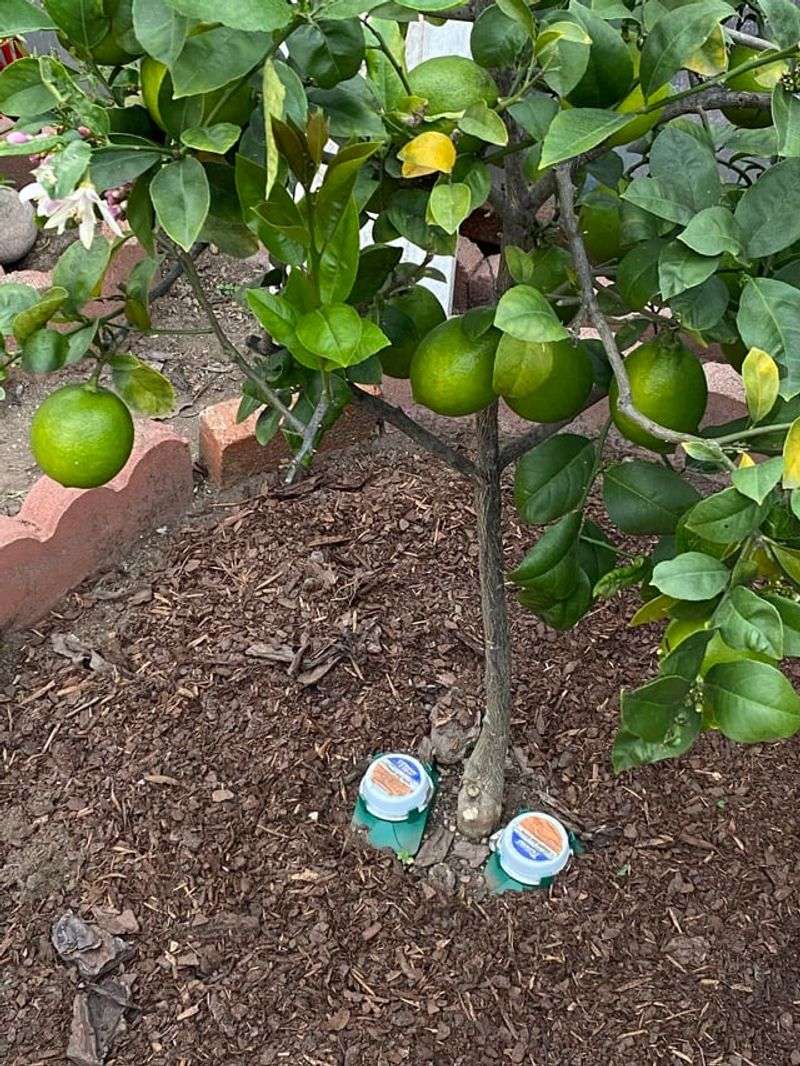
Root temperature in Arizona during May can get high enough to slow down nutrient absorption significantly.
When the soil around a citrus tree bakes in direct sun all afternoon, the roots near the surface get stressed, and that stress translates directly into yellowing leaves.
Mulching around the base of the tree is one of the simplest ways to break that cycle.
A layer of organic mulch two to four inches deep spread from about six inches away from the trunk out to the drip line makes a real difference. Wood chips, straw, or shredded bark all work well.
Avoid piling mulch directly against the trunk since that can trap moisture and encourage rot at the base of the tree.
Beyond temperature control, mulch slows down evaporation dramatically. In dry Arizona air, soil without mulch can lose significant moisture within hours of watering.
Mulched soil holds onto that water much longer, which reduces how often you need to water and keeps the root zone consistently moist.
Organic mulch also breaks down slowly over time and adds nutrients back into the soil, which benefits the tree long after it has been applied.
7. Check Drainage To Prevent Root Stress
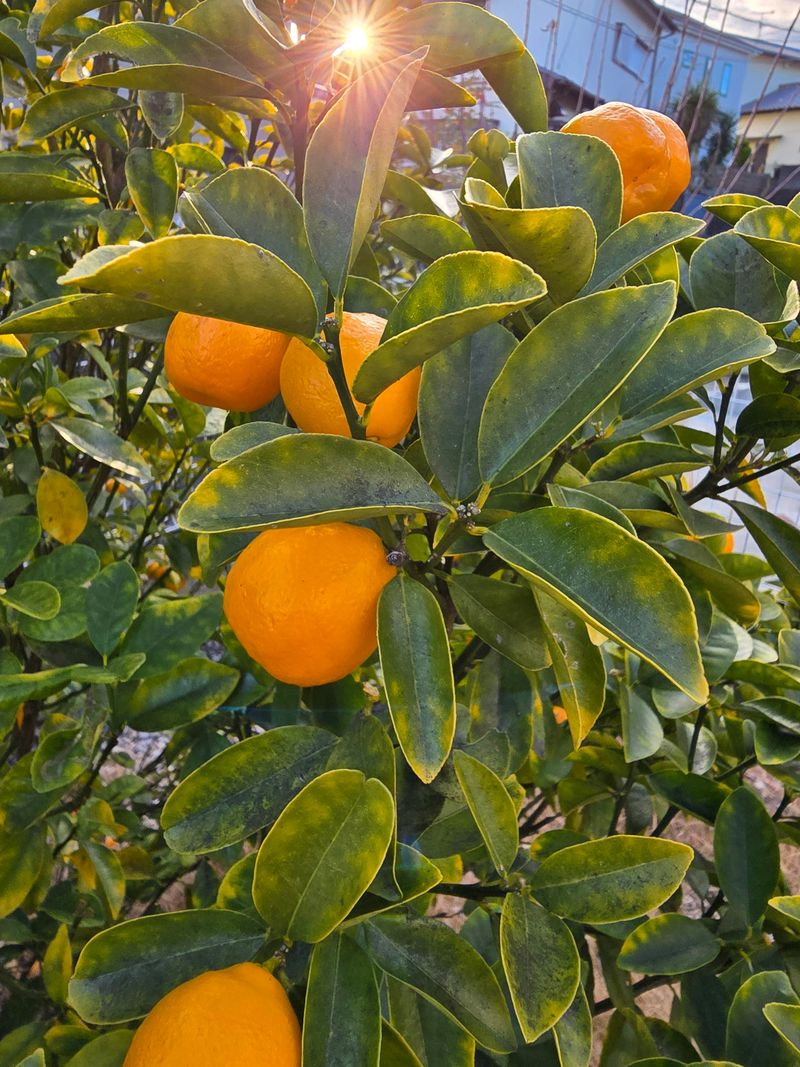
Poor drainage is an underrated cause of yellow citrus leaves in Arizona, and it catches a lot of gardeners off guard.
Most people assume desert soil drains too fast, but compacted clay soils found in many Phoenix and Tucson neighborhoods can hold water for days after a deep watering session.
Roots sitting in saturated soil cannot breathe properly, and that suffocation shows up as yellowing leaves that look surprisingly similar to underwatering symptoms.
A simple drainage test can save a lot of guesswork. Dig a hole about twelve inches deep near the drip line of the tree and fill it with water.
If the water is still sitting there two hours later, drainage is likely an issue that needs attention before any other fix will work reliably.
Improving drainage in established planting areas is not always easy, but a few options help. Mixing coarse sand or perlite into the top layer of soil around the drip line can improve drainage slightly.
In more serious cases, installing a simple French drain nearby redirects excess water away from the root zone entirely.
Raised planting beds are a popular solution in Arizona for exactly this reason. If you are planning to add new citrus trees, building up the planting area by eight to twelve inches gives roots a well-drained zone to grow in from the start.