Why Do Oregon Rhododendron Leaves Droop During A Hot Dry Spell?
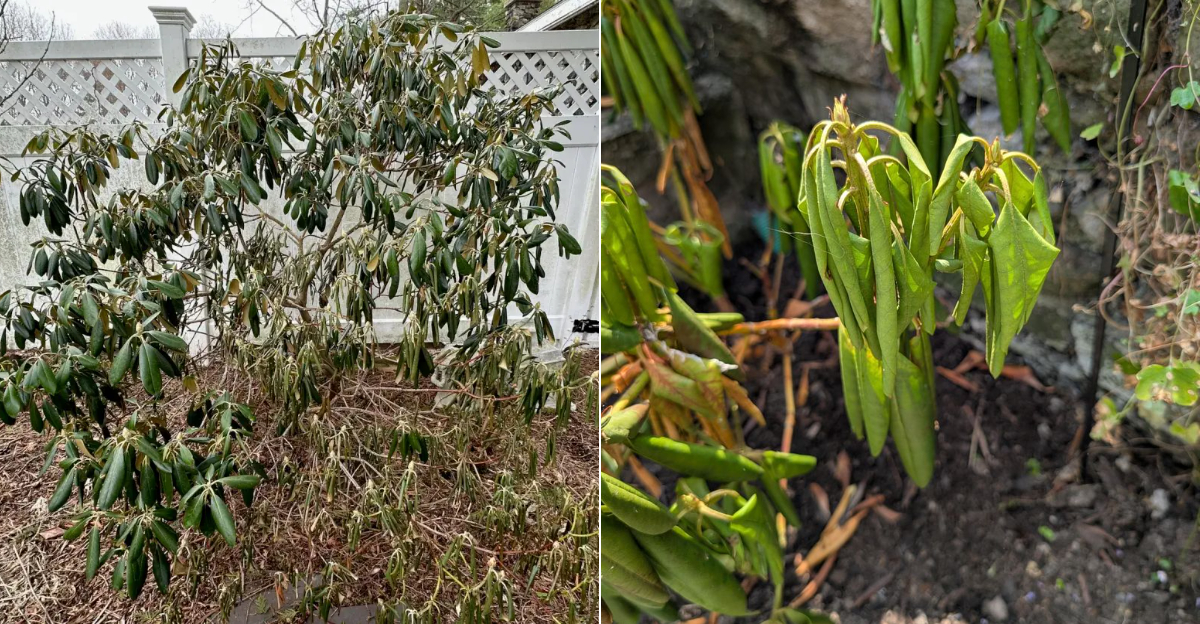
By midafternoon, your rhododendron can look like it has had enough of the weather and would very much like to speak to management.
Leaves that stood proudly in the morning may hang downward, curl slightly, or lose that familiar glossy confidence once the day turns hot and dry.
For Oregon gardeners, the sudden change can be unsettling because rhododendrons are such familiar landscape plants. They sit beside porches, line shady borders, and quietly anchor gardens for years, so any dramatic shift tends to stand out fast.
Add a dry spell to the mix, and it is easy to start second-guessing everything you have been doing.
The strange part is how quickly the plant’s appearance can change as temperatures rise, sometimes looking much better again once conditions ease. That can make it difficult to tell what deserves action and what simply deserves observation.
Instead of treating every drooping leaf like a garden emergency, it helps to read the whole scene. Your rhododendron may be reacting to the day in a way that looks far more dramatic than the story actually is.
1. Hot Dry Weather Makes Rhododendrons Lose Moisture Fast
On a scorching summer afternoon, a rhododendron can lose water through its leaves much faster than its roots can replace it.
This process is called transpiration, and it happens constantly as the plant breathes. When the air is hot and dry, transpiration speeds up dramatically.
Rhododendrons have large, waxy leaves that are built to hold moisture in cooler, wetter climates.
But when temperatures climb above 85 degrees Fahrenheit, even those waxy leaves struggle to keep up. The plant starts losing water faster than the soil can supply it.
Hot, dry air also pulls moisture out of the soil quickly. The top layer of soil can dry out within hours on a very hot day.
Once the soil moisture drops, the roots simply cannot absorb enough water to keep the leaves firm and upright.
Wind makes things even harder. A dry breeze can speed up water loss from the leaves significantly.
Even a light wind on a hot day can stress a rhododendron that might otherwise be managing fine in still air.
Watching the weather forecast can help you stay ahead of heat events. When a hot, dry stretch is coming, watering deeply the day before can give the plant a head start.
Keeping the soil consistently moist during heat waves is one of the best things you can do for your rhododendron’s health.
2. Drooping Leaves Can Be The Plant’s Way Of Conserving Water
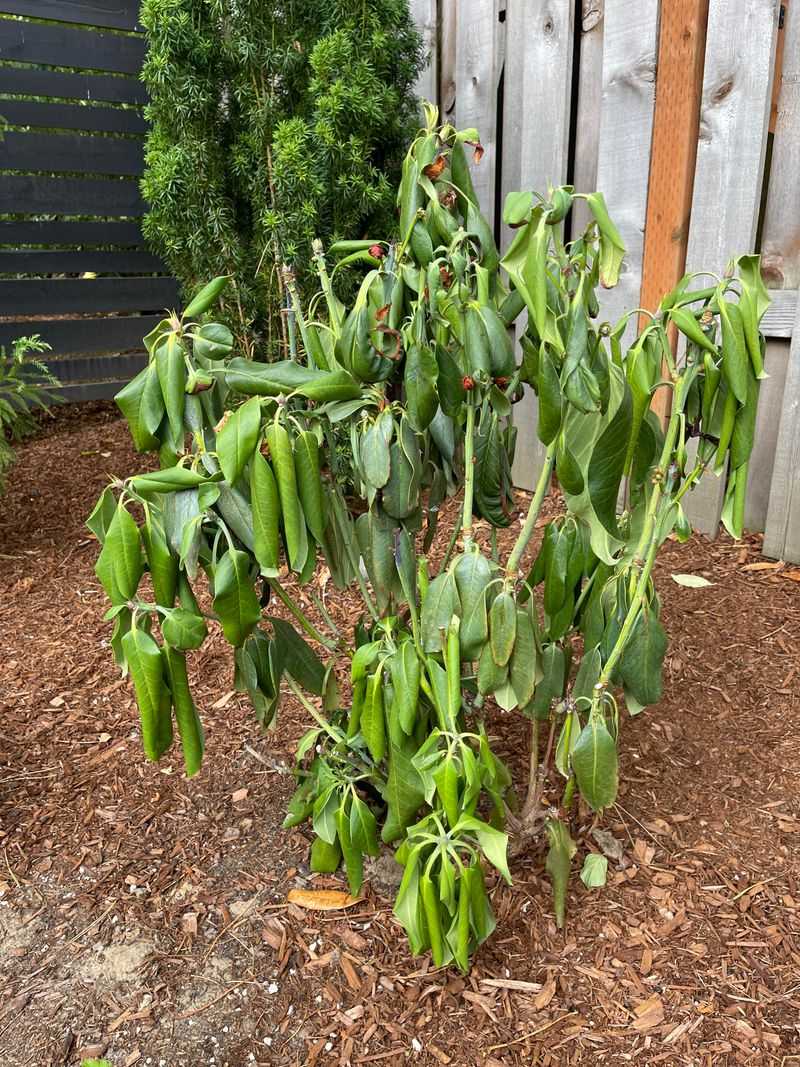
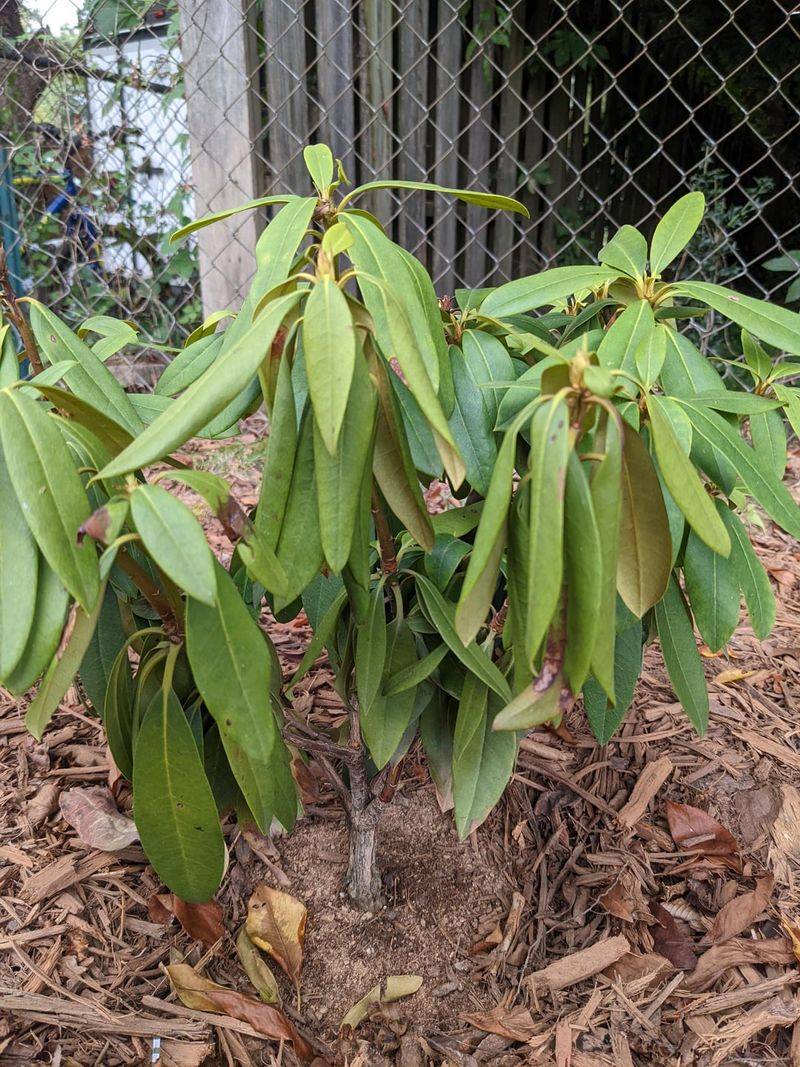
Believe it or not, a drooping rhododendron is not always a plant in trouble. Sometimes the droop is actually a clever survival trick. When leaves hang down or curl inward, they expose less surface area to the sun and heat.
Less surface area means less water evaporates from the leaf. By drooping and curling, the plant is essentially pulling its shades down to block the sun.
It is a built-in response that helps the plant slow down water loss when conditions get tough. Scientists call this a thermoregulation response. The plant is not broken.
Your Oregon Garden Changes Every Week. Your Plan Should Too.
Gardening in Oregon changes quickly throughout the season. Every Friday you’ll receive a simple weekly plan showing exactly what to plant, prune, fertilize, harvest, and protect so you never miss the right timing.
It is doing exactly what it was designed to do in stressful conditions. Many gardeners panic when they see this, but a closer look usually reveals that the soil is still moist and the plant bounces back once temperatures cool in the evening.
You can test this easily. If the leaves perk back up after sunset or after a good watering, the drooping was just a temporary stress response.
If the leaves stay limp even after the temperature drops and the soil is moist, then there may be another problem to investigate.
Recognizing the difference between stress drooping and actual dehydration takes a little practice.
Checking the soil moisture regularly and observing how the plant responds to cooler evening temperatures are both great habits to build as a gardener.
3. Shallow Roots Dry Out Faster Than Many Gardeners Expect
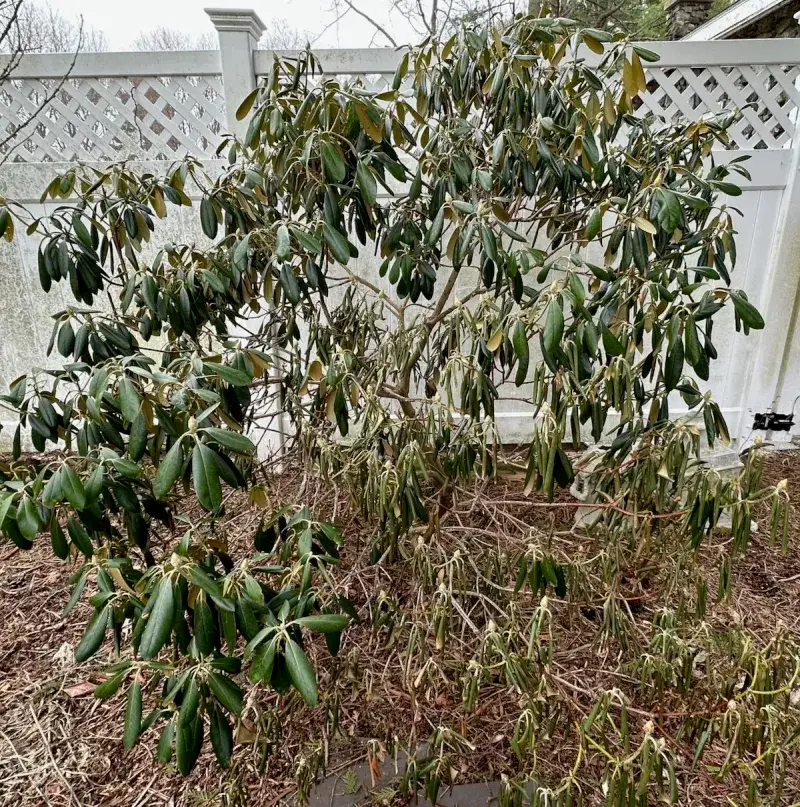
One thing that surprises many gardeners is just how shallow rhododendron roots actually are.
Unlike trees that send roots deep into the ground, rhododendrons keep most of their roots in the top 12 inches of soil. That zone dries out the fastest during hot weather.
Because the roots stay near the surface, they are the first to feel the effects of dry conditions. A few hot, sunny days without rain can dry out that shallow root zone completely.
When the roots run out of available moisture, the leaves start to droop quickly.
Shallow roots also make rhododendrons more vulnerable to foot traffic and soil compaction. Compacted soil holds less water and makes it harder for roots to spread.
Keeping people and pets from walking over the root zone helps protect the plant’s ability to absorb water.
Adding a thick layer of mulch over the root zone is one of the smartest things you can do. Mulch keeps the soil cooler and slows down evaporation significantly.
A 3-inch layer of bark mulch or wood chips can make a big difference during a heat wave. Watering slowly and deeply also helps. Shallow, quick watering only wets the very top of the soil.
Deep watering encourages roots to stay moist and gives the plant a better reserve to draw from during hot, dry stretches.
4. Afternoon Sun Can Make The Wilting Look Much Worse
There is a reason many experienced gardeners plant rhododendrons on the north or east side of a building.
Afternoon sun in the Pacific Northwest can be surprisingly intense, especially during summer heat waves. That direct afternoon light hits the plant hard and speeds up water loss.
Morning sun is much gentler. It warms the plant gradually and dries the dew off the leaves without causing major stress.
Afternoon sun, on the other hand, comes in at a lower angle and carries more heat. It can raise the temperature around the plant by several degrees compared to a shaded spot.
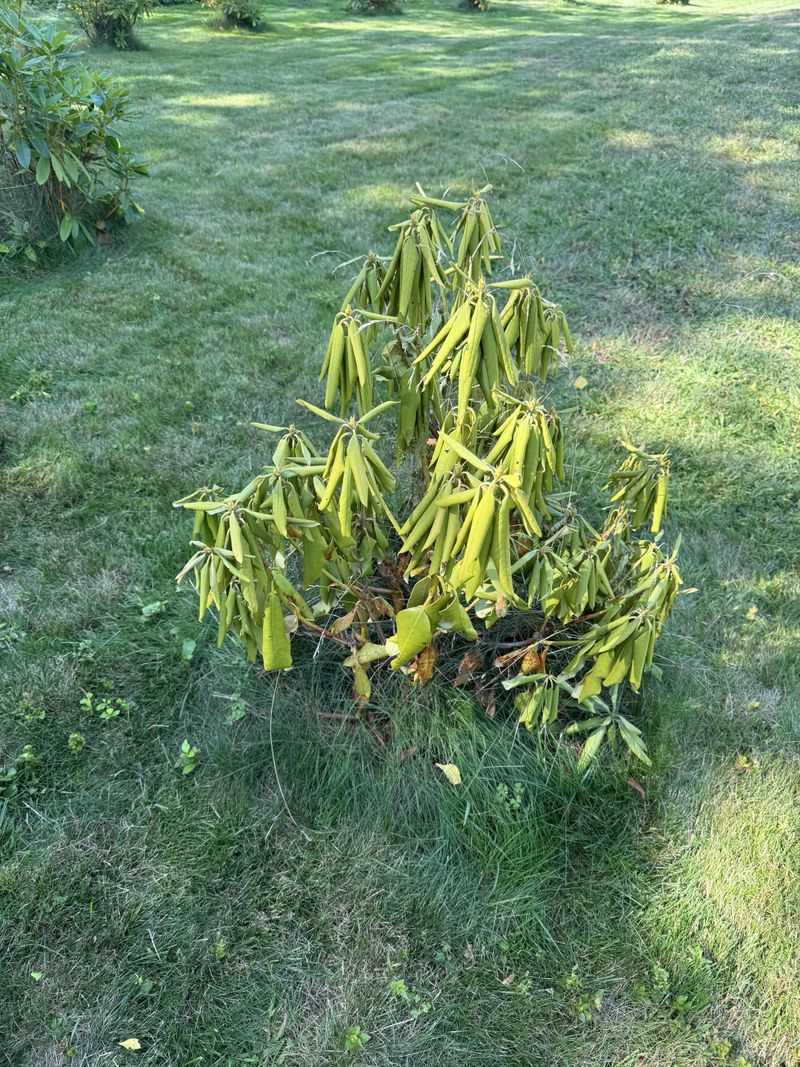
A rhododendron that looks perfectly fine in the morning can look completely wilted by 3 p.m. just because of sun exposure. This is especially true for plants growing in open areas with no shade from trees or buildings.
The wilting may look alarming, but it often reverses once the sun moves and temperatures drop.
If your plant consistently struggles in the afternoon, consider adding some shade. A shade cloth stretched over the plant during peak heat hours can reduce stress significantly.
Even a nearby tree or tall shrub that blocks the west-facing sun can make a real difference.
Repositioning a plant is also an option if it is still young and small. Moving it to a spot with afternoon shade can prevent the repeated stress that wears the plant down over time.
5. Dry Soil Beneath The Mulch Is The First Thing To Check
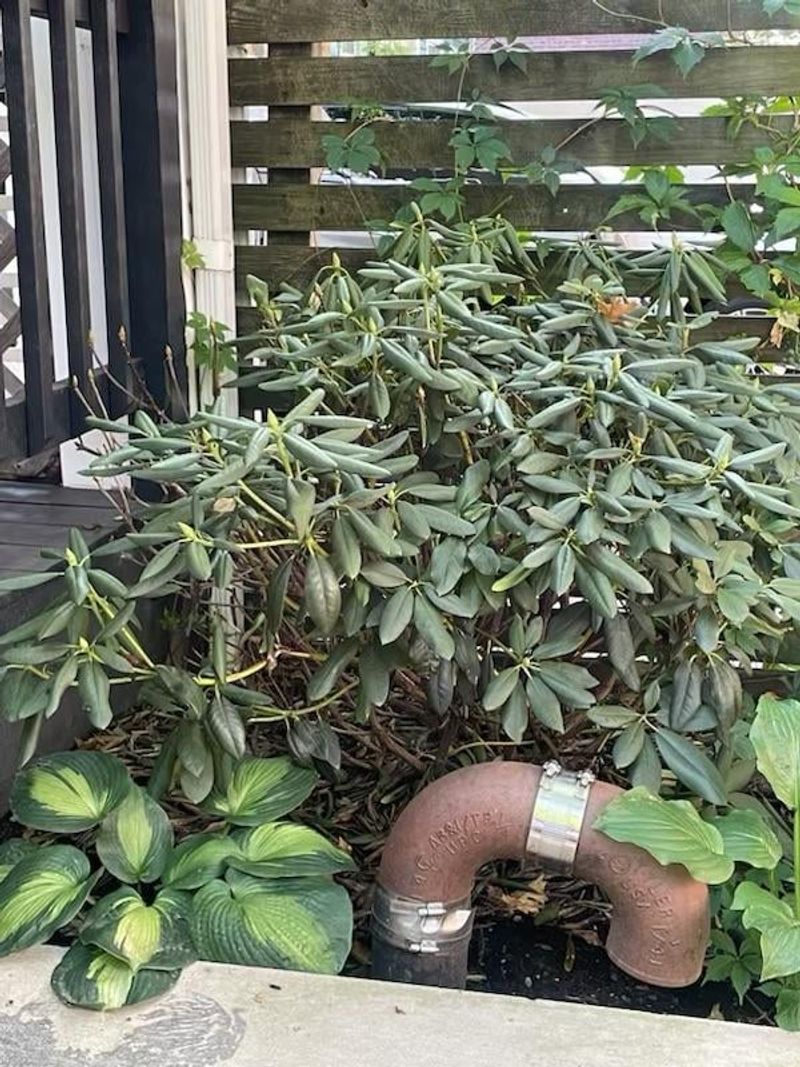
Mulch can be a bit deceptive. The top layer of mulch might look moist or feel slightly damp, but the soil beneath it can be completely dry.
Many gardeners make the mistake of checking only the surface and assuming everything is fine.
Pulling back the mulch and poking a finger or a small stick a few inches into the soil gives you a much more accurate picture.
If the soil feels dry past the first inch or two, the plant likely needs water. Waiting until the leaves droop to check is often waiting too long.
A soil moisture meter is a handy tool that takes the guesswork out of this process. You simply push the probe into the soil near the root zone and read the moisture level.
These meters are inexpensive and widely available at garden centers.
Oregon summers can go weeks without significant rainfall, which means relying on natural precipitation alone is not always enough.
Setting up a consistent watering schedule during dry months keeps the soil moisture from dropping to stressful levels in the first place.
Checking under the mulch every few days during a hot spell is a simple habit that can prevent a lot of plant stress.
Catching dry soil early means you can water before the leaves start drooping, which is much easier on the plant than waiting until it is already showing signs of dehydration.
6. Newly Planted Rhododendrons Struggle Most During Heat
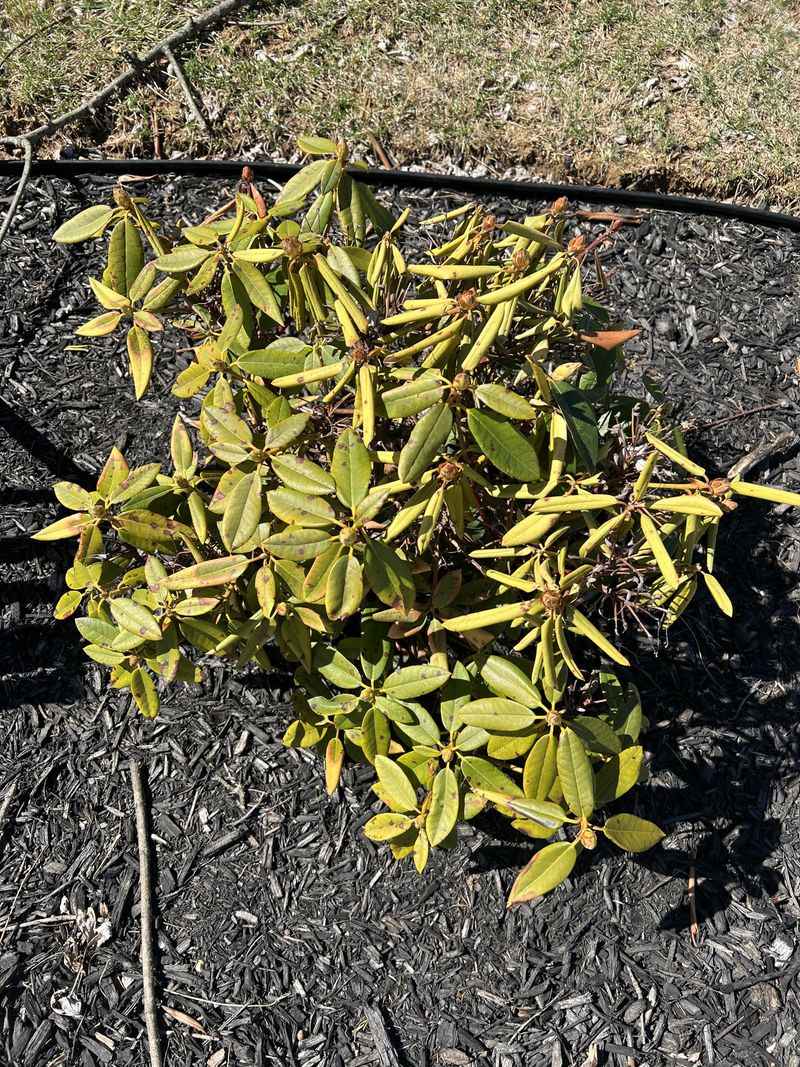
Fresh transplants have a tough time during Oregon heat waves. A newly planted rhododendron has not yet had the chance to spread its roots out into the surrounding soil.
That limited root zone means it can only pull water from a very small area. Established plants have roots that extend several feet in all directions, giving them access to a much larger reservoir of soil moisture.
A new plant is working with just the rootball it came with from the nursery, which dries out very quickly in hot weather.
Planting rhododendrons in fall or early spring gives them time to establish roots before summer heat arrives. If you plant in late spring or summer, you need to be extra attentive with watering.
Checking soil moisture daily during the first few weeks is not too much. It is actually necessary.
Giving a newly planted rhododendron a slow, deep watering every two to three days during a heat wave can help it survive until its roots spread out.
A drip irrigation system or soaker hose placed around the base of the plant makes this much easier to manage.
Shading a new plant during its first summer is also a smart move. A temporary shade structure or even a few strategically placed outdoor umbrellas can reduce heat stress dramatically.
The extra effort during the first season pays off with a stronger, healthier plant in the years ahead.
7. Deep Watering Works Better Than Quick Daily Sprinkles
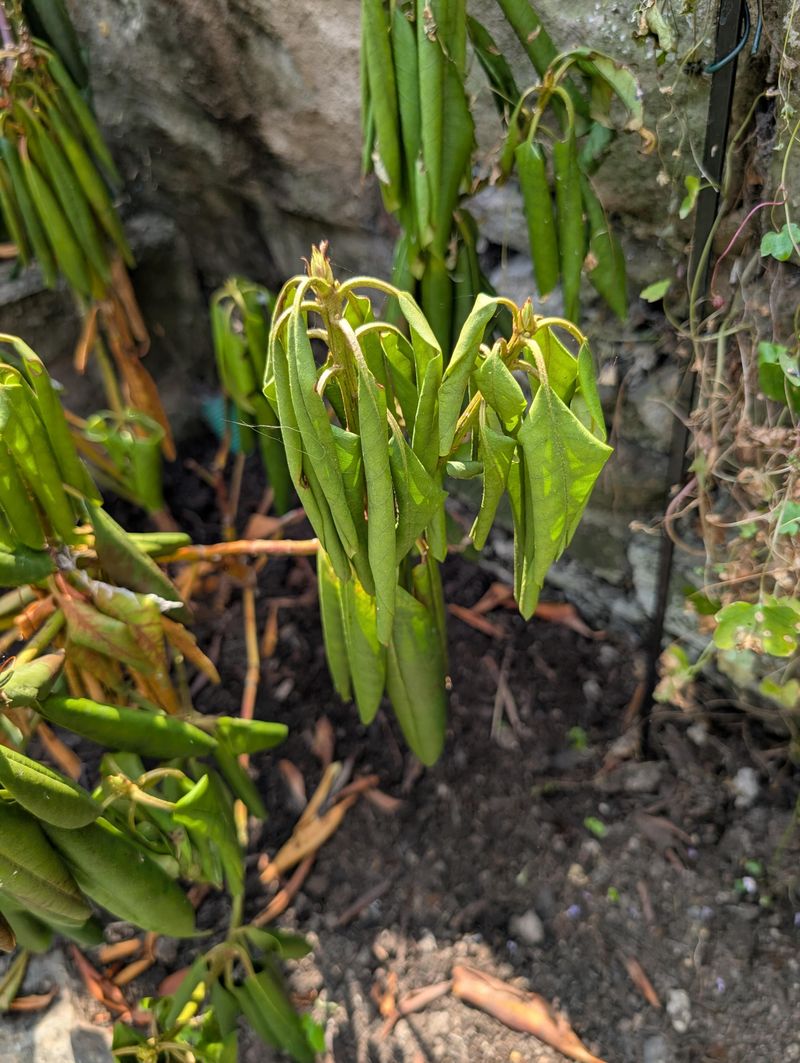
A lot of gardeners water their plants a little bit every day and wonder why the plants still look stressed. The problem with quick, shallow watering is that it only moistens the very top layer of soil.
The roots, which sit several inches down, never really get the drink they need. Deep watering means letting water soak slowly into the soil so it reaches the full root zone. For rhododendrons, that means getting moisture down to at least 10 to 12 inches.
A slow, steady trickle from a garden hose held at the base of the plant for 20 to 30 minutes works well.
Drip irrigation systems are excellent for this purpose. They deliver water slowly and directly to the root zone, which reduces evaporation and ensures the water goes exactly where it is needed.
Many gardeners in Oregon rely on drip systems during the dry summer months. Watering in the early morning is also a smart practice. Morning watering gives the soil time to absorb moisture before the heat of the day causes evaporation.
Evening watering can leave the leaves wet overnight, which may encourage fungal issues. Cutting back on watering frequency but increasing the amount per session is the key shift to make.
Watering deeply two or three times a week during a heat wave is far more effective than light daily sprinkles.
Your rhododendron will respond with firmer, healthier leaves and stronger overall growth.