Why Fall Armyworms Keep Coming Back To North Carolina Lawns No Matter What You Spray
Fall armyworms have earned a reputation among North Carolina homeowners for seeming to return no matter how aggressively a lawn gets treated, and the reason often comes down to timing rather than the treatment itself.
These pests move through the state in waves during late summer and fall, meaning a lawn successfully treated once can still get hit again by an entirely new group arriving from elsewhere just weeks later.
Armyworms also feed mostly at night and can strip a lawn of green blades in a matter of days, making it easy to underestimate just how quickly a new wave can cause visible damage.
Because they reproduce quickly and disperse widely, controlling armyworms effectively often requires monitoring for new activity rather than assuming one successful treatment solves the problem for the season.
Understanding this pattern of repeated waves helps explain why persistence, not just a stronger spray, is usually the real key to lasting control.
1. New Moths Fly In From The South Every Year
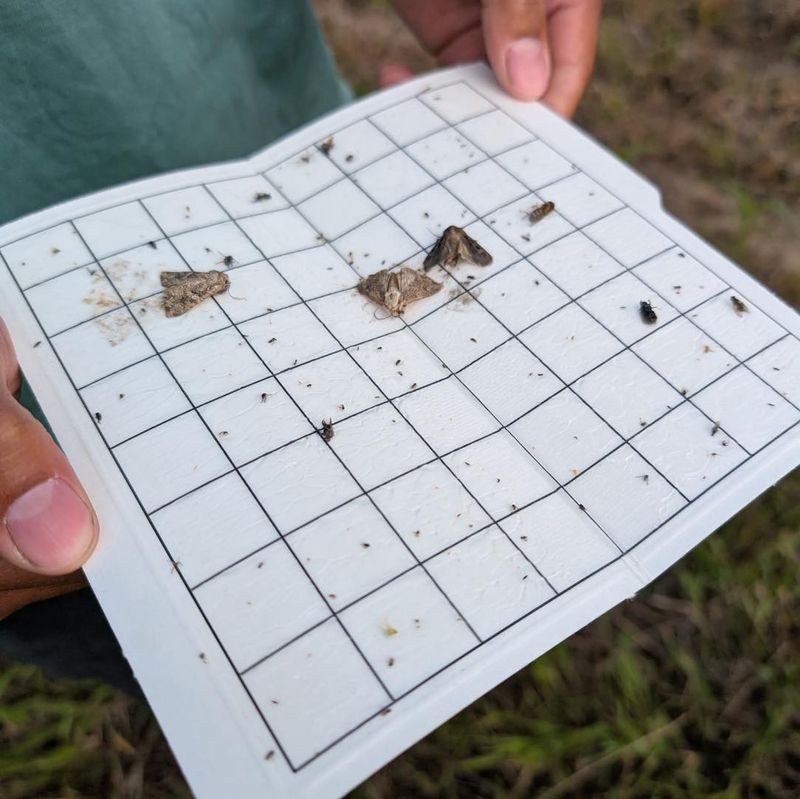
Every fall armyworm munching your grass is a traveler, or the offspring of one. The pests cannot make it through a cold North Carolina winter, so they spend the chilly months in warm spots like South Florida, South Texas, and the Caribbean.
When spring warms up, the moths start moving north one generation at a time. Warm southern winds and big storm systems give those moths a free ride.
Some flights carry them hundreds of miles in just a few nights, and fresh waves keep landing all summer and into fall. That steady stream is the real reason your lawn gets hit again after you already sprayed.
Think of a spray as a broom, not a locked door. It can sweep away the caterpillars living in your turf today, but it cannot stop a moth that flies in next week and lays a new batch of eggs. Once you understand that, the problem feels a lot less like your fault.
Smart timing helps you stay ahead. Start watching your lawn closely in late summer, looking for small greenish or brownish caterpillars and moths fluttering around porch lights at dusk.
After any treatment, mark your calendar and check again two to three weeks later, since a new wave may already be on the way.
North Carolina sits right along a major migration path, which makes the state a popular stop. Outbreaks here usually show up from August through October, though some years are much worse than others.
Keeping an eye on NC State Extension alerts can give you an early heads-up when moths arrive in big numbers.
2. New Generations Hatch Every Few Weeks
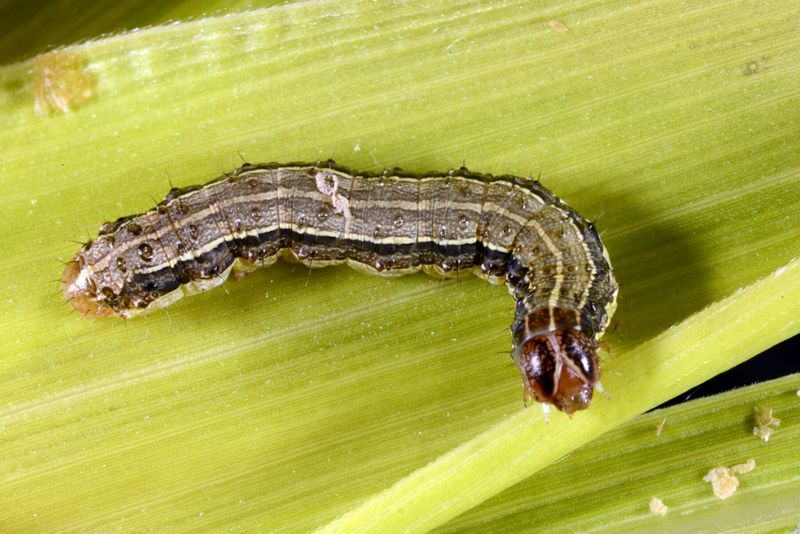
Four weeks. That is about all the time a fall armyworm needs to go from a tiny egg to a flying moth when the weather stays warm.
Eggs hatch in just a few days, the caterpillars feed for around two weeks, and then they tunnel into the soil to change into moths.
Speed like that creates a sneaky problem for homeowners. Most lawn insecticides only keep working for a short window after you apply them, often just several days.
Your North Carolina Garden Changes Every Week. Your Plan Should Too.
Gardening in North Carolina changes quickly throughout the season. Every Friday you’ll receive a simple weekly plan showing exactly what to plant, prune, fertilize, harvest, and protect so you never miss the right timing.
Eggs laid after that window hatch into a brand new group of hungry caterpillars that find your grass wide open.
So one spray rarely ends the story. It clears out the current crowd, but it does not protect the lawn for the rest of the season. Treating over and over just in case is not the answer either, because it wastes money and can harm helpful insects that eat armyworms.
A better plan starts with your own two eyes. Walk the lawn every few days during outbreak season, paying extra attention to spots that look thin or off-color.
Treat again only when you actually find new caterpillars, and always follow the label on how soon a product can be reapplied.
Warm weather in North Carolina often hangs around well into October, giving these pests time for several generations in one season.
Those generations can overlap, so you might see tiny caterpillars and nearly grown ones in the same yard at once. Staying patient and watchful through the whole fall pays off far more than one big spray in August.
3. Spraying Too Late When Caterpillars Are Large
Ever notice how a lawn can look fine on Monday and brown by Friday? Fall armyworms are the reason that happens so often, because the biggest caterpillars eat most of the grass during their last few days of feeding. The damage seems to appear overnight.
Size makes a huge difference in how well a spray works. Caterpillars under about half an inch long are much easier to control, while the large, plump ones near the end of their growth are far harder to handle.
By the time brown patches show up, much of the eating is already done. Catching them early is the secret, and a simple soap test makes it easy.
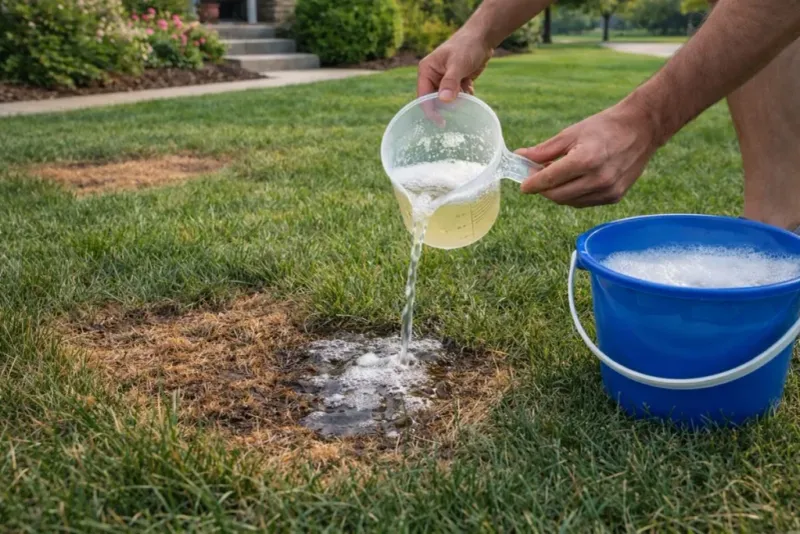
Mix about 2 tablespoons of dish soap into a gallon of water. Pour it slowly over a square foot or two of grass at the edge of any brown or thinning area.
Then wait and watch for a few minutes. The soap irritates the caterpillars, so they wiggle up to the surface where you can see them. If you spot several small ones, you caught them at the perfect time to treat.
Look for a few telltale signs while you are down there. Fall armyworms have a light, upside-down Y shape on the head and four dark dots forming a square near the tail end. Knowing those marks helps you tell them apart from other lawn caterpillars.
North Carolina homeowners face an extra challenge here. Outbreaks can build within just a few days, and early damage often looks like drought stress. Before you drag out the sprinkler, do a quick soap test to make sure thirst is really the problem.
4. Caterpillars Hide In Thatch During The Day
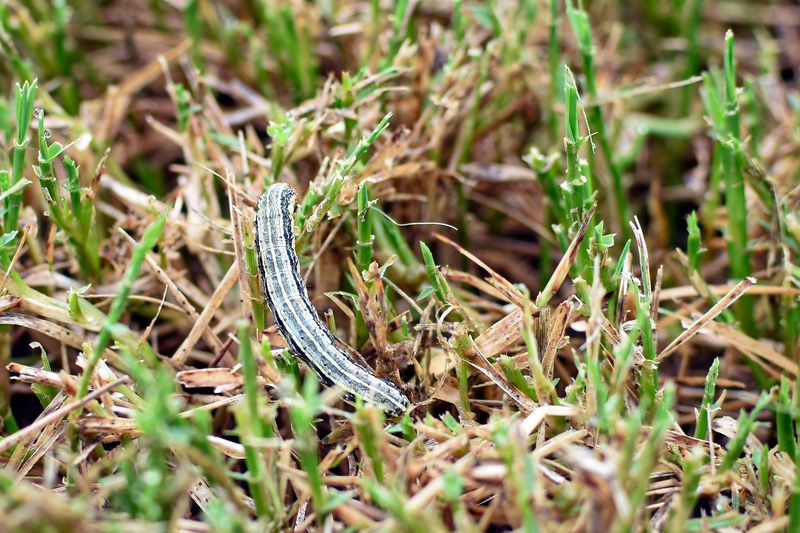
Fall armyworms are night owls with a big appetite for fresh grass. They do most of their feeding in the early morning, late afternoon, and through the night.
When the hot sun is high, they crawl down into the thatch and near the soil surface to stay cool and out of sight.
That hiding habit can quietly ruin a spray job. If you treat at noon, most of the product lands on the grass blades while the caterpillars are tucked away below.
Some products also break down in strong sunlight and heat, so less is left by the time the pests come back up.
Thatch is the spongy layer of stems and roots sitting between the green blades and the soil. A thick layer gives caterpillars a cozy hiding place and can catch spray before it reaches where they rest.
Keeping thatch under about half an inch with regular care makes your lawn a less welcoming hideout.
Timing your spray to match their schedule works much better. Apply liquid products in the late afternoon or early evening, right when the caterpillars start moving up to feed. They will be chewing on freshly treated grass instead of hiding from it.
Always read the label to see whether a product should be watered in or left on the leaves. Some granular products need a little water to activate, while most liquids work best staying on the blades.
Here in North Carolina, bright fall afternoons can still feel like summer, pushing caterpillars deep into the turf. An evening spray lines up perfectly with their dinner hour.
5. Rain And Mowing Remove Treatments Too Soon
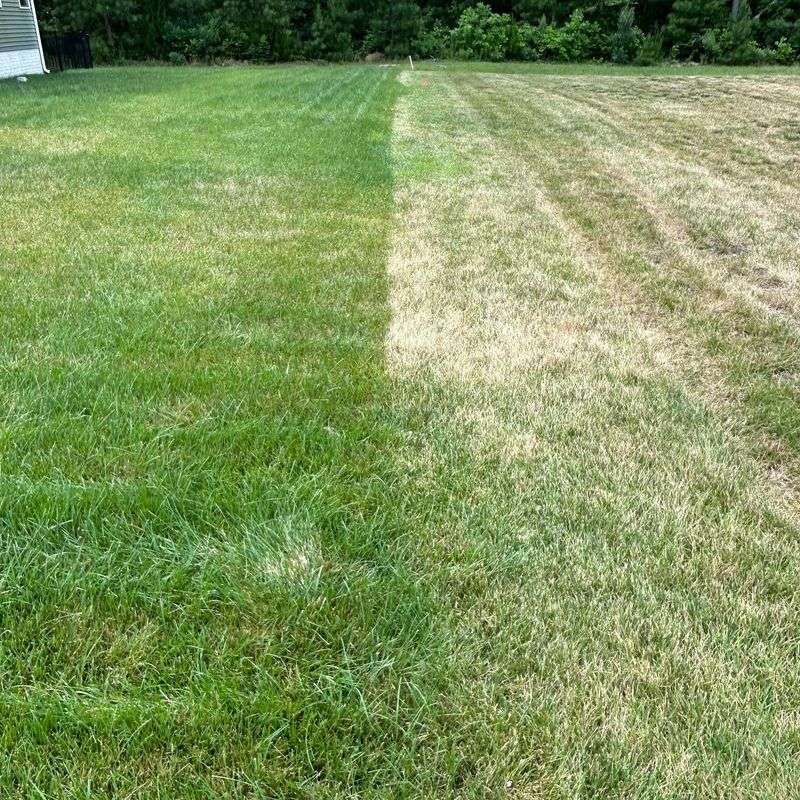
Nothing stings quite like spraying the lawn and hearing thunder an hour later. Rain, sprinklers, and mowing can all undo your hard work before it has a chance to help. Knowing why makes the mistake much easier to avoid.
Most liquid products used on fall armyworms work on the grass blades themselves. The caterpillars have to eat treated leaves to be affected, so the product needs to stay right where they feed.
Wash it off with water or cut those leaves away with the mower, and the protection disappears before the pests take a bite. A quick look at the forecast before you spray can save a lot of money.
Aim for a stretch of at least a day without heavy rain, and choose a calm evening so the spray lands where you want it. Wind can carry droplets onto flower beds, sidewalks, or a neighbor’s garden.
Your sprinkler system deserves some attention too. Turn off automatic irrigation after a liquid application unless the label says to water it in. One early morning cycle is all it takes to rinse away the whole treatment.
Mowing needs a short break as well. Wait at least a day, or longer if the label says so, before cutting the grass again.
If the lawn is getting tall, mow a day or two before you spray so you are not chopping off treated blades soon after. North Carolina weather makes all of this extra tricky.
Late summer brings pop-up thunderstorms almost daily, and tropical systems can soak the state in September and October. Planning around those rainy spells keeps your spray on the grass where it belongs.
6. Nearby Fields And Lawns Send More In
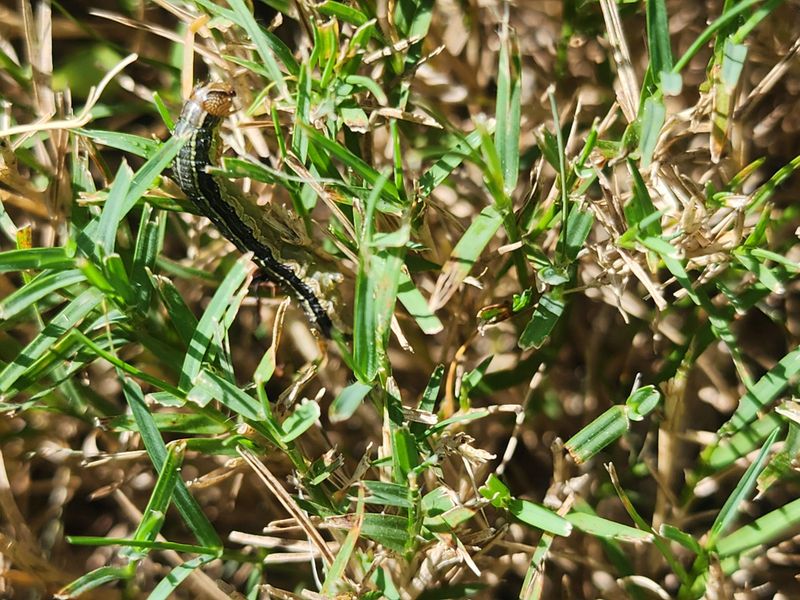
A fun bit of history hides in the name. Armyworms earned it because, once they eat through one patch of food, huge groups march together across the ground to find more, like a tiny army on the move.
Farmers have watched these caterpillar parades roll across fields and roads for generations. That marching habit explains why a treated lawn can fill back up with pests.
Moths lay eggs across wide areas, including pastures, hayfields, ditches, and empty lots nobody is spraying. When those caterpillars run out of grass, they head straight for the green yard next door, which might be yours.
Start your search at the edges. Check the borders of your lawn that touch fields, vacant lots, or a neighbor’s yard, since invaders usually show up there first. A soap flush along those lines can reveal trouble before it spreads toward the house.
Talking with neighbors helps more than you might expect. When several homes treat around the same time, caterpillars have fewer safe places to build up and crawl from.
A quick chat over the fence or a post in your neighborhood group can make the whole street tougher to invade.
Location plays a big role in North Carolina. Many homes sit right beside pastures and hayfields full of bermudagrass, one of the fall armyworm’s favorite meals.
Hayfields can hold enormous numbers of caterpillars, and when that food runs short, the hungry crowd may move toward nearby lawns.
You cannot control what happens in a field down the road. Watching those borders closely still gives you a strong head start.
7. Lush Lawns And Outdoor Lights Draw Egg-Laying Moths
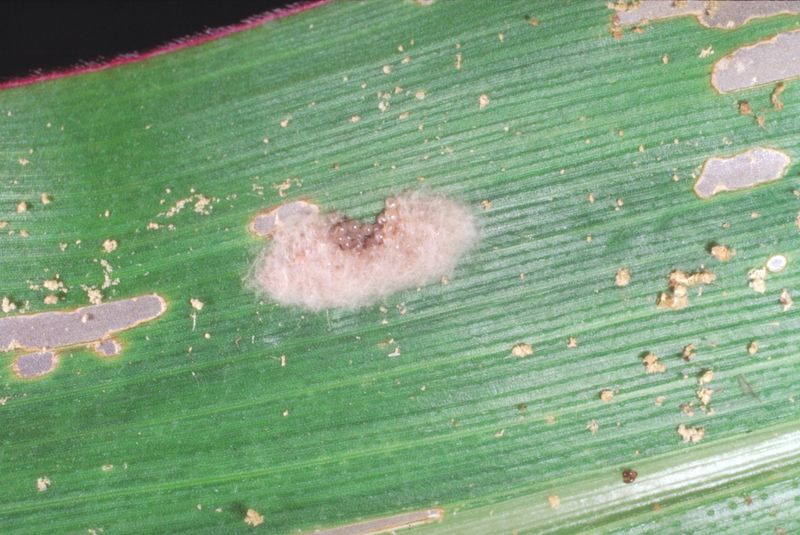
A beautiful lawn can be its own worst enemy. Fall armyworm moths love healthy, green, fast-growing grass because it promises plenty of food for their young. The yard that gets compliments from the neighbors is often the first one the moths pick.
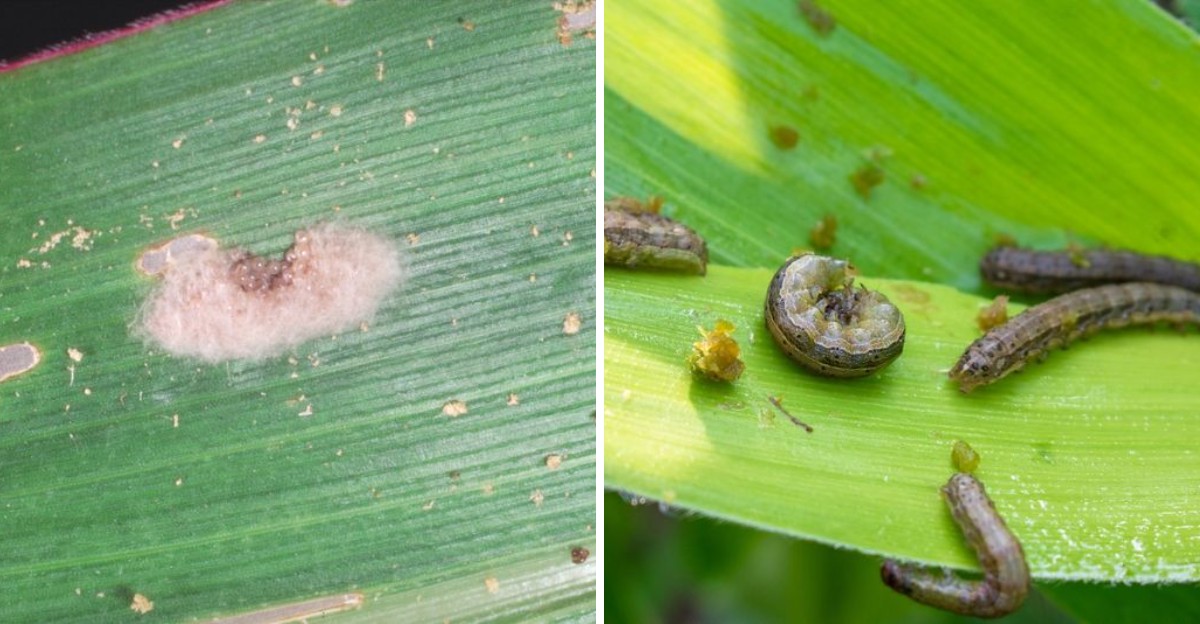
Bright lights add to the attraction. The moths fly toward porch lights, garage lights, and floodlights at night, and they often lay eggs on nearby surfaces. A single egg mass can hold 100 or more eggs, and one female can lay several masses.
Those masses show up on grass blades, but also on fences, walls, siding, mailboxes, and even outdoor furniture.
They look like small, fuzzy, grayish patches because the moth covers the eggs with scales from her body. Scrape them off with a putty knife or wipe them into a bag with soapy water before they hatch.
Cutting back on lighting is an easy win. Turn off outdoor lights you do not truly need during outbreak season, or switch to yellow bug lights, which draw fewer insects.
Motion sensor lights are another handy choice that keeps your home safe without glowing all night.
Fertilizer timing matters too. Pushing heavy nitrogen in late summer creates soft, lush growth that moths find hard to resist, so follow a balanced feeding schedule based on a soil test.
North Carolina lawns are especially inviting in late summer. Bermudagrass, zoysia, and other warm season grasses are growing hard right when the moths arrive, creating a perfect landing zone.
A little less glow and a little less fertilizer can make your yard noticeably less tempting.
8. Some Populations Resist Common Insecticides
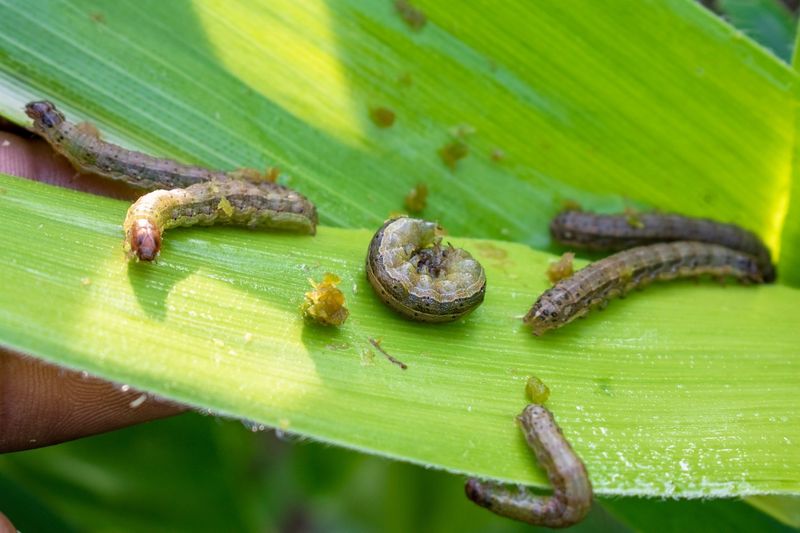
Scientists have been watching fall armyworms outsmart chemicals for decades. Populations in different parts of the Americas have developed resistance to several common insecticide types, including some pyrethroids and older products.
In certain areas, they have even adapted to crops bred to fight them. Resistance builds in a simple way.
When the same type of product gets used again and again, a few caterpillars with natural toughness make it through. They grow up, mate, and pass that toughness to their offspring, so over time a spray that once worked great gives weaker results.
The key to fighting back is something called mode of action, which means how a product affects the pest.
Look on the label for a group number, usually shown in a box near the top. Products with the same number work the same way, even if the brand names are totally different.
Rotating groups keeps the caterpillars guessing. If you used a group 3A pyrethroid last time, switch to a product from a different group, such as group 28 or group 5, for the next round. Avoid leaning on the same group over and over through a single season.
Always pick products labeled for fall armyworms on turf, and follow every label direction exactly. NC State Extension offers updated recommendations for homeowners, and your local county Extension office can answer questions for free.
North Carolina gets a fresh batch of moths every year from southern regions where resistance has already been documented.
The caterpillars in your yard may arrive tougher than you expect. Smart rotation helps your treatments stay effective season after season.