Why Georgia Lawns Suddenly Turn Yellow Even With Regular Watering
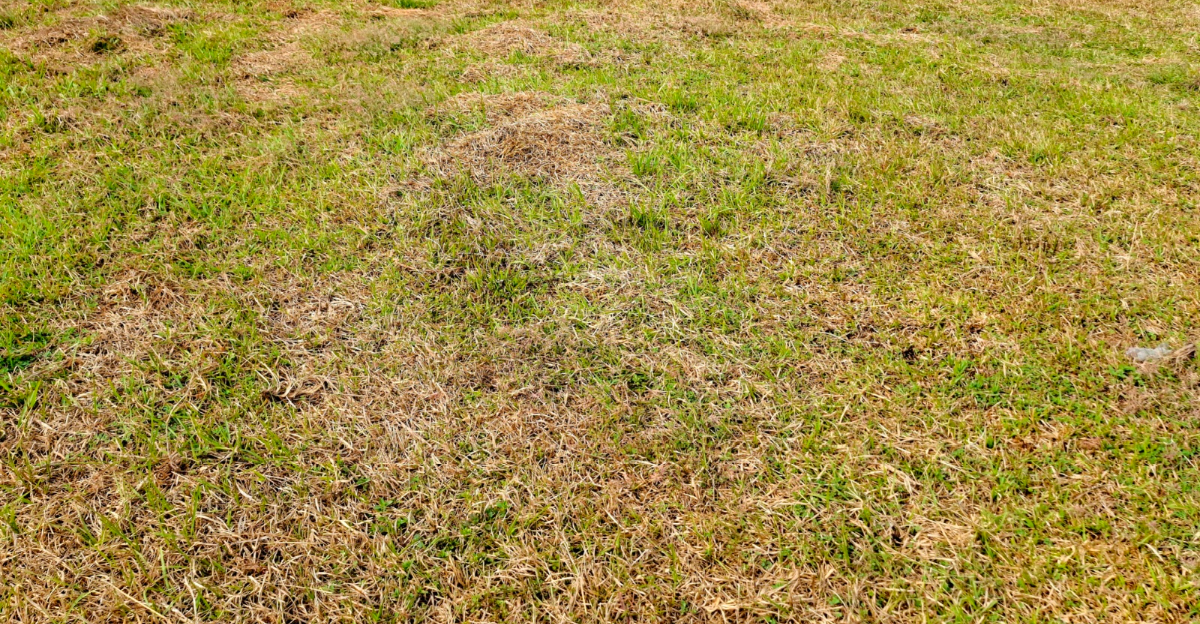
Running the sprinklers every morning and still watching your Georgia lawn go yellow is the kind of thing that makes a homeowner question everything.
You’re putting in the effort, the water is going down, and somehow the grass still looks pale, patchy, and completely unimpressed.
The frustrating truth is that a yellow lawn in Georgia summer is rarely just a watering problem, even though that’s the first thing most people try to fix.
Georgia’s intense heat, thick humidity, and unpredictable rainfall create a combination of stressors that water alone simply can’t address.
What turf actually needs to stay green and strong through the season is a balance of moisture, oxygen, nutrients, healthy soil biology, and proper mowing working together.
Pull one of those out of the equation and the lawn starts showing it, usually in the most visible way possible.
1. Nitrogen Deficiency Can Leave Grass Looking Pale
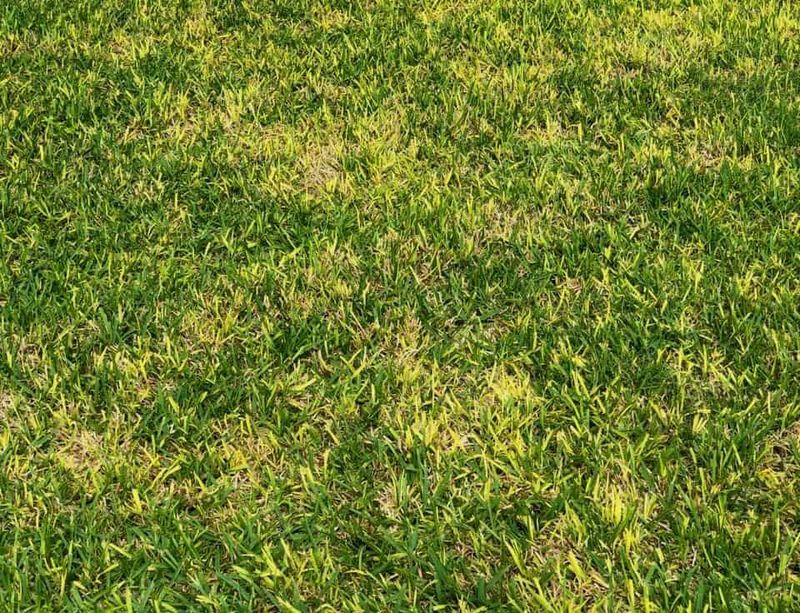
Pale grass after a good rain is one of the more confusing sights a Georgia homeowner can face. The lawn got water, the soil looks moist, but the blades still have that washed-out, yellowish tone that just will not go away.
In many cases, the culprit is not drought at all but a shortage of nitrogen in the soil.
Nitrogen is the nutrient that keeps turfgrass green and actively growing. When grass does not have enough of it, the blades start losing their deep color and gradually shift toward a pale yellow-green.
This can happen even when the lawn is being watered on a regular schedule because water moves nutrients through the soil, and in Georgia’s sandy or clay-heavy soils, nitrogen can leach away faster than the grass can absorb it.
Heavy rainfall and frequent irrigation both speed up this leaching process. So the more water that moves through the soil, the quicker nitrogen can be pushed out of the root zone before the grass ever gets a chance to use it.
Warm-season grasses like bermuda and zoysia, which are common across Georgia, tend to need consistent nitrogen during the growing season to hold their color.
A simple soil test can confirm whether nitrogen levels are low. Applying a balanced lawn fertilizer with the right nitrogen ratio, following label directions carefully, can help turf recover its green color over several weeks without risking fertilizer burn.
2. Too Much Water Can Yellow The Lawn
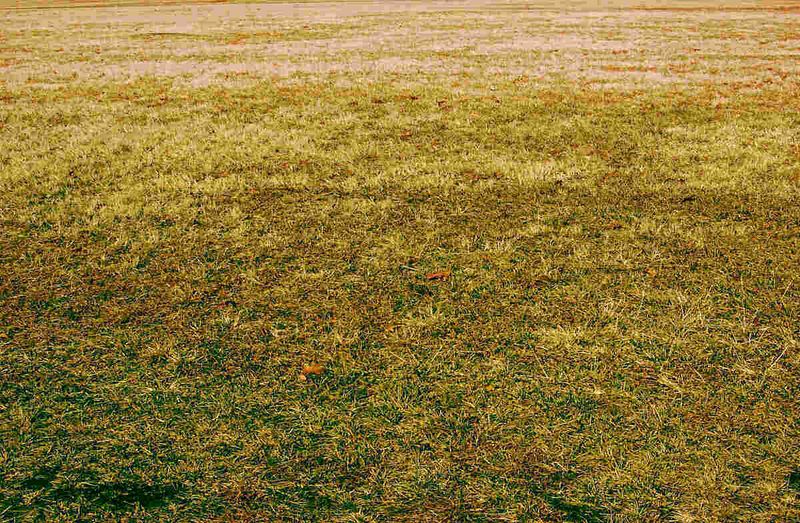
Sprinklers running twice a day might feel like great lawn care, but in Georgia’s humid climate, overwatering is a surprisingly common reason grass turns yellow.
More water does not mean healthier turf, and the soil beneath the surface tells a very different story than what the hose suggests.
When soil stays saturated for too long, oxygen gets pushed out of the root zone. Grass roots need both water and air to function properly.
Without enough oxygen in the soil, roots begin to struggle and lose their ability to take up nutrients effectively. The grass above ground responds by turning yellow, even though it is technically surrounded by moisture.
Your Georgia Garden Changes Every Week. Your Plan Should Too.
Gardening in Georgia changes quickly throughout the season. Every Friday you’ll receive a simple weekly plan showing exactly what to plant, prune, fertilize, harvest, and protect so you never miss the right timing.
Georgia’s clay soils make this problem worse. Clay holds water longer than sandy soils, so frequent watering on top of clay can create soggy conditions that last for days.
Homeowners sometimes see yellow patches in low spots of the yard where water collects after irrigation or rain, and those areas tend to stay yellow the longest because drainage is slow.
Cutting back irrigation frequency and allowing the soil to partially dry between watering sessions can give roots the air they need to recover.
Watering deeply but less often encourages stronger root development and helps prevent the oxygen-starved conditions that lead to yellowing.
In Georgia, adjusting irrigation schedules based on recent rainfall rather than running them on a fixed timer makes a noticeable difference in turf health over the summer.
3. Shallow Watering Leaves Roots Struggling
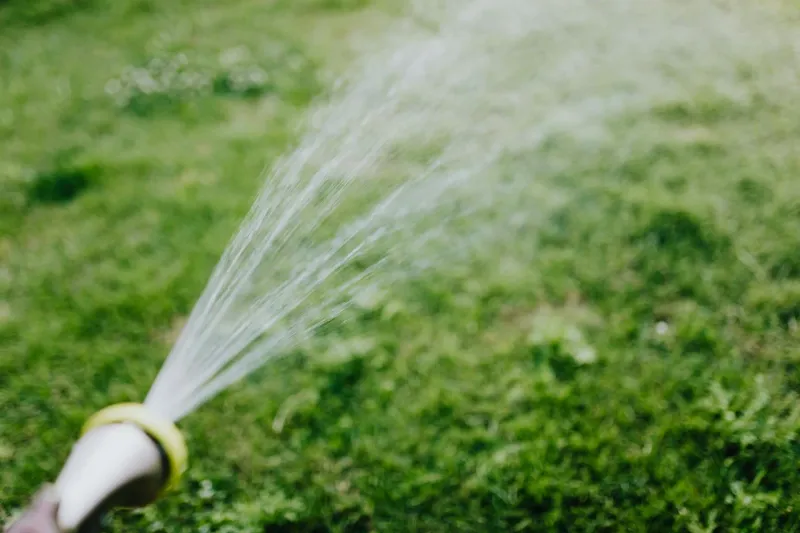
Running the sprinklers for just a few minutes each morning might seem like a consistent routine, but short watering sessions often do little more than wet the top inch or two of soil.
Roots follow moisture, and when water barely penetrates the surface, the root system stays shallow and weak.
Shallow roots have a hard time surviving Georgia summers. The top layer of soil heats up quickly under the sun and dries out fast between watering sessions.
Grass with roots anchored only near the surface has almost no buffer against heat or brief dry spells, and it shows that stress through yellowing, especially during the hottest weeks of the year.
A simple way to check watering depth is to push a screwdriver or thin rod into the soil after a watering session. If it only slides in easily for an inch or two, the water is not reaching deep enough.
Most warm-season grasses in Georgia benefit from watering that moistens the soil to a depth of several inches, which encourages roots to grow downward where conditions are more stable.
Shifting to longer, less frequent watering sessions helps train roots to grow deeper into the soil profile. This approach builds a stronger, more resilient lawn that can handle Georgia’s summer heat and short dry periods without turning yellow between watering days.
It takes a few weeks of adjusted irrigation habits, but the improvement in turf color and density is usually worth the change.
4. Humid Weather Encourages Leaf Diseases
Georgia mornings in July and August have a way of feeling like a warm, wet blanket before the sun even clears the trees.
That thick humidity is comfortable for mosquitoes and miserable for turfgrass, because it creates exactly the conditions that lawn diseases need to take hold and spread quickly.
Fungal diseases like dollar spot, brown patch, and gray leaf spot are common across Georgia lawns during the summer months.
These diseases thrive when grass blades stay wet for extended periods, temperatures are warm overnight, and air movement across the lawn is limited.
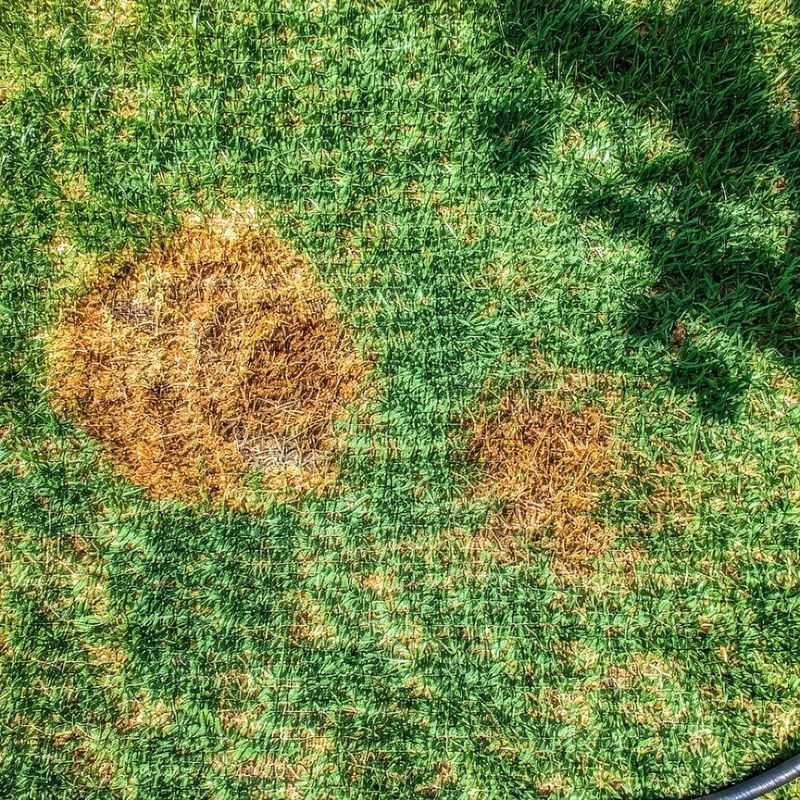
Homeowners often notice yellow or tan patches appearing suddenly after a stretch of humid, overcast days, even when the lawn has been watered on schedule.
What makes this tricky is that the yellowing from leaf disease can look similar to the yellowing from drought or nutrient problems at first glance.
Looking closely at individual blades often reveals lesions, spots, or irregular discoloration patterns that suggest disease rather than a simple moisture issue.
Patches caused by fungal activity tend to have irregular edges and may spread outward over several days.
Watering in the morning rather than in the evening helps reduce the time grass blades stay wet overnight, which lowers disease pressure.
Improving air circulation by trimming nearby shrubs or hedges and avoiding overwatering can also reduce humidity at the turf level.
In serious cases, a properly identified fungal disease may respond to a labeled fungicide applied according to product directions.
5. Wet Grass Blades Stay Vulnerable Longer
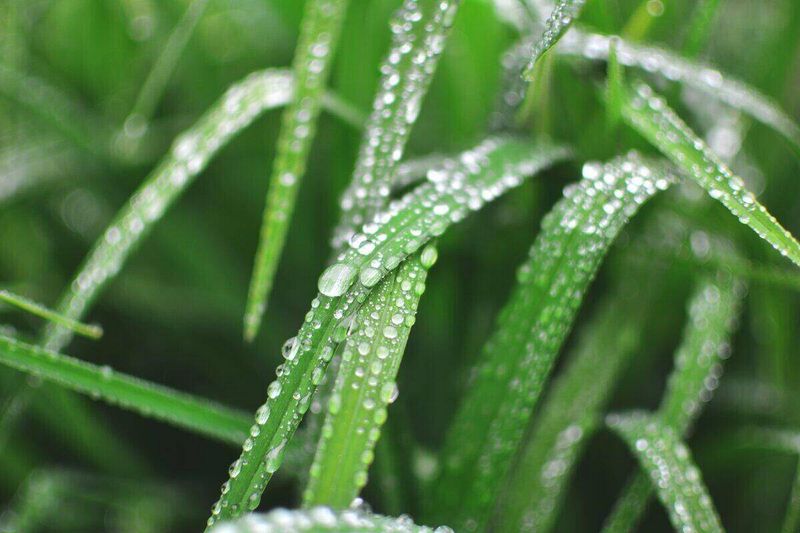
There is a window of time each morning in a Georgia summer when the grass is wet, the air is warm, and conditions are ripe for problems that most homeowners never think about.
Wet foliage is not just a sign of a recent watering session; it is also an open invitation for pathogens and stress to work their way into the leaf tissue.
Grass blades that stay wet for several hours at a time are more vulnerable to fungal infection, and the longer that moisture sits on the surface of the leaf, the greater the risk.
In Georgia, where overnight temperatures stay warm and humidity lingers well into the morning, grass can remain wet from an evening irrigation session all the way through the following mid-morning.
That extended wet period gives fungal spores plenty of time to germinate and begin causing damage.
Evening watering is one of the most common habits that contributes to this problem. Homeowners often water after work to avoid evaporation, but the result is grass that stays damp through the entire night and into the next day.
Switching irrigation to early morning allows the sun and rising temperatures to dry the blades off within a few hours.
Reducing the time foliage stays wet is one of the most straightforward adjustments a Georgia homeowner can make.
It does not require new equipment or expensive treatments, just a change in the irrigation schedule that gives the grass a better chance of drying off before conditions become favorable for disease development.
6. Poor Fertilizer Timing Adds Stress
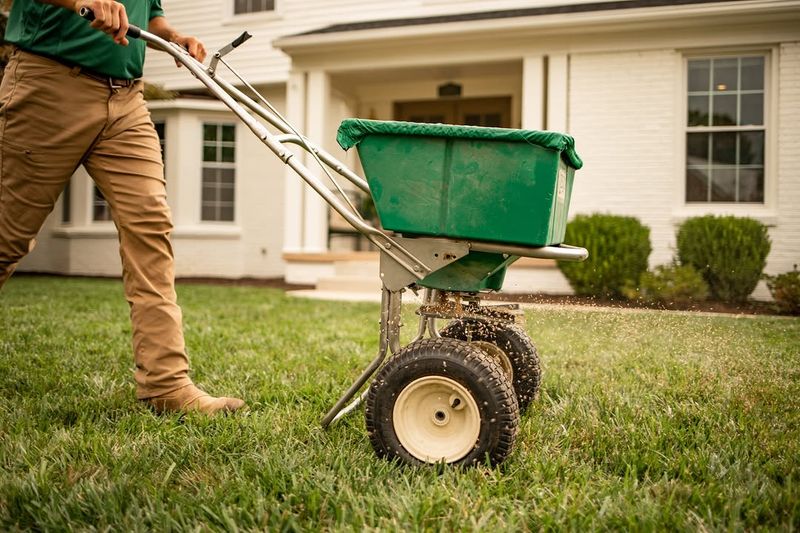
Fertilizing a Georgia lawn at the wrong time of year, or at the wrong point in the season, can push grass in the wrong direction fast.
Many homeowners assume that fertilizer equals green grass and apply it whenever they notice the lawn looking pale, but timing matters just as much as the product itself.
Applying nitrogen-heavy fertilizer during a heat wave or drought stress period can cause the grass blades to take on a scorched, yellowish appearance rather than the lush green the homeowner was hoping for.
Fertilizer encourages new growth, and when the lawn is already under heat stress, pushing it to grow faster can overwhelm its ability to stay hydrated and healthy.
The result often looks worse than the original problem.
Late summer fertilization on warm-season grasses in Georgia also carries risk. Stimulating growth too close to the end of the growing season can leave tender new blades exposed to early cool temperatures, which can lead to yellowing as the grass struggles to adjust.
Following a fertilization schedule based on the specific turfgrass variety and the Georgia growing season helps avoid these timing mistakes.
Soil testing before fertilizing is a practical step that removes a lot of guesswork. Knowing what nutrients are actually lacking allows a homeowner to apply the right product at the right rate rather than guessing.
Spreading fertilizer evenly, watering it in lightly, and avoiding application during the hottest part of the day all help reduce the chance of stress-related yellowing after treatment.
7. Mowing Too Low Weakens Turf Color
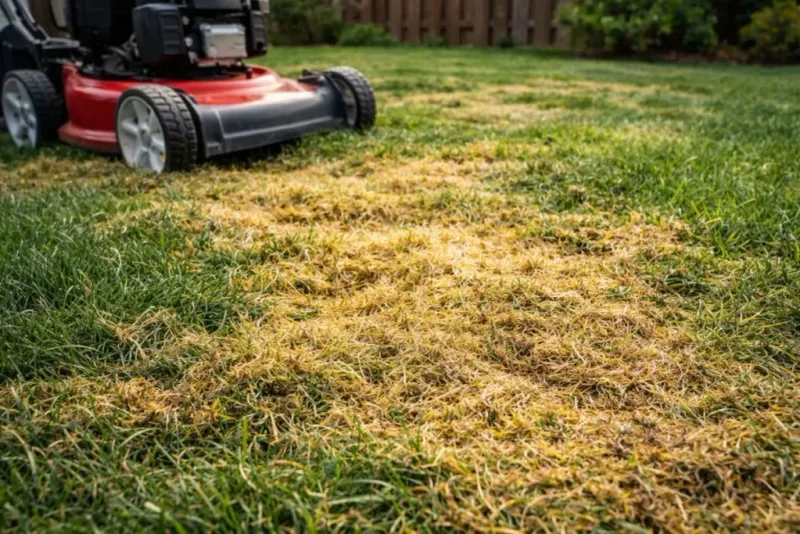
Mower tracks cutting across a Georgia lawn should leave behind an even, tidy surface, but when the blade is set too low, those tracks can leave behind something less welcome: a patchy, yellowish lawn that looks stressed for weeks afterward.
Cutting grass too short is one of the fastest ways to drain color out of an otherwise healthy lawn.
Removing too much of the grass blade at once, a problem called scalping, exposes the lower stems and crowns to direct sunlight and heat. These parts of the plant are not designed to handle intense sun exposure the way the upper blades are.
Once exposed, they can take on a pale yellow or straw-colored appearance that looks similar to drought stress but is actually caused by the mower.
Each grass variety has a recommended mowing height range, and staying within that range helps the lawn maintain enough leaf surface area to photosynthesize properly.
Bermudagrass, zoysia, and centipede, all common in Georgia, each have different ideal cutting heights.
Mowing too low on any of them during summer heat puts the turf under additional stress at the worst possible time.
Raising the mower deck by even half an inch can make a meaningful difference in how well the lawn holds its color through the season.
Keeping mower blades sharp also helps, since dull blades tear the grass rather than cutting it cleanly, leaving ragged edges that turn yellow or brown within a day or two of mowing.
8. Compacted Soil Makes Water Run Off
Water running down the driveway instead of soaking into the lawn is a sign that something is wrong beneath the surface.
In many Georgia yards, especially those with heavy clay soil or high foot traffic from kids, pets, and backyard gatherings, the soil beneath the turf can become so compacted that water has almost nowhere to go.
Compacted soil has fewer air pockets, which means water moves through it slowly or not at all. When irrigation or rain hits a compacted lawn, the water tends to pool briefly and then run off the surface rather than penetrating down to the root zone.
The grass ends up missing most of the moisture it was supposed to receive, and the roots stay dry even though the sprinklers ran on schedule.
The grass above compacted soil often yellows in a way that looks exactly like drought stress, because in practical terms, it is experiencing drought.
The roots cannot access the water that is sitting on or just below the surface, and they cannot grow deeper because the soil is too dense to allow root expansion.
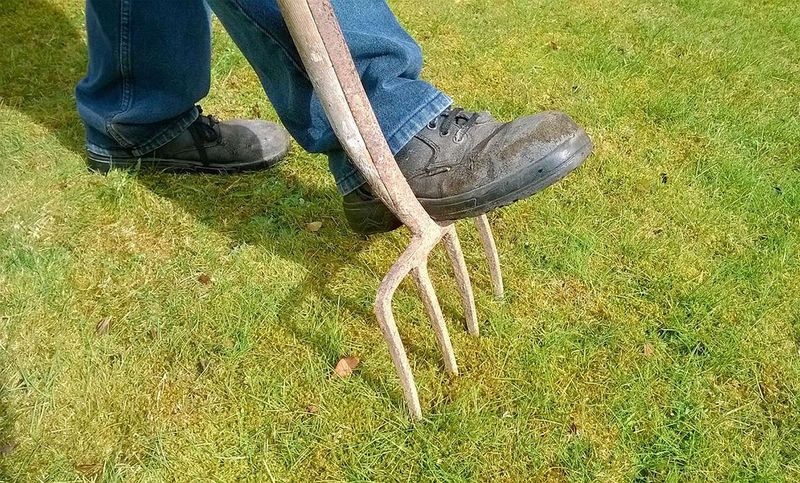
Core aeration is one of the most effective ways to address compaction. This process removes small plugs of soil from the lawn, opening up channels for water, air, and nutrients to reach the root zone more easily.
In Georgia, fall aeration on warm-season grasses allows the lawn to recover and build a stronger root system before the next growing season begins, setting it up for better color and resilience the following summer.