Why Indigo Buntings Are The Rarest Summer Visitor To Ohio Yards
You could stare into your backyard for thirty summers straight and never once catch this bird. That’s how rare it is.
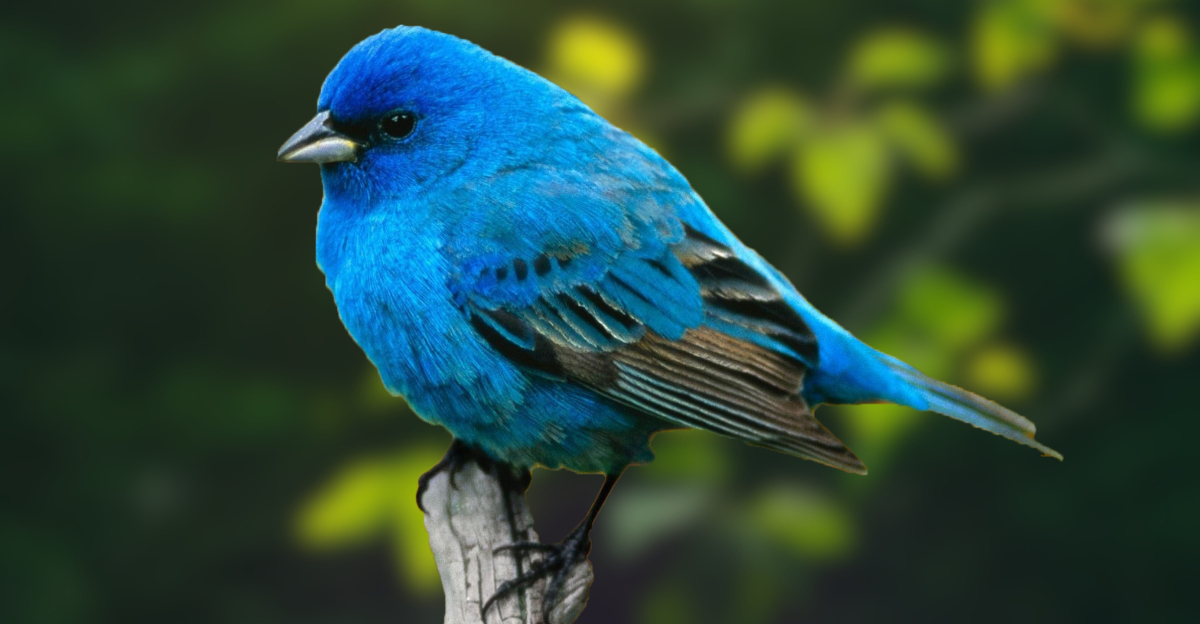
Picture a finch dipped in pure electric blue, so vivid it looks fake. Early settlers assumed someone dyed the feathers.
They were wrong. The indigo bunting holds no blue pigment anywhere on its body.
Its color comes from a strange optical trick: light bends across microscopic ridges on each feather and scatters back as blazing blue. Science calls it structural coloration.
Your eyes call it magic. Every spring, this tiny traveler crosses thousands of miles from Central America, and only a handful of lucky Ohio yards earn a visit.
Forget your tidy, mowed lawn. This bird craves brush, tangled field edges, and scrappy borders where wildness still lives.
Catch a glimpse at your feeder and you belong to a rare club few Ohioans ever join. Your next move?
Learn exactly what pulls this bird close, and turn your yard into its favorite summer address.
1. That Electric Blue Flash Usually Comes From The Yard Edge
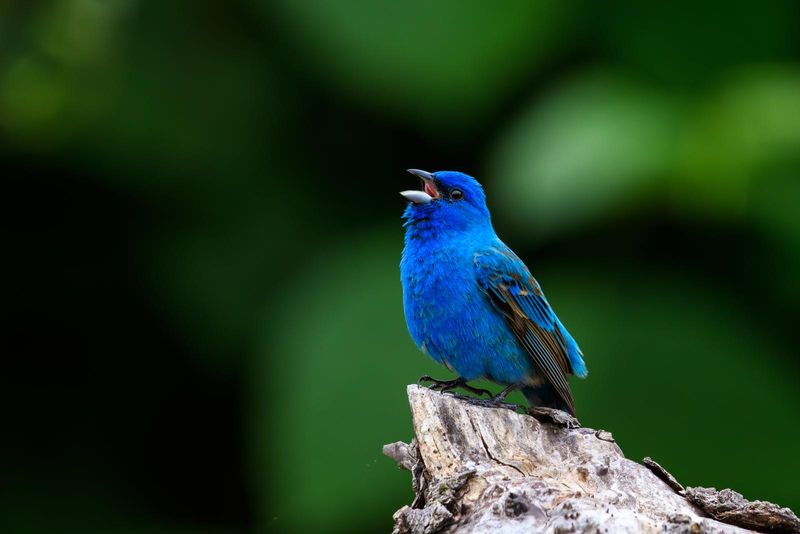
A vivid blue bird perching briefly at the edge of a hedgerow or rough fence line is one of summer’s more memorable surprises. That bird is almost certainly a male Indigo Bunting, known scientifically as Passerina cyanea.
Males appear a rich, deep blue across nearly their entire body, which makes them stand out sharply against summer greenery.
What produces that color is worth understanding. Male Indigo Buntings carry no actual blue pigment in their feathers.
The blue appearance comes entirely from feather structure, which scatters and reflects light in a way that produces intense blue tones. Shift the angle, and the color can look darker or duller almost instantly.
A sighting like this in Ohio tends to happen near cover rather than in the middle of an open yard. Males often perch at the boundary between brush and open ground.
That location is not accidental. It connects directly to the vegetation structure these birds favor for feeding and territory.
Worth noting is that not every blue bird near a yard is an Indigo Bunting. Eastern Bluebirds and Blue Jays also appear in residential areas.
Size, shape, and setting all help narrow things down. A small, compact bird with an entirely blue body sitting atop a shrub near a weedy edge fits the Indigo Bunting profile well.
2. Open Lawns Give Them Less Reason To Stop
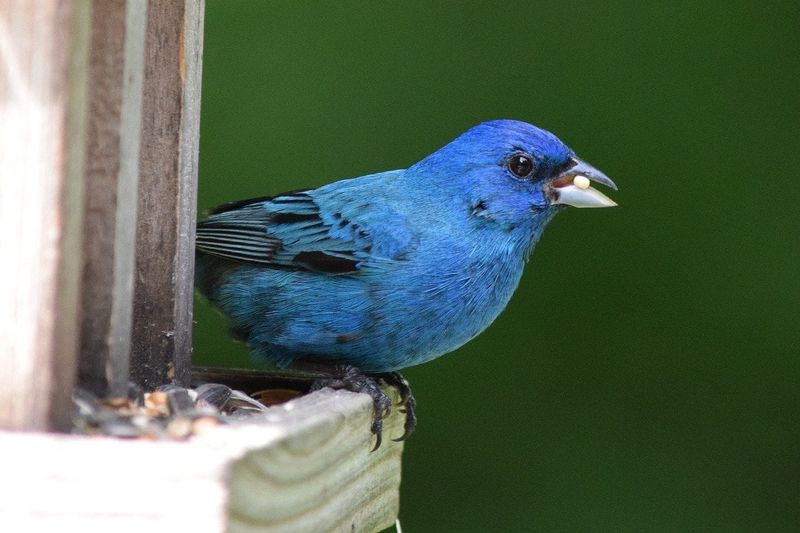
A well-maintained lawn can be beautiful, but from a small songbird’s perspective, it offers a very specific set of resources. For Indigo Buntings, a large expanse of short grass provides little of the low, dense vegetation they tend to use during the breeding season.
The structure simply does not match what they need most.
Cornell Lab of Ornithology notes that Indigo Buntings favor brushy and weedy areas. They use low, thick growth for nesting and foraging.
A lawn ending at a row of clipped ornamental shrubs provides far fewer opportunities than a field edge thick with mixed shrubs and young woody stems.
Your Ohio Garden Changes Every Week. Your Plan Should Too.
Gardening in Ohio changes quickly throughout the season. Every Friday you’ll receive a simple weekly plan showing exactly what to plant, prune, fertilize, harvest, and protect so you never miss the right timing.
Nesting typically happens in low vegetation, often in shrubs or dense weed patches close to the ground. A yard with minimal low cover and few seed-bearing plants offers little reason for a breeding pair to settle nearby.
The absence of structural complexity is the core issue.
This does not mean Indigo Buntings avoid lawns entirely. Cornell notes they can forage on open ground during migration.
A bird passing through in late summer might cross a lawn briefly. That behavior differs from the denser cover they prefer when raising young.
Recognizing that distinction helps explain why a yard can feel quiet all summer even when the species breeds in nearby rural areas.
3. Brushy Corners Look More Like Their Real Summer Habitat
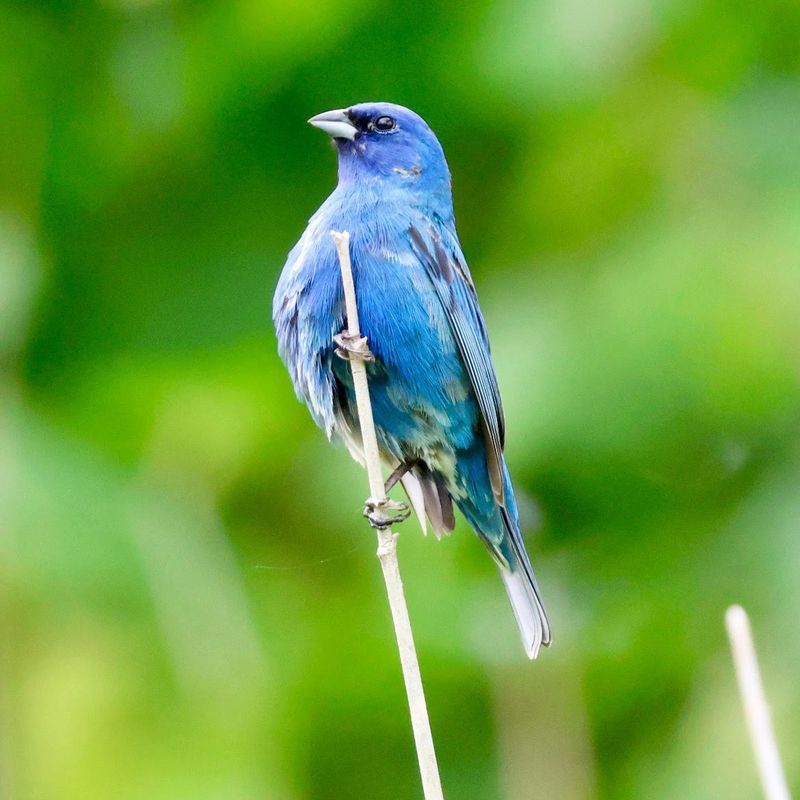
Blackberry canes arching over a weedy patch, young saplings pushing up along a field edge, goldenrod crowding a fence line. That kind of rough, layered growth is exactly what Indigo Buntings tend to seek out during summer.
Cornell Lab describes them as birds of brushy and weedy areas, and that description holds up across much of their range.
They appear regularly along woodland edges, overgrown roadsides, hedgerows, powerline cuts, and abandoned fields. These settings share a quality called early successional structure.
That phrase simply means areas where grasses, shrubs, weeds, and young woody plants grow together after some form of disturbance. It produces dense, low cover that suits both foraging and nesting.
Across Ohio, this kind of edge is common in rural and semi-rural landscapes. Roadsides, farm field margins, and regenerating clearings can all hold Indigo Buntings during summer.
A yard rarely replicates that structure, even when shrubs are present, because ornamental plantings tend to lack the density and variety of a natural edge.
A small brushy corner left to grow along a back fence could offer more useful cover than several well-spaced ornamental plants. No single yard feature guarantees a visit.
The surrounding landscape matters too. Even so, understanding what natural edge looks like helps explain why certain spots attract these birds and others do not.
4. Summer Insects Matter More Than A Busy Seed Feeder
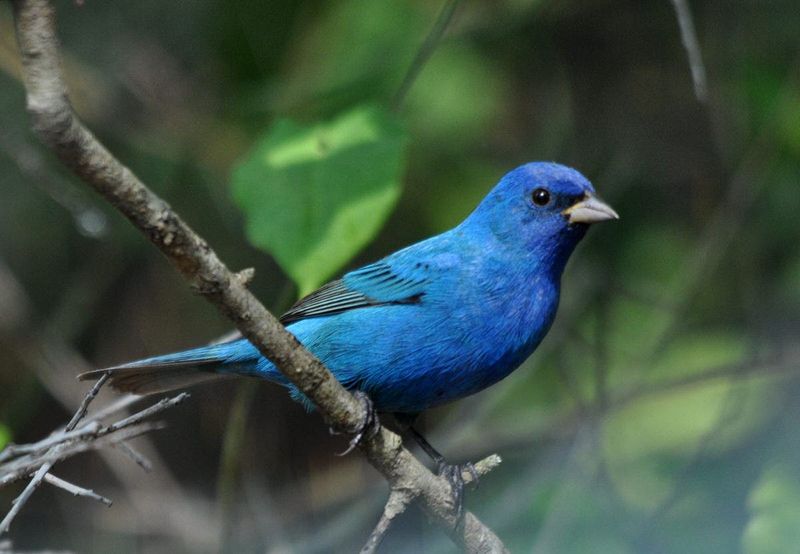
Caterpillars moving through low foliage, grasshoppers resting in weedy stems, small beetles working through leaf litter. These are the kinds of prey that make up a large portion of an Indigo Bunting’s summer diet.
Cornell Lab of Ornithology notes that insects form a significant part of what these birds eat during the breeding season, fueling both adults and growing nestlings.
A yard with minimal insect-rich vegetation naturally provides fewer foraging opportunities. Dense, weedy growth tends to support more invertebrate life than a closely mowed lawn.
That connection between plant structure and insect availability partly explains why brushy edges attract these birds more reliably than open residential settings.
Seed feeders can still play a role. Cornell notes that Indigo Buntings may visit feeders offering small seeds, including nyjer.
A feeder sighting is possible, especially during migration or late summer when birds shift toward plant-based foods. However, that visit does not reflect the conditions a breeding pair needs nearby.
A feeder provides food at one location. It cannot replace the low cover, nesting structure, and natural foraging areas needed throughout the season.
Thinking of a feeder as one possible contact point, rather than a substitute for suitable surroundings, keeps expectations realistic. A sighting at a feeder is worth celebrating without overstating what it means.
5. High Perches Make Singing Males Easier To Notice
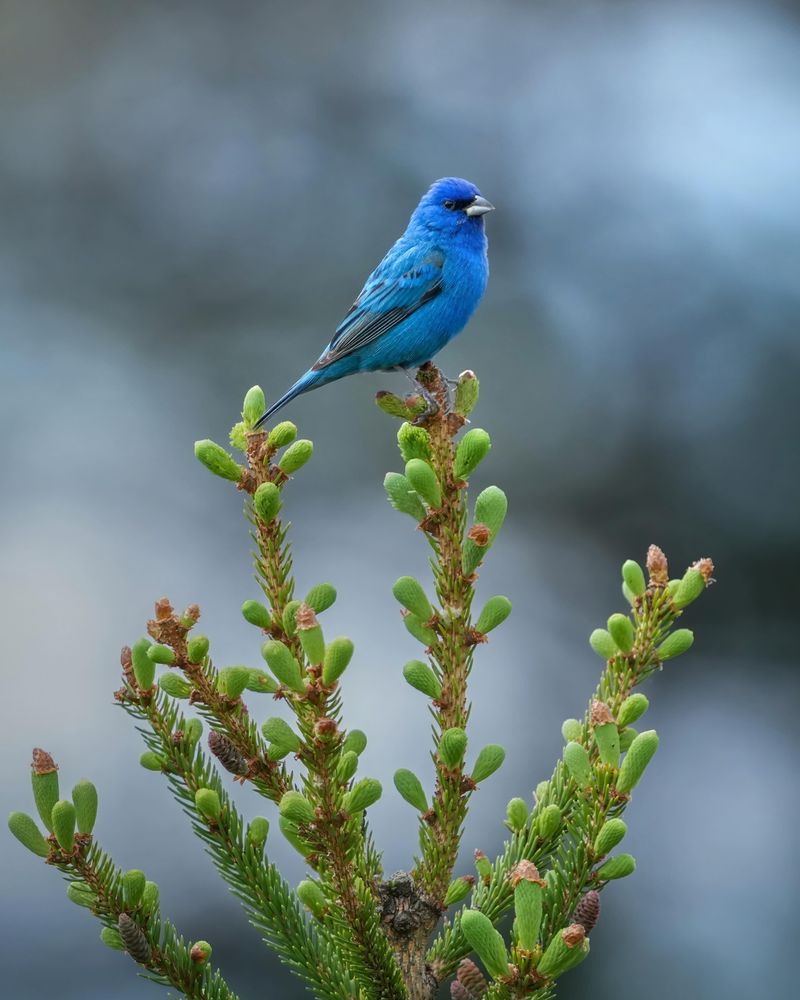
A male singing from the very top of a small tree or a utility wire is one of the more conspicuous signs of summer in brushy rural landscapes. Cornell Lab notes that male Indigo Buntings often choose exposed, elevated perches to deliver their song.
That behavior puts them in full view against an open sky, making them far easier to spot than a bird feeding quietly in low vegetation.
The song itself is a bright, rapid series of paired notes. Males can sing persistently through much of the breeding season, and their habit of repeating phrases from a high, open perch helps them carry sound across open ground and field edges.
Across parts of Ohio with suitable brushy cover, a singing male on a wire or shrub top is not an unusual summer sight. The elevated perch serves a territorial function.
It advertises presence to other males and helps maintain a breeding area. For a casual observer, that high position is often what makes the bird noticeable in the first place.
In a residential yard without tall shrubs or nearby wires bordering rough cover, a singing male has fewer obvious spots to use. The bird may still pass through, but without a prominent perch near suitable vegetation, its presence can go unnoticed.
The song is distinctive enough that learning it can reveal birds you might otherwise walk right past.
6. Brown Females Can Be There Without Catching Your Eye
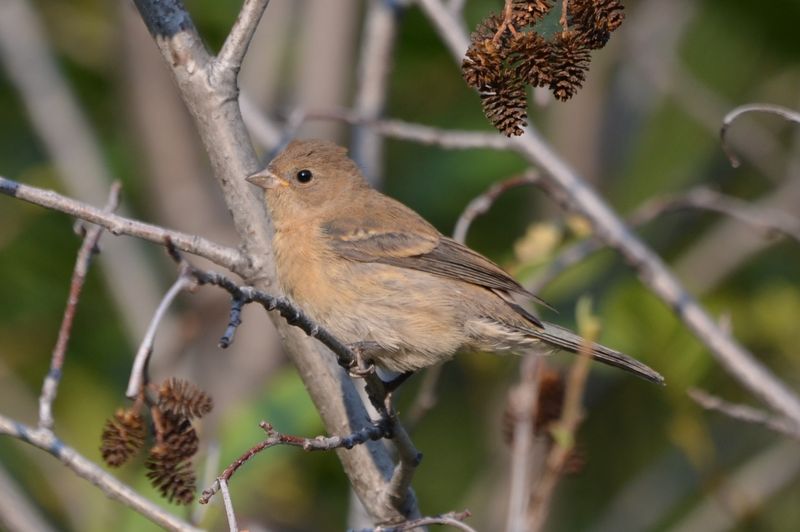
Most people scanning a yard for Indigo Buntings are watching for brilliant blue. That focus means a quieter bird moving through the same space can go completely unnoticed.
Female Indigo Buntings are primarily brown, and without a direct comparison to the male, they can blend into low vegetation with ease.
Cornell Lab describes females as warm brown overall, sometimes with faint breast streaking and hints of blue on the wings or tail. Young birds and nonbreeding males can also appear less colorful.
None of these birds announce themselves the way a fully blue adult male does.
Identifying a female confidently involves more than color. Body shape, bill structure, and behavior all contribute.
Indigo Buntings have a compact build and a short, conical bill suited for cracking seeds. Females tend to spend more time in lower, denser vegetation, particularly around nesting areas, which keeps them out of easy sightlines.
Visual bias toward the bright male can create a false impression that only one bird is present, or that the species is scarcer than it actually is. A pair may be using a brushy edge near a yard all summer while only the male draws attention.
Slowing down and watching low cover more carefully can reveal birds that color alone might cause you to miss entirely.
7. Late Summer Seeds Can Bring Buntings Closer
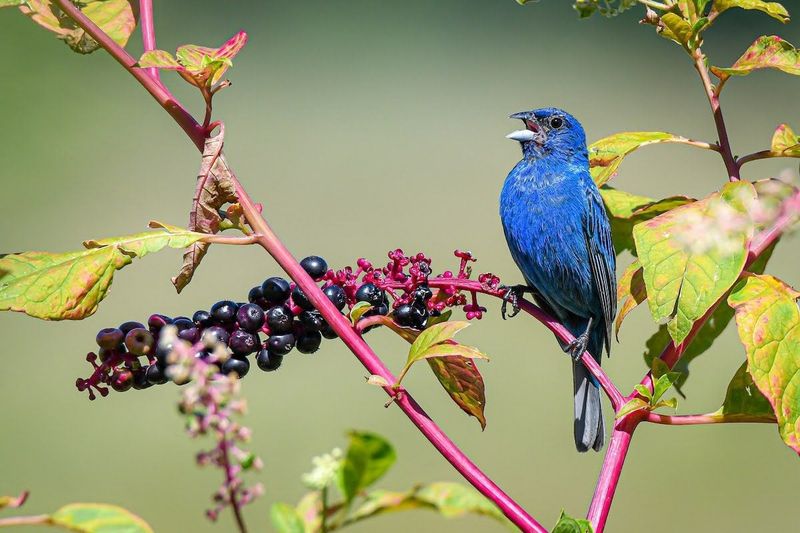
Seed heads ripening along a yard’s rough edge in August represent a seasonal shift that can work in a birdwatcher’s favor. As the breeding season winds down, Indigo Buntings begin relying more heavily on plant-based foods.
Cornell Lab notes that their diet includes small seeds, berries, and buds alongside insects, with the balance shifting across the season.
Native plants that produce small seeds in late summer can make a yard edge more useful. Goldenrod is one well-documented example, offering seeds that attract a range of small songbirds.
Thistle species, especially native ones, produce seeds that Indigo Buntings and other birds may use. Avoid planting invasive non-native thistles.
Instead, allow native goldenrod or other verified seed producers to mature along suitable edges.
Fruits also appear in their diet. Cornell documents use of berries including blackberries, elderberries, and serviceberries at various points in the season.
A yard with fruiting shrubs near brushy cover may attract post-breeding birds moving through the area in late summer.
Across Ohio, August can bring a mix of birds still using local breeding areas and others beginning to shift toward seasonal movement. No single plant or food source guarantees a sighting.
What late-summer seed availability does is extend the window during which a yard edge might briefly become worth a bunting’s attention.