Why Joe Pye Weed Is The Florida Native Wildflower Butterfly Gardens Are Missing
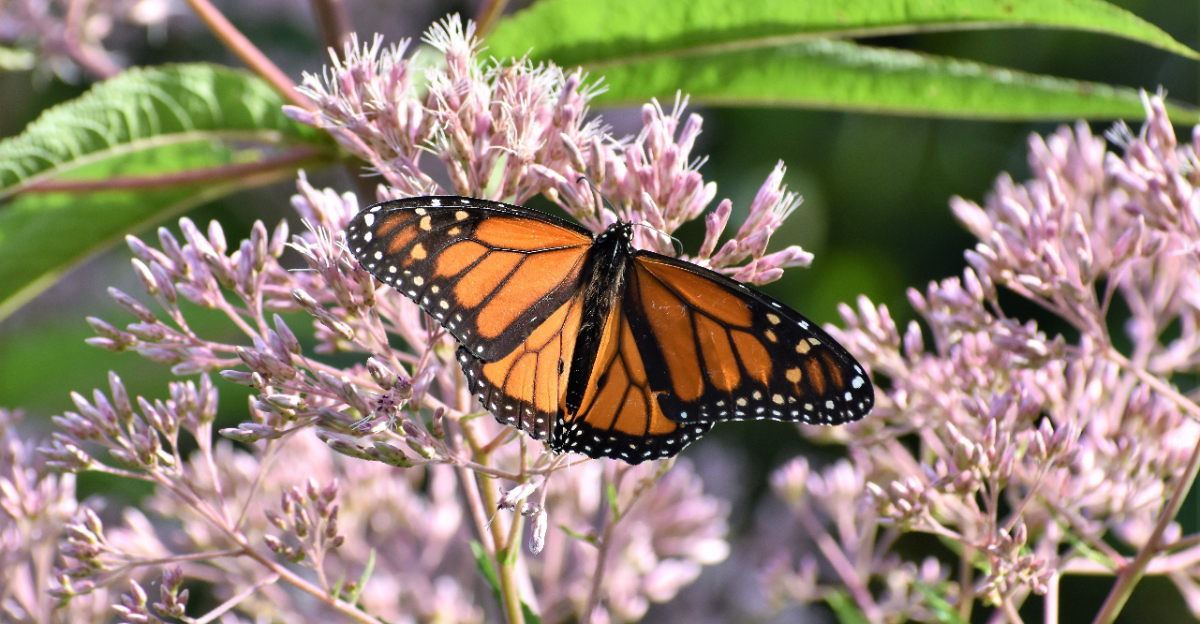
Butterfly gardens across Florida are missing a heavy hitter, and most gardeners have never even heard its name. Joe Pye Weed doesn’t exactly roll off the tongue, and the word “weed” in the name doesn’t do it any favors at the garden center.
So it gets passed over, every single time, in favor of the usual suspects. Pentas, lantana, milkweed.
All solid choices, no argument. But Joe Pye Weed brings something to a butterfly garden that those plants simply can’t match.
Tall, dramatic, covered in dusty pink blooms that pollinators go absolutely crazy for, this native wildflower is built for Florida’s conditions in a way that most ornamental plants are not.
It handles the heat, it handles the rain, and it attracts a wider variety of butterfly species than most gardeners expect.
Once you see it in action, the question stops being “why would I grow this” and flips completely to “why did I wait so long?”
1. Plant Joe Pye Weed For Towering Butterfly Blooms
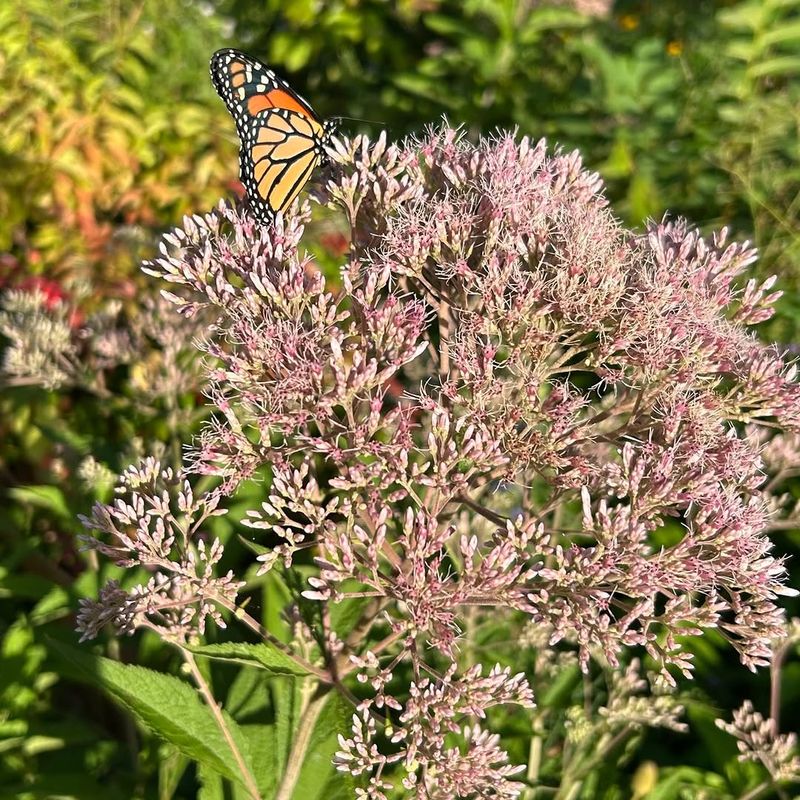
Few Florida-native wildflowers command attention the way Eutrochium fistulosum does. Rising anywhere from five to seven feet tall in the right conditions, it brings the kind of vertical presence that most pollinator plantings desperately need.
While shorter annuals and groundcovers fill in the foreground nicely, they tend to blur together visually from a distance. Joe Pye weed does not have that problem.
The flower heads are clustered and rounded, ranging from soft pink to a deeper rosy purple depending on growing conditions and individual plant variation.
These blooms appear in late summer and into fall, which is exactly when many other flowering plants start winding down in the Florida heat.
That late-season timing makes Eutrochium fistulosum especially useful for extending the nectar season in your planting.
Placement matters a great deal with this plant. Use it at the back of a sunny border where its full height reads as structure rather than obstruction.
Avoid tucking it into a cramped corner or a narrow strip along a fence line. As a background anchor in a larger pollinator bed, it creates a natural backdrop that makes the entire planting feel more intentional and layered.
Florida gardeners who have tried it often say it changes the whole feel of the space.
2. Give It Moist Soil For Stronger Growth
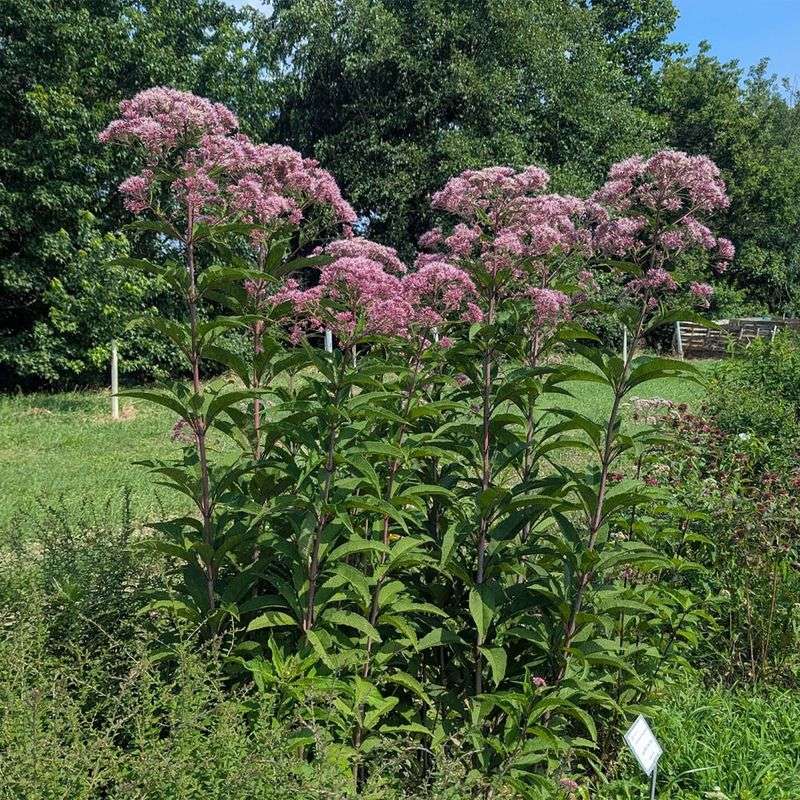
Soil moisture is probably the single most important factor in getting Eutrochium fistulosum to perform well in a Florida yard.
This plant is native to moist, low-lying habitats across much of the eastern United States, including parts of Florida, and it shows its best growth when its roots have consistent access to water.
Sandy, well-drained upland beds are not where this plant shines.
Florida yards often have more moisture variation than gardeners realize. A low corner of the lawn, a spot near a downspout, or the edge of a retention area can stay noticeably wetter than the rest of the yard for days after a rain event.
Those are exactly the kinds of spots where Joe Pye weed can settle in and thrive without needing supplemental irrigation every few days.
Your Florida Garden Changes Every Week. Your Plan Should Too.
Gardening in Florida changes quickly throughout the season. Every Friday you’ll receive a simple weekly plan showing exactly what to plant, prune, fertilize, harvest, and protect so you never miss the right timing.
If you want to grow Eutrochium fistulosum in a drier area, consistent irrigation is a must, especially during establishment.
Drip irrigation or soaker hoses work better than overhead sprinklers for keeping root-zone moisture steady without wetting the foliage unnecessarily.
Rain gardens, swale edges, and pond margins are the most natural fits for this plant in a Florida landscape. Choosing the right site from the start saves a lot of effort and produces a much healthier, more productive plant over time.
3. Use It Behind Shorter Nectar Plants
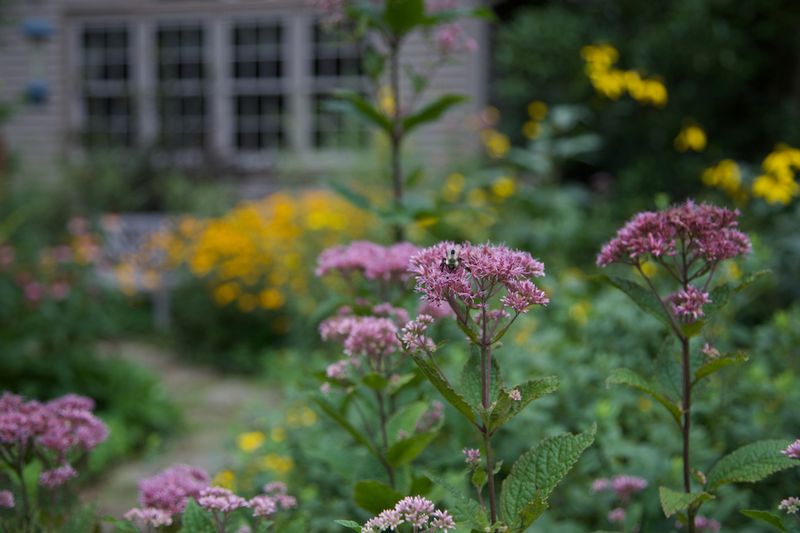
Layering is one of the most effective design tools in any pollinator planting, and Eutrochium fistulosum is built for the back row. When placed behind shorter nectar plants, it adds structure and height without crowding out the plants in front.
The result is a planting that looks thought-out and full rather than randomly assembled.
Think about how the garden reads from your porch, your driveway, or a nearby window. Shorter plants in the front give visitors a clear entry point visually, while the taller Joe Pye weed creates a backdrop that anchors the whole scene.
Spacing matters here. Give Eutrochium fistulosum at least three feet of width to develop naturally, and keep it far enough back that it does not shade out the sun-loving plants in front of it.
Pairing it with Florida-native nectar plants of varying heights creates a more naturalistic look that also supports a wider range of pollinators. You do not need a long plant list to make this work.
Even two or three well-chosen shorter natives in front of a healthy Joe Pye weed planting can make a border feel lush and productive. Avoid placing it near walkways, patios, or mailbox areas where its mature size would feel out of scale with the surrounding space.
4. Let The Pink Flower Clusters Do The Work
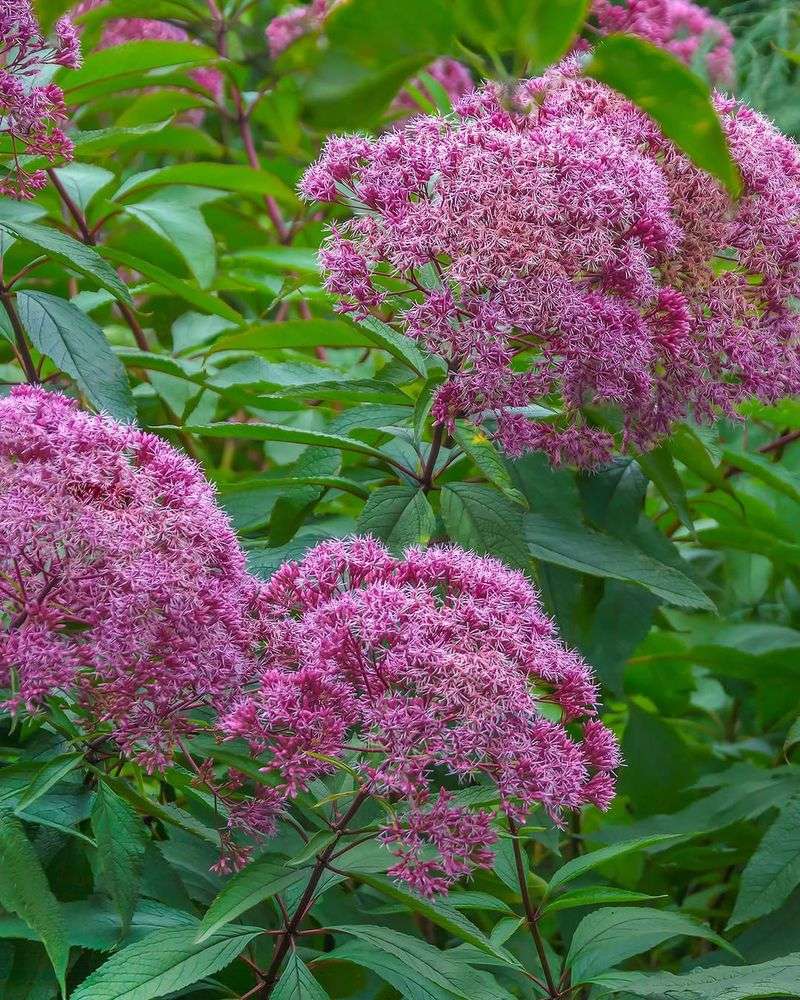
There is something quietly impressive about a well-grown Joe Pye weed in full bloom. The flower clusters are large, rounded, and held above the foliage on strong stems, which means they are visible from a good distance.
Unlike scattered small flowers that require close inspection to appreciate, the blooms of Eutrochium fistulosum read clearly from across a yard or from a porch chair.
The soft pinkish-purple color has a meadow-like quality that feels at home in naturalistic plantings.
During peak bloom, which typically runs from late summer into early fall in Florida, the flower heads can make an entire bed look more established and more finished than it actually is.
That is a useful quality for gardeners who are still building out a new planting.
Position the plant where those blooms can be seen and appreciated during the times you actually spend time outdoors. A spot visible from a kitchen window, a back patio, or an evening sitting area puts the flowers right where they will make the most impression.
Morning light catches the pink tones especially well.
If you are trying to make a pollinator planting feel more like a destination in the yard rather than just a maintenance project, the flower clusters of Joe Pye weed are one of the most effective tools available to Florida gardeners.
5. Expect Bees And Butterflies To Show Up
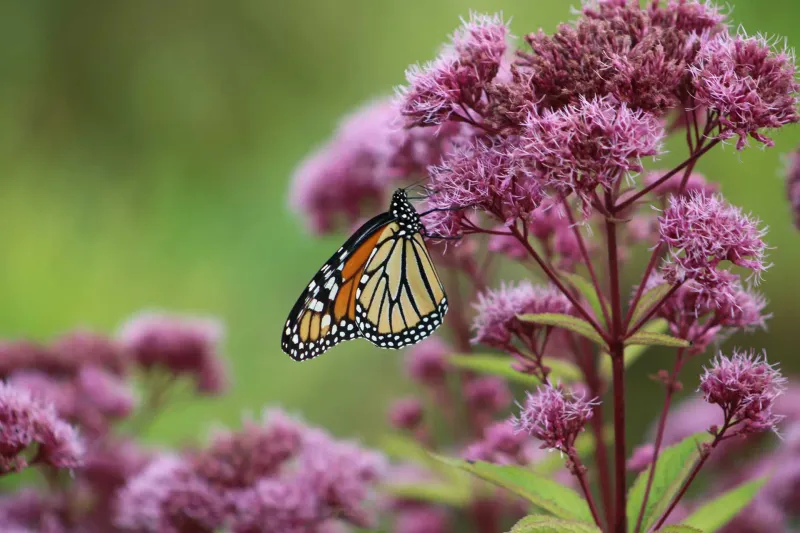
Eutrochium fistulosum has a solid reputation among native plant gardeners for drawing pollinators during its bloom period.
Swallowtails, skippers, and various bee species are among the most commonly observed visitors, and on a warm fall morning with the plant in full flower, the activity around those blooms can be genuinely impressive.
Nectar availability is one of the main reasons pollinators seek it out.
That said, no plant guarantees a specific pollinator on any given day. Butterfly activity depends on regional populations, local habitat, weather patterns, and what else is blooming nearby.
Growing Eutrochium fistulosum in the right conditions, meaning adequate moisture, good sun exposure, and healthy soil, gives the plant the best chance to produce abundant nectar that pollinators will actually find worthwhile.
One of the most important things you can do to support pollinators in any planted bed is to avoid applying pesticides, including systemic products, on or near flowering plants.
Even products labeled as safe can affect beneficial insects when used carelessly around bloom time.
Joe Pye weed attracts the kind of beneficial insect activity that makes a whole garden healthier, so protecting that activity by being thoughtful about any chemical use nearby is worth the effort.
Growing it alongside other Florida natives extends the value of the planting across a longer season.
6. Grow It Where Rainwater Naturally Collects
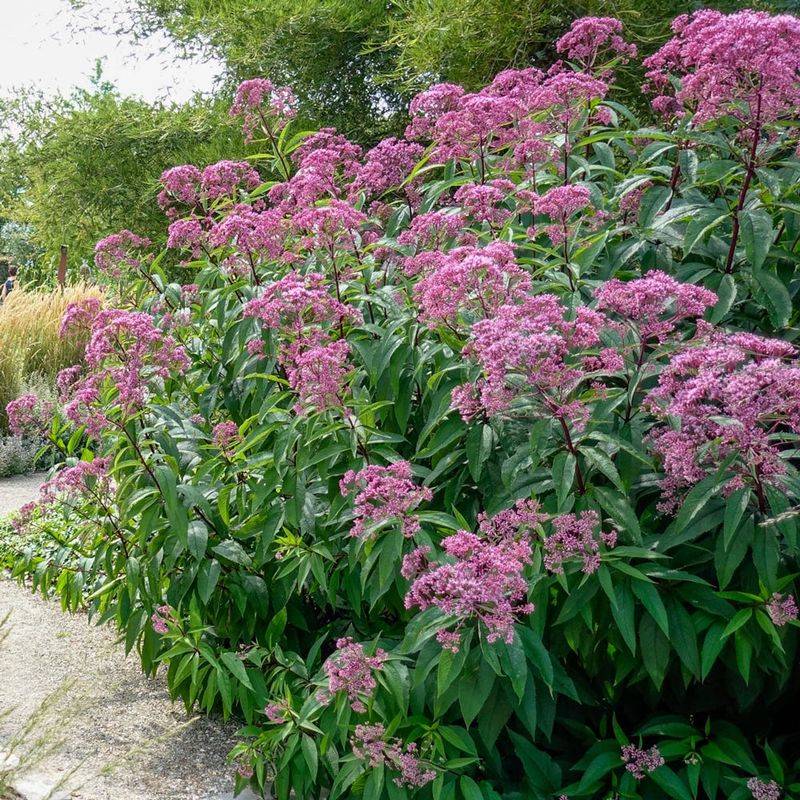
Florida yards are full of spots that other plants struggle with, and one of the most common is the low area that stays soggy after a heavy rain. Most traditional landscape plants do not love wet feet, but Eutrochium fistulosum was practically made for those conditions.
Using the right plant in the right spot is always more effective than trying to fight the natural drainage patterns of your property.
Swale edges, pond margins, ditch banks, and the low corners of retention areas are all worth considering as potential sites for Joe Pye weed. These spots often go underplanted because gardeners are not sure what can handle the moisture fluctuation.
A plant that can tolerate both wet periods and drier stretches between rain events is exactly what those spots need, and Eutrochium fistulosum fits that description reasonably well when it is properly established.
Before you choose a planting location, spend a few minutes observing your yard after a significant rain. Notice which areas drain quickly and which ones hold water for a day or more.
The spots that stay moist longest are your best candidates for Joe Pye weed. Drier upland areas with fast-draining sandy soil are better suited to other Florida wildflowers that are adapted to those conditions.
Matching the plant to the site is the simplest way to reduce maintenance and improve results.
7. Choose Native Eutrochium From Trusted Nurseries
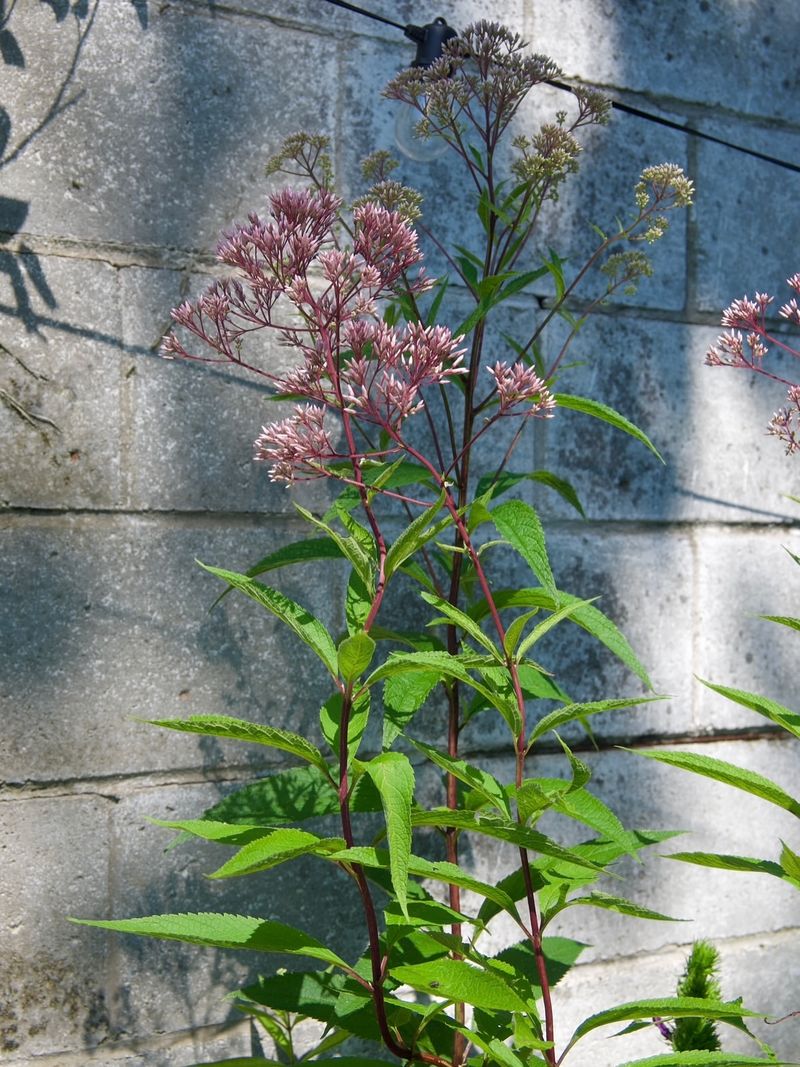
Buying the right plant under the right name sounds straightforward, but the common name Joe Pye weed has been applied to several different species over the years, and not all of them are equally suitable for Florida gardens.
Eutrochium fistulosum is the species with documented native status in parts of Florida and is the one most commonly recommended by Florida native plant resources and extension horticulturists.
When you shop at a nursery, look at the botanical name on the tag rather than relying solely on the common name. A reputable Florida native plant nursery should be able to tell you the species and ideally the provenance of the plants they carry.
Local provenance means the plant was grown from seed or cuttings sourced from Florida populations, which can improve its adaptability to local conditions.
The Florida Native Plant Society and the Florida Wildflower Foundation both offer resources to help gardeners find reputable native plant sources in their region.
Be cautious about plants sold at big-box garden centers under the Joe Pye weed name without a clear botanical label. Some may be cultivars or non-Florida species that perform differently in Florida’s climate and soil.
Spending a little extra time finding a trusted source is worth it. A correctly identified Eutrochium fistulosum from a reliable nursery gives you a much better foundation for a successful planting than an unlabeled or misidentified plant.
8. Skip Tiny Beds And Give It Room
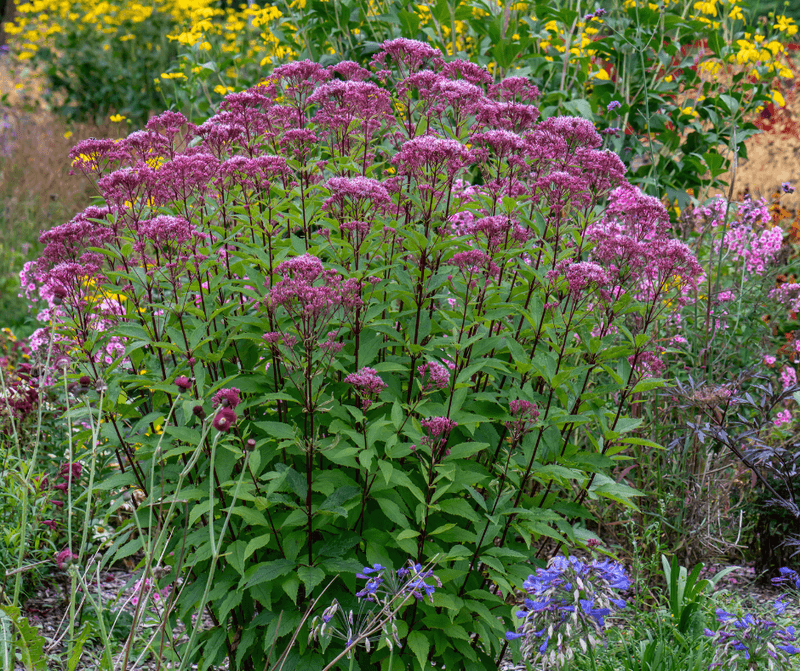
Eutrochium fistulosum is not a compact plant, and trying to squeeze it into a small ornamental bed is one of the fastest ways to end up frustrated with it. At maturity, it can reach five to seven feet in height and spread two to three feet wide.
In a tiny front border or a narrow strip garden, that size becomes a problem rather than an asset.
Crowding this plant also makes routine maintenance harder. When Joe Pye weed is hemmed in by other plants without enough air circulation, it can be more prone to powdery mildew and other fungal issues, especially in humid Florida summers.
Giving it enough space to grow upright and open keeps the plant healthier and the planting looking cleaner overall.
The best situations for Eutrochium fistulosum in a Florida yard are larger pollinator beds, rain garden installations, pond-edge plantings, or the back section of a generous sunny border.
If your only available space is a small raised bed or a narrow strip along a fence, consider a shorter Florida-native wildflower that is better scaled to that space.
Joe Pye weed rewards gardeners who give it room to do what it naturally does, grow tall, bloom boldly, and draw pollinators in numbers that make the whole planting feel alive during the long Florida fall season.