Why Michigan Poinsettias Wilt Next To Heat Vents And Drafty Windows
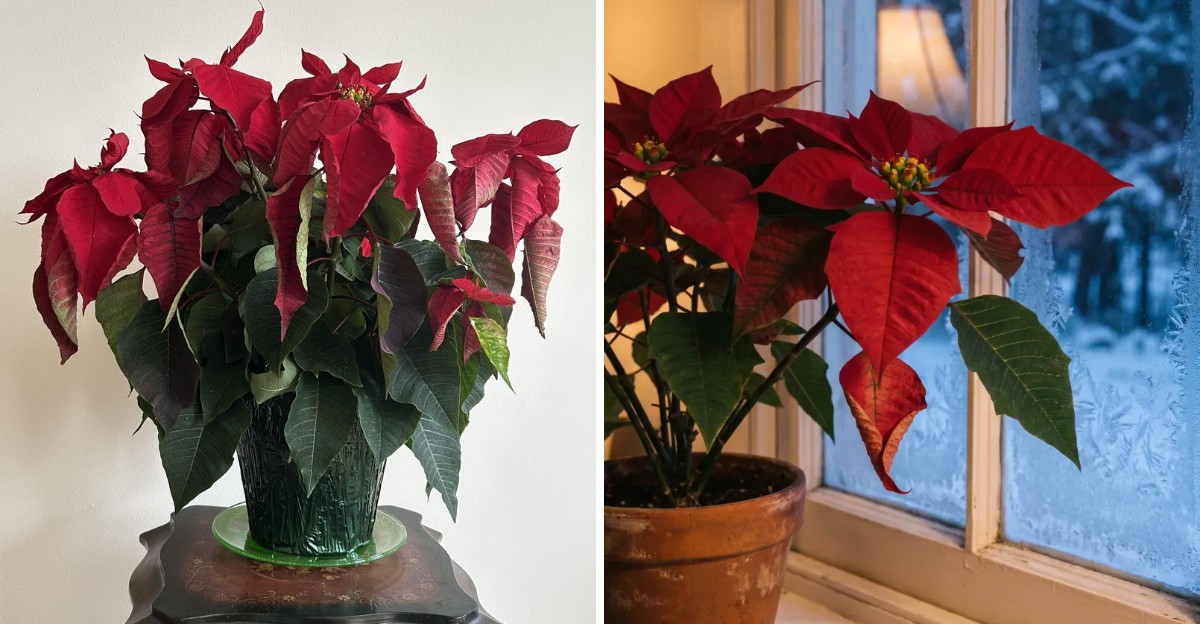
The bright red petals on a holiday poinsettia are not petals at all. They are leaves called bracts, and the tiny yellow buds in the middle are the real flowers.
This showy plant grows wild as a tall shrub in the warm hills of Mexico. Then we haul it home through a Michigan December and park it beside a furnace register. No wonder it pouts.
I know how frustrating it can be when a plant looks perfect at the store and slumps within a week. You water it, you fuss over it, and it still flops like a tired rag doll. The real question is what changed.
There’s actually a good reason why the spot by your vent or that frosty window causes so much trouble. The answer has more to do with air than water. Would you guess your cozy living room feels like a desert to this plant?
1. That Droopy Poinsettia Is Reacting To More Than Just Thirst
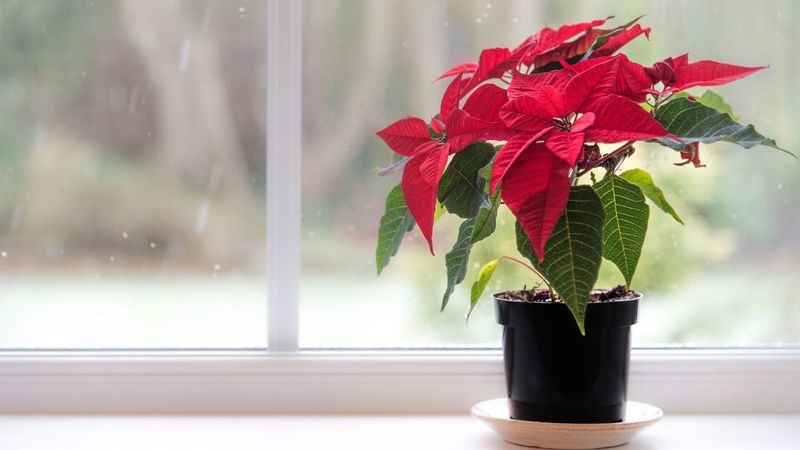
Wilting tricks almost everyone into grabbing the watering can. Sometimes that helps, but often the real trouble is the spot where the plant sits.
Poinsettias come from the tropical dry forests of western Mexico. They like steady room temperatures, roughly 65 to 75 degrees during the day and a little cooler at night. Big swings in either direction stress the plant fast.
A heat vent and a drafty window create the exact opposite of steady. One blasts hot, dry air in short bursts. The other leaks cold air every time the wind picks up outside.
When the furnace kicks on and off all day, your poinsettia rides a roller coaster of warm and cool, dry and drier. Leaves soften, bracts sag, and green leaves may start to yellow.
University extension experts point out that leaf drop on poinsettias is commonly linked to temperature stress and drafts. That means the fix often begins with moving the pot, not pouring more water into it.
So before you panic, take a quick look around the plant. Is there a vent nearby, a cold pane, or an outside door that opens often? Those clues usually tell the whole story.
2. Hot Air From Furnace Registers Pulls Moisture Out Of Poinsettia Leaves
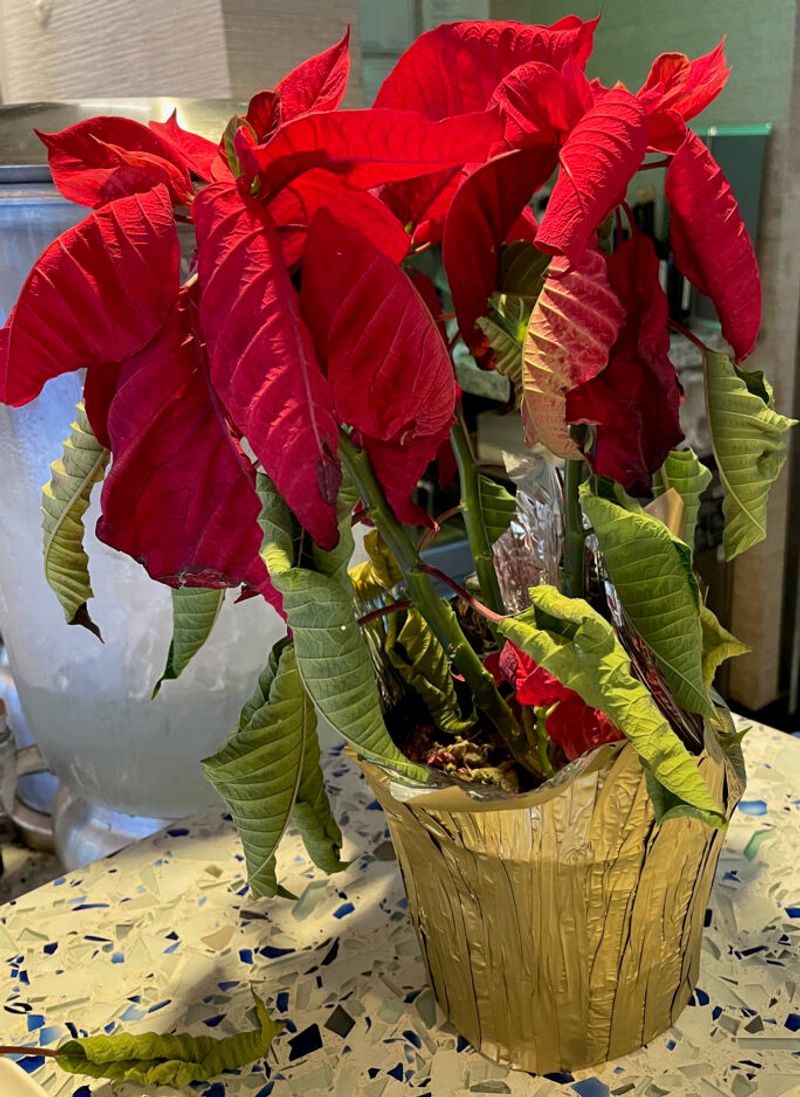
Forced-air heat feels wonderful on cold toes. For a poinsettia, it acts more like a hair dryer aimed straight at its leaves.
Warm air holds more moisture than cold air, so heating chilly outdoor air drops indoor humidity sharply. In a Michigan winter, indoor humidity can fall to 20 percent or lower. Poinsettias prefer much moister air than that.
Leaves lose water through tiny pores in a process called transpiration. A steady stream of hot, dry air speeds that loss way up. The roots simply cannot pull water from the soil fast enough to keep pace.
The result is a plant that wilts even when the soil is damp. You may also notice crispy leaf edges or soil that dries out in a day or two.
Here is a quick test I like. Hold your hand where the plant sits when the furnace runs. If you feel warm air moving, your poinsettia feels it too.
Moving the pot just a few feet away from the register often makes a big difference within days. Pointing a vent deflector away from your plant shelf also helps.
3. Opening The Front Door Sends Icy Drafts Straight To Your Poinsettia
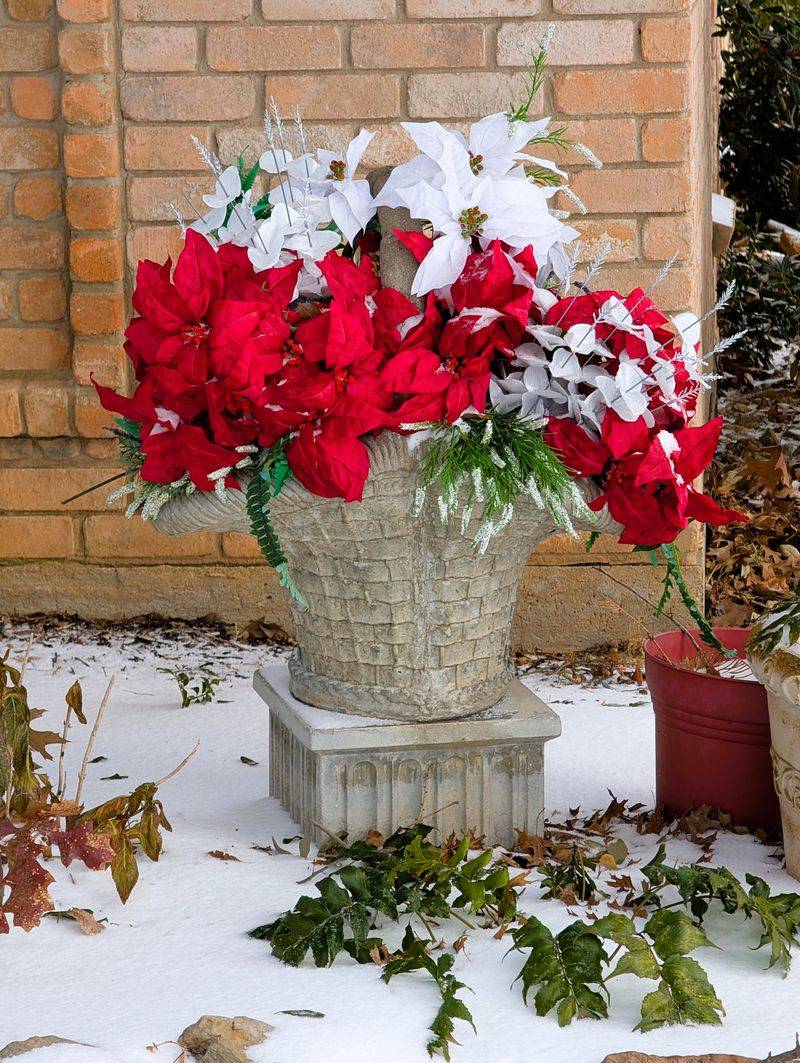
Holiday guests bring hugs, cookies, and a blast of freezing air. Every time the door swings open, any poinsettia in the entryway gets hit first.
Short bursts of cold might not sound like much. Repeated drafts all day, though, add up to steady stress for a plant that dislikes sudden changes.
Entry halls, mudrooms, and spots near sliding patio doors are some of the chilliest places in a winter home. They also tend to be where we put festive decorations to greet visitors.
Watch for leaves that drop suddenly, even while they still look green. That quick leaf loss is a classic sign of drafts.
If you love the look of red bracts by the door, try a compromise. Place the plant on a table farther inside the room, out of the direct path of the opening door.
The same caution applies on the trip home from the store. Garden centers often wrap poinsettias in paper or plastic sleeves for good reason. Keep that cover on, and do not leave the plant waiting in a cold car while you run more errands.
4. Cold Window Glass Can Chill Tender Poinsettia Bracts Overnight
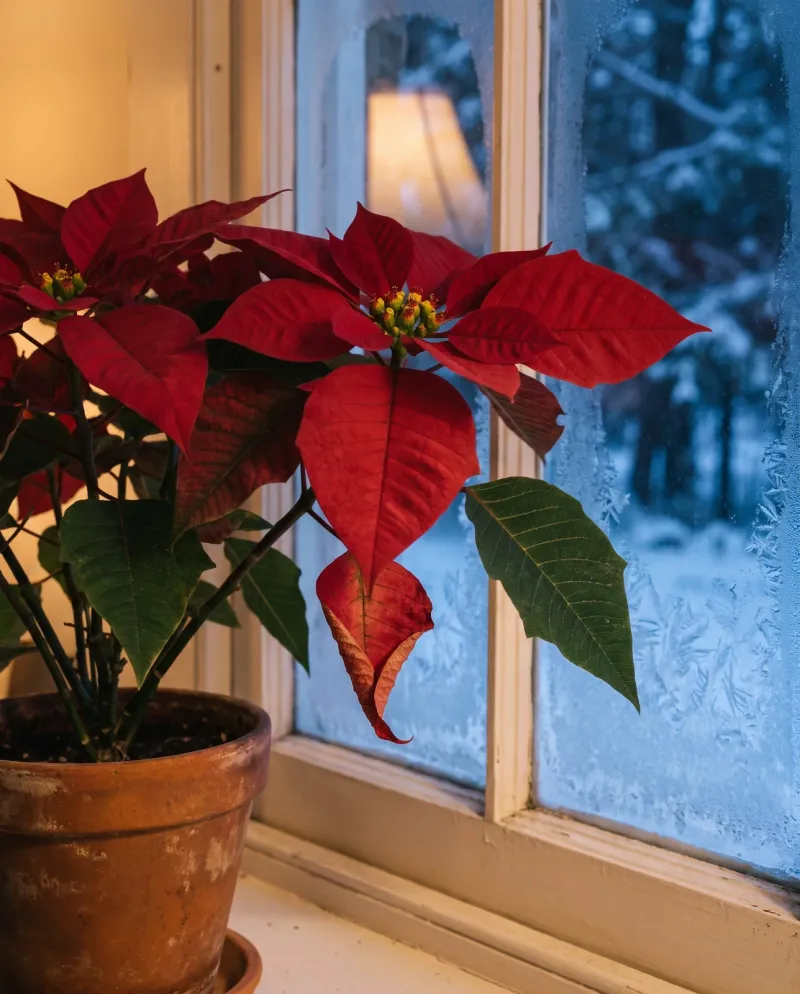
Windows look like the obvious home for a sun-loving holiday plant. On a January night, though, the glass can feel much colder than the room around it.
Poinsettias are very sensitive to chilling. Many extension sources warn that temperatures below about 50 degrees can injure the plant, and leaves touching cold glass can be damaged even sooner.
Chill injury often shows up as wilting, darkened or water-soaked leaf spots, curling, and sudden leaf drop. Sometimes the damage appears a day or two after the cold exposure, which makes it confusing.
Older windows add another problem. Gaps around the frame let cold air slip in, creating a little river of chilly air right along the sill.
To test how risky your sill really is, try holding the back of your hand right where the leaves sit after dark.
If the air feels noticeably cooler than the center of the room, the plant is already dealing with a nighttime temperature drop. Even double-pane windows can lose enough heat overnight to create a cold pocket on the ledge.
My favorite trick is simple. Pull the plant back several inches from the glass at night, or close the curtains between the plant and the window after sunset.
During the day, slide it back toward the light if the spot stays comfortable. Bright, indirect light from an east, south, or west window keeps the bracts colorful without the overnight chill.
5. Soggy Foil Wraps Can Make Poinsettia Roots Wilt Too
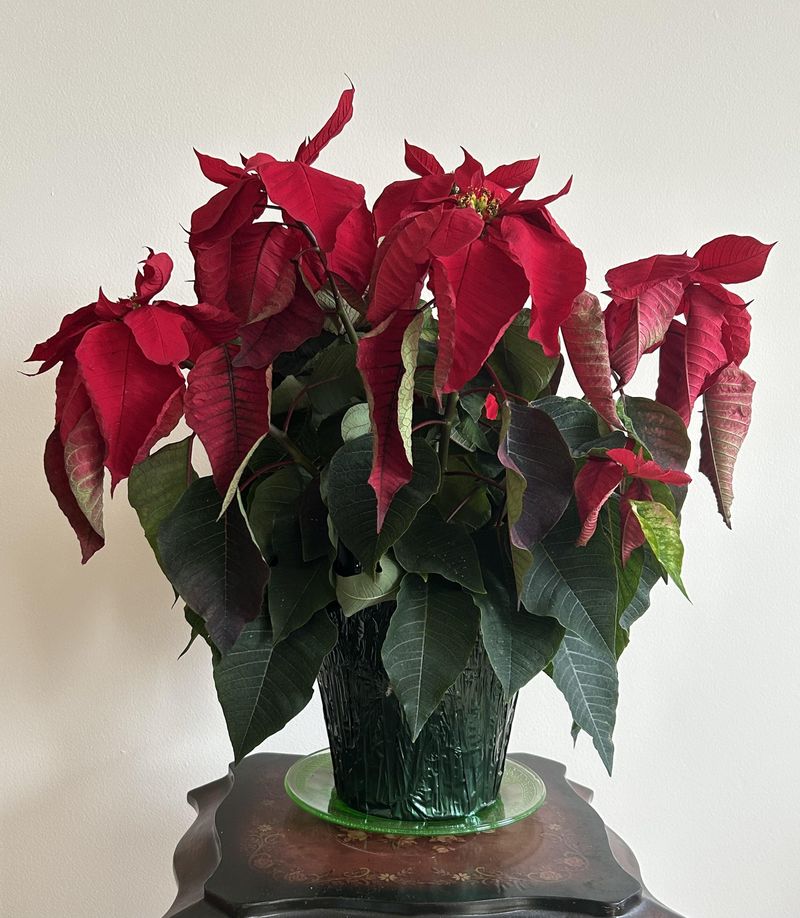
That shiny foil sleeve looks festive. Unfortunately, it can trap water like a hidden bathtub around the roots.
When roots sit in water, they run short on oxygen and begin to rot. Damaged roots cannot move water up to the leaves, so the plant wilts even though it has plenty of moisture.
Overwatering and underwatering create surprisingly similar droopy leaves. A plant parked near a heat vent may dry out fast, while one in a cool corner may stay wet much longer.
Check the soil with your finger before reaching for the watering can. If the top inch feels dry, water thoroughly over the sink until it drains out the bottom.
Then let it drain for a few minutes before returning it to the wrap. Some gardeners poke holes in the foil or set the pot on a saucer instead.
Lift the pot now and then to feel its weight. A light pot usually needs water, while a heavy one can wait. Pairing smart watering with a steady location gives your plant its best shot at staying perky.
6. Grouped Houseplants And Pebble Trays Give Poinsettias Extra Humidity
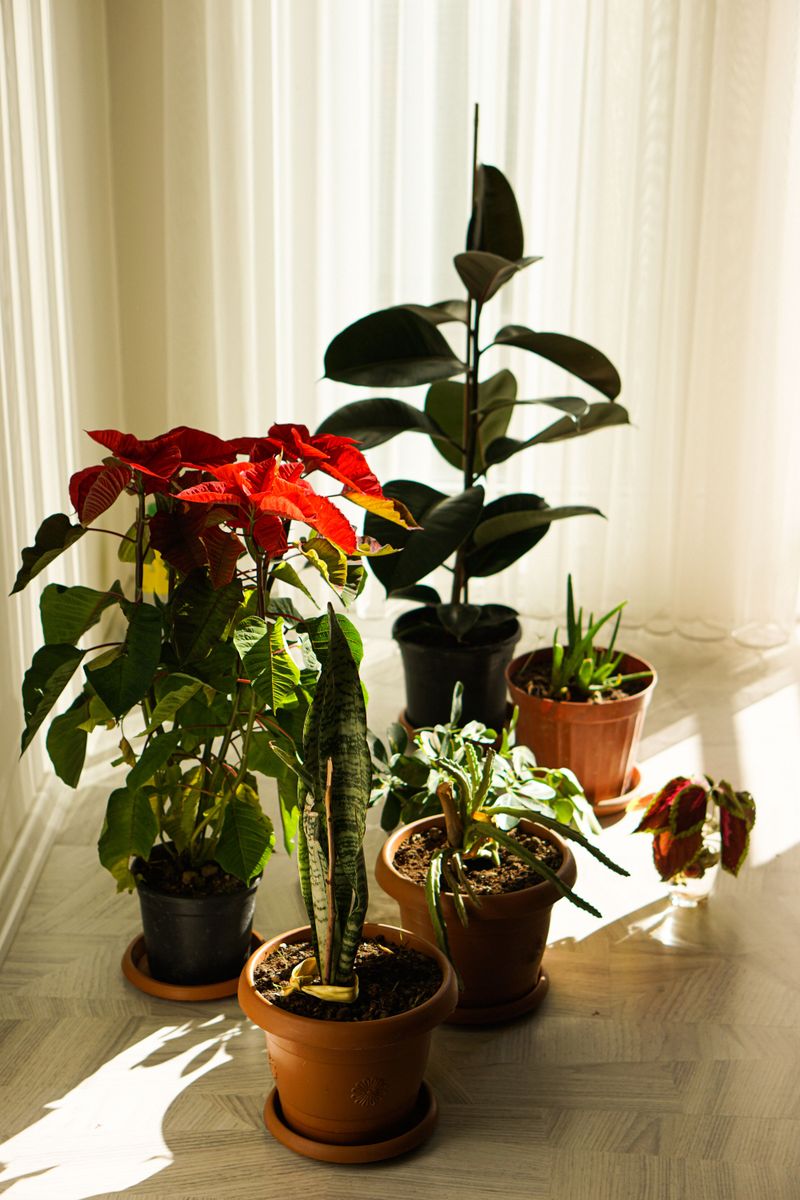
Plants are social creatures in their own quiet way. Clustered together, they release moisture that raises humidity in the air around them.
Poinsettias appreciate moderate to higher humidity, which is hard to find indoors during a long Michigan heating season. A few simple tricks can bump it up without fancy equipment.
Try a pebble tray. Fill a shallow tray with gravel, add water just below the top of the stones, and set the pot on the pebbles so it is not sitting in water.
Grouping your poinsettia with ferns, pothos, or other houseplants also helps. A small room humidifier works even better if you already have one running.
Misting gives only a brief boost, since the water dries quickly in warm rooms. It is pleasant but not a long-term solution.
Fun fact: poinsettias are named after Joel Poinsett, the first U.S. minister to Mexico, who sent plants home in the 1820s. December 12 is National Poinsettia Day, marking the date of his passing in 1851. A little humidity is a nice way to honor that long history.
7. A Bright, Steady Spot Keeps Poinsettia Bracts Colorful For Weeks
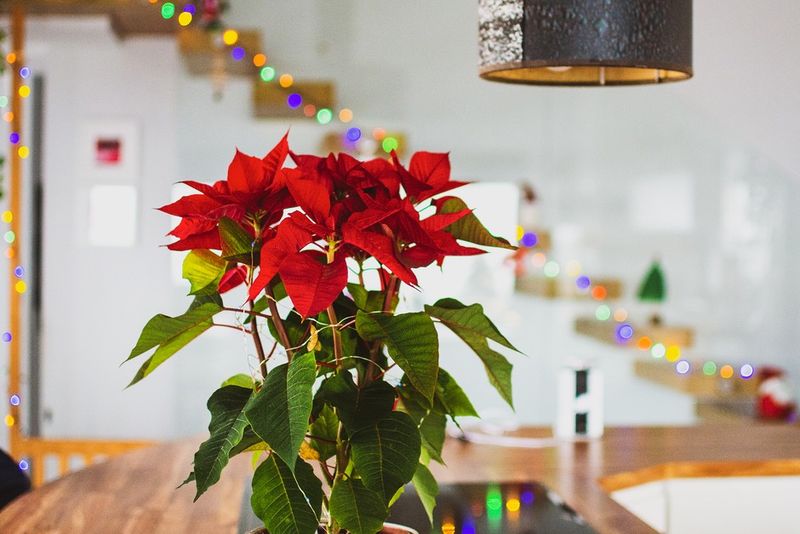
Finding the right home for a poinsettia feels a bit like picking the best seat at a holiday dinner. Not too hot, not too cold, and close enough to the light.
Aim for a room that stays between about 65 and 75 degrees during the day. Slightly cooler nights, around 60 degrees, help the colorful bracts last longer.
Bright, indirect light keeps the plant happy. A spot a few feet from an east, south, or west window often works well in winter.
Keep the pot several feet away from heat vents, radiators, fireplaces, space heaters, and outside doors. Avoid the top of the refrigerator or television, too, since those spots stay warm.
Remember that poinsettias are only mildly irritating if eaten, according to poison control experts. Still, keep them out of reach of curious pets and toddlers to prevent upset tummies.
With stable temperatures, smart watering, and a bit of extra humidity, many poinsettias stay bright well into January. Once you find that sweet spot, give it a little nudge and enjoy the show for weeks.