Why North Carolina Crape Myrtle Roots Slowly Crack Sidewalks And Driveways Over Time
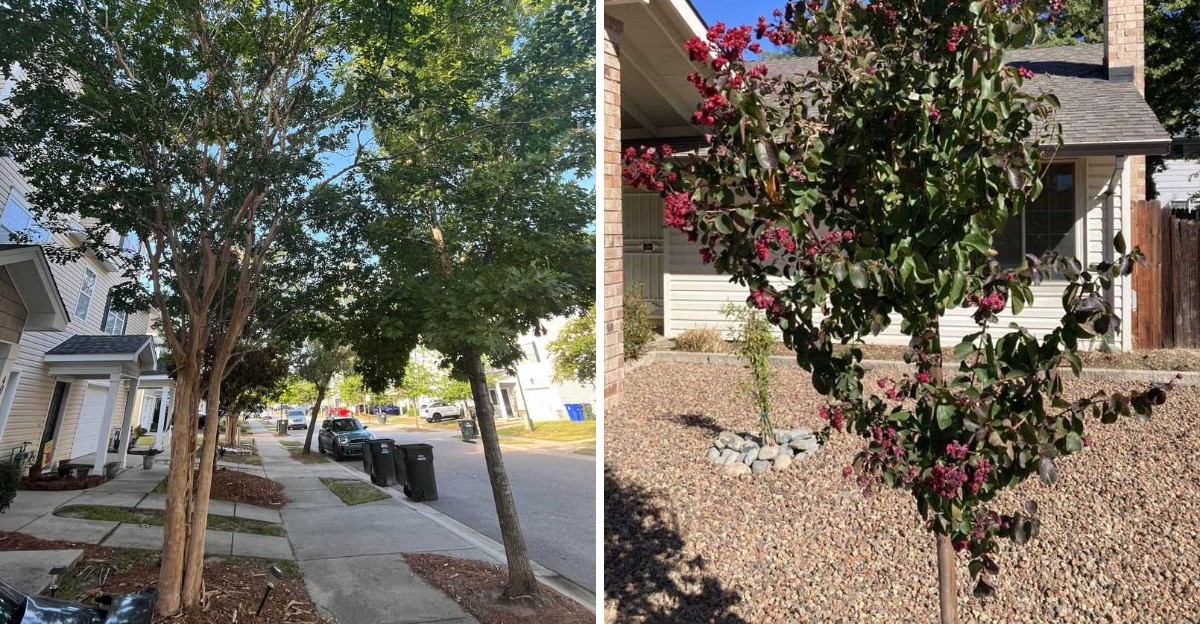
A crape myrtle planted decades ago as a small ornamental tree can end up at war with the concrete around it, and the process happens so gradually that most homeowners never see it coming.
As the tree’s root system expands in search of water and stability, roots naturally follow the path of least resistance, which often means growing directly beneath nearby sidewalks and driveways rather than around them.
Over years, this steady root growth exerts enough upward and outward pressure to crack even properly poured concrete, regardless of how well the surface was originally installed.
Because crape myrtles are frequently planted closer to hardscaping than their mature root spread actually requires, this conflict is more common in North Carolina yards than many people realize.
Understanding this slow-motion process helps explain why that innocent-looking ornamental tree might be responsible for the cracked walkway leading up to the front door.
1. Shallow Roots Spread Just Below The Surface
Dig a small hole a few feet from a mature crape myrtle, and you will likely hit a web of thin, wiry roots before your shovel sinks very far. That tangle tells the whole story.
Crape myrtles grow fibrous roots that stay mostly in the top foot or so of soil, stretching outward instead of plunging straight down.
Why does that matter for your walkway? Sidewalks and driveways rest on that same shallow layer of ground, often only a few inches thick.
When roots creep under a slab and start pressing upward, even a small push can lift one section higher than the next.
The good news is that a little planning goes a long way. Instead of paving right up to the trunk, give the tree a wide ring of mulch that roots can enjoy without bothering the concrete.
Spread 2 to 3 inches of shredded hardwood or pine bark across that area, and keep it pulled a few inches back from the trunk so the bark stays dry and healthy.
A mulched circle also keeps soil cool and moist, which gives roots a happy place to grow away from your driveway. It also keeps mowers away from the trunk.
Here in North Carolina, crape myrtles rank among the most popular landscape trees around. You will spot them lining neighborhood streets, framing driveways, and standing guard beside front walks from Asheville to Wilmington.
With so many trees planted near pavement, shallow roots and concrete meet more often than most homeowners expect, so a smart mulch zone is one of the easiest fixes you can make.
2. Roots Grow Thicker Every Year
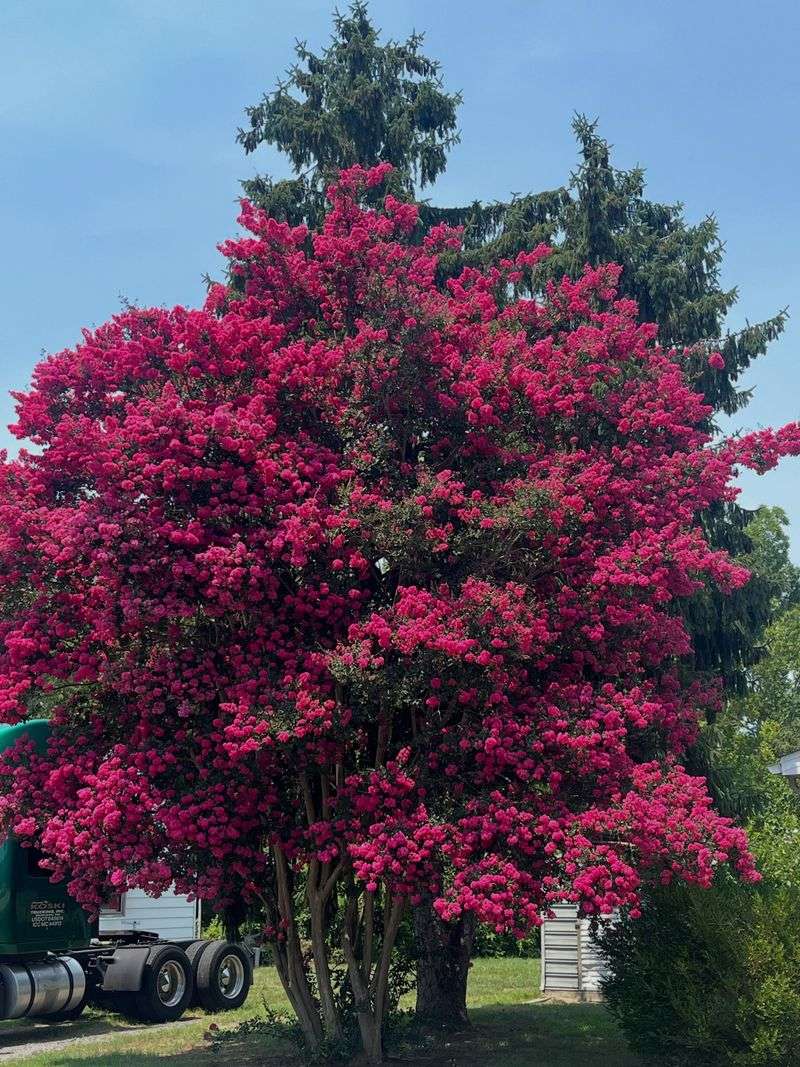
Nobody notices a tree root getting fatter, and that quiet habit is exactly what makes it sneaky. Each growing season, crape myrtle roots add a thin new layer of wood, much like the rings you see inside a cut trunk.
One year of growth barely registers, but ten or twenty years adds up fast. Think about a root sitting right under a concrete slab. As it widens, it presses up a tiny bit more every summer, slowly lifting one edge of the pavement.
Your North Carolina Garden Changes Every Week. Your Plan Should Too.
Gardening in North Carolina changes quickly throughout the season. Every Friday you’ll receive a simple weekly plan showing exactly what to plant, prune, fertilize, harvest, and protect so you never miss the right timing.
Eventually the slab tilts, a crack appears, or a raised lip forms that catches the toe of your shoe.
That slow timeline explains why so many homeowners feel surprised. The tree looked harmless for years, and then suddenly the sidewalk has a bump.
In reality, damage often shows up 10 to 20 years after planting, once the roots have had plenty of time to bulk up.
So what can you do? Walk around the tree a few times a year and look for hairline cracks, uneven joints, or edges that sit higher than they used to.
Catching these signs early gives you more choices, like grinding down a small lip or adjusting the slab before things get worse.
Resist the urge to hack away at big roots near the trunk, though. Cutting large roots close to the base can harm the tree and make it less stable in strong winds.
North Carolina adds another twist, since our long, warm growing season lets roots keep thickening from early spring deep into fall.
3. Planting Too Close To Pavement
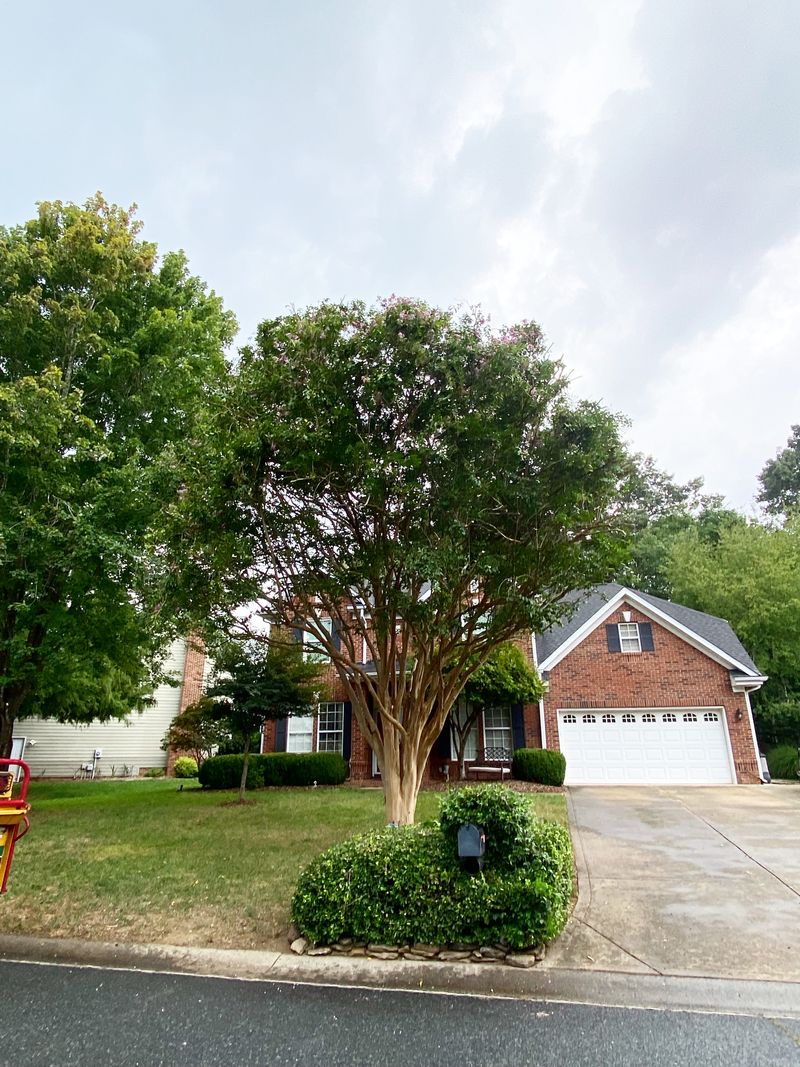
Ask any landscaper what decides whether a crape myrtle will bother nearby concrete, and most will give the same answer: distance. Spacing matters more than soil, water, or variety.
A tree with room to roam rarely causes trouble, while a crowded one almost always does. The reason is simple. Roots grow wherever they can find space, water, and air.
If a crape myrtle sits in a skinny strip between the street and the sidewalk, or snug against a driveway, the only open path is right under the pavement.
Before you dig, check the tag for the tree’s mature size and match it to the spot you have in mind. Larger types need several feet more space from paved surfaces than dwarf and semi-dwarf types. A little measuring tape work now can spare you a costly repair bill later.
For spots where space is tight, consider a vertical root barrier. The plastic or fabric panels go into the ground between the tree and the pavement at planting time, gently steering roots downward and away.
Installing one later is much harder, so plan ahead if your tree will sit near a walk or drive.
Newer North Carolina neighborhoods often make this problem worse. Builders tend to tuck crape myrtles into narrow foundation beds and small street-side strips because the trees look lovely and bloom for months.
Those tight spaces seem fine when the tree is young, but they leave almost no elbow room once it matures.
If you are planting in one of these areas, choose a smaller variety or move the tree a few steps farther out.
4. Large Varieties Outgrow Small Spaces
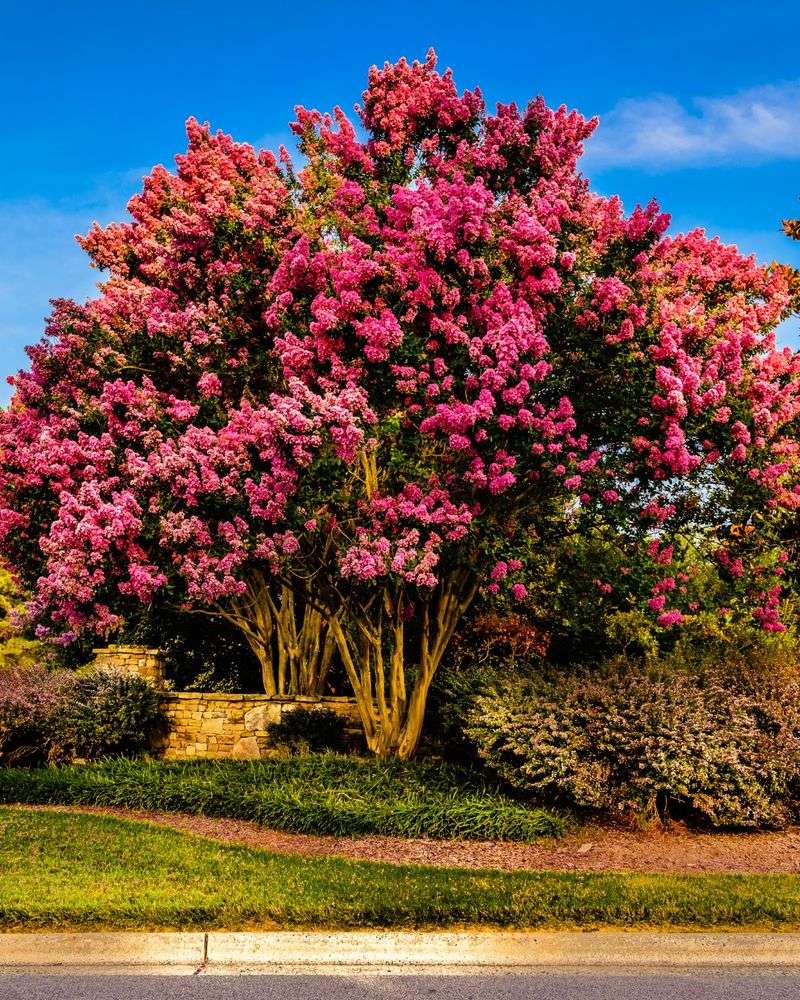
Natchez, Muskogee, and Tuscarora sound like names from a history book, and in a way they are. The U.S.
National Arboretum released these tall crape myrtle hybrids and named them after Native American tribes, and they have been Southern favorites ever since. They are also true giants, often reaching 20 feet or taller.
Size above ground comes with size below ground. A big tree builds a big root system and a wide trunk base to support all that height.
Plant one where a compact variety belongs, and it will eventually run out of room in every direction.
That mismatch happens all the time at garden centers. A young Natchez in a pot looks small and sweet, so it ends up in a tiny bed beside the driveway.
Fifteen years later, the roots have pushed under the slab and the base crowds the edge. Protecting your pavement starts before you buy. Flip over the plant tag and read the mature height and width, not just the bloom color.
For spots near concrete, pick dwarf or semi-dwarf types such as Tonto, Acoma, or the Razzle Dazzle series, which stay far smaller than the big hybrids.
North Carolina gardeners love the big varieties for good reason. Their summer flowers light up yards when little else blooms, and our heat helps them grow fast.
Just give those showy giants an open lawn or a corner lot where they can stretch out without fighting your sidewalk, and they will reward you with years of carefree color.
5. Compacted Piedmont Clay Keeps Roots Near The Top
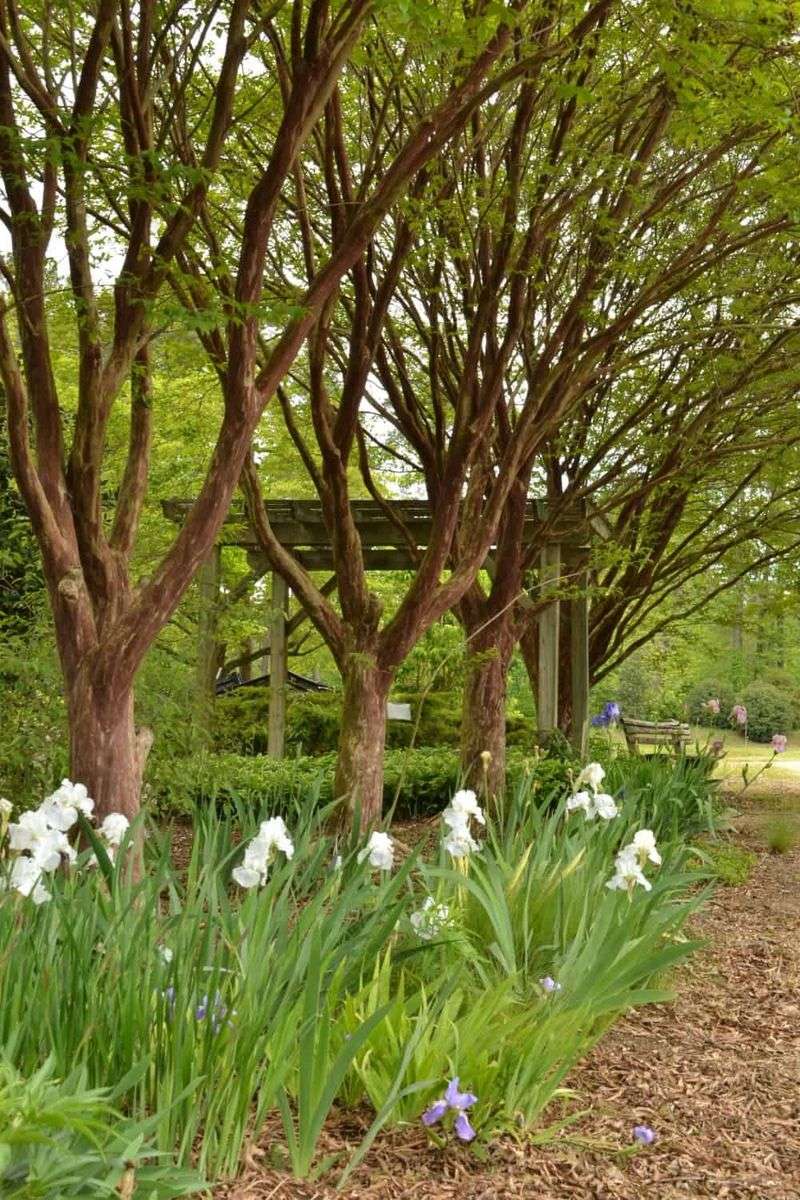
Anyone who has gardened in Raleigh, Charlotte, or Greensboro knows the feeling of a shovel bouncing off hard red clay. That stubborn soil does more than frustrate gardeners. It also shapes where crape myrtle roots decide to grow.
Roots need oxygen as much as they need water. Dense, packed clay holds very little air deeper down, so roots stay in the looser top layer where breathing is easier. Unfortunately, that top layer is exactly where sidewalks and driveways sit.
Clay also gets squeezed tighter during construction, when heavy equipment rolls across new lots. The result is a hard layer just below the surface that roots struggle to break through.
Instead of heading down, they fan out sideways and slip under nearby concrete. You can fight back at planting time.
Rather than digging a narrow hole the size of the root ball, loosen the soil across a wide area, ideally two or three times wider than the ball.
Then work compost into the top few inches across that whole zone to give roots an open, crumbly place to explore.
Keep cars and trucks off the root area, too. Parking or driving over the ground around a crape myrtle packs the clay even tighter and pushes roots back toward the surface.
That challenge belongs mostly to the Piedmont. Head east to the Coastal Plain, and the sandy soils there let roots spread more freely at different depths, so they are less likely to crowd under a slab.
If your yard sits on red clay, though, soil prep may be the smartest gift you give a new tree.
6. Moist Soil Under Concrete Draws Roots In
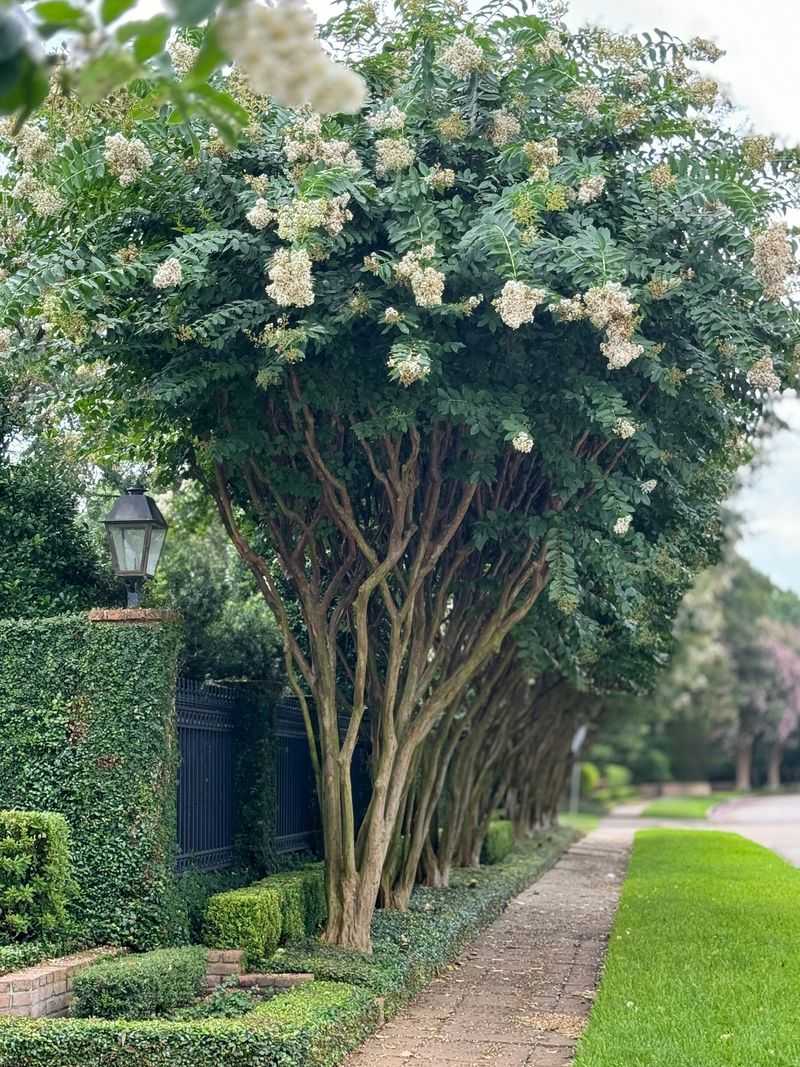
Lift a paver or flat stone on a hot July afternoon, and the dirt underneath will feel cool and damp. Roots discover that same hidden treasure under sidewalks and driveways.
To a thirsty crape myrtle, a concrete slab works a bit like a lid on a water jar. Open soil loses moisture quickly as sun and wind pull water into the air. Concrete blocks that evaporation, so moisture collects and lingers underneath.
Roots naturally grow toward steady water, and they will happily follow it right under the pavement.
Roots that settle there keep growing, and over time their pressure can lift or crack the slab above them. The tree is simply chasing a drink, but your driveway pays the price.
A few small changes can steer roots in a better direction. When you water, aim the hose or soaker line at the open root zone around the tree, not along the edge of the pavement.
Giving roots plenty of moisture in the mulched area makes the space under concrete far less tempting.
Check your gutters and downspouts as well. If a downspout empties near a walkway or driveway, extend it or redirect it so water flows away from slabs instead of soaking the ground beneath them.
North Carolina summers make all of this more likely. Long stretches of heat with little rain dry out open ground fast, while the soil under concrete stays moist.
During those dry spells, a damp patch under your sidewalk can look like an oasis to a crape myrtle.
7. Light, Frequent Watering Creates Surface Roots
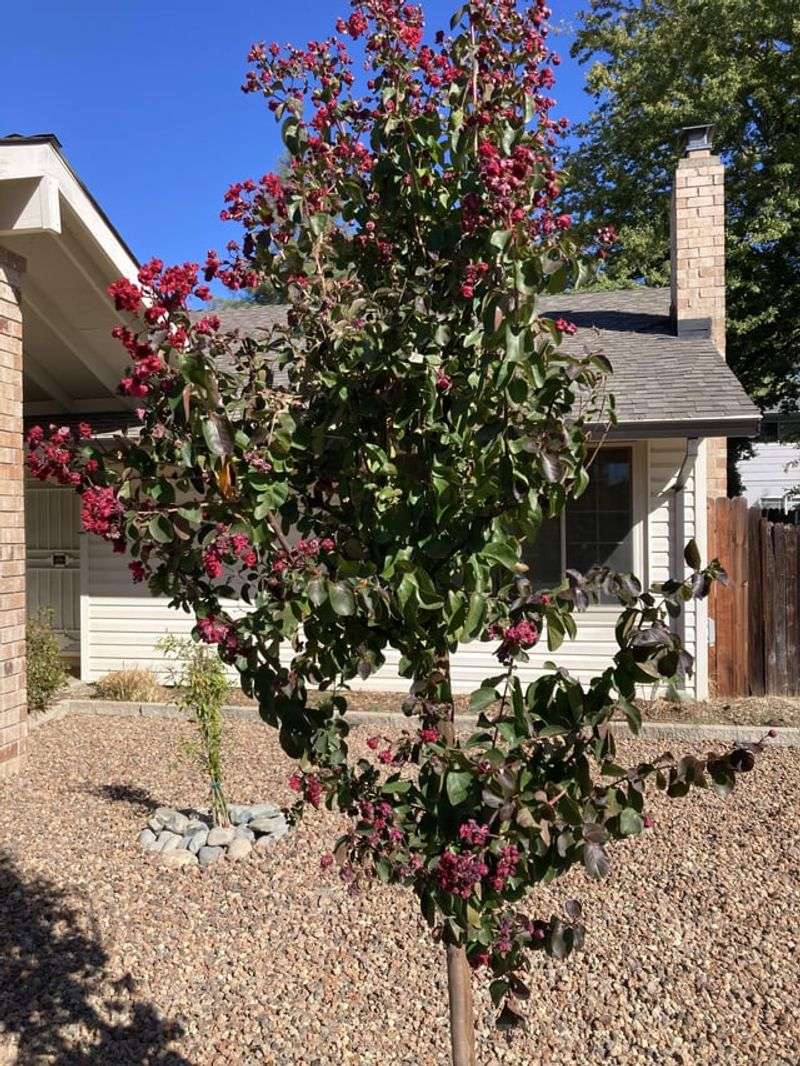
Roots are a little lazy. They grow where water shows up, and if water only reaches the top inch or two of soil, that is where they stay.
Quick, shallow sprinkles train crape myrtle roots to crowd near the surface instead of reaching deeper ground.
Surface roots cause two headaches. They are more likely to spread under sidewalks and driveways, and they dry out faster during hot weather, which makes the tree need even more water.
It becomes a cycle that is hard to break. Deep watering fixes the problem. For young trees, soak the whole root zone slowly so moisture reaches several inches down, then wait several days before watering again.
A soaker hose or a garden hose on a slow trickle for 20 to 30 minutes works well. Want an easy test? Push a long screwdriver into the soil a few hours after watering. If it slides in smoothly for six inches or more, you watered deeply enough.
Once a crape myrtle settles in, usually after the first two growing seasons, you can cut back a lot. Mature crape myrtles handle drought surprisingly well and often need extra water only during long dry spells.
Lawn sprinklers create a hidden version of this problem across North Carolina. Many irrigation systems run short cycles every day to keep grass green, and nearby crape myrtles get the same light treatment.
Consider adjusting the schedule to water less often but longer, or set the zone so spray does not hit the tree’s root area, and your crape myrtle will grow deeper, sturdier roots.
8. Trunk Bases Widen Against Nearby Edges
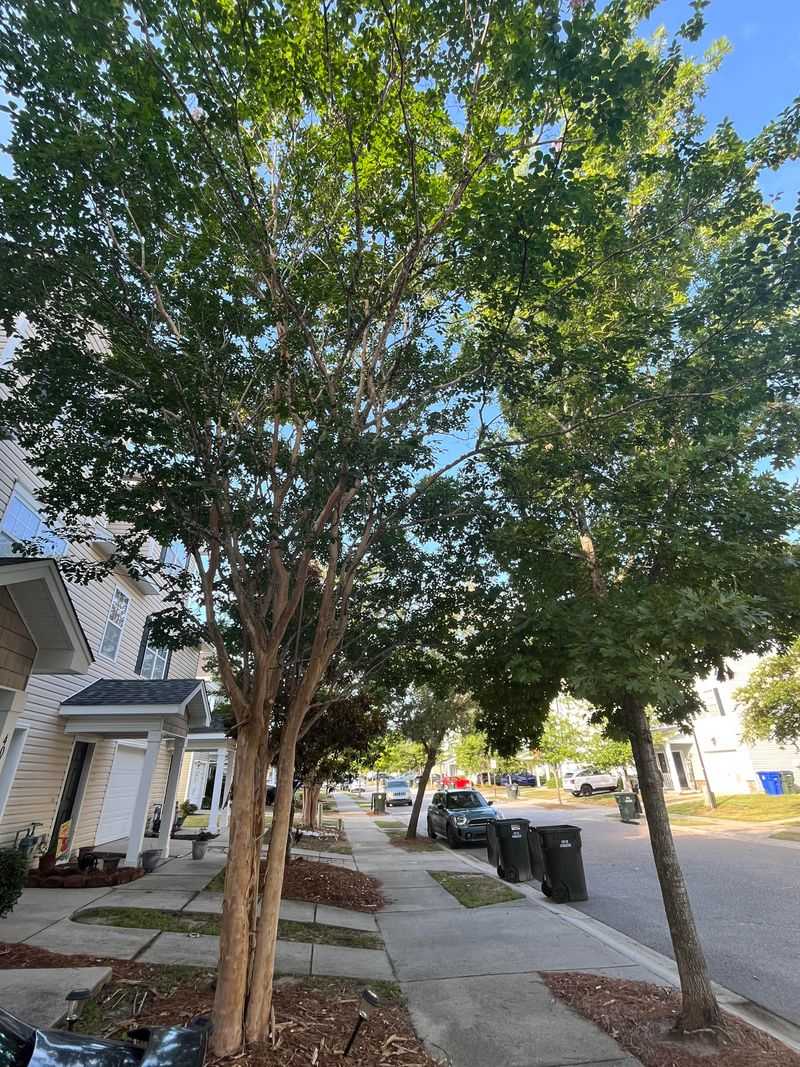
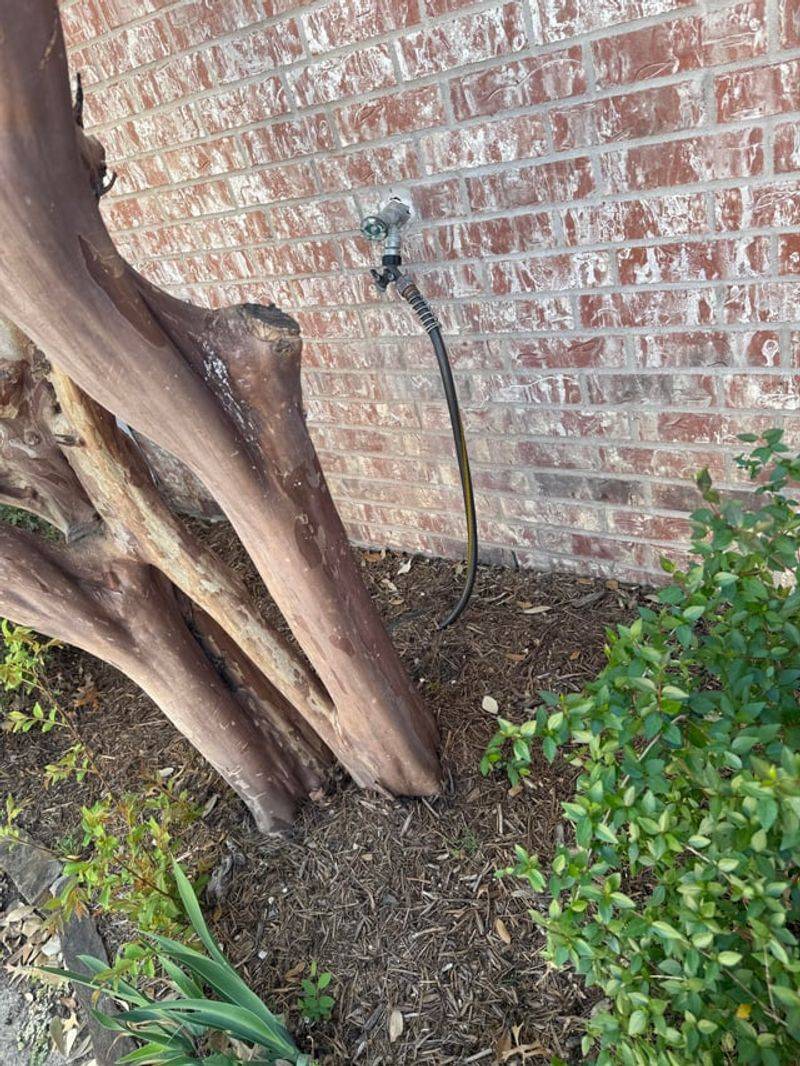
Crape myrtles have a secret talent that has nothing to do with roots. As the tree matures, its base spreads wider and wider, especially on multi-trunk clumps where several stems grow side by side. That base can push hard against anything in its way.
The flared bottom of a trunk, where it meets the soil, keeps expanding as the tree gets older. If it sits right against a curb, sidewalk, or driveway edge, it presses on the concrete with steady force.
Eventually the pavement can crack or shift, even when the roots underneath are behaving. Plenty of homeowners find this out the hard way with trees planted in small cutouts. A square opening barely bigger than the root ball looks neat on planting day.
A decade later, the clump has swallowed the gap and started nudging the concrete. Prevention begins with space. Plant your crape myrtle far enough from edges that the base can widen comfortably, and skip cutouts that leave only a few inches to spare.
For multi-trunk trees, allow extra room, since several stems together take up more ground than one.
Regular trimming at the base helps too. Crape myrtles love to send up suckers, those skinny shoots that pop up around the trunk.
Snip them off at ground level whenever they appear so the clump does not grow wider than it needs to.
Across North Carolina, multi-trunk crape myrtles are the most common form you will find at nurseries and in yards. Their graceful stems and peeling bark look beautiful all year. Give that lovely base the breathing room it deserves.