Why North Carolina Gardeners Should Stop Ignoring Thrips On Their Tomatoes In May
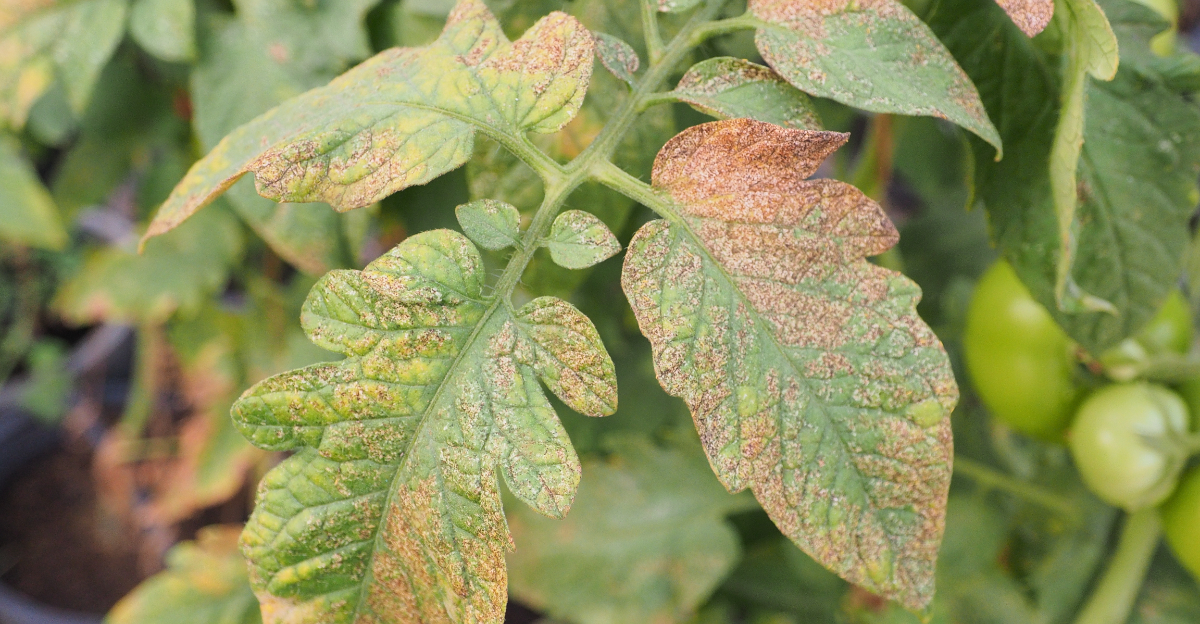
Thrips are easy to overlook. They are tiny, they move fast, and the early damage they cause on tomato plants is subtle enough that most North Carolina gardeners attribute it to something else entirely.
By the time the damage becomes obvious, thrips populations have built up to a point where control takes real effort. May is when they become active across North Carolina gardens, and tomatoes are one of their preferred targets.
The problem goes beyond the feeding damage itself. Thrips are efficient carriers of tomato spotted wilt virus, a disease that spreads fast once it enters a garden and has no cure once a plant is infected.
Catching thrips early in the season, understanding what their presence actually means for your tomato crop, and responding before populations peak is one of the most important things a North Carolina tomato grower can do in May.
1. Thrips Damage Often Starts Before North Carolina Gardeners Even Notice It
Tiny insects have a sneaky way of getting a head start, and thrips are no exception.
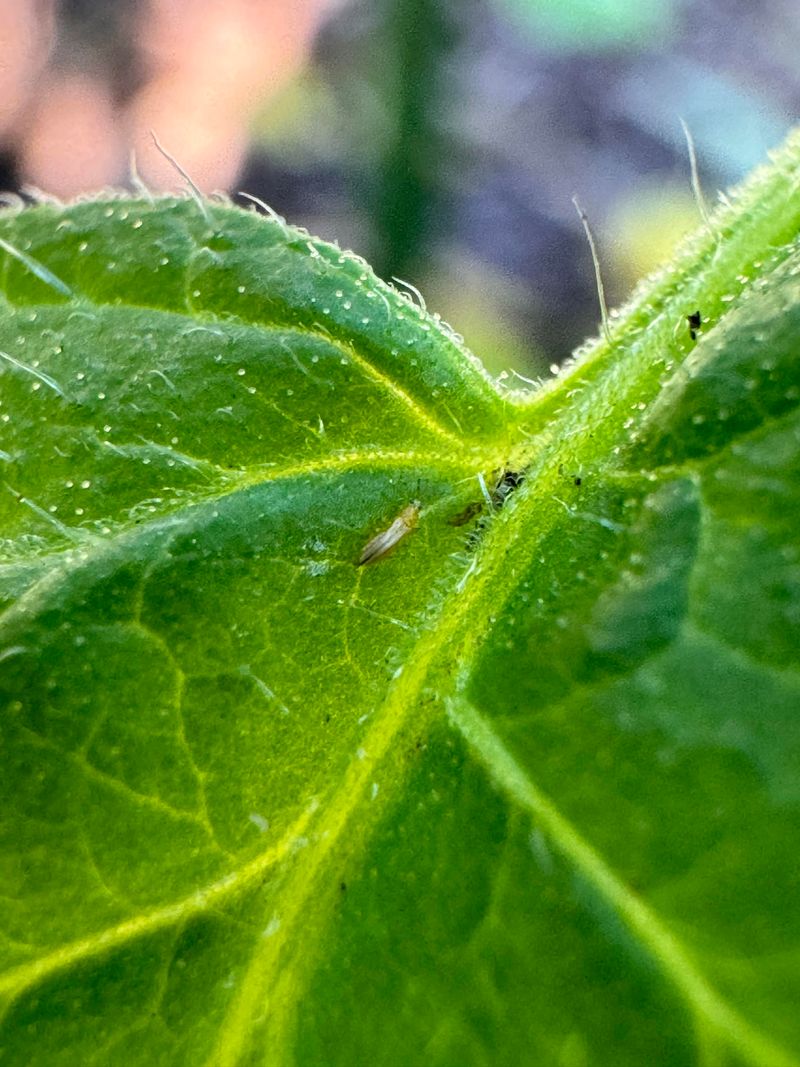
Frankliniella spp., the most common thrips species targeting Solanum lycopersicum in North Carolina, can begin feeding on your tomato plants long before any obvious symptoms appear.
They work fast and quietly, which makes early detection genuinely tricky for most home gardeners.
Warm spring temperatures in May create perfect feeding conditions for thrips. As humidity rises and your garden fills with flowers and fresh foliage, thrip populations can double rapidly.
They tuck themselves into leaf folds and deep inside blossoms where most gardeners never think to look.
The earliest signs are easy to miss or misread. Silvery streaking on leaves, slightly distorted new growth, and tiny pale scars on leaf tissue are the first clues something is feeding.
Running your finger along the underside of a leaf or shaking a flower over white paper can reveal tiny moving insects you would otherwise overlook completely.
Catching thrips at this early stage makes a real difference in how well you can manage them. Once populations build up through several generations, the damage becomes much harder to reverse.
Checking your tomatoes twice a week in May, especially the newest growth and open flowers, gives you the best shot at staying ahead of these tiny but determined pests.
2. Thrips Spread Tomato Spotted Wilt Virus Across North Carolina Gardens
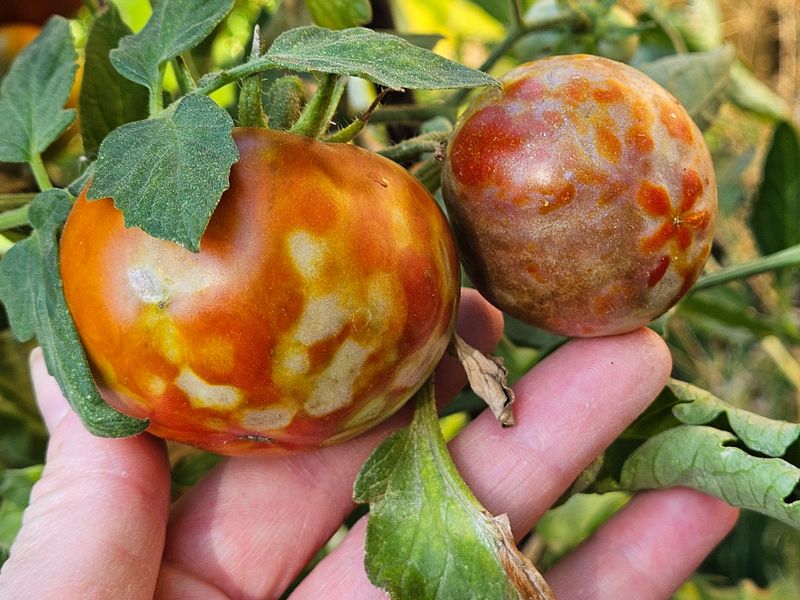
Frankliniella occidentalis and Frankliniella fusca are two thrips species that carry one of the most damaging plant diseases in North Carolina vegetable gardens.
Tomato Spotted Wilt Virus, often shortened to TSWV, spreads when infected thrips feed on healthy Solanum lycopersicum plants.
What makes this virus especially frustrating is that thrips pick it up as young nymphs and can transmit it for the rest of their lives.
Once a tomato plant is infected, there is no treatment that reverses the damage. Infected plants often develop bronzed or purplish leaf coloring, yellow ring spots on foliage and fruit, stunted growing tips, and overall declining productivity.
Some plants may still produce a few tomatoes, but the fruit quality drops significantly and the plants weaken over time.
Your North Carolina Garden Changes Every Week. Your Plan Should Too.
Gardening in North Carolina changes quickly throughout the season. Every Friday you’ll receive a simple weekly plan showing exactly what to plant, prune, fertilize, harvest, and protect so you never miss the right timing.
North Carolina gardens face higher TSWV pressure than many other regions because of the warm climate and long thrips season. Planting TSWV-resistant tomato varieties is one of the most reliable defenses available.
Look for varieties labeled with the T designation, which indicates resistance to this specific virus.
Beyond variety selection, reducing thrips populations early in May limits how many infected insects are moving through your garden.
Row covers, reflective mulch, and removing infected plants promptly all work together to lower the risk of the virus spreading from plant to plant during peak thrips season.
3. North Carolina’s Warm Spring Weather Helps Thrips Multiply Quickly
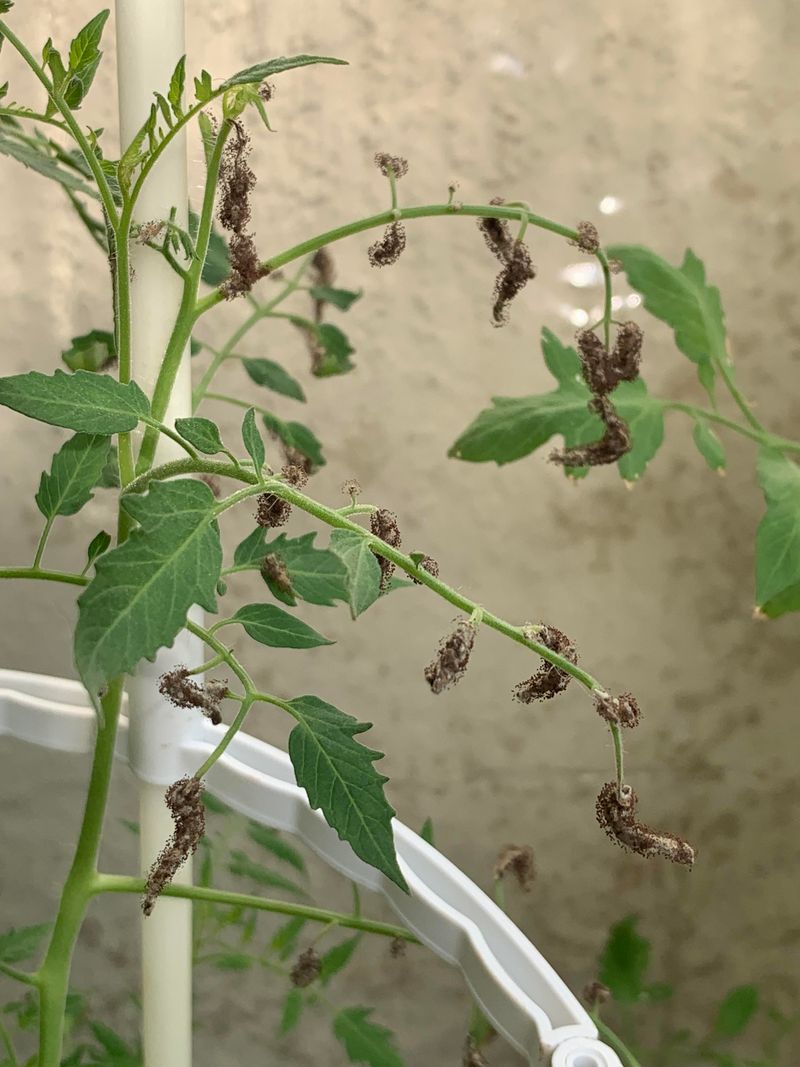
May in North Carolina brings exactly the kind of weather that thrips absolutely love. Temperatures regularly climb into the upper 70s and 80s, dry spells alternate with humid stretches, and flowering plants pop up everywhere across gardens and roadsides.
For Frankliniella spp. feeding on Solanum lycopersicum, these conditions act like a turbo boost for reproduction.
Thrips generations turn over quickly in warm weather. A single female can lay dozens of eggs in just a few days, and those eggs hatch into feeding nymphs within a week or less when temperatures are favorable.
By the time a gardener notices a problem, several overlapping generations may already be active on the same plants.
Flowering weeds scattered around garden borders play a big role in this rapid buildup. Common spring weeds like wild onion, henbit, and chickweed serve as early season food sources and breeding sites for thrips before your tomatoes even begin to flower.
Once those weeds dry out or get removed, thrips migrate straight onto your garden plants.
Monitoring becomes especially important during warm dry stretches in May. Sticky blue or yellow traps placed near tomato plants can help you track how many thrips are active in your garden week by week.
If counts start climbing fast, that is your cue to step up inspection frequency and consider physical or biological management options before populations get out of hand.
4. Thrips Hide Deep Inside Tomato Flowers During May
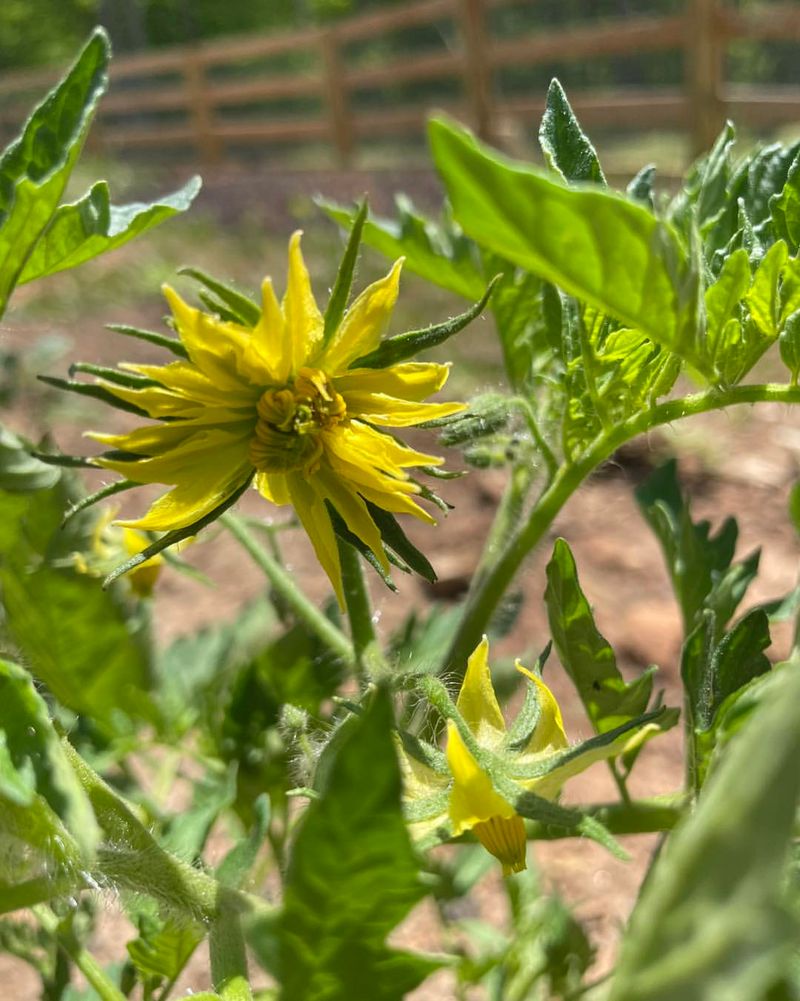
Most gardeners scan the tops of leaves and call it a day, but thrips have a much better hiding spot.
Frankliniella spp. are strongly attracted to the pollen and soft tissue inside Solanum lycopersicum blossoms, making tomato flowers one of their favorite hangouts during May.
The problem is that the inside of a flower is one of the last places most people think to check.
Flower feeding causes more than just cosmetic damage. When thrips feed inside blossoms, they can disrupt pollination, cause petals to brown prematurely, and leave behind scarring that affects fruit set.
In some cases, heavy flower feeding leads to blossom drop, which means fewer tomatoes on your plants by midsummer.
A simple trick for detecting flower-dwelling thrips is to hold a white piece of paper under an open blossom and give it a firm tap. Any thrips inside will fall onto the paper and become visible as tiny pale or dark specks moving around.
Doing this with several flowers across your garden gives you a much more accurate picture of your actual thrips pressure.
Folded young leaves near growing tips are another hiding spot worth checking. Thrips often shelter in the tight folds of new foliage before it fully opens, and feeding at this stage causes the characteristic leaf distortion gardeners sometimes mistake for other problems.
Building flower inspection into your regular May garden routine makes a real difference in catching infestations early.
5. Overfertilized Tomatoes Often Attract More Thrips Problems
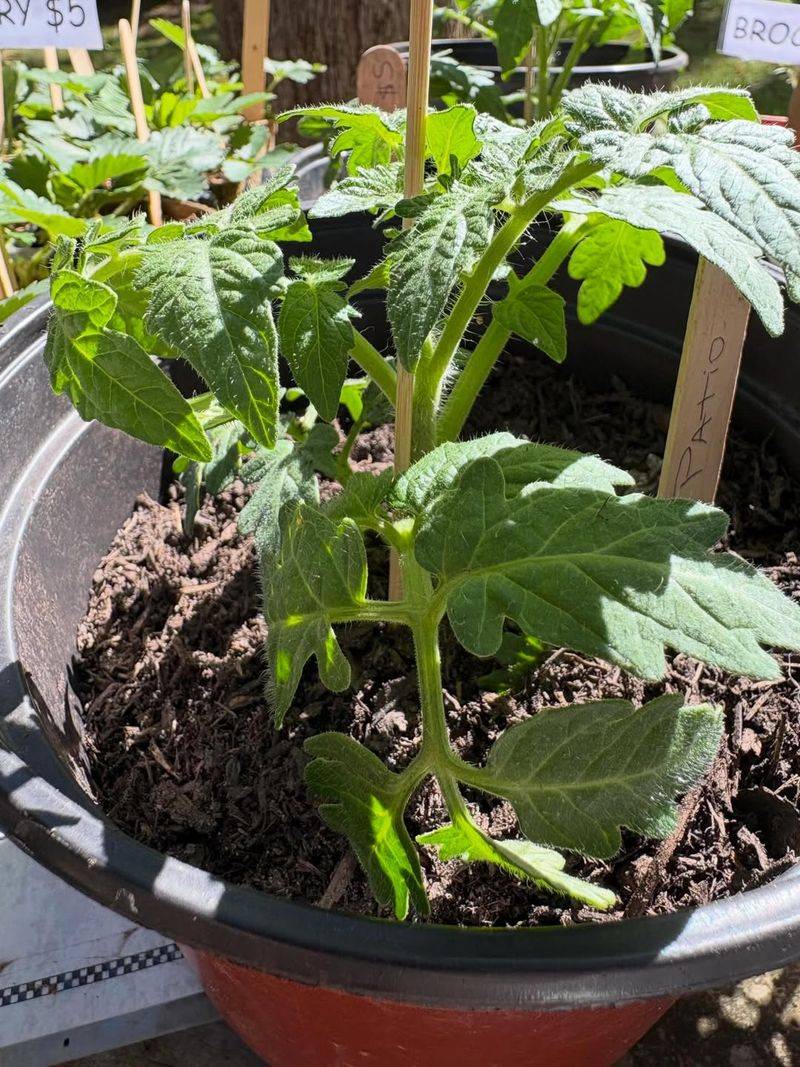
More fertilizer does not always mean a healthier tomato plant, and thrips are one reason why. Applying too much nitrogen to Solanum lycopersicum produces plants with extremely lush, soft, dark green foliage that is packed with nitrogen-rich sap.
Frankliniella spp. are sap-feeding insects, and tender new growth loaded with nutrients is exactly what draws them in during warm humid weather.
Soft tissue is also physically easier for thrips to pierce and feed on compared to mature, tougher leaves.
Plants pushed into rapid vegetative growth by heavy nitrogen applications keep producing the kind of fresh young tissue that thrips prefer throughout the growing season.
This essentially turns an overfertilized tomato into a continuous buffet for pests.
A balanced approach to fertilizing works much better for long-term plant health. Tomatoes need phosphorus and potassium just as much as nitrogen, especially once flowering begins.
Switching to a fertilizer with a lower nitrogen ratio and higher phosphorus content when your plants start to bloom helps shift their energy toward fruit production rather than excessive leaf growth.
Soil testing is a smart habit for any North Carolina gardener. Knowing what your soil already contains helps you avoid applying nutrients that are not needed.
Compost-amended beds often supply enough steady nitrogen on their own without additional high-nitrogen fertilizer. Keeping your plants well-fed but not overfed is one of the simplest ways to make your tomatoes less appealing to thrips all season long.
6. Weeds Around Tomato Beds Can Harbor Thrips Populations
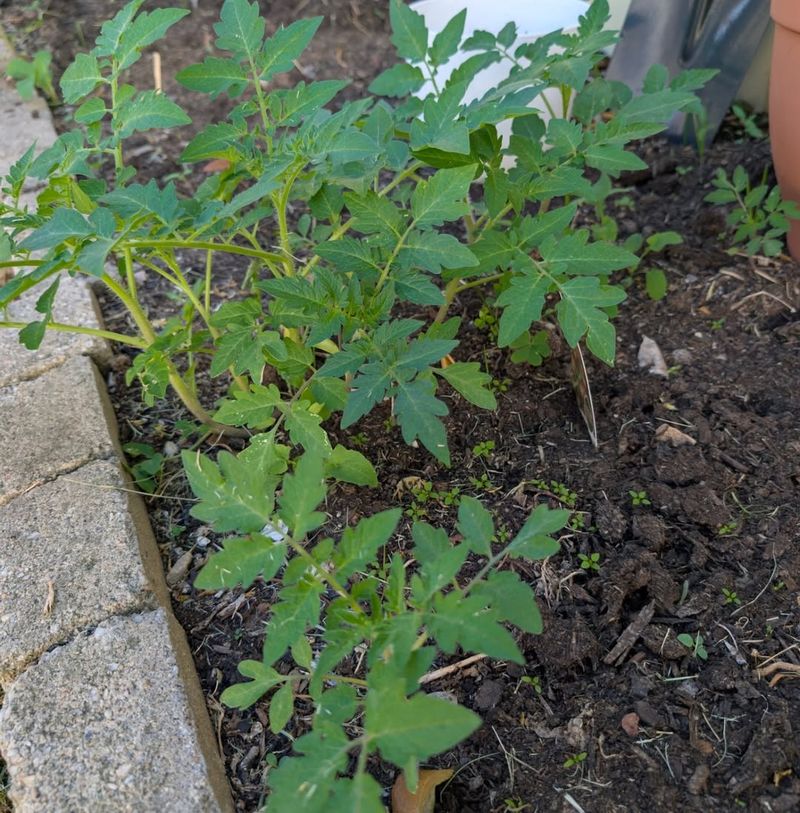
A weedy garden border might seem harmless, but for thrips it is basically a welcome mat.
Many common spring weeds that bloom in North Carolina during April and May serve as primary feeding and breeding sites for Frankliniella spp. long before your Solanum lycopersicum plants are fully established.
Once those weed populations decline or dry out, the thrips already living in them look for the next best food source nearby.
Flowering weeds are particularly attractive because thrips feed heavily on pollen. Wild onion, henbit, purple deadnettle, and chickweed are all common in North Carolina gardens and all capable of hosting significant thrips populations.
Having these plants growing right next to your tomato beds creates a very short migration path once weed season winds down.
Clearing weeds from around your tomato beds before they flower cuts off this early season reservoir. Pulling or hoeing weeds while they are still young and before they bloom removes the food source and reduces the number of thrips that build up near your garden.
This step is especially impactful in April and early May before your tomatoes begin flowering.
Mulching garden beds thickly with straw, wood chips, or a similar material also helps. A good layer of mulch suppresses weed germination and keeps the soil surface less hospitable for thrips that pupate in the ground.
Combining weed removal with mulching creates a noticeably less inviting environment for thrips to establish themselves near your tomatoes.
7. Thrips Damage Is Often Mistaken For Heat Stress Or Nutrient Problems
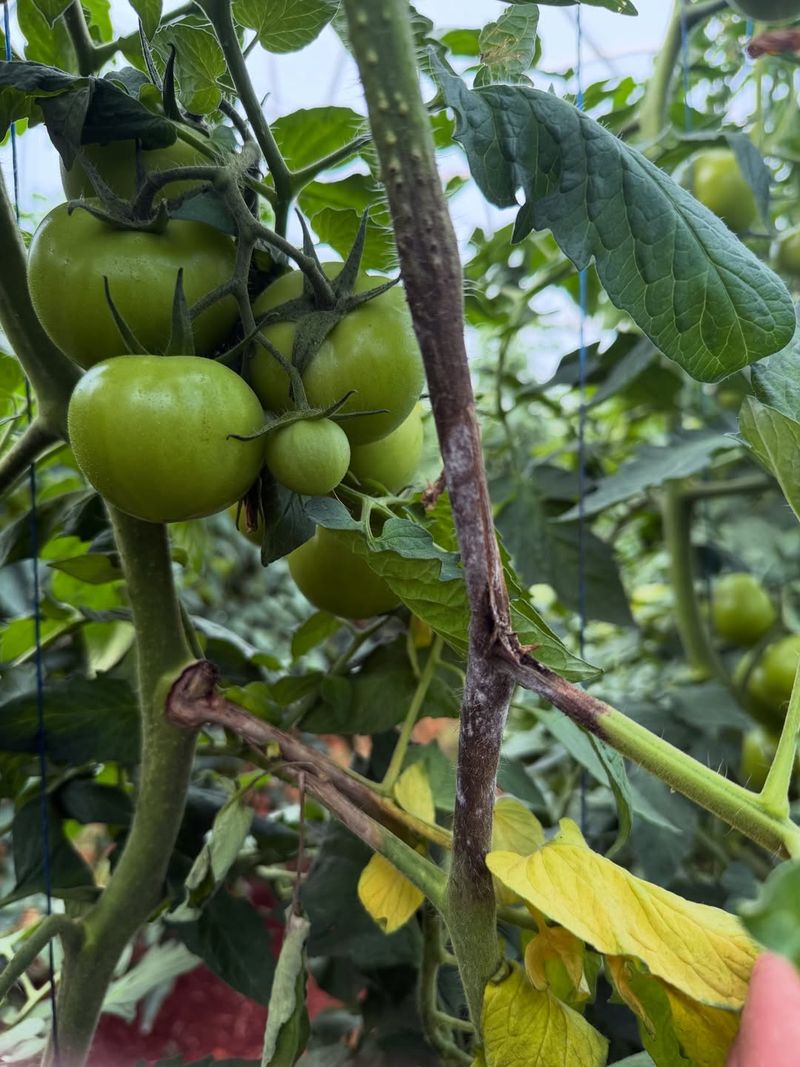
Plenty of gardeners spend weeks trying to fix the wrong problem because thrips symptoms look a lot like other common issues.
Curled leaves, silvery or bronze leaf surfaces, and distorted growing tips on Solanum lycopersicum are regularly blamed on heat stress, calcium deficiency, or irregular watering before anyone thinks to check for Frankliniella spp. insects.
Misdiagnosis wastes time and lets the actual pest population keep growing.
Heat stress usually affects the whole plant more evenly, causing wilting during the hottest part of the day followed by recovery in the evening. Thrips damage tends to show up in specific areas first, especially on the newest growth and in and around flowers.
The silvery or bronzed appearance from thrips feeding also has a slightly shiny, scarred texture that heat stress alone does not typically produce.
Nutrient deficiencies usually follow predictable patterns tied to specific minerals. Calcium deficiency shows up mostly at the margins of young leaves, while magnesium deficiency causes yellowing between leaf veins.
Thrips damage creates irregular scarring and distortion that does not match these tidy patterns, though it is easy to confuse the two without a close look.
Getting a hand lens or magnifying glass and examining the undersides of affected leaves and the insides of open flowers is the most reliable way to confirm thrips. Seeing the insects themselves, even in small numbers, tells you far more than leaf symptoms alone.
Accurate identification is the first step toward actually solving the problem rather than chasing the wrong cause.
8. North Carolina Gardeners Should Encourage Beneficial Insects Before Thrips Explode
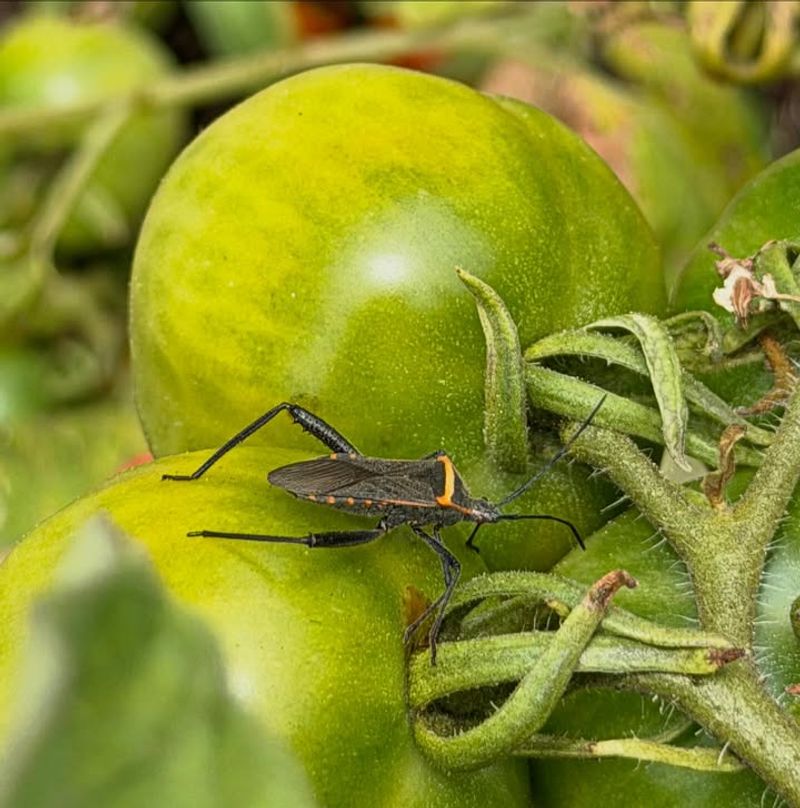
Nature has its own thrips control squad, and it works remarkably well when gardeners give it a chance. Orius insidiosus, commonly called the minute pirate bug, is one of the most effective natural predators of Frankliniella spp. in North Carolina vegetable gardens.
These tiny beneficial insects actively hunt thrips nymphs and adults on Solanum lycopersicum plants, and they can make a real dent in populations when present in good numbers.
Lacewings, predatory mites, and parasitic wasps also contribute to natural thrips suppression. The challenge is that broad-spectrum insecticides wipe out these beneficial insects along with the pests.
Once natural predators are removed from the garden equation, thrips populations tend to rebound faster and stronger than before, creating a worse situation than if nothing had been sprayed at all.
Planting flowers that attract and feed beneficial insects is one of the smartest investments a North Carolina gardener can make. Alyssum, dill, fennel, marigolds, and native wildflowers all support populations of predatory insects.
Keeping a diverse planting near your tomatoes throughout May and into summer helps maintain a steady presence of natural thrips predators right where you need them.
Choosing targeted, low-impact products like spinosad or insecticidal soap when intervention is necessary helps protect beneficial insect populations. These options are far less disruptive to the broader garden ecosystem than broad-spectrum chemicals.
Working with nature rather than against it consistently produces better long-term pest balance in home gardens.
9. Ignoring Thrips In May Often Leads To Bigger Summer Tomato Problems
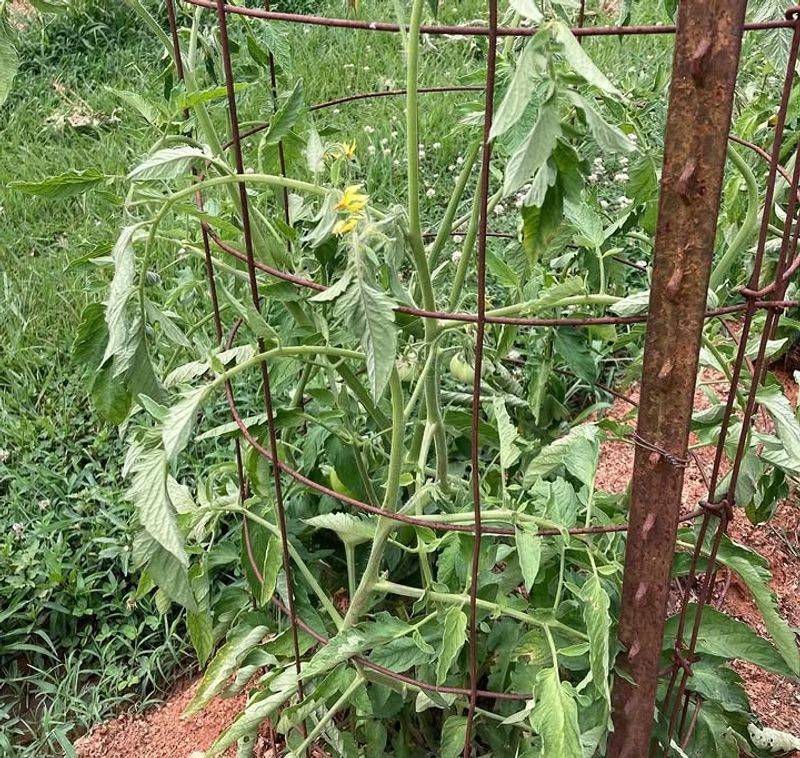
Small problems in spring have a habit of turning into big problems by July, and thrips on tomatoes follow that pattern almost every time.
A light infestation of Frankliniella spp. on Solanum lycopersicum in early May can quietly expand through multiple generations as summer heat and humidity ramp up.
By the time a gardener realizes something is seriously wrong, the population is already well established and the plants are under significant stress.
Summer heat accelerates thrips reproduction even faster than spring weather. Populations that seemed manageable in May can balloon within weeks once temperatures consistently reach the upper 80s and 90s.
Plants already weakened by early feeding become less able to handle additional stress from heat, drought, or disease, which compounds the overall decline in garden productivity.
Fruit quality suffers noticeably when thrips pressure goes unchecked. Scarring on tomato skin, reduced fruit size, and bronzed or distorted fruits are all outcomes of sustained feeding and virus spread that begins with ignored spring infestations.
What should be a rewarding summer harvest can turn into a disappointing collection of damaged, undersized tomatoes.
Building a simple monitoring schedule into your May garden routine is the most practical way to prevent this outcome.
Checking plants twice a week, using sticky traps to track insect activity, and acting quickly when populations start rising keeps you in control of the situation.
Integrated pest management that combines monitoring, beneficial insect support, physical barriers, and targeted treatments when necessary gives North Carolina gardeners the best chance at a healthy and productive tomato harvest all summer long.