Why Ohio Ginkgo Trees Drop All Their Leaves In A Single Day
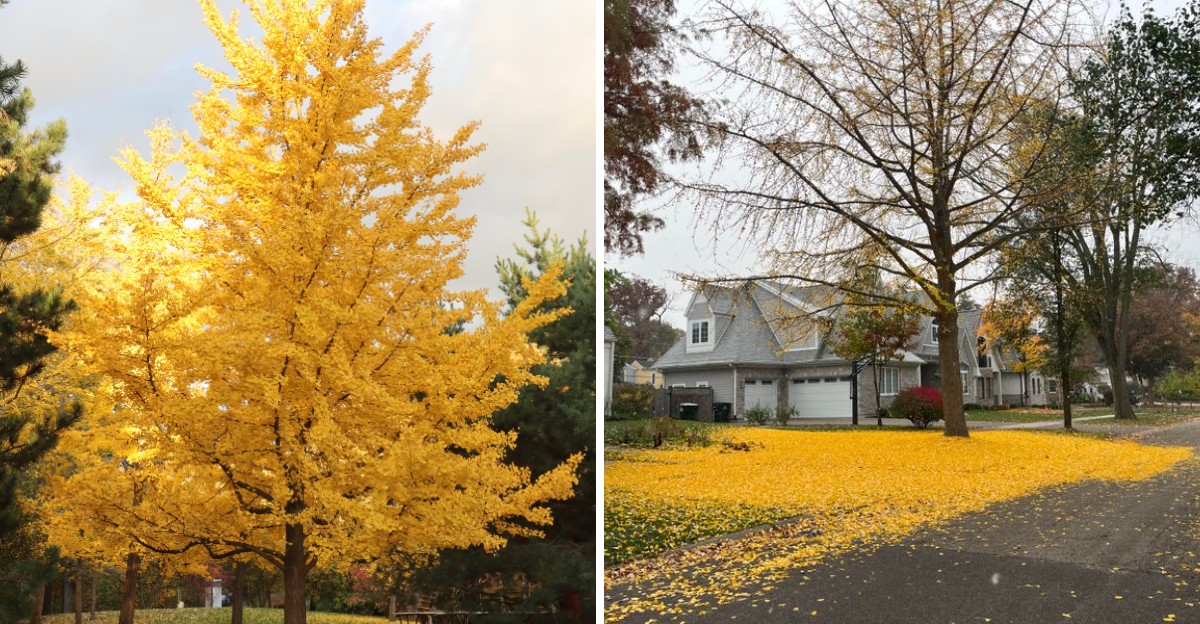
You leave for work under a golden canopy, and by dinner the whole thing is lying on the grass like someone pulled a rug out from under the tree.
Ohio ginkgos pull this stunt every fall. One day the branches glow, and the next they stand bare while a yellow carpet covers the ground.
Neighbors stop mid-stride. Kids rush out to stomp through it.
The tree isn’t broken, and the timing isn’t random. A ginkgo spends weeks quietly preparing every leaf to let go at once, then often waits for the first hard frost to give the final push.
Few other trees do it this way, which is part of the charm.
Mark the first cold night on your calendar and keep an eye on the ginkgo down the street. The big moment arrives fast.
1. Most Trees Shed Their Leaves Over Several Weeks
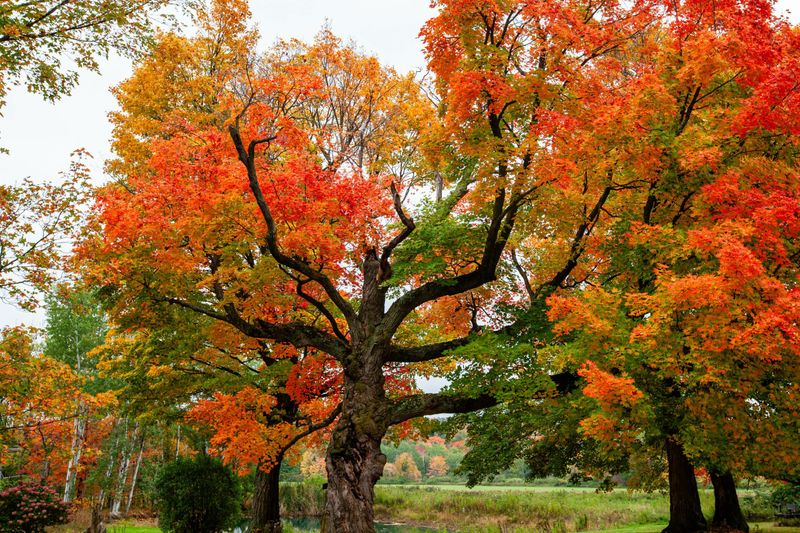
Think about raking your yard in October. You clear the lawn on Saturday, and by Tuesday it looks messy again.
That slow trickle happens because most trees are not in a hurry. Maples, oaks, and sycamores let go of their leaves bit by bit over three to six weeks.
Inside each leaf stem, a thin band of cells called the separation layer slowly forms. On a typical tree, that band grows at different speeds in different spots.
Leaves on the sunny top might loosen first, while shady lower leaves hang on longer.
Wind, rain, and squirrels knock loose whatever is ready. The rest waits its turn, so the canopy thins out a little each day.
Oaks are famous for being extra stubborn. Some hold brown, papery leaves until spring, rattling in the winter breeze.
For homeowners, this slow pace means many small cleanups instead of one big one. A leaf blower or mulching mower gets steady work for over a month.
Here is a handy tip for Ohio yards. Mow fallen leaves into tiny bits and leave them on the grass, since they break down and feed the soil.
Keep this gradual pattern in mind. It makes the ginkgo’s surprise performance feel even more amazing.
2. Ginkgo Leaves Turn Gold In Unison
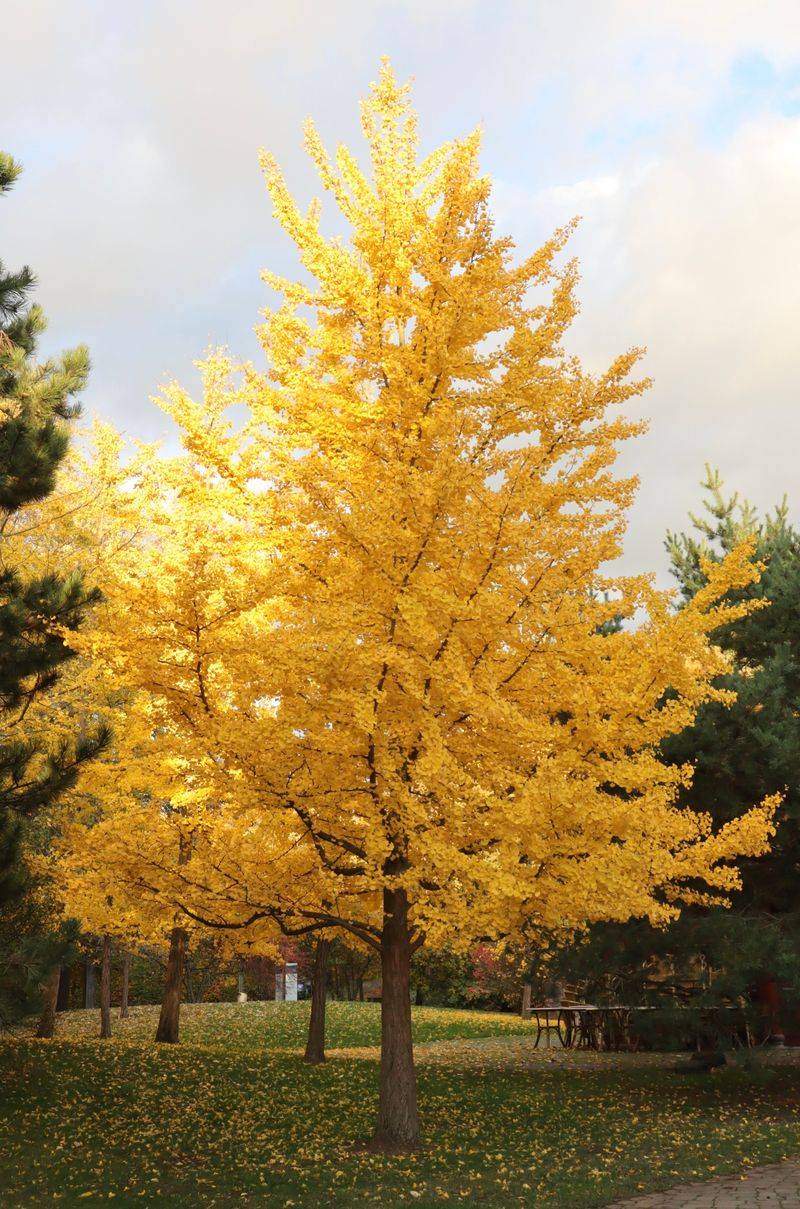
Nobody forgets their first glowing ginkgo. One Columbus neighbor described it as a giant yellow umbrella someone forgot to close.
Ginkgo leaves are shaped like little paper fans, with veins that spread out like the ribs of a folding fan. In summer they stay a cool green.
When fall arrives, the tree stops making green chlorophyll. As that green fades, bright yellow pigments that were hiding underneath finally show off.
What makes ginkgos special is how evenly this happens. Many trees blush from the outside in, leaving patches of green for weeks.
A ginkgo tends to switch over almost as one piece, top to bottom.
Did you know ginkgos are sometimes called living fossils? Their family line goes back more than 200 million years, so dinosaurs may have stepped on these same fan-shaped leaves.
Want to catch the color at its best? Check your local ginkgo every few days starting in late October, especially in central and southern Ohio.
Your Ohio Garden Changes Every Week. Your Plan Should Too.
Gardening in Ohio changes quickly throughout the season. Every Friday you’ll receive a simple weekly plan showing exactly what to plant, prune, fertilize, harvest, and protect so you never miss the right timing.
Bring a camera when the whole crown turns lemony. That golden stage is the signal that the big drop is coming soon, sometimes within a week or two.
3. Every Leaf Forms Its Separation Layer At Once
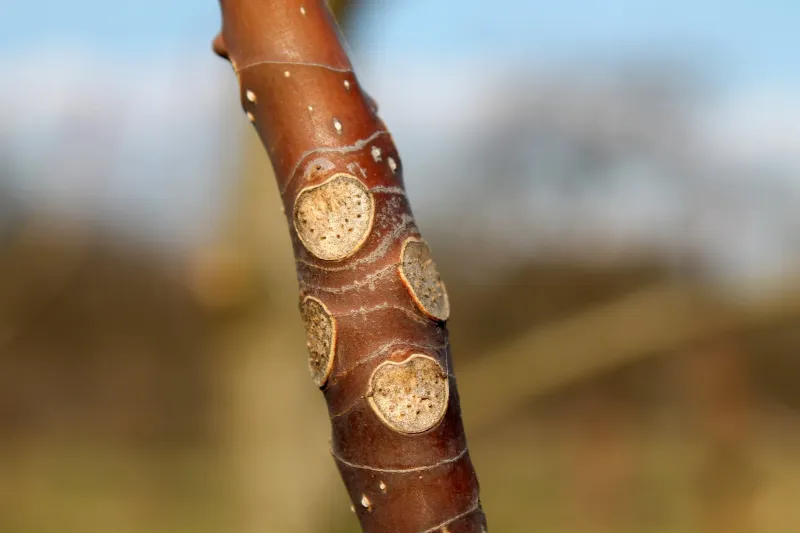
Here is the real secret, and it hides in a spot smaller than a grain of rice. Right where each leaf stem meets the twig, a tiny zone of cells gets ready to let go.
Scientists call this zone the abscission layer. You can think of it as a perforated line, like the tear strip on a ticket.
On most trees, those tear strips get made one leaf at a time. Ginkgos are different, because they build that weak line in nearly every leaf at the same moment.
Picture a classroom where every student finishes the test at the exact same second. That is basically what the tree pulls off.
Once the layer is set, each leaf hangs by just a thread of tissue. The tree also seals the spot with a corky patch, so no germs sneak in later.
Why would a tree work this way? Researchers are still curious, but the steady, matched timing may come from the ginkgo’s ancient design.
Try a little backyard science this fall. Gently tug a yellow ginkgo leaf, and if it pops off easily, you know the tear strip is ready.
4. A Hard Frost Often Finishes The Job Overnight
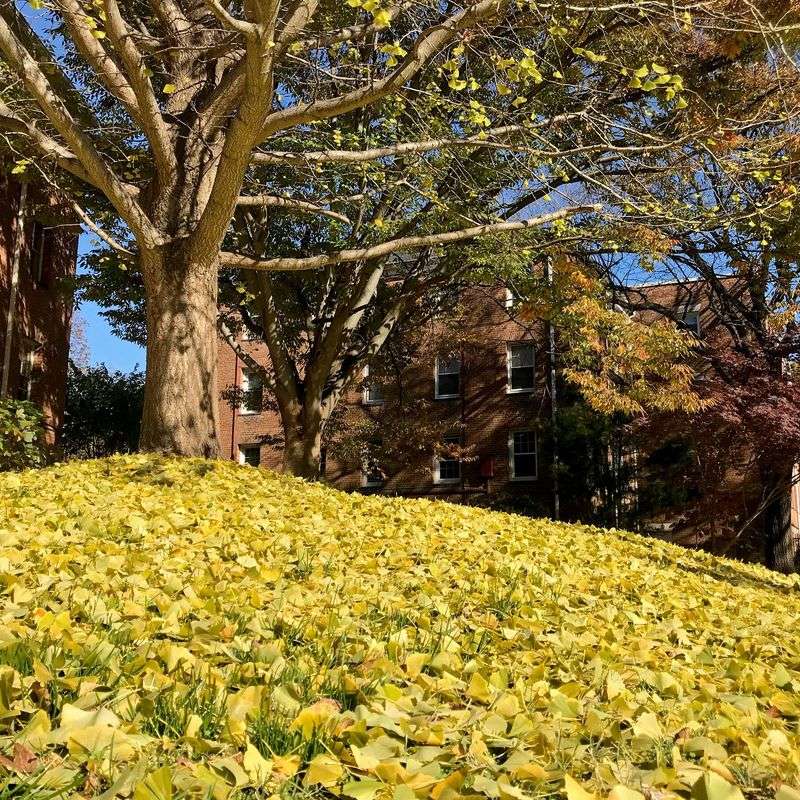
Brrr. When the thermometer dips into the mid twenties, ginkgo fans across Ohio set their alarms for sunrise.
A hard frost is often the final nudge the tree needs. The cold snap damages those thin threads of tissue still holding each leaf in place.
Then the sun comes up and warms the branches. As ice inside the stems thaws, the leaves start slipping off by the hundreds.
Some people report the whole tree emptying within a few hours. A few lucky watchers say they saw it happen in under an hour, like golden snow.
Every so often, an early freeze arrives before the color change is finished. In those years, you may see leaves that are still a bit greenish land on the ground.
For the best view, check the local forecast in late October and November. When a night below 28 degrees is predicted, plan a morning stroll past the nearest ginkgo.
Bring a warm drink and some patience. Watching thousands of yellow fans flutter down in quiet air is one of the calmest shows nature offers, and it costs nothing at all.
5. Not Every Ginkgo Follows The Script Every Year
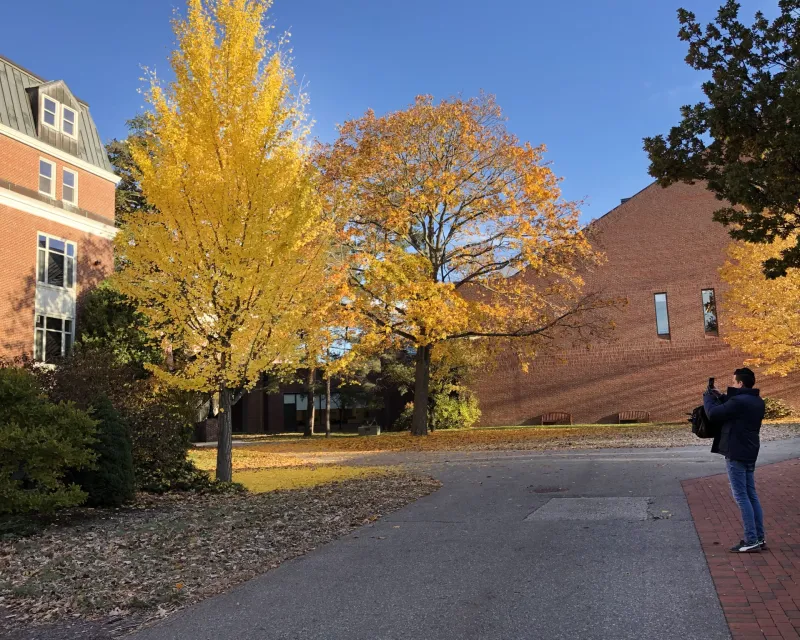
Plot twist. Some years your favorite ginkgo might shrug off the one day drama and drop its leaves over a week instead.
Nature loves to break its own rules. While the sudden drop is the classic ginkgo move, it is a tendency rather than a promise.
Several things can change the routine. A gusty storm might strip part of the crown early, leaving the rest to fall later.
Young trees sometimes behave differently than old giants. A sapling planted a few years ago may still be settling into its rhythm.
Stress plays a role too. A hot, dry summer or cramped roots near a sidewalk can make a tree drop leaves in a scattered, uneven way.
Genetics matter as well. Ginkgos sold in nurseries come from many different parent trees, and each line carries its own habits.
So if your ginkgo seems off script, there is no need to worry. Keep the tree watered during dry spells and add a layer of mulch around its base.
Jot down drop dates in a notebook each fall. After a few seasons, you will learn your tree’s quirks better than anyone else on the block.
6. A Mild October Can Push The Drop Later
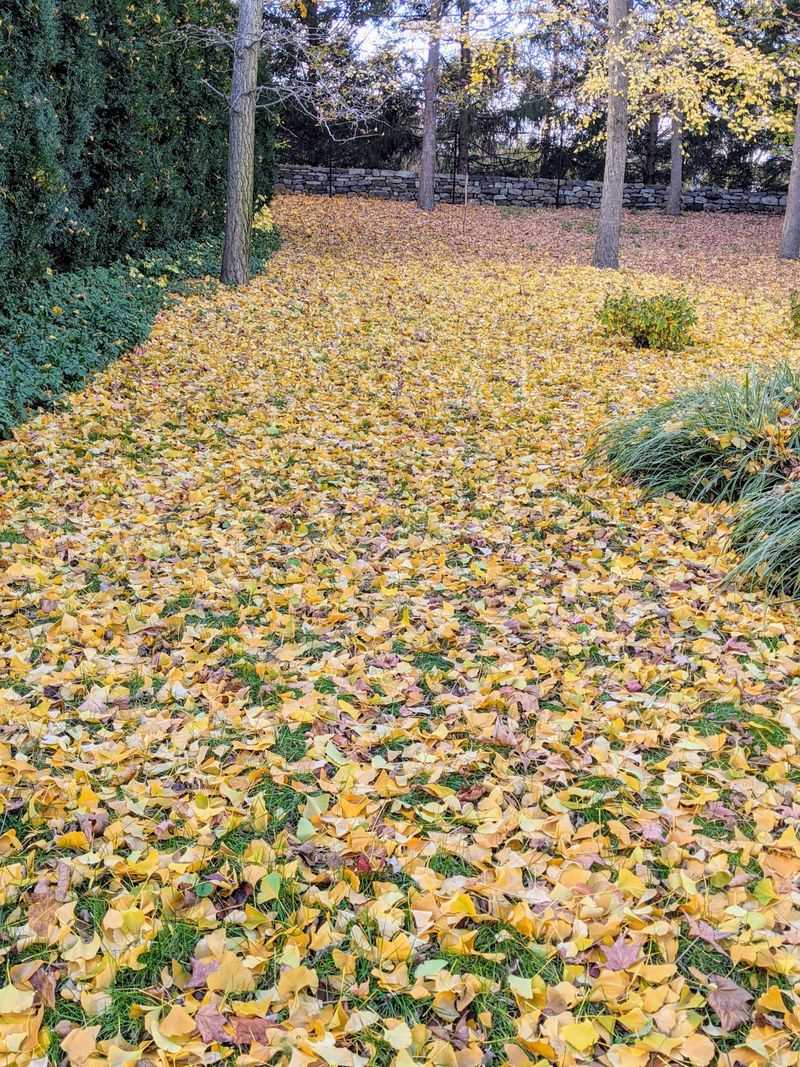
Remember that October when you wore shorts to a Halloween party? Ginkgos notice warm spells like that too.
When autumn feels more like September, the tree takes its time. Shorter days still tell it winter is coming, but warm air slows down the steps that get leaves ready to fall.
The color change may drag on, with some green lingering longer than usual. The separation layers also form at a lazier pace.
And without a hard frost to finish things, the leaves just hang around. In some recent Ohio falls, ginkgos held their gold well into mid November.
There is an upside here. A longer golden season gives you more chances to enjoy the view and snap photos.
Gardeners can use a mild fall wisely. Water trees deeply if rain has been scarce, since roots keep working while the soil stays warm.
Also, hold off on heavy fertilizer late in the season. Extra feeding can push tender new growth that frost may damage later.
Simply enjoy the bonus weeks. When the cold finally arrives, the big drop will still happen, just on a slightly later calendar.
7. Each Tree Keeps Its Own Schedule
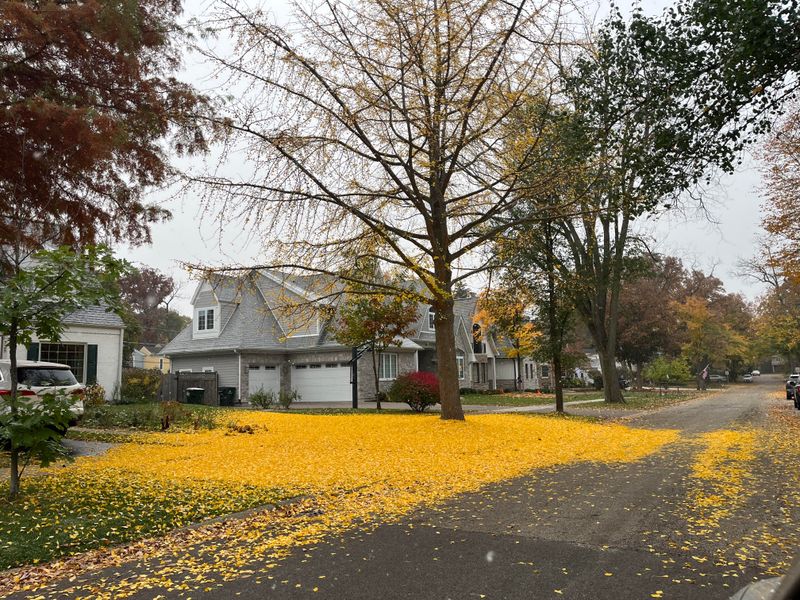
Walk down a street lined with ginkgos, and you might spot a funny sight. One tree is bare, its neighbor is still golden, and the third is halfway there.
Like people, every tree has a personal clock. Two ginkgos planted on the same day can drop their leaves days apart.
Much of that comes down to genes. Trees grown from different seeds carry slightly different instructions about timing.
Location makes a big difference too. A ginkgo near a warm brick building or busy road stays cozier at night than one in an open field.
Elevation, wind, and sun also count. A tree in a low, chilly hollow may feel frost first, while one on a sheltered hill waits longer.
Across Ohio, the timing shifts from north to south. Trees near Lake Erie can follow a different pace than those near Cincinnati.
Here is a fun family project. Pick three local ginkgos and check on them every morning from late October onward.
Record which one drops first and what the weather was like. You might discover your own neighborhood patterns, the same kind of clues scientists gather on a larger scale.
8. The Big Drop Has Been Arriving Later Over The Decades
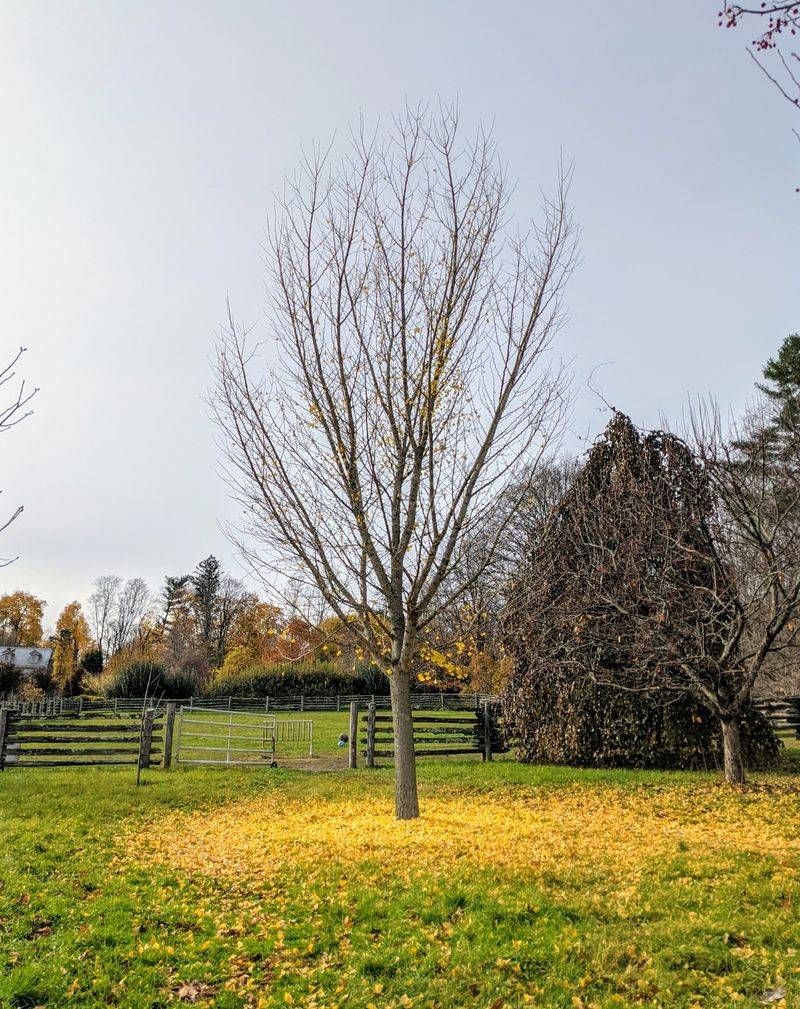
Some ginkgo lovers keep notebooks going back many years. Their pages tell a quiet but interesting story.
At places like Bates College in Maine, people have recorded the drop date of a single ginkgo for decades. Over time, the big day has tended to slide later into the fall.
The likely reason is simple. First hard frosts have been showing up later than they used to in many parts of the country.
Since frost often triggers the final release, a later freeze means a later carpet of gold. Ohio gardeners have noticed similar shifts in their own yards.
Records like these matter to scientists. Tracking when plants bloom, leaf out, and drop leaves is called phenology, and it helps show how seasons are changing.
You can join in without any special tools. Programs such as the USA National Phenology Network welcome observations from regular folks and students.
Start by writing down the date your local ginkgo turns gold and the date it drops. Add a quick note about the weather that week.
Years from now, that simple list could become a small treasure. It links your own backyard to a much bigger story about our changing autumns.