Why Ohio Rhododendron Leaves Curl Up On Cold Mornings
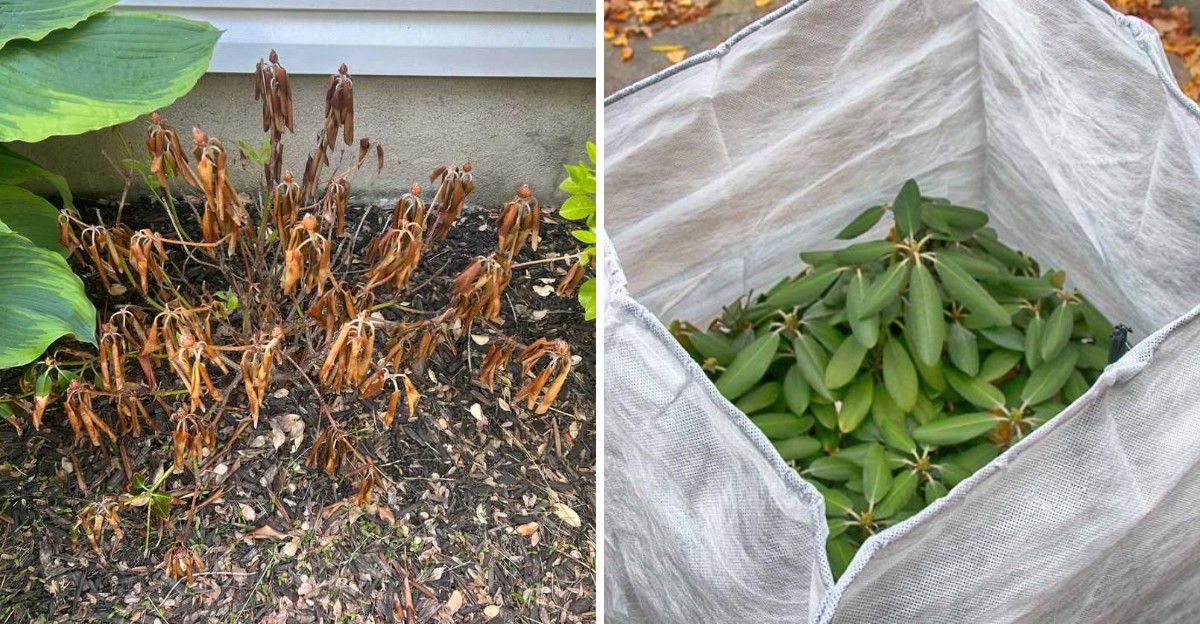
Some shrubs in your yard can tell the temperature better than a cheap thermometer. On frosty mornings, their glossy leaves roll into tight green tubes and hang down like they gave up.
By lunch, many of them flatten out again. I still remember my first winter noticing this and assuming my whole planting was in serious trouble.
Scientists actually have a name for this odd motion, and it has nothing to do with weakness. You’re in for a big surprise once you learn how much planning goes into one curled leaf.
Here in Ohio, January cold snaps can push temperatures into the single digits, so this trick matters. I believe every gardener should know what those rolled leaves are saying.
Have you ever checked your shrubs at sunrise and wondered whether they were secretly reading the weather report?
1. Those Rolled Rhododendron Leaves Are Following The Thermometer
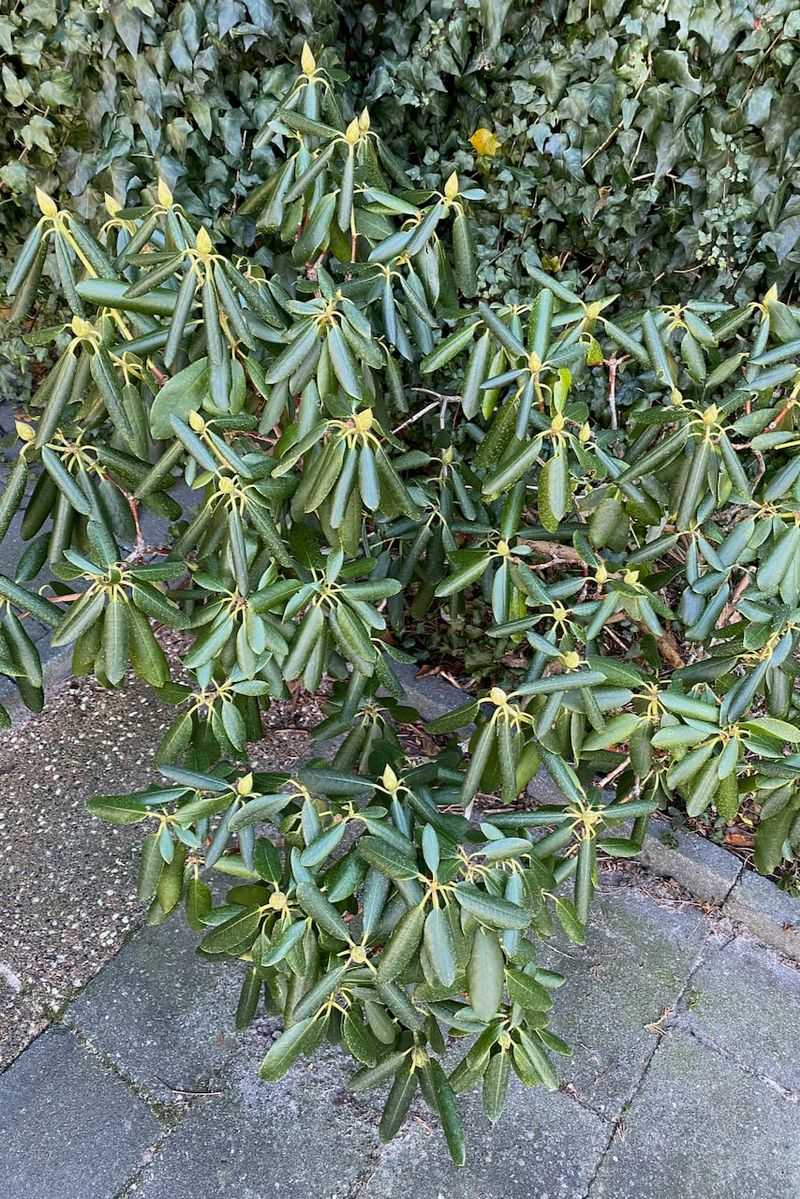
Grab a thermometer and stand next to your rhododendron some January morning. You may notice the leaves change shape in step with the numbers.
Botanists call this response thermonasty, which simply means a plant movement triggered by temperature. Around freezing, rhododendron leaves often start to droop.
As readings slip toward the mid-20s, the edges begin rolling inward.
Once temperatures fall near 20 degrees or lower, many leaves curl into tight cylinders about the width of a pencil. Gardeners in snowy states have used this as a rough outdoor thermometer for generations.
The colder it gets, the tighter the roll.
I love that the plant gives you a free weather report before your coffee is even ready. It is not perfectly precise, since leaf age, wind, and the variety you grow all play a part.
Still, it is surprisingly reliable for a shrub.
The movement is reversible. When the sun warms the air and the leaves thaw, cells take back water and the blades slowly flatten again.
A plant that curls at dawn and relaxes by afternoon is behaving normally.
So that sad droop you see on frosty days is not a cry for help. It is a built-in reaction doing its job.
2. Curled Leaves Help Shield Frozen Cells From Harsh Winter Sun
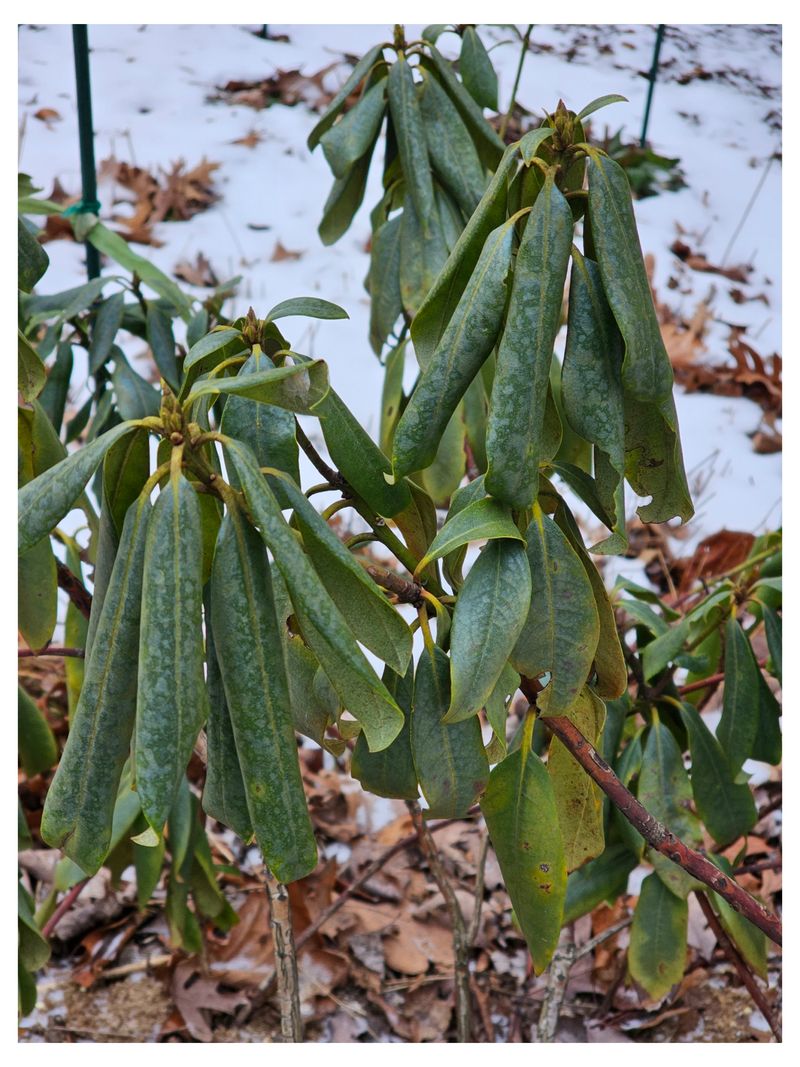
Researchers have studied this curl for decades, and one leading idea surprised me. The main benefit may be protection from sunlight, not warmth.
Wild rhododendrons, including the great rhododendron that grows in parts of Ohio, often live under tall forest trees. In winter, those trees drop their leaves.
Suddenly the evergreen shrubs below sit in bright sun while their tissues are still frozen.
Cold leaves cannot use sunlight well, because the chemical processes of photosynthesis slow to a crawl. Extra light energy can build up and harm the green chloroplasts inside the cells.
Scientists call this photo-oxidative damage.
By curling and hanging down, the leaf shows far less surface to the sky. Studies from Penn State researcher Erik Nilsen and others found that curled leaves suffered less light stress than leaves held flat on cold, sunny days.
There is a second perk tied to the same move. Rolled leaves tend to thaw more gradually, which may reduce stress on cell walls compared with a fast, sunny warm-up.
Personally, I find this clever. The shrub is basically pulling down a window shade until its machinery is ready to work again.
Pretty smart for something without a brain.
3. Frozen Soil Makes Every Drop Of Water In A Rhododendron Leaf Count
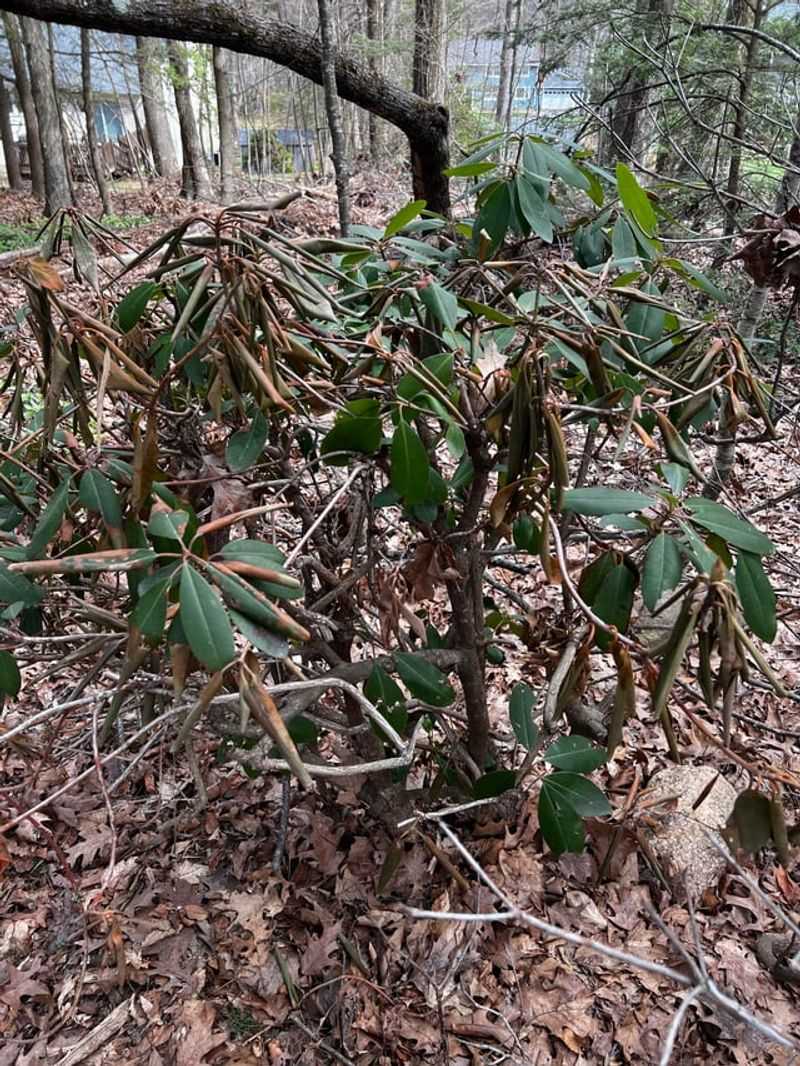
Winter drought sounds strange in a state known for gray, damp months. Yet your evergreens can run short on water even when snow covers the ground.
When the soil freezes, roots cannot pull up moisture. Meanwhile, cold dry winds and sunny days keep drawing small amounts of water out through the leaves.
Gardeners call the result winter desiccation, or winter burn.
Rhododendrons keep their broad leaves all year, so they face this risk more than oaks or maples. Curling may help a bit by tucking the leaf underside, where most pores sit, inside the roll.
Less exposed surface can mean slightly less moisture loss.
Scientists still debate how big this water benefit is compared with sun protection. Most agree both play some role, and the effects likely work together.
You can help the plant here. Water deeply in fall until the ground freezes, especially after a dry autumn.
Rhododendrons have shallow, fine roots that dry quickly.
A midwinter thaw is another chance. If the soil softens and you have had little rain or snow, a slow drink at the base can top off the reserves.
Your shrub will thank you with greener leaves come April.
4. Summer Leaf Curl On A Rhododendron Tells A Different Story
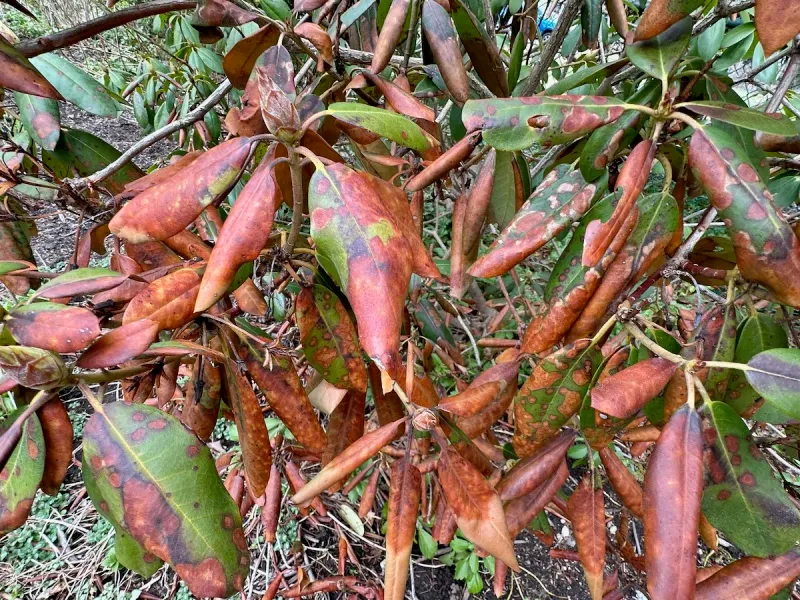
Timing is everything when you read a curled rhododendron leaf. A roll in January means something very different from a roll in July.
Winter curling that relaxes as the day warms is a normal cold response. Summer curling, on the other hand, usually points to thirst.
When soil dries out during a hot spell, leaves fold and droop to cut water loss.
Check the soil a few inches down with your finger. If it feels dry and dusty, give the shrub a slow, deep soaking rather than a quick sprinkle.
Morning watering works well and lets foliage dry before evening.
Soggy soil can cause trouble too. Rhododendrons hate wet feet, and heavy clay common across much of the state can hold water around roots.
Root rot from Phytophthora can make leaves droop and roll even when the ground is moist.
Other clues help you sort things out. Yellowing, brown patches, or whole branches wilting suggest a problem beyond simple dryness.
Your county Extension office can help diagnose a sample.
So before you reach for the hose, look at the calendar, feel the soil, and watch whether the leaves bounce back by evening.
5. Brown Crispy Rhododendron Leaves Mean It Is Time To Look Closer
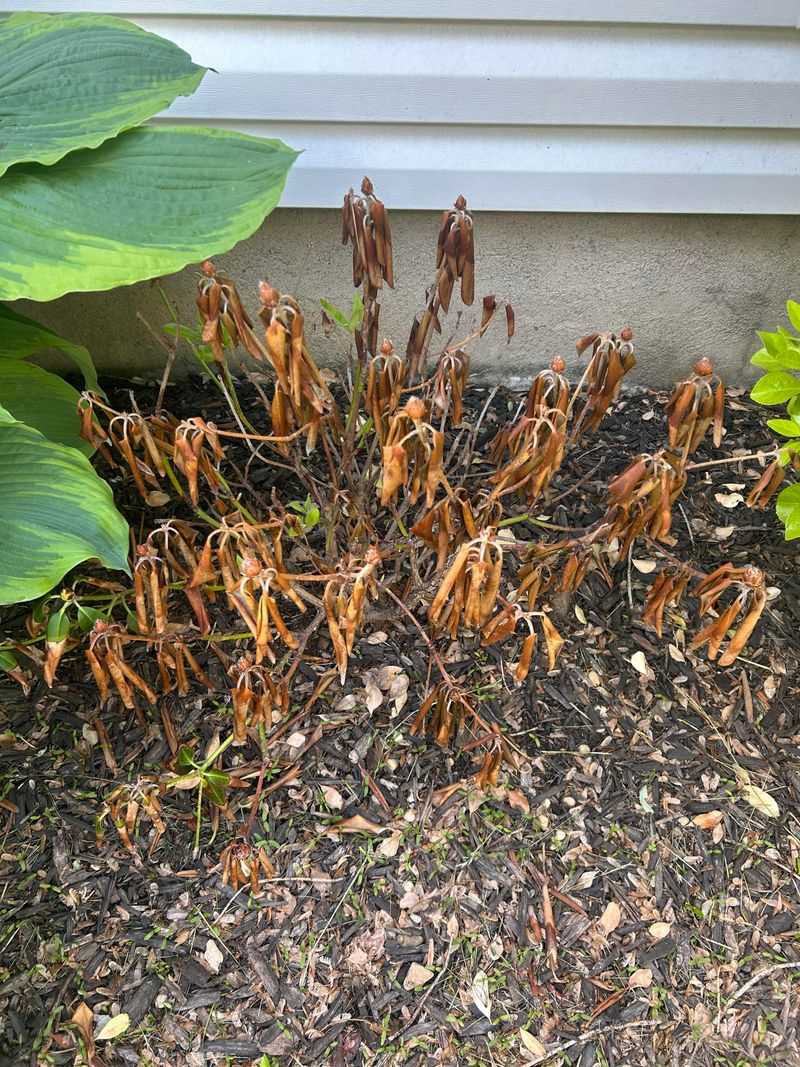
Late winter is when the real report card arrives. Curling itself is harmless, but brown edges that show up in March deserve your attention.
Winter burn usually appears on the side of the shrub facing south, west, or the prevailing wind. Leaves turn tan or brown at the tips and margins, sometimes across the whole blade.
The damage often looks worst after a sunny, windy winter with frozen ground.
Hold off on pruning right away. Buds may still be healthy even when leaves look rough.
Wait until new growth starts in spring, then scratch a twig gently with your fingernail.
Green tissue underneath means the stem is alive. Brown and brittle wood can be trimmed back to a healthy bud or side branch.
Clean, sharp pruners make neat cuts that heal well.
Remember that rhododendrons set next year’s flower buds in summer. Heavy pruning after midsummer can cost you blooms, so do your cleanup soon after flowering finishes.
A few scorched leaves rarely spell disaster. Most shrubs push fresh foliage and carry on.
Repeated burn year after year, though, hints that the location may be too exposed for comfort.
6. Some Rhododendron Varieties Shrug Off Ohio Cold Better Than Others
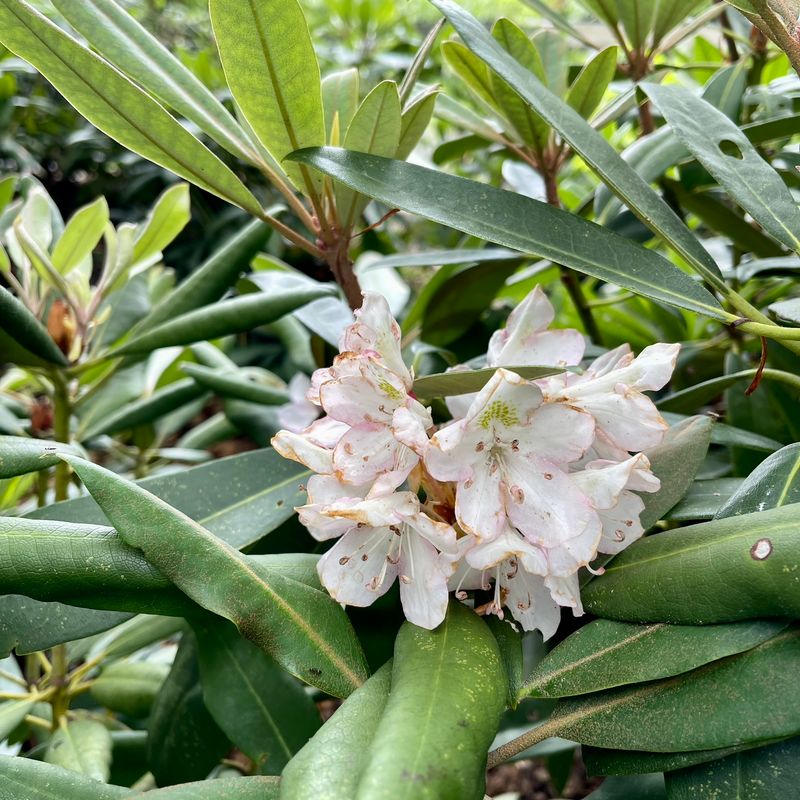
Walk through a few neighborhoods after a hard freeze and you will spot differences. Some shrubs look curled but healthy, while others appear scorched and tired.
Variety matters a lot. The great rhododendron, Rhododendron maximum, is native to parts of southeastern Ohio and handles cold well.
It is also a champion curler, so do not mistake its dramatic rolls for weakness.
Catawba rhododendron hybrids are another tough group. Many classic cultivars sold as ironclads were bred from Rhododendron catawbiense for cold climates.
Small-leaved types like the PJM group also earn praise for winter toughness.
Ohio stretches across USDA zones 5b through 7a, with colder pockets in the northeast snowbelt and milder conditions along the Ohio River. Check plant tags for hardiness ratings that fit your area, with a little buffer.
Fun fact for history fans: the Catawba rhododendron was named for the Catawba River region in the Carolinas, where it grows wild in the mountains. Breeders in England crossed it in the 1800s to create hardier garden plants.
Talking with a local nursery or Extension Master Gardener volunteer can point you to cultivars proven in your county. Local success stories beat pretty catalog photos every time.
7. A Burlap Windbreak And Mulch Give Rhododendrons An Easier Winter
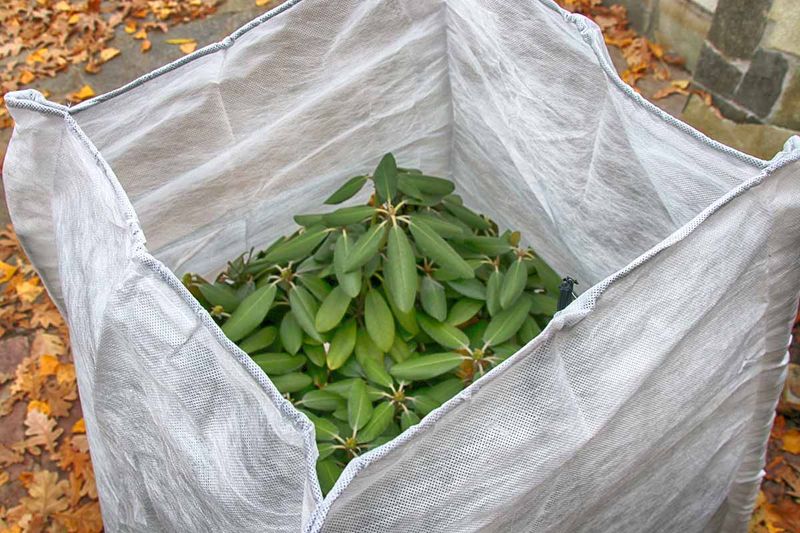
A few simple chores in fall can save you plenty of heartache in spring. None of them require fancy gear or a big budget.
Start with mulch. Spread two to three inches of shredded bark, wood chips, or pine needles over the root zone, keeping it a few inches away from the stems.
Mulch evens out soil temperature and holds moisture near those shallow roots.
Next, think about exposure. Shrubs on open, windy corners or against bright south-facing walls struggle most.
A simple burlap screen on stakes, placed on the windward or sunny side, cuts drying gusts and harsh glare.
Skip wrapping burlap tightly around the whole plant. Leaves need air movement, and snug wraps can trap moisture or crush branches under snow.
A screen standing a little away from the shrub works better.
Anti-desiccant sprays are sold widely, but research results on their value are mixed. If you try one, follow label directions and apply on a mild day above freezing.
Finally, brush heavy snow off branches with an upward sweep of a broom. Gentle help keeps limbs from splitting while your shrub rides out the season.
8. Smart Planting Spots Keep Rhododendron Leaves Happier Every Winter
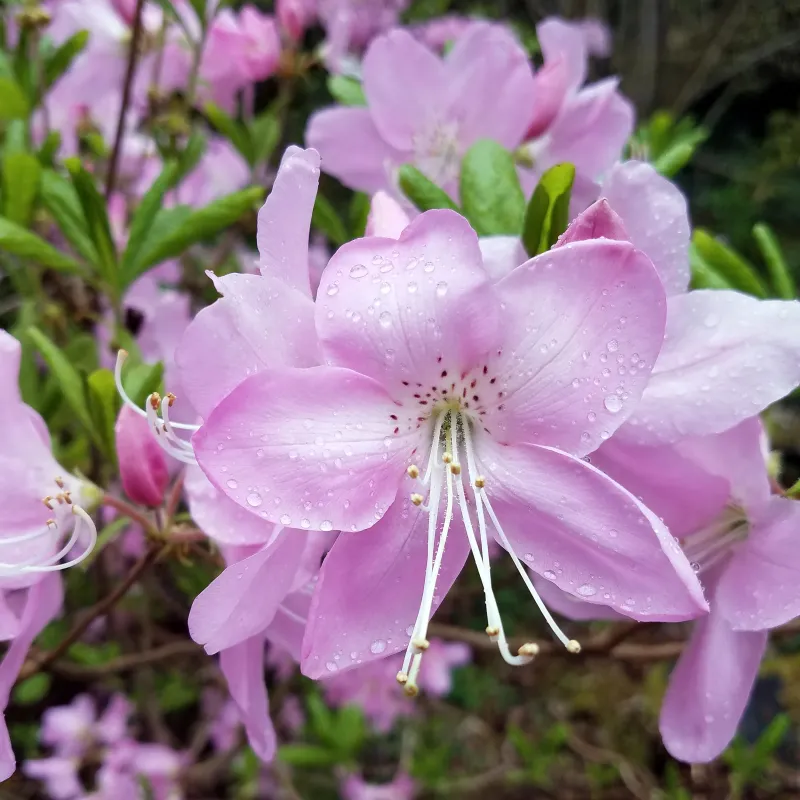
Location ranks as the best long-term fix for winter stress. Get the spot right, and those curled leaves become a fun show instead of a worry.
Rhododendrons do best in morning sun with afternoon shade, or light dappled shade under tall trees. East or north sides of buildings often work well, since they avoid strong winter afternoon sun.
Soil matters just as much. These shrubs want acidic, well-drained ground rich in organic matter, roughly pH 4.5 to 6.
Much of Ohio has alkaline or heavy clay soil, so a soil test from your Extension office is worth the small fee.
If drainage is poor, consider a raised bed or planting slightly high, with the root ball top just above grade. Amending a wide area with compost helps more than filling one small hole.
Spring and early fall are the best planting windows. That gives roots time to settle before summer heat or hard frost arrives.
Once your shrub is well placed, enjoy the morning ritual. Peek out on a frosty day, watch the leaves curl, and smile when they relax by lunch.
You are witnessing a smart survival trick in your own backyard.