Why Pink Trumpet Trees Suddenly Bloom All Over Florida In Spring
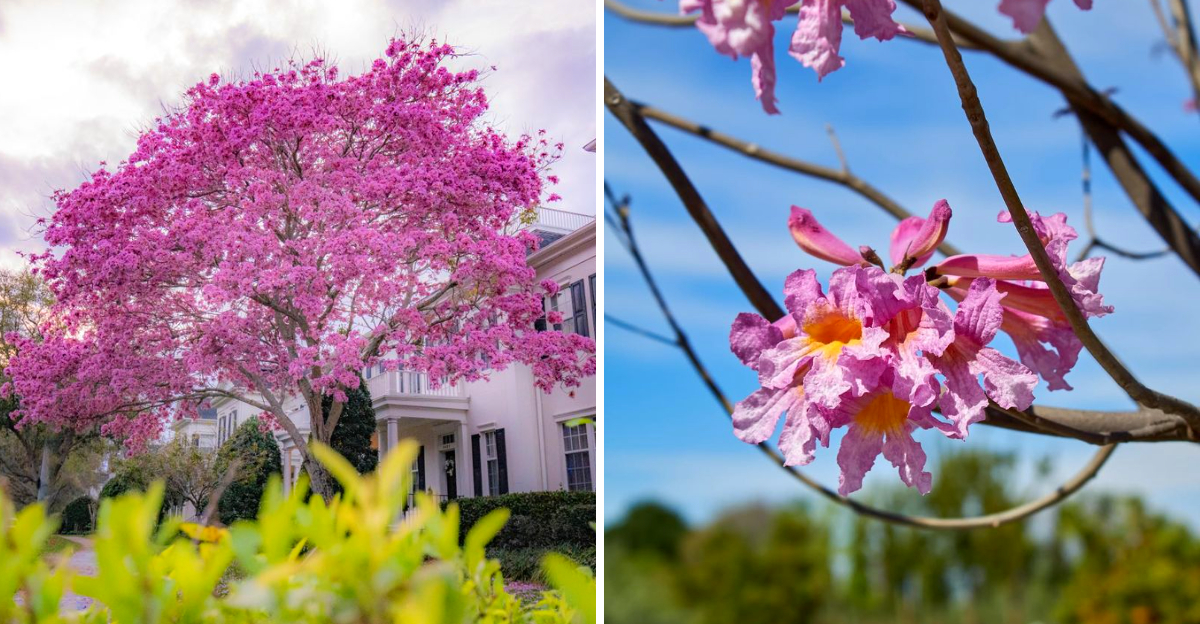
Every spring across Florida, something almost magical happens along neighborhood streets and in quiet front yards.
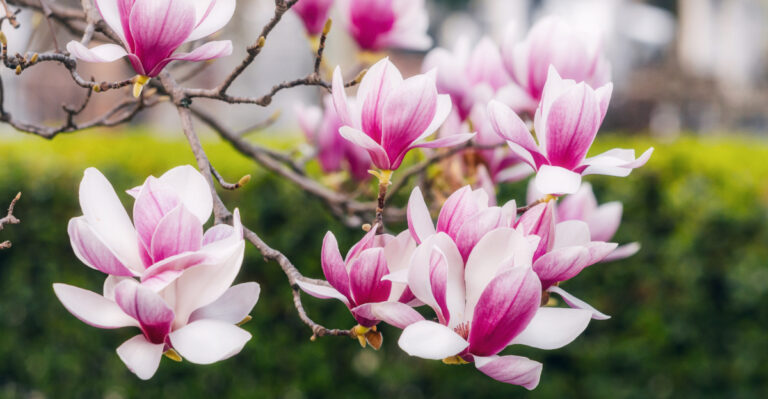
Pink trumpet trees go from bare and still to absolutely covered in bright pink blooms practically overnight.
This sudden burst of color often catches people off guard, especially those new to the state who have never seen the trees through a full seasonal cycle. The transformation turns an ordinary Florida landscape into something that feels like a painting.
This spectacular show is no accident; it is the result of how these trees adapt to our unique climate and dry season.
Understanding the science behind the bloom makes the display even more impressive as these trees thrive in conditions unlike anywhere else.
1. Warm Spring Weather Pushes Florida Trees Into Bloom
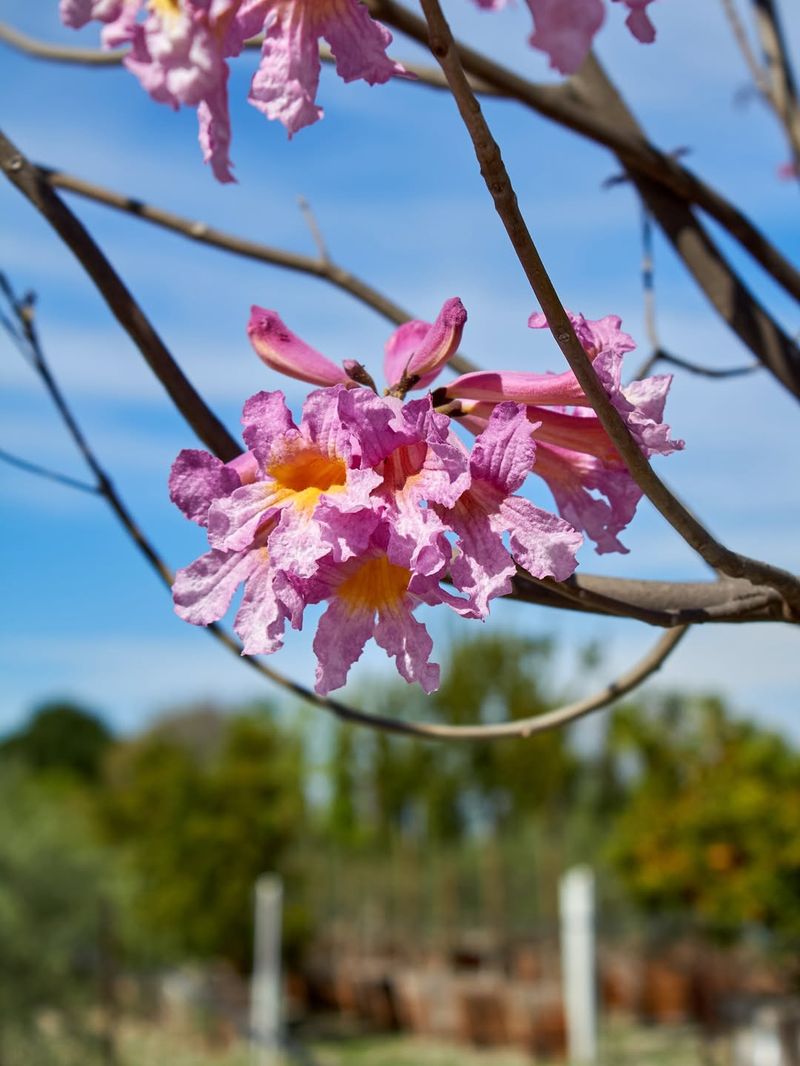
Walking through a Florida neighborhood in early spring, you might notice the air feels noticeably warmer almost overnight, and that shift in temperature is one of the biggest reasons pink trumpet trees seem to explode into color so quickly.
These trees are extremely sensitive to changes in temperature, and as Florida transitions out of its cooler winter months, even a gradual rise of a few degrees can trigger a blooming response that has been building for weeks beneath the surface.
Handroanthus species, which include the most common pink trumpet trees found across Florida, evolved in tropical and subtropical climates where seasonal temperature changes serve as reliable cues for flowering.
When daytime temperatures consistently climb into the upper 70s and low 80s Fahrenheit, the trees interpret that warmth as a signal that conditions are favorable for reproduction.
The result is a flowering event that can cover entire branches in dense clusters of pink to rose-purple blooms within just a few days.
Florida’s spring warmth arrives earlier than in most of the country, which is why residents here get to enjoy this display while other parts of the United States are still dealing with frost.
The timing varies slightly from year to year depending on how quickly temperatures rise, but late March tends to be the peak period for most pink trumpet trees across the state.
Warmer winters can push blooming a bit earlier, while cooler stretches may delay it slightly into April.
2. Leaf Drop Makes The Pink Flowers Look Even Brighter
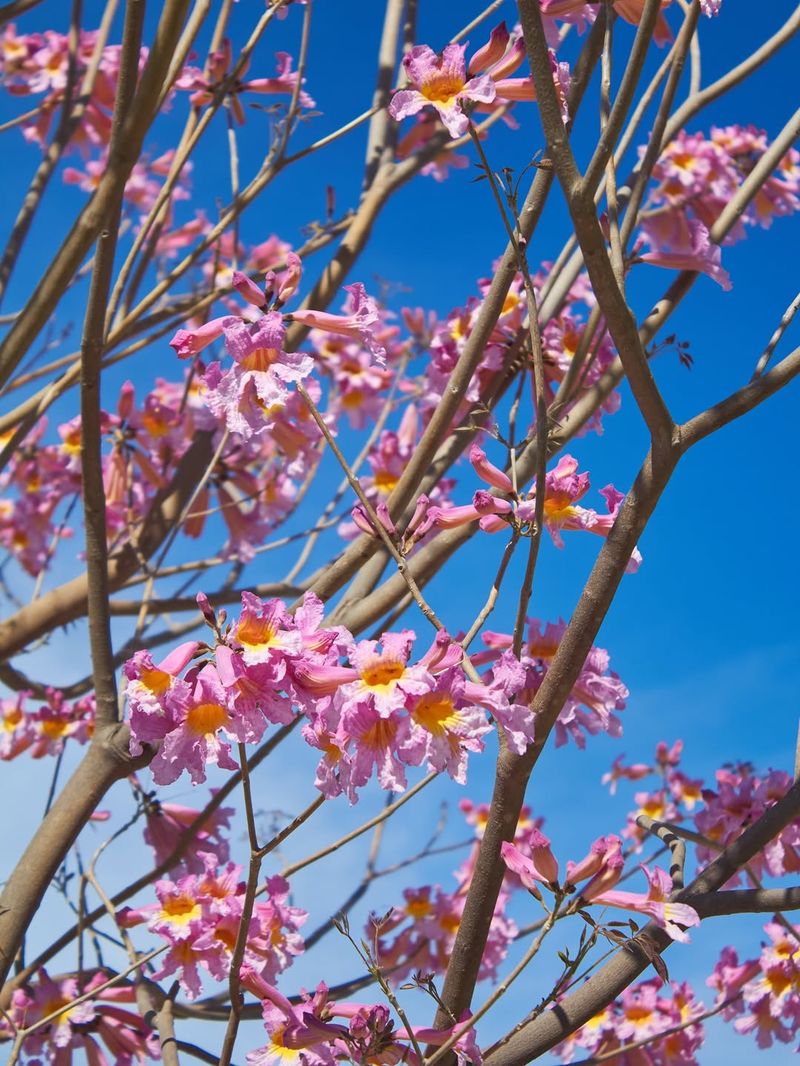
One of the most striking things about pink trumpet trees in Florida is that they drop most of their leaves right before they bloom, which creates a visual effect that few other flowering trees can match.
When the branches are completely bare and then suddenly covered in bright pink blossoms, the contrast is almost theatrical.
There are no green leaves competing for your attention, just a dense canopy of flowers set against light gray bark and open blue sky.
This leaf-drop behavior, known as brief deciduousness, is fairly unusual for Florida trees since most species in the state remain evergreen or semi-evergreen year-round.
Pink trumpet trees behave differently because they originate from regions in Central and South America where seasonal dry periods are common, and shedding leaves is a strategy for conserving moisture.
Your Florida Garden Changes Every Week. Your Plan Should Too.
Gardening in Florida changes quickly throughout the season. Every Friday you’ll receive a simple weekly plan showing exactly what to plant, prune, fertilize, harvest, and protect so you never miss the right timing.
In Florida, this same pattern plays out even though the climate here is generally more humid than their native range.
The timing of leaf drop and flowering tends to overlap closely, so the window when trees are both leafless and in full bloom can last anywhere from one to three weeks depending on conditions.
During that period, the flowers are essentially unobstructed, which amplifies how vivid and dramatic the display looks from the street.
Many Florida residents describe the experience as seeing a tree that looks like it is covered in pink confetti, and that impression is largely because the leaves have already cleared the way for the flowers to shine.
3. Dry Season Stress Can Lead To A Stronger Flower Show
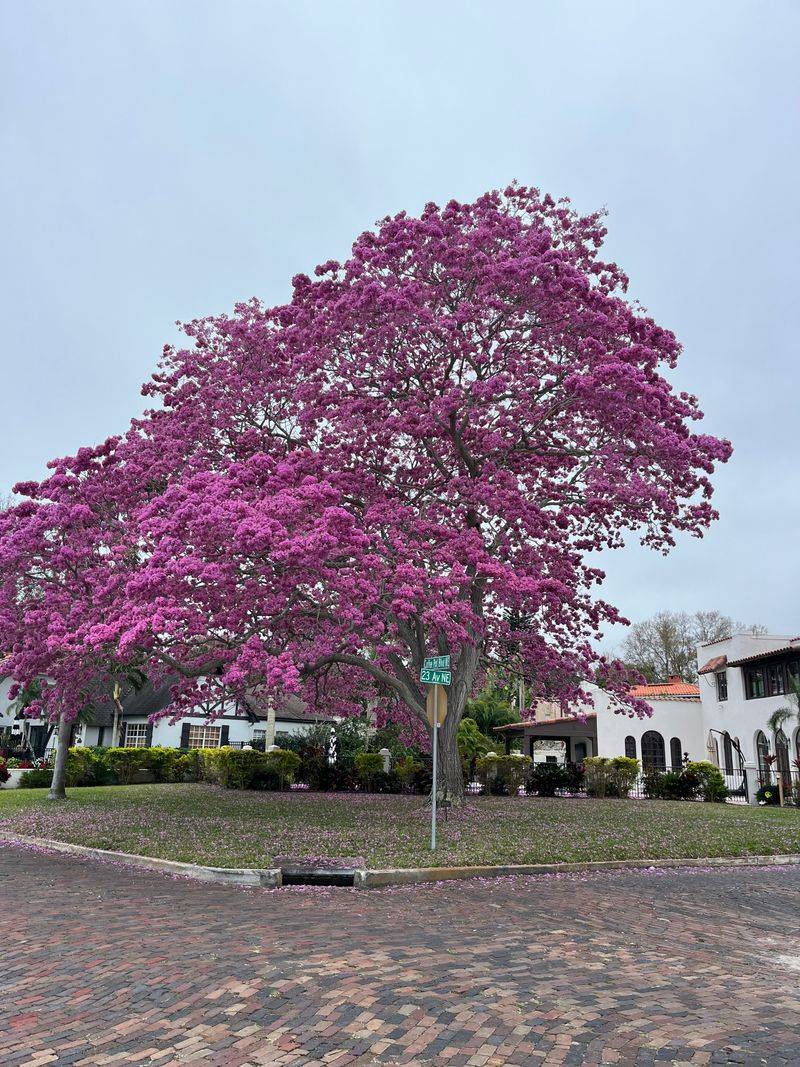
Florida’s dry season runs roughly from November through April, and by the time spring arrives, many parts of the state have gone weeks without significant rainfall.
For pink trumpet trees, that period of low moisture is not just something they tolerate, it may actually be one of the reasons their blooms appear so abundantly.
Mild drought stress has been observed to encourage heavier flowering in several tropical tree species, and pink trumpet trees seem to follow that same pattern.
When a tree experiences reduced water availability, it can shift its energy toward reproduction rather than vegetative growth.
Producing flowers and seeds becomes a biological priority, and the result is often a more dramatic bloom than what you might see in a tree that has been consistently well-watered throughout the dry season.
Florida gardeners who grow these trees sometimes notice that specimens in slightly drier spots on their property tend to put on a more impressive floral display than those in areas with better soil moisture retention.
This does not mean intentionally withholding water will always produce better results, since extended drought stress can weaken a tree over time.
The key seems to be the natural rhythm of Florida’s dry season followed by the arrival of spring warmth, which together create conditions that trigger a strong flowering response.
Once the rainy season begins around June, the trees shift their focus back to producing new leaves and growing their canopy, and the bloom period wraps up relatively quickly.
4. Full Sun Helps Pink Trumpet Trees Bloom More Heavily
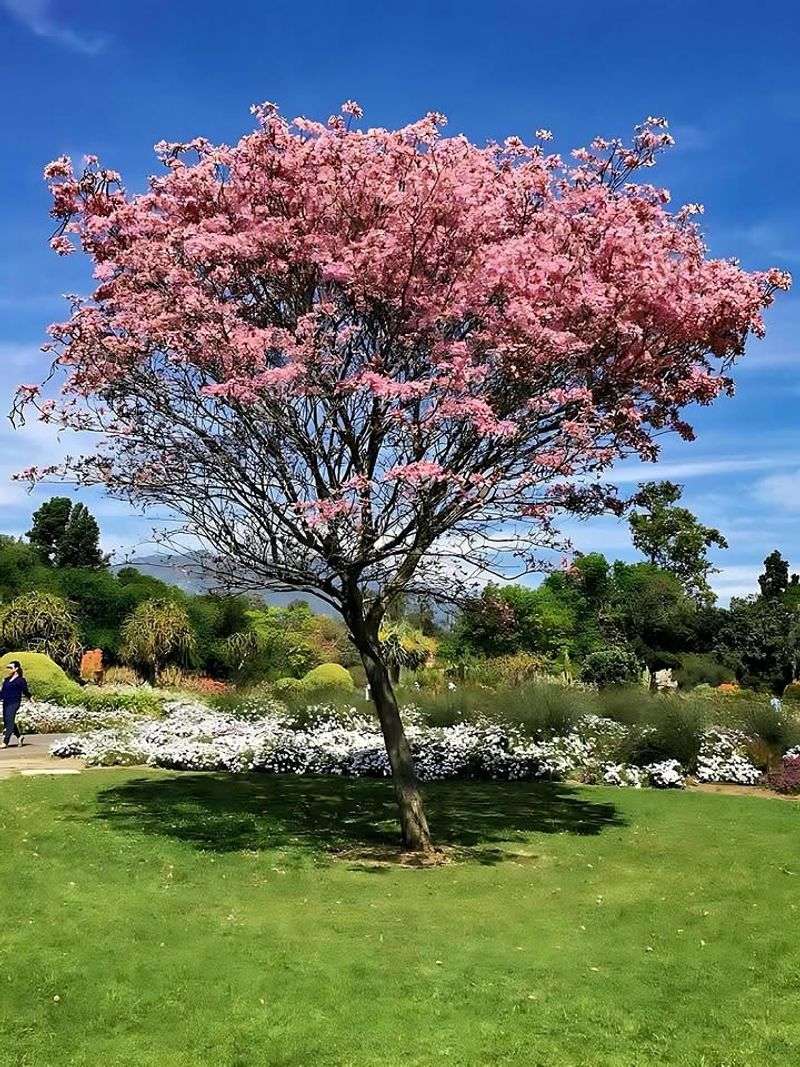
Spend any time driving around Florida in late March and you will notice that the most impressive pink trumpet trees are almost always the ones growing in wide-open spaces with direct sunlight hitting them from all sides.
Sun exposure plays a significant role in how heavily these trees bloom, and trees that receive fewer than six hours of direct sun per day tend to produce noticeably fewer flowers than those growing in fully open areas.
Handroanthus species evolved in environments where sunlight is abundant and competition for light is strong. When grown in full sun, these trees develop more flowering buds and tend to produce denser clusters of blooms across their branches.
In contrast, trees planted too close to buildings, under the canopy of larger shade trees, or along north-facing walls often bloom sparsely or with much less visual impact than their sun-drenched counterparts across the street.
Florida’s geography works in favor of pink trumpet trees in this regard, since the state receives an exceptional amount of sunlight year-round compared to most of the country.
Even in winter, Florida’s sun angle is high enough to provide meaningful light exposure, which helps trees build up the energy reserves needed for a strong spring bloom.
Homeowners who want to maximize the flowering potential of a pink trumpet tree should prioritize planting it in spots with minimal shade.
Ideal locations include the center of a yard or along a south-facing fence line where sunlight reaches freely throughout the day.
5. Different Pink Trumpet Trees Bloom On Slightly Different Schedules
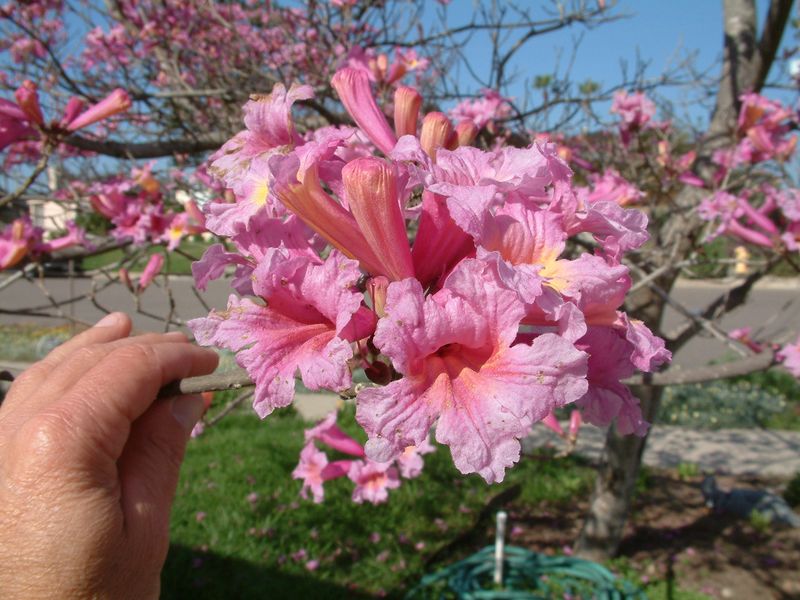
Not every pink trumpet tree you see blooming across Florida is the same species, and that variety is actually one of the reasons the flowering season seems to stretch out longer than you might expect from a single tree.
Handroanthus impetiginosus and Handroanthus heptaphyllus are the two most commonly planted pink-flowering species in Florida, and while they look similar at a glance, they tend to bloom on slightly offset schedules that can differ by a few weeks.
Handroanthus impetiginosus, sometimes called the pink trumpet tree or pink poui, typically blooms a bit earlier in the season and tends to have slightly brighter pink flowers.
Handroanthus heptaphyllus, which can grow considerably taller and produces flowers that lean more toward rose-purple, often follows a few weeks behind.
In neighborhoods where both species are planted along the same street, the overlapping bloom windows can make it seem like the flowering season lasts much longer than it actually does for any individual tree.
Beyond species differences, individual trees of the same species can also vary based on their microclimate, soil conditions, and how established they are in the landscape.
A young tree planted three years ago may bloom a week or two later than a mature specimen nearby simply because it has had less time to develop a robust root system and energy reserve.
Florida’s diverse mix of tree ages, species, and planting locations across neighborhoods contributes to a bloom season that feels more continuous and widespread than the biology of any single tree would suggest.
6. Central And South Florida Conditions Suit These Trees Best
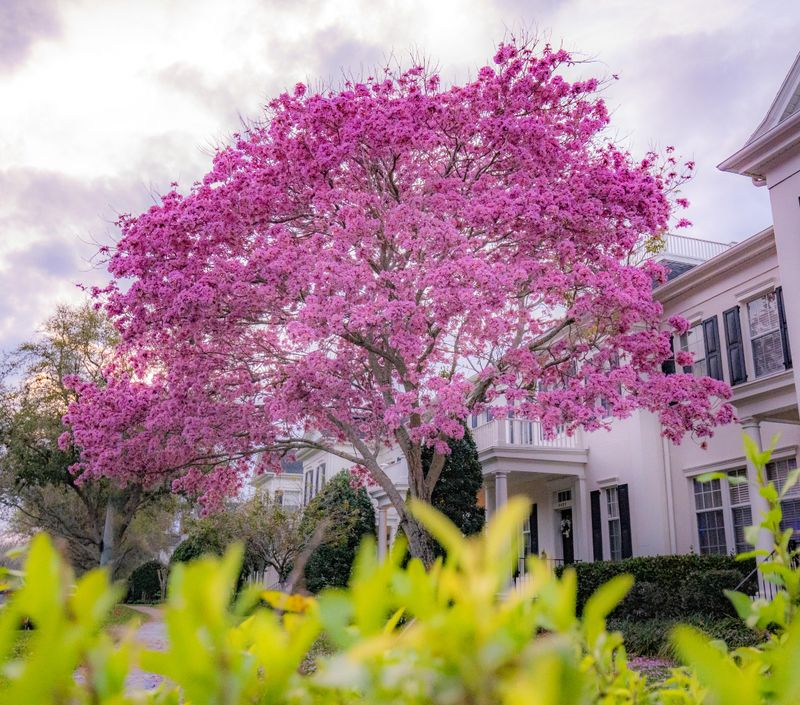
Florida is not a single climate, and the way pink trumpet trees perform can vary quite a bit depending on where in the state they are growing.
Central and South Florida tend to produce the most reliable and visually dramatic bloom displays, largely because the temperatures in those regions stay warm enough throughout winter to keep the trees in good physiological condition heading into spring.
In North Florida, pink trumpet trees can still bloom beautifully, but occasional cold snaps during winter months can damage flower buds or delay the onset of blooming.
Temperatures that drop below freezing, even briefly, can set back a tree’s flowering timeline and reduce the overall density of blooms when spring finally arrives.
South Florida’s mild winters largely eliminate that risk, which is one reason why areas like Miami-Dade, Broward, and Palm Beach counties tend to have particularly striking pink trumpet tree displays in spring.
The soils in Central and South Florida also tend to be well-drained, sandy, and slightly alkaline in many areas, which suits pink trumpet trees reasonably well since they prefer conditions that do not stay waterlogged.
While these trees can adapt to a range of soil types, standing water around their roots for extended periods can create problems that reduce overall vigor and flowering performance.
Florida’s varied geography means gardeners in different parts of the state may need to adjust planting locations and care routines to get the best results.
Across most of the peninsula, conditions are generally well-suited for a strong spring bloom.
7. Bare Branches Turn Short Bloom Windows Into Big Visual Moments
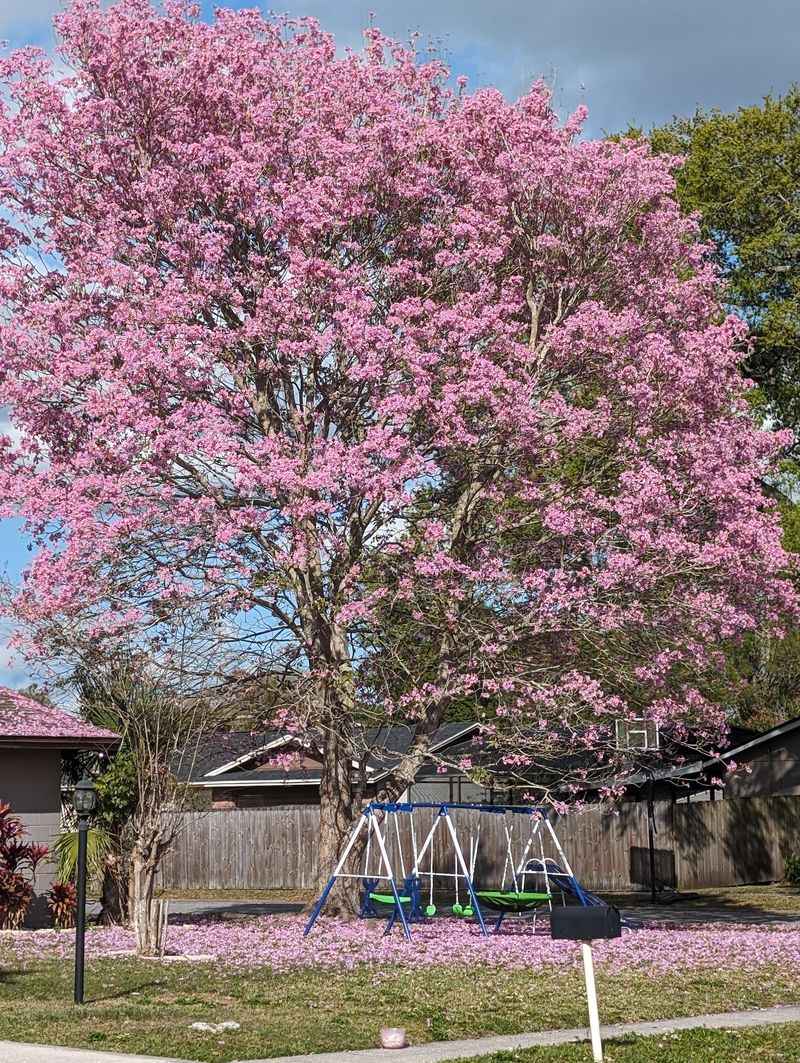
Few trees in the Florida landscape create the kind of instant visual impact that a bare-branched pink trumpet tree in full bloom does.
The bloom window for most specimens is relatively short, typically lasting between one and three weeks before petals begin to fall and new leaves start to emerge.
But because the flowers appear on branches that are completely stripped of foliage, that short window feels extraordinarily vivid and intense.
The architecture of the tree plays a big role in this effect.
Pink trumpet trees tend to develop broad, spreading canopies with multiple branching layers, and when every inch of that structure is covered in dense flower clusters, the visual result is something that genuinely stops people in their tracks.
Drivers slow down, neighbors come outside, and phones come out for photos because the display is so concentrated and unexpected, especially if the tree looked completely bare and unremarkable just a week before.
This quality of appearing to transform almost overnight is part of what makes pink trumpet trees so beloved in Florida neighborhoods and along roadways.
Urban planners and landscape designers in Florida have taken note, planting these trees along medians and in public parks specifically because of the way their brief but spectacular bloom cycles create seasonal landmarks.
Even after the flowers fall, a carpet of pink petals beneath the tree continues the display for a few days. Sidewalks and lawns take on a soft layer of color before new leaves fully emerge and the tree returns to its green summer appearance.
8. Showy Spring Flowers Make Pink Trumpet Trees Stand Out Fast
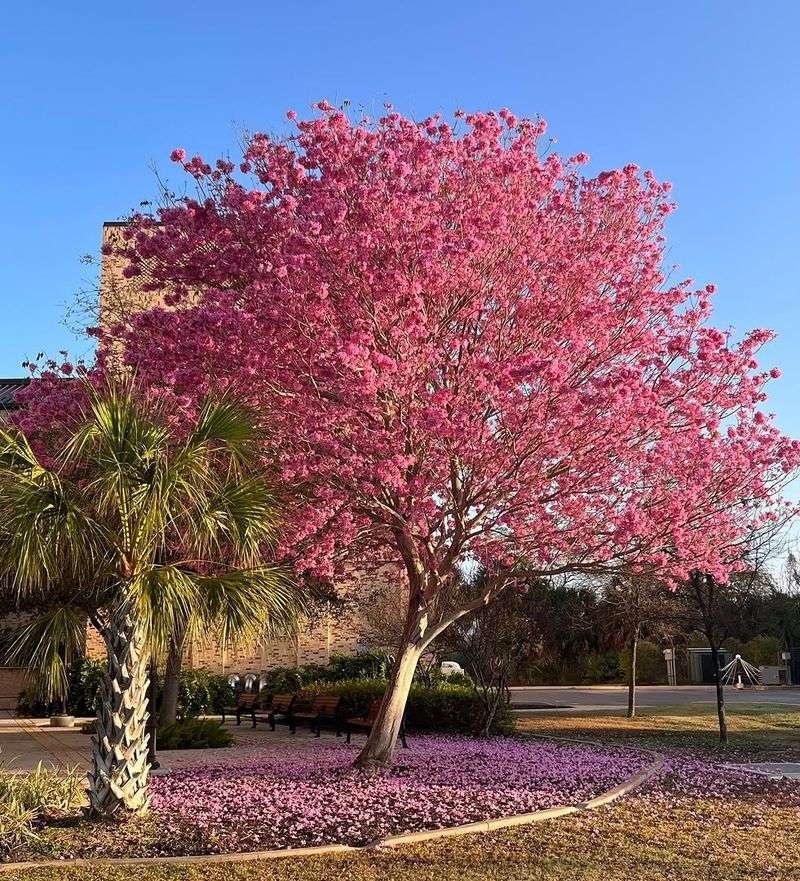
Among the flowering trees commonly planted across Florida, few generate as much immediate attention as the pink trumpet tree when it reaches full bloom.
The flowers themselves are large, tubular, and arranged in tight clusters that cover the outer canopy of the tree in a way that makes the whole structure glow from a distance.
That combination of flower size, cluster density, and the leafless backdrop creates a display that is hard to overlook even from a moving car.
The color range across different specimens adds to the visual variety you see in Florida neighborhoods each spring. Some trees produce flowers that are a soft, almost blush pink, while others lean toward deeper rose or magenta tones.
When multiple trees bloom along the same street or in the same park, the slight variation in shade from tree to tree creates a layered, rich effect that feels more like a curated garden display than something happening naturally in a residential neighborhood.
Beyond pure aesthetics, the showy nature of pink trumpet tree blooms has practical value for Florida homeowners and community planners.
A single mature tree in full bloom can significantly elevate the curb appeal of a property, and streets lined with these trees during peak flowering season often become informal destinations where residents and visitors come specifically to see the display.
Florida’s reputation for vibrant outdoor beauty is reinforced every spring by these trees, which ask for relatively little in terms of maintenance while delivering one of the most dramatic seasonal shows the state’s landscape has to offer.