Why Planting Ohio Cardinal Flower Brings Both Hummingbirds And Scarlet Tanagers
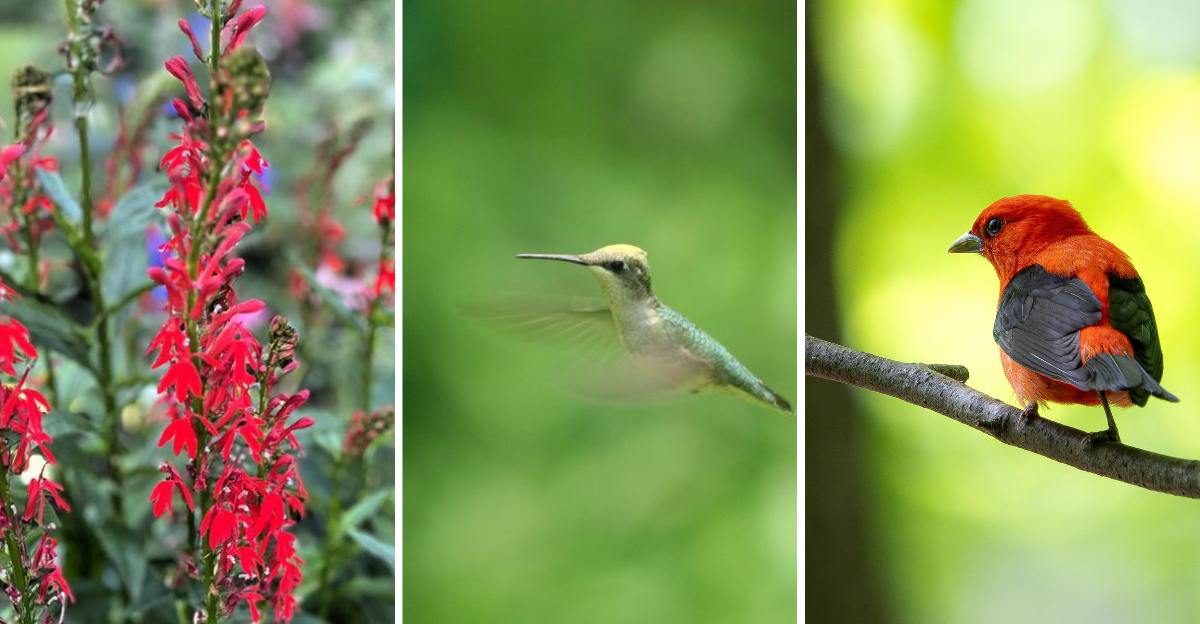
A flash of red near the back fence can turn an ordinary Ohio garden into a place you watch from the window. Cardinal flower earns attention with its brilliant color, but the real reward may arrive on wings.
Hummingbirds can appear close to the blooms, while scarlet tanagers may add another burst of red higher in the yard. That combination feels almost too perfect, especially from one native perennial.
Yet color alone does not explain why this plant can draw such different birds into the space. Its value reaches beyond the flowers you notice first.
For Ohio gardeners who want more wildlife without a complicated habitat project, cardinal flower offers a surprisingly useful place to start. Give it the right spot, and your garden can become far more interesting from midsummer onward.
The reason both birds may take notice starts with what this plant adds to the landscape around them.
1. Cardinal Flower Is Built For Hummingbirds
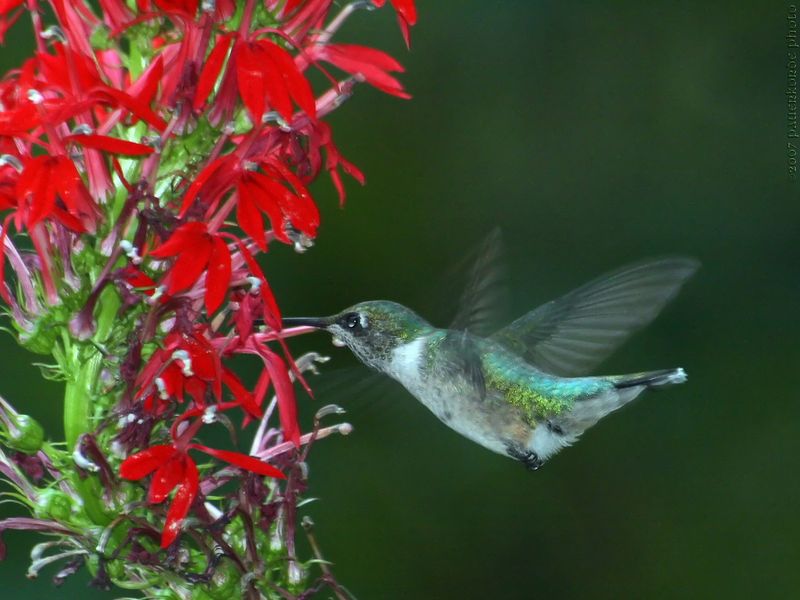
Few plants match a hummingbird’s needs as closely as Lobelia cardinalis does. The tubular, bright red flowers sit on upright spikes and are shaped in a way that suits a long bill perfectly.
Bees and butterflies often struggle to reach the nectar deep inside, but a hummingbird’s bill slides right in. According to Ohio State University Extension, Cardinal Flower is a native perennial that supports pollinators, with hummingbirds being among its most effective visitors.
As a Ruby-throated Hummingbird pushes its bill into each floret, pollen can be transferred from flower to flower. This relationship benefits both the bird and the plant.
The hummingbird gets a reliable nectar source, and the plant gets pollination help from a visitor well-suited to reach it.
That kind of tight match between flower shape and feeder is sometimes called a pollination syndrome, and Cardinal Flower fits the hummingbird syndrome closely.
Planting it near a garden edge or moist border gives the bird a clear flight path in and out. A patch of several plants together tends to draw more attention than a single stem.
Red is a color hummingbirds respond to strongly, and Cardinal Flower delivers that signal in a natural, garden-friendly way. Starting with this plant is one of the most direct steps a gardener can take toward supporting local hummingbird activity.
2. Scarlet Blooms Arrive At The Perfect Time
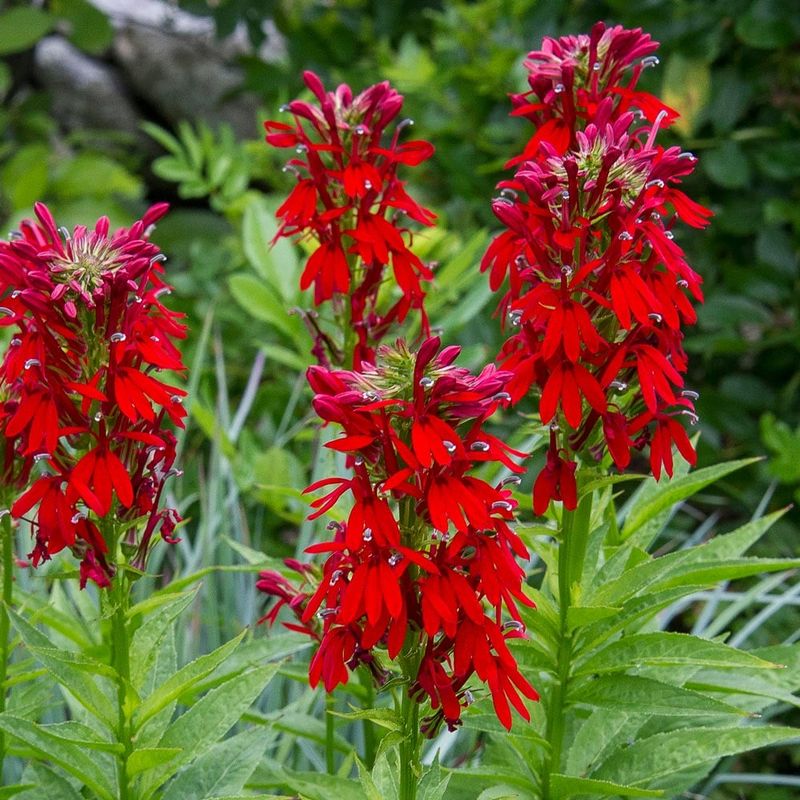
By mid to late summer, many of the garden’s early bloomers have already faded. Coneflowers start to look tired, and bee balm finishes up before August is over.
Right around that same stretch, Cardinal Flower steps in with its tall red spikes and carries color through a period when nectar sources can get harder to find. Ohio State University Extension notes that Lobelia cardinalis typically blooms from July through September.
Exact timing can shift based on site conditions and weather.
That late-season window matters for Ruby-throated Hummingbirds. These birds begin preparing for their southward migration in late summer, and reliable nectar sources during that period can support their energy needs along the way.
Your Ohio Garden Changes Every Week. Your Plan Should Too.
Gardening in Ohio changes quickly throughout the season. Every Friday you’ll receive a simple weekly plan showing exactly what to plant, prune, fertilize, harvest, and protect so you never miss the right timing.
A garden that offers blooms when others have finished gives hummingbirds a reason to linger a little longer near your yard.
The flower spikes themselves are hard to miss. Each stalk can reach three to four feet tall, and the individual florets open from bottom to top over several weeks.
That staggered opening stretches the bloom period out rather than delivering all the flowers at once. A planting of Cardinal Flower near a fence line or rain-garden edge can stay red and active well into September in many local gardens.
Choosing a site where plants can naturalize over time helps ensure that color and nectar return each year.
3. Scarlet Tanagers Come For A Different Reason
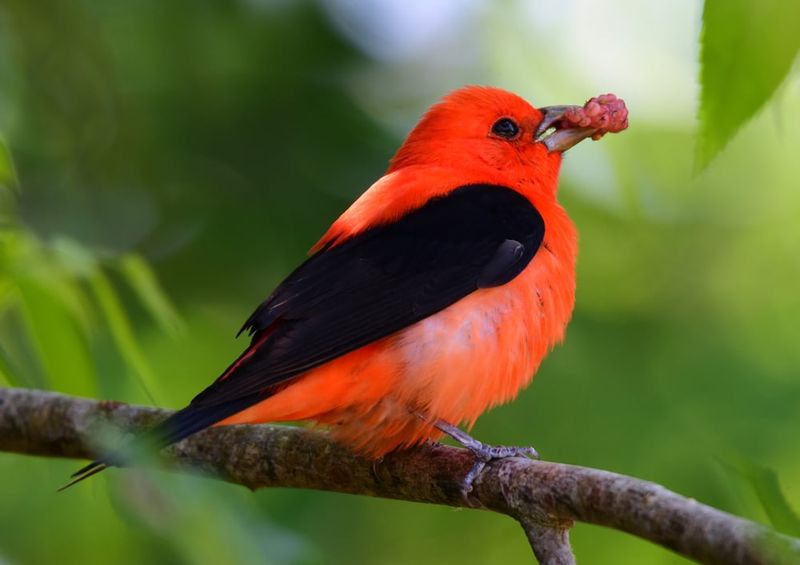
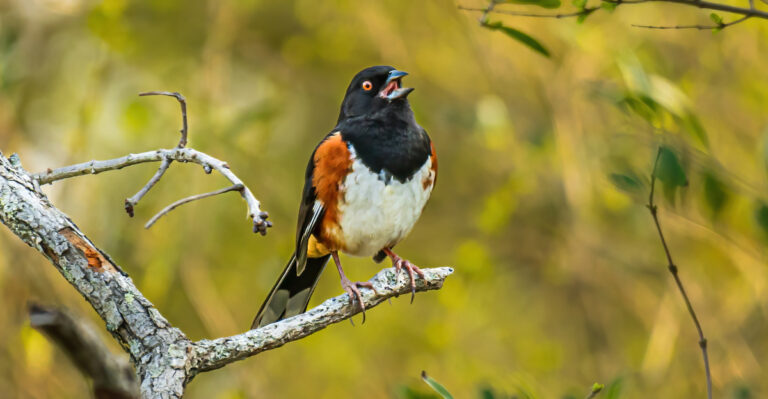
Spotting a Scarlet Tanager near your yard feels like a reward for patient gardening. But here is something worth understanding clearly: these birds are not visiting Cardinal Flower for nectar.
According to the Cornell Lab of Ornithology, Scarlet Tanagers are primarily insectivores that also eat fruit, especially during migration. They forage in the forest canopy and along wooded edges, not by hovering near tubular flowers the way a hummingbird does.
So why does Cardinal Flower even enter the tanager conversation? The answer lies in habitat.
A garden that includes native plants, layered vegetation, moisture, and nearby trees creates a richer environment than a single ornamental bed.
Scarlet Tanagers move through areas with dense canopy cover and native understory during migration, according to Cornell.
A yard connected to trees, shrubs, and diverse native plantings has a better chance of serving as a useful stopover. A single flower in an otherwise bare lawn offers much less habitat value.
Planting Cardinal Flower as part of a broader native garden is a step toward building that kind of habitat. The flower itself does not feed the tanager directly.
What it signals is a gardener who values native plants, and those gardens tend to attract a wider range of native insects and birds over time.
Understanding this distinction makes the tanager connection more honest and more useful for anyone trying to support local wildlife.
4. Native Insects Give Tanagers More To Hunt
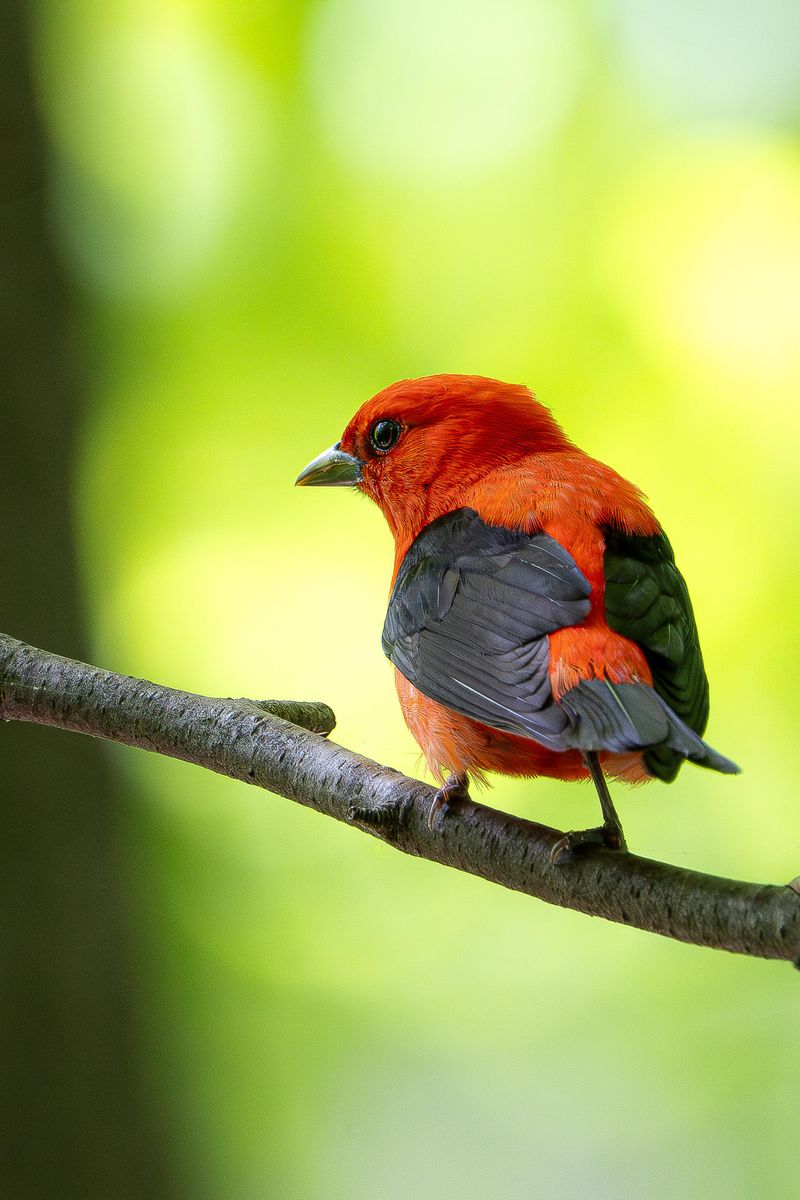
Movement among the leaves is often the first sign a tanager is nearby. These birds pick insects from foliage, bark, and branches rather than visiting flowers directly.
The Cornell Lab of Ornithology confirms that insects make up a large portion of the Scarlet Tanager’s breeding-season diet. These include caterpillars, beetles, and wasps.
That insect dependence is exactly why native vegetation matters so much to their presence.
University of Delaware research widely cited in native-plant guidance shows that native plants support many more native insect species. Non-native ornamentals generally support fewer.
Oak trees alone can host hundreds of caterpillar species. Native perennials like Cardinal Flower add to that insect diversity at the ground and mid-level of the garden.
A yard with several native species growing together creates more feeding opportunities than any single plant can on its own.
Cardinal Flower does attract some insects, including certain bees and hummingbird moths. Those visitors add small links to the local food web.
A garden designed with native trees, shrubs, and perennials working together gives insect-eating birds like the Scarlet Tanager more to hunt across a wider area. No single plant produces enough insect activity to guarantee a tanager’s attention.
But a diverse native planting raises the overall value of a yard as a feeding and stopover location during migration.
5. Berrying Plants Make The Habitat Even Better
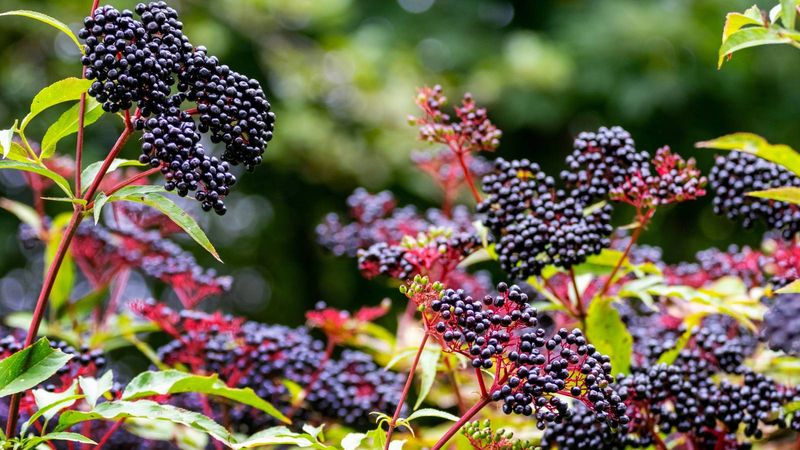
Red flower spikes give way to seed capsules by fall, and around that same time, something else begins to ripen nearby. Native fruiting shrubs can provide an important food source for Scarlet Tanagers, especially during migration.
The Cornell Lab of Ornithology notes that fruit becomes a more significant part of the tanager’s diet in late summer and fall, when insects can be less available.
Adding native fruiting plants to the same garden where Cardinal Flower grows strengthens the habitat considerably. Elderberry, Sambucus canadensis, is a good regional option.
It produces fruit that many bird species use, and Ohio State University Extension lists it as a native shrub suited to moist sites. Serviceberry, Amelanchier species, is another native option that fruits earlier in the season and supports a range of wildlife.
These plants work alongside Cardinal Flower rather than competing with it.
No single shrub guarantees a tanager visit, and that is worth saying plainly. Habitat works as a system.
A yard with layered native plants, a water source, canopy cover, and fruiting shrubs offers more than any one element alone.
Cardinal Flower fits naturally into that system as a moisture-loving native perennial that supports pollinators and adds structure to the planting.
Pairing it with even one or two native fruiting shrubs moves a garden noticeably closer to a place where birds have real reasons to stop and stay.
6. Moist Ground Keeps The Red Spikes Coming
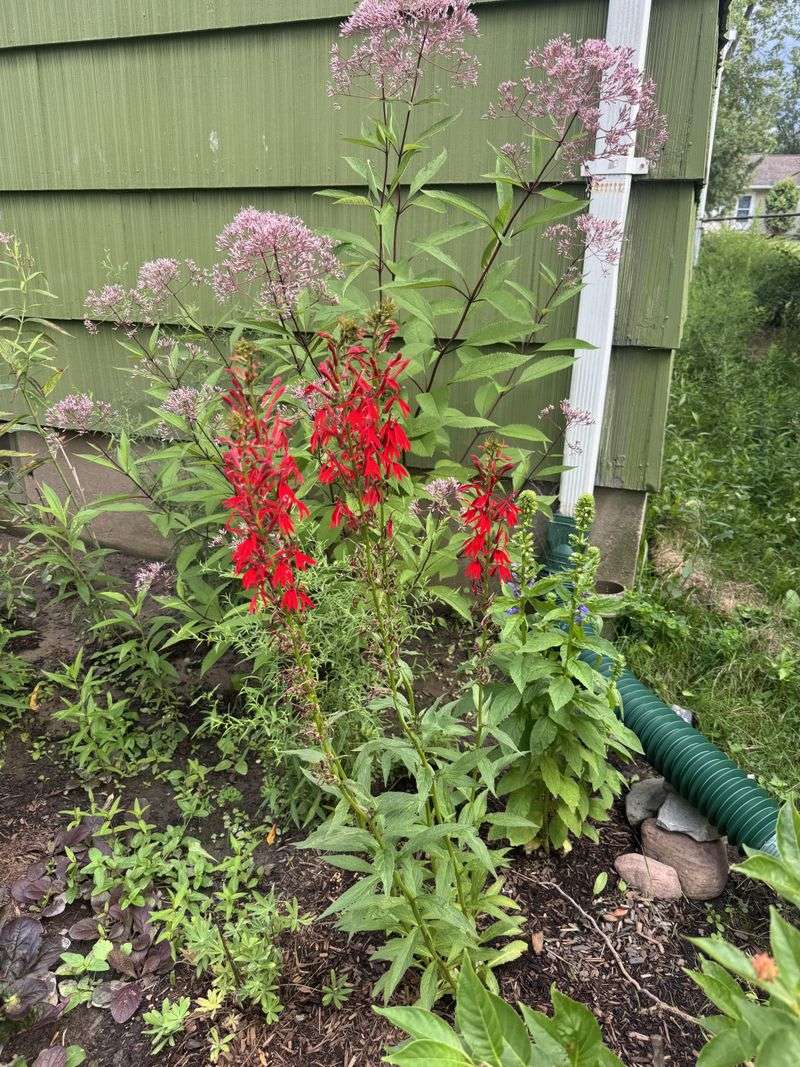
A soggy low spot in the yard that never seems to dry out can actually be an ideal home for Cardinal Flower. Lobelia cardinalis is a plant that naturally grows along stream banks, pond edges, and wet meadows across the eastern United States, including throughout Ohio.
Ohio State University Extension describes Cardinal Flower as preferring consistently moist to wet soils. That makes it a strong choice for rain garden borders and low-lying areas.
Moist soil is not the same as standing water that never drains. Cardinal Flower does best in ground that stays reliably damp but still allows roots to breathe.
A site that floods and sits waterlogged for extended periods may cause root problems over time. The goal is consistent moisture rather than permanent saturation.
Soil that drains slowly after rain and stays cool and damp between storms is close to ideal.
Drier sites are not impossible, but they require more attention. A sunny, sandy, or fast-draining location will likely need regular watering to keep plants healthy through the summer.
Mulching around the base of the plant helps retain soil moisture between rain events. Rainfall, soil type, and exposure all affect how often supplemental water is needed, so there is no single schedule that works everywhere.
Placing Cardinal Flower where natural moisture collects reduces the effort needed to keep it blooming reliably from July through September.
7. Part Shade Still Delivers Serious Color
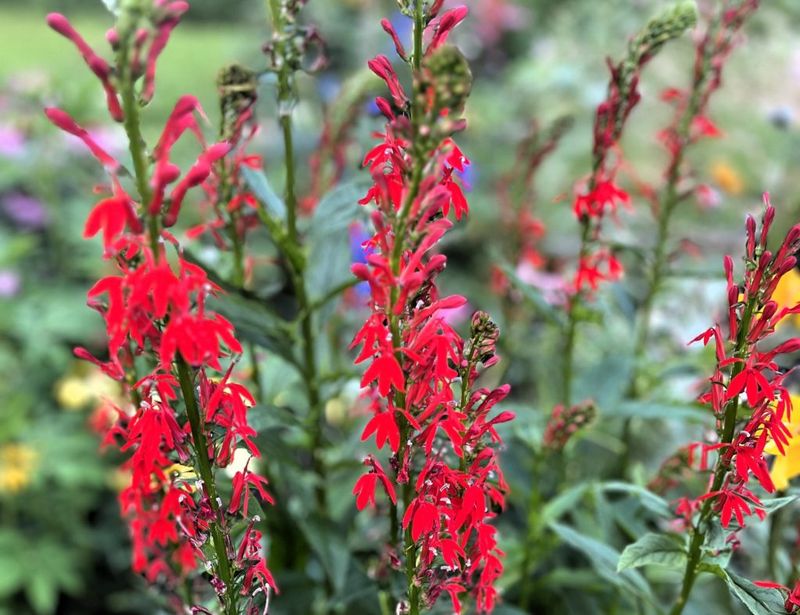
A garden bed that shifts between bright morning light and softer afternoon shade can be a surprisingly good spot for Cardinal Flower.
Ohio State University Extension indicates that Lobelia cardinalis grows well in full sun to partial shade, giving it flexibility that many moisture-loving plants lack.
That range makes it useful near the edges of tree canopies, along fence lines with afternoon shade, and in rain gardens that receive filtered light.
Full sun tends to produce strong flowering when soil moisture stays consistent. A sunnier location dries out faster, though, so the two conditions are connected.
Gardeners who choose a brighter spot should plan for more consistent watering unless the site naturally holds moisture well.
Partial shade, especially protection from harsh afternoon sun, can reduce the plant’s moisture demand and help it stay healthier through dry stretches.
Deep shade is a different situation. A spot that receives little direct light through the day will likely produce fewer blooms and weaker stems.
Cardinal Flower is not a plant for the darkest corner under a dense canopy. The sweet spot tends to be a location with good morning sun, some midday brightness, and relief from the hottest afternoon rays.
Those conditions can come together naturally near a rain garden at the edge of a tree line. A moist border beside taller shrubs can also support reliable late-summer color.
8. One Native Plant Starts A Bigger Bird Habitat
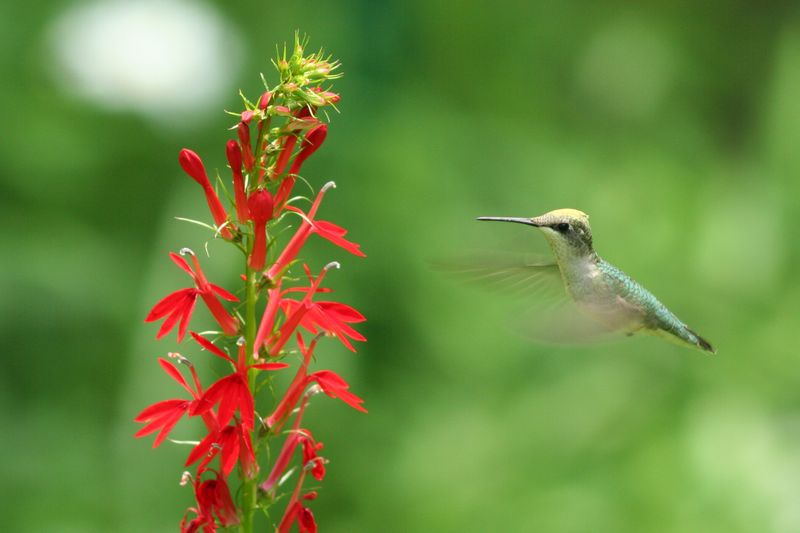
Planting one native perennial does not transform a yard overnight, but it can be a genuinely useful first step. Cardinal Flower, Lobelia cardinalis, brings a direct benefit to Ruby-throated Hummingbirds by offering nectar through a long late-summer bloom.
That is a well-supported connection backed by horticultural and wildlife sources. Adding more native plants around it builds toward something larger.
Native shrubs add cover and fruiting food sources that birds like Scarlet Tanagers may use during migration. Native trees support caterpillars and other insects that insect-eating birds depend on.
A shallow water feature gives multiple species a place to drink and bathe. Each addition raises the habitat value of the yard without requiring a complete landscape overhaul.
Starting with Cardinal Flower in a moist border and then adding one native shrub the following season is a practical way to grow the planting gradually.
No garden design guarantees that a Scarlet Tanager will appear. Migration routes, local tree cover, and regional population levels all play a role in which birds show up.
What a gardener can control is whether the yard offers food, cover, and native vegetation that make a visit worthwhile. Cardinal Flower earns its place by directly supporting hummingbirds.
It also fits into the kind of native-plant habitat that can attract a broader range of wildlife over time. Building outward from that one red spike is a solid way to start.