Why Pulling Creeping Charlie In Texas Never Works And What To Do This Fall Instead
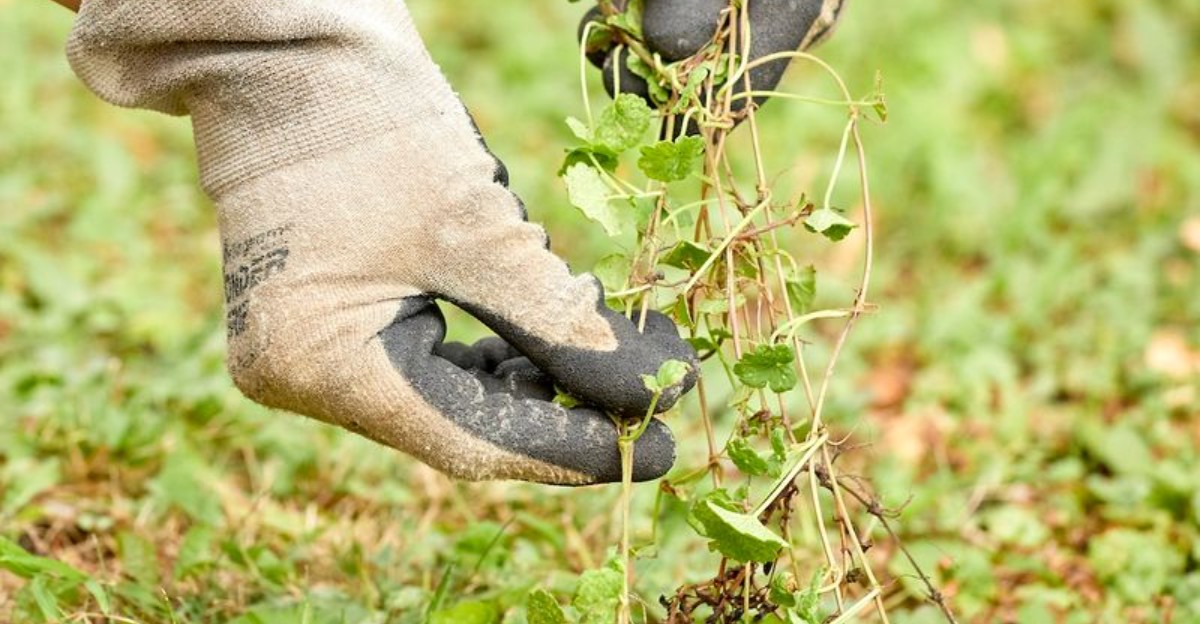
Settlers from Europe carried a tiny minty groundcover to America on purpose, and many lawns still regret it today. Its square stems crawl across shady soil and plant fresh roots wherever a leaf joint touches the ground.
I watched one stubborn patch in my Texas yard swallow a flower bed edge in a single spring. I yanked it out by the handful, feeling proud, and it returned within weeks looking even happier.
You might notice the same pattern near downspouts or along a soggy, shady fence line in your lawn. Turns out the plant has clever survival tricks, and plain muscle rarely beats them on its own.
Fall in Texas brings cooler days, and that shift opens a smart window for gardeners willing to switch tactics. So what exactly makes pulling fail, and which moves actually give your grass the upper hand?
Rooting Runners Plant New Ground Ivy at Every Leaf Joint
Creeping Charlie travels like a sneaky green zipper, stitching itself into your lawn one leaf joint at a time. Each long runner, called a stolon, can drop fresh roots wherever a node rests on damp soil.
When you tug the main stem, those rooted joints often snap free and stay anchored right where they were. I learned this the hard way after clearing a patch, only to find a dozen tiny plants waiting.
Purdue and Minnesota extension experts both point to these rooting stems as the reason ground ivy spreads so fast. Its scientific name, Glechoma hederacea, even hints at an ivy-like habit of creeping across whatever surface it finds.
Before you pull anything, slide your fingers along a runner and feel for the little white roots underneath. You will quickly see how many separate anchor points one innocent looking stem actually has in your yard.
Knowing this habit helps you plan smarter, because removing the top growth alone leaves the real network behind. Treat every runner as a whole family of plants, not a single weed, and your strategy changes fast.
Brittle Square Stems Snap and Leave Ground Ivy Fragments Behind
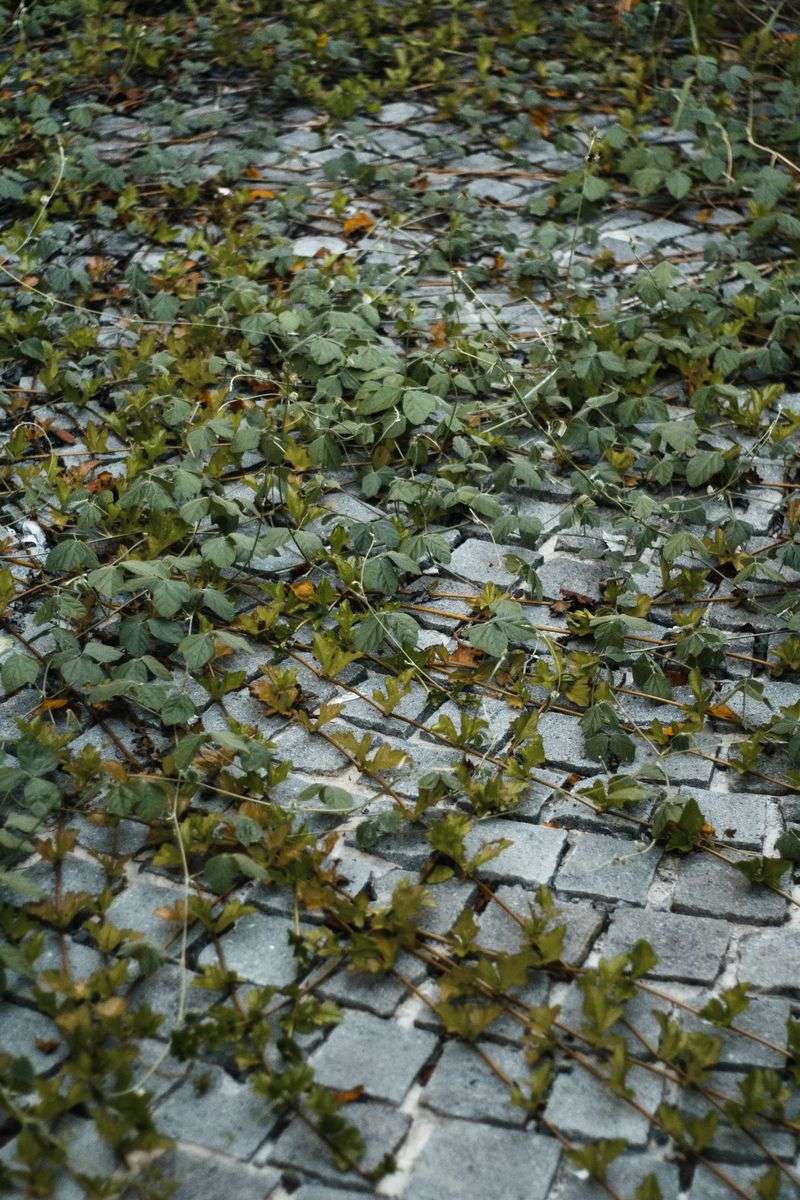
Roll a stem between your fingers and you will feel four flat sides, a classic clue of the mint family. Those square stems smell pleasantly minty when crushed, yet they break apart far too easily during a pull.
Each snapped piece with a node attached can root again if it lands on moist, loose soil. Gardeners often leave these scraps behind without noticing, especially when the patch is tangled in thick grass.
I once raked up a pile after weeding and left it overnight on the bed edge by accident. By the next week, several of those scraps had grabbed onto the soil and started fresh new leaves.
Hold the base of the plant close to the soil, then lift slowly instead of yanking with force. Gentle, steady pressure keeps more of each runner intact, which means fewer leftover pieces hiding in the dirt.
Bag every scrap you remove, and skip tossing them onto the compost pile unless it heats up well. Cool, casual compost piles can let ground ivy pieces survive and sneak back into your beds later.
Ground Ivy Mats Weave Tightly Through Your Turfgrass
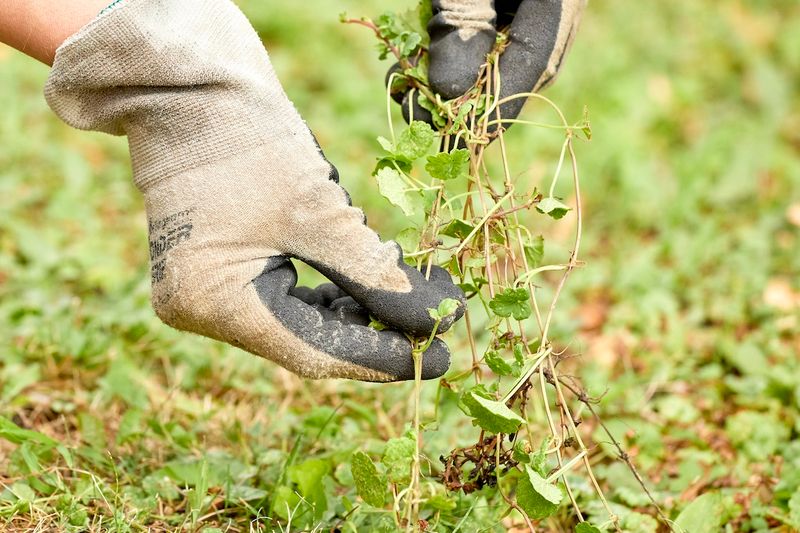
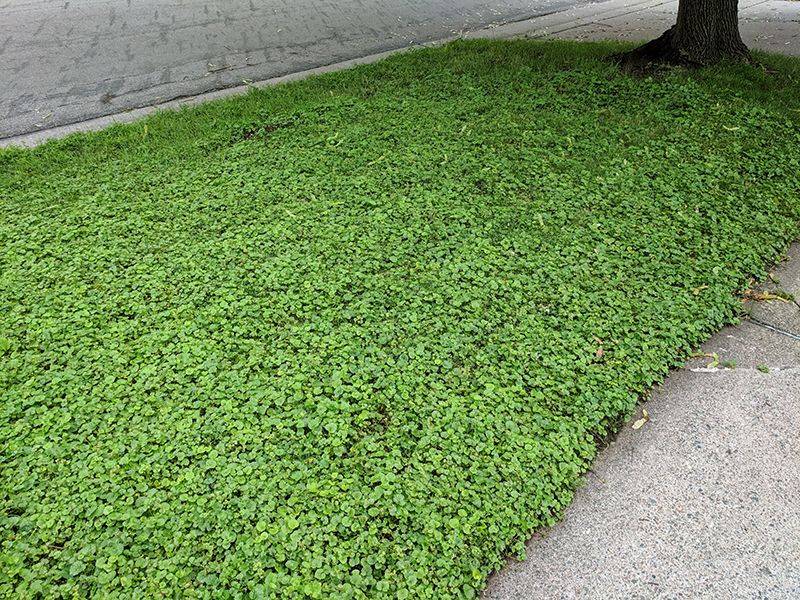
Ground ivy does not politely grow beside your grass, it threads itself right through the blades like loose yarn. Over time, those runners form a dense mat that hugs the soil and blends into the lawn.
Pull hard on that mat and you often rip up chunks of healthy turf along with the weed. Those torn spots become bare soil, which is the exact opening a creeping invader loves to fill.
The roots themselves stay fairly shallow and fibrous, so they tear rather than slide out cleanly in one piece. That shallow habit sounds easy to beat, but it actually spreads the problem across a wider area.
I compare it to untangling a necklace chain that someone stuffed in a pocket for a few months. Patience matters more than strength, and a small hand fork works far better than bare fingers here.
Loosen the soil around the patch first, then tease runners away from grass crowns one section at a time. Afterward, press the disturbed turf back down and water it so grass roots can settle again quickly.
Shady Soggy Spots Keep Inviting Creeping Charlie Back
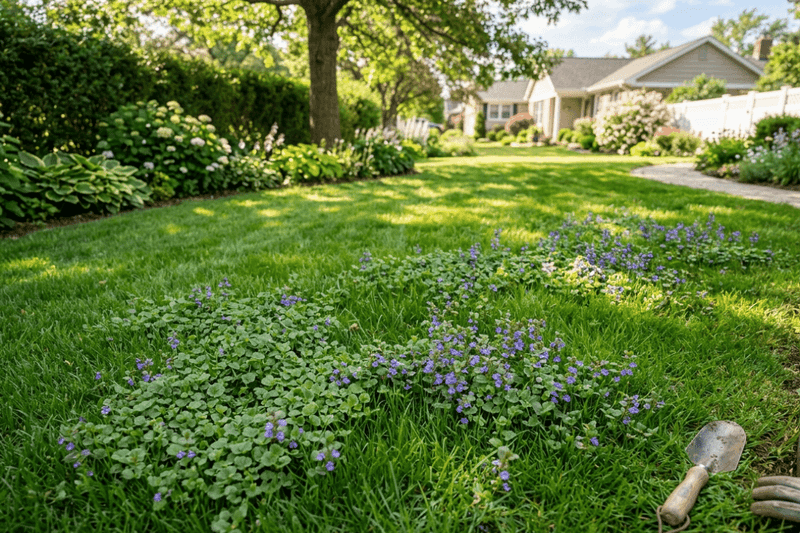
Creeping Charlie is basically a shade lover with a taste for damp feet, and your yard may be serving both. Spots under thick tree canopies or beside leaky hoses give it the cool, moist comfort it craves.
Pulling removes the plant, but it does nothing to change the conditions that welcomed it in the first place. As long as the shade and wet soil remain, new runners simply move back into the empty space.
Turfgrass usually struggles in heavy shade, especially sun-hungry Bermudagrass, which thins out quickly without enough direct light. That weak, patchy grass leaves plenty of gaps for ground ivy to claim without much competition at all.
In many Texas neighborhoods, big live oaks and pecans cast deep shade that lawns find hard to handle. I love those trees too, so my goal is finding a balance rather than removing the shade.
Walk your yard after a rain and note where water lingers longest and sunlight barely reaches the ground. Those soggy, shaded zones are your hot spots, and they deserve attention before you ever reach for gloves.
Tiny Purple Ground Ivy Flowers Leave Seeds in the Soil
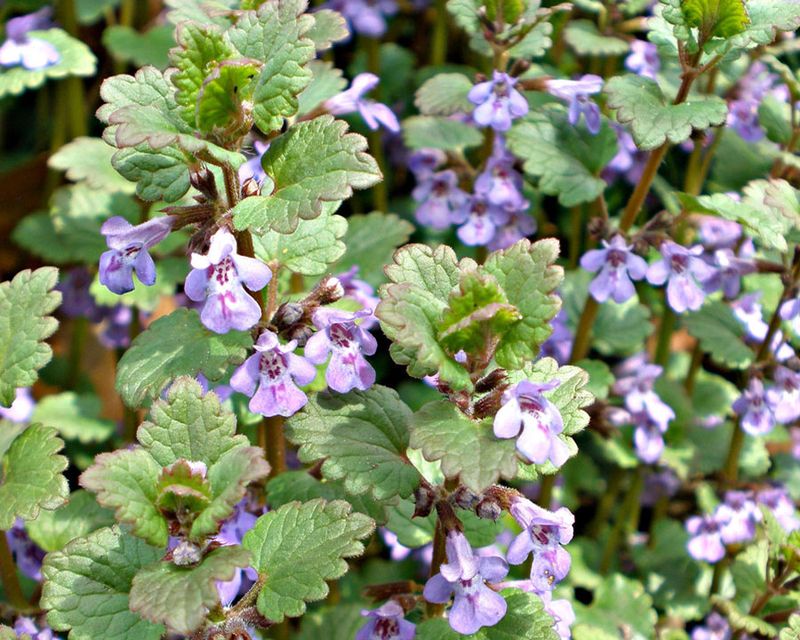
Those sweet little lavender flowers that pop up in spring look harmless, and bees certainly enjoy visiting them. Each flower can form small nutlets, so a blooming patch quietly adds seeds to your soil over time.
Most spread happens through runners, yet seeds give the plant a backup plan you cannot see or pull. Clearing every visible leaf still leaves some potential sprouts tucked below the surface, waiting quietly for good growing conditions.
Researchers have not settled exactly how long ground ivy seed stays viable, so expect occasional surprises for a while. I simply assume a cleared patch will need a few follow-up checks rather than one heroic weekend.
Mowing before the plant finishes flowering in spring can help reduce the number of seeds that mature. Pairing that mowing habit with thick, healthy grass gives new seedlings far less room to establish themselves.
When you spot a tiny rounded seedling with scalloped leaf edges, remove it right away while roots are small. Young plants come out easily, and catching them early saves you plenty of work next season.
Green Ground Ivy Spreads Over Dormant Winter Lawns
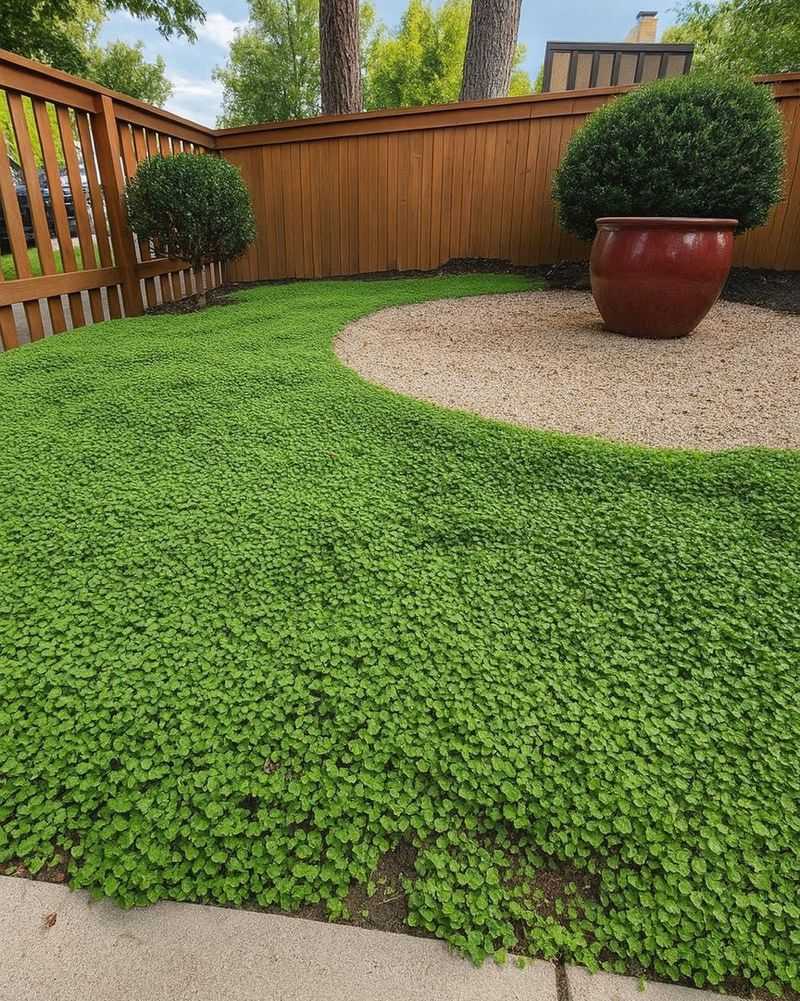
Ground ivy is a perennial that often keeps green leaves through mild winters, while warm-season lawns go brown. That timing gives the weed a head start, since it can keep growing while your grass naps.
St. Augustine and Bermudagrass usually slow down and go dormant once cool weather settles across much of Texas. Meanwhile, creeping weeds that tolerate cool temperatures can quietly stretch their runners into those resting, tan patches.
Pulling during this stretch feels satisfying, but the bare spots you create have no active grass to fill them. By spring green-up, ground ivy may already own those gaps before your lawn wakes up fully.
I like to scan the yard in late winter, when green weeds stand out sharply against dormant turf. It works like a handy treasure map, showing exactly where runners have crept since the last mowing.
Mark those spots with small flags so you remember them once the whole lawn turns green again. Then you can target them with the right tools at the right time instead of guessing blindly.
Spray Broadleaf Herbicide While Ground Ivy Stores Fall Energy
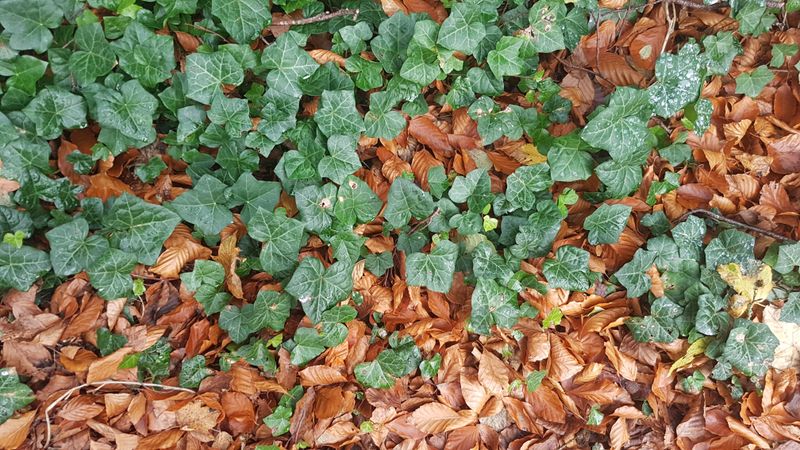
Autumn is when ground ivy starts packing sugars down into its roots, much like a squirrel stashing acorns. Extension specialists at Purdue and Iowa State agree fall is the best season for treating it with herbicide.
Systemic products ride along with that downward flow, reaching roots and runners your hands rarely manage to grab. Look for broadleaf weed controls containing triclopyr, dicamba, or 2,4-D, which are common choices for this weed.
Read the label carefully, because some of these products can injure St. Augustine or centipedegrass in Texas lawns. Choose a formula specifically labeled safe for your grass type, and follow the mixing directions without guessing.
Spray on a calm day when temperatures sit roughly between sixty and eighty-five degrees for steadier results. Skip applications right before rain or mowing, since the plant needs time to absorb the product.
I usually plan a second application a few weeks later, because one round seldom finishes the job. Keep kids and pets off treated grass until the spray fully dries, and store containers safely afterward.
Trim Low Tree Limbs to Let Sunlight Reach the Lawn

Sunshine is a surprisingly strong weed fighter, and ground ivy loses much of its swagger in brighter spots. Thinning a few low branches lets more light reach the soil, which tilts the odds toward your grass.
Fall is a sensible time for light pruning on many shade trees once the summer stress has passed. For oaks, Texas A&M Forest Service experts advise skipping pruning from February through June to reduce oak wilt risk.
Paint fresh oak wounds right away with a wound dressing, which the same experts recommend to discourage beetles. Remove crossing or crowded limbs first, and avoid stripping too much canopy from any single tree.
I raised the lowest branches on a crape myrtle last year, and the grass beneath noticeably thickened. Even an hour or two of extra direct sun can make a visible difference for struggling turf.
Large limbs high in the canopy are a job for a certified arborist, not a wobbly ladder. Safety comes first, and a pro can shape the tree so it stays healthy while letting light through.
Fix Soggy Lawn Spots Where Ground Ivy Loves to Grow
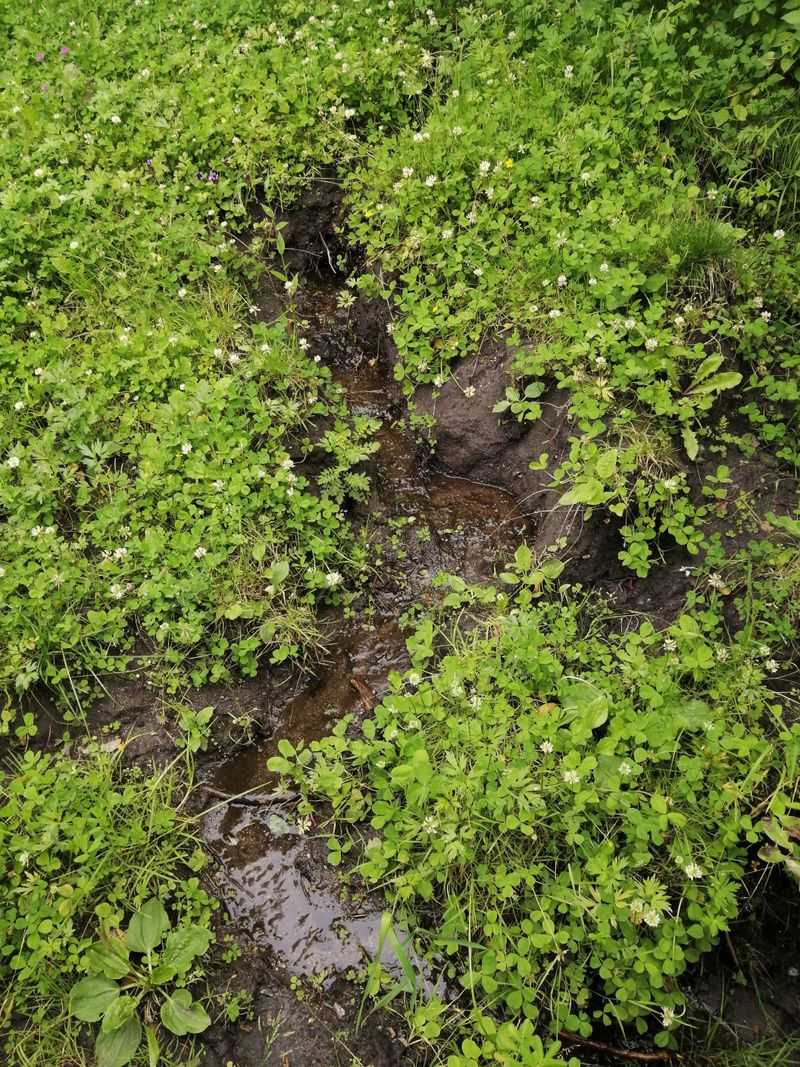
Water that puddles for hours after a storm is practically a welcome mat for this moisture-loving weed. Drying out those soft, squishy spots makes your yard far less comfortable for ground ivy to settle in.
Start by checking sprinklers, since overwatering is a common culprit in shady areas that dry out slowly. Shade lawns usually need less water than sunny ones, so trim run times for those zones this fall.
Point downspouts away from low areas, or add an extension that carries roof runoff toward better drained ground. Small grading fixes, like filling a shallow dip with soil, can stop water from pooling in one spot.
Mowing at the correct height also helps, since taller grass shades the soil and crowds out creeping weeds. St. Augustine generally performs well at two and a half to four inches, while Bermudagrass prefers lower.
I was amazed how much tougher my lawn looked after I simply stopped watering it every other day. Deeper, less frequent watering encourages stronger grass roots, and the weed loses its favorite soggy hangout.
Smother Big Creeping Charlie Patches With Cardboard and Mulch
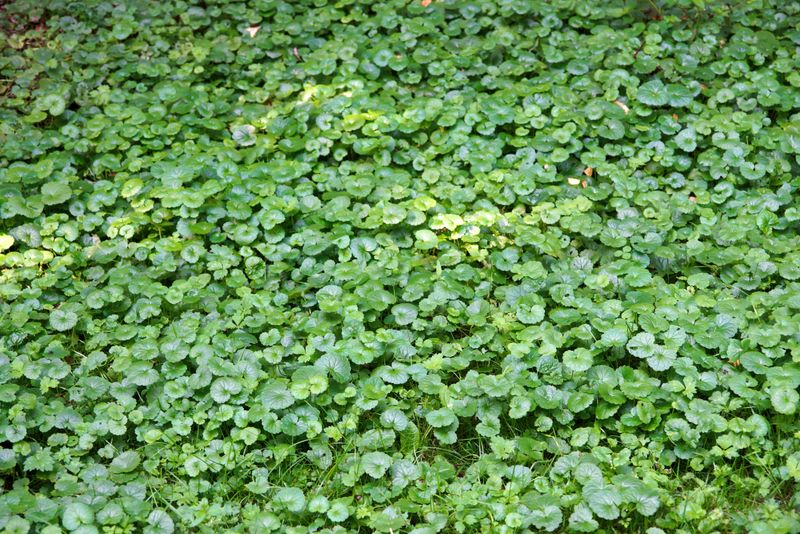
Plain brown cardboard from your last online order can do heavy lifting against a stubborn ground ivy patch. Laying it flat blocks sunlight, and without light, those leaves gradually run out of energy to grow.
This trick works best in garden beds or areas you plan to replant rather than in established lawns. Remove tape and glossy labels, then overlap the edges by several inches so no runners slip through gaps.
Wet the cardboard thoroughly and top it with three or four inches of shredded wood mulch or compost. The mulch weighs everything down and slowly breaks apart to feed the soil underneath over time.
Fall works nicely for this method, since cooler weather gives you comfortable time to work outdoors. Leave the layer undisturbed for several months, and peek under a corner occasionally to check on progress.
I found a few sneaky runners escaping around one edge, so I extended the cardboard farther out. Keep an eye on the borders, and pull any escapees promptly before they root into fresh territory.
Hand Weed Small Ground Ivy Patches After a Soaking Rain
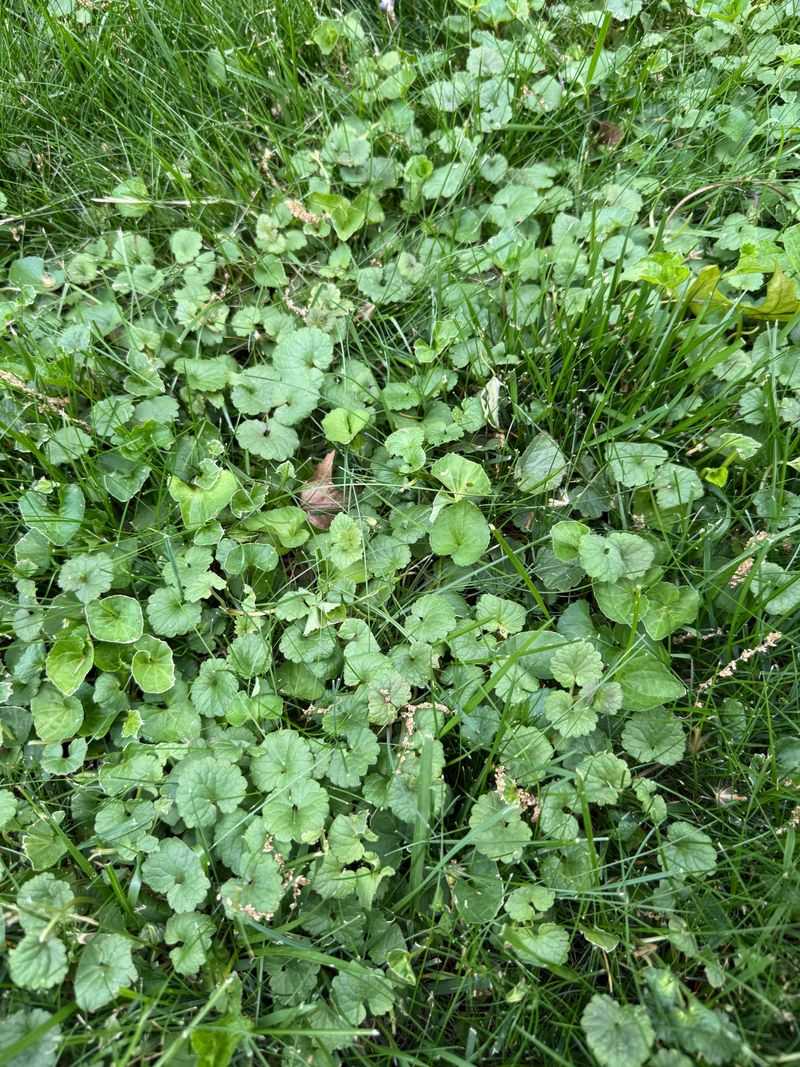
Pulling earns a spot on this list after all, but only with better timing and much smaller targets. Moist soil releases shallow roots far more easily, so wait for a good rain or a deep watering first.
Focus on young patches no bigger than a dinner plate, especially inside flower beds where sprays are risky. Grab the plant near its crown and follow each runner outward, lifting rooted joints as you go along.
A narrow hand fork or hori hori knife helps pry up roots without tearing the stems into scraps. Drop everything straight into a bucket or trash bag so no stray pieces land back on the soil.
I set a phone reminder to check the same spots every two weeks through the cooler months ahead. New sprouts are tiny and easy to remove, and each quick visit takes only a few minutes.
Combining this habit with the other fall steps turns a frustrating chore into a steady, manageable routine. By next spring, you may finally notice more grass and far fewer minty runners creeping across your yard.