Why Red Yucca Is One Of The Best Front Door Plants For Arizona Homes
First impressions begin long before anyone steps inside a home. Even a small planting near the front door can make the entry feel brighter, more welcoming, and better cared for.
Finding a plant that keeps looking good through months of intense heat, however, is not always easy. Plenty of beautiful choices fade, struggle, or demand more attention than most homeowners want to give.
Color is only part of the picture. Reliable growth, low maintenance, and year-round appeal matter just as much when choosing a plant for such a noticeable spot.
A variety that stays attractive without constant care quickly becomes a favorite because it keeps the entrance looking inviting with very little effort.
Red yucca has earned that reputation in Arizona for good reason.
Its bold blooms, tidy shape, and ability to handle desert conditions make it a standout choice for front entrances that need beauty without the extra work.
1. Red Yucca Handles Heat And Drought With Ease
Surviving an Arizona summer is no small feat for any plant. Red yucca does it without complaint.
Temperatures can push past 110 degrees Fahrenheit in the low desert, and most ornamental plants tap out well before that point.
Red yucca stores moisture in its thick, fibrous root system. When rain is scarce, it draws on those reserves instead of wilting.
That built-in survival strategy makes it one of the most drought-tolerant ornamental plants available for hot, dry climates.
Once established, it rarely needs supplemental watering. Most gardeners water deeply every two to three weeks during summer, then back off significantly in cooler months.
Overwatering is actually more of a concern than underwatering with this plant.
Rocky, sandy, or caliche-heavy soil does not slow it down. Red yucca adapts to the difficult soil conditions common across the desert Southwest without special amendments or extra care.
Planting near a front door gives it reflected heat from walls and pavement. Rather than suffering, red yucca handles that extra warmth well.
It stays upright, green, and healthy even when surrounding plants look stressed.
2. Bright Flower Spikes Add Color For Months
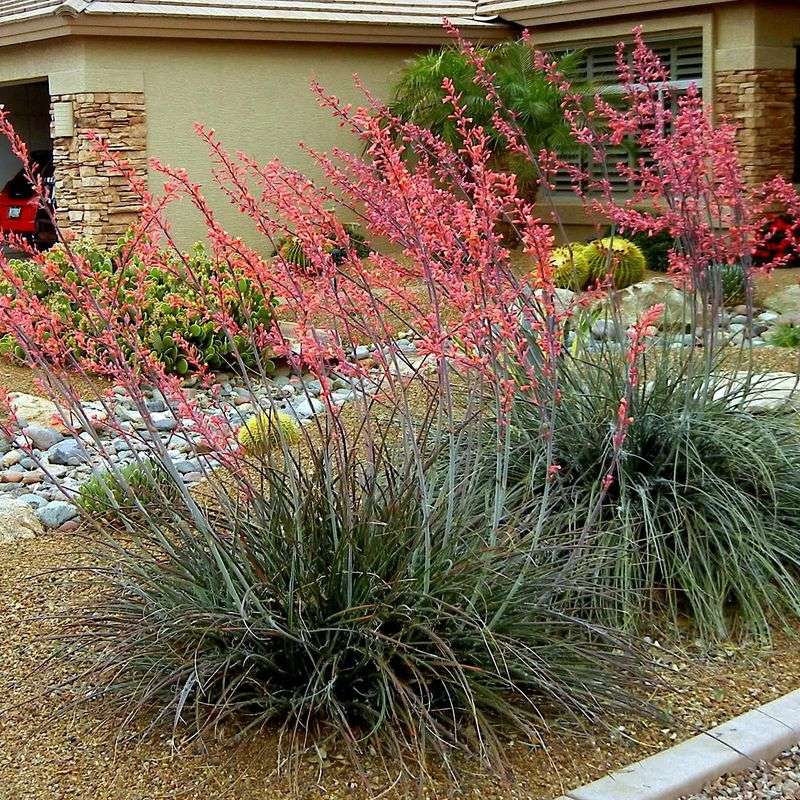
Few plants in the desert Southwest put on a flower show that lasts as long as red yucca does. Blooming typically kicks off in spring and stretches well into summer.
Some plants push out a second flush of blooms in fall if conditions cooperate.
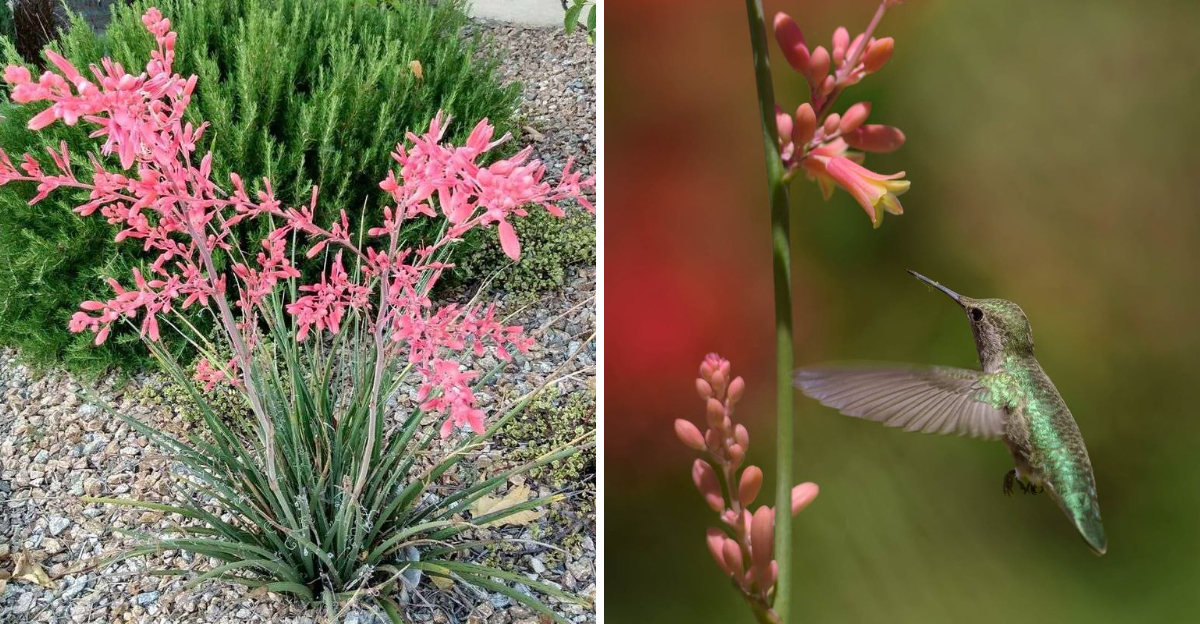
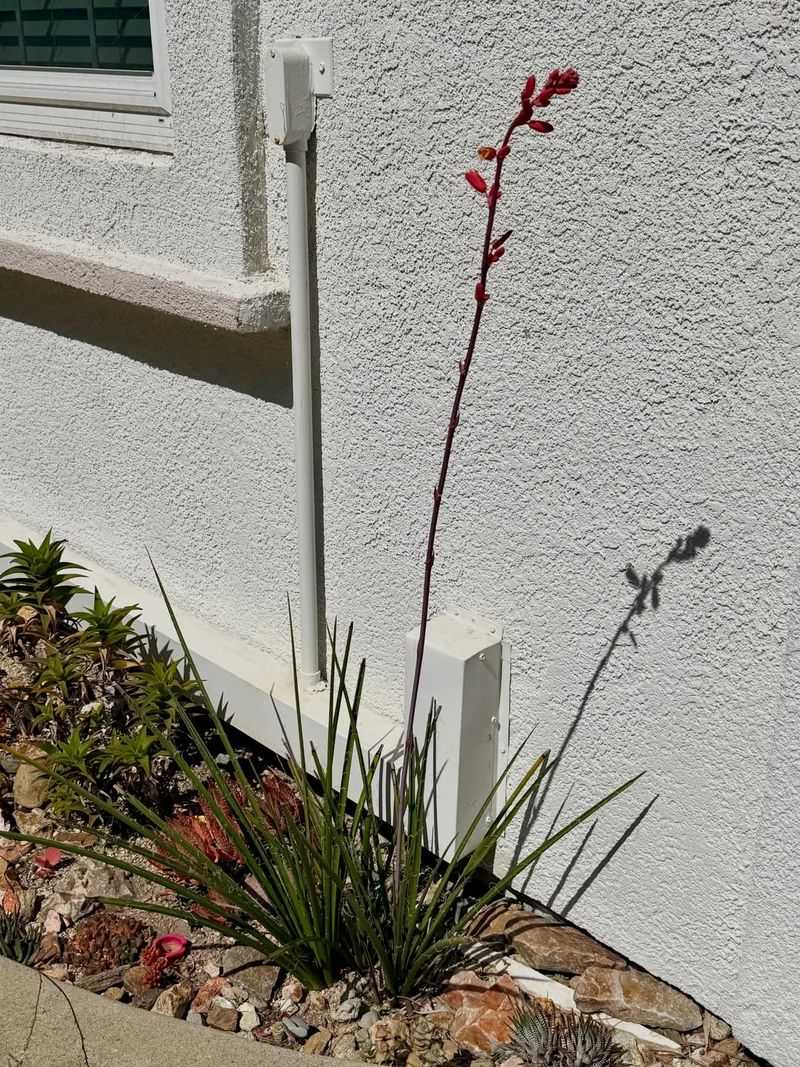
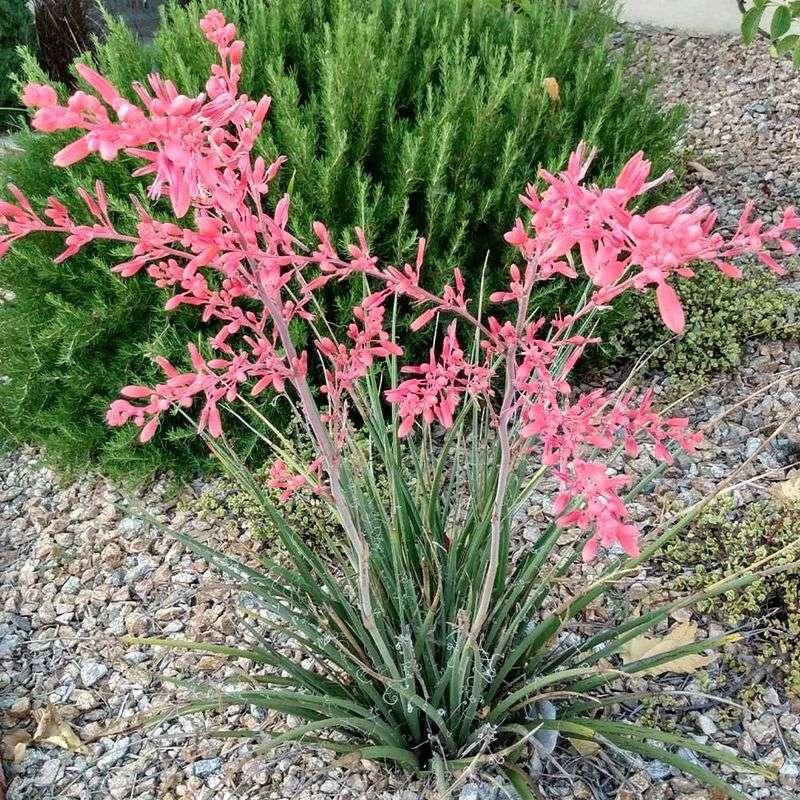
Each flower spike can reach four to five feet tall. Dozens of small, tubular, coral-pink to red flowers line each spike from base to tip.
Up close, they have a delicate look that contrasts beautifully with the plant’s tough, spiky leaves.
Planted beside a front door, those tall spikes create instant vertical interest. They draw the eye upward and add structure to an entry that might otherwise look flat or bare.
The warm color pops against neutral stucco walls and light-colored pavers.
Color variety exists within the species too. Some cultivars lean more toward salmon or peachy-pink tones, while others display deeper coral-red hues.
Visiting a local nursery and choosing in person lets you pick the exact shade that works best with your home’s exterior.
Your Arizona Garden Changes Every Week. Your Plan Should Too.
Gardening in Arizona changes quickly throughout the season. Every Friday you’ll receive a simple weekly plan showing exactly what to plant, prune, fertilize, harvest, and protect so you never miss the right timing.
After blooms fade, the dried seed stalks still add textural interest. Many gardeners leave them standing through fall for a naturalistic look before cutting them back in late winter.
3. Narrow Leaves Stay Tidy Without Constant Pruning
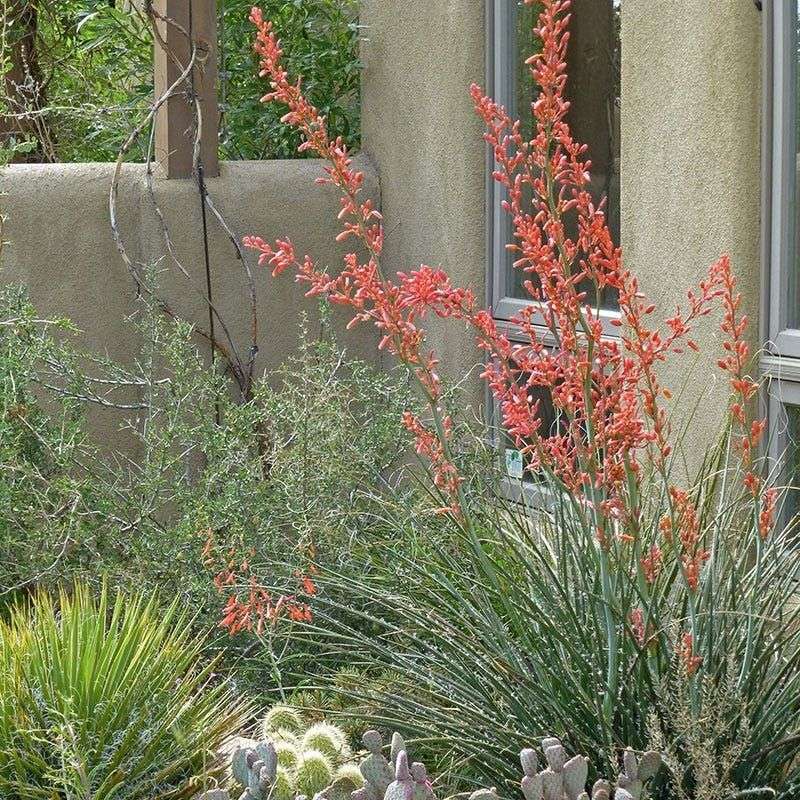
Maintenance is one of the biggest concerns homeowners have about front door plants. Nobody wants to spend every weekend trimming and cleaning up.
Red yucca sidesteps that problem almost entirely.
Its leaves are long, narrow, and slightly arching. They grow outward in a symmetrical rosette pattern that stays naturally tidy.
Unlike ornamental grasses that flop and sprawl, red yucca holds its shape season after season without staking or cutting back.
Old leaves do eventually dry out and turn brown at the base. Pulling them off by hand is quick and easy.
Most gardeners do a light cleanup once a year in late winter before new growth pushes out, and that is genuinely all the leaf maintenance required.
Leaf tips are flexible and softer than true yuccas. That makes red yucca a safer option near walkways and front doors where people pass closely.
Children and pets are far less likely to get scratched than with rigid-spined desert plants.
Its compact growth habit also keeps it from crowding neighboring plants or overrunning a small entry bed. A mature clump spreads to about three or four feet wide, which is manageable in most front yard setups.
4. Full Sun Brings Out The Best Flower Display
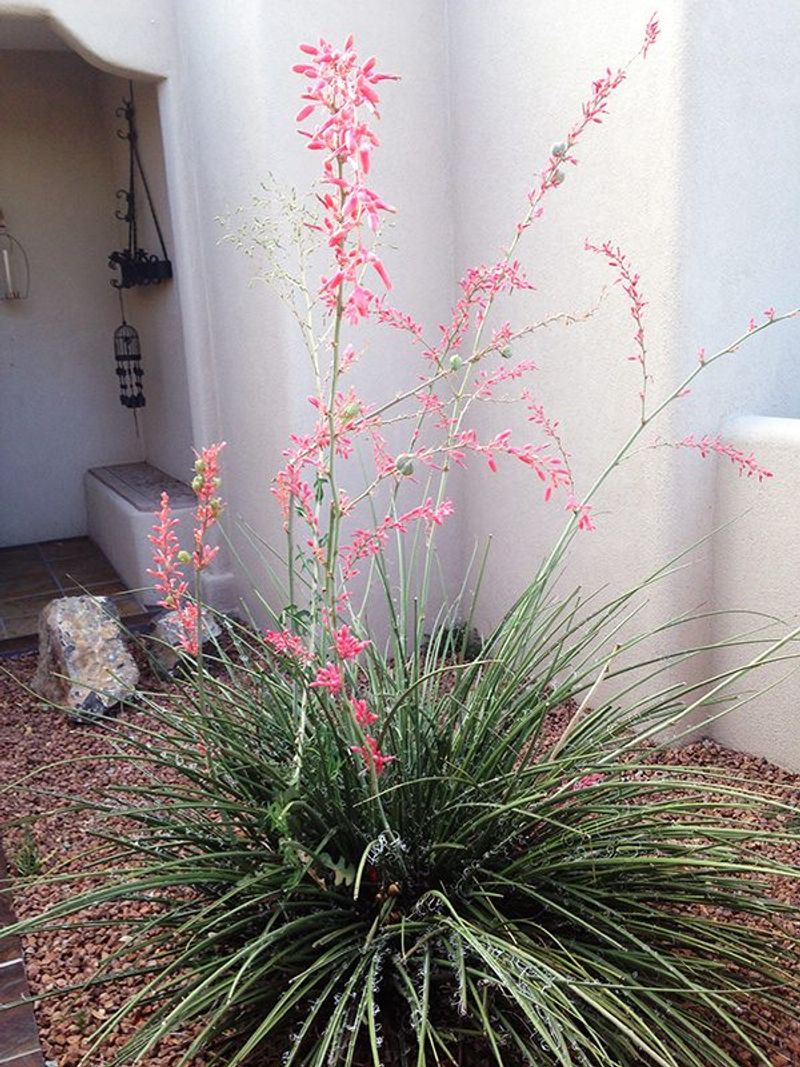
Shade lovers have their place, but red yucca is not one of them. Give it full sun and it rewards you with the most impressive flower display it can produce.
Pull it back into partial shade and blooming noticeably drops off.
Most front doors in the desert Southwest face south or west, which means they receive intense direct sun for most of the day. That exposure is exactly what red yucca wants.
It uses that light energy to push out taller, denser flower spikes than plants growing in shadier spots.
Six or more hours of direct sun per day is the general guideline. More sun typically equals more flowers and stronger overall growth.
Gardeners who place red yucca in a south-facing bed right beside the front door tend to get the showiest results.
Reflected heat from walls and pavement adds extra warmth that most plants cannot tolerate. Red yucca handles it without issue.
Its leaf structure and root system are adapted to absorb sunlight and manage heat efficiently.
If your entry has a covered porch that blocks afternoon sun, position red yucca just outside the shaded zone where it can still catch full western exposure. Even a slight adjustment in placement can make a meaningful difference in bloom production.
5. Good Drainage Prevents Common Growing Problems
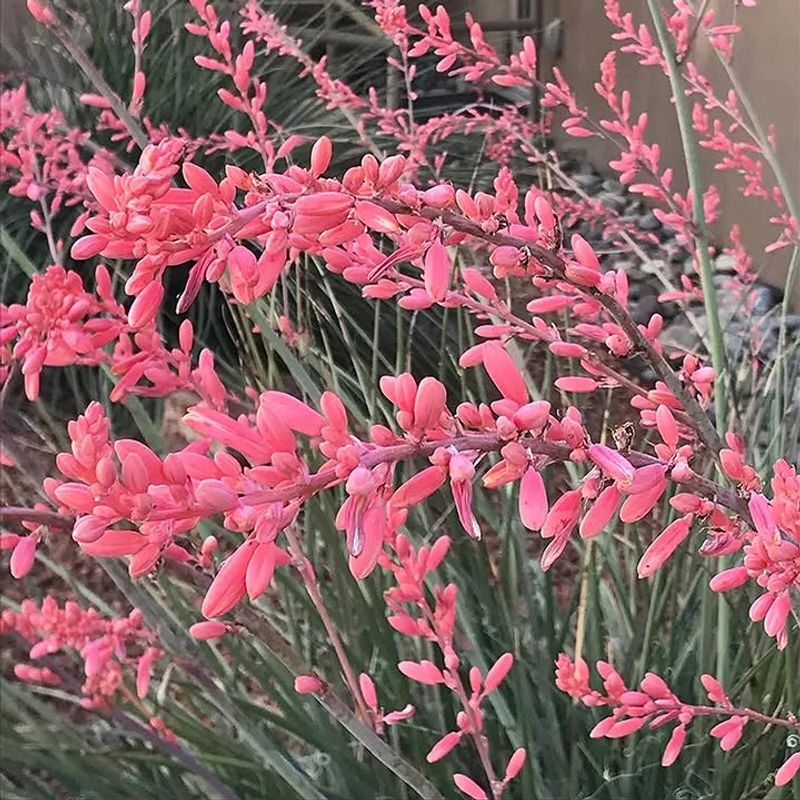
Root rot is the most common way red yucca struggles. It is not heat that causes problems.
It is wet feet from poorly draining soil that creates trouble fast.
Desert soils vary widely across the region. Sandy soils drain quickly and suit red yucca perfectly.
Clay-heavy soils hold water far too long and can cause root problems, especially during monsoon season when rainfall arrives in heavy bursts.
Raised planting areas solve drainage issues quickly. Building a small mound of amended soil four to six inches above grade gives roots a drier zone to occupy.
Gravel mulch around the base also helps moisture evaporate faster after rain or irrigation.
Avoid planting in low spots where water naturally collects after storms. Even a brief period of standing water around the crown can cause damage that takes weeks to show up visually.
By the time leaves start yellowing, root issues may already be well established.
Soil amendment with coarse sand or decomposed granite helps break up compacted clay and improves drainage without adding nutrients that could push soft, weak growth. Red yucca does not need rich soil.
It actually performs better in lean, gritty conditions.
Check your planting area after a heavy rain. If water pools for more than thirty minutes, improve drainage before planting.
6. Leave Enough Space For Mature Plants To Spread
Crowding is one of the most common planting mistakes made with red yucca. Young plants at the nursery look compact and manageable.
Give them a few years and they tell a different story.
A mature red yucca clump can reach three to four feet wide and produce multiple offsets, called pups, around the base. Each pup eventually grows into a full rosette.
Without enough space, the whole grouping becomes congested and hard to manage.
Spacing plants at least four feet from walls, walkways, and other plants gives each one room to develop naturally.
Near a front door, that space also keeps leaf tips away from guests walking past, which matters more than most people realize when they are first planting.
Pups can be removed and replanted elsewhere once they are large enough to separate. That gives you free plants for other areas of the yard without spending anything extra.
It also keeps the parent clump looking neat and well-defined over time.
Plan for mature size from day one rather than planting close together for an instant-full look. Overcrowded plants compete for water and airflow, which can reduce flowering and increase the risk of fungal issues during humid monsoon months.
7. Hummingbirds Visit The Blooms Throughout The Blooming Season
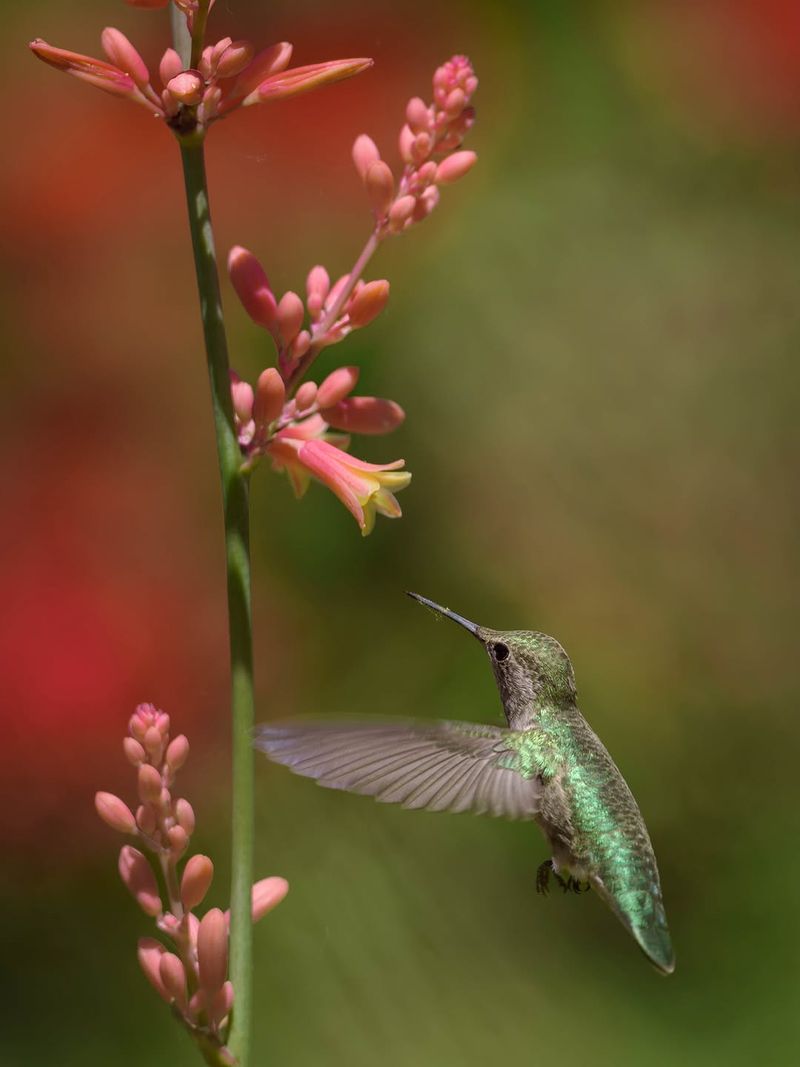
Watch your front entry come alive during bloom season. Hummingbirds zero in on red yucca flowers with impressive consistency.
The tubular shape of each bloom is practically designed for a hummingbird’s long bill.
Broad-billed and black-chinned hummingbirds are common visitors across much of the desert Southwest. Both species actively seek out nectar-rich tubular flowers, and red yucca delivers exactly that.
A single plant in bloom can attract multiple birds throughout the day.
Watching hummingbirds hover and dart around your front door is genuinely entertaining. Guests notice immediately, and kids especially enjoy seeing the birds up close.
It turns a simple plant into a backyard wildlife experience.
No feeders, no sugar water, and no maintenance required on your end. Red yucca handles the nectar production naturally.
Birds find it on their own once blooms open, often within days of the first flowers appearing.
Orioles and some butterfly species also visit the blooms occasionally, adding even more wildlife activity to your front entry. Planting red yucca near a window gives you a great view without needing to set up any special equipment.
Pollinators benefit from consistent nectar sources in urban and suburban desert landscapes, where natural food sources can be limited.