Why Tree-Of-Heaven Seedlings In Michigan Yards Are A Bigger Problem Than Free Shade
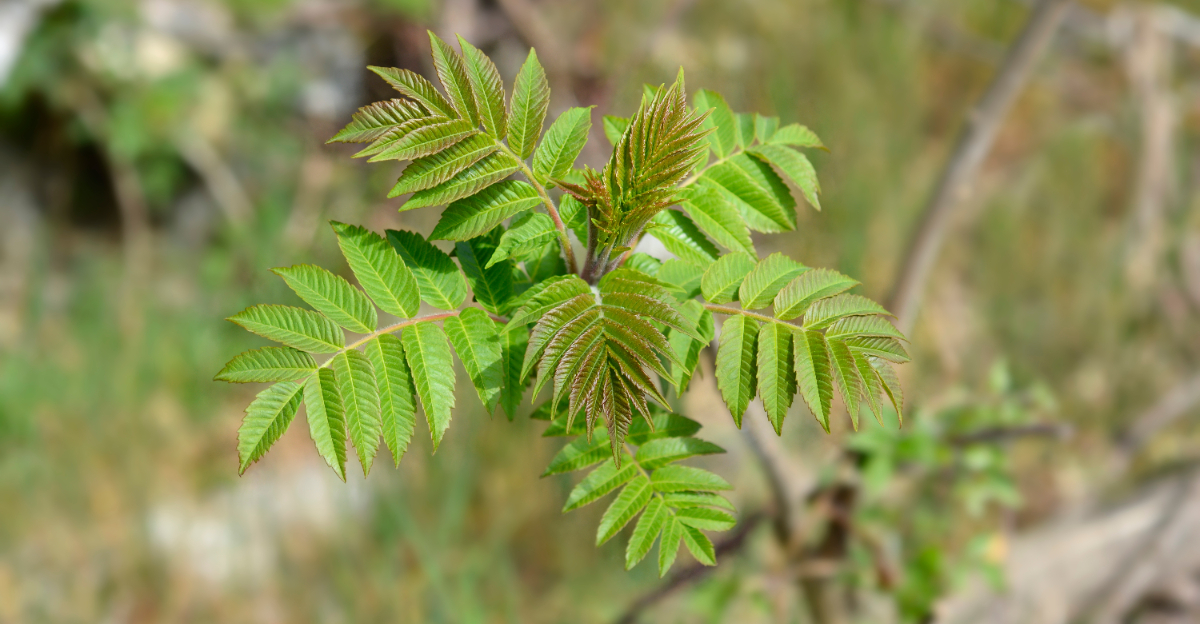
Tree of heaven seedlings might look like an easy source of future shade, but these fast growing plants create far more trouble than benefit in Michigan yards.
This invasive species spreads aggressively through both seeds and root suckers, often popping up yards away from the original plant.
Its shallow, spreading roots can damage nearby foundations, sidewalks, and underground pipes as the tree matures.
Tree of heaven also releases chemicals into surrounding soil that suppress the growth of other nearby plants.
Perhaps most concerning, this tree serves as the primary host for spotted lanternfly, an invasive pest causing serious agricultural concerns across the region.
Removing seedlings while they’re small is far easier than dealing with an established tree later on.
Cutting alone often triggers even more aggressive resprouting, so full removal including the root system works best. Recognizing these seedlings early saves significant time and money down the road.
1. Small Seedlings Can Become Large Trees Quickly
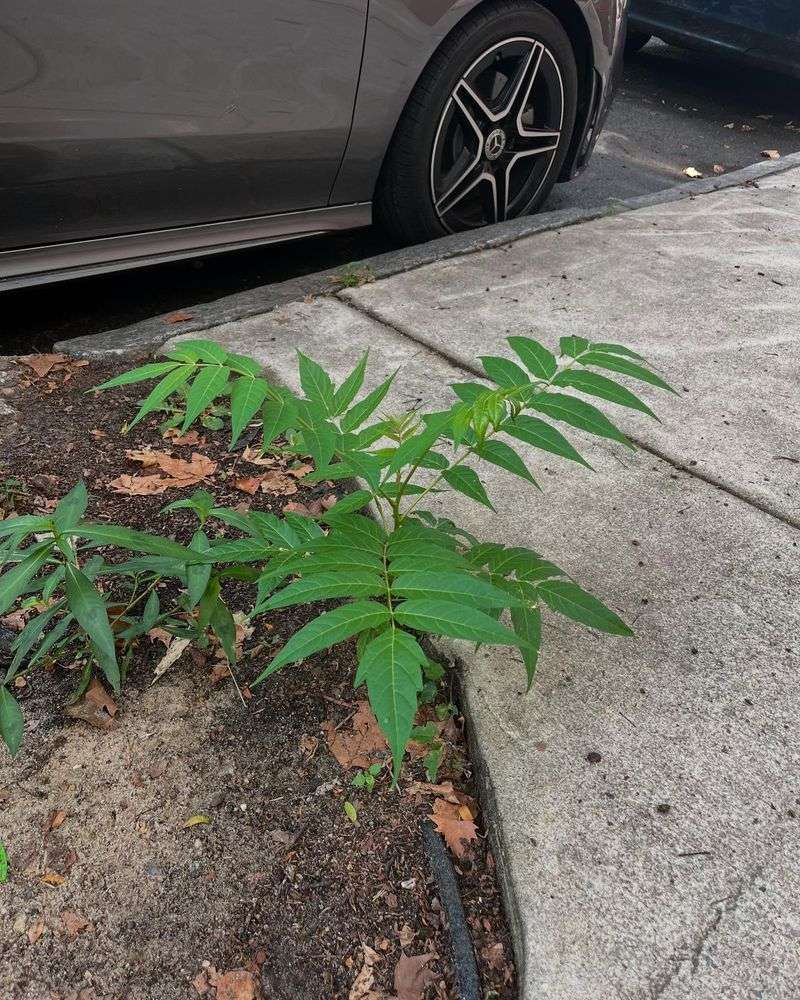
A seedling that barely reaches your knee today can transform your yard in ways you never expected.
Tree-of-Heaven is one of the fastest-growing trees in North America, capable of shooting up several feet in a single growing season under the right conditions.
In Michigan yards, where disturbed soil and open sunlight are common, this plant finds exactly what it needs to take off.
Given enough time, a Tree-of-Heaven can reach approximately seventy feet tall with a wide, spreading crown.
At that size, the trunk thickens considerably, the root system pushes deep and wide, and the entire plant becomes far more challenging to manage than it ever was as a seedling.
What felt like a manageable garden task early on can turn into a major landscaping project once the tree matures.
Some homeowners make the mistake of treating the temporary shade as a bonus, deciding to deal with the tree later.
The problem is that every season you wait gives the roots more time to anchor, the trunk more time to harden, and the overall plant more time to establish itself in your yard’s ecosystem.
Michigan’s urban and suburban landscapes already have plenty of competition from invasive species, and Tree-of-Heaven moves quickly to claim any available space.
Catching it early, while the root system is still shallow and the stem is still thin, makes management far more practical. A small seedling takes minutes to address.
A mature seventy-foot tree near a structure or utility line is a completely different situation that may require professional help and significant cost.
2. Root Shoots Can Turn One Plant Into A Thicket
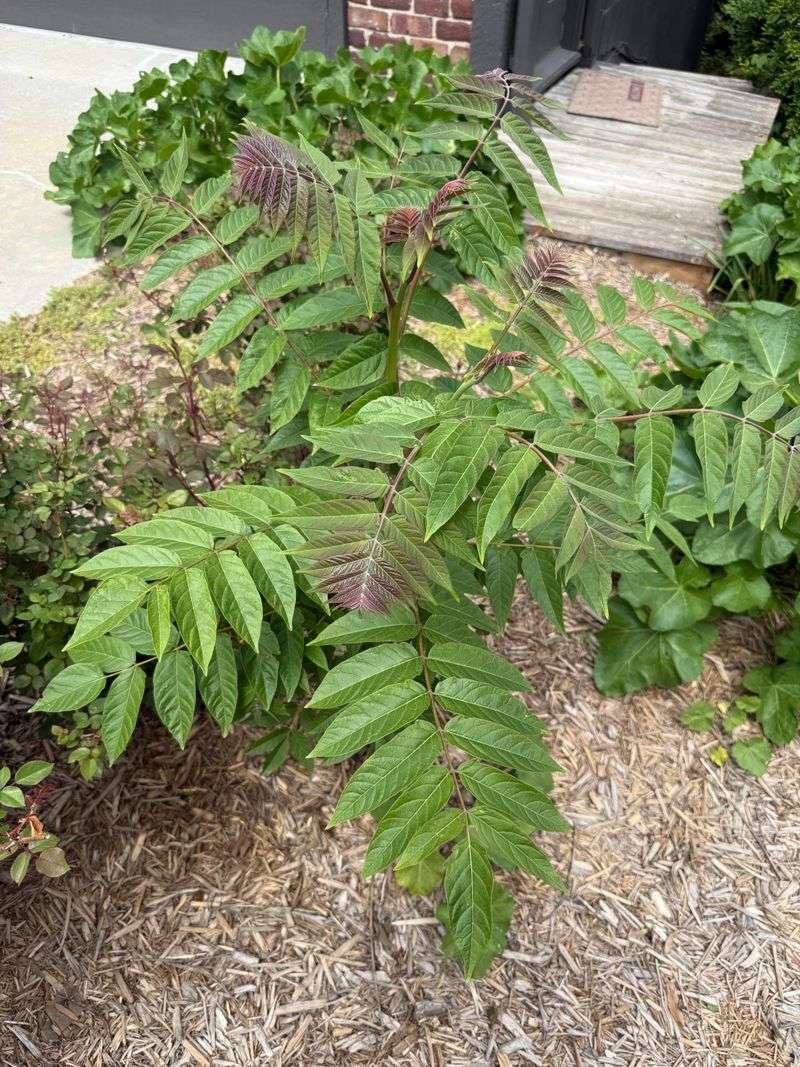
One seedling looks manageable. A dozen connected stems spreading across your lawn and garden beds is a completely different story.
Tree-of-Heaven spreads aggressively through root shoots, which are new stems that push up from the underground root system rather than from a seed.
This means that what looks like several separate plants may actually all be connected beneath the surface.
These root shoots can emerge several feet away from the original trunk, popping up in lawns, garden beds, along fence lines, and in corners of the yard that rarely get attention.
Your Michigan Garden Changes Every Week. Your Plan Should Too.
Gardening in Michigan changes quickly throughout the season. Every Friday you’ll receive a simple weekly plan showing exactly what to plant, prune, fertilize, harvest, and protect so you never miss the right timing.
Once they establish, they tend to grow quickly and form dense clusters that crowd out other vegetation.
In yards where homeowners value their gardens and lawns, this kind of spreading can become frustrating to manage season after season.
Here is something that catches many people off guard: removing one visible stem does not necessarily address the root system beneath it.
If the underground roots are intact and healthy, new shoots will likely continue emerging nearby.
The plant essentially redirects its energy into producing more stems, which can make it feel like the problem multiplies every time you address one part of it.
Recognizing this spreading pattern early is genuinely useful information for Michigan homeowners.
A single seedling growing near a garden bed or fence line today can quietly expand into a thicket over the course of a few growing seasons.
Addressing the plant while the root system is still limited gives you a much better chance of keeping it from taking over valuable yard space.
3. The Roots Can Affect Structures And Sewer Lines
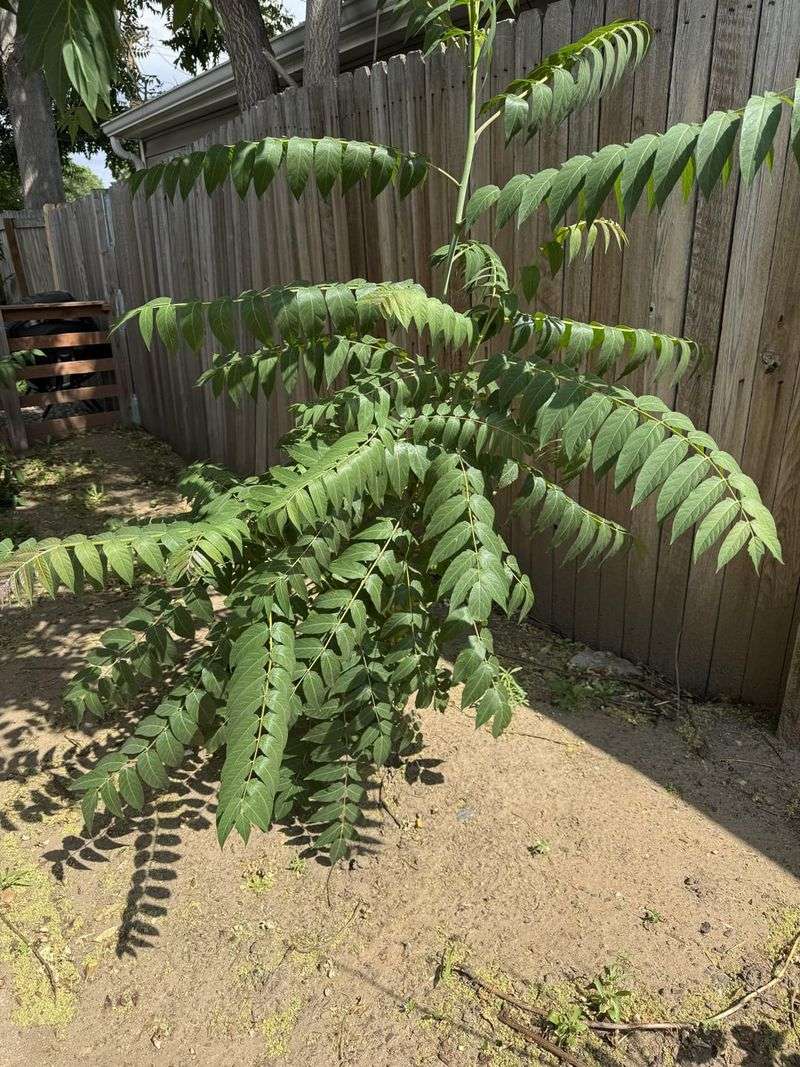
Most people think about shade, appearance, or smell when they consider whether to keep a tree in their yard.
What rarely comes to mind is what the roots are doing underground, especially when a fast-growing invasive species is involved.
Michigan’s official invasive species guidance specifically warns that Tree-of-Heaven roots have the potential to damage structures and sewer lines, making location a critical factor when assessing any seedling in your yard.
A seedling growing near a foundation, retaining wall, patio, driveway, or utility corridor might seem completely harmless right now.
However, as the root system expands over time, it can work its way into cracks, joints, and gaps in pavement or masonry.
Roots follow the path of least resistance, and unfortunately that path sometimes runs directly toward underground pipes, drainage systems, or structural footings.
Sewer line repairs and foundation work are among the most expensive home repairs a homeowner can face.
Catching a Tree-of-Heaven seedling before it matures near these areas is a straightforward way to reduce that risk.
The plant’s rapid growth rate means the window for easy action is shorter than it would be with a slower-growing species.
Taking a few minutes to look at where seedlings are sprouting in relation to your home’s structures, utility areas, and underground lines is a smart habit.
A small plant growing against a wall or beside a patio may not look threatening today, but giving it two or three growing seasons changes the picture considerably.
Early awareness of location is one of the simplest ways to protect your property from unnecessary damage.
4. The Roots Can Limit Nearby Plant Growth
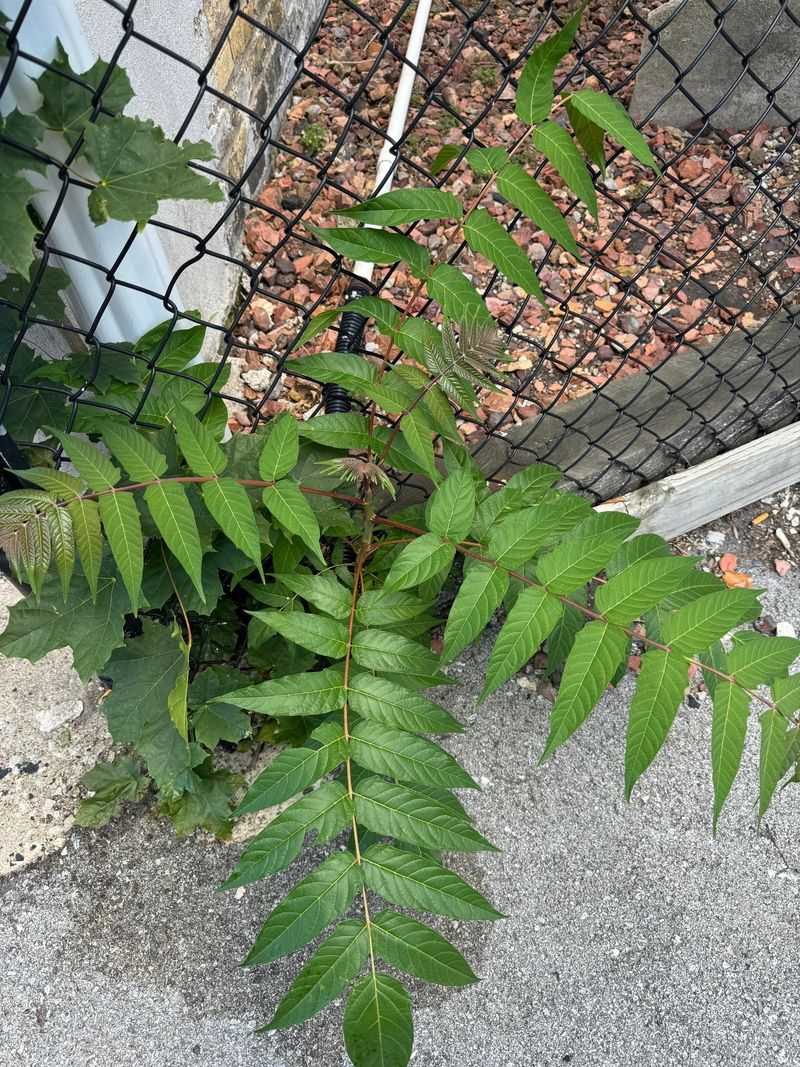
Sparse grass under a tree is easy to blame on shade, but with Tree-of-Heaven there is something else happening underground that most homeowners never consider.
This invasive species produces chemicals through its roots that actively inhibit the growth of nearby plants, a process called allelopathy.
So even plants that receive adequate sunlight and water may struggle if Tree-of-Heaven roots are present in the surrounding soil.
Lawn grasses, garden plants, native seedlings, and carefully chosen landscape plants can all be affected by this chemical competition.
Michigan homeowners who notice their garden beds performing poorly or their lawn thinning out near a fast-growing tree may be dealing with more than just shading.
The root chemicals spread through the soil and can create conditions that favor Tree-of-Heaven while making it harder for other vegetation to thrive.
This is one of the reasons Tree-of-Heaven spreads so effectively in disturbed areas. It is not just competing for sunlight and water like most plants.
It is actively working to reduce competition from other species at the root level, giving itself a consistent advantage over time.
For a gardener who has invested in native plantings, perennial beds, or a healthy lawn, this is a significant concern worth understanding.
Recognizing that the shade beneath the tree is not the only factor affecting nearby plant health changes how you think about the problem.
Even a young Tree-of-Heaven seedling with a developing root system can begin influencing the soil chemistry around it.
Addressing it early protects not just your lawn but also the broader plant community you have worked to establish in your yard.
5. Winged Seeds Help It Reach New Parts Of The Yard
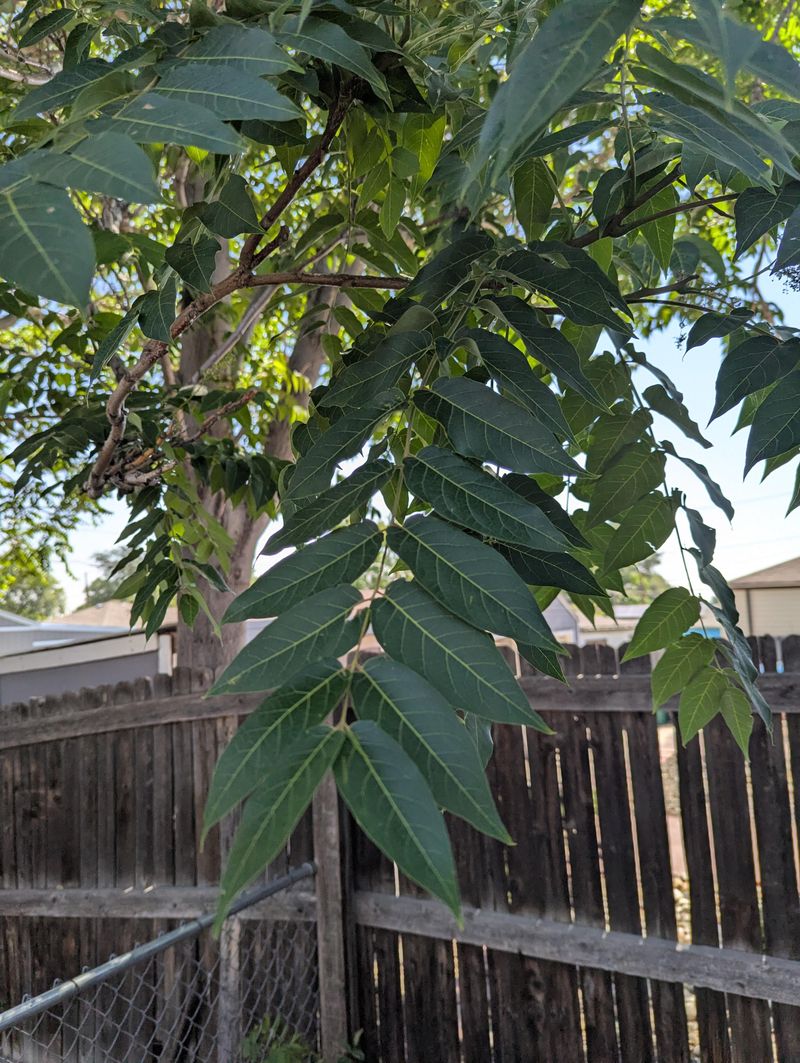
Imagine thousands of tiny, paper-thin seeds spinning through the air and landing in every open patch of soil across your yard and your neighbor’s yard. That is exactly what a mature female Tree-of-Heaven does each year.
The seeds are flat, twisted, and winged, shaped in a way that allows wind to carry them surprising distances from the parent plant. One mature tree can produce a staggering number of seeds in a single season.
These seeds find their way into garden beds, cracks in pavement, fence lines, disturbed soil, and any spot where conditions are even slightly favorable for germination.
They are not picky about where they land, and they germinate readily in a wide range of conditions.
This seed dispersal ability is one of the main reasons Tree-of-Heaven spreads so efficiently across Michigan neighborhoods, roadsides, and natural areas.
Combine this with the plant’s ability to also spread through root shoots, and you start to see why allowing even one seedling to mature into a seed-producing tree creates a much larger management challenge.
You are no longer dealing with one plant. You are potentially dealing with dozens of new seedlings appearing across your property and beyond, season after season.
Catching Tree-of-Heaven before it reaches reproductive maturity is one of the most practical ways to limit its spread. A seedling or young sapling that has not yet produced seeds is a contained problem.
A mature female tree in full seed production is an ongoing source of new plants that can spread well beyond your property line, making it a concern for the entire neighborhood, not just your yard.
6. Tree-Of-Heaven Supports Spotted Lanternfly Activity
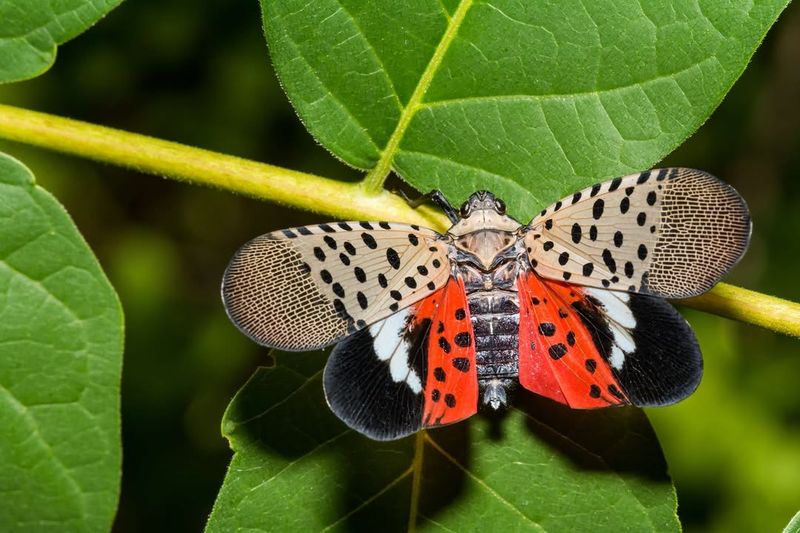
There is a two-for-one problem growing in Michigan yards, and most homeowners have no idea it exists.
Tree-of-Heaven is one of the preferred host plants of the Spotted Lanternfly, an invasive insect that has been confirmed in Michigan.
Keeping Tree-of-Heaven in your landscape essentially provides a reliable feeding location for this pest as it continues to spread across the state.
Spotted Lanternfly feeds on plant sap and can cause significant stress to a wide range of plants beyond Tree-of-Heaven.
Grapes, apples, hops, ornamental trees, and several native Michigan tree species are all on its list of preferred hosts.
For gardeners, orchardists, and homeowners with fruit trees or ornamental plantings, this insect represents a real concern that is made worse by the presence of its favorite host tree nearby.
The connection between Tree-of-Heaven and Spotted Lanternfly is well-documented and something Michigan agricultural and environmental agencies take seriously.
Allowing Tree-of-Heaven to remain in residential landscapes gives this invasive insect exactly the kind of habitat it seeks out.
As the insect’s range expands, yards with established Tree-of-Heaven could become local hotspots for Spotted Lanternfly activity.
Staying informed about this connection is genuinely valuable for anyone gardening or growing fruit in Michigan.
Early awareness means you can take steps to reduce habitat for this pest before it becomes a bigger issue in your area.
Reporting sightings of both Tree-of-Heaven and Spotted Lanternfly through Michigan’s invasive species reporting tools is one of the most helpful actions a homeowner can take to support broader management efforts across the state.
7. Cutting The Stem Alone May Produce More Shoots
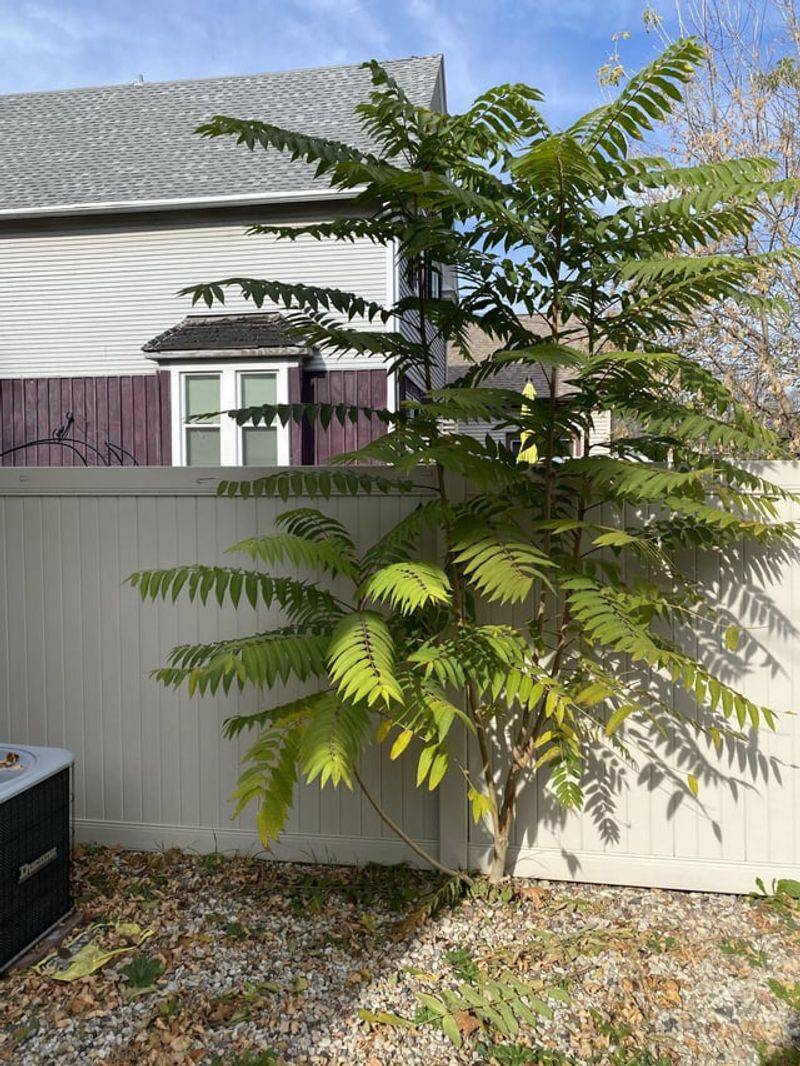
Grabbing a pair of loppers and cutting a Tree-of-Heaven seedling at the base feels like a satisfying solution, but for plants connected to an established root system, it often triggers the opposite of what you hoped for.
Cutting or mowing the stem can actually stimulate the roots to push out multiple new shoots, turning one stem into several.
This is one of the most common surprises homeowners encounter when trying to manage this plant on their own.
Stump sprouts and root shoots can continue emerging repeatedly after cutting, requiring consistent follow-up over multiple growing seasons.
The underground root system stores energy and redirects it into producing new growth after the top is removed.
Without addressing the root system directly, repeated cutting becomes an ongoing management task rather than a permanent fix. Proper identification is a smart first step before taking any action.
Tree-of-Heaven has large compound leaves, smooth-edged leaflets with small notches near the base, and a distinctive smell when the leaves or stems are crushed.
Confirming what you have before acting helps you choose the most effective approach and avoids accidentally managing the wrong plant.
Michigan gardeners dealing with Tree-of-Heaven are encouraged to report it through the Midwest Invasive Species Information Network, known as MISIN, which helps track the spread of invasive species across the state.
For larger plants growing near structures, desirable trees, vehicles, or utility lines, consulting Michigan State University Extension or a qualified professional is a wise move.
Getting the right guidance early makes the entire management process more effective and far less frustrating in the long run.