Why Wild Columbine Outperforms Store-Bought Coral Bells In Ohio Shade
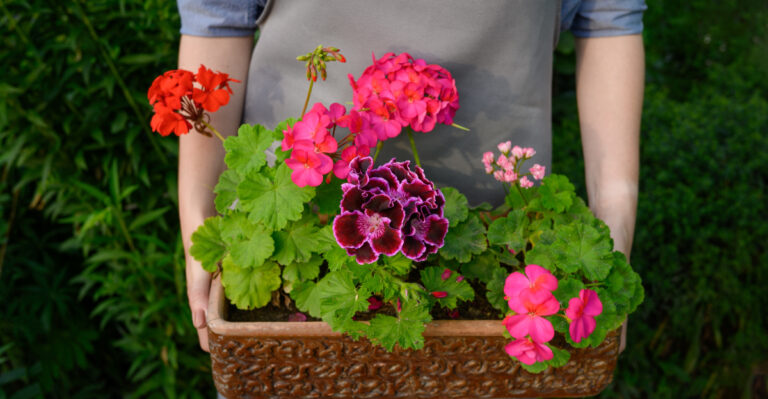
Coral bells have been winning the Ohio shade garden sale for years on the strength of one thing. Foliage color.
Burgundy, lime, silver, caramel. The color chart at the garden center is genuinely impressive.
Completely disconnected from how the plant actually performs once the novelty wears off. Wild columbine does not have a color chart.
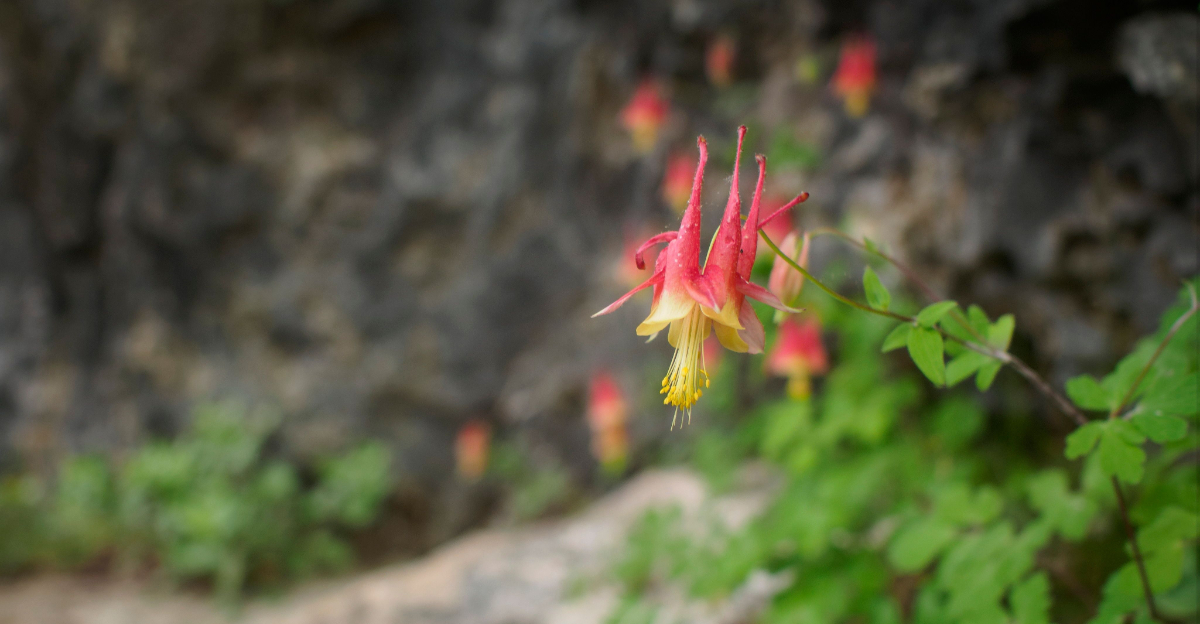
It has a track record. Native to Ohio, evolved for exactly the dappled, dry, rocky shade that coral bells finds challenging.
The spring flower it produces stops hummingbirds mid-route. No cultivated coral bells has ever generated that response from anything with wings.
The garden center has been selling Ohio shade gardeners a foliage plant dressed up as a performer. Wild columbine is the performer that was always available and consistently overlooked.
1. Wild Columbine Feels At Home Beneath A Light Tree Canopy
Placing a plant beneath a tree sounds simple, but conditions under a canopy vary more than most Ohio gardeners expect. Light levels shift depending on tree density, leaf size, and canopy height.
Soil moisture and root competition also change from spot to spot beneath the same tree.
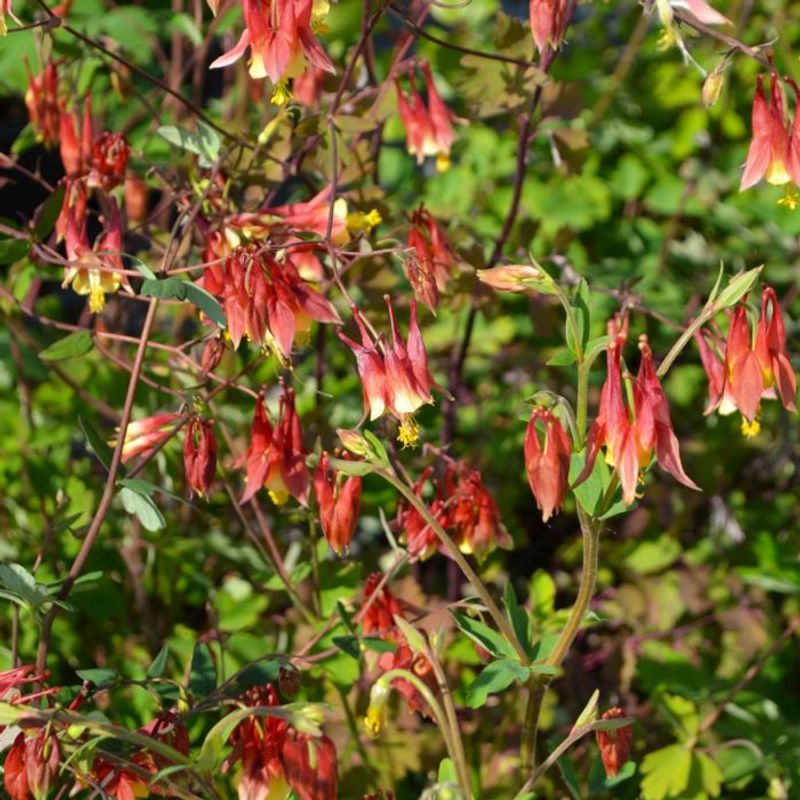
Aquilegia canadensis grows naturally along woodland edges and rocky slopes. It favors sites with dappled or part shade rather than deep, unbroken darkness.
A thin canopy that lets filtered light reach the ground is much closer to its natural habitat than a dense stand of evergreens blocking nearly all sun.
Root competition from shallow-rooted trees can reduce available moisture. Wild columbine generally prefers well-drained soil and does not perform well in consistently wet or waterlogged spots.
Sites that stay soggy after rain are not a good match.
Heavy dry shade under a dense maple or Norway spruce presents a different challenge entirely. Wild columbine may struggle there just as many other perennials do.
Matching the plant to a brighter, more open spot under a tree will produce much better results than placing it in the darkest corner of the yard.
Knowing your canopy type before planting helps you set realistic expectations. Not every shaded spot is the same, and wild columbine does best where some light still filters through.
2. Its Native Roots Fit Woodland Gardens Better Than Many Hybrids
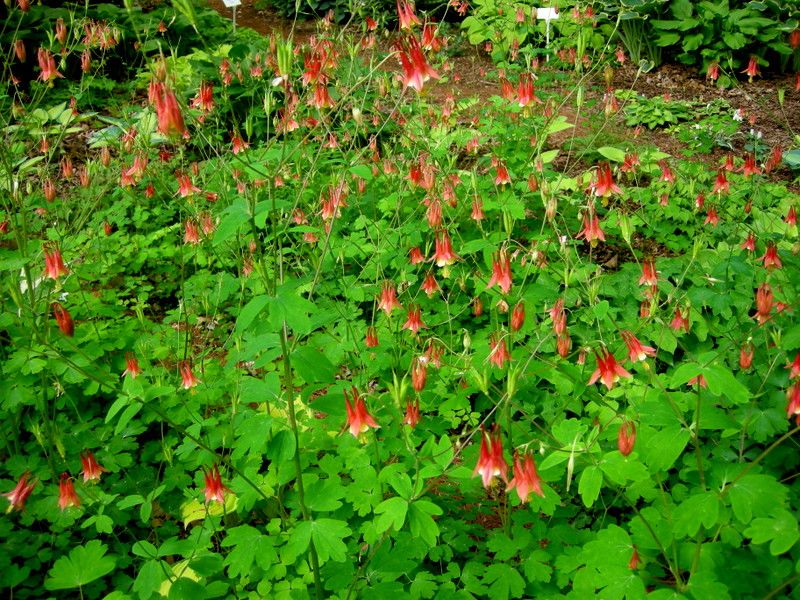
A plant that evolved alongside local soils, insects, and seasonal rhythms carries a different kind of relationship to a garden than one selected primarily for leaf color.
Aquilegia canadensis is native across much of eastern North America, including the state of Ohio, where it grows in open woods and rocky areas.
That regional history matters in informal woodland garden designs. A native species tends to fit naturally into the seasonal rhythm of a shade bed.
It emerges in spring, flowers, and then settles into the background as summer progresses. That cycle mirrors what happens in actual woodlands.
Many coral bells sold in garden centers are ornamental Heuchera cultivars selected largely for foliage traits. Some Heuchera species are native to parts of North America, but the cultivars most commonly stocked at retail are often complex hybrids.
Your Ohio Garden Changes Every Week. Your Plan Should Too.
Gardening in Ohio changes quickly throughout the season. Every Friday you’ll receive a simple weekly plan showing exactly what to plant, prune, fertilize, harvest, and protect so you never miss the right timing.
Their ecological relationships with local wildlife may be less established than those of a plant with a long regional presence.
None of this means hybrid coral bells are without value. Some Heuchera cultivars flower and can support pollinators.
The distinction is about design intent and ecological context, not about declaring one plant universally better.
In a garden designed to resemble a natural woodland understory, a plant with genuine local roots reinforces that character well. A cultivar chosen mainly for leaf color may feel less natural in that setting.
3. Spring Flowers Give Hummingbirds A Reason To Visit The Shade
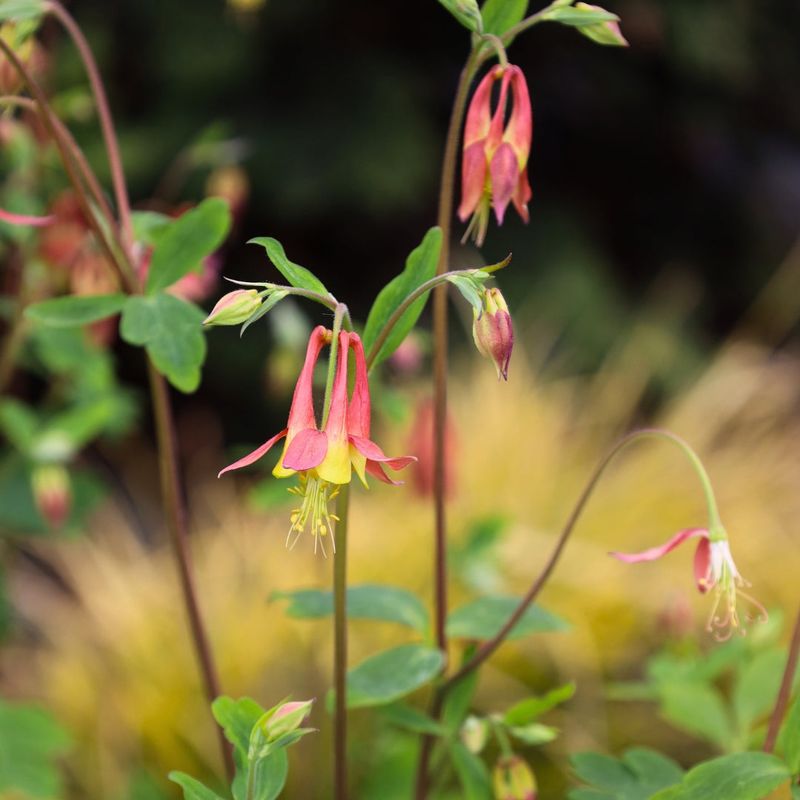
A flash of movement near the shaded border in late April or early May often turns out to be a Ruby-throated Hummingbird. These birds arrive in the region around the time wild columbine opens its red and yellow flowers.
That timing is not a coincidence.
Aquilegia canadensis produces tubular, spurred flowers that are well-suited to hummingbird feeding. The Ruby-throated Hummingbird is documented as a pollinator of this species.
Long-tongued bees, including bumblebees, also visit the flowers for nectar.
Bloom time typically falls from April through June depending on local conditions and site exposure. That spring window aligns with the early season when hummingbirds are actively searching for nectar sources after migration.
Coral bells do produce flowers, and some Heuchera cultivars attract bees and other pollinators. That is worth acknowledging.
The comparison here is about the documented strength of wild columbine’s relationship with hummingbirds, which is tied directly to its flower structure and bloom timing.
Planting columbine does not guarantee a hummingbird will appear. Other factors like nearby habitat, water sources, and garden setting all play a role.
The plant offers a flower that matches what the bird is actively seeking in spring. It provides that resource in a shaded spot where few other plants do so at the same time of year.
4. One Happy Plant Can Slowly Turn Into A Natural Looking Colony
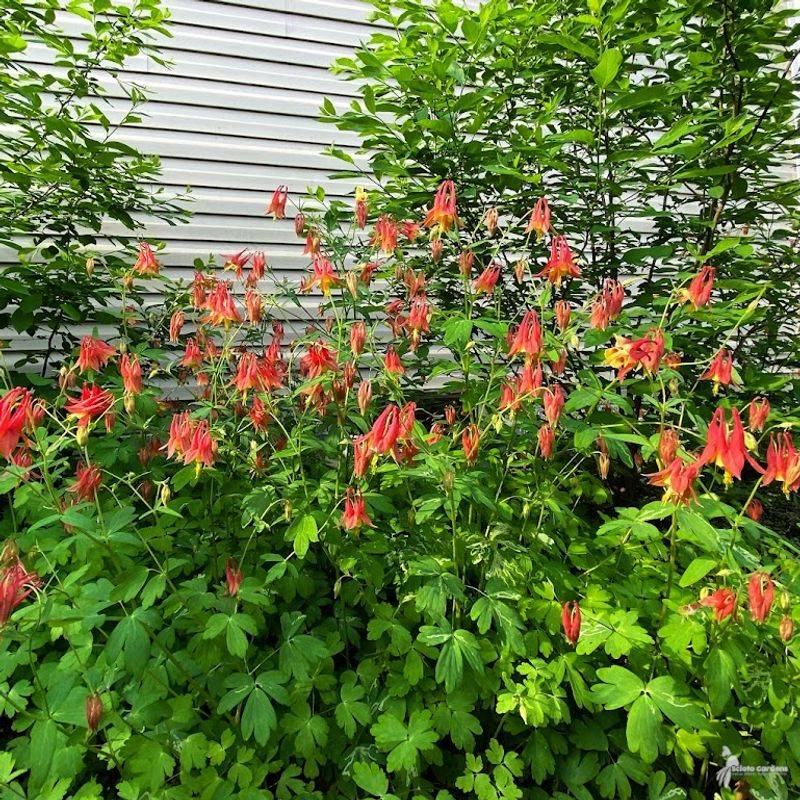
Finding a small columbine seedling a foot away from the original rarely feels like a problem. It feels more like the garden doing something on its own.
Wild columbine can self-seed under suitable conditions, and over several seasons a single plant may produce a loose cluster of offspring nearby.
Conditions matter. Seeds need contact with soil and some moisture to germinate.
Very dense mulch layers or compacted ground can limit establishment. A light layer of mulch or open soil around the base of existing plants gives seeds a better chance.
That naturalizing habit suits informal shade beds well. Small gaps between other perennials can fill gradually with columbine seedlings, adding spring color without requiring you to divide or replant.
The effect tends to look relaxed rather than arranged, which fits a woodland-style design.
Not every gardener wants a plant that moves around. Some prefer tidy clumps that stay exactly where they were placed.
Many Heuchera cultivars hold a compact, mounded form season after season, which works well in defined edging situations or formal borders.
Unwanted columbine seedlings are easy to pull when small. They are not aggressive spreaders in Ohio, and there is no credible evidence that Aquilegia canadensis behaves invasively.
The spreading is gentle and manageable, making it a design asset for informal plantings rather than a maintenance concern.
5. Good Drainage Matters More Than Constantly Rich Garden Soil
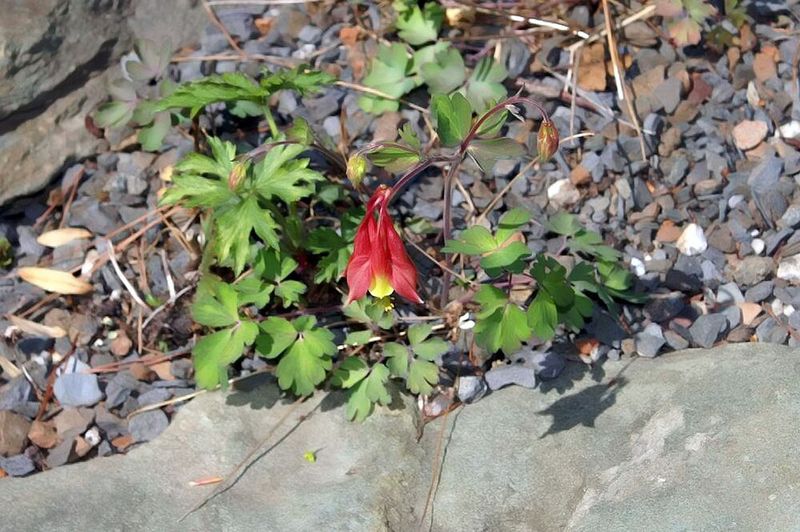
Rocky slopes and open woodland edges are the natural home of Aquilegia canadensis. Those sites share one consistent trait: water moves through them rather than pooling.
Good drainage is a genuine requirement for this plant, not a vague suggestion.
Rich, heavily amended soil is not necessary. Wild columbine can perform well in lean, average, or even somewhat rocky ground as long as drainage is adequate.
Constantly wet soil around the crown is more likely to cause problems than soil that lacks compost.
Coral bells have their own preferences, and those vary by species and cultivar parentage. Some Heuchera cultivars are sensitive to crown rot in poorly drained or heavily amended soils.
Extension sources note that good drainage is also a priority for many coral bells. So on this point, the two plants share more common ground than the comparison might suggest.
Wild columbine may tolerate leaner or rockier conditions more readily than some ornamental Heuchera hybrids. Those hybrids may prefer consistently moist, well-drained soil with some organic matter.
University extension guidance generally recommends improving drainage before planting rather than relying on heavy soil amendment.
Before planting either species, check how quickly water drains from the site after a soaking rain. A spot that stays wet for more than a day or two is a warning sign for both plants.
Matching drainage conditions to plant needs saves effort later.
6. Coral Bells Win On Foliage But Columbine Brings More Wildlife Value
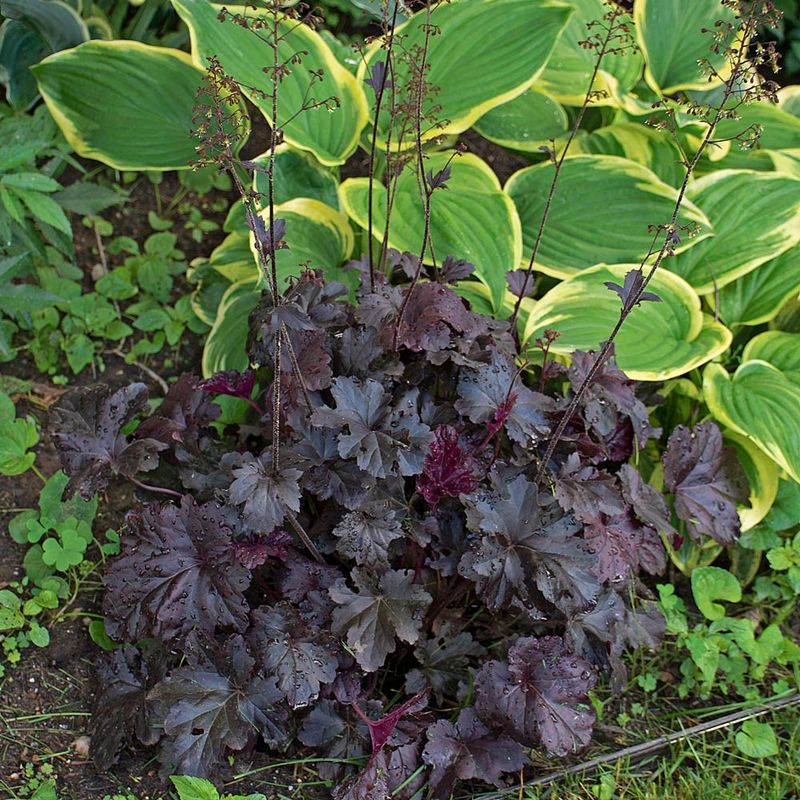
Few Ohio perennials sold for shade can match the foliage display of ornamental coral bells. Many Heuchera cultivars offer leaves in deep burgundy, silver, amber, or near-black, holding that color from spring through much of the growing season.
That long foliage interest is a genuine strength, especially in formal borders or containers where consistent visual structure matters.
Coral bells also tend to form tidy, compact mounds. That predictable habit makes them useful for edging paths or defining the front of a shaded bed.
Some cultivars retain ornamental foliage well into autumn, which wild columbine does not reliably provide.
Where wild columbine pulls ahead is in its documented wildlife relationships. The spring flowers support Ruby-throated Hummingbirds and long-tongued bees at a time when few other shade plants are in bloom.
That combination of timing and flower structure creates a specific ecological role that most ornamental Heuchera cultivars do not fill in the same way.
Some coral bells do flower and attract bees. That is worth stating clearly.
The comparison is not about zero versus something. It is about the strength and specificity of wild columbine’s relationship with hummingbirds during the spring migration window.
A gardener focused on colorful foliage and clean lines will likely find coral bells more satisfying. A gardener hoping to bring hummingbirds and native bees into a shaded area will find wild columbine offers something ornamental selections often do not.
7. Summer Fading Does Not Mean The Plant Failed In Your Shade Bed
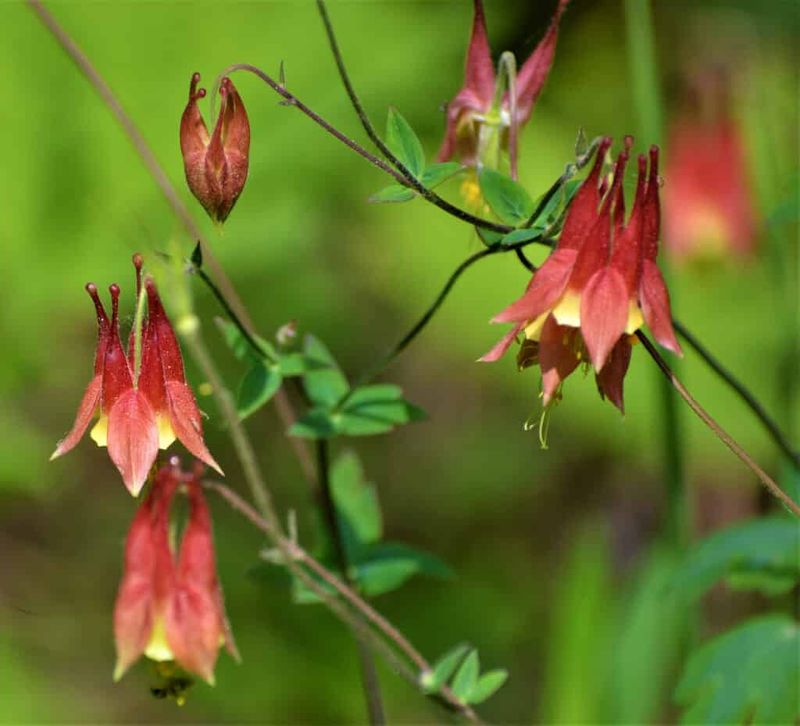
After the flowers finish in late spring, wild columbine foliage can begin to look tired. Leaves may yellow, develop spots from leaf miners, or simply lose their fresh appearance by midsummer.
That is a normal part of this plant’s seasonal cycle, not a sign that something went wrong.
Aquilegia canadensis is a spring-blooming woodland perennial. Its peak contribution happens between April and June.
Expecting it to look ornamental through August sets up an unfair standard, similar to judging a spring bulb by how it looks in July.
Coral bells have a clear advantage here. Many cultivars maintain attractive, colored foliage from spring through fall, and some hold reasonable foliage into winter in mild years.
For gardeners who want a shade plant with consistent visual interest across multiple seasons, that longer display is a real benefit.
Designing around wild columbine’s summer fade is straightforward. Hostas, ferns, and other shade perennials can fill the visual gap as columbine steps back.
The columbine does not need to be removed. Cutting back tired foliage after flowering can tidy the plant and occasionally encourages fresh growth.
Thinking of wild columbine as a spring contributor rather than a four-season plant helps set accurate expectations.
A plant that blooms well, feeds hummingbirds, and self-seeds quietly into gaps has done its job, even if it spends part of summer looking unremarkable.
8. The Better Choice Depends On What You Want From The Space
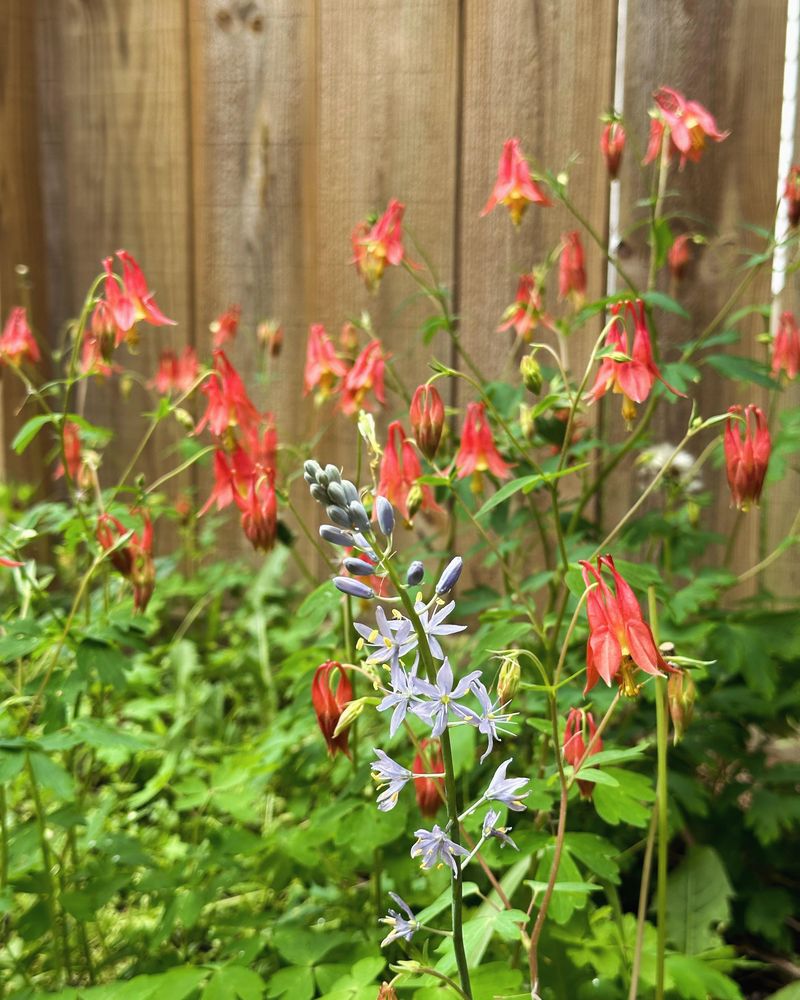
Most planting decisions come down to what role you need the plant to play. Both wild columbine and ornamental coral bells can succeed in shaded beds, but they serve different purposes and reward different gardening goals.
Wild columbine makes the most sense when spring wildlife activity or a naturalistic woodland feel is the priority. It also works well when you want a planting that gradually fills space through self-seeding.
It works well in informal beds under open canopy trees where some light still reaches the ground. Ohio gardeners building habitat-focused landscapes or native plant designs will find it fits those goals more directly than most ornamental Heuchera cultivars do.
Coral bells make more sense when the goal is consistent foliage color, a tidy mounded form, or defined edging along a path. Many cultivars hold attractive leaves across a long season, which wild columbine simply does not offer.
Container plantings and formal shaded borders often suit coral bells better.
The headline’s claim about outperforming holds up in several specific categories. These include spring hummingbird value, naturalizing character, native plant design, and seasonal ecological function.
Those are real and meaningful advantages in the right context.
Neither plant is the automatic answer for every shaded yard. The more useful question is what the space needs to do.
A plant matched carefully to that role will always serve the garden better than one chosen only for how it looks on the shelf at the garden center.