Why Wild Lupine Blooming In May Is A Critical Lifeline For Michigan’s Endangered Karner Blue Butterfly
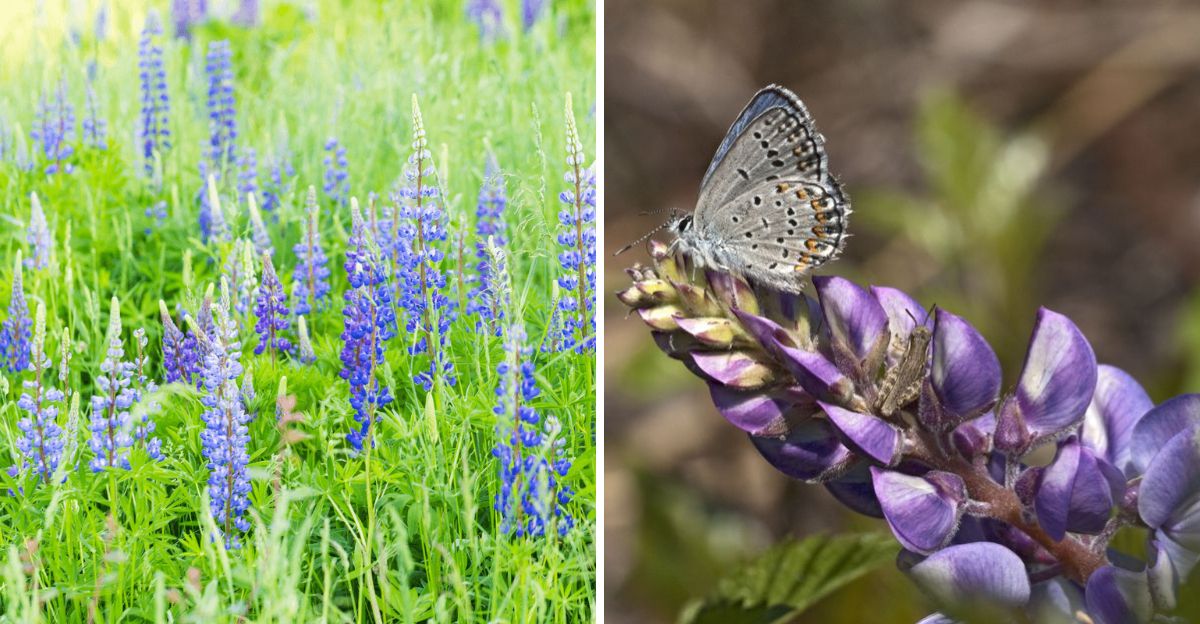
Every May, Michigan’s sandy pine barrens and oak savannas stage a floral takeover that is seriously easy on the eyes. Clusters of wild lupine explode in shades of purple and blue, looking like something straight out of a high-end botanical painting.
While we are busy snapping photos for our feeds, a tiny, endangered celebrity known as the Karner blue butterfly is treating this bloom like a high-stakes grand opening.
For these rare butterflies, lupine isn’t just a pretty backdrop; it is the only item on the menu for their larvae.
Without these specific spring flowers, the entire Karner blue population would be in major trouble.
This fragile connection between a single wildflower and a winged wonder creates a dramatic survival story playing out right in our backyard.
Learning the secrets of this May bloom helps you appreciate the Michigan landscape on a much deeper level.
1. Wild Lupine Hosts Karner Blue Larvae
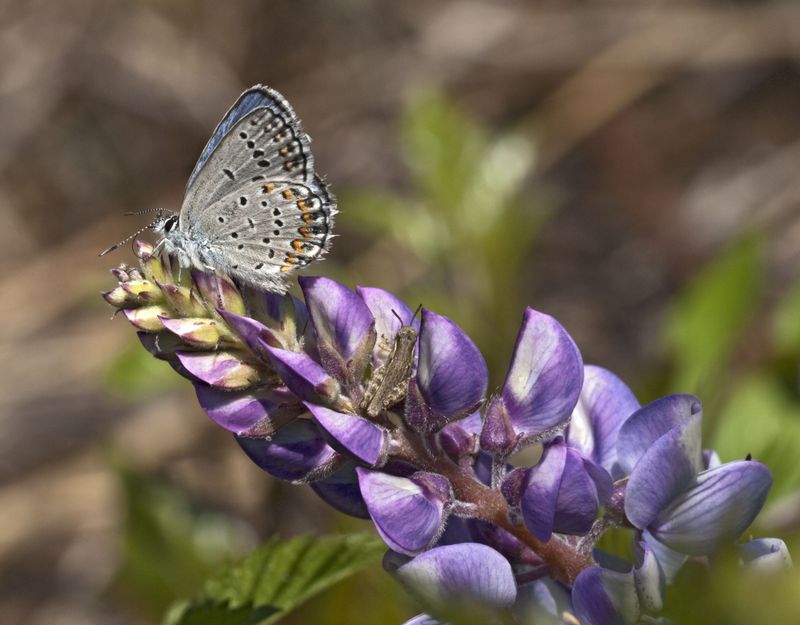
In Michigan’s sandy pine barrens, a tiny caterpillar with an enormous dependency is quietly going about its business.
The Karner blue butterfly larva feeds almost exclusively on wild lupine leaves, making this native plant not just helpful but genuinely essential to the species’ survival.
Without lupine foliage, the larvae cannot complete their development.
Wild lupine belongs to the legume family and produces leaves that contain the specific nutrients Karner blue larvae need during their early growth stages. Other plants simply do not provide a workable substitute.
This tight relationship between one butterfly and one plant species is called host plant specificity, and it makes the Karner blue especially sensitive to changes in plant availability.
When lupine patches in Michigan are healthy and widespread, larvae have enough foliage to feed on through their growth stages. When patches shrink or disappear due to habitat changes, the larvae have nowhere to go.
Michigan conservation efforts have focused heavily on protecting and restoring lupine stands partly because of this direct larval dependency.
Watching a healthy patch of wild lupine in a Michigan oak barren, it can be easy to overlook the tiny caterpillars tucked along the undersides of the leaves.
But those small creatures represent a living link between a native plant and a rare butterfly, and that link is only as strong as the lupine patch supporting it.
2. May Bloom Timing Matches The First Adult Flight
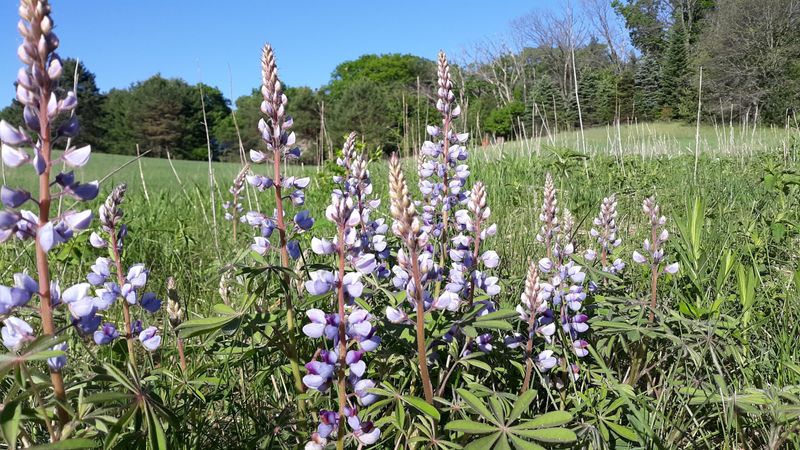
Spring in Michigan’s sandy habitats moves fast, and the timing between wild lupine blooming and the Karner blue butterfly’s first adult flight is not a coincidence.
The butterfly’s spring emergence is closely tied to lupine’s bloom period, which typically peaks in May across many Michigan sites.
When that timing lines up, the butterfly has the resources it needs right when it needs them most.
The first generation of adult Karner blues in Michigan emerges in late spring, usually from mid-May through early June depending on local conditions. These newly emerged adults need nectar sources nearby, and wild lupine flowers happen to provide exactly that.
The overlap between bloom and flight creates a brief but important window of ecological opportunity.
Your Michigan Garden Changes Every Week. Your Plan Should Too.
Gardening in Michigan changes quickly throughout the season. Every Friday you’ll receive a simple weekly plan showing exactly what to plant, prune, fertilize, harvest, and protect so you never miss the right timing.
If lupine blooms too early because of unusual warm spells, or if adult emergence is delayed by cool weather, the two can fall slightly out of sync.
Even a modest mismatch in timing can reduce how much the adults benefit from lupine flowers during that first spring flight.
Michigan’s changing spring weather patterns make this timing relationship worth paying close attention to.
Seasonal timing in fragile ecosystems like Michigan’s pine barrens is rarely flexible.
The Karner blue and wild lupine have developed this ecological rhythm over a long period, and the May bloom period represents one of the most important moments in that shared seasonal calendar.
3. Lupine Flowers Feed Adult Karner Blues
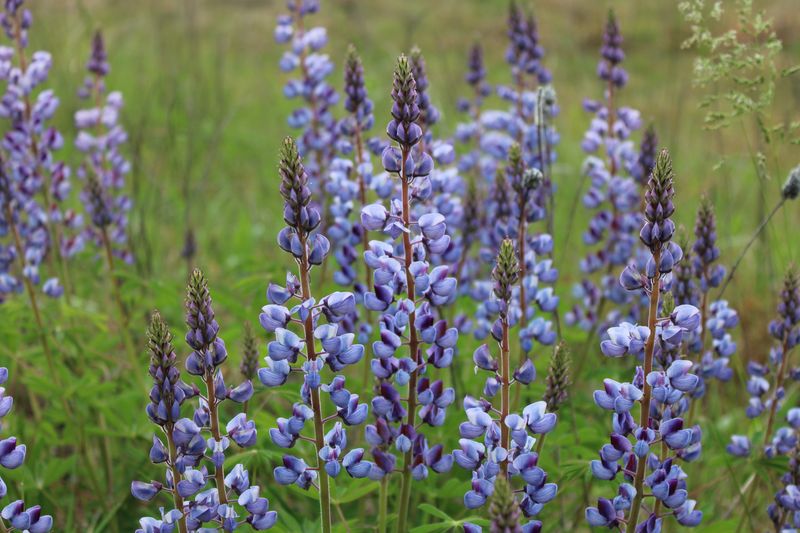
Adult Karner blue butterflies need nectar to fuel their short but active lives, and wild lupine flowers are among the most accessible nectar sources available during the spring flight period in Michigan.
The timing of lupine’s bloom puts food right where the butterflies are, which matters a great deal for a species with limited habitat range.
Karner blues are small butterflies with a wingspan of roughly an inch, and they do not travel long distances in search of food.
Their foraging range is relatively compact, which means the nectar sources within or immediately near their habitat patches carry significant weight.
Lupine flowers blooming right inside those sandy habitat openings give adults a reliable food source without requiring them to venture far.
Beyond lupine, adult Karner blues may also visit other spring wildflowers that bloom in open Michigan habitats. But lupine’s presence within the core habitat areas makes it especially convenient and ecologically relevant.
A patch that provides both larval host plant material and adult nectar in the same location is more valuable than a patch that only offers one of those things.
Watching an adult Karner blue move across a blooming lupine stand on a warm May morning in Michigan gives a clear picture of how tightly these two species are connected.
The flowers are not just visually striking; they are functioning as a fuel station for one of the state’s rarest insects at a critical moment in its season.
4. Sandy Open Habitat Supports Both Species
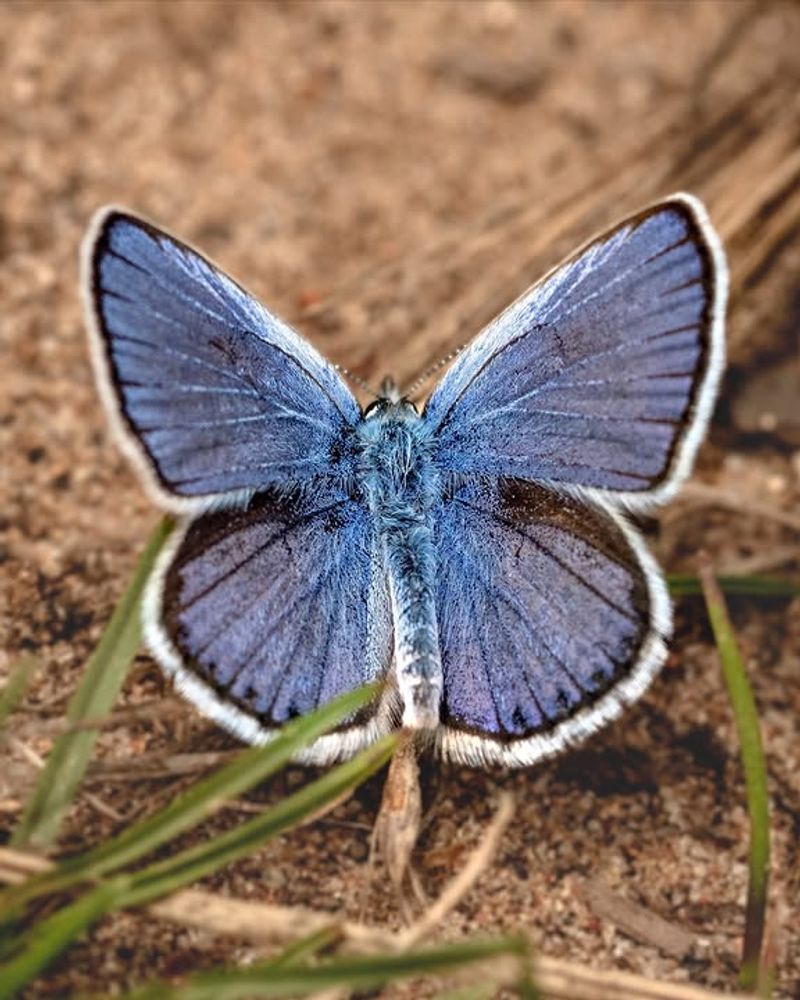
Sandy soils and open, sunny conditions might not sound like prime real estate, but for wild lupine and the Karner blue butterfly, this kind of habitat is home.
Michigan’s pine barrens and oak savannas, particularly in areas like the northwestern Lower Peninsula, provide the exact growing conditions that wild lupine needs to thrive.
That same habitat structure also happens to suit the Karner blue butterfly well.
Wild lupine grows best in well-drained, sandy soils with plenty of direct sunlight. It does not compete well in dense forest understories or in areas where taller vegetation shades it out.
The open, somewhat disturbed character of Michigan’s pine barrens and fire-maintained savannas creates the kind of low-competition growing environment where lupine can establish and spread.
For the Karner blue butterfly, these same open habitats provide the warm microclimates the species prefers.
Sandy soils absorb heat quickly, and the low, sparse vegetation of pine barrens allows sunlight to reach ground level where lupine grows and where butterflies fly.
The combination of warmth, open structure, and lupine presence makes certain Michigan habitats particularly important for the species.
Preserving these sandy, open landscapes in Michigan is not just about saving a plant or a butterfly in isolation.
It is about maintaining the habitat structure that allows both species to function together, which is what makes the conservation of Michigan’s pine barrens and oak savannas so ecologically meaningful.
5. Habitat Loss Makes Each Bloom Season More Important
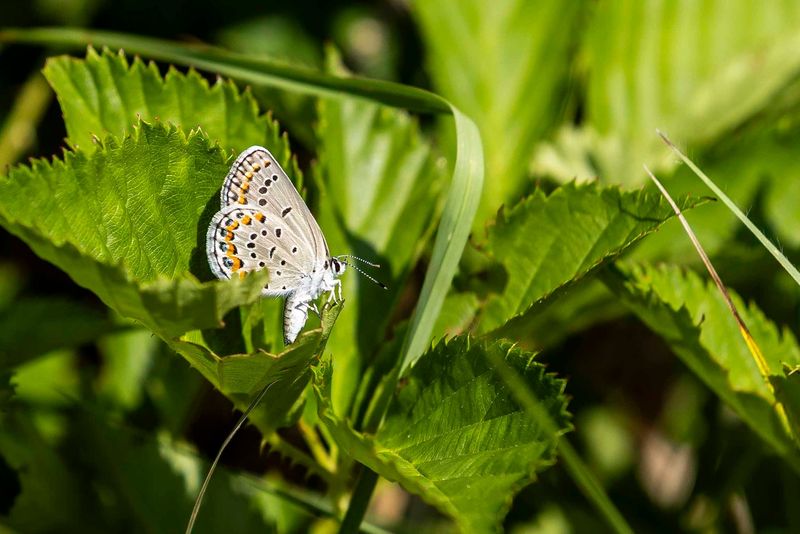
Across Michigan, the sandy open habitats that wild lupine and the Karner blue butterfly depend on have shrunk considerably over the past century.
Fire suppression, development, and natural succession have converted many former pine barrens and oak savannas into denser forests or developed land.
As those habitats have shrunk, so have the lupine patches within them.
When lupine patches become smaller and more isolated, the Karner blue butterfly population in those areas faces greater pressure. Smaller patches support fewer plants, which means less larval food and fewer adult nectar sources.
Isolated patches also make it harder for butterflies to move between habitat areas, which reduces the genetic exchange that healthy populations need over time.
This fragmentation makes each remaining bloom season in Michigan feel more significant from a conservation standpoint.
A strong May bloom in a well-maintained habitat patch is not just a nice wildflower display; it represents a functioning piece of the Karner blue’s life cycle in a landscape where functioning habitat is increasingly rare.
Habitat managers and conservation groups working in Michigan take the health of lupine stands seriously for exactly this reason.
Efforts to restore habitat through controlled burning, invasive species removal, and lupine seeding have helped some Michigan populations stabilize.
But the underlying pressure of habitat loss means that each spring bloom still carries extra weight, and protecting the patches that remain continues to be a conservation priority across the state.
6. Female Karner Blues Lay Eggs Near Wild Lupine
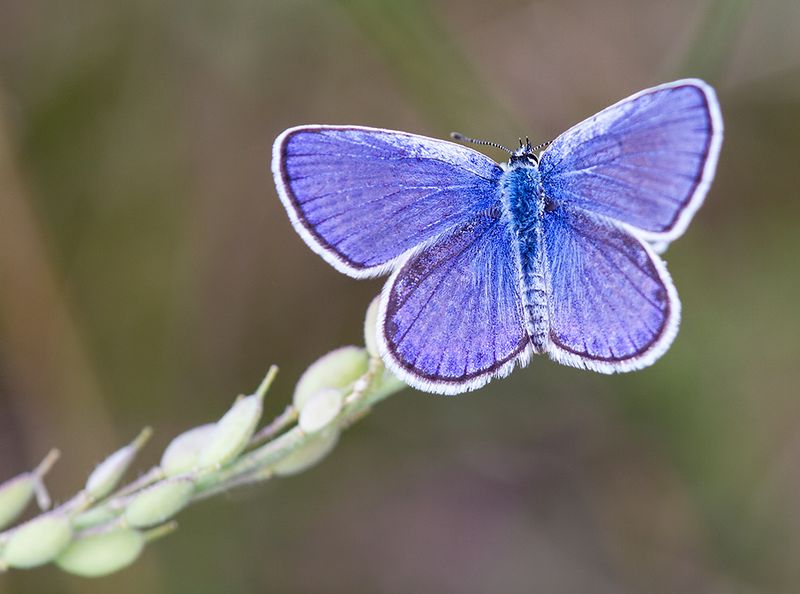
Egg-laying behavior in the Karner blue butterfly is closely tied to wild lupine in a way that shapes where populations can exist at all.
Female Karner blues lay their eggs on or very near lupine plants, often on the stems or in the leaf litter close to the base of the plant.
This means that wherever lupine grows in Michigan, it has the potential to become a nursery for the next generation of butterflies.
Females are selective about where they deposit eggs, and lupine presence is a key factor in that selection process.
A habitat that lacks lupine is essentially a habitat that cannot support reproduction, regardless of how many adult butterflies might visit it for nectar.
The eggs need to be placed where the hatching larvae will have immediate access to lupine foliage.
In Michigan, the May bloom period is also the time when first-generation females are laying eggs for the second generation, which will emerge later in summer.
This means lupine does not just need to be present and blooming; it also needs to retain healthy foliage after flowering to support larvae that hatch in the weeks following the spring flight.
A healthy lupine stand that supports egg-laying and subsequent larval feeding represents the full package from a Karner blue perspective.
Michigan habitat managers often focus on maintaining lupine patches with enough plant density to support both the blooming stage and the post-bloom foliage stage that larvae rely on.
7. Open Sun Helps Wild Lupine Support Butterflies
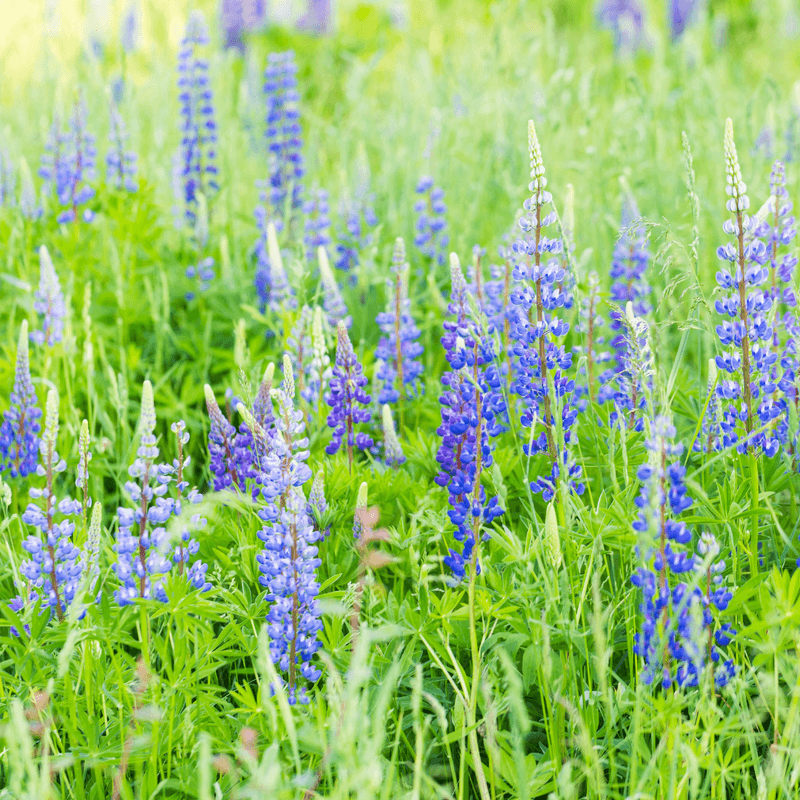
Sunlight plays a bigger role in this story than it might first appear.
Wild lupine is a sun-loving plant, and the amount of direct light it receives affects how well it grows, how abundantly it blooms, and ultimately how much support it can offer to Karner blue butterflies in Michigan’s sandy habitats.
In shaded conditions, lupine plants tend to grow more slowly, produce fewer flowers, and develop less foliage overall.
For a butterfly species that depends on lupine for both larval food and adult nectar, a shaded and struggling lupine patch is less useful than a sunlit and vigorous one.
Open, sunny habitats are not just a preference for lupine; they are part of what makes lupine ecologically functional for the butterfly.
Michigan’s pine barrens and oak savannas historically maintained their open structure through periodic fire, which cleared out competing shrubs and young trees before they could shade the ground layer.
Habitat managers in Michigan now use controlled burns and mechanical clearing to replicate that process and keep lupine habitat open enough to remain productive.
Without that management, plant succession can gradually shade out lupine patches over time.
For people who want to understand why habitat management matters for the Karner blue in Michigan, the sun connection is a good place to start.
Keeping habitats open is not just about aesthetics; it directly influences whether lupine can grow vigorously enough to sustain the butterfly population through its spring life cycle.
8. Wild Lupine Patches Keep Spring Life Cycles Moving
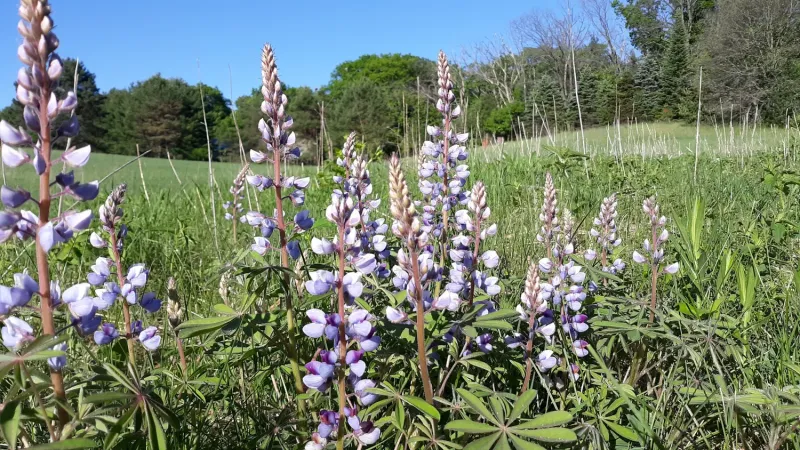
A well-established patch of wild lupine in a sunny Michigan opening does something quietly remarkable each May.
It sets the Karner blue butterfly’s spring life cycle in motion, providing the food, egg-laying sites, and larval nutrition that carry the population from one season into the next.
Without that patch, the chain of events simply does not begin.
The spring life cycle of the Karner blue moves through several stages in a relatively short window of time. Adults emerge, feed, mate, and lay eggs.
Larvae hatch and feed on lupine foliage. Pupation follows, and a second generation of adults emerges later in summer.
Each step in that sequence depends on lupine being available in the right condition at the right time.
Michigan’s sandy habitats that still support healthy lupine populations give the Karner blue its best chance of completing that full seasonal cycle.
Patches that are large enough, sunny enough, and managed well enough to produce abundant foliage and flowers in May are the ones that function as genuine strongholds for the species.
Smaller or degraded patches may support some butterfly activity but often cannot sustain a full breeding population on their own.
For Michigan residents and nature enthusiasts, recognizing the role that wild lupine plays each spring adds real depth to what might otherwise seem like just a pretty wildflower display.
That purple bloom in May is the starting point for something far more significant, and protecting it is one of the most direct ways to support a species that genuinely needs the help.