Why You Should Grow Arborvitae Along Your Ohio Fence For Year-Round Privacy
An Ohio fence can feel private in August and exposed by Thanksgiving.
Maples empty out. Viburnums lose their leaves. Summer vines retreat, and the patio that felt tucked away suddenly sits in plain view.
Arborvitae solves a different problem.
American arborvitae, Thuja occidentalis, keeps its scale-like evergreen foliage through winter and has long served as a hedge and privacy-screen plant.
Ohio State also notes that site drainage, mature size, wildlife pressure, and cultivar choice matter before one goes beside a property line.
So why does this evergreen make sense along an Ohio fence?
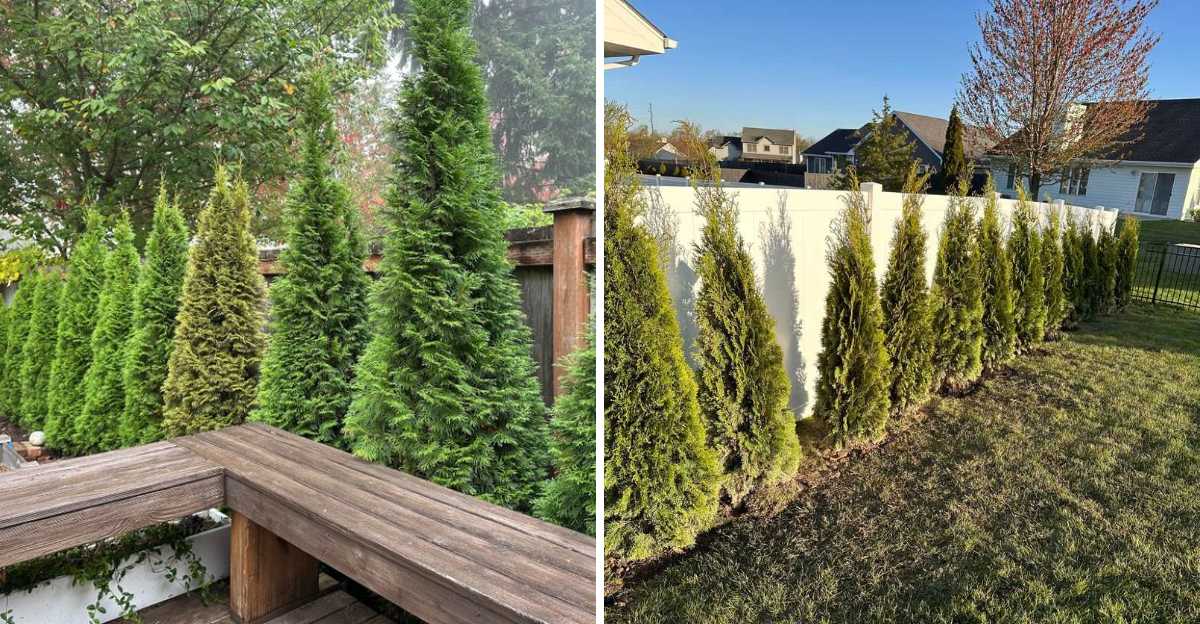
The right cultivar can add height above fence boards, keep a narrow footprint, soften chain link, and create a green backdrop for flowers through every season.
It can also spare you years of corrective cuts when its mature width matches the space from day one.
Tradeoffs matter too. Deer browse arborvitae readily, wet roots create trouble, and some forms bronze during winter.
Plan around those limits, and a bare fence can become a four-season privacy layer instead.
1. Evergreen Foliage Keeps Winter Sightlines Covered
The first cold November week reveals exactly what summer foliage had concealed.
American arborvitae keeps evergreen foliage through the year, so a row along the fence continues to block views after deciduous shrubs and vines lose their leaves.
Ohio State describes arborvitae as a common evergreen hedge and screen plant, while Illinois Extension lists several cold-hardy Thuja occidentalis cultivars with good winter color.
Expect some seasonal change. Older interior foliage can turn brown and shed in fall, and some cultivars take on bronze or yellow-brown tones through winter.
That does not erase the privacy value. The outer foliage remains in place and keeps the row visually solid.
Stand at the patio in January and check the exact sightline you want to block. That view matters more than the summer version of the yard because bare branches expose every gap.
A six-foot wood fence already handles low views. Arborvitae adds green height above it and softens the hard line below. Chain link gains even more because dense foliage can replace a see-through boundary with a green wall over time.
Skip the claim that the plants will silence neighborhood noise. A narrow row does not act like an acoustic barrier in any dramatic way.
Privacy is the stronger promise.
The fence handles structure. The evergreen row handles the season when almost every deciduous plant steps aside.
2. Narrow Cultivars Preserve Precious Fence-Line Space
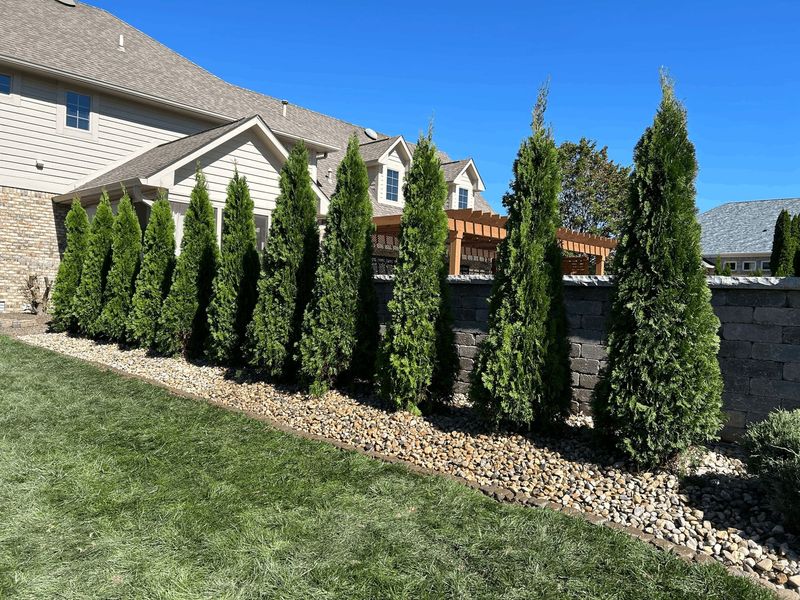
Narrow side yards reward a cultivar that knows how to stay in its lane.
American arborvitae comes in many forms, and mature width varies far more than two nursery pots suggest.
Illinois Extension lists ‘Emerald’ as a narrow cultivar that reaches about 10 to 15 feet tall, while ‘Techny’ can become a much broader plant. University of Minnesota Extension gives ‘Techny’ a mature spread near 15 feet.
Measure from the fence to the walkway, house, gate, or bed edge before you shop. Then compare that usable width with the cultivar’s verified mature spread.
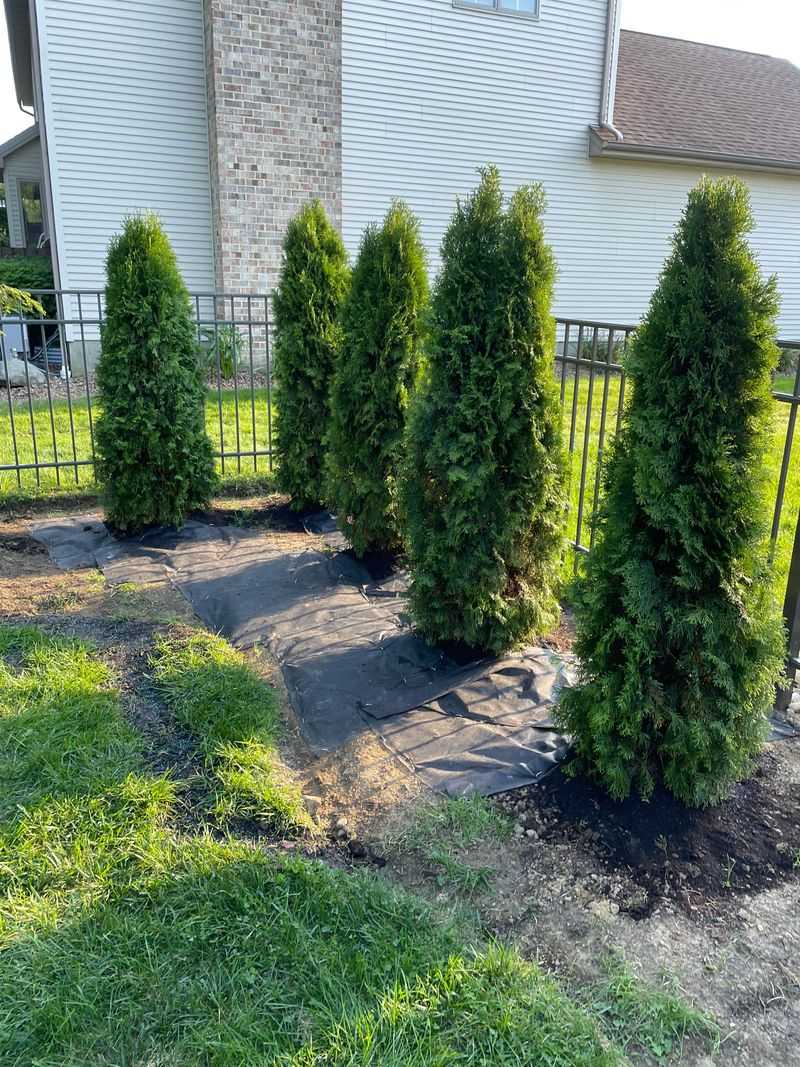
Give the fence itself some room too. Set the trunk far enough away for the plant to reach its natural width without constant contact with boards or chain link.
Your Ohio Garden Changes Every Week. Your Plan Should Too.
Gardening in Ohio changes quickly throughout the season. Every Friday you’ll receive a simple weekly plan showing exactly what to plant, prune, fertilize, harvest, and protect so you never miss the right timing.
Leave practical access for stain, repair, and debris cleanup. A fixed 18-inch rule cannot work for every cultivar.
This is where a narrow selection earns its price tag.
A compact upright form can create height and preserve precious side-yard space. A broad cultivar placed in the same strip can turn every summer into a shears appointment.
Avoid the urge to solve a width mistake with perpetual shears. Arborvitae does not reliably refill bare brown interior wood after a severe cut.
Let the mature dimensions do the math before the shovel does the work.
The best privacy plant is not the fastest one at the garden center. It is the one that still fits beside the fence ten years later.
3. Taller Forms Can Block Views Above The Fence
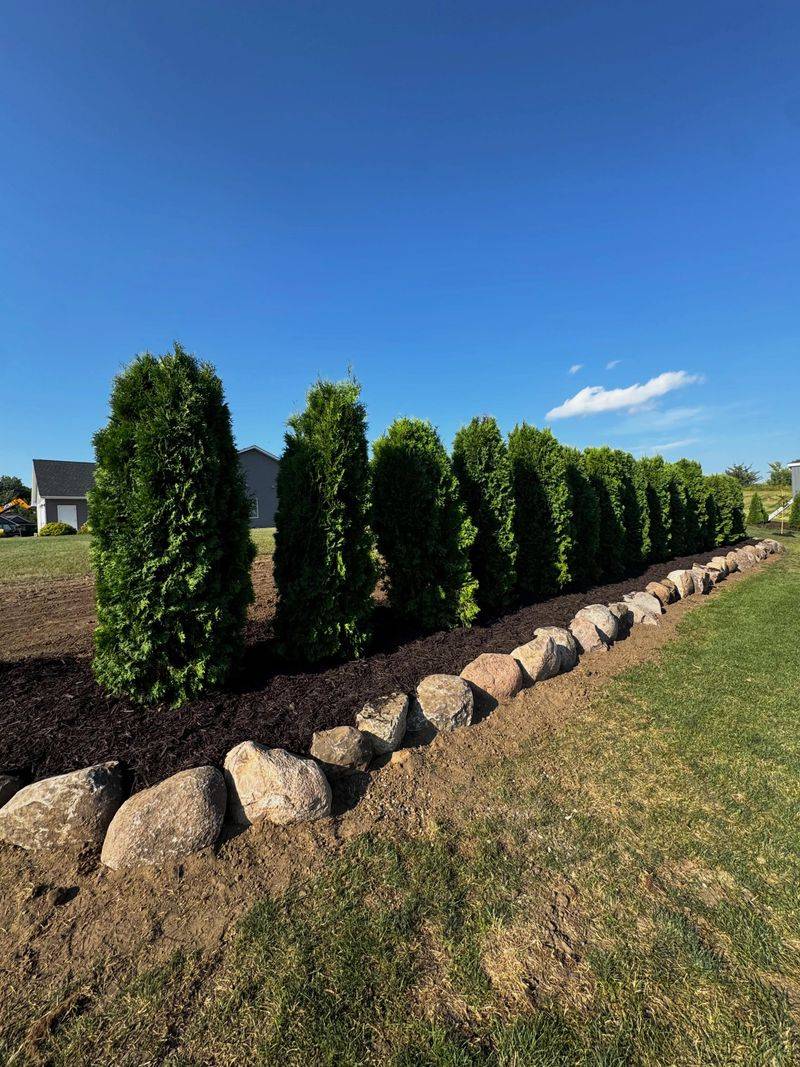
Second-story windows create the kind of privacy problem a six-foot fence cannot solve.
A taller arborvitae can lift the screen above the fence line and close that elevated view without a new wall or structure.
Cultivar choice controls how high that green layer eventually reaches. Illinois Extension lists ‘Nigra’ at roughly 20 to 30 feet and ‘Wintergreen’ in a similar height range, while ‘Emerald’ stays closer to 10 to 15 feet.
Match the plant to the actual view you want to hide.
Stand where you sit most often, then note the roofline, deck, or upper window that creates the exposure. Choose a mature height that clears that line without excess height beyond what the yard needs.
Check overhead space before any hole goes into the soil. Utility lines, roof overhangs, and nearby trees can turn a tall cultivar into a future conflict.
Ohio law requires an OHIO811 notification before excavation, with current rules calling for notice at least two working days before the work date, excluding the notification day.
Give taller forms enough horizontal room as well. Height never arrives alone, and a plant chosen only from the number on the vertical axis can crowd a narrow fence bed later.
Temporary summer plants can cover early gaps while the evergreens gain size. Tall annuals or ornamental grasses can provide seasonal softness without an unnaturally tight arborvitae row.
The goal is not maximum height.
It is the right height.
A carefully chosen cultivar can lift privacy above the fence just enough to make the patio feel tucked away again.
4. Cold-Hardy Structure Keeps The Screen Useful In Ohio
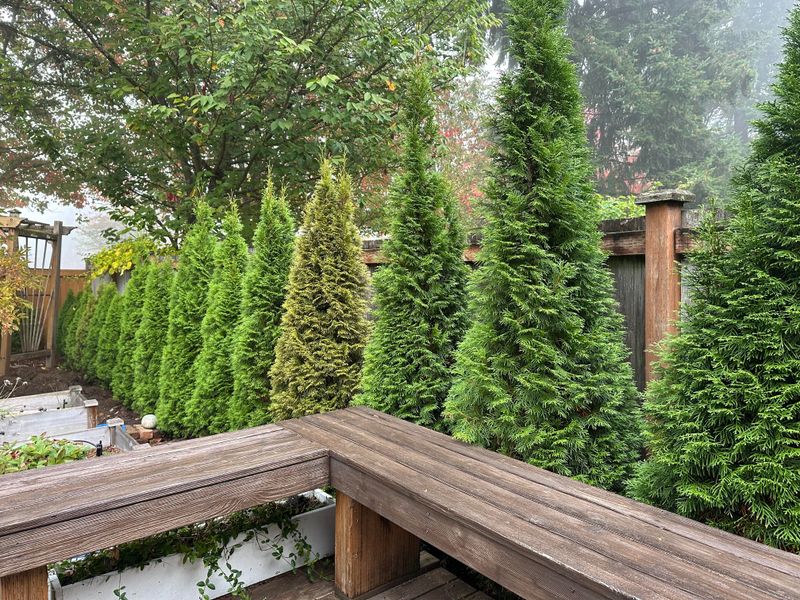
Ohio winter makes evergreen structure valuable, but cold tolerance is only part of the test.
American arborvitae is hardy across cold northern climates, and Illinois Extension places the species in USDA Zones 3 through 7.
That range suits Ohio well, yet Ohio State repeatedly points to drainage and site stress as major factors behind poor arborvitae performance.
Start below ground.
Choose soil that drains after rain rather than a low strip where water lingers around the root zone. Ohio
State reported excess water and root problems among common causes behind arborvitae decline in landscapes. A cold-hardy plant can still struggle in saturated soil.
Give new trees steady moisture through establishment, especially before the ground freezes. Evergreens continue to lose water from foliage through winter, while frozen soil can limit replacement moisture.
A well-hydrated root zone enters winter with a better reserve.
Keep mulch broad and shallow rather than piled against the trunks.
Watch snow load too. Ohio State’s PlantFacts notes branch separation under snow as a weakness of American arborvitae. Brush heavy wet snow off gently from the side with a broom rather than beat branches from above.
Give the row a quick winter check after storms. Catch bent or separated stems before snow sits on them for days.
Cold does not automatically make arborvitae carefree.
Ohio gives this species the right climate range, but drainage, moisture, and snow still decide how handsome that privacy wall looks by March.
5. Dense Green Foliage Makes An Old Fence Fade Away
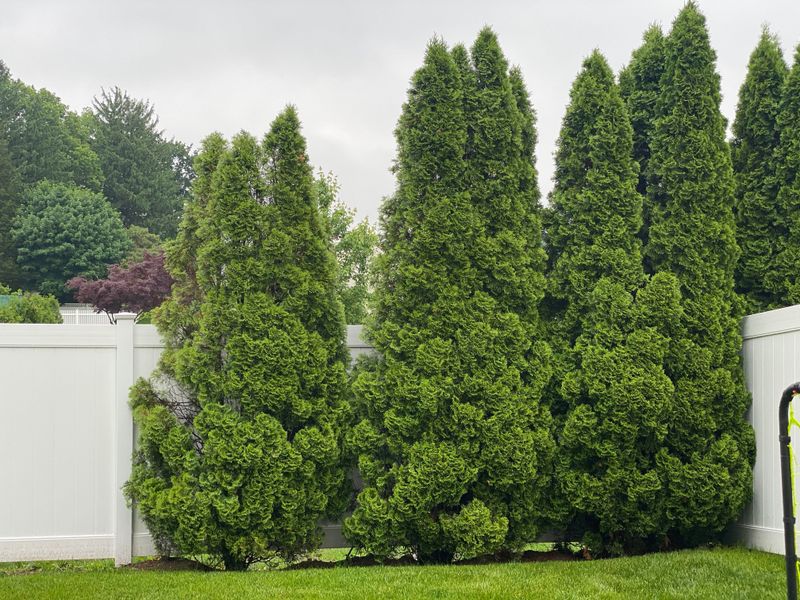
Chain link disappears much faster once evergreen foliage becomes the feature your eye notices first.
That visual trick is one of arborvitae’s strongest fence-line roles.
Dense scale-like foliage creates a consistent green plane behind flower beds, patios, and lawn areas, which can make an ordinary boundary feel more finished through every season.
American arborvitae has long served as a hedge and screen species for exactly that dense evergreen habit.
Keep the plant separate from the fence rather than press it against the structure.
Use the cultivar’s mature width to choose the trunk position, then preserve enough clearance for fence maintenance. Wood boards still need stain, repair, and airflow.
Chain link may need access after storm damage or a gate adjustment. A shrub plastered against either surface turns a simple repair into a chore.
Walk the line with a tape measure before the first hole opens. Mark gates, posts, utility boxes, drainage paths, and corners that need routine access. Those unglamorous details protect the screen from expensive changes later.
A little open space also helps you inspect the back of each plant for broken branches, bagworms, and other trouble. Ohio State lists arborvitae among plants that can suffer substantial bagworm damage.
Do not promise the evergreens will preserve the wood behind them. Dense foliage can shade a fence, but trapped moisture and poor access can create their own maintenance headaches.
The design win is visual.
Weathered boards become background. Chain link fades from attention. The green row gives flowers and patio furniture a calmer edge.
A fence can stay exactly where it is and still feel completely different once the landscape takes over the foreground.
6. The Right Cultivar Saves Years Of Constant Shearing
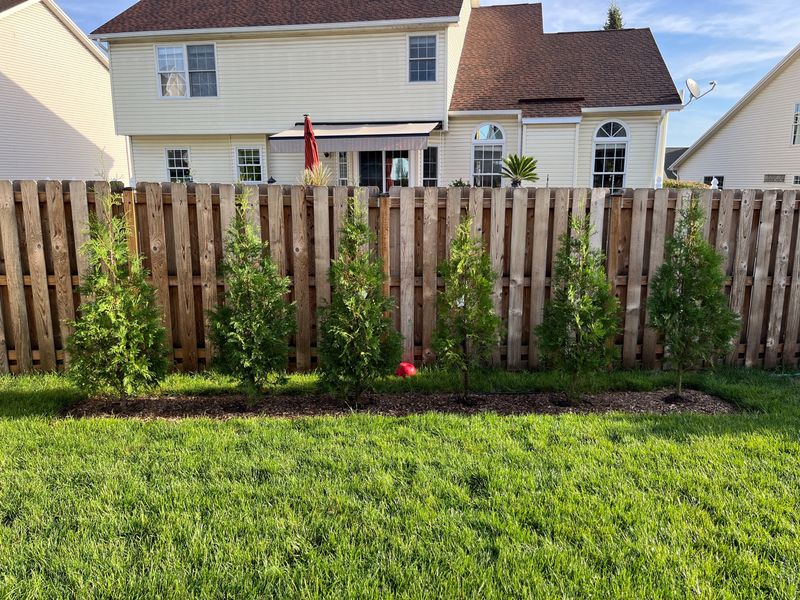
The easiest arborvitae hedge to maintain is the one that never needs force to fit the wrong space.
American arborvitae naturally forms dense evergreen structure, and some cultivars need little work to keep an upright outline.
Penn State notes that heavy cuts into bare brown wood are a poor strategy because arborvitae generally does not produce fresh growth from those leafless interior stems.
Choose mature size as your first maintenance tool.
‘Green Giant’ can grow far beyond the scale of a narrow suburban fence strip. Illinois Extension describes annual growth of two feet or more under good conditions and a final height above 50 feet.
That speed sounds wonderful until the goal is a six-foot screen only four feet wide.
Use a smaller cultivar where the yard demands restraint.
Then make light corrective cuts while green foliage remains on the stems. Remove stray tips, damaged branches, or small sections that interrupt the outline. Do not carve repeatedly into the bare center in hopes of a fresh green flush.
Step back from the row before every cut. Preserve a slightly wider base so light can reach lower foliage and the screen stays full near the ground.
A cultivar that fits can spend most seasons neat without a formal hedge haircut. The yard gets privacy without another yearly chore.
Let genetics carry most of the workload.
Shears should refine the screen, not spend every summer in an argument with the size printed on a tag you ignored at purchase.
7. Mature Size Helps You Avoid A Future Fence-Line Mistake
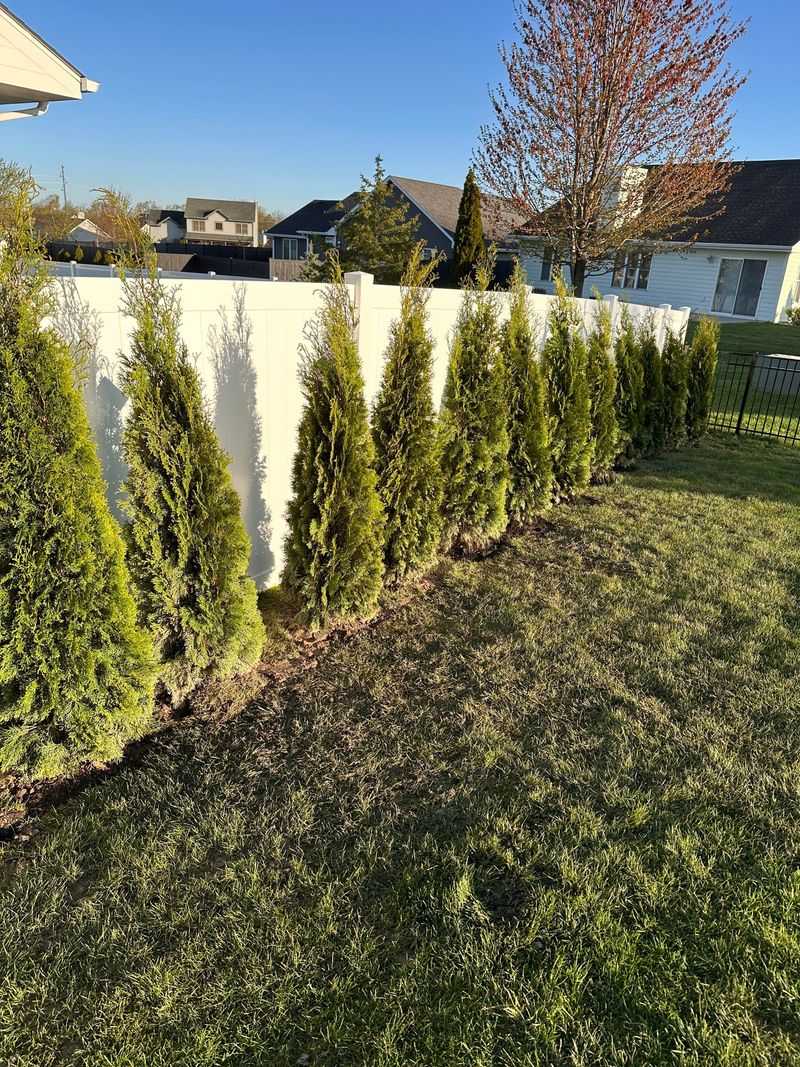
Mature dimensions matter more than almost any other number on an arborvitae label.
A two-foot nursery plant makes every cultivar look manageable. Ten years later, the differences become obvious.
Illinois Extension lists ‘Emerald’ at about 10 to 15 feet tall with a narrow habit, ‘Nigra’ at 20 to 30 feet, and ‘Techny’ at 10 to 15 feet.
University of Minnesota Extension gives ‘Techny’ a much broader 15-foot spread, which shows why width deserves equal attention.
Write down three measurements before you shop: desired screen height, available bed width, and the length of fence that needs coverage.
Use those numbers to compare actual cultivars rather than rely on the word “arborvitae.”
Give each plant enough center-to-center space to approach its natural width without severe competition. A privacy row can overlap visually at maturity, but trunks set too close for instant coverage can create competition and future access trouble.
Account for deer pressure too.
Ohio State lists arborvitae among plants frequently damaged by deer. In neighborhoods with regular deer traffic, lower foliage can lose its dense shape right where privacy matters most.
Protect young plants with exclusion or choose another screen where deer pressure stays severe.
Do not let the garden-center height decide the entire plan.
The small plant is temporary. Its mature footprint is the real resident.
Match that footprint to the yard, and the fence line can stay useful rather than become a long green problem that demands constant correction.
8. Evergreen Structure Gives The Rest Of The Garden A Backdrop
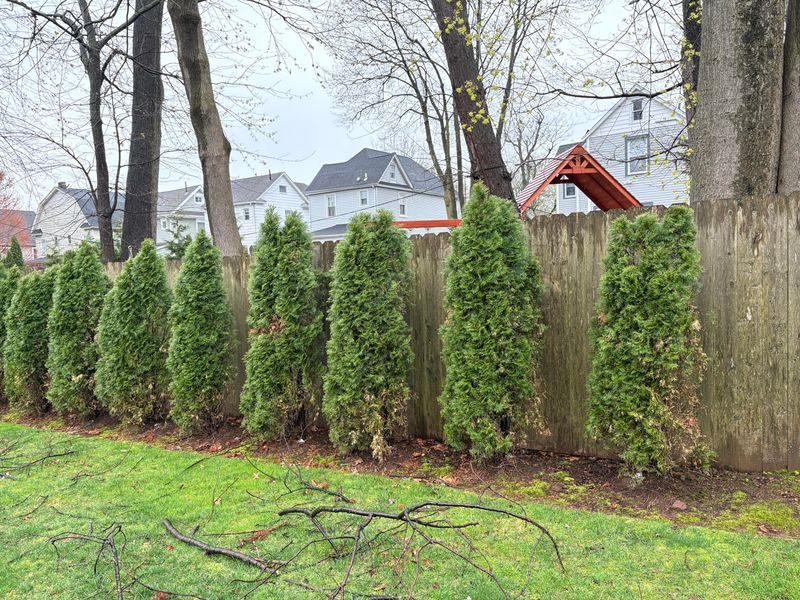
An evergreen wall can make an Ohio garden look more deliberate.
Arborvitae gives the fence line a consistent backdrop while perennials, bulbs, and deciduous shrubs change through the year.
Summer flowers gain contrast against green foliage. Autumn seedheads stand out after other leaves fade. Winter stems still have a visual boundary behind them instead of open chain link or bare boards.
Keep companion plants away from the arborvitae trunks.
Leave enough root-zone space for mulch, moisture checks, and air around the lower foliage. Then place shorter plants toward the front of the bed where their mature width will not press into the evergreen row.
Choose companions from the conditions in front of the screen.
A sunny fence line can support black-eyed Susan, coneflower, grasses, or other Ohio perennials that prefer sun. A shaded side of the row needs a different palette.
Use the available light and soil moisture as the guide rather than copy one fixed combination. Ohio State’s broader landscape advice stresses the same right-plant, right-place principle for Ohio sites.
Give the bed seasonal layers.
Spring bulbs can start the show. Summer perennials add color. Grasses and seedheads carry texture into fall. Arborvitae stays behind all of them and holds the composition together once the flowers retreat.
That is the bonus beyond privacy.
The row does not have to look like a green barricade.
Use it as the permanent background and let the plants in front change the mood from month to month.
The fence becomes harder to notice, the garden gains depth, and winter still has green structure to work with.